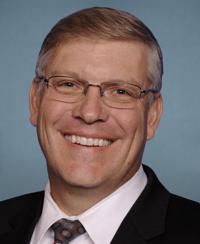
United States · United States Congress · 25 September 2017
CBO Show Your Work Act This bill amends the Congressional Budget Act of 1974 to require the Congressional Budget Office (CBO) to make available to Congress and the public each fiscal model, policy model, and data preparation routine that the CBO uses to estimate the costs and other fiscal, social, or economic effects of legislation. For each estimate of the costs and other fiscal effects of legislation, the CBO must also disclose, in a manner sufficient to permit replication by individuals not employed by the CBO, the data, programs, models, assumptions, and other details of the computations used to prepare the estimate. For data that is not required to be disclosed, the CBO must make available to Congress and the public: a complete list of all data variables for the data; descriptive statistics for all data variables for the data, to the extent that the descriptive statistics do not violate the rule against disclosure; a reference to the statute requiring that the data not be disclosed; and contact information for the individual or entity who has unrestricted access to the data.
United States · United States Congress · 14 September 2017
Save American Workers Act of 2017 This bill amends the Internal Revenue Code to change the definition of "full-time employee" for purposes of the employer mandate to provide minimum essential health care coverage under the Patient Protection and Affordable Care Act from an employee who is employed on average at least 30 hours of service a week to an employee who is employed on average at least 40 hours of service a week.
United States · United States Congress · 28 July 2017
Exchange Regulatory Improvement Act This bill amends the Securities Exchange Act of 1934 to exempt certain property of an exchange from regulation by the Securities and Exchange Commission. Specifically, the exemption applies to property not for the purpose of effecting or reporting a transaction on an exchange.
United States · United States Congress · 28 July 2017
Border Security for America Act of 2017 This bill directs the Department of Homeland Security (DHS) to: (1) construct and operate infrastructure and technology to deter and detect illegal border activity in high traffic areas, (2) deploy the most practical and effective technology to achieve situational awareness and operational control of the border, (3) deploy additional capabilities to specified border sectors or regions, (4) submit a plan for evaluating and using independent verification and validation resources for border security technology, (5) establish a National Border Security Advisory Committee, (6) submit a southern border threat analysis, (7) implement the Border Security Deployment Program, (8) establish a biometric exit data system, and (9) begin eradicating the carrizo cane plant and any salt cedar along the Rio Grande River. The bill provides for: (1) U.S. Border Patrol personnel increases and infrastructure improvements, including forward base upgrades along the southern border; and (2) National Guard and Department of Defense border assistance. The bill: (1) prohibits federal agency restrictions on U.S. Customs and Border Protection activities on federal land within 100 miles of the border, (2) requires increases in immigration and law enforcement personnel and agricultural specialists, (3) authorizes appropriations for specified immigration purposes, and (4) requires electronic passport screening and biometric matching at airports of entry. The Anti-Border Corruption Act of 2010 is amended to provide for hiring flexibility. Operation Stonegarden is established as a DHS program to provide border security grants. This bill authorizes DHS to construct new ports of entry along the northern and southern borders.
United States · United States Congress · 28 July 2017
Transportation and Trailer Modernization Act of 2017 This bill amends the Clean Air Act to revise the definition of a motor vehicle to exclude trailers and vehicles reliant on a connection to a self-propelled vehicle for power. (The Environmental Protection Agency set emissions standards for trailers as a part of motor vehicle emissions regulations. The regulations as applied to trailers were stayed by a federal court on October 27, 2017.)
United States · United States Congress · 28 July 2017
Rightsizing Pension Premiums Act of 2017 This bill amends the Employee Retirement Income Security Act of 1974 (ERISA) to: (1) modify the formula that the Pension Benefit Guaranty Corporation (PBGC) uses to calculate the funded percentage of single-employer pension plans, and (2) reduce single-employer PBGC premiums for pension plans that are sponsored by certain small employers or have specified PBGC funded percentages. The bill also prohibits the budget effects of provisions that change PBGC premiums from being counted for the purposes of determining budget points of order for legislation in the House or the Senate. (The PBGC is a federal agency that insures the benefits of private sector, defined benefit pension plans. The PBGC is financed by insurance premiums paid by sponsors of the plans, investment income, assets from pension plans taken over by the PBGC, and recoveries from the companies formerly responsible for the plans.)
United States · United States Congress · 27 July 2017
Save Local Business Act This bill amends the National Labor Relations Act and the Fair Labor Standards Act of 1938 to provide that a person may be considered a joint employer in relation to an employee only if such person directly, actually, and immediately, and not in a limited and routine manner, exercises significant control over the essential terms and conditions of employment (including hiring employees, discharging employees, determining individual employee rates of pay and benefits, day-to-day supervision of employees, assigning individual work schedules, positions, and tasks, and administering employee discipline).
United States · United States Congress · 25 July 2017
529 Opening Paths To Invest in Our Nation's Students Act or the 529 OPTIONS Act This bill amends the Internal Revenue Code to allow distributions from qualified tuition programs (known as 529 plans) to be used for certain expenses associated with registered apprenticeship programs. The bill expands the definition of "qualified higher education expenses" for which tax-free distributions are allowed to include: (1) books, supplies, and equipment required for the enrollment or attendance of a designated beneficiary in an apprenticeship program registered and certified with the Department of Labor; (2) child care at a licensed day care center, and transportation, in connection with such enrollment or attendance; and (3) costs associated with obtaining an industry certification or other credential in connection with an apprenticeship program.
United States · United States Congress · 20 July 2017
This joint resolution nullifies a rule submitted by the Consumer Financial Protection Bureau (CFPB) regarding arbitration agreements. (The rule regulates the use of arbitration agreements in contracts for specific consumer financial products and services. It prohibits the use of a predispute arbitration agreement to prevent a consumer from filing or participating in certain class action suits. The rule also requires consumer financial product and service providers to furnish the CFPB with particular information regarding arbitrations.)
United States · United States Congress · 20 July 2017
Ensuring Quality in the Unemployment Insurance Program (EQUIP) Act This bill allows states to enact unemployment compensation laws that require an applicant for unemployment compensation, before receiving any such compensation, to: (1) complete a substance abuse risk assessment, and (2) test negative for controlled substances within one week after the results of such assessment if determined to be high-risk. It prescribes retesting requirements and payment suspensions for applicants who test positive.
United States · United States Congress · 19 July 2017
Systemic Risk Designation Improvement Act of 2017 This bill amends the Dodd-Frank Wall Street Reform and Consumer Protection Act to allow the Federal Reserve Board (FRB) to subject a bank holding company to enhanced supervision if: (1) the company has been identified as a global systemically important company; or (2) the risk of the company's financial distress, or the nature of the company's activities, could pose a threat to the financial stability of the United States. Currently, companies are subject to this type of oversight if they possess at least $50 billion in assets or are a nonbank financial company under the FRB's supervision. The Financial Stability Oversight Council must approve of any metrics used by the FRB in determining by regulation that a category of bank holding companies is subject to enhanced supervision. Under this bill, companies subject to enhanced supervision may be required to limit mergers and acquisitions, restrict products offered, or maintain a certain debt ratio. The FRB must publish the list of companies that have been identified as requiring enhanced supervision.
United States · United States Congress · 19 July 2017
Wounded Officers Recovery Act of 2017 This bill authorizes the Capitol Police Board to make payments from the United States Capitol Police Memorial Fund to employees of the U.S. Capitol Police who have sustained serious line-of-duty injuries. The board is required to issue specific regulations governing the fund's use for making such payments. These regulations shall ensure that the payments are in addition to, and do not otherwise affect, other forms of compensation payable to the employee, including worker's compensation benefits. The bill requires amounts received by the board in response to the shooting incident at the practice for the Congressional Baseball Game for Charity on June 14, 2017, to be deposited into the fund.
United States · United States Congress · 17 July 2017
President John F. Kennedy Commemorative Coin Act This bill directs the Department of the Treasury to mint and issue not more than 500,000 $1 silver coins in commemoration of President John F. Kennedy. The bill requires all sales of such coins to include a surcharge of $10 per coin, which shall be paid by Treasury to the John F. Kennedy Library Foundation to support the John F. Kennedy Presidential Library and Museum.
United States · United States Congress · 14 July 2017
Promote Accountability and Government Efficiency Act This bill revises the status and rights of federal civil service employees. Specifically, the bill: provides that employees hired one year after the enactment of this bill shall be hired on an at-will basis (i.e., removal or suspension for good cause, bad cause, or no cause at all); allows the suspension of such employees for misconduct or poor performance; denies a pay increase to employees who do not achieve a certain performance rating; denies a retirement annuity to an employee convicted of a felony; permits the transfer of a Senior Executive Service employee to a position in the General Schedule; and prohibits an employee from carrying out the business of a labor organization unless such employee is in a non-duty status or from using any government property in carrying out union business.
United States · United States Congress · 29 June 2017
Streamlining Environmental Approvals Act of 2017 or the SEA Act of 2017 This bill amends the Marine Mammal Protection Act of 1972 to: (1) limit the scope of the moratorium on taking and importing marine mammals and marine mammal products, and (2) revise the requirements for obtaining an authorization for incidentally taking by harassment marine mammals (incidental harassment authorizations or IHAs). Harassment is an act of pursuit, torment or annoyance which has the potential to either: (1) injure a marine mammal in the wild; or (2) disturb a marine mammal by causing disruption of behavioral patterns, such as migration or breeding. The bill: (1) allows persons who are not U.S. citizens to make requests to obtain IHAs, (2) eliminates the requirement that the taking occur within a specific geographic region, and (3) permits more than a small number of marine mammals to be taken. Monitoring requirements under an IHA must be efficient and practical. Additionally, the bill eliminates a requirement that IHAs prescribe reporting requirements. Any condition imposed by an IHA for minimizing adverse impacts on marine mammals may not result in more than a minor change to the activity and may not alter the activity's basic design, location, scope, duration, or timing. The bill establishes a process and deadlines for approving or denying IHAs, including a process for extending IHAs. Any taking of a marine mammal in compliance with an IHA is exempt from the prohibitions on takings under the Endangered Species Act of 1973.
United States · United States Congress · 28 June 2017
Holding SSA Employees Accountable Act This bill prohibits employees of the Social Security Administration who are convicted of certain offenses related to their official duties from further participating in federal annuity programs.
United States · United States Congress · 26 June 2017
Freedom from Union Stalking Act This bill amends the National Labor Relations Act to declare that nothing in such Act shall be construed to preempt a law of any state, territory, or the District of Columbia that prohibits, criminalizes, or creates a civil cause of action for stalking, cyberstalking, or harassment.
United States · United States Congress · 26 June 2017
Freedom from Union Identity Theft Act This bill amends the National Labor Relations Act to declare that nothing in such Act shall be construed to preempt a law of any state, territory, or the District of Columbia that prohibits, criminalizes, or creates a civil cause of action for identity theft or the release of an individual's personally identifiable information.
United States · United States Congress · 22 June 2017
Supplemental Nutrition Assistance Program Reform Act of 2017 This bill amends the Food and Nutrition Act of 2008 to modify the Supplemental Nutrition Assistance Program (SNAP, formerly known as the food stamp program) work requirements that apply to able-bodied adults without dependents (ABAWDs). The bill modifies the work requirements to: terminate the authority of the Department of Agriculture to waive the requirements, upon the request of a state agency, for individuals residing in an area that has an unemployment rate of over 10% or does not have a sufficient number of jobs to provide employment for the individuals; shorten from three months to one month the time limit for receiving benefits in a three-year period without meeting the requirements; decrease from 15% to 5% the portion of ABAWDs that a state may exempt from the requirements; allow participation in a supervised job search to satisfy the requirements; require states receiving SNAP funds to provide ABAWDs with opportunities to participate in a work program, a workfare program, or a supervised job search; and reduce SNAP allotments for states that fail to comply with requirements regarding eligibility disqualifications. The bill also modifies the congressional declaration of policy to specify that the purpose of SNAP is to increase employment, to encourage healthy marriage, and to promote prosperous self-sufficiency (maintaining an income above the poverty level without services and benefits from the federal government).
United States · United States Congress · 15 June 2017
DC Personal Protection Reciprocity Act This bill declares that the prohibitions of the District of Columbia Official Code against carrying a pistol within Washington, DC either openly or concealed without a license under DC law shall not apply to an individual who is: not prohibited by federal law from possessing, transporting, shipping, or receiving a firearm; carrying a valid license or permit for a concealed firearm issued under the law of a state; and carrying a valid identification document containing the individual's photograph. The Metropolitan Police Department, upon application by a person with a bona fide residence or place of business within the United States and a license to carry a concealed pistol under the law of any state or local government, shall issue that person a license to carry a concealed pistol within DC for up to two years from its date of issue, regardless of the applicant's reason for applying for the license. The bill repeals the condition on the permission for a non-DC resident who lives in a state that does not require a license to carry a concealed pistol to apply to the department for a license to carry one within DC for up to two years. The condition repealed states that the non-resident may apply for a license to carry a concealed weapon only if the non-resident meets the same reasons and requirements a person must meet who has a bona fide residence or place of business in DC. The department shall enter into reciprocity agreements with each other state that requires such an agreement in order to grant recognition to a license to carry a concealed firearm issued by that state.
United States · United States Congress · 12 June 2017
Preserving Patient Access to Compounded Medications Act of 2017 This bill amends the Federal Food, Drug, and Cosmetic Act to expand the circumstances under which a drug may be compounded (manufactured at small scale) to allow pharmacists and physicians to compound drugs for administration to patients in an office or clinical setting, in accordance with state law. (Drugs that are compounded do not need to meet certain federal requirements regarding manufacturing, labeling, or approval.) Dietary supplements may be used in the compounding of a drug. The bill exempts from interstate distribution limits the dispensing of a compounded drug from the facility where it is compounded to a patient or health facility. The scope of Food and Drug Administration (FDA) inspections of compounding pharmacies is limited to pertinent equipment, materials, containers, and labeling, which is the same scope as inspections of pharmacies. (Currently, the scope of inspections of compounding pharmacies is the same scope as inspections of drug manufacturers.) The bill eliminates the requirement for compounding pharmacies to register with the FDA as drug manufacturers.
United States · United States Congress · 6 June 2017
Employee Privacy Protection Act This bill amends the National Labor Relations Act to require the National Labor Relations Board, not earlier than seven days after it makes a final determination of the appropriate bargaining unit in a proposed election for collective bargaining representation, to acquire from the employer a list of all employees eligible to vote in the election, which shall: (1) be made available to all parties; and (2) include the employees' names and not more than one additional form of personal contact information (e.g., telephone number, email address, or mailing address) chosen by the employees in writing.
United States · United States Congress · 25 May 2017
Financial Institution Customer Protection Act of 2017 This bill specifies that a federal banking agency may not request or order a depository institution to terminate a customer account unless: (1) the agency has a material reason for doing so, and (2) that reason is not based solely on reputation risk. In addition, the bill amends the Financial Institutions Reform, Recovery, and Enforcement Act of 1989 to: (1) apply civil penalties to specified violations by a financial institution against an unaffiliated third person, and (2) modify provisions related to administrative subpoenas.
United States · United States Congress · 25 May 2017
Employee Rights Act This bill amends the National Labor Relations Act to: (1) make it an unlawful labor practice for a labor organization to interfere (currently, restrain or coerce) with the rights of employees to organize and collectively bargain; (2) require union recertification after a turnover in the workforce exceeding 50% of the bargaining unit; (3) require the National Labor Relations Board (NLRB) to give 14 days advance notice before a hearing investigating an election petition; and (4) require an employer to provide the NLRB with a list consisting only of employee names and addresses of all eligible voters within seven days after an NLRB determination of the appropriate bargaining unit or an agreement on eligible voters. The bill: (1) grants union and nonunion employees the right to vote by secret ballot on whether to ratify a collective bargaining agreement or engage in a strike, (2) prohibits the use of union dues for any purpose not directly related to collective bargaining, (3) prohibits a strike without the consent of a majority of all represented employees determined by secret ballot, and (4) prohibits the use or threat of force or violence to obtain the right to represent employees. .
United States · United States Congress · 25 May 2017
Truck, Trailer, and Transport Efficiency Act of 2017 This bill removes trailers that do not emit greenhouse gases in connection with a propulsion system from the scope of the final rule titled "Greenhouse Gas Emissions and Fuel Efficiency Standards for Medium- and Heavy-Duty Engines and Vehicles--Phase 2." The Environmental Protection Agency and the National Highway Traffic Safety Administration jointly issued the rule, which created fuel consumption standards and carbon dioxide emission standards for heavy-duty vehicles (e.g., tractors, trucks, vans, and vocational vehicles), on October 25, 2016.
United States · United States Congress · 24 May 2017
Representation Fairness Restoration Act This bill amends the National Labor Relations Act to replace the current legal standard for determining the appropriateness of a collective bargaining unit. Under a 2011 ruling by the National Labor Relations Board (NLRB) in Specialty Healthcare and Rehabilitation Center of Mobile , the NLRB must approve a requested bargaining unit unless an employer can show that an overwhelming community of interest exists between the requested unit and some other portion of the workforce, thus allowing the formation of smaller bargaining units (i.e., micro-bargaining units). This bill requires the NLRB to determine a unit appropriate for collective bargaining if it consists of employees who share a sufficient community of interest and sets forth factors for the NLRB to consider in determining whether employees share a sufficient community of interest.
United States · United States Congress · 19 May 2017
Taking Account of Bureaucrats' Spending Act of 2017 or the TABS Act of 201 7 This bill amends the Consumer Financial Protection Act of 2010 to eliminate provisions that fund the Consumer Financial Protection Bureau (CFPB) using transfers from the earnings of the Federal Reserve System. The transfers under current law permit the CFPB to be funded outside of the annual appropriations process, and this bill brings the CFPB into the regular process.
United States · United States Congress · 18 May 2017
American Legion 100th Anniversary Commemorative Coin Act This bill requires the Department of the Treasury to mint and issue commemorative coins in recognition and celebration of the 100th anniversary of the American Legion. Surcharges received from the sale of these coins shall be paid to the American Legion for costs related to promoting the importance of: (1) caring for those who have served, and those who are still serving, in the Armed Forces; and (2) maintaining patriotic values, strong families, and assistance for at-risk children.
United States · United States Congress · 17 May 2017
Expanding Veterans' Access to Choice Act This bill amends the Veterans Access, Choice, and Accountability Act of 2014 to provide that a veteran who lives within 40 miles (calculated on distance traveled) of a Department of Veterans Affairs (VA) medical facility, including a community-based outpatient clinic, remains eligible to receive Veterans Choice program services through an approved private health care center if: (1) the VA cannot assign a full-time primary care physician to the veteran at any VA facility within such distance, or (2) no VA facility within such distance provides the needed hospital care or medical treatment.
United States · United States Congress · 11 May 2017
Reaffirms the U.S. commitment to promoting religious freedom globally. Calls on the President to: strengthen U.S. religious freedom diplomacy; appoint a new Ambassador-at-Large for International Religious Freedom; name a Special Advisor for International Religious Freedom at the National Security Council; develop a national security strategy on international religious freedom; support international religious freedom in United Nations institutions; leverage the growing network of foreign international religious freedom focused institutions; develop a strategic plan for U.S. diplomatic missions to promote and protect international religious freedom; direct grants to specified groups engaged in innovative programs to build and strengthen pluralistic societies, protect freedom of religion, reduce conflict, and counter violent religious extremism and terrorism; develop a comprehensive and multiyear strategy that partners with specified entities to achieve rapid levels of closed society access to the Internet in promotion of democracy and human rights; and develop a comprehensive response to protect war crimes victims and to provide assistance to affected individuals from religious and ethnic groups in Iraq and Syria. Urges the Department of State to: (1) implement Frank Wolf International Religious Freedom Act provisions that direct the George P. Shultz National Foreign Affairs Training Center to conduct training on religious freedom for all Foreign Service officers and all outgoing deputy chiefs of mission and ambassadors, (2) develop a training curriculum for American diplomats in international religious freedom policy, and (3) reestablish the Religion and Foreign Policy Working Group.
United States · United States Congress · 4 May 2017
FCRA Liability Harmonization Act This bill amends the Fair Credit Reporting Act to limit the recovery amount available in a class action lawsuit to the lesser of $500,000 or 1% of the net worth of the defendant. The bill also eliminates the awarding of punitive damages.
United States · United States Congress · 3 May 2017
This bill directs the Speaker of the House of Representatives and the President pro tempore of the Senate to arrange for the posthumous award of a Congressional Gold Medal in commemoration of Glen Doherty, Tyrone Woods, J. Christopher Stevens, and Sean Smith in recognition of their contributions to the nation.
United States · United States Congress · 3 May 2017
Puppies Assisting Wounded Servicemembers Act of 2017 or the PAWS Act of 2017 This bill directs the Department of Veterans Affairs (VA) to carry out a five-year pilot program under which it provides grants to eligible nonprofit organizations to provide service dogs to veterans who suffer from post-traumatic stress disorder after completing other evidence-based treatment. An organization that receives a grant shall provide for each participating service dog and veteran: coverage by a commercially available veterinary health insurance policy, hardware clinically determined to be required by the dog to perform the tasks necessary to assist the veteran, payments for travel expenses to obtain the dog, and travel expenses required to obtain a replacement service dog. To be eligible for a grant, an organization must: (1) agree to cover all costs in excess of the grant amount to guarantee such benefits, (2) be certified by Assistance Dogs International, (3) provide one-on-one training for each service dog and recipient for 30 hours or more over 90 days or more, and (4) provide an in-house residential facility or other accommodations nearby in which service dog recipients stay for a minimum of 10 days while receiving at least 30 hours of training. The VA shall develop metrics to measure the improvement in psychosocial function and therapeutic compliance and changes independence on prescription narcotics and psychotropic medication of veterans participating in the program. The Government Accountability Office must report to Congress on the methodology used for the pilot program.
United States · United States Congress · 3 May 2017
Faith in Health Savings Accounts Act of 2017 This bill amends the Internal Revenue Code to treat membership in a tax-exempt health care sharing ministry as coverage under a high deductible health plan for purposes of the tax deduction for contributions to a health savings account.
United States · United States Congress · 3 May 2017
Expresses the sense of the House of Representatives that free speech zones and restrictive speech codes are inherently at odds with the freedom of speech guaranteed by the First Amendment of the Constitution. Urges institutions of higher education to facilitate and recommit themselves to protecting the free and open exchange of ideas.
United States · United States Congress · 28 April 2017
Portfolio Lending and Mortgage Access Act This bill amends the Truth in Lending Act to modify provisions related to residential mortgage loans. In general, a creditor that is a depository institution shall not be subject to suit for violating specified ability-to-pay requirements with respect to a residential mortgage loan if: (1) the creditor has consistently held the loan on its balance sheet, and (2) prepayment penalties associated with the loan comply with specified limitations. Similarly, a mortgage originator shall not be subject to suit for such a violation if: (1) the creditor is a depository institution; and (2) the creditor informs the mortgage originator, which informs the consumer, that the creditor intends to hold the loan on its balance sheet for the life of the loan.
United States · United States Congress · 26 April 2017
Clarifying Commercial Real Estate Loans This bill amends the Federal Deposit Insurance Act to specify that a federal banking agency may not subject a depository institution to higher capital standards with respect to a high-volatility commercial real-estate (HVCRE) exposure unless the exposure is an HVCRE acquisition, development, or construction (ADC) loan. An HVCRE ADC loan is a one that: (1) is secured by land or improved real property; (2) has the purpose of providing financing to acquire, develop, or improve the real property such that the property becomes income-producing; and (3) is dependent upon future income or sales proceeds from, or refinancing of, the real property for the repayment of the loan. An HVCRE ADC loan does not include financing for a one- to four-family residential property, agricultural land, real property that would qualify as an investment in community development, existing income-producing real property secured by a mortgage, or certain commercial real-property projects. Furthermore, such a loan does not include any loan made prior to January 1, 2015. A depository institution may reclassify a loan as a non-HVCRE ADC loan if the depository institution is satisfied that: (1) the acquisition, development, or improvement of real property being financed by the loan is complete; and (2) the cash flow being generated by the real property is sufficient to support the debt service and expenses of the real property.
United States · United States Congress · 26 April 2017
Outer Continental Shelf Energy Access Now Act or the OCEAN Act This bill amends the Outer Continental Shelf Lands Act to limit the President's authority to prohibit oil and gas leasing on the outer Continental Shelf. The President may prohibit oil and gas leasing on areas of the outer Continental Shelf located in a national marine sanctuary designated in accordance with the National Marine Sanctuaries Act or by statute or rule. Any suspension of operations under a lease arising from a state of war or declaration of national emergency shall be for 90 days and may be renewed. The bill rescinds existing moratoriums on oil and gas leasing on areas of the outer Continental Shelf other than marine sanctuaries and national monuments. The President may not declare or reserve any ocean waters or lands beneath ocean waters as a national monument.
United States · United States Congress · 26 April 2017
Unauthorized Spending Accountability Act of 2017 This bill establishes a three-year budgetary level reduction schedule with respect to unauthorized programs funded through the annual appropriations process. The term "budgetary level" refers to an allocation provided to the congressional appropriations committees under section 302(a) of the Congressional Budget Act of 1974 by a congressional budget resolution or a deeming resolution. The schedule applies to programs included in the Congressional Budget Office's annual report listing programs that are funded through the appropriations process and have an authorization of appropriations that has either expired or will expire during the year. For the first year after a program's authorization has expired, the bill requires the budgetary level to be reduced by 10% of the funds appropriated for the program in the expiring fiscal year. The bill then requires reductions of 15% in the second and third years before terminating the program at the end of the third unauthorized year. Programs that are reauthorized during the three-year period are exempt from the budgetary level reductions if the reauthorization contains a sunset provision limiting the authorization of appropriations period to no more than three years. The bill establishes the Spending and Accountability Commission to review all mandatory spending programs and submit to Congress a legislative proposal to establish an authorization cycle for discretionary spending programs. The commission may recommend legislation to replace the budgetary level reductions required by this bill with reductions in mandatory spending. The commission's reauthorization schedule must limit reauthorizations to three years, include the budgetary level reductions established by this bill, and establish a mechanism for replacing the budgetary level reductions with reductions to mandatory spending programs. The House of Representatives must consider the commission's proposal using specified expedited legislative procedures.
United States · United States Congress · 26 April 2017
Financial CHOICE Act of 2017 This bill amends the Dodd-Frank Wall Street Reform and Consumer Protection Act, among other Acts, to: repeal Volcker Rule restrictions on certain speculative investments by banks; with respect to winding down failing banks, eliminate the Federal Deposit Insurance Corporation's orderly liquidation authority and establish new provisions regarding financial institution bankruptcy; and repeal Durbin Amendment limitations on fees that may be charged to retailers for debit card processing. Certain banks may exempt themselves from specified regulatory standards if they maintain a certain ratio of capital to total assets and meet other specified requirements. The bill removes the Financial Stability Oversight Council's authority to designate non-bank financial institutions and financial market utilities as "systemically important" (also known as "too big to fail"). Under current law, entities so designated are subject to additional regulatory restrictions. Designations made previously are retroactively repealed. The bill also amends the Consumer Financial Protection Act of 2010 to: convert the Consumer Financial Protection Bureau into a consumer law enforcement agency; subject the agency to the congressional appropriations process, expanded judicial review, and additional congressional oversight; eliminate supervisory authority over financial institutions; and limit the agency's authority to take action against entities for abusive practices. In addition, the bill: modifies provisions related to the Securities and Exchange Commission's managerial structure and enforcement authority; eliminates the Office of Financial Research within the Department of the Treasury; and revises provisions related to capital formation, insurance regulation, civil penalties for securities laws violations, and community financial institutions.
United States · United States Congress · 25 April 2017
Pension, Endowment, and Mutual Fund Access to Banking Act This bill requires the appropriate federal banking agencies to exclude, for purposes of calculating a custodial bank's supplementary leverage ratio, funds of a custodial bank that are deposited with a central bank. ("Supplementary leverage ratio" is a capital adequacy measure that refers to the ratio of a banking organization's tier-one capital to its leverage exposure.) The amount of such funds: (1) may not exceed the total value of deposits of the custodial bank linked to fiduciary or custodial and safekeeping accounts; and (2) may be otherwise limited, as specified by the bill.
United States · United States Congress · 25 April 2017
Community Lending Enhancement and Regulatory Relief Act of 2017 or the CLEARR Act of 2017 This bill exempts small banks from certain mortgage escrow requirements and from mandatory disclosures of loan servicing transfers; exempts small mortgage loans from specified property appraisal requirements; requires federal banking agencies to revise regulations regarding capital requirements for mortgage servicing assets; modifies the authority of the Consumer Financial Protection Bureau (CFPB) over unfair, deceptive, or abusive acts; limits the institutions over which the CFPB has a supervisory role; limits prohibitions on discrimination under the Equal Credit Opportunity Act and the Fair Housing Act to intentional acts; modifies certain mortgage loan recordkeeping and disclosure requirements; limits the authority of a federal banking agency to request or order a deposit institution to terminate a customer account; limits the liability of creditors and mortgage originators for violating certain ability-to-pay requirements; and otherwise modifies provisions related to financial institutions.
United States · United States Congress · 4 April 2017
Child Welfare Provider Inclusion Act of 2017 This bill prohibits the federal government, and any state or local government that receives federal funding for any program that provides child welfare services under part B (Child and Family Services) or part E (Foster Care and Adoption Assistance) of title IV of the Social Security Act (SSAct), from discriminating or taking an adverse action against a child welfare service provider that declines to provide, facilitate, or refer for a child welfare service that conflicts with the provider's sincerely held religious beliefs or moral convictions. The bill bars such prohibition from applying to SSAct requirements that forbid state entities from denying or delaying adoption or foster care placements on the basis of an adoptive parent's or a child's race, color, or national origin. The Department of Health and Human Services must withhold 15% of the federal funds that a state or local government receives for such programs if the state or local government violates this bill. An aggrieved child welfare service provider may assert such an adverse action violation as a claim or defense in a judicial proceeding and to obtain all appropriate relief (including declaratory relief, injunctive relief, compensatory damages, and reasonable attorney's fees and costs).
United States · United States Congress · 3 April 2017
Larry Doby Congressional Gold Medal Act This bill directs the Speaker of the House of Representatives and the President pro tempore of the Senate to arrange for the presentation of a Congressional Gold Medal in honor of Larry Doby in recognition of his achievements and contributions to American major league athletics, civil rights, and the Armed Forces during World War II.
United States · United States Congress · 24 March 2017
Protecting American Jobs Act This bill amends the National Labor Relations Act, with respect to the authority of the National Labor Relations Board, to: repeal the authority of the General Counsel of the board to issue, and prosecute before the board, complaints of unfair labor practices; limit the board's rulemaking authority to rules concerning the internal functions of the board; prohibit the board from promulgating rules that affect the substantive rights of any person, employer, employee, or labor organization; repeal the board's authority to prevent persons from engaging in unfair labor practices, limiting such authority to the investigation of allegations of such practices; and repeal the board's authority to petition courts for enforcement of its orders, seek injunctions, or hold hearings on jurisdictional strikes.
United States · United States Congress · 23 March 2017
Israel Anti-Boycott Act This bill declares that Congress: (1) opposes the United Nations Human Rights Council resolution of March 24, 2016, which urges countries to pressure companies to divest from, or break contracts with, Israel; and (2) encourages full implementation of the United States-Israel Strategic Partnership Act of 2014 through enhanced, governmentwide, coordinated U.S.-Israel scientific and technological cooperation in civilian areas. The bill amends the Export Administration Act of 1979 to declare that it shall be U.S. policy to oppose: requests by foreign countries to impose restrictive practices or boycotts against other countries friendly to the United States or against U.S. persons; and restrictive trade practices or boycotts fostered or imposed by an international governmental organization, or requests to impose such practices or boycotts, against Israel. The bill prohibits any U.S. person engaged interstate or foreign commerce from supporting: any request by a foreign country to impose any boycott against a country that is friendly to the United States and that is not itself the object of any form of boycott pursuant to United States law or regulation, or any boycott fostered or imposed by any international governmental organization against Israel or any request by any international governmental organization to impose such a boycott. The bill amends the Export-Import Bank Act of 1945 to include as a reason for the Export-Import Bank to deny credit applications for the export of goods and services between the United States and foreign countries, opposition to policies and actions that are politically motivated and are intended to penalize or otherwise limit commercial relations specifically with citizens or residents of Israel, entities organized under the laws of Israel, or the government of Israel.
United States · United States Congress · 23 March 2017
Iran Ballistic Missiles and International Sanctions Enforcement Act This bill states that it is U.S. policy to prevent Iran from undertaking any activity related to nuclear-capable ballistic missiles. The President shall report to Congress regarding the foreign and domestic supply chain in Iran that supports Iran's ballistic missile program. The report shall identify individuals and companies involved in such activities. The President shall submit to Congress a determination of whether any Iranian ballistic missile test violates United Nations Security Council Resolution 2231. Such resolution endorses the Joint Comprehensive Plan of Action and sets out a mechanism to monitor Iranian compliance. The President shall impose sanctions against: (1) Iranian government agencies involved in ballistic missile development; (2) foreign entities that supply material for, or otherwise facilitate or finance, such efforts; (3) foreign persons or foreign government agencies that import, export, or re-export prohibited arms or related material to or from Iran; and (4) foreign persons or entities that transfer goods or technologies contributing to Iran's ability to acquire or develop ballistic missiles, including launch technology, and destabilizing numbers and types of advanced conventional weapons. The President shall investigate potential violations of ballistic missile and conventional weapons sanctions against Iran. The President shall report to Congress regarding credible information about Iran's violations of arms restrictions and attempts to pursue sanctionable activities.
United States · United States Congress · 15 March 2017
This bill amends the Internal Revenue Code, with respect to the tax credit for the production of electricity from advanced nuclear power facilities, to: (1) establish requirements for the allocation of unutilized portions of the national megawatt capacity limitation, and (2) allow public entities to transfer the credit to project partners. If a portion of the 6,000 national megawatt capacity limitation for the credit is unutilized after December 31, 2020, the Internal Revenue Service must allocate the unutilized capacity: (1) first to facilities that were placed in service on or before December 31, 2020, and did not receive an allocation equal to their full nameplate capacity, and (2) then to facilities placed in service after December 31, 2020, in the order in which the facilities are placed in service. The placed-in-service sunset date of January 1, 2021, does not apply to the allocations of unutilized national megawatt capacity. Qualified public entities may transfer the credit to an eligible project partner. A "qualified public entity" is: (1) a federal, state, or local government or any political subdivision, agency, or instrumentality thereof; (2) a mutual or cooperative electric company; or (3) a not-for-profit electric utility which has or had received a loan or loan guarantee under the Rural Electrification Act of 1936. An "eligible project partner" includes any person who: (1) is responsible for, or is participating in, the design or construction of the facility; (2) participates in the provision of nuclear steam or nuclear fuel to the facility, or (3) has an ownership interest in the facility.