Bill· HRH.R. 2192 (119th)referred
Air America Act of 2025
United States · United States Congress · 18 March 2025
The world's political record
Person
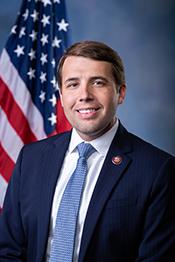
United States · Official source
2,301 records where Rep. Pappas, Chris [D-NH-1] is listed as a sponsor, author, or other actor. Search with topics and years
United States · United States Congress · 18 March 2025
United States · United States Congress · 14 March 2025
United States · United States Congress · 14 March 2025
Maintaining and Enhancing Hydroelectricity and River Restoration Act This bill establishes a new investment tax credit in the amount of 30% of the basis of any hydropower improvement property. The bill defines hydropower improvement property as property that adds or improves fish passage at a qualified dam; maintains or improves the quality of the water retained or released by a qualified dam; promotes downstream sediment transport and habitat maintenance; upgrades, repairs, or reconstructs a qualified dam to meet safety and security standards; improves public uses of, and access to, public waterways impacted by a qualified dam; removes an obsolete river obstruction; or places into service an approved remote dam. Further, written approval for hydropower improvement property must be obtained from the Federal Energy Regulatory Commission or state or local officials prior to January 1, 2032. The bill also allows an election to claim the investment tax credit for qualified progress expenses for some types of hydropower improvement property in advance of such property being placed into service. Any investment tax credit amount claimed for qualified progress expenses reduces the amount of the investment tax credit that may be claimed once the hydropower improvement property is placed into service. The bill authorizes certain entities, including tax-exempt and governmental entities, to treat the investment tax credit for hydropower improvement property as a payment of tax and receive a refund of any overpayment (also known as elective pay). Finally, the investment tax credit for hydropower improvement property may be transferred (i.e., sold).
United States · United States Congress · 14 March 2025
United States · United States Congress · 14 March 2025
United States · United States Congress · 14 March 2025
Correcting Guam's History in the PACT Act This bill expands eligibility for a presumption of service-connection for specified diseases associated with exposure to certain herbicide agents. Under a presumption of service-connection, specific conditions diagnosed in certain veterans are presumed to have been caused by the circumstances of their military service. Health care benefits and disability compensation may then be awarded. Under the bill, service performed in Guam or its territorial waters between August 15, 1958, and July 31, 1980, provides a veteran who has a specified disease that is associated with exposure to certain herbicide agents with eligibility for a presumption of service-connection. (Under current law, the eligible time frame for service in Guam is between January 9, 1962, and July 31, 1980.)
United States · United States Congress · 14 March 2025
United States · United States Congress · 14 March 2025
Veteran Caregiver Reeducation, Reemployment, and Retirement Act This bill expands support and assistance provided to family caregivers under the Program of Comprehensive Assistance for Family Caregivers administered by the Department of Veterans Affairs (VA). First, the bill extends the period of medical care coverage for primary family caregivers to include the 180-day period following the removal of their designation as a caregiver under the program, unless such individuals (1) were dismissed from the program for fraud, abuse, or mistreatment; or (2) are entitled to Medicare. Next, the VA must provide bereavement counseling and support to family caregivers following the death of a veteran receiving care under the program. The VA must also provide retirement planning services to primary family caregivers and study the feasibility and advisability of establishing a retirement plan or retirement savings for caregivers. Further, unless they were discharged for fraud, abuse, or mistreatment, the VA must provide to primary family caregivers (1) assistance returning to the workforce upon discharge or dismissal from the program, (2) support in transitioning from caregiving, and (3) specified employment assistance during their tenure as a caregiver and for the following 180-days. The VA must partner with the Department of Labor to study and report on the feasibility and advisability of conducting a program to assist primary caregivers in returning to the workforce. Finally, the Government Accountability Office must report on the VA’s efforts supporting family caregivers in transitioning from caregiving.
United States · United States Congress · 14 March 2025
Veterans' Compensation Cost-of-Living Adjustment Act of 2025 This bill requires the Department of Veterans Affairs (VA) to increase the amounts payable for wartime disability compensation, additional compensation for dependents, the clothing allowance for certain disabled veterans, and dependency and indemnity compensation for surviving spouses and children. Specifically, the VA must increase the amounts by the same percentage as the cost-of-living increase in benefits for Social Security recipients that is effective on December 1, 2025. The bill requires the VA to publish the amounts payable, as increased, in the Federal Register. The VA is authorized to make a similar adjustment to the rates of disability compensation payable to persons who have not received compensation for service-connected disability or death.
United States · United States Congress · 14 March 2025
Homes for Every Local Protector, Educator, and Responder Act of 2025 or the HELPER Act of 2025 This bill establishes a program administered by the Department of Housing and Urban Development to provide mortgage assistance to law enforcement officers, elementary and secondary school teachers, firefighters, or other first responders. Specifically, these individuals may be eligible for a first-time mortgage on a primary family residence with no down payment. Instead, the mortgage is subject to a one-time, up-front mortgage insurance premium.
United States · United States Congress · 11 March 2025
Metastatic Breast Cancer Access to Care Act This bill expedites payment of Social Security Disability Insurance (SSDI) benefits and eligibility for Medicare coverage for those with metastatic breast cancer (i.e., breast cancer that has spread to other sites in the body). Specifically, the bill eliminates the 5-month waiting period for SSDI benefits and the subsequent 24-month waiting period for Medicare coverage for individuals with metastatic breast cancer. Under current law, individuals generally must wait 5 months after the onset of disability to begin receiving SSDI benefits and an additional 24 months to become eligible for Medicare.
United States · United States Congress · 11 March 2025
Resident Education Deferred Interest Act or the REDI Act This bill allows borrowers in medical or dental internships or residency programs to defer student loan payments until the completion of their programs.
United States · United States Congress · 11 March 2025
United States · United States Congress · 11 March 2025
Caring for Survivors Act of 2025 This bill increases the monthly rate of dependency and indemnity compensation payable to surviving spouses through the Department of Veterans Affairs (VA). Dependency and indemnity compensation is a monthly payment made to eligible survivors (i.e., spouses, parents, or children) of (1) certain veterans who died as a result of a service-connected condition; (2) service members killed while on active military duty or active or inactive duty for training; or (3) veterans who did not die from a service-connected condition, but were totally disabled by a service-connected disability for a certain period of time. The bill also (1) reduces, from 10 years to 5 years, the period of time that certain veterans must have been rated totally disabled due to a service-connected disability in order for a survivor to qualify for benefits; and (2) specifies the amount that is payable to survivors of veterans who were rated totally disabled for a period of less than 10 years before their death.
United States · United States Congress · 11 March 2025
United States · United States Congress · 10 March 2025
25th Anniversary of 9/11 Commemorative Coin Act This bill directs the Department of the Treasury to mint and issue coins to commemorate the 25th anniversary of the September 11, 2001, terrorist attacks on the United States and the establishment of the National September 11 Memorial and Museum at the World Trade Center. The sale of all coins issued under this bill must include a surcharge to be paid to the National September 11 Memorial and Museum at the World Trade Center to support operations and maintenance. However, if the issuance of this commemorative coin exceeds certain annual limits, no surcharge may be included.
United States · United States Congress · 10 March 2025
United States · United States Congress · 10 March 2025
United States · United States Congress · 10 March 2025
United States · United States Congress · 10 March 2025
No Pay for Congress During Default or Shutdown Act This bill withholds or eliminates the pay of Members of Congress for any day that the public debt limit is reached or there is a government shutdown. During the 119th Congress, any salary earned by Members during these events must be held in escrow and released on the last day of that Congress. For subsequent Congresses, a Member shall not be paid for any day that these events occur. (Some exceptions apply.)
United States · United States Congress · 10 March 2025
Feed Our Families Act of 2025 This bill provides appropriations for carrying out the Food and Nutrition Act of 2008 during the first 90-day period of a lapse in discretionary appropriations for carrying out the act during any fiscal year beginning after FY2024. The Food and Nutrition Act of 2008 is the authorizing statute for several Department of Agriculture nutrition and food assistance programs, including the Supplemental Nutrition Assistance Program (SNAP).
United States · United States Congress · 6 March 2025
Audio-Only Telehealth Access Act of 2025 This bill permanently allows for Medicare coverage of audio-only telehealth services for evaluation and management and behavioral health services.
United States · United States Congress · 6 March 2025
United States · United States Congress · 5 March 2025
United States · United States Congress · 5 March 2025
TAP Promotion Act This bill requires that pre-separation counseling under the Transition Assistance Program include a presentation that promotes the benefits available to veterans from the Department of Veterans Affairs (VA). The bill also requires the VA to annually report on the presentation to (1) identify veterans service organizations that participate, (2) provide the number of members of the Armed Forces who attend, and (3) provide any recommendations for changes to the presentation.
United States · United States Congress · 5 March 2025
John R. Lewis Voting Rights Advancement Act of 2025 This bill establishes new criteria for determining which states and political subdivisions must obtain preclearance before changes to voting practices may take effect. Preclearance is the process of receiving preapproval from the Department of Justice (DOJ) or the U.S. District Court for the District of Columbia before making legal changes that would affect voting rights. A state and all of its political subdivisions shall be subject to preclearance of voting practice changes for a 10-year period if, during the previous 25 years: 15 or more voting rights violations occurred in the state; 10 or more violations occurred, at least 1 of which was committed by the state itself; or 3 or more violations occurred and the state administers the elections. A political subdivision as a separate unit shall also be subject to preclearance for a 10-year period if three or more voting rights violations occurred there during the previous 25 years. States and political subdivisions that meet certain thresholds regarding minority groups must preclear covered practices before implementation, such as redistricting. States and political subdivisions must notify the public of changes to voting practices. The bill authorizes DOJ to require states or political subdivisions to provide certain documents or answers to questions for enforcing voting rights. The bill outlines factors courts must consider when hearing challenges to voting practices, such as the extent of any history of official voting discrimination in the state or political subdivision.
United States · United States Congress · 5 March 2025
United States · United States Congress · 4 March 2025
United States · United States Congress · 3 March 2025
United States · United States Congress · 3 March 2025
Safe Schools Improvement Act This bill requires states to direct their local educational agencies (LEAs) to establish policies that prevent and prohibit bullying and harassment of elementary and secondary school students. In particular, these policies must prohibit bullying and harassment based on race, color, national origin, disability, religion, or sex. Sex includes sexual orientation, gender identity, and sex characteristics (including intersex traits). Further, LEAs must provide (1) students, parents, and educational professionals with annual notice of the conduct prohibited in their disciplinary policies; (2) students and parents with grievance procedures that target such conduct; and (3) the public with annual data on the incidence and frequency of that conduct at the school and LEA level. The Department of Education must conduct and report on an independent biennial evaluation of programs and policies to combat bullying and harassment in elementary and secondary schools. The National Center for Education Statistics must collect state data to determine the incidence and frequency of the conduct prohibited by LEA disciplinary policies.
United States · United States Congress · 27 February 2025
Community News and Small Business Support Act This bill establishes a temporary business tax credit for expenses incurred by an eligible small business to advertise in local media. The bill also establishes a temporary refundable tax credit for a percentage of wages paid by an eligible employer to local news journalists. (Limitations apply.) Under the bill, an eligible small business (a business with an average of fewer than 50 employees) may claim a tax credit for (1) 80% of local media advertising expenses, up to a maximum of $5,000, in the first year of the tax credit; and (2) 50% of such expenses, up to a maximum of $2,500, in the subsequent four years. (Other conditions and limitations may apply.) The bill also allows an eligible employer to claim each calendar quarter a refundable tax credit against Medicare payroll taxes for (1) 50% of wages paid to a local news journalist in the first four calendar quarters of the tax credit, and (2) 30% of such wages paid in each calendar quarter in the subsequent four years. However, under the bill, the tax credit for local news journalist wages is limited to $12,500 in wages paid per local news journalist per quarter and the wages of no more than 1,500 local news journalists may be included. Further, the tax credit may not be claimed for wages for which certain other tax credits (e.g., the tax credit for paid family and medical leave) are claimed. (Other conditions and limitations may apply.)
United States · United States Congress · 27 February 2025
Governing Unaccredited Representatives Defrauding VA Benefits Act or the GUARD VA Benefits Act This bill imposes fines on individuals for soliciting, contracting for, charging, or receiving any unauthorized fee or compensation with respect to the preparation, presentation, or prosecution of any claim for Department of Veterans Affairs benefits. The attempted commission of such offenses is also punishable by fine.
United States · United States Congress · 27 February 2025
United States · United States Congress · 27 February 2025
Justice for ALS Veterans Act of 2025 This bill extends increased dependency and indemnity compensation to the surviving spouse of a veteran who dies from amyotrophic lateral sclerosis (ALS or Lou Gehrig's disease) regardless of how long the veteran had such disease prior to death. Under current law, such compensation is paid for a service-connected disability that was rated totally disabling for a continuous period of at least eight years immediately preceding death. For purposes of compensation for a surviving spouse of a veteran who dies from ALS, the spouse must have been married to the veteran for a continuous period of eight years or longer prior to the death of the veteran. Additionally, the Department of Veterans Affairs (VA) must report on service-connected disabilities the VA determines should be treated in the same manner as ALS for purposes of dependency and indemnity compensation.
United States · United States Congress · 27 February 2025
Save America's Forgotten Equines Act of 2025 or the SAFE Act of 2025 This bill permanently prohibits the slaughter of equines (e.g., horses and mules) for human consumption. (Current law prohibits the slaughter of dogs and cats for human consumption. This bill extends the prohibition to equines.) Specifically, this bill prohibits a person from knowingly (1) slaughtering an equine for human consumption; or (2) shipping, transporting, possessing, purchasing, selling, or donating an equine to be slaughtered for human consumption or equine parts for human consumption. The bill subjects a violator to a fine. The bill applies to conduct in or affecting interstate or foreign commerce or within the special maritime and territorial jurisdiction of the United States. However, it does not apply to an activity carried out by an Indian for a religious ceremony. As background, in recent years, the appropriations acts have prohibited the Department of Agriculture (USDA) from using federal funds to inspect horses before they are slaughtered for human consumption. Therefore, there are currently no USDA-inspected horse slaughter facilities in the United States.
United States · United States Congress · 27 February 2025
Truck Parking Safety Improvement Act This bill directs the Department of Transportation (DOT) to provide competitive grants for projects that provide public parking for commercial motor vehicles and improve the safety of commercial motor vehicle drivers. States, metropolitan planning organizations, tribal governments, and local governments are eligible for these grants. The grants must be used for projects on federal-aid highways or a facility with reasonable access to such a highway or a freight facility. A grant recipient may not charge a fee to a commercial motor vehicle driver to access a public parking facility that is constructed, opened, maintained, or improved with a grant under this program. In providing grants, DOT must determine that there is a shortage of commercial motor vehicle parking capacity in the project's corridor; the eligible entity has consulted motor carriers, commercial motor vehicle drivers, public safety officials, and private providers of commercial motor vehicle parking regarding the project; the project will likely increase the availability or utilization of commercial motor vehicle parking, facilitate the efficient movement of freight, or improve highway safety, traffic congestion, and air quality; and the eligible entity has demonstrated the ability to provide for the facility's maintenance and operation. To the maximum extent practicable, DOT must select grant projects that maximize the geographic dispersion of new commercial motor vehicle parking capacity across the United States.
United States · United States Congress · 27 February 2025
This joint resolution redesignates the memorial to Robert. E. Lee in Arlington National Cemetery as the Arlington House National Historic Site.
United States · United States Congress · 27 February 2025
Prevent All Soring Tactics Act of 2025 or the PAST Act of 2025 This bill increases protections for horses at shows, exhibitions, sales, or auctions (horse events) to prevent the practice of soring horses. Generally, the soring of horses includes certain actions taken on horses' limbs to produce higher gaits that may cause pain, distress, inflammation, or lameness. Specifically, the bill expands existing soring prohibitions under the Horse Protection Act, including by banning the use of certain action devices (e.g., nonprotective boots) on specified horse breeds. The bill also requires soring inspectors at horse events to be assigned by the Animal and Plant Health Inspection Service (APHIS) of the Department of Agriculture rather than appointed by the management of horse events. APHIS must also license, train, and oversee inspectors to detect and diagnose soring at such events. Additionally, the bill increases penalties for violations of the act. It also directs APHIS to disqualify horses found to be sore from being shown or exhibited for specified periods. Further, APHIS may permanently disqualify violators from participating in horse events after the third or any subsequent violation. By way of background, APHIS issued a rule in 2024 to increase efforts to protect horses from soring practices. However, in 2025, a court vacated parts of the rule as exceeding APHIS' statutory authority (e.g., prohibiting the use of certain action devices) while deeming other parts acceptable (e.g., establishing APHIS-designated inspectors). APHIS subsequently delayed the effective date of the rule to December 31, 2026.
United States · United States Congress · 27 February 2025
Guarding Readiness Resources Act This bill modifies the treatment of funds received by the National Guard Bureau as a reimbursement from a state or other U.S. territory (e.g., Guam) for the use of military property. Specifically, the funds must be credited to (1) the appropriation, fund, or account used in incurring the obligation; or (2) an appropriation, fund, or account currently available for the purposes of which the expenditures were made. Further, the funds may only be used by the Department of Defense for the repair, maintenance, replacement, or other similar functions related directly to assets used by National Guard units while operating under state active duty status.
United States · United States Congress · 26 February 2025
ThinkDIFFERENTLY About Disability Employment Act This bill requires the Small Business Administration (SBA) to (1) provide assistance to individuals with disabilities who desire to become entrepreneurs or to be self-employed, (2) help individuals with disabilities find employment at small businesses; and (3) assist small businesses with hiring such individuals and with accessibility issues applicable to such individuals. The SBA must conduct outreach and education about such activities. The bill establishes reporting requirements with respect to these activities.
United States · United States Congress · 26 February 2025
United States · United States Congress · 26 February 2025
Promoting Access to Diabetic Shoes Act This bill allows a nurse practitioner or physician assistant to fulfill documentation requirements for coverage, under Medicare, of special shoes for diabetic individuals. Under current law, such requirements may be satisfied only by a physician.
United States · United States Congress · 26 February 2025
American Dream and Promise Act of 2025 This bill provides certain non-U.S. nationals ( aliens under federal law) with a path to receive permanent resident status and contains other immigration-related provisions. The Department of Homeland Security (DHS) or the Department of Justice (DOJ) shall provide conditional permanent resident status for 10 years to a qualifying individual who entered the United States as a minor and (1) is deportable or inadmissible, (2) has deferred enforced departure (DED) status or temporary protected status (TPS), or (3) is the child of certain classes of nonimmigrants. The bill imposes various qualifying requirements, such as the individual being continuously physically present in the United States since January 1, 2021, passing a background check, and being enrolled in or having completed certain educational programs. DHS shall remove the conditions placed on permanent resident status granted under this bill if the individual applies and meets certain requirements, such as completing certain programs at an educational institution, serving in the military, or being employed. Furthermore, DHS or DOJ shall provide lawful permanent resident status to certain individuals who had TPS, were eligible for TPS, or were eligible for DED status on certain dates. Such individuals must meet certain requirements and apply for such status within three years of this bill's enactment. This bill also repeals a restriction that bars a state from providing higher education benefits to undocumented individuals unless those benefits are available to all U.S. nationals without regard to residency in the state.
United States · United States Congress · 25 February 2025
United States · United States Congress · 25 February 2025
Ethan's Law This bill establishes a framework to regulate the storage of firearms on residential premises at the federal, state, and tribal levels. At the federal level, the bill establishes statutory requirements for firearms on residential premises to be safely stored if a minor is likely to gain access without permission or if a resident is ineligible to possess a firearm. An individual who violates the requirements is subject to criminal penalties. A firearm stored in violation of the requirements is subject to seizure and forfeiture. At the state and tribal levels, the bill requires the Department of Justice to award grants to implement functionally identical requirements for the safe storage of firearms.
United States · United States Congress · 24 February 2025
Delivering for Rural Seniors Act of 2025 This bill directs the Food and Nutrition Service (FNS) to award competitive grants to state agencies under a home delivery pilot program for participants in the Commodity Supplemental Food Program (CSFP). As background, the CSFP works to improve the health of low-income persons at least 60 years of age by supplementing their diets with nutritious Department of Agriculture foods. Under the pilot program, a state agency must distribute grant funds to an eligible entity (i.e., a local agency or subdistributing agency) to operate projects that facilitate home delivery of commodities to CSFP participants. Grant funds may be used for costs associated with transportation and distribution of commodities to CSFP participants, staffing required to operate home delivery services, and home delivery outreach to CSFP participants or potential participants. A state agency must prioritize eligible entities that serve CSFP participants who reside in rural areas. A state agency must also submit an annual report to FNS about the project, including best practices regarding the use of home delivery to improve the effectiveness of the CSFP.
United States · United States Congress · 24 February 2025
This resolution expresses condolences to the families, friends, and loved ones of the victims of the crash of American Eagle Flight 5342 and the U.S. Army helicopter flying under the call sign PAT 25 near Ronald Reagan Washington National Airport on January 29, 2025. The resolution also commends the heroic actions of the first responders, emergency services personnel, and all those who aided in the recovery efforts.
United States · United States Congress · 24 February 2025
United States · United States Congress · 24 February 2025
Dentist and Optometric Care Access Act of 2025 or the DOC Access Act of 20 25 This bill prohibits private health insurance plans from setting rates for items and services, except for dental cleanings, provided by a doctor of optometry, of dental surgery, or of dental medicine (or an employer of such a doctor) for which the plan does not pay a substantial amount. Additionally, an agreement between a plan and such a doctor for limited scope dental or vision benefits may last longer than two years only with the prior acceptance of the doctor for each term extension. Plans also may not restrict such a doctor's choice of laboratories or suppliers. Such doctors may elect to waive the application of the payment amount and choice of laboratories provisions of this bill. The bill does not supersede state laws regarding health insurers and dental or vision benefit plans.
United States · United States Congress · 24 February 2025
Pay Our Coast Guard Parity Act of 2025 This bill provides continuing appropriations to the Coast Guard for pay and benefits when there is a Coast Guard-specific funding lapse. Under the bill, a Coast Guard-specific funding lapse occurs when (1) a bill providing appropriations for the Coast Guard for a fiscal year has not been enacted before the beginning of that fiscal year, and no joint resolution providing continuing appropriations for the Coast Guard is in effect; and (2) a bill providing appropriations for the Department of Defense (DOD) for the fiscal year has been enacted before the beginning of the fiscal year, or a joint resolution providing continuing appropriation for DOD is in effect. If a Coast Guard-specific funding lapse occurs, the bill provides appropriations to the Coast Guard for pay and allowances for military members of the Coast Guard who perform active service or inactive-duty training; pay and benefits for certain civilian employees and contract employees; the payment of a death gratuity; payments for travel related to funerals, the dignified transfer of remains, and unit memorial services; and the temporary continuation of the basic allowance for housing for dependents of members of the Coast Guard dying on active duty. The bill generally provides the appropriations to the Coast Guard until the earlier of the enactment of specified Coast Guard appropriations legislation, the termination of the availability of appropriations for DOD, or two weeks after the beginning of the Coast Guard-specific funding lapse.