Bill· HRH.R. 5434 (119th)referred
988 LGBTQ+ Youth Access Act of 2025
United States · United States Congress · 17 September 2025
The world's political record
Person
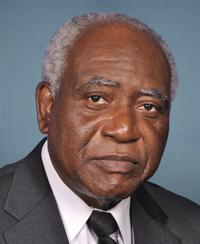
United States · Official source
8,143 records where Rep. Davis, Danny K. [D-IL-7] is listed as a sponsor, author, or other actor. Search with topics and years
United States · United States Congress · 17 September 2025
United States · United States Congress · 17 September 2025
This joint resolution proposes a constitutional amendment authorizing Congress and the states to (1) regulate and impose reasonable viewpoint-neutral limitations on the raising and spending of money by candidates and others to influence elections; and (2) regulate and enact public campaign financing systems, including those designed to restrict the influence of private wealth by offsetting the raising and spending of money by candidates and others with increased public funding. The amendment grants Congress and the states the power to implement and enforce this amendment by legislation. They are allowed to distinguish between natural persons and corporations or other artificial entities created by law, including by prohibiting such entities from spending money to influence elections.
United States · United States Congress · 16 September 2025
United States · United States Congress · 16 September 2025
United States · United States Congress · 16 September 2025
United States · United States Congress · 15 September 2025
George Floyd Justice in Policing Act of 2025 This bill addresses a wide range of policies and issues regarding policing practices and law enforcement accountability. It increases accountability for law enforcement misconduct, restricts the use of certain policing practices, enhances transparency and data collection, and establishes best practices and training requirements. The bill enhances existing enforcement mechanisms to remedy violations by law enforcement. Among other things, it does the following: lowers the criminal intent standard—from willful to knowing or reckless—to convict a law enforcement officer for misconduct in a federal prosecution, limits qualified immunity as a defense to liability in a private civil action against a law enforcement officer, and grants administrative subpoena power to the Department of Justice (DOJ) in pattern-or-practice investigations. It establishes a framework to prevent and remedy racial profiling by law enforcement at the federal, state, and local levels. It also limits the unnecessary use of force and restricts the use of no-knock warrants, chokeholds, and carotid holds. The bill creates a national registry—the National Police Misconduct Registry—to compile data on complaints and records of police misconduct. It also establishes new reporting requirements, including on the use of force, officer misconduct, and routine policing practices (e.g., stops and searches). Finally, it directs DOJ to create uniform accreditation standards for law enforcement agencies and requires law enforcement officers to complete training on racial profiling, implicit bias, and the duty to intervene when another officer uses excessive force.
United States · United States Congress · 15 September 2025
United States · United States Congress · 15 September 2025
United States · United States Congress · 15 September 2025
United States · United States Congress · 11 September 2025
United States · United States Congress · 11 September 2025
Supporting Early-childhood Educators' Deductions Act of 2025 or the SEED Act of 2025 This bill expands eligibility for the above-the-line federal tax deduction for certain eligible educator expenses to include early childhood educators. (An above-the-line tax deduction is subtracted from gross income to calculate adjusted gross income.) Under current law, kindergarten through grade 12 teachers, instructors, counselors, principals, or aides in schools that provide elementary or secondary education are allowed an above-the-line tax deduction of up to $300 (in 2025 and adjusted annually) for certain unreimbursed professional development and classroom expenses. (Other conditions apply.) The bill expands eligibility for the tax deduction for such educator expenses to include early childhood educators in schools that provide early childhood (pre-kindergarten) education.
United States · United States Congress · 11 September 2025
United States · United States Congress · 10 September 2025
United States · United States Congress · 10 September 2025
United States · United States Congress · 10 September 2025
United States · United States Congress · 10 September 2025
Reforming and Enhancing Sustainable Updates to Laboratory Testing Services Act of 2025 or the RESULTS Act This bill requires the use of particular data from the private sector to inform Medicare payment rates for certain widely available laboratory tests. Specifically, the Centers for Medicare & Medicaid Services (CMS) must contract with an entity that maintains a database of claims data for clinical diagnostic laboratory tests that (1) are not advanced diagnostic tests, and (2) were furnished by more than 100 providers and suppliers of such services over a specified six-month period (i.e., widely available tests). The database must meet specified requirements, such as having data that is representative of the entire country and from more than 50 private payors and claims administrators. The contracted entity must be a nonprofit entity that is not affiliated with any government agency, any insurance issuer or provider, or any other organization in the health care sector. Beginning January 1, 2028, the CMS must use the information obtained from the database to inform Medicare payment rates for these widely available laboratory tests. The bill additionally specifies processes for determining payment rates for laboratory tests that are not advanced diagnostic tests, are not widely available, and lack adequate claims data. The CMS must use certain existing processes to set appropriate rates. The bill also delays scheduled payment reductions for laboratory tests until 2028 and allows for judicial and administrative review of payment rates.
United States · United States Congress · 9 September 2025
United States · United States Congress · 8 September 2025
Sickle Cell Disease Comprehensive Care Act This bill allows state Medicaid programs to establish health homes to provide coordinated care for individuals with sickle-cell disease. (Under current law, state Medicaid programs may establish health homes to provide coordinated care for individuals with specified chronic conditions.) States must ensure that such care includes dental and vision services. The Centers for Medicare & Medicaid Services must issue best practices for states on how to design and implement such health homes.
United States · United States Congress · 8 September 2025
United States · United States Congress · 15 August 2025
United States · United States Congress · 5 August 2025
United States · United States Congress · 5 August 2025
Deceptive Practices and Voter Intimidation Prevention Act of 2025 This bill generally prohibits deceptive communications and voter interference regarding federal elections. Specifically, the bill prohibits any person, within 60 days before a federal election, from communicating, causing to be communicated, or producing for communication certain information on voting, if the person (1) knows such information to be materially false, and (2) has the intent to impede or prevent another person from voting in an election. Additionally, the bill prohibits any person, within 60 days before a federal election, from using an artificial intelligence system to produce certain information on voting, if the person has the intent to use the system to (1) produce false information, and (2) impede or prevent another person from voting in an election. The bill also prohibits hindering, interfering with, or preventing voting or registering to vote. A private right of action for preventive relief is established for persons aggrieved by violations of these prohibitions. Criminal penalties are also established for violations. If the Department of Justice (DOJ) receives a credible report that materially false information has been or is being communicated in violation of the prohibitions on deceptive communications, and state and local election officials have not adequately communicated corrected information, then DOJ must communicate to the public accurate information designed to correct the materially false information. The bill extends the prohibition on certain types of intimidation in federal elections to also prohibit intimidation for processing ballots or tabulating, canvassing, or certifying votes.
United States · United States Congress · 5 August 2025
United States · United States Congress · 1 August 2025
Lowering Obstacles to Achievement Now Act or the LOAN Act This bill revises federal student aid programs, including the Federal Pell Grant program and the Public Service Loan Forgiveness (PSLF) program. It also repeals the education provisions that were enacted under P.L. 119-21 (commonly known as the One Big Beautiful Bill Act). Among other provisions, the bill revises the Federal Pell Grant program by (1) providing funding to increase the maximum award for each eligible student, and (2) allowing income-eligible graduate students to utilize their remaining Pell Grant eligibility toward their first graduate degree. Changes to the PSLF program include (1) reducing the number of monthly loan payments required for loan forgiveness, and (2) removing the requirement that a borrower must be employed in a public service job at the time of forgiveness. The bill makes Dreamer students (i.e., students who have been granted Deferred Action for Childhood Arrivals status and who entered the United States before the age of 18) who meet certain educational criteria eligible for federal financial aid. The bill also (1) establishes refinancing programs for federal and private student loans; (2) creates a new income-driven repayment plan; and (3) repeals origination fees for Direct Subsidized Loans, Direct Unsubsidized Loans, and Direct PLUS Loans. The bill repeals the education provisions that were enacted under P.L. 119-21. For example, the act addressed the amount of federal financial aid available to students by changing the mix and availability of student loans. (For more information, see CRS Report R48727 .)
United States · United States Congress · 1 August 2025
Protecting Health Care and Lowering Costs Act 2025 This bill makes permanent temporary provisions that generally expand eligibility for and increase the amount of the premium tax credit. This bill also repeals multiple Medicaid, Medicare, and health-related tax provisions enacted by the One Big Beautiful Bill Act (OBBBA). Currently, eligible taxpayers may claim the premium tax credit, which applies toward the cost of obtaining health insurance through health insurance exchanges. To qualify, a taxpayer’s household income must meet or exceed 100% of the federal poverty level (FPL) and, after 2025, may not exceed 400% of the FPL (maximum income limit). For 2021-2025, the maximum income limit is eliminated, which generally expands eligibility for the premium tax credit. Further, under current law, the amount of the premium tax credit is partially based on the taxpayer’s household income multiplied by the applicable percentage. The applicable percentage varies depending on which of six income ranges (adjusted for inflation after 2025) the taxpayer’s household income falls within. For 2021-2025, the applicable percentages are lowered and the adjustment of the applicable percentages for inflation is eliminated, which generally increases the amount of the premium tax credit. The bill permanently eliminates the 400% maximum income limit, lowers the applicable percentages, and eliminates the inflation adjustment for the applicable percentages. Finally, the bill repeals multiple Medicaid, Medicare, and health-related tax provisions enacted by the OBBBA, including certain Medicare and Medicare eligibility and verification requirements, the reduced window for retroactive Medicaid coverage, and premium tax credit verification requirements.
United States · United States Congress · 1 August 2025
United States · United States Congress · 29 July 2025
Enhance Access To SNAP Act of 2025 or the EATS Act of 2025 This bill expands eligibility for the Supplemental Nutrition Assistance Program (SNAP) for certain students. Specifically, the bill removes the restriction on SNAP eligibility for students to allow otherwise eligible students who are attending institutions of higher education (IHEs) at least half time to participate in SNAP. Under current law, students 18-49 years old are restricted from participating in SNAP, with exceptions (e.g., caring for a child under the age of 6 or employed for at least 20 hours a week). The Consolidated Appropriations Act, 2021 temporarily exempted some students from certain SNAP eligibility requirements; these temporary student exemptions expired after the end of the COVID-19 public health emergency on May 11, 2023. Further, the bill provides that students enrolled at least half time in a recognized school, training program, or IHE constitute individual households (not residents of institutions ) and may be eligible for SNAP benefits. (Participation in SNAP is limited to households.)
United States · United States Congress · 29 July 2025
United States · United States Congress · 29 July 2025
United States · United States Congress · 25 July 2025
United States · United States Congress · 23 July 2025
United States · United States Congress · 23 July 2025
United States · United States Congress · 23 July 2025
United States · United States Congress · 23 July 2025
Choosing Our Own Lives Over Fast Firearms Act or the COOL OFF Act This bill establishes a three-day waiting period for certain handgun transfers. Specifically, the bill makes it unlawful for a licensed importer, manufacturer, or dealer to sell or transfer a handgun to an unlicensed individual unless three business days have elapsed since the licensee initiated a background check. A violator is subject to criminal penalties—a fine, up to one year in prison, or both. Additionally, the bill makes it unlawful for an unlicensed individual to receive a handgun from another unlicensed individual unless at least three business days have elapsed since the recipient most recently offered to take possession of the handgun. A violator is subject to criminal penalties—a fine, up to five years in prison, or both. The three-day waiting period does not apply to certain handgun transfers, such as for a loan between spouses for a lawful purpose.
United States · United States Congress · 23 July 2025
This bill designates the community-based outpatient clinic of the Department of Veterans Affairs in Bloomington, Illinois, as the Andrew Jackson Smith Medal of Honor Department of Veterans Affairs Clinic.
United States · United States Congress · 23 July 2025
Freedom to Move Act This bill directs the Department of Transportation to award competitive five-year grants (i.e., Freedom to Move Grants) to states, local governments, transit agencies, and nonprofit organizations in both rural and urban areas to cover the lost fare revenue for fare-free public transportation and improve public transportation. Grants must be used to support (1) implementing a fare-free transit program; and (2) efforts to improve public transportation, particularly in underserved communities, such as costs associated with efforts to provide more safe, frequent, and reliable bus service, including bus stop safety and accessibility improvements, and pedestrian and bike shelters.
United States · United States Congress · 22 July 2025
United States · United States Congress · 22 July 2025
United States · United States Congress · 22 July 2025
United States · United States Congress · 21 July 2025
United States · United States Congress · 17 July 2025
United States · United States Congress · 17 July 2025
United States · United States Congress · 17 July 2025
United States · United States Congress · 17 July 2025
United States · United States Congress · 16 July 2025
This resolution expresses the sense that adaptations to and protections from extreme weather conditions must be developed and deployed rapidly and equitably, with consideration for the physical and mental health needs of current and future generations of young people.
United States · United States Congress · 16 July 2025
United States · United States Congress · 16 July 2025
United States · United States Congress · 16 July 2025
United States · United States Congress · 15 July 2025
Epstein Files Transparency Act This bill requires the Department of Justice (DOJ) to publish (in a searchable and downloadable format) all unclassified records, documents, communications, and investigative materials in DOJ's possession that relate to the investigation and prosecution of Jeffrey Epstein. This includes (1) materials that relate to Ghislaine Maxwell, (2) flight logs and travel records, and (3) individuals named or referenced (including government officials) in connection with the investigation and prosecution of Jeffrey Epstein. DOJ is permitted to withhold certain information such as the personal information of victims and materials that would jeopardize an active federal investigation. Additionally, not later than 15 days after the required publication, DOJ must report to Congress (1) all categories of information released and withheld, (2) a summary of any redactions made, and (3) a list of all government officials and politically exposed individuals named or referenced in the published materials.
United States · United States Congress · 15 July 2025