Bill· HRH.R. 1894 (119th)referred
FISH Act of 2025
United States · United States Congress · 6 March 2025
The world's political record
Person
United States · Official source
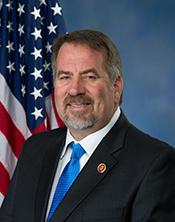
2,598 records where Rep. LaMalfa, Doug [R-CA-1] is listed as a sponsor, author, or other actor. Search with topics and years
United States · United States Congress · 6 March 2025
United States · United States Congress · 5 March 2025
United States · United States Congress · 5 March 2025
Disaster Mitigation and Tax Parity Act of 2025 This bill excludes from gross income, for federal income tax purposes, payments received from a state catastrophe loss mitigation program by an individual for the purpose of making improvements to the individual’s property that mitigate the impact of certain disasters. Under current law, individuals may exclude from gross income, for federal income tax purposes, payments received under the Robert T. Stafford Disaster Relief and Emergency Assistance Act or the National Flood Insurance Act (as in effect on April 15, 2005) for hazard mitigation. (Some exceptions apply.) Further, under current law, such payments do not increase the basis of the property for which the payments are made. The bill allows a similar exclusion from gross income for certain payments received by an individual from a program established by a state (or any political subdivision or instrumentality of the state), a joint powers authority, or an entity that was established by the state to provide essential or basic property insurance and is regulated by the state. Under the bill, such payments must be for making improvements to the individual’s property for the sole purpose of reducing damage that would be done to the property by a windstorm, earthquake, flood, or wildfire. Finally, the bill provides that such payments from a state catastrophe loss mitigation program do not increase the basis of the property for which the payments are made.
United States · United States Congress · 27 February 2025
Second Amendment For Every Registrable Voter Act or the SAFER Voter Act This bill reduces the minimum age—from 21 years to 18 years—at which an individual may obtain a handgun from a federally licensed gun dealer, manufacturer, importer, or collector.
United States · United States Congress · 27 February 2025
United States · United States Congress · 27 February 2025
Tribal Labor Sovereignty Act of 2025 This bill excludes Indian tribes and tribal enterprises and institutions on tribal land from requirements for employers under the National Labor Relations Act (NLRA). (Currently under the NLRA, employers may not engage in unfair labor practices and must allow employees to form unions, engage in collective bargaining, and take collective action.)
United States · United States Congress · 27 February 2025
United States · United States Congress · 26 February 2025
Shielding Children's Retinas from Egregious Exposure on the Net Act or the SCREEN Act This bill establishes age-verification requirements for commercial interactive computer services (e.g., websites) that make available content that is harmful to minors (e.g., content that appeals to the prurient interest in nudity or sex, is obscene, or is child pornography). Specifically, the bill requires such services to adopt and utilize technology verification measures to ensure that (1) users of the service are not minors, and (2) minors are prevented from accessing any content on the service that is harmful to minors. Additionally, such services must (1) use the technology to verify a user's age; (2) publish the verification process that the service uses; and (3) subject users' Internet Protocol (IP) addresses, including known virtual proxy network (VPN) IP addresses, to the technology verification measures, unless the service determines a user is not located within the United States. Covered services also must implement data security measures to protect information about individuals collected through the verification process. The Federal Trade Commission must conduct regular audits of such services, issue guidance, and otherwise enforce the requirements of this bill.
United States · United States Congress · 26 February 2025
Defund NPR Act This bill prohibits federal funding of National Public Radio (NPR) or any successor organization. The prohibition includes the payment of dues to or the purchase of programming from NPR by a public broadcast station using federal funds.
United States · United States Congress · 26 February 2025
United States · United States Congress · 25 February 2025
Protecting American Agriculture from Foreign Adversaries Act of 2025 This bill makes changes to the Committee on Foreign Investment in the United States (CFIUS), including by requiring CFIUS to determine whether a national security review is necessary for reportable agricultural land transactions that are referred by the Department of Agriculture (USDA). (CFIUS oversees the national security risks of certain foreign investment in the United States. CFIUS has the authority to review covered transactions, which include mergers, acquisitions, and takeovers that could result in foreign control of a U.S. business; certain investments in businesses involved in critical technologies, critical infrastructure, or sensitive personal data; and certain real estate transactions.) Specifically, the bill directs CFIUS to, after receiving notification from USDA, determine (1) whether a reportable agricultural land transaction is a covered transaction, and (2) whether CFIUS should initiate a national security review or take another action with respect to the transaction. Reportable agricultural land transaction means a transaction (1) that USDA has reason to believe is a covered transaction; (2) that involves the acquisition of an interest in agricultural land by a foreign person of China, North Korea, Russia, or Iran; and (3) with respect to which a foreign person is required to submit a report to USDA regarding their agricultural land transactions. The bill also expands the membership of CFIUS to include the Secretary of Agriculture for covered transactions that involve agricultural land, agricultural biotechnology, or the agriculture industry (e.g., agricultural transportation, storage, and processing).
United States · United States Congress · 24 February 2025
Protecting Life from Chemical Abortions Act This bill nullifies certain changes made by the Food and Drug Administration (FDA) to dispensing requirements for mifepristone. (Mifepristone is a drug that is approved to end pregnancies through 10 weeks gestation when used in conjunction with the drug misoprostol. The procedure is often referred to as medication abortion or the abortion pill.) The FDA regulates mifepristone through the Mifepristone Risk Evaluation and Mitigation Strategy (REMS) program. The program requires health care providers to comply with certain requirements in order to prescribe or dispense mifepristone to end a pregnancy; the program previously included an in-person dispensing requirement that required mifepristone to be directly dispensed to patients in clinics, medical offices, or hospitals. During the COVID-19 public health emergency, the FDA stopped enforcing the in-person dispensing requirement, which allowed mail-order pharmacies to fill and dispense mifepristone prescriptions. In January 2023, the FDA modified program requirements so as to (1) remove the in-person dispensing requirement, and (2) require pharmacies to be program-certified in order to dispense mifepristone. The modifications allow certified retail pharmacies to dispense mifepristone pursuant to prescriptions that are written by certified prescribers. The bill nullifies the January 2023 changes and prohibits the FDA from (1) exercising any enforcement discretion with respect to program requirements, or (2) reducing program protections until every state submits certain data regarding abortions to the Centers for Disease Control and Prevention. The bill also generally prohibits the declaration of a public health emergency with respect to abortions.
United States · United States Congress · 24 February 2025
America Works Act of 2025 This bill expands the applicability of work requirements for Supplemental Nutrition Assistance Program (SNAP) recipients who are able-bodied adults without dependents (ABAWDs). As background, these SNAP recipients have work-related requirements in addition to the general SNAP work registration and employment and training requirements. Specifically, the bill amends the exemptions to this requirement. First, the bill applies the work requirements for ABAWDs to adults who are not over 65 years old, whereas these requirements currently apply to adults who are not over 55 years old. Second, the ABAWD exemption for a parent or household member with responsibility for a dependent child is restricted to a dependent child under the age of seven. Currently, the child must be under the age of 18. Third, the bill repeals the ABAWD exemptions for homeless individuals, veterans, and certain foster care individuals (those who are 24 years old or younger and were in foster care on the date of attaining 18 years of age or a higher age). In addition, under current law, an ABAWD waiver program allows state exemptions based on an area having an unemployment rate of over 10% or an insufficient number of jobs. The bill amends the exemption to require the unemployment rate to be based on the rate for the county, instead of the area. Further, the bill repeals the provision that allows a state exemption if that area does not have a sufficient number of jobs.
United States · United States Congress · 21 February 2025
United States · United States Congress · 18 February 2025
United States · United States Congress · 18 February 2025
Buffalo Soldiers Congressional Gold Medal Act of 2025 This bill provides for a Congressional Gold Medal to be awarded to the Buffalo Soldier regiments (six all-Black cavalry and infantry regiments authorized by Congress in 1866 to serve in the Armed Forces) in recognition of their vital service to the United States.
United States · United States Congress · 18 February 2025
Enhanced Iran Sanctions Act of 2025 This bill imposes sanctions on certain foreign persons (individuals and entities) that are involved in Iran's petroleum sector as well as certain associated persons. The bill also requires or authorizes actions to facilitate the enforcement of sanctions on Iran. Specifically, the bill requires the President to impose visa- and property-blocking sanctions on any foreign person that, after the bill's enactment, knowingly engages in any transaction related to the processing, export, or sale of oil, condensates, gas, liquefied natural gas, or other petrochemical products in whole or in part from Iran. The President must also impose sanctions on certain foreign persons associated with a sanctioned individual or entity. For example, the President must sanction the subsidiaries and corporate officers of a sanctioned business. The bill provides certain exceptions to these sanctions, including specifying that sanctions do not apply to the importation of goods or to conducting or facilitating transactions for humanitarian assistance. The Department of State must establish an interagency working group that shall seek to establish a multilateral contact group to coordinate international efforts to enforce sanctions on Iran. The bill expands the State Department rewards program to authorize a reward payment to any individual who furnishes information leading to the identification of a person (1) subject to sanctions under this bill, or (2) that has attempted or is attempting to evade sanctions under this bill.
United States · United States Congress · 14 February 2025
The resolution urges the E3 (the United Kingdom, France, and Germany) to invoke the snapback of United Nations (UN) sanctions against Iran under UN Security Council Resolution 2231 before the option expires on October 18, 2025. This resolution also (1) recognizes that Iran's possession of a nuclear weapon would threaten U.S. and global security, (2) condemns Iran's repeated violations of certain international commitments related to nuclear weapons, and (3) reaffirms that the United States maintains the right to prevent Iran from acquiring nuclear weapons.
United States · United States Congress · 14 February 2025
Secure Rural Schools Reauthorization Act of 2025 This bill extends and modifies the Secure Rural Schools and Community Self-Determination Act of 2000, including by extending payments made to states and counties containing federal land through FY2026, providing for payments for FY2024 and FY2025, extending the authority of counties to initiate projects using such funds through FY2028, and extending the authority to initiate projects proposed by resource advisory committees through FY2028.
United States · United States Congress · 14 February 2025
Wildfire Response Improvement Act This bill expands certain wildfire management assistance to beyond the time when the fire occurs and requires the Federal Emergency Management Agency (FEMA) to update various programmatic guidance relating to wildfire response and cost-effectiveness criteria for wildfire mitigation projects. Currently, in general, government entities’ costs for fighting wildfires are only eligible for assistance under the Fire Management Assistance Grant (FMAG) Program if the costs are incurred during the incident period (i.e., time during which the fire occurs). The bill requires FEMA to modify the FMAG Program so that assessments and emergency stabilization to protect public safety are eligible for FMAG assistance regardless of when the incident period begins or ends. The bill also requires FEMA to review and update its evaluation criteria for the cost-effectiveness of wildfire mitigation projects proposed under the Building Resilient Infrastructure and Communities program or Hazard Mitigation Grant Program and prioritize projects accordingly. Additionally, FEMA must update its policy guide for the Public Assistance program to include guidance on challenges with wildfire recovery, including the resulting toxicity of drinking water resources.
United States · United States Congress · 13 February 2025
Smithsonian American Women’s History Museum Act This bill authorizes the Smithsonian American Women's History Museum to be located on a particular site within the Reserve of the National Mall in Washington, DC. Specifically, the bill designates the South Monument site as the location for the museum; however, the President may designate an alternative site within 180 days of the bill's enactment. (The site is the undeveloped land across the National Mall from the National Museum of African American History and Culture.) Administrative jurisdiction of the site must be transferred to the Smithsonian Institution. The Board of Regents of the Smithsonian Institution must have the approval of specified federal entities (e.g., the Commission of Fine Arts) to plan, design, and construct a museum building. The bill (1) outlines the criteria for considering site and design proposals, and (2) requires the Smithsonian Institution to reimburse for costs resulting from the building approval process. The bill directs the museum to be dedicated to preserving, researching, and presenting the history, achievements, and lived experiences of biological women in the United States. Under this bill, the museum may not identify, present, describe, or depict any biological male as a female. In carrying out its duties, the museum's advisory council must (1) seek and utilize guidance from a broad array of knowledgeable and respected sources reflecting the diversity of the political viewpoints and authentic experiences held by women in the United States, and (2) seek guidance for the creation and substantial revision of exhibits and programs.
United States · United States Congress · 13 February 2025
This resolution supports the designation of Hawaiian Language Month or 'Ōlelo Hawai'i Month.
United States · United States Congress · 13 February 2025
This concurrent resolution declares that Congress should not impose any new performance fee, tax, royalty, or other charge relating to the public performance of sound recordings on a local radio station for broadcasting sound recordings over the air, or on any business for such public performance of sound recordings.
United States · United States Congress · 13 February 2025
United States · United States Congress · 13 February 2025
This resolution supports the designation of National FFA (Future Farmers of America) Week. It also celebrates the 90th anniversary of New Farmers of America (NFA), which served Black vocational agriculture students in segregated public schools until NFA and FFA became one organization in 1965. The resolution also commemorates the 75th anniversary of the federal charter for the Future Farmers of America.
United States · United States Congress · 13 February 2025
Promoting American Patriotism In Our Schools Act This bill requires local educational agencies (LEAs) to establish, maintain, and enforce policies that require federally funded public elementary and secondary schools to display the U.S. flag, educate students about the U.S. flag, and direct students and staff to recite the Pledge of Allegiance on a daily basis. Specifically, LEAs, as a condition of receiving federal elementary and secondary education funds, must require the following activities at each school: for all students, teachers, and staff to recite the Pledge of Allegiance at the beginning of each school day (with an exception for religious or personal reasons); for the U.S. flag to be prominently displayed in each classroom and gymnasium; and for educational materials on the history, significance, and proper display of the U.S. flag to be incorporated into the civics or history curriculum of each grade level. The bill includes annual certification requirements. Further, the bill authorizes and directs the Department of Education to issue and secure compliance with rules or orders with respect to an LEA that fails to certify (or certifies in bad faith) compliance with the bill's requirements.
United States · United States Congress · 12 February 2025
United States-Israel Defense Partnership Act of 2025 This bill requires or authorizes certain actions to increase defense-related cooperation between the United States and Israel. Specifically, the bill requires the Department of Defense (DOD) to establish a cooperative program, with the concurrence of Israel's Ministry of Defense (MOD), to develop and deploy advanced technologies for countering unmanned systems that threaten the United States and Israel; establish in Israel an office of the Defense Innovation Unit (an organization that focuses on rapidly fielding and scaling commercial technology across the U.S. military); and seek to engage Israel's MOD on the ascension of Israel into the national technology and industrial base (currently defined in law as the persons and organizations engaged in research, development, production, integration, services, or information technology activities conducted within the United States, the United Kingdom, Australia, New Zealand, and Canada). The bill authorizes DOD, upon request of Israel's MOD, to jointly conduct research, development, test, and evaluation (RDT&E) of emerging technologies such as artificial intelligence and robotics to meet defense challenges. Additionally, the bill extends the authority for DOD to (1) carry out RDT&E on a joint basis with Israel to establish anti-tunnel and counter unmanned aerial systems capabilities through 2028, and (2) transfer defense articles intended for use as reserve stocks for Israel through January 1, 2029.
United States · United States Congress · 12 February 2025
United States · United States Congress · 12 February 2025
Give Kids a Chance Act of 2025 This bill expands the Food and Drug Administration’s (FDA’s) authority with respect to research on rare pediatric diseases, including by permitting the FDA to take enforcement action against drug sponsors that fail to satisfy pediatric study requirements and by reauthorizing programs that support pediatric research. Specifically, the bill modifies requirements relating to molecularly targeted pediatric cancer investigations to permit research on new drugs in combination with active ingredients that have already been approved, provided certain conditions are met; permits the FDA to take enforcement action against drug sponsors that fail to comply with pediatric study requirements, if such sponsors demonstrated a lack of due diligence in satisfying the requirement; renews the FDA’s authority to award priority review vouchers to sponsors of new products intended to treat rare pediatric diseases through September 30, 2029; and reauthorizes through FY2027 certain funding for the National Institutes of Health to support priority pediatric research. The bill also provides statutory authority for the FDA’s interpretation of the orphan drug exclusivity period. The bill specifies, consistent with FDA regulations, that the seven-year market exclusivity period for drugs for rare diseases or conditions (i.e., orphan drugs) prohibits the approval of the same drug for the same approved use or indication with respect to the disease or condition. (In Catalyst Pharmaceuticals, Inc. v. Becerra , a court rejected the FDA’s interpretation and held that orphan drug exclusivity extends to all uses or indications for the disease or condition.)
United States · United States Congress · 12 February 2025
This joint resolution nullifies the Energy Conservation Program for Appliance Standards: Certification Requirements, Labeling Requirements, and Enforcement Provisions for Certain Consumer Products and Commercial Equipment rule published by the Department of Energy (DOE) on October 9, 2024. Under the rule, DOE modified its regulations on the energy efficiency of certain types of consumer products (e.g., washing machines and dishwashers) and industrial equipment (e.g., computer room air conditioners). Specifically, it modified certification requirements, labeling requirements, and enforcement provisions for these products and equipment to (1) align reporting requirements with currently applicable energy conservation standards and test procedures, and (2) provide DOE with the information necessary to determine the appropriate classification of products for the application of standards.
United States · United States Congress · 11 February 2025
Protecting Privacy in Purchases Act This bill prohibits payment card networks from using merchant codes that distinguish firearms retailers from general-merchandise retailers or sporting-goods retailers. The Department of Justice must enforce this bill and report annually on the resulting investigations and cases.
United States · United States Congress · 11 February 2025
United States · United States Congress · 10 February 2025
Alpha-gal Allergen Inclusion Act This bill expands the definition of major food allergen to include galactose-alpha-1,3-galactose (commonly known as alpha-gal ). Under current law, food labels generally must identify each major food allergen found in labeled food products. (Certain tick bites cause an allergic condition known as alpha-gal syndrome that can result in an allergy to the alpha-gal molecule, which is found in red meat and other products made from mammals.)
United States · United States Congress · 7 February 2025
United States · United States Congress · 7 February 2025
Family Farm and Small Business Exemption Act This bill restores an exemption for certain family farms and small businesses on the Free Application for Federal Student Aid (FAFSA) form. The bill applies to the net worth of (1) a family farm on which the family resides, or (2) a small business with not more than 100 full-time or full-time equivalent employees that is owned and controlled by the family. Prior to recent changes made to the FAFSA, the net worth of these family farms and small businesses were excluded as assets when calculating a student's financial need to determine federal student aid eligibility. Beginning with the 2024-2025 academic year, the net worth of these farms and businesses are treated as an asset and therefore included in the calculation. This bill restores the exemption to exclude such net worth from the calculation.
United States · United States Congress · 6 February 2025
Natural Disaster Property Protection Act of 2025 This bill increases to $5,000 (from $600) the dollar threshold at which a person engaged in a trade or business is required to file an information return (for federal tax purposes) reporting certain payments related to a natural disaster or extreme weather. Under current law, a person engaged in a trade or business (including a corporation, company, partnership, association, individual, estate, and trust) is required to file an information return for certain payments made during the tax year to another person (but generally not to a corporation) if such payments total (in the aggregate) $600 or more (information reporting threshold). Such payments are reported on the IRS Form 1099 series. Specifically, payments made to nonemployees in exchange for services are reported on IRS Form 1099-NEC (nonemployee compensation). (Some exceptions apply.) Under the bill, the information reporting threshold increases to $5,000 for (1) expenses incurred to mitigate the risk of damage to real property that may result from a natural disaster or extreme weather, and (2) expenses incurred to repair damage to real property caused by a natural disaster or extreme weather.
United States · United States Congress · 6 February 2025
Agriculture Export Promotion Act of 2025 This bill extends the Market Access Program (MAP) and the Foreign Market Development (FMD) Program of the Foreign Agricultural Service (FAS) through FY2029 and increases funding for the programs. Under MAP, FAS provides funds to eligible participants to share the cost of marketing and promotion activities to encourage the development, maintenance, and expansion of commercial export markets for U.S. agricultural commodities. Eligible participants include nonprofit U.S. agricultural trade organizations, state regional trade groups, U.S. agricultural cooperatives, state government agencies, and small businesses. Under the FMD Program, FAS provides funds to nonprofit U.S. agricultural trade organizations to share the cost of overseas marketing and promotion activities. The FMD program focuses on the generic promotion of U.S. commodities, rather than the promotion of branded products.
United States · United States Congress · 6 February 2025
United States · United States Congress · 6 February 2025
Disaster Resiliency and Coverage Act of 2025 This bill establishes a grant program for certain hazard mitigation measures for homes in disaster risk areas and provides a tax credit for up to 30% of expenditures on such mitigation measures. It also excludes from taxable income certain payments for residential hazard mitigation and federal emergency agricultural assistance. The bill requires the Federal Emergency Management Agency (FEMA) to award grants to states and Indian tribal governments for specified hazard mitigation activities on residential properties at a high risk of experiencing a major disaster. FEMA must establish and periodically update disaster risk areas in which homes are eligible for the grant funding. Individual residential households, subject to certain income limitations, may receive up to $10,000 (adjusted for inflation) for eligible hazard mitigation activities, such as reinforcing a roof, installing a flood control system, or reducing flammable vegetation near the home. The bill also provides an income tax credit to individuals and businesses for up to 30% of expenditures on the specified residential mitigation activities eligible under the grant program. Additionally, under current law, payments for disaster relief and payments under federal hazard mitigation programs are excluded from taxable income. The bill specifically excludes from taxable income payments to an individual for hazard mitigation improvements to their residence under any program established or administered by a state or local government. The bill also excludes certain federal emergency and disaster agricultural assistance from taxable income as a type of disaster relief payment.
United States · United States Congress · 6 February 2025
Ski Hill Resources for Economic Development Act This bill allows National Forest System (NFS) units to keep the majority of ski area permit rental fees that were generated within their boundaries and outlines how revenues from those fees may be used. Such fees are collected by the Department of Agriculture (USDA) from ski area operators on NFS land. Within the NFS unit where the fees were generated, USDA must expend (1) 60%-48% of the collected fees for activities such as administration of the ski area permit program, visitor information, or reducing the likelihood of wildfire in or adjacent to a recreation site; and (2) 20% of the collected fees for activities such as repair of a Forest Service-owned facility, habitat restoration, or search and rescue activities. The remainder of the collected fees must be expended by USDA at any NFS unit for any of the activities specified in this bill.
United States · United States Congress · 5 February 2025
AM Radio for Every Vehicle Act of 2025 This bill requires the Department of Transportation (DOT) to issue a rule requiring AM radio capabilities to be standard in all new passenger vehicles. (AM radio is often used to deliver emergency alerts and news and entertainment programming; some newer vehicles do not include AM equipment.) Specifically, this bill applies to passenger vehicles (1) manufactured in the United States for sale in the United States, imported into the United States, or shipped in interstate commerce; and (2) manufactured after the rule's effective date. The rule must require all such vehicles to have devices that can receive signals and play content transmitted by AM stations or digital audio AM stations installed as standard equipment and made easily accessible to drivers. Prior to the rule's effective date, manufacturers that do not include devices that can access AM radio as standard equipment (1) must inform purchasers of this fact through clear and conspicuous labeling, and (2) may not charge an additional or separate fee for AM radio access. DOT may assess civil penalties for any violation of the rule. The Department of Justice may also bring a civil action to enjoin a violation. The rule, including DOT’s authority to enforce it, must expire 10 years after the bill’s enactment. Further, the Government Accountability Office must study and report on the dissemination of emergency alerts to the public, including by conducting an assessment of AM radio relative to other Integrated Public Alert and Warning System communication technologies.
United States · United States Congress · 5 February 2025
Protection of Women in Olympic and Amateur Sports Act This bill requires certified national governing bodies (NGBs) of amateur sports (e.g., USA Gymnastics) to prohibit a person whose sex is male from participating in an amateur athletic competition that is designated for females, women, or girls. Under the bill, male means an individual who has, had, will have—or would have, but for a developmental or genetic anomaly or historical accident—the reproductive system that at some point produces, transports, and utilizes sperm for fertilization.
United States · United States Congress · 4 February 2025
Aerial Firefighting Enhancement Act of 2025 This bill reauthorizes the Department of Defense to sell its excess aircraft and aircraft parts that are acceptable for commercial sale for wildfire suppression purposes. Such authority begins October 1, 2025, and ends October 1, 2035. The bill also provides that such aircraft may be used to deliver water by air in order to suppress wildfire (the previous authority only provided for the delivery of fire retardant). The bill removes the previous limitation on providing international wildfire suppression assistance with such purchased aircraft.
United States · United States Congress · 4 February 2025
Chinese Spy Balloon Assessment Act This bill requires the Department of Defense to consult with the President and report on the effects on national security of surveillance conducted by China via the high-altitude surveillance balloon shot down in the United States in February 2023. The report must be submitted in an unclassified form, but may include a classified annex.
United States · United States Congress · 4 February 2025
No User Fees for Gun Owners Act This bill prohibits a state or local government from imposing any insurance requirement, tax, user fee, or similar charge on the manufacture, import, acquisition, transfer, or continued ownership of a firearm or ammunition. The bill includes an exception for a generally applicable sales tax that is assessed against firearms or ammunition in the same proportion to which the tax applies to other goods or services.
United States · United States Congress · 4 February 2025
American Consumer Awareness of National Source Act or the American CANS Act This bill revises country-of-origin labeling requirements for canned goods. Under current country-of-origin labeling requirements, every article of foreign origin entering the United States must be legibly marked with the English name of the country of origin of the article (with certain exemptions). This bill requires country-of-origin labeling for any agricultural product packaged in a can to (1) appear on the front label of the can; or (2) be stamped, embossed, or printed on the top of the can.
United States · United States Congress · 31 January 2025
Pet and Livestock Protection Act of 2025 This bill directs the Department of the Interior to remove protections for the gray wolf under the Endangered Species Act of 1973 (ESA). Specifically, the bill requires Interior to reissue the final rule titled Endangered and Threatened Wildlife and Plants; Removing the Gray Wolf (Canis lupus) From the List of Endangered and Threatened Wildlife and published on November 3, 2020. The rule removed the gray wolf in the lower 48 United States, except for the Mexican wolf ( C. l. baileyi ) subspecies, from the endangered and threatened species list. However, the U.S. District Court for the Northern District of California vacated the rule on February 10, 2022. As a result, the gray wolf reattained the protection status it had prior to the rule's promulgation. The bill also prohibits the reissuance of the rule from being subject to judicial review.
United States · United States Congress · 31 January 2025
Nancy Gardner Sewell Medicare Multi-Cancer Early Detection Screening Coverage Act This bill allows, beginning in 2028, for Medicare coverage and payment for multi-cancer early detection screening tests that are approved by the Food and Drug Administration and that are used to screen for cancer across many cancer types, if the Centers for Medicare & Medicaid Services determines such coverage is appropriate. Coverage is limited to those under a certain age (age 68 in 2028, increased by one year every year thereafter) and to one test every 11 months.
United States · United States Congress · 31 January 2025
United States · United States Congress · 31 January 2025
This bill prohibits a non-U.S. citizen from voting in a District of Columbia (DC) election and repeals relevant provisions of DC law. Federal law prohibits noncitizens from voting in a federal election; however, in 2022, DC enacted a law allowing noncitizens who meet residency and other requirements to vote in local elections. This bill repeals the DC law, which went into effect on February 23, 2023.