Bill· HRH.R. 9134 (119th)referred
Protecting Student Privacy Act
United States · United States Congress · 3 June 2026
The world's political record
Person
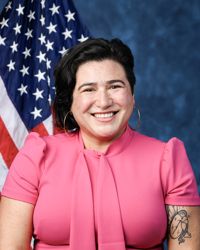
United States · Official source
430 records where Rep. Randall, Emily [D-WA-6] is listed as a sponsor, author, or other actor. Search with topics and years
United States · United States Congress · 3 June 2026
United States · United States Congress · 29 May 2026
United States · United States Congress · 21 May 2026
United States · United States Congress · 20 May 2026
United States · United States Congress · 19 May 2026
This joint resolution prohibits the Centers for Medicare & Medicaid Services (CMS) from testing a new Medicare payment model in certain states that involves a prior authorization process and the use of enhanced technology by third-party contractors to determine whether certain claims should be paid. Specifically, the joint resolution nullifies a notice issued by the CMS on July 1, 2025, titled Medicare Program; Implementation of Prior Authorization for Select Services for the Wasteful and Inappropriate Services Reduction (WISeR) Model . (On May 12, 2026, the Government Accountability Office issued a letter of opinion stating that this notice constituted an agency rule and is therefore subject to the Congressional Review Act.) The CMS selected six states to participate in this model over a six-year period: New Jersey, Ohio, Oklahoma, Texas, Arizona, and Washington. Under the model, contracted companies must process prior authorization requests (i.e., requests for coverage determinations before a service is furnished) for certain services using enhanced technology (e.g., artificial intelligence). Contracted companies are paid based on the share of resulting savings. The CMS aims to test the model's ability to produce accurate results while streamlining the prior authorization process for Medicare claims. The model is based in part on similar processes used for Medicare Advantage claims. CMS began implementing the model on January 1, 2026. This joint resolution prohibits the CMS from continuing to do so.
United States · United States Congress · 15 May 2026
United States · United States Congress · 15 May 2026
This concurrent resolution directs the President to remove U.S. Armed Forces from hostilities against Iran or any part of its government or military unless a declaration of war or authorization to use military force for such purpose has been enacted. The resolution specifies that it shall not be construed to prevent the United States from defending itself, its Armed Forces, its diplomatic facilities, or allied states from imminent attack.
United States · United States Congress · 14 May 2026
United States · United States Congress · 14 May 2026
United States · United States Congress · 13 May 2026
United States · United States Congress · 13 May 2026
United States · United States Congress · 13 May 2026
United States · United States Congress · 12 May 2026
United States · United States Congress · 12 May 2026
United States · United States Congress · 7 May 2026
United States · United States Congress · 7 May 2026
This resolution recognizes the historic struggle of the people of Mexico for independence and freedom, which Cinco de Mayo commemorates, and encourages the people of the United States to observe Cinco de Mayo.
United States · United States Congress · 7 May 2026
United States · United States Congress · 4 May 2026
United States · United States Congress · 29 April 2026
United States · United States Congress · 29 April 2026
United States · United States Congress · 29 April 2026
United States · United States Congress · 28 April 2026
United States · United States Congress · 21 April 2026
United States · United States Congress · 16 April 2026
United States · United States Congress · 14 April 2026
United States · United States Congress · 9 April 2026
United States · United States Congress · 30 March 2026
Provider Reimbursement Stability Act of 2026 This bill allows for larger annual adjustments to the Medicare physician fee schedule. It also requires the Centers for Medicare & Medicaid Services (CMS) to make certain corrections to compensate for expenditures under the fee schedule that exceed a certain amount in a given year, and it limits how much certain adjustment factors may vary each year. Current law prohibits annual adjustments to the Medicare physician fee schedule that would result in a more than $20 million difference between the adjusted amount and the non-adjusted amount of total expenditures. The bill increases this threshold to $54.3 million beginning in 2027, with adjustments for inflation every five years beginning in 2032. Additionally, for certain services, the bill requires the CMS to determine the difference between expenditures based on estimated utilization of the service and expenditures based on actual utilization. If this difference exceeds a certain percentage of total expenditures under the fee schedule, the CMS must reconcile this difference by adjusting payments for the following year. This requirement applies to services for which payment was bundled with another service and there was a separate or add-on payment during the previous year. Finally, the CMS must update the prices and rates of each category of direct costs that affect payments (e.g., prices of equipment) at least every five years, with updates made to each category in the same year. The bill also prohibits the CMS from varying a certain adjustment factor by more than 2.5% each year.
United States · United States Congress · 27 March 2026
United States · United States Congress · 26 March 2026
United States · United States Congress · 26 March 2026
United States · United States Congress · 25 March 2026
United States · United States Congress · 25 March 2026
United States · United States Congress · 24 March 2026
United States · United States Congress · 18 March 2026
United States · United States Congress · 18 March 2026
United States · United States Congress · 17 March 2026
United States · United States Congress · 16 March 2026
United States · United States Congress · 4 March 2026
United States · United States Congress · 4 March 2026
Democracy Is Strengthened by Casting Light On Spending in Elections Act of 2026 or the DISCLOSE Act of 2026 This bill addresses campaign finance, including by expanding the prohibition on campaign spending by foreign nationals, requiring additional disclosures of campaign expenditures, and requiring additional disclosures regarding certain political advertisements. Specifically, the bill expands existing foreign money prohibitions to include disbursements for paid web-based or digital communications and federal judicial nomination communications. It also prohibits foreign nationals from contributing to campaigns related to ballot initiatives and referenda. The Government Accountability Office must, for each four-year election cycle, study and report on the incidence of illicit foreign money in federal elections. Next, the bill makes it unlawful to establish or use a corporation, company, or other entity with the intent to conceal an election contribution or donation by a foreign national. A violator is subject to criminal penalties—a fine, a prison term of up to five years, or both. Covered organizations (e.g., corporations, labor organizations, and political organizations) must, within 24 hours, file reports with the Federal Election Commission to disclose campaign expenditures of more than $10,000 during an election cycle. The bill also requires organizations to provide additional disclosures regarding political advertisements, including the donors who contributed the most money to that organization in the last year.
United States · United States Congress · 4 March 2026
United States · United States Congress · 3 March 2026
United States · United States Congress · 26 February 2026
United States · United States Congress · 26 February 2026
United States · United States Congress · 26 February 2026
United States · United States Congress · 25 February 2026
United States · United States Congress · 25 February 2026
United States · United States Congress · 23 February 2026
United States · United States Congress · 13 February 2026
United States · United States Congress · 12 February 2026
United States · United States Congress · 12 February 2026