Bill· HRH.R. 6056 (119th)referred
International Human Rights Defense Act of 2025
United States · United States Congress · 17 November 2025
The world's political record
Person
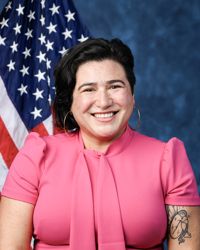
United States · Official source
430 records where Rep. Randall, Emily [D-WA-6] is listed as a sponsor, author, or other actor. Search with topics and years
United States · United States Congress · 17 November 2025
United States · United States Congress · 7 November 2025
United States · United States Congress · 7 November 2025
United States · United States Congress · 7 November 2025
United States · United States Congress · 7 November 2025
United States · United States Congress · 31 October 2025
United States · United States Congress · 31 October 2025
United States · United States Congress · 28 October 2025
United States · United States Congress · 28 October 2025
United States · United States Congress · 24 October 2025
United States · United States Congress · 24 October 2025
United States · United States Congress · 21 October 2025
United States · United States Congress · 17 October 2025
Head Start Shutdown Protection Act of 2025 This bill requires the Department of Health and Human Services to reimburse a state, local government, or school district that uses its funds to maintain participation in the Head Start program or the Early Head Start program during a government shutdown in which there is a lapse in federal appropriations for the programs. The Head Start programs provide comprehensive early childhood education and development services to low-income children. The programs seek to promote school readiness through the provision of educational, health, nutritional, social, and other services.
United States · United States Congress · 17 October 2025
United States · United States Congress · 14 October 2025
Healthy Meals Help Kids Learn Act of 2025 This bill permanently increases the federal reimbursement rates for the school lunch and breakfast programs of the Department of Agriculture. Specifically, beginning November 1, 2025, the bill provides an additional 45 cents per lunch served in the National School Lunch Program and an additional 28 cents per breakfast served in the School Breakfast Program. These amounts must be adjusted annually for inflation beginning July 1, 2026.
United States · United States Congress · 14 October 2025
This resolution requests that the President submit certain information to Congress regarding a reduction in force or the withholding of pay due to the lapse in appropriations (i.e., government shutdown) that began on October 1, 2025. Specifically, the resolution requests that the President submit to Congress any and all documents and communications related to any proposed reduction in force at a federal agency related to the lapse in appropriations, efforts to create a legal determination at the Office of Management and Budget finding or suggesting that the Government Employee Fair Treatment Act of 2019 does not create a self-executing requirement that furloughed federal employees must receive pay for the period in which they were furloughed during a lapse in appropriations immediately after the lapse in appropriations ends, and efforts or plans to withhold pay for the period of the lapse of appropriations for excepted or furloughed federal or District of Columbia employees. The resolution also requests that the President submit to Congress any documents or communications between the President's office, the Vice President's office, the Office of Personnel Management, the Office of Management and Budget, the Office of Special Counsel, and the Merit System Protection Board regarding these topics.
United States · United States Congress · 10 October 2025
This resolution requires the House of Representatives to convene and hold recorded quorum calls during a government shutdown. It also limits recesses and adjournments during a government shutdown. Under the resolution, a government shutdown occurs when there is a lapse in appropriations for any federal agency or department as a result of a failure to enact a regular appropriations bill or a continuing resolution. The resolution requires the House to convene on each day on which a government shutdown is in effect unless a recess or adjournment is permitted. Under the resolution, such a recess or adjournment is only permitted if the House has met for each of the first five consecutive calendar days on which the government shutdown is in effect, the proposed period of adjournment or recess does not last for more than two consecutive calendar days, and the House has met for at least five consecutive calendar days since the expiration of the most recent period of adjournment or recess. The resolution also requires the House to hold at least one recorded quorum call on each day that the House is in session during a government shutdown. Members of the House who fail to record their presence during a quorum call on two or more consecutive days must be fined $500 for a first offense and $2,500 for any subsequent offense unless the failure is due to an illness. A Member may not use official or campaign funds to pay the fine.
United States · United States Congress · 8 October 2025
Federal Employees Civil Relief Act This bill establishes a framework to temporarily suspend certain judicial and administrative proceedings against a federal employee or contractor during a shutdown. Under the bill, a shutdown is a period in which (1) there is more than a 24-hour lapse in appropriations for any federal agency or department because a regular appropriations bill or a continuing resolution has not been enacted, or (2) the debt of the federal government is greater than the statutory limit. A federal worker (i.e., an employee of a government agency or contractor) who is furloughed or required to work without pay during a shutdown may apply to a court for a temporary stay, postponement, or suspension with respect to any payment of rent, mortgage, tax, fine, penalty, insurance premium, student loan repayment, or other civil obligation or liability that the worker owes or would owe during the duration of the shutdown. The bill includes related provisions that restrict evictions, foreclosures, the enforcement of liens, and the termination of insurance policies during a shutdown. It also provides for the deferral of federal income taxes and student loan payments during a shutdown. The Department of Justice may commence a civil action against any person who engages in (1) a pattern or practice of violating the requirements of this bill, or (2) a violation that raises an issue of significant public importance. A person aggrieved by a violation of this bill's requirements may also bring a private right of action.
United States · United States Congress · 8 October 2025
This bill requires the federal government to reimburse state agencies that use state funds to carry out operations necessary to maintain participation in the Special Supplemental Nutrition Program for Women, Infants, and Children (WIC) during a lapse in discretionary appropriations (i.e., government shutdown). WIC provides nutrition-rich foods, nutrition education, and health care and social services referrals to eligible low-income women, infants, and children.
United States · United States Congress · 8 October 2025
Voter Purge Protection Act This bill prohibits a state from removing registrants from the official list of eligible voters unless it meets certain verification and notice requirements. Specifically, the bill prohibits a state from removing a registrant from the official list of eligible voters unless it verifies, on the basis of objective and reliable evidence, that the registrant is ineligible to vote in federal elections. Further, a state is prohibited from considering failure to vote in an election or failure to respond to a notice as evidence of ineligibility to vote. Additionally, the bill requires a state to provide individual registrants who are removed with a notice, which must include the grounds for the removal and information on contesting the removal. Public notice must be provided after conducting any general program to remove the names of ineligible voters.
United States · United States Congress · 3 October 2025
United States · United States Congress · 3 October 2025
Shutdown Guidance for Financial Institutions Act This bill directs financial regulators—including the Federal Reserve Board, the Consumer Financial Protection Bureau, the Office of the Comptroller of the Currency, the Federal Deposit Insurance Corporation, and the National Credit Union Administration—to jointly issue guidance relating to a government shutdown. Specifically, financial regulators must issue guidance encouraging financial institutions to work with consumers and businesses affected by a shutdown, recognize that consumers and businesses affected by a shutdown may lose access to credit and face temporary hardship in making payments on debts, consider efforts to modify terms on existing loans or extend new credit to assist consumers and businesses affected by a shutdown, and take steps to prevent adverse credit information from being reported in a manner that harms consumers affected by a shutdown. In addition, financial regulators must jointly issue a press release to notify financial institutions, consumers, and businesses of this guidance in the event of a government shutdown. Financial regulators must also complete a report after a government shutdown regarding the guidance's effectiveness and update the guidance if any shortcoming are identified in the report.
United States · United States Congress · 3 October 2025
Pay Our Public Shipyard Workers Act This bill provides continuing appropriations to pay public shipyard workers during any period in which interim or full-year appropriations for FY2026 or FY2027 are not in effect (i.e., a government shutdown). Specifically, the bill provides continuing appropriations to provide pay and allowances to civilian and military public shipyard workers who work during the government shutdown. If a government shutdown occurs, the bill provides the continuing appropriations until the earlier of (1) the enactment into law of specified appropriations legislation, or (2) January 1, 2027.
United States · United States Congress · 3 October 2025
United States · United States Congress · 30 September 2025
Fair Pay for Federal Contractors Act of 2025 This bill provides back pay to employees of federal contractors who lost pay due to a lapse in appropriations (i.e., government shutdown) in FY2026. Specifically, the bill provides appropriations for federal agencies that are subject to a lapse in appropriations in FY2026 to adjust the price of contracts to compensate federal contractors for providing back pay to employees who were affected by the lapse in appropriations. The agencies must adjust the price of any contract for which the contractor stopped, suspended, delayed, or interrupted all or part of the work under the contract due to the lapse in appropriations. The price adjustment must compensate the contractor for reasonable costs incurred to (1) compensate employees who were furloughed or laid off, were not working, or experienced a reduction of hours or compensation due to the lapse in appropriations; or (2) restore paid leave taken by employees during the lapse in appropriations if the contractor required or permitted employees to use paid leave as a result of the lapse in appropriations. The maximum amount of weekly compensation of an employee for which an adjustment may be made under this bill may not exceed the lesser of (1) the employee's actual weekly compensation, or (2) $1,442 (or a lesser amount pro-rated for an employee who works less than 40 hours per week). The bill also requires the Office of Federal Procurement Policy to submit a report to Congress on the adjustments made under this bill.
United States · United States Congress · 30 September 2025
United States · United States Congress · 30 September 2025
Federal Firefighter Paycheck Protection Act This bill provides continuing FY2026 appropriations to pay federal firefighters if a government shutdown is in effect. It also prohibits the firefighters from being subject to a reduction in force (RIF) during a government shutdown. Specifically, the bill provides continuing FY2026 appropriations to provide pay and allowances to federal firefighters during any period in which interim or full-year appropriations for FY2026 are not in effect (i.e., a government shutdown). The bill provides the appropriations until the earlier of (1) the enactment of specified appropriations legislation, or (2) January 1, 2027. The bill also prohibits federal firefighters from being removed from the civil service due to a RIF during a government shutdown.
United States · United States Congress · 30 September 2025
Pay Our Military Act This bill provides continuing appropriations for military pay for any period during which interim or full-year appropriations for FY2026 are not in effect (i.e., a government shutdown). Specifically, the bill provides FY2026 continuing appropriations for the pay and allowances of (1) members of the Armed Forces, including reserve components, who perform active service or inactive-duty training during the period; and (2) civilian employees and contractors of the Department of Defense (and the Department of Homeland Security in the case of the Coast Guard when the Coast Guard is not operating as a service in the Department of the Navy) who are providing support to such members of the Armed Forces. If a government shutdown occurs, the bill provides the continuing appropriations until the earlier of (1) the enactment into law of specified appropriations legislation, or (2) January 1, 2027.
United States · United States Congress · 30 September 2025
United States · United States Congress · 26 September 2025
National Guard Proper Use Act This bill prohibits, in accordance with the Posse Comitatus Act, members of the Armed Forces and members of the National Guard from being ordered to enforce immigration laws. Generally, the Posse Comitatus Act prohibits the use of the military for civil law enforcement purposes.
United States · United States Congress · 26 September 2025
United States · United States Congress · 26 September 2025
This bill prohibits the removal of federal employees from the civil service during a government shutdown due to a lapse in discretionary appropriations. If an employee is removed from the civil service in violation of this bill, the employee may elect to be reinstated with back pay on the date on which the lapse in appropriations ends.
United States · United States Congress · 26 September 2025
United States · United States Congress · 19 September 2025
United States · United States Congress · 19 September 2025
United States · United States Congress · 19 September 2025
This joint resolution directs the President to remove U.S. Armed Forces from hostilities against any organization designated on or after February 20, 2025, as a foreign terrorist organization or specially designated global terrorist, any states in which such entities operate, or any non-state organization engaged in illegal drug trafficking unless a declaration of war or authorization to use military force for such purpose has been enacted. The resolution specifies that it shall not be construed to prevent the United States from defending itself from an armed attack or the threat of an imminent armed attack or from using the U.S. Armed Forces in support of civil authorities as part of authorized counternarcotics operations.
United States · United States Congress · 19 September 2025
United States · United States Congress · 18 September 2025
Aviation Funding Stability Act of 2025 This bill provides continuing appropriations to the Federal Aviation Administration (FAA) if (1) an appropriations bill for the FAA has not been enacted before a fiscal year begins, or (2) a joint resolution making continuing appropriations for the FAA is not in effect. Specifically, the bill provides appropriations from the Airport and Airway Trust Fund at the rate of operations that was provided for the prior fiscal year to continue programs, projects, and activities that were funded in the preceding fiscal year. The bill provides the appropriations until the earlier of (1) the date on which the applicable regular appropriations bill for the fiscal year or a joint resolution making continuing appropriations becomes law, or (2) the date that is 30 days after the first day of a lapse in appropriations.
United States · United States Congress · 18 September 2025
United States · United States Congress · 18 September 2025
United States · United States Congress · 18 September 2025
Protecting Free Vaccines Act This bill requires Medicare, Medicaid, the Children's Health Insurance Program (CHIP), and private health insurers to cover, without cost-sharing, vaccines that were recommended by the Centers for Disease Control and Prevention's Advisory Committee on Immunization Practices as of October 25, 2024. The requirement ends on January 1, 2030.
United States · United States Congress · 18 September 2025
United States · United States Congress · 18 September 2025
United States · United States Congress · 18 September 2025
United States · United States Congress · 18 September 2025
Responsible Retirement of Law Enforcement Firearms Act of 2025 or the RRLEF Act of 2025 This bill establishes a framework to limit the transfer of firearms to and purchase from federally licensed gun dealers whose firearms have a short time to crime. The term short time to crime means a period of three years or less between the date of the last known retail sale of a firearm and the date a firearm is recovered in an actual or suspected criminal offense. Specifically, the bill directs the Bureau of Alcohol, Tobacco, Firearms and Explosives (ATF) to notify a state or local law enforcement agency if a firearm transferred by the agency is used, or suspected of being used, in the commission of a criminal offense, as traced by the National Tracing Center. Additionally, the bill directs the ATF to publish annually a list of federally licensed gun dealers who have 25 or more traces of firearms with a short time to crime in at least two of the three previous years. The bill prohibits a state (including the District of Columbia), territory, or local government that receives funds under the Edward Byrne Memorial Justice Assistance Grant Program from transferring a firearm to, or purchasing a firearm from, a dealer on the list. The bill removes limits on the authority of the ATF to disclose firearms tracing data.
United States · United States Congress · 17 September 2025
This joint resolution nullifies the rule titled Patient Protection and Affordable Care Act; Marketplace Integrity and Affordability , which was issued by the Centers for Medicare & Medicaid Services on June 25, 2025. The rule makes several changes to enrollment requirements for health insurance exchanges, including (1) requiring annual open enrollment periods for all exchanges to begin by November 1 and end by December 31, (2) requiring all exchanges to conduct pre-enrollment verification of eligibility for at least 75% of new enrollments through special enrollment periods, and (3) prohibiting Deferred Action for Childhood Arrivals (DACA) recipients from enrolling in plans through exchanges or in state Basic Health Programs (state programs for certain low-income residents). The rule also prohibits individual and small group health insurers from covering certain sex-trait modification procedures as an essential health benefit.
United States · United States Congress · 17 September 2025
This resolution expresses support for the designation of National Estuaries Week.
United States · United States Congress · 17 September 2025
United States · United States Congress · 17 September 2025
This joint resolution proposes a constitutional amendment authorizing Congress and the states to (1) regulate and impose reasonable viewpoint-neutral limitations on the raising and spending of money by candidates and others to influence elections; and (2) regulate and enact public campaign financing systems, including those designed to restrict the influence of private wealth by offsetting the raising and spending of money by candidates and others with increased public funding. The amendment grants Congress and the states the power to implement and enforce this amendment by legislation. They are allowed to distinguish between natural persons and corporations or other artificial entities created by law, including by prohibiting such entities from spending money to influence elections.
United States · United States Congress · 16 September 2025
Pay Our Troops Act of 2026 This bill provides continuing appropriations for military pay for any period during which interim or full-year appropriations for FY2026 are not in effect (i.e., a government shutdown). Specifically, the bill provides FY2026 continuing appropriations for the pay and allowances of (1) members of the Armed Forces, including reserve components, who perform active service during the period; and (2) civilian personnel and contractors of the Department of Defense (and the Department of Homeland Security in the case of the Coast Guard) who are providing support to such members of the Armed Forces. If a government shutdown occurs, the bill provides the continuing appropriations until the earlier of (1) the enactment into law of specified appropriations legislation, or (2) January 1, 2027.