Bill· HRH.R. 5839 (118th)referred
Maritime Border Security Technology Improvement Act
United States · United States Congress · 29 September 2023
The world's political record
Person
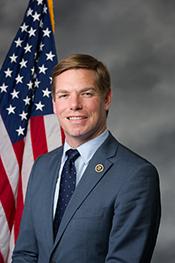
United States · Official source
3,426 records where Rep. Swalwell, Eric [D-CA-15] is listed as a sponsor, author, or other actor. Search with topics and years
United States · United States Congress · 29 September 2023
United States · United States Congress · 28 September 2023
This resolution recognizes the relationship between, and encourages efforts to address, firearm violence and intimate partner violence.
United States · United States Congress · 27 September 2023
Energy Innovation and Carbon Dividend Act of 2023 This bill imposes a fee on the carbon content of fuels, including crude oil, natural gas, coal, or any other product derived from those fuels that will be used so as to emit greenhouse gases into the atmosphere. The fee is imposed on the producers or importers of the fuels and is equal to the greenhouse gas content of the fuel multiplied by the carbon fee rate. The rate begins at $15 per metric ton of CO2-e (i.e., carbon dioxide equivalent) in 2023, increases by $10 each year, and is subject to further adjustments based on the progress in meeting specified emissions reduction targets. The bill also includes exemptions for fuels used for agricultural or nonemitting purposes, exemptions for fuels used by the Armed Forces, rebates for facilities that capture and sequester carbon dioxide, and border adjustment provisions that require certain fees or refunds for carbon-intensive products that are exported or imported. The fees must be deposited into a Carbon Dividend Trust Fund and used for administrative expenses and dividend payments to U.S. citizens or lawful residents. The fees must be decommissioned when emissions levels and monthly dividend payments fall below specified levels. The bill also requires the Department of Energy to enter into agreements with the National Academy of Sciences to study and report on various impacts related to the carbon fee and emissions reduction schedule established by the bill.
United States · United States Congress · 27 September 2023
This bill designates the U.S. courthouse at 350 W. First Street, Los Angeles, California, as the Felicitas and Gonzalo Mendez United States Courthouse.
United States · United States Congress · 27 September 2023
United States · United States Congress · 27 September 2023
This resolution expresses concern about the practice of book banning in the United States.
United States · United States Congress · 27 September 2023
United States · United States Congress · 27 September 2023
Alice Cogswell and Anne Sullivan Macy Act This bill expands special education and related services for children and youth who are deaf, hard of hearing, deafdisabled, blind, visually impaired, or deafblind. The bill establishes additional requirements for states to identify and evaluate children who are deaf, hard of hearing, deafdisabled, blind, visually impaired, or deafblind. A state's closure of a specialized school serving children who are blind or deaf shall count as a reduction of its financial support for special education and related services. The bill also authorizes support, including grants for training special education personnel, to be used in preparing individuals to become qualified teachers and early intervention specialists for children who are deaf, hard of hearing, deafdisabled, or deafblind. The bill establishes within the Department of Education the Anne Sullivan Macy Center on Visual Disability and Educational Excellence to better support students with visual disabilities.
United States · United States Congress · 26 September 2023
This resolution expresses support for the designation of National Clean Energy Week.
United States · United States Congress · 22 September 2023
Tyler Clementi Higher Education Anti-Harassment Act of 2023 This bill addresses harassment at institutions of higher education (IHEs). Specifically, the bill requires each IHE to include in its annual security report a statement of policy regarding harassment on the basis of a student's actual or perceived race, color, national origin, sex (including sexual orientation, gender identity, pregnancy, childbirth, a medical condition related to pregnancy or childbirth, a sex stereotype, and sex characteristics, including intersex traits), disability, or religion. In addition, the Department of Education may award grants to IHEs to initiate, expand, or improve programs to (1) prevent the harassment of students; (2) provide counseling or redress services to students who have been harassed or accused of subjecting other students to harassment; or (3) educate and train students, faculty, or staff to prevent harassment or address harassment if it occurs.
United States · United States Congress · 21 September 2023
Stop Campus Hazing Act This bill requires institutions of higher education (IHEs) that participate in federal student aid programs to report hazing incidents. Specifically, the bill requires each IHE to disclose hazing incidents that were reported to campus security authorities or local police agencies in its annual security report. The bill defines the term hazing to mean any intentional, knowing, or reckless act committed by a person against a student (regardless of that student's willingness to participate), that (1) is connected with an initiation into, an affiliation with, or the maintenance of membership in, an organization (e.g., a club, athletic team, fraternity, or sorority); and (2) causes or is likely to contribute to a substantial risk, above the reasonable risk encountered in the course of participation in the IHE or the organization, of physical injury, mental harm, or degradation. In addition, each IHE must develop and distribute as part of its annual security report a statement of policy regarding the following: (1) a comprehensive program to prevent hazing, which must include information on hazing awareness and hazing prevention; and (2) the IHE's current campus policies on hazing, which must include procedures that comply with specified collection and reporting requirements.
United States · United States Congress · 20 September 2023
Marijuana Opportunity Reinvestment and Expungement Act or the MORE Act This bill decriminalizes marijuana. Specifically, it removes marijuana from the list of scheduled substances under the Controlled Substances Act and eliminates criminal penalties for an individual who manufactures, distributes, or possesses marijuana. The bill also makes other changes, including the following: replaces statutory references to marijuana and marihuana with cannabis , requires the Bureau of Labor Statistics to regularly publish demographic data on cannabis business owners and employees, establishes a trust fund to support various programs and services for individuals and businesses in communities impacted by the war on drugs, imposes an excise tax on cannabis products produced in or imported into the United States and an occupational tax on cannabis production facilities and export warehouses, makes Small Business Administration loans and services available to entities that are cannabis-related legitimate businesses or service providers, prohibits the denial of federal public benefits to a person on the basis of certain cannabis-related conduct or convictions, prohibits the denial of benefits and protections under immigration laws on the basis of an event (e.g., conduct or conviction) relating to possession or use of cannabis that is no longer prohibited under the bill, establishes a process to expunge convictions and conduct sentencing review hearings related to federal cannabis offenses, and directs the Government Accountability Office to study the societal impact of cannabis legalization.
United States · United States Congress · 19 September 2023
John R. Lewis Voting Rights Advancement Act of 2023 This bill establishes new criteria for determining which states and political subdivisions must obtain preclearance before changes to voting practices may take effect. Preclearance is the process of receiving preapproval from the Department of Justice (DOJ) or the U.S. District Court for the District of Columbia before making legal changes that would affect voting rights. A state and all of its political subdivisions shall be subject to preclearance of voting practice changes for a 10-year period if, during the previous 25 years: 15 or more voting rights violations occurred in the state; 10 or more violations occurred, at least 1 of which was committed by the state itself; or 3 or more violations occurred and the state administers the elections. A political subdivision as a separate unit shall also be subject to preclearance for a 10-year period if three or more voting rights violations occurred there during the previous 25 years. States and political subdivisions that meet certain thresholds regarding minority groups must preclear covered practices before implementation, such as redistricting. States and political subdivisions must notify the public of changes to voting practices. The bill authorizes DOJ to require states or political subdivisions to provide certain documents or answers to questions for enforcing voting rights. The bill outlines factors courts must consider when hearing challenges to voting practices, such as the extent of any history of official voting discrimination in the state or political subdivision.
United States · United States Congress · 14 September 2023
United States · United States Congress · 14 September 2023
United States · United States Congress · 14 September 2023
Jumpstart on College Act This bill directs the Department of Education (ED) to award grants to support early-college high schools and dual- or concurrent-enrollment programs. Specifically, ED must award grants to (1) institutions of higher education in partnership with one or more local educational agencies to assist them in establishing or supporting early-college high schools or dual- or concurrent-enrollment programs, and (2) states to assist them in supporting or establishing these schools or programs.
United States · United States Congress · 14 September 2023
United States · United States Congress · 13 September 2023
This resolution expresses support for the designation of National Hispanic-Serving Institutions Week.
United States · United States Congress · 12 September 2023
Humane Cosmetics Act of 2023 This bill generally prohibits animal testing in the evaluation of cosmetic products, and it prohibits the sale or transport of cosmetics developed using animal testing, subject to civil penalties. These prohibitions begin one year after enactment. The bill specifies exceptions to these prohibitions, including if such animal testing (1) is conducted outside the United States to comply with a foreign regulatory authority; (2) is pursuant to a specified finding that there are no nonanimal alternatives to test the safety of a potentially dangerous cosmetic product or ingredient; (3) is of a product or ingredient for a drug or device subject to regulation by the Food and Drug Administration (FDA); or (4) is required for a noncosmetic purpose pursuant to a state, federal, or foreign regulatory authority. Further, no animal-testing evidence may be used to establish the safety of a cosmetic product or ingredient that is regulated by the FDA after the effective date of this bill, subject to limited exceptions.
United States · United States Congress · 12 September 2023
United States · United States Congress · 5 September 2023
Nationwide Right To Unionize Act This bill authorizes labor agreements to require membership in a labor organization (i.e., union) as a condition of employment regardless of state law (thus preempting any state laws that prohibit such agreements).
United States · United States Congress · 1 September 2023
Wildfire Smoke Emergency Declaration Act of 2023 This bill authorizes the President to declare a smoke emergency and provide emergency assistance to affected communities under specified circumstances. Specifically, the President, upon determining that there is, or anticipating that there will be, a significant decrease in air quality due to wildland fire smoke in one or more states, may declare a smoke emergency. The governor or other agency of a state that is or will be affected may request such a declaration. If the President declares a smoke emergency, the Federal Emergency Management Agency (FEMA) and other federal agencies may provide emergency assistance to states and local communities that are or will be affected by the emergency, including grants, equipment, supplies, and personnel and resources for establishing smoke shelters, air purifiers, and additional air monitoring sites. The Small Business Administration may provide grants to any small business concern that loses a significant amount of revenue due to wildland fire smoke in an area in which the President has declared a smoke emergency.
United States · United States Congress · 1 September 2023
Time Off to Vote Act This bill requires an employer, upon the request of an employee, to provide the employee with a minimum of two consecutive hours of paid leave in order to vote in a federal election. The employer may determine the two-hour period, excluding any lunch break or other break. Taking such leave shall not result in the employee losing accrued employment benefits. The bill makes it unlawful for an employer to interfere with the right to take such leave or for an employer to discriminate against an employee for taking such leave. Further, the bill makes it unlawful for any employer to retaliate against an employee for (1) opposing any practice made unlawful by this bill; (2) filing a charge, or instituting or causing to be instituted any proceeding, under or related to this bill; or (3) testifying or preparing to testify in an inquiry or proceeding relating to such leave. The bill specifies penalties for employers who violate these provisions.
United States · United States Congress · 25 August 2023
United States · United States Congress · 25 August 2023
Sustaining Our Democracy Act This bill establishes and provides funds through FY2033 for the State Election Assistance and Innovation Trust Fund for purposes of promoting election activities. Specifically, the bill establishes the Democracy Advancement and Innovation Program, through which the Office of Democracy Advancement and Innovation (also established by this bill) shall make allocations to states for carrying out democracy promotion activities. These activities include improving the administration of federal elections, recruiting and training nonpartisan election officials and poll workers, and increasing voting access. The bill requires each state, in order to receive allocated funds, to (1) submit a plan for approval that describes how the state will distribute resources and carry out democracy promotion activities, and (2) establish uniform and nondiscriminatory state-based administrative complaint procedures. The bill prohibits states from using funds for certain activities, including any activity that diminishes the ability of any eligible voter to participate in the electoral process.
United States · United States Congress · 25 August 2023
Expanding the Voluntary Opportunities for Translations in Elections Act or the Expanding the VOTE Act This bill expands access to voting materials for individuals with limited proficiency in the English language. Section 203 of the Voting Rights Act of 1965 (VRA) requires covered states and political subdivisions to provide voting materials and other language assistance to persons who are American Indian, Asian American, Alaskan Natives, or of Spanish heritage and whose ability to speak or understand English limits electoral participation. A state or political subdivision that is subject to Section 203 is prohibited from providing English-only voting materials in an election. Among other requirements, this bill (1) requires the Department of Justice to issue a notice of prohibition, including the trigger threshold at which the prohibition applies, to certain states and political subdivisions; and (2) requires covered states and political subdivisions to provide written translations of all voting materials, with the consent of any applicable tribal government, to election workers. Additionally, the bill requires the Election Assistance Commission to make incentive grants for states and political subdivisions to provide translated voting materials. The bill also directs the Government Accountability Office to study and report on the impact of (1) reducing the threshold requirement under Section 203 of the VRA, and (2) expanding the definition of language minorities to include native speakers of additional languages.
United States · United States Congress · 8 August 2023
United States · United States Congress · 4 August 2023
This resolution recognizes the importance of Chicano Heritage Month and asserts that Mexican Americans enhance the diversity and strength of the United States.
United States · United States Congress · 4 August 2023
United States · United States Congress · 1 August 2023
United States · United States Congress · 1 August 2023
Visitor Visa Wait Time Reduction Act This bill requires the Department of State to report to Congress on the average waiting time to get a visitor visa interview at each diplomatic or consular post. For each post where the average waiting time is longer than 300 days, the State Department must temporarily reassign personnel at that post to shorten the waiting time.
United States · United States Congress · 1 August 2023
This resolution expresses that the International Atomic Energy Agency plays an indispensable role in strengthening nuclear security and safety around the globe. The resolution also reaffirms that the United States has a vital interest in preventing the spread of nuclear weapons and securing nuclear materials.
United States · United States Congress · 28 July 2023
Kidney Patient Access to Technologically Innovative and Essential Nephrology Treatments Act of 2023 or the Kidney PATIENT Act of 2023 This bill delays a change to the payment methodology under Medicare for oral drugs that are used to treat end-stage renal disease (ESRD). Under current regulations, beginning January 1, 2025, the Centers for Medicare & Medicaid Services will incorporate payments for oral-only ESRD drugs into the ESRD prospective payment system rather than issuing separate payments to ESRD facilities. The bill delays implementation of this policy until January 1, 2033, or until an approved intravenous drug is available, whichever is earlier.
United States · United States Congress · 27 July 2023
Better Collaboration, Accountability, and Regulatory Enforcement for Animals Act of 2023 or the Better CARE for Animals Act of 2023 This bill modifies enforcement provisions under the Animal Welfare Act, including by allowing the Department of Justice (DOJ) to bring civil actions against violators of the act for appropriate relief, such as removing animals, revoking violators' licenses, or issuing civil penalties. DOJ must use the penalties to pay for the temporary care for animals pending the disposition of civil or criminal proceedings that allege violations of the act with respect to such animals.
United States · United States Congress · 27 July 2023
United States · United States Congress · 27 July 2023
Tax Fairness for Workers Act This bill allows an above-the-line tax deduction for union dues and expenses. (An above-the-line deduction is subtracted from gross income and is available whether or not a taxpayer itemizes other deductions.) The bill also reinstates the miscellaneous itemized tax deduction for unreimbursed expenses attributable to the performance of services as an employee (Under current law, all miscellaneous itemized deductions are suspended through 2025).
United States · United States Congress · 27 July 2023
Rebuild America's Schools Act of 2023 This bill provides support for long-term improvements to public elementary and secondary school facilities. First, the bill sets forth allocations to states and establishes a need-based grant program for local educational agencies (LEAs) to improve school facilities. Further, the bill specifies allowable uses of grant funds, including carrying out major repairs, improving indoor air quality, and making facilities accessible to disabled individuals. Additionally, the bill requires LEAs that receive funds for new construction, modernization, or renovation projects to comply with hazard-resistance building codes and performance criteria under the WaterSense program of the Environmental Protection Agency. Further, the bill requires such LEAs to adopt certain green practices (environmental standards) and requires the use of iron, steel, and manufactured products that are made in the United States (Buy America). The bill restores school infrastructure tax credit bonds. The bill also sets forth reporting requirements, including annual reports on grant program projects and a report by the Government Accountability Office that requires a study of the geographic distribution of projects, the impact of selected projects on student and staff health and safety, and the accessibility of projects to high-poverty schools. The bill also establishes the Office of School Infrastructure and Sustainability within the Department of Education. Next, the bill extends through FY2028 the Impact Aid Construction program. Finally, the bill establishes a grant program to assist LEAs with repairing or replacing concrete foundations affected by pyrrhotite (an iron sulfide material linked to crumbling foundations).
United States · United States Congress · 27 July 2023
This resolution condemns Iran for the 1988 massacre of political prisoners. It also urges the Biden Administration and U.S. allies to publicly condemn the massacre and to pressure Iran to provide information to the families of the victims.
United States · United States Congress · 27 July 2023
This concurrent resolution opposes actions that undermine Israel's future as a Jewish, democratic state. The resolution expresses that democracy is at the core of the special relationship between the United States and Israel, and that Congress stands with all Israelis seeking to defend liberal democracy, judicial review, and independent political institutions.
United States · United States Congress · 27 July 2023
Student Loan Interest Elimination Act This bill makes changes to federal student loans, including to interest rates. Specifically, the bill directs the Department of Education (ED) to establish and implement procedures to (1) modify the terms of Federal Direct Loans so that beginning on July 1, 2024, no interest shall accrue on such a loan; and (2) allow a borrower to opt out of this loan modification. Additionally, ED must establish and implement procedures to (1) refinance eligible loans that are not Federal Direct Loans (e.g., privately held Federal Family Education Loans and Perkins Loans), and (2) allow a borrower to opt out of this loan refinancing. The bill outlines the terms and conditions of these refinanced loans, including by prohibiting ED from charging origination fees and specifying that no interest shall accrue on these loans. Next, the bill creates a tiered interest rate (based on the borrower's total adjusted available income) for federal student loans made on or after July 1, 2024. The bill caps this interest rate at 4%. The bill establishes the Education Affordability Trust Fund. ED must deposit all payments made on federal student loans into this trust fund. The Trust Fund Board, as established by this bill, must transfer the profits from investments of this trust fund to ED to pay for the administrative costs of carrying out federal student loan programs. The bill allows ED to use excess amounts of funds in the trust fund to carry out a Supplemental Pell Grant Program.
United States · United States Congress · 26 July 2023
This resolution condemns the Taliban’s ongoing human rights abuses against women and girls, members of religious and ethnic minorities, and members of other vulnerable groups in Afghanistan. It also encourages the Department of State to consider determining whether the Taliban have committed crimes against humanity in connection to their treatment of women and girls.
United States · United States Congress · 26 July 2023
Expedited Federal Permitting for California Act This bill expands a Department of Transportation (DOT) program that allows up to two states to approve environmental reviews for certain transportation projects under state laws and regulations instead of under the National Environmental Policy Act of 1969 (NEPA). Specifically, the bill makes permanent a pilot program that allows DOT to approve a state to participate in a program to conduct environmental reviews and approve permits for certain transportation projects if DOT (with the concurrence of the Council on Environmental Quality) determines that the state laws and regulations are at least as stringent as the federal NEPA requirements. The bill also expands project eligibility for the program to include certain federally funded airport and port development projects.
United States · United States Congress · 25 July 2023
Scientific Integrity Act This bill revises provisions regarding the release of scientific research results by federal agencies. Each agency that funds, conducts, or oversees scientific research must (1) adopt and enforce a scientific integrity policy that includes certain requirements, such as restricting scientific conclusions from being based on political considerations; and (2) submit such policy to the Office of Science and Technology Policy (OSTP) for approval. Agencies must make their policies public, submit them to Congress, and periodically update them with OSTP's approval. The Government Accountability Office shall review implementation of the policies. Each agency shall (1) appoint a Scientific Integrity Officer, (2) establish a process for dispute resolution consistent with the scientific integrity policy, and (3) establish a specified training program for current and new employees.
United States · United States Congress · 25 July 2023
United States · United States Congress · 20 July 2023
Treat and Reduce Obesity Act of 2023 This bill expands Medicare coverage of intensive behavioral therapy for obesity. Specifically, the bill allows coverage for therapy that is provided by (1) a physician who is not a primary care physician; or (2) other health care providers (e.g., physician assistants and nurse practitioners) and approved counseling programs, if provided upon a referral from, and in coordination with, a physician or primary care practitioner. Currently, such therapy is covered only if provided by a primary care practitioner. The bill also allows coverage under Medicare's prescription drug benefit of drugs used for the treatment of obesity or for weight loss management for individuals who are overweight.
United States · United States Congress · 20 July 2023
This concurrent resolution calls for an end to the consumption and trade of dog and cat meat and urges nations to adopt and enforce laws banning that trade.
United States · United States Congress · 19 July 2023
Accelerating Kids' Access to Care Act This bill requires state Medicaid programs to establish a process through which qualifying out-of-state providers may enroll as participating providers for five years without undergoing additional screening requirements, unless the state has an agreement with other states that governs coverage of children with medically complex conditions that is in accordance with specified guidance from the Centers for Medicare & Medicaid Services (CMS). Among other requirements, a qualifying provider must (1) serve individuals under the age of 21; (2) have previously been screened for Medicare participation or for participation in the Medicaid program of the state in which the provider is located; and (3) have been determined by the CMS or state Medicaid program to pose a limited risk of fraud, waste, or abuse.
United States · United States Congress · 18 July 2023
Freedom to Vote Act This bill addresses voter registration and voting access, election integrity and security, redistricting, and campaign finance. Specifically, the bill expands voter registration (e.g., automatic and same-day registration) and voting access (e.g., vote-by-mail and early voting). It also limits removing voters from voter rolls. Next, the bill establishes Election Day as a federal holiday. The bill declares that the right of a U.S. citizen to vote in any election for federal office shall not be denied or abridged because that individual has been convicted of a criminal offense unless, at the time of the election, such individual is serving a felony sentence. The bill establishes certain federal criminal offenses related to voting. In particular, the bill establishes a new criminal offense for conduct (or attempted conduct) to corruptly hinder, interfere with, or prevent another person from registering to vote or helping someone register to vote. Additionally, the bill sets forth provisions related to election security, including by requiring states to conduct post-election audits for federal elections. The bill outlines criteria for congressional redistricting and generally prohibits mid-decade redistricting. The bill addresses campaign finance, including by expanding the prohibition on campaign spending by foreign nationals, requiring additional disclosure of campaign-related fundraising and spending, requiring additional disclaimers regarding certain political advertising, and establishing an alternative campaign funding system for certain federal offices.
United States · United States Congress · 14 July 2023
This joint resolution expresses the sense of Congress that the Equal Rights Amendment, which prohibits discrimination on the basis of sex, was ratified by more than three-fourths of the states and is therefore a valid constitutional amendment, effective January 27, 2020 (the date of Virginia's ratification). The Equal Rights Amendment was originally proposed to the states in 1972. The original proposal included a deadline for ratification of March 22, 1979; Congress subsequently extended the deadline to June 30, 1982. Although the requisite 38 states have ratified the amendment, three of these states did so after the deadlines, and five states subsequently rescinded their ratifications. The status of the amendment has been the subject of litigation.
United States · United States Congress · 13 July 2023