Bill· HRH.R. 6597 (119th)referred
LET’S Protect Workers Act
United States · United States Congress · 10 December 2025
The world's political record
Person
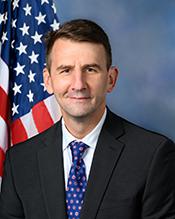
United States · Official source
804 records where Rep. Mrvan, Frank J. [D-IN-1] is listed as a sponsor, author, or other actor. Search with topics and years
United States · United States Congress · 10 December 2025
United States · United States Congress · 9 December 2025
Safeguarding Americans from Fraudulent and Experimental Drugs Act of 2025 or the SAFE Drugs Act of 2025 This bill provides for increased oversight of drug compounding and imposes statutory limits on compounded drugs that are essentially copies of commercially available drugs. Currently, subject to certain requirements, compounded drugs (i.e., drugs that are mixed or altered to meet patient needs) do not require Food and Drug Administration (FDA) approval. Additional limits apply to the compounding of drugs that are essentially copies of commercially available drug products. Under the bill, a compounded drug is essentially a copy of a commercially available drug product if (1) the compounded drug contains any active ingredient found in a commercially available drug product, and (2) there is no change made for an individual patient that results in a significant difference between the compounded drug and the commercially available drug. (The FDA’s current definition of the term also addresses dosage strength and route of administration.) The bill increases the frequency at which a licensed pharmacist or physician may compound a drug that is essentially a copy of a commercially available drug to 20 times per month. Current FDA policy allows four such prescriptions per month. The bill also imposes annual reporting requirements on physicians, facilities, and pharmacies (except hospital-based pharmacies) that compound certain drug products for out-of-state patients more than 20 times per month. Further, the bill subjects certain large-scale outsourcing facilities (i.e., FDA-registered facilities that compound in bulk) to regular inspection and reporting requirements.
United States · United States Congress · 4 December 2025
United States · United States Congress · 20 November 2025
United States · United States Congress · 20 November 2025
United States · United States Congress · 20 November 2025
United States · United States Congress · 19 November 2025
United States · United States Congress · 19 November 2025
United States · United States Congress · 18 November 2025
United States · United States Congress · 17 November 2025
United States · United States Congress · 12 November 2025
Building Resources and Access for Veterans' Mental Health Engagement Act of 2025 or the BRAVE Act of 2025 This bill addresses mental health services and care provided by the Department of Veterans Affairs (VA), including matters related to personnel, Vet Center administration, care for women veterans, and access to care. The bill authorizes the VA to waive the licensure or certification requirement for individual licensed professional mental health counselor appointees for a reasonable period of time. The bill also extends the Staff Sergeant Parker Gordon Fox Suicide Prevention Grant Program and increases the maximum annual grant amount. The VA must provide Vet Centers with guidance for assessing outreach activities and implement processes to periodically assess the extent to which (1) veterans and eligible members of the Armed Forces experience barriers to obtaining services at Vet Centers, and (2) Vet Center staff may encounter barriers to providing services. Among other requirements, the VA must also survey and host listening sessions with women veterans to gauge the effectiveness of the VA’s suicide prevention, lethal-means safety, and mental health resources and messaging campaigns; initiate efforts to modify the Recovery Engagement and Coordination for Health-Veterans Enhanced Treatment (REACH VET) program to incorporate risk factors weighted for women; annually offer a mental health consultation to veterans who are receiving compensation for a service-connected disability relating to a mental health diagnosis; and implement a pilot program to provide access to mental health residential treatment programs for veterans with a spinal cord injury or disorder.
United States · United States Congress · 7 November 2025
United States · United States Congress · 31 October 2025
United States · United States Congress · 31 October 2025
United States · United States Congress · 28 October 2025
United States · United States Congress · 17 October 2025
United States · United States Congress · 14 October 2025
Healthy Meals Help Kids Learn Act of 2025 This bill permanently increases the federal reimbursement rates for the school lunch and breakfast programs of the Department of Agriculture. Specifically, beginning November 1, 2025, the bill provides an additional 45 cents per lunch served in the National School Lunch Program and an additional 28 cents per breakfast served in the School Breakfast Program. These amounts must be adjusted annually for inflation beginning July 1, 2026.
United States · United States Congress · 26 September 2025
This bill prohibits the removal of federal employees from the civil service during a government shutdown due to a lapse in discretionary appropriations. If an employee is removed from the civil service in violation of this bill, the employee may elect to be reinstated with back pay on the date on which the lapse in appropriations ends.
United States · United States Congress · 23 September 2025
United States · United States Congress · 19 September 2025
United States · United States Congress · 19 September 2025
United States · United States Congress · 18 September 2025
United States · United States Congress · 18 September 2025
United States · United States Congress · 18 September 2025
Protecting Free Vaccines Act This bill requires Medicare, Medicaid, the Children's Health Insurance Program (CHIP), and private health insurers to cover, without cost-sharing, vaccines that were recommended by the Centers for Disease Control and Prevention's Advisory Committee on Immunization Practices as of October 25, 2024. The requirement ends on January 1, 2030.
United States · United States Congress · 18 September 2025
United States · United States Congress · 18 September 2025
Redistricting Reform Act of 2025 This bill sets forth requirements for congressional redistricting and generally prohibits mid-decade redistricting. Specifically, the bill requires that congressional redistricting be conducted in accordance with a plan developed by (1) a state-established independent commission; or (2) if such a commission does not enact a plan, a three-judge panel from a U.S. District Court. This requirement does not apply to a state that has a plan developed and approved by an independent redistricting commission that complies with specified requirements. The bill outlines the criteria for a redistricting plan, including that congressional districts must be drawn to (1) ensure the practical ability of a protected group to participate in the political process, nominate candidates, and elect representatives of choice; and (2) represent communities of interest and neighborhoods. Additionally, the bill prohibits the use of a redistricting plan that was drawn with the intent (or has the effect of) materially favoring or disfavoring any political party. Further, the bill establishes the requirements for appointing members to a state-established independent redistricting commission, including diversity requirements. The Government Accountability Office must report on the extent to which these commissions meet the diversity requirements. The bill includes a provision to prevent states from redistricting more than once following an apportionment (i.e., mid-decade redistricting). The bill also directs the Election Assistance Commission to make payments to states to carry out congressional redistricting.
United States · United States Congress · 17 September 2025
United States · United States Congress · 16 September 2025
United States · United States Congress · 16 September 2025
Pay Our Troops Act of 2026 This bill provides continuing appropriations for military pay for any period during which interim or full-year appropriations for FY2026 are not in effect (i.e., a government shutdown). Specifically, the bill provides FY2026 continuing appropriations for the pay and allowances of (1) members of the Armed Forces, including reserve components, who perform active service during the period; and (2) civilian personnel and contractors of the Department of Defense (and the Department of Homeland Security in the case of the Coast Guard) who are providing support to such members of the Armed Forces. If a government shutdown occurs, the bill provides the continuing appropriations until the earlier of (1) the enactment into law of specified appropriations legislation, or (2) January 1, 2027.
United States · United States Congress · 16 September 2025
Faster Labor Contracts Act This bill establishes mandatory deadlines for parties negotiating an initial collective bargaining agreement (CBA) and provides for mediation and arbitration to finalize CBAs. Under the bill, CBA negotiations must begin within 10 days after an employer receives a written request from a newly recognized or certified bargaining representative. The bill provides that parties must make every reasonable effort to conclude and sign a CBA. Further, the bill provides that, if the parties have not reached an agreement after 90 days, either party may request mediation by the Federal Mediation and Conciliation Service (FMCS). The bill directs FMCS to use its best efforts to secure an agreement. If mediation does not result in an agreement within 30 days (or an additional period agreed to by both parties), FMSC must refer the parties to an arbitration panel to render a decision settling the dispute. The panel must consider specified factors, including the employer's financial prospects and employees' cost of living. The resulting CBA is binding on the parties for two years. (Parties may agree to amend the terms during the two-year period.) The bill specifies that (1) an employer must maintain current wages, hours, terms, and conditions of employment during negotiations; and (2) an employer's duty to collectively bargain continues even if a representative has been decertified. The Government Accountability Office must report to Congress regarding the average number of days between the certification or recognition of a bargaining representative and the date the initial CBA was executed.
United States · United States Congress · 16 September 2025
United States · United States Congress · 15 September 2025
Ensuring Patient Access to Critical Breakthrough Products Act This bill provides for Medicare coverage of medical devices that are approved under the Food and Drug Administration (FDA) Breakthrough Devices Program. (Under the program, manufacturers work with the FDA to expedite the review and approval of certain medical devices that provide for more effective treatment or diagnosis of life-threatening or irreversibly debilitating human diseases or conditions.) The bill allows designated medical breakthrough devices to be temporarily covered under Medicare during a four-year transitional period. Manufacturers must apply to the Centers for Medicare & Medicaid Services (CMS) to receive this designation. Qualifying devices must (1) have received priority review from the FDA, (2) received premarket approval (if applicable) based on clinical data that includes data from Medicare beneficiaries, (3) already generally qualify for Medicare coverage, and (4) not present an undue risk of harm that outweighs potential clinical benefits for Medicare beneficiaries. The CMS must approve or deny applications within six months of receipt and must provide an explanation in the case of a denial. In addition, the CMS must make permanent coverage decisions before the end of the transitional period upon a timely request to do so, as specified. The bill provides funds through FY2030 for the CMS to implement the bill.
United States · United States Congress · 15 September 2025
George Floyd Justice in Policing Act of 2025 This bill addresses a wide range of policies and issues regarding policing practices and law enforcement accountability. It increases accountability for law enforcement misconduct, restricts the use of certain policing practices, enhances transparency and data collection, and establishes best practices and training requirements. The bill enhances existing enforcement mechanisms to remedy violations by law enforcement. Among other things, it does the following: lowers the criminal intent standard—from willful to knowing or reckless—to convict a law enforcement officer for misconduct in a federal prosecution, limits qualified immunity as a defense to liability in a private civil action against a law enforcement officer, and grants administrative subpoena power to the Department of Justice (DOJ) in pattern-or-practice investigations. It establishes a framework to prevent and remedy racial profiling by law enforcement at the federal, state, and local levels. It also limits the unnecessary use of force and restricts the use of no-knock warrants, chokeholds, and carotid holds. The bill creates a national registry—the National Police Misconduct Registry—to compile data on complaints and records of police misconduct. It also establishes new reporting requirements, including on the use of force, officer misconduct, and routine policing practices (e.g., stops and searches). Finally, it directs DOJ to create uniform accreditation standards for law enforcement agencies and requires law enforcement officers to complete training on racial profiling, implicit bias, and the duty to intervene when another officer uses excessive force.
United States · United States Congress · 15 September 2025
United States · United States Congress · 15 September 2025
United States · United States Congress · 11 September 2025
United States · United States Congress · 10 September 2025
United States · United States Congress · 8 September 2025
United States · United States Congress · 3 September 2025
United States · United States Congress · 2 September 2025
United States · United States Congress · 29 August 2025
United States · United States Congress · 29 August 2025
Marijuana Opportunity Reinvestment and Expungement Act or the MORE Act This bill decriminalizes marijuana. Specifically, it removes marijuana from the list of scheduled substances under the Controlled Substances Act and eliminates criminal penalties for an individual who manufactures, distributes, or possesses marijuana. The bill replaces statutory references to marijuana and marihuana with cannabis . The bill also makes changes related to the economic impact of decriminalization, including the following: requires the Bureau of Labor Statistics to regularly publish demographic data on cannabis business owners and employees, establishes a trust fund to support various programs and services for individuals and businesses in communities impacted by the war on drugs, imposes an excise tax on cannabis products produced in or imported into the United States and an occupational tax on cannabis production facilities and export warehouses, and makes Small Business Administration loans and services available to entities that are cannabis-related legitimate businesses or service providers. The bill also makes changes to other federal programs and legal processes to account for decriminalization, including the following: prohibits the denial of federal public benefits to a person on the basis of certain cannabis-related conduct or convictions, prohibits the denial of benefits and protections under immigration laws on the basis of an event (e.g., conduct or conviction) relating to possession or use of cannabis that is no longer prohibited under the bill, and establishes a process to expunge convictions and conduct sentencing review hearings related to federal cannabis offenses.
United States · United States Congress · 15 August 2025
United States · United States Congress · 12 August 2025
United States · United States Congress · 5 August 2025
United States · United States Congress · 5 August 2025
United States · United States Congress · 29 July 2025
Enhance Access To SNAP Act of 2025 or the EATS Act of 2025 This bill expands eligibility for the Supplemental Nutrition Assistance Program (SNAP) for certain students. Specifically, the bill removes the restriction on SNAP eligibility for students to allow otherwise eligible students who are attending institutions of higher education (IHEs) at least half time to participate in SNAP. Under current law, students 18-49 years old are restricted from participating in SNAP, with exceptions (e.g., caring for a child under the age of 6 or employed for at least 20 hours a week). The Consolidated Appropriations Act, 2021 temporarily exempted some students from certain SNAP eligibility requirements; these temporary student exemptions expired after the end of the COVID-19 public health emergency on May 11, 2023. Further, the bill provides that students enrolled at least half time in a recognized school, training program, or IHE constitute individual households (not residents of institutions ) and may be eligible for SNAP benefits. (Participation in SNAP is limited to households.)
United States · United States Congress · 25 July 2025
United States · United States Congress · 23 July 2025
United States · United States Congress · 23 July 2025