Bill· HRH.R. 5555 (118th)referred
DRA of 2023
United States · United States Congress · 19 September 2023
The world's political record
Person
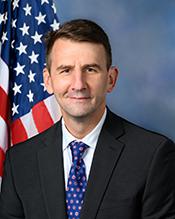
United States · Official source
804 records where Rep. Mrvan, Frank J. [D-IN-1] is listed as a sponsor, author, or other actor. Search with topics and years
United States · United States Congress · 19 September 2023
United States · United States Congress · 19 September 2023
John R. Lewis Voting Rights Advancement Act of 2023 This bill establishes new criteria for determining which states and political subdivisions must obtain preclearance before changes to voting practices may take effect. Preclearance is the process of receiving preapproval from the Department of Justice (DOJ) or the U.S. District Court for the District of Columbia before making legal changes that would affect voting rights. A state and all of its political subdivisions shall be subject to preclearance of voting practice changes for a 10-year period if, during the previous 25 years: 15 or more voting rights violations occurred in the state; 10 or more violations occurred, at least 1 of which was committed by the state itself; or 3 or more violations occurred and the state administers the elections. A political subdivision as a separate unit shall also be subject to preclearance for a 10-year period if three or more voting rights violations occurred there during the previous 25 years. States and political subdivisions that meet certain thresholds regarding minority groups must preclear covered practices before implementation, such as redistricting. States and political subdivisions must notify the public of changes to voting practices. The bill authorizes DOJ to require states or political subdivisions to provide certain documents or answers to questions for enforcing voting rights. The bill outlines factors courts must consider when hearing challenges to voting practices, such as the extent of any history of official voting discrimination in the state or political subdivision.
United States · United States Congress · 18 September 2023
United States · United States Congress · 14 September 2023
No Tax Breaks for Union Busting (NTBUB) Act This bill denies employers a tax deduction for any expenditures incurred for attempting to influence their employees with respect to labor organizations or labor organization activities, such as elections, labor disputes, and collective actions. The bill requires employers to report on their attempts to influence their employees with respect to labor organizations and their activities.
United States · United States Congress · 13 September 2023
No Tax Breaks for Union Busting (NTBUB) Act This bill denies employers a tax deduction for any expenditures incurred for attempting to influence their employees with respect to labor organizations or labor organization activities, such as elections, labor disputes, and collective actions. The bill requires employers to report on their attempts to influence their employees with respect to labor organizations and their activities.
United States · United States Congress · 12 September 2023
Humane Cosmetics Act of 2023 This bill generally prohibits animal testing in the evaluation of cosmetic products, and it prohibits the sale or transport of cosmetics developed using animal testing, subject to civil penalties. These prohibitions begin one year after enactment. The bill specifies exceptions to these prohibitions, including if such animal testing (1) is conducted outside the United States to comply with a foreign regulatory authority; (2) is pursuant to a specified finding that there are no nonanimal alternatives to test the safety of a potentially dangerous cosmetic product or ingredient; (3) is of a product or ingredient for a drug or device subject to regulation by the Food and Drug Administration (FDA); or (4) is required for a noncosmetic purpose pursuant to a state, federal, or foreign regulatory authority. Further, no animal-testing evidence may be used to establish the safety of a cosmetic product or ingredient that is regulated by the FDA after the effective date of this bill, subject to limited exceptions.
United States · United States Congress · 29 August 2023
United States · United States Congress · 18 August 2023
United States · United States Congress · 4 August 2023
Investing in Veteran Entrepreneurial Talents Act or the Investing in VETS Act This bill raises from 3% to 5% the federal contracting participation goal for small businesses that are owned and controlled by service-disabled veterans. Only small businesses owned and controlled by service-disabled veterans that have been certified by the Small Business Administration may be included in calculating goals related to small businesses owned and controlled by service-disabled veterans.
United States · United States Congress · 27 July 2023
United States · United States Congress · 27 July 2023
Better Collaboration, Accountability, and Regulatory Enforcement for Animals Act of 2023 or the Better CARE for Animals Act of 2023 This bill modifies enforcement provisions under the Animal Welfare Act, including by allowing the Department of Justice (DOJ) to bring civil actions against violators of the act for appropriate relief, such as removing animals, revoking violators' licenses, or issuing civil penalties. DOJ must use the penalties to pay for the temporary care for animals pending the disposition of civil or criminal proceedings that allege violations of the act with respect to such animals.
United States · United States Congress · 27 July 2023
Public Housing Fire Safety Act This bill creates a grant program, to be administered by the Department of Housing and Urban Development, for public housing agencies to install automatic sprinkler systems in certain public housing projects.
United States · United States Congress · 27 July 2023
Democracy Restoration Act of 2023 This bill addresses the voting rights of individuals convicted of a criminal offense and the restoration of their voting rights. First, the bill declares that the right of a U.S. citizen to vote in any election for federal office shall not be denied or abridged because that individual has been convicted of a criminal offense unless, at the time of the election, such individual is serving a felony sentence. Further, the bill provides for enforcement of, and remedies for violations of, the bill. In addition, it sets forth requirements for state and federal notification of individuals of the restoration of their voting rights. Finally, the bill prohibits federal funding of construction or improvement of a place of incarceration unless U.S. citizens incarcerated in that jurisdiction are notified, upon release, of their voting rights.
United States · United States Congress · 27 July 2023
Tax Fairness for Workers Act This bill allows an above-the-line tax deduction for union dues and expenses. (An above-the-line deduction is subtracted from gross income and is available whether or not a taxpayer itemizes other deductions.) The bill also reinstates the miscellaneous itemized tax deduction for unreimbursed expenses attributable to the performance of services as an employee (Under current law, all miscellaneous itemized deductions are suspended through 2025).
United States · United States Congress · 27 July 2023
Rebuild America's Schools Act of 2023 This bill provides support for long-term improvements to public elementary and secondary school facilities. First, the bill sets forth allocations to states and establishes a need-based grant program for local educational agencies (LEAs) to improve school facilities. Further, the bill specifies allowable uses of grant funds, including carrying out major repairs, improving indoor air quality, and making facilities accessible to disabled individuals. Additionally, the bill requires LEAs that receive funds for new construction, modernization, or renovation projects to comply with hazard-resistance building codes and performance criteria under the WaterSense program of the Environmental Protection Agency. Further, the bill requires such LEAs to adopt certain green practices (environmental standards) and requires the use of iron, steel, and manufactured products that are made in the United States (Buy America). The bill restores school infrastructure tax credit bonds. The bill also sets forth reporting requirements, including annual reports on grant program projects and a report by the Government Accountability Office that requires a study of the geographic distribution of projects, the impact of selected projects on student and staff health and safety, and the accessibility of projects to high-poverty schools. The bill also establishes the Office of School Infrastructure and Sustainability within the Department of Education. Next, the bill extends through FY2028 the Impact Aid Construction program. Finally, the bill establishes a grant program to assist LEAs with repairing or replacing concrete foundations affected by pyrrhotite (an iron sulfide material linked to crumbling foundations).
United States · United States Congress · 26 July 2023
United States · United States Congress · 25 July 2023
United States · United States Congress · 20 July 2023
Treat and Reduce Obesity Act of 2023 This bill expands Medicare coverage of intensive behavioral therapy for obesity. Specifically, the bill allows coverage for therapy that is provided by (1) a physician who is not a primary care physician; or (2) other health care providers (e.g., physician assistants and nurse practitioners) and approved counseling programs, if provided upon a referral from, and in coordination with, a physician or primary care practitioner. Currently, such therapy is covered only if provided by a primary care practitioner. The bill also allows coverage under Medicare's prescription drug benefit of drugs used for the treatment of obesity or for weight loss management for individuals who are overweight.
United States · United States Congress · 20 July 2023
United States · United States Congress · 19 July 2023
Accelerating Kids' Access to Care Act This bill requires state Medicaid programs to establish a process through which qualifying out-of-state providers may enroll as participating providers for five years without undergoing additional screening requirements, unless the state has an agreement with other states that governs coverage of children with medically complex conditions that is in accordance with specified guidance from the Centers for Medicare & Medicaid Services (CMS). Among other requirements, a qualifying provider must (1) serve individuals under the age of 21; (2) have previously been screened for Medicare participation or for participation in the Medicaid program of the state in which the provider is located; and (3) have been determined by the CMS or state Medicaid program to pose a limited risk of fraud, waste, or abuse.
United States · United States Congress · 18 July 2023
Freedom to Vote Act This bill addresses voter registration and voting access, election integrity and security, redistricting, and campaign finance. Specifically, the bill expands voter registration (e.g., automatic and same-day registration) and voting access (e.g., vote-by-mail and early voting). It also limits removing voters from voter rolls. Next, the bill establishes Election Day as a federal holiday. The bill declares that the right of a U.S. citizen to vote in any election for federal office shall not be denied or abridged because that individual has been convicted of a criminal offense unless, at the time of the election, such individual is serving a felony sentence. The bill establishes certain federal criminal offenses related to voting. In particular, the bill establishes a new criminal offense for conduct (or attempted conduct) to corruptly hinder, interfere with, or prevent another person from registering to vote or helping someone register to vote. Additionally, the bill sets forth provisions related to election security, including by requiring states to conduct post-election audits for federal elections. The bill outlines criteria for congressional redistricting and generally prohibits mid-decade redistricting. The bill addresses campaign finance, including by expanding the prohibition on campaign spending by foreign nationals, requiring additional disclosure of campaign-related fundraising and spending, requiring additional disclaimers regarding certain political advertising, and establishing an alternative campaign funding system for certain federal offices.
United States · United States Congress · 14 July 2023
Federal Mechanical Insulation Act The bill directs federal agencies to identify energy saving and water saving measures, such as the installation of mechanical insulation property, in certain annual energy and water evaluations of federal buildings. Thus, the bill allows the installation of mechanical insulation property (e.g., thermal insulation) to be considered an energy or water efficiency measure that may be used in federal buildings under the National Energy Conservation Policy Act.
United States · United States Congress · 12 July 2023
Social Security 2100 Act This bill modifies the Social Security system, particularly with respect to benefit calculations, fund administration, and beneficiary resources. For example, the bill temporarily increases the primary insurance amount for Social Security benefits for all individuals (from 90% of a certain portion of average indexed monthly earnings to 93%). It also modifies benefit calculations for certain individuals, including by temporarily (1) increasing benefits for widows or widowers in two-income households; and (2) allowing children of a deceased, disabled, or retired worker to remain eligible for benefits through age 25 if they are full-time students. Additionally, the bill temporarily eliminates (1) the government pension offset , which reduces Social Security benefits for spouses, widows, and widowers who also receive government pensions of their own; and (2) the windfall elimination provision , which reduces Social Security benefits for individuals who also receive a pension or disability benefit from an employer that did not withhold Social Security taxes. The bill also modifies the financing and administration of the Social Security trust funds. For example, the bill (1) subjects income over $400,000 to Social Security payroll taxes, and (2) combines the Federal Old-Age and Survivors Insurance Trust Fund and the Federal Disability Insurance Trust Fund into a single Social Security Trust Fund. Finally, the bill establishes requirements relating to Social Security services and resources, including by prohibiting the closure of field offices unless certain conditions are met (e.g., public hearings).
United States · United States Congress · 12 July 2023
Veteran Service Recognition Act of 2023 This bill addresses immigration-related issues pertaining to noncitizen (or non-U.S. national) military veterans, including by authorizing the Department of Homeland Security (DHS) to provide lawful permanent resident status to a veteran who is subject to removal. If a noncitizen veteran appears to be eligible for lawful permanent resident status under this bill, that veteran must receive a reasonable opportunity to apply for such status and may not be removed until there is a final administrative decision on the veteran's eligibility. For the purposes of providing such status under this bill, DHS may waive any applicable grounds of inadmissibility, except for certain crime- or security-related grounds. The bill also extends certain deadlines relating to obtaining citizenship after serving in the Armed Forces. DHS must create a system for identifying noncitizens who are or may be veterans. Before initiating removal proceedings against a noncitizen, DHS must attempt to determine whether the noncitizen is a veteran. DHS must ensure that veteran status is considered in immigration proceedings. Additionally, the bill requires U.S. Citizenship and Immigration Services and the Department of Defense to take certain actions to facilitate opportunities for military recruits and veterans to obtain U.S. citizenship; establishes the Military Family Immigration Advisory Committee to provide recommendations on cases involving the removal of a servicemember, veteran, or certain family members of a servicemember or veteran; and waives certain grounds of inadmissibility for certain noncitizens applying for lawful permanent resident status as an immediate relative of a U.S. citizen who has served at least two years in the Armed Forces.
United States · United States Congress · 27 June 2023
This resolution expresses condemnation for criminalizing the provision of and access to reproductive health care services, including abortion, contraception, and gender-affirming care. It further expresses support for efforts to expand access to such services.
United States · United States Congress · 23 June 2023
United States · United States Congress · 23 June 2023
Promoting Respect for Individuals' Dignity and Equality Act of 2023 or the PRIDE Act of 2023 This bill requires the equal treatment of same sex married couples for tax purposes. It permits such couples to amend their filing status to married filing jointly for tax returns outside of the statute of limitations and modifies tax rules relating to married couples to include same sex couples.
United States · United States Congress · 22 June 2023
Critical Supply Chains Commission Act This bill establishes a National Commission on Critical Supply Chains to identify and investigate the dependencies, limitations, and risks associated with critical supply chains. The commission may hold hearings as appropriate and obtain relevant information directly from federal, state, and local governmental bodies as needed. The commission must annually report its findings, conclusions, and recommendations for actions to mitigate the risks of future American supply chain disruptions.
United States · United States Congress · 22 June 2023
Helping Emergency Responders Overcome Act or the HERO Act This bill establishes a series of programs relating to the behavioral health of law enforcement officers, first responders, 9-1-1 operators, and other public safety officers and health care providers. The programs include a public safety officer suicide-reporting system at the Centers for Disease Control and Prevention, a grant program for peer-support behavioral health and wellness programs within fire departments and emergency medical services agencies, and a grant program for behavioral health and wellness programs for health care providers.
United States · United States Congress · 21 June 2023
This joint resolution redesignates the memorial to Robert. E. Lee in Arlington National Cemetery as the Arlington House National Historic Site.
United States · United States Congress · 21 June 2023
Equality Act This bill prohibits discrimination based on sex, sexual orientation, or gender identity with respect to businesses, employment, housing, federally funded programs, and other settings. Specifically, the bill expands Title II and Title VI of the Civil Rights Act of 1964 to prohibit public accommodations and federally funded programs, respectively, from discriminating based on sex, sexual orientation, or gender identity. It also includes stores, transit services, recreational facilities, and establishments that provide health care, accounting, or legal services as public accommodations under Title II. The bill also expands Title IV (desegregation of public schools) and Title VII (employment discrimination) to specifically include sexual orientation and gender identity. (The Supreme Court held in Bostock v. Clayton County that Title VII's prohibition of employment discrimination based on sex also prohibits employment discrimination based on sexual orientation or gender identity.) The bill similarly expands the Fair Housing Act (discrimination in public and private housing) to include sexual orientation and gender identity. It also prohibits discrimination based on sexual orientation or gender identity by creditors and with respect to jury selection. The bill defines sex for purposes of the aforementioned provisions to include sex stereotypes, pregnancy, childbirth, sexual orientation, gender identity, and sex characteristics.
United States · United States Congress · 20 June 2023
VA Acquisition Review Board Act of 2023 This bill establishes the Acquisition Review Board within the Department of Veterans Affairs (VA) to support the VA in managing its acquisition programs. In the case of an acquisition program of at least $250 million, the board chair must appoint a manager to administer the program.
United States · United States Congress · 15 June 2023
Import Security and Fairness Act This bill excludes imported articles from nonmarket economy countries or countries on the priority watch list from receiving de minimis treatment. De minimis treatment allows imported articles valued under $800 to enter the United States without paying duties or taxes. The bill also directs U.S. Customs and Border Protection to collect additional information on merchandise that may qualify for de minimis treatment.
United States · United States Congress · 15 June 2023
Creating Opportunities Now for Necessary and Effective Care Technologies for Health Act of 2023 or the CONNECT for Health Act of 2023 This bill expands coverage of telehealth services under Medicare. Among other provisions, the bill permanently removes geographic restrictions on originating sites (i.e., the location of the beneficiary) and allows the home of the beneficiary to serve as the originating site for all services; permanently allows federally qualified health centers and rural health clinics to serve as the distant site (i.e., the location of the health care practitioner); and allows the Centers for Medicare & Medicaid Services (CMS) to generally waive coverage restrictions during any public health emergency. Additionally, the CMS must post certain information about the effects of Medicare telehealth services on its website, including information about utilization, costs, and the outcome of services. The CMS must also (1) provide resources to health care professionals about the requirements for furnishing telehealth services under Medicare, including with respect to payment, patient privacy, and support for underserved populations; and (2) ensure certain quality measures are applied to telehealth services.
United States · United States Congress · 15 June 2023
Hate Crimes Commission Act of 2023 This bill establishes the United States Commission on Hate Crimes. The commission must investigate and report on whether hate crimes have increased; factors that contributed to an increase in hate crimes, if one is determined to exist; policies or actions that law enforcement agencies might adopt to reduce the commission of hate crimes; the impact of underreporting on hate crimes statistics and prevention; ways to improve hate crimes reporting and ensure full and complete participation in the National Incident-Based Reporting System by local law enforcement agencies; bias prevention efforts and responses to hate crimes that are successful and possible through coordination with nonprofit organizations, local education agencies, and government entities; and the prevalence and rise of online hate crime incidents.
United States · United States Congress · 15 June 2023
Equal Access to Justice for Victims of Gun Violence Act of 2023 This bill removes limitations on the civil liability of gun manufacturers and the disclosure of gun trace data in civil actions. Specifically, the bill repeals the Protection of Lawful Commerce in Arms Act, which prohibits civil actions against a firearm or ammunition manufacturer, seller, importer, dealer, or trade association for damages resulting from the criminal or unlawful misuse of a firearm. Additionally, the bill states that firearms trace data maintained by the Bureau of Alcohol, Tobacco, Firearms and Explosives is not immune from legal process. Such data is subject to discovery; is admissible as evidence; and may be used, relied on, or disclosed in a civil action or administrative proceeding.
United States · United States Congress · 15 June 2023
American Dream and Promise Act of 2023 This bill provides certain non-U.S. nationals ( aliens under federal law) with a path to receive permanent resident status and contains other immigration-related provisions. The Department of Homeland Security (DHS) or the Department of Justice (DOJ) shall provide conditional permanent resident status for 10 years to a qualifying individual who entered the United States as a minor and (1) is deportable or inadmissible, (2) has deferred enforced departure (DED) status or temporary protected status (TPS), or (3) is the child of certain classes of nonimmigrants. The bill imposes various qualifying requirements, such as the individual being continuously physically present in the United States since January 1, 2021, passing a background check, and being enrolled in or having completed certain educational programs. DHS shall remove the conditions placed on permanent resident status granted under this bill if the alien applies and meets certain requirements, such as completing certain programs at an educational institution, serving in the military, or being employed. Furthermore, DHS and DOJ shall provide lawful permanent resident status to certain individuals who had TPS, were eligible for TPS, or were eligible for DED status on certain dates. Such individuals must meet certain requirements and apply for such status within three years of this bill's enactment. DHS may not use information from applications filed under this bill or for Deferred Action for Childhood Arrivals status for immigration enforcement purposes. This bill also repeals a restriction that bars a state from providing higher education benefits to undocumented individuals unless those benefits are available to all U.S. nationals without regard to residency in the state.
United States · United States Congress · 14 June 2023
Preserving Patient Access to Home Infusion Act This bill specifically includes pharmacy services as part of covered home infusion therapy under Medicare. The bill also allows nurses and physician assistants to establish and review the plan of care for home infusion therapy.
United States · United States Congress · 14 June 2023
Right to Contraception Act This bill sets out statutory protections for an individual's right to access and a health care provider's right to provide contraception and related information. Contraception refers to an action taken to prevent pregnancy, including the use of contraceptives (i.e., a device or medication used to prevent pregnancy), fertility-awareness based methods, and sterilization procedures. Generally, the bill prohibits measures that single out and impede access to contraception and related information. However, a party may defend against a claim that a measure violates the bill's prohibitions by demonstrating, through clear and convincing evidence, that the measure significantly advances the safety of contraception and cannot be achieved through less restrictive means. The bill also specifies that the prohibition preempts inconsistent state and local laws and applies in spite of other federal laws, including the Religious Freedom Restoration Act of 1993. The Department of Justice, individuals, or health care providers may bring a lawsuit to enforce this bill, and states are not immune from suits for violations.
United States · United States Congress · 9 June 2023
LGBTQ I+ Data Inclusion Act This bill addresses federal data collection of voluntary, self-disclosed information on sexual orientation, gender identity, and variations in sex characteristics. Specifically, the bill requires federal agencies that collect information through a survey for statistical purposes that includes demographic data (where subjects self-report information or a proxy provides information about the subject or responds for all persons in a household) to review existing data sets to determine which data sets do not include information about sexual orientation, gender identity, and variations in sex characteristics. Such agencies must assess needed changes in survey methods related to asking questions on such matters. Agencies that publish reports relying on survey demographic data must include information on sexual orientation, gender identity, and variations in sex characteristics. Agencies may waive this publication requirement on a case-by-case basis if the confidentiality of the information cannot be maintained or if adding such information to the survey would impair the agency's ability to preserve the utility, accuracy, or objectivity of the survey while also generating relevant evidence about the LGBTQI+ community. The Government Accountability Office must report to Congress on the implementation of this bill's requirements by agencies.
United States · United States Congress · 9 June 2023
Neighborhood Homes Investment Act This bill allows a business-related tax credit for certain development costs for the acquisition, rehabilitation, or remediation of qualified real property (i.e., real property affixed on a permanent foundation and comprised of four or fewer residential units, a condominium unit, or a house or apartment owned by a cooperative housing corporation). The bill also provides for the exclusion from gross income, for income tax purposes, of the value of any subsidy provided to a taxpayer by any state energy office for purposes of improvements made to a qualified residence.
United States · United States Congress · 7 June 2023
Leveling the Playing Field 2.0 Act This bill addresses unfair trade practices by making various changes to U.S. antidumping and countervailing duty law. Antidumping provides relief to U.S industries and workers that are materially injured or threatened with injury due to imports of like products sold in the U.S. market at less than fair value, while countervailing duty provides such relief from imports of products subsidized by a foreign government or public entity. Specifically, the bill establishes a process for successive antidumping and countervailing duty investigations. Successive investigations may be concurrent (an ongoing investigation of the same product) or recently completed (not more than two years before the date of the initiation of the successive investigation). Further, the bill establishes a time line for the Department of Commerce to issue determinations in successive investigations. Among other provisions, the bill authorizes Commerce to apply countervailing duty law to subsidies provided by a foreign government or public entity to a company operating in a third country, use another method for calculating the cost of production in specific circumstances, and require importers to provide a certification that the imported merchandise is not subject to an antidumping or countervailing duty order. Additionally, the bill statutorily establishes procedures for Commerce to conduct circumvention inquiries, including by specifying the deadlines for preliminary and final determinations. The bill also provides statutory authority for Commerce to investigate currency undervaluation as a countervailable subsidy.
United States · United States Congress · 7 June 2023
United States · United States Congress · 7 June 2023
American Family Act This bill provides for a new fully refundable child tax credit and monthly advance payments of credit amounts.
United States · United States Congress · 6 June 2023
Pride in Mental Health Act of 2023 This bill establishes grants and reporting requirements concerning the mental and behavioral health of youth who are lesbian, gay, bisexual, queer or questioning, nonbinary, intersex, or Two Spirit (gender-variant members of indigenous communities). Specifically, the Substance Abuse and Mental Health Services Administration (SAMHSA) must award grants to assess and improve mental health and substance abuse outcomes for those youth. Recipients may use grants for providing mental and behavioral health resources for such youth (including training for caregivers and school-based interventions) and collecting data. Recipients may not use grants for any practice or treatment that seeks to change another individual's sexual orientation or gender (i.e., conversion therapy). Additionally, the Department of Health and Human Services (HHS) must (1) conduct a survey to measure issues related to mental health and health care among such youth; and (2) report about the mental health and related care of such youth who are in foster care and otherwise participate in federal social services programs. HHS must also review existing publications on SAMHSA's website that focus on lesbian, gay, bisexual, transgender, queer or questioning, nonbinary, intersex, and Two Spirit individuals and update or commission new publications to fill information gaps related to the mental and behavioral health of those individuals.
United States · United States Congress · 31 May 2023
Stop Harboring Iranian Petroleum Act or the SHIP Act This bill requires the President to impose visa- and property-blocking sanctions against foreign persons that knowingly transport, process, refine, or otherwise deal in petroleum and petroleum products originating in Iran. These sanctions also extend to certain foreign persons associated with the sanctioned individual, such as adult family members and any entities owned or controlled by the sanctioned individual.
United States · United States Congress · 25 May 2023
Mental Health Services for Students Act of 2023 This bill provides specific statutory authority for the Project AWARE (Advancing Wellness and Resiliency in Education) State Educational Agency Grant Program that is administered by the Substance Abuse and Mental Health Services Administration. The program supports school-based mental health services, including screening, treatment, and outreach programs.
United States · United States Congress · 25 May 2023
This resolution supports the goals and ideals of National Poppy Day and honors past and current members of the Armed Forces and their families.
United States · United States Congress · 24 May 2023
Menstrual Equity For All Act of 2023 This bill expands access to menstrual products through federal programs, in certain locations, and for particular groups. It also prohibits states and localities from taxing retail sales of a range of menstrual products (e.g., sanitary napkins, tampons, and menstrual cups). The bill expands access to that range of menstrual products by requiring Medicaid to cover those products, establishing a grant program in the Temporary Assistance for Needy Families program to provide benefits to ensure access to those products, and increasing Social Services Block Grant funding for providing those products to low-income individuals and exempting that increase from sequestration (a process of automatic, usually across-the-board cancellations of budgetary resources to enforce specific budget policy goals). Additionally, the bill sets out requirements to make free sanitary napkins and tampons available in federal and state correctional facilities (including Department of Homeland Security detention facilities) and restrooms in federal buildings that are open to the public. Further, the bill (1) establishes a grant program to support the provision of free sanitary napkins and tampons on campuses of institutions of higher education, and (2) permits elementary and secondary schools to use certain grants to provide sanitary napkins and tampons to students. In addition, the bill requires employers with at least 100 employees to provide free sanitary napkins and tampons for employees. It also permits the Emergency Food and Shelter Program to provide sanitary napkins and tampons to homeless individuals.
United States · United States Congress · 24 May 2023
Love Lives On Act of 2023 This bill extends entitlement for various benefit programs and services for surviving spouses of deceased members of the Armed Forces or veterans. First, the bill removes the expiration on a surviving spouses' entitlement to educational assistance through the Marine Gunnery Sergeant John David Fry Scholarship (Fry Scholarship). The bill also provides that the remarriage of a surviving spouse must not bar the furnishing of dependency and indemnity compensation to such spouse. Next, the Department of Defense may not terminate the payment of an annuity for a surviving spouse under the Survivor Benefit Plan solely because the surviving spouse remarries. Additionally, the bill provides commissary store and MWR retail facility (e.g., exchange store) access to surviving spouses regardless of the martial status of the spouse. Such spouses must be entitled to use such stores and facilities to the same extent and on the same basis as surviving spouses who did not remarry. The bill expands the definition of a dependent under TRICARE to include a remarried widow or widower whose subsequent marriage has ended due to death, divorce, or annulment. Finally, the bill modifies the definition of a surviving spouse for purposes of veterans benefits to include same sex marriages.