Bill· HRH.R. 8119 (119th)referred
HOPE with Fertility Services Act
United States · United States Congress · 26 March 2026
The world's political record
Person
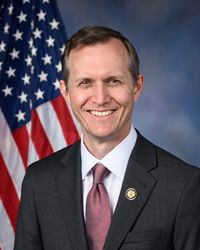
United States · Official source
313 records where Rep. Whitesides, George [D-CA-27] is listed as a sponsor, author, or other actor. Search with topics and years
United States · United States Congress · 26 March 2026
United States · United States Congress · 24 March 2026
United States · United States Congress · 18 March 2026
United States · United States Congress · 18 March 2026
United States · United States Congress · 5 March 2026
United States · United States Congress · 26 February 2026
United States · United States Congress · 25 February 2026
United States · United States Congress · 25 February 2026
United States · United States Congress · 20 February 2026
United States · United States Congress · 20 February 2026
United States · United States Congress · 12 February 2026
United States · United States Congress · 12 February 2026
United States · United States Congress · 11 February 2026
Department of Homeland Security Appropriations Act, 2026 This bill provides FY2026 appropriations for various agencies and offices within the Department of Homeland Security (DHS), except for U.S. Immigration and Customs Enforcement (ICE), U.S. Customs and Border Protection (CBP), and management and oversight activities of the Office of the Secretary. Specifically, the bill provides appropriations to DHS for the Federal Protective Service, the Office of Inspector General, the Transportation Security Administration, the U.S. Coast Guard, the U.S. Secret Service, the Cybersecurity and Infrastructure Security Agency, the Federal Emergency Management Agency (FEMA), U.S. Citizenship and Immigration Services, the Federal Law Enforcement Training Centers, and the Science and Technology Directorate. The bill does not provide appropriations for some agencies and activities that have been funded in prior DHS appropriations acts, including ICE, CBP, and management and oversight activities of the Office of the Secretary.
United States · United States Congress · 20 January 2026
United States · United States Congress · 14 January 2026
United States · United States Congress · 8 January 2026
United States · United States Congress · 7 January 2026
United States · United States Congress · 18 December 2025
United States · United States Congress · 18 December 2025
United States · United States Congress · 18 December 2025
United States · United States Congress · 18 December 2025
United States · United States Congress · 18 December 2025
This bill designates the facility of the United States Postal Service located at 2121 Meridian Park Boulevard in Concord, California, as the "Carl Jefferson Post Office Building".
United States · United States Congress · 17 December 2025
United States · United States Congress · 17 December 2025
United States · United States Congress · 16 December 2025
Essential Caregivers Act of 2025 This bill prohibits certain health care facilities from limiting the access of essential caregivers to residents of those facilities, including during designated emergency periods. Specifically, the bill generally prohibits Medicare skilled nursing facilities, Medicaid nursing facilities, Medicaid intermediate care facilities, and associated inpatient rehabilitation facilities from restricting the access of essential caregivers to residents of the facilities, including during emergency periods in which visitation rights are otherwise restricted. During emergency periods, facilities may restrict access for an initial period of up to seven days and for one additional maximum seven-day period (if the additional period is approved by the state health department). Facilities may restrict access for a total of 7 days (or 14 days with the approval of the state health department) during an emergency period. Essential caregivers must agree to comply with any safety protocols set by the facility, which may be no more stringent for caregivers compared to those for staff. Caregivers who fail to comply with these requirements may be denied access, subject to an appeals process.
United States · United States Congress · 16 December 2025
United States · United States Congress · 11 December 2025
United States · United States Congress · 10 December 2025
United States · United States Congress · 4 December 2025
Resources for Evaluating and Documenting AI Models or the READ AI Models Act This bill requires the National Institute of Standards and Technology (NIST) to develop a customizable template for information to accompany artificial intelligence (AI) models. Specifically, NIST must initiate a pilot program to establish a structured template that may be used to document information about an artificial intelligence model and any associated data, such as the model’s name, the developer, and the cutoff date for the model’s training data. The template must be modular to enable users to adopt and complete various sections to suit their needs and intended audience. NIST must also provide technical guidelines to accompany the template that incorporate consensus-based standards and industry best practices, as appropriate. In developing these materials, NIST must collaborate with and conduct periodic outreach to various stakeholders, including private sector entities, international standards organizations, and institutions of higher education. NIST must publish and solicit public comment on a draft of the template and guidelines. Within 12 months of the start of the pilot program, NIST must publish the finished products and report to Congress with an assessment of the program.
United States · United States Congress · 2 December 2025
United States · United States Congress · 20 November 2025
United States · United States Congress · 19 November 2025
First Responders' Care Expansion Act of 2025 or the FORCE Act of 2025 This bill provides for Medicare coverage of first responders between the ages of 57 and 64 who do not otherwise already qualify for Medicare.
United States · United States Congress · 19 November 2025
United States · United States Congress · 19 November 2025
This bill designates the facility of the United States Postal Service located at 28201 Franklin Parkway in Santa Clarita, California, as the "Deputy Ryan Clinkunbroomer Post Office Building".
United States · United States Congress · 19 November 2025
United States · United States Congress · 18 November 2025
United States · United States Congress · 10 November 2025
VA Work-Study Improvement Act This bill modifies certain pay and eligibility requirements under the Department of Veterans Affairs (VA) work-study program, including minimum wage and timesheet requirements. The bill expands the list of qualifying work-study activities to include state government, local government, or nonprofit organization activities that would benefit veterans or members of the Armed Forces. The bill also modifies minimum wage requirements under the work-study program. Under the bill, the hourly minimum wage paid under the work-study program must be the higher of (1) the minimum rate of basic pay for any federal employee (under the general schedule or federal wage system pursuant to specified regulations), (2) the hourly minimum wage in the state where the services are to be performed, or (3) the hourly minimum wage of the local government with jurisdiction over the area in which the services are to be performed. Additionally, the VA must ensure that (1) an individual participating in a qualifying work-study activity may electronically record such hours, and (2) the supervisor may electronically approve such records. Finally, the VA must annually publish specified information regarding qualifying work-study activities carried out during the year, including the demographics of individuals participating in the program.
United States · United States Congress · 7 November 2025
United States · United States Congress · 7 November 2025
Student Veteran Work Study Modernization Act This bill requires the Department of Veterans Affairs to implement a five-year pilot program to expand eligibility for the work-study allowance program to individuals who are pursuing programs of rehabilitation, education, or training at a rate equal to at least half of that required of a full-time student.
United States · United States Congress · 4 November 2025
United States · United States Congress · 17 October 2025
Federal Emergency Management Continuity Act of 2025 This bill requires the Federal Emergency Management Agency (FEMA) to continue using certain funds in the Disaster Relief Fund (DRF) during a lapse in appropriations (i.e., government shutdown). Specifically, FEMA must continue obligating and disbursing funds in the DRF that were appropriated before the lapse in appropriations and remain available to be expended. The funds may be used for any disaster relief, emergency assistance, and recovery program authorized under the Robert T. Stafford Disaster Relief and Emergency Assistance Act, including individual assistance, public assistance, and other disbursements and obligations for programs or activities necessary to protect life and property during a lapse in appropriations. The bill also requires employees who are necessary to carry out these disbursements or related program activities to be treated as excepted employees under the Anti-Deficiency Act. (Excepted employees are required to work during a lapse in appropriations.) The bill also prohibits these employees from being subject to a furlough or a reduction in force due to a lapse in appropriations.
United States · United States Congress · 14 October 2025
Healthy Meals Help Kids Learn Act of 2025 This bill permanently increases the federal reimbursement rates for the school lunch and breakfast programs of the Department of Agriculture. Specifically, beginning November 1, 2025, the bill provides an additional 45 cents per lunch served in the National School Lunch Program and an additional 28 cents per breakfast served in the School Breakfast Program. These amounts must be adjusted annually for inflation beginning July 1, 2026.
United States · United States Congress · 14 October 2025
United States · United States Congress · 10 October 2025
United States · United States Congress · 10 October 2025
This resolution requires the House of Representatives to convene and hold recorded quorum calls during a government shutdown. It also limits recesses and adjournments during a government shutdown. Under the resolution, a government shutdown occurs when there is a lapse in appropriations for any federal agency or department as a result of a failure to enact a regular appropriations bill or a continuing resolution. The resolution requires the House to convene on each day on which a government shutdown is in effect unless a recess or adjournment is permitted. Under the resolution, such a recess or adjournment is only permitted if the House has met for each of the first five consecutive calendar days on which the government shutdown is in effect, the proposed period of adjournment or recess does not last for more than two consecutive calendar days, and the House has met for at least five consecutive calendar days since the expiration of the most recent period of adjournment or recess. The resolution also requires the House to hold at least one recorded quorum call on each day that the House is in session during a government shutdown. Members of the House who fail to record their presence during a quorum call on two or more consecutive days must be fined $500 for a first offense and $2,500 for any subsequent offense unless the failure is due to an illness. A Member may not use official or campaign funds to pay the fine.
United States · United States Congress · 8 October 2025
This bill requires the federal government to reimburse state agencies that use state funds to carry out operations necessary to maintain participation in the Special Supplemental Nutrition Program for Women, Infants, and Children (WIC) during a lapse in discretionary appropriations (i.e., government shutdown). WIC provides nutrition-rich foods, nutrition education, and health care and social services referrals to eligible low-income women, infants, and children.
United States · United States Congress · 3 October 2025
United States · United States Congress · 3 October 2025
United States · United States Congress · 3 October 2025
This resolution expresses support for the designation of World Space Week.
United States · United States Congress · 30 September 2025
Wildfire Recovery Act This bill provides flexibility to increase the federal cost share for the Fire Management Assistance Grant (FMAG) program of the Federal Emergency Management Agency (FEMA). It also requires updates to FMAG policy to remove limitations on reimbursement for predeployment of firefighting assets. Under current law, FEMA’s regulations require a 75% federal cost share for FMAG assistance and do not permit adjustments. The bill establishes FMAG’s 75% federal cost share as a minimum, providing flexibility for such percentage to be increased in certain instances. It also requires FEMA to establish by regulation criteria through which FEMA may recommend the President increase FMAG’s federal cost share above 75%. Such criteria must include a financial threshold, relating to the costs of state or local government response to a fire triggering FMAG assistance, above which FEMA may recommend the President increase the federal cost share. Also, currently, FMAG may reimburse costs for pre-positioning firefighting resources into areas of higher fire danger up to 21 days before a declared fire. However, under current FMAG policy, costs for pre-positioning state or local government-owned resources within their own state are ineligible. The bill requires FEMA to update FMAG grants policy to allow reimbursement for predeployment of domestic assets by state, local, or Indian tribal governments in a manner consistent with other FEMA programs.