Bill· HRH.R. 4398 (119th)open
Veteran Burial Timeliness and Death Certificate Accountability Act
United States · United States Congress · 15 July 2025
The world's political record
Person
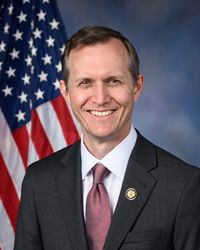
United States · Official source
313 records where Rep. Whitesides, George [D-CA-27] is listed as a sponsor, author, or other actor. Search with topics and years
United States · United States Congress · 15 July 2025
United States · United States Congress · 14 July 2025
United States · United States Congress · 7 July 2025
United States · United States Congress · 2 July 2025
This bill designates the facility of the United States Postal Service located at 1157 West Mission Avenue in Escondido, California, as the "Captain E. Royce Williams Post Office Building".
United States · United States Congress · 2 July 2025
United States · United States Congress · 2 July 2025
This bill designates the community-based outpatient clinic of the Department of Veterans Affairs in San Jose, California, as the Corporal Patrick D. Tillman Department of Veterans Affairs Clinic or the Pat Tillman VA Clinic.
United States · United States Congress · 30 June 2025
United States · United States Congress · 26 June 2025
United States · United States Congress · 26 June 2025
United States · United States Congress · 26 June 2025
United States · United States Congress · 26 June 2025
United States · United States Congress · 26 June 2025
United States · United States Congress · 25 June 2025
United States · United States Congress · 24 June 2025
Women's Health Protection Act of 2025 This bill prohibits governmental restrictions on the provision of, and access to, abortion services. Before fetal viability, governments may not restrict providers from using particular abortion procedures or drugs, offering abortion services via telemedicine, or immediately providing abortion services if delaying risks the patient's health. Furthermore, governments may not require providers to perform unnecessary medical procedures, provide medically inaccurate information, or comply with credentialing or other conditions that do not apply to providers who offer medically comparable services to abortions. Additionally, governments may not require patients to make medically unnecessary in-person visits before receiving abortion services or disclose their reasons for obtaining services. After fetal viability, governments may not restrict providers from performing abortions when necessary to protect a patient's life and health. The same provisions that apply to abortions before viability also apply to necessary abortions after viability. Additionally, states may authorize post-viability abortions in circumstances beyond those that the bill considers necessary. Further, the bill recognizes an individual's right to interstate travel, including for abortion services. The bill also prohibits governments from implementing measures that are similar to those restricted by the bill or that otherwise target and impede access to abortion services, unless the measure significantly advances the safety of abortion services or health of patients and cannot be achieved through less restrictive means. The Department of Justice, individuals, or providers may sue states or government officials to enforce this bill, regardless of certain immunity that would otherwise apply.
United States · United States Congress · 24 June 2025
United States · United States Congress · 24 June 2025
United States · United States Congress · 23 June 2025
United States · United States Congress · 11 June 2025
Cross-Boundary Wildfire Solutions Act This bill directs the Government Accountability Office to study wildfire mitigation across land ownership boundaries and make recommendations to simplify cross-boundary wildfire mitigation between federal land management agencies and state, local, and Indian tribal governments.
United States · United States Congress · 11 June 2025
United States · United States Congress · 11 June 2025
United States · United States Congress · 11 June 2025
Strengthening Transparency and Obligations to Protect Children Suffering from Abuse and Mistreatment Act of 2025 or the STOP CSAM Act of 2025 This bill revises the federal framework governing the prevention of online child sexual exploitation to expand protections for victims, expand requirements for electronic communication service providers and remote computing service providers (providers), and expand related penalties and remedies. The bill extends protections for child victims and witnesses who testify in federal court (e.g., privacy protections) to child victims and witnesses of kidnapping offenses and to child victims and witnesses who were under 18 years of age at the time of the crime, even if they are 18 or older at the time of court proceedings. Additionally, the bill establishes statutory procedures for courts to appoint a trustee to hold restitution payments for certain victims (e.g., minor victims) of offenses involving human trafficking, sexual abuse, child sexual abuse material, illegal sexual activity and related crimes, or crimes of violence. The bill requires providers to report online child sexual exploitation to the CyberTipline (i.e., the national reporting system for online child sexual exploitation) within 60 days. Reports must include specified information, such as information about repeat offenders. The bill establishes criminal and civil penalties for providers who fail to comply with the requirements. Finally, the bill prohibits providers from hosting or storing child pornography or knowingly facilitating the sexual exploitation of children and allows victims to pursue civil remedies.
United States · United States Congress · 10 June 2025
Bipartisan Background Checks Act of 2025 This bill establishes new background check requirements for firearm transfers between private parties (i.e., unlicensed individuals). Specifically, it prohibits a firearm transfer between private parties unless a licensed gun dealer, manufacturer, or importer first takes possession of the firearm to conduct a background check. The prohibition does not apply to certain firearm transfers or exchanges, such as a gift between spouses.
United States · United States Congress · 10 June 2025
United States · United States Congress · 5 June 2025
Expanding Access for Online Veteran Students Act This bill increases the monthly housing stipend available under the Post-9/11 Educational Assistance Program for individuals who pursue programs of education solely through distance learning on more than a half-time basis.
United States · United States Congress · 4 June 2025
United States · United States Congress · 4 June 2025
United States · United States Congress · 4 June 2025
United States · United States Congress · 4 June 2025
United States · United States Congress · 4 June 2025
United States · United States Congress · 3 June 2025
United States · United States Congress · 29 May 2025
United States · United States Congress · 29 May 2025
United States · United States Congress · 23 May 2025
United States · United States Congress · 21 May 2025
United States · United States Congress · 21 May 2025
United States · United States Congress · 21 May 2025
United States · United States Congress · 20 May 2025
Improving Seniors' Timely Access to Care Act of 2025 This bill establishes several requirements and standards relating to prior authorization processes under Medicare Advantage (MA) plans. Specifically, MA plans must (1) establish an electronic prior authorization program that meets specified standards; (2) annually submit to the CMS for publication specified prior authorization information, including the percentage of requests approved and the average response time; and (3) meet other standards, as set by the Centers for Medicare & Medicaid Services (CMS), relating to the quality and timeliness of prior authorization determinations. The CMS and the Office of the National Coordinator for Health Information Technology must publish on the CMS' website a report that analyzes the information received from MA plans, the feasibility of implementing real-time decision making with respect to prior authorization requests, and the impact of decisions that are made using artificial intelligence on patient access.
United States · United States Congress · 20 May 2025
United States · United States Congress · 20 May 2025
United States · United States Congress · 15 May 2025
United States · United States Congress · 15 May 2025
Chip Security Act This bill requires covered integrated circuit products (e.g., advanced computing chips) to incorporate certain security mechanisms. Specifically, the bill directs the Department of Commerce to require any covered integrated circuit product to have chip security mechanisms that implement location verification before the product is exported, reexported, or in-country transferred to or in a foreign country. Commerce must require any person that has received a license or other authorization under the Export Control Reform Act of 2018 to export, reexport, or in-country transfer a covered product to promptly report to Commerce's Bureau of Industry and Security if the person obtains credible information that the product has been diverted away from its intended location or has been subjected to tampering. Additionally, Commerce must conduct an assessment and report to Congress on whether additional chip security mechanisms should be adopted. If Commerce determines additional security measures are necessary, then Commerce must require any covered product to include the secondary chip security mechanisms before the product is exported, reexported, or in-country transferred to or in a foreign country. The bill authorizes Commerce to take certain enforcement actions, such as verifying the ownership and location of a covered product that has been exported, reexported, or in-country transferred to or in a foreign country. Commerce must, within two years of the bill's enactment and annually thereafter for three years, assess new chip security mechanisms and report to Congress.
United States · United States Congress · 5 May 2025
United States · United States Congress · 5 May 2025
United States · United States Congress · 5 May 2025
This resolution supports (1) the goals of Wildfire Preparedness Week; and (2) resources and educational initiatives that communicate how affected communities can take preventative measures such as instituting early warning systems and reducing unplanned human ignitions, as well as how to safely and efficiently evacuate people and their animals.
United States · United States Congress · 1 May 2025
United States · United States Congress · 30 April 2025
United States · United States Congress · 30 April 2025
Assault Weapons Ban of 2025 This bill makes it a crime to knowingly import, sell, manufacture, transfer, or possess a semiautomatic assault weapon (SAW) or large capacity ammunition feeding device (LCAFD). The prohibition does not apply to a firearm that is (1) manually operated by bolt, pump, lever, or slide action, except for certain shotguns; (2) permanently inoperable; (3) an antique; (4) only capable of firing rimfire ammunition; or (5) a rifle or shotgun specifically identified by make and model. The bill also exempts from the prohibition the following, with respect to a SAW or LCAFD: importation, sale, manufacture, transfer, or possession related to certain law enforcement efforts, or authorized tests or experiments; importation, sale, transfer, or possession related to securing nuclear materials; and possession by a retired law enforcement officer. The bill permits continued possession, sale, or transfer of a grandfathered SAW, which must be securely stored. A licensed gun dealer must conduct a background check prior to the sale or transfer of a grandfathered SAW between private parties. The bill permits continued possession of, but prohibits sale or transfer of, a grandfathered LCAFD. Newly manufactured LCAFDs must display serial number identification. Newly manufactured SAWs and LCAFDs must display the date of manufacture. The bill also allows a state or local government to use Edward Byrne Memorial Justice Assistance Grant Program funds to compensate individuals who surrender a SAW or LCAFD under a buy-back program.
United States · United States Congress · 30 April 2025
United States · United States Congress · 29 April 2025
Equality Act This bill prohibits discrimination based on sex, sexual orientation, or gender identity with respect to businesses, employment, housing, federally funded programs, and other settings. Specifically, the bill expands Title II and Title VI of the Civil Rights Act of 1964 to prohibit public accommodations and federally funded programs, respectively, from discriminating based on sex, sexual orientation, or gender identity. It also includes stores, transit services, recreational facilities, and establishments that provide health care, accounting, or legal services as public accommodations under Title II. The bill also expands Title IV (desegregation of public schools) and Title VII (employment discrimination) to specifically include sexual orientation and gender identity. (The Supreme Court held in Bostock v. Clayton County that Title VII's prohibition of employment discrimination based on sex also prohibits employment discrimination based on sexual orientation or gender identity.) The bill similarly expands the Fair Housing Act (discrimination in public and private housing) to include sexual orientation and gender identity. It also prohibits discrimination based on sexual orientation or gender identity by creditors and with respect to jury selection. The bill defines sex for purposes of the aforementioned provisions to include sex stereotypes, pregnancy, childbirth, sexual orientation, gender identity, and sex characteristics.
United States · United States Congress · 28 April 2025