Resolution· HRESH.Res. 1329 (119th)referred
Expressing support for the designation of May 2026 as "Mental Health Awareness Month".
United States · United States Congress · 29 May 2026
The world's political record
Person
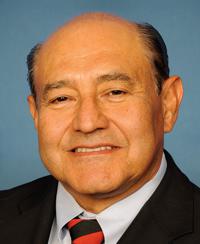
United States · Official source
2,020 records where Rep. Correa, J. Luis [D-CA-46] is listed as a sponsor, author, or other actor. Search with topics and years
United States · United States Congress · 29 May 2026
United States · United States Congress · 21 May 2026
United States · United States Congress · 20 May 2026
United States · United States Congress · 19 May 2026
Loan Forgiveness for Educators Act of 2026 This bill expands loan forgiveness for educators by revising the Teacher Loan Forgiveness Program. The program provides loan forgiveness (up to $17,500) for teachers who are highly qualified, teach full-time in a low-income elementary or secondary school or educational service agency, and complete five years of consecutive service. Specifically, the bill renames the program as the Educator Loan Forgiveness Programs. Additionally, the bill expands the program by making additional loan types eligible for benefits under the program (e.g., Parent PLUS Loans). Further, the bill expands program eligibility to early childhood educators and program directors serving in early childhood education programs and school leaders serving in public high-need schools. The bill requires the Department of Education to make monthly student loan payments on behalf of the educator during qualifying service (i.e., employment as a full-time qualifying educator in a high-need school or an early childhood education program), provide complete loan forgiveness after five years of qualifying service (which does not have to be consecutive), and take steps to notify borrowers about changes to the program.
United States · United States Congress · 14 May 2026
United States · United States Congress · 13 May 2026
United States · United States Congress · 13 May 2026
United States · United States Congress · 30 April 2026
United States · United States Congress · 30 April 2026
United States · United States Congress · 30 April 2026
United States · United States Congress · 30 April 2026
This resolution recognizes the significance of Asian American, Native Hawaiian, and Pacific Islander Heritage Month as an important time to celebrate the significant contributions of Asian Americans, Native Hawaiians, and Pacific Islanders to the history of the United States.
United States · United States Congress · 29 April 2026
United States · United States Congress · 27 April 2026
United States · United States Congress · 27 April 2026
Measuring Illicit Fentanyl Trafficking Act This bill requires the components of the Department of Homeland Security (DHS) engaged in the detection, deterrence, and seizure of fentanyl to collaborate and share relevant information and data with each other. The bill also requires DHS to establish performance metrics related to the detection, deterrence, and seizure of fentanyl for DHS and its components.
United States · United States Congress · 27 April 2026
United States · United States Congress · 27 April 2026
United States · United States Congress · 21 April 2026
United States · United States Congress · 16 April 2026
United States · United States Congress · 16 April 2026
United States · United States Congress · 16 April 2026
United States · United States Congress · 14 April 2026
United States · United States Congress · 14 April 2026
United States · United States Congress · 9 April 2026
United States · United States Congress · 6 April 2026
Accelerating Access to Critical Therapies for ALS Reauthorization Act of 2026 This bill reauthorizes through FY2031 and revises programs that support research and development of drugs and other therapies to address amyotrophic lateral sclerosis (also known as ALS or Lou Gehrig's disease) and other neurodegenerative diseases. The bill reauthorizes grants from the National Institutes of Health (NIH) for scientific research on investigational drugs to prevent or treat ALS for individuals not otherwise eligible for clinical trials, grants from the Food and Drug Administration (FDA) for research and development of therapies to prevent and treat ALS and other neurodegenerative diseases, and a Public-Private Partnership including the FDA and NIH that supports development and regulatory review of treatments for neurodegenerative diseases. Also, the NIH, in considering renewal of its grants, must assess available information on the safety and efficacy of the investigational drugs. It must also require grantees to promptly report serious and unexpected adverse events associated with their investigational drugs. Additionally, the FDA must publish a plan describing actions it will take over a five-year period to foster development of safe and effective drugs, and facilitate access to investigational drugs, that treat ALS and other rare neurodegenerative diseases. The FDA must also publish a report describing the actions it has taken under the plan.
United States · United States Congress · 30 March 2026
Provider Reimbursement Stability Act of 2026 This bill allows for larger annual adjustments to the Medicare physician fee schedule. It also requires the Centers for Medicare & Medicaid Services (CMS) to make certain corrections to compensate for expenditures under the fee schedule that exceed a certain amount in a given year, and it limits how much certain adjustment factors may vary each year. Current law prohibits annual adjustments to the Medicare physician fee schedule that would result in a more than $20 million difference between the adjusted amount and the non-adjusted amount of total expenditures. The bill increases this threshold to $54.3 million beginning in 2027, with adjustments for inflation every five years beginning in 2032. Additionally, for certain services, the bill requires the CMS to determine the difference between expenditures based on estimated utilization of the service and expenditures based on actual utilization. If this difference exceeds a certain percentage of total expenditures under the fee schedule, the CMS must reconcile this difference by adjusting payments for the following year. This requirement applies to services for which payment was bundled with another service and there was a separate or add-on payment during the previous year. Finally, the CMS must update the prices and rates of each category of direct costs that affect payments (e.g., prices of equipment) at least every five years, with updates made to each category in the same year. The bill also prohibits the CMS from varying a certain adjustment factor by more than 2.5% each year.
United States · United States Congress · 30 March 2026
United States · United States Congress · 26 March 2026
United States · United States Congress · 24 March 2026
United States · United States Congress · 18 March 2026
United States · United States Congress · 17 March 2026
United States · United States Congress · 9 March 2026
United States · United States Congress · 5 March 2026
United States · United States Congress · 5 March 2026
United States · United States Congress · 5 March 2026
United States · United States Congress · 4 March 2026
United States · United States Congress · 26 February 2026
Bankruptcy Threshold Adjustment Act of 2026 This bill restores changes that expired in 2024 applicable to debt limits for Subchapter V (small business reorganization) and Chapter 13 (the wage earner's plan) bankruptcies. Specifically, the bill increases the debt limit under Subchapter V from approximately $3.4 million to $7.5 million and increases the cumulative debt limit under Chapter 13 from approximately $2.1 million to $2.75 million. The bill also applies both secured and unsecured debt towards the Chapter 13 limit. (Currently, separate limits apply to secured and unsecured debt under Chapter 13 bankruptcy.)
United States · United States Congress · 20 February 2026
United States · United States Congress · 17 February 2026
United States · United States Congress · 17 February 2026
Federal Extreme Risk Protection Order Act of 2026 This bill authorizes and establishes procedures for federal courts to issue federal extreme risk protection orders. Additionally, the bill establishes grants to support the implementation of extreme risk protection order laws at the state and local levels, extends federal firearms restrictions to individuals who are subject to extreme risk protection orders, and expands related data collection. Extreme risk protection order laws, or red flag laws, generally allow certain individuals (e.g., law enforcement officers or family members) to petition a court for a temporary order that prohibits an at-risk individual from purchasing and possessing firearms. Among its provisions, the bill authorizes a family or household member, or a law enforcement officer, to petition for a federal extreme risk protection order with respect to an individual who poses a risk to themselves or others; directs the Department of Justice to establish a grant program to help states, local governments, Indian tribes, and other entities implement extreme risk protection order laws; extends federal restrictions on the receipt, possession, shipment, and transportation of firearms and ammunition to individuals who are subject to extreme risk protection orders; and requires the Federal Bureau of Investigation to compile records from federal, tribal, and state courts and other agencies that identify individuals who are subject to extreme risk protection orders.
United States · United States Congress · 12 February 2026
United States · United States Congress · 12 February 2026
United States · United States Congress · 12 February 2026
United States · United States Congress · 11 February 2026
Department of Homeland Security Appropriations Act, 2026 This bill provides FY2026 appropriations for various agencies and offices within the Department of Homeland Security (DHS), except for U.S. Immigration and Customs Enforcement (ICE), U.S. Customs and Border Protection (CBP), and management and oversight activities of the Office of the Secretary. Specifically, the bill provides appropriations to DHS for the Federal Protective Service, the Office of Inspector General, the Transportation Security Administration, the U.S. Coast Guard, the U.S. Secret Service, the Cybersecurity and Infrastructure Security Agency, the Federal Emergency Management Agency (FEMA), U.S. Citizenship and Immigration Services, the Federal Law Enforcement Training Centers, and the Science and Technology Directorate. The bill does not provide appropriations for some agencies and activities that have been funded in prior DHS appropriations acts, including ICE, CBP, and management and oversight activities of the Office of the Secretary.
United States · United States Congress · 10 February 2026
United States · United States Congress · 4 February 2026
United States · United States Congress · 3 February 2026
United States · United States Congress · 3 February 2026
United States · United States Congress · 30 January 2026
United States · United States Congress · 22 January 2026
United States · United States Congress · 22 January 2026