Bill· HRH.R. 6976 (119th)referred
Duty Status Reform Act
United States · United States Congress · 8 January 2026
The world's political record
Person
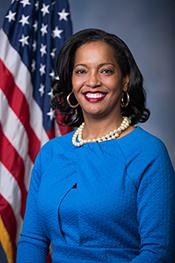
United States · Official source
3,026 records where Rep. Hayes, Jahana [D-CT-5] is listed as a sponsor, author, or other actor. Search with topics and years
United States · United States Congress · 8 January 2026
United States · United States Congress · 8 January 2026
United States · United States Congress · 7 January 2026
This concurrent resolution directs the President to remove U.S. Armed Forces from Venezuela unless a declaration of war or authorization to use military force for such purpose has been enacted.
United States · United States Congress · 23 December 2025
United States · United States Congress · 23 December 2025
United States · United States Congress · 18 December 2025
Veteran Suicide Prevention Act This bill requires the Department of Veterans Affairs (VA) to complete a review of the deaths of all covered veterans who died by suicide during the five-year period preceding the enactment of this bill. Covered veterans are those who received VA hospital care or medical services during the five-year period preceding the death of the veteran. The VA shall report on the results of the review and make such report publicly available.
United States · United States Congress · 17 December 2025
United States · United States Congress · 17 December 2025
School Modernization and Efficient Access to Lunches for Students Act of 2025 or the School MEALS Act of 2025 This bill establishes programs and revises requirements relating to direct certification processes for the National School Lunch Program. Direct certification allows schools to use data matching procedures to approve school meals without the need for applications for children who receive assistance under other programs, such as the Supplemental Nutrition Assistance Program (SNAP). Specifically, the bill directs the Department of Agriculture to provide grants and technical assistance for states and tribal organizations to improve their direct certification processes, including with respect to children who receive assistance under a food distribution program on Indian reservations. The bill also expands the time frame for schools to elect and gather eligibility data for the Community Eligibility Provision. This provision permits schools in high-poverty areas to serve free meals to all enrolled students without the need for applications. Further, the bill specifies that a state subject to a continuous improvement plan (for not directly certifying at least 95% of children eligible for direct certification because they receive SNAP benefits) must implement the improvement measures within three years.
United States · United States Congress · 17 December 2025
United States · United States Congress · 16 December 2025
Essential Caregivers Act of 2025 This bill prohibits certain health care facilities from limiting the access of essential caregivers to residents of those facilities, including during designated emergency periods. Specifically, the bill generally prohibits Medicare skilled nursing facilities, Medicaid nursing facilities, Medicaid intermediate care facilities, and associated inpatient rehabilitation facilities from restricting the access of essential caregivers to residents of the facilities, including during emergency periods in which visitation rights are otherwise restricted. During emergency periods, facilities may restrict access for an initial period of up to seven days and for one additional maximum seven-day period (if the additional period is approved by the state health department). Facilities may restrict access for a total of 7 days (or 14 days with the approval of the state health department) during an emergency period. Essential caregivers must agree to comply with any safety protocols set by the facility, which may be no more stringent for caregivers compared to those for staff. Caregivers who fail to comply with these requirements may be denied access, subject to an appeals process.
United States · United States Congress · 16 December 2025
United States · United States Congress · 16 December 2025
United States · United States Congress · 15 December 2025
United States · United States Congress · 11 December 2025
Keeping All Students Safe Act This bill prohibits the use of seclusion and limits the use of physical restraint in schools and Head Start programs that receive federal funding. Specifically, the bill prohibits the use of seclusion , which is the involuntary confinement of a student alone in a room or area from which the student is physically prevented from leaving. The term does not include a time out, which may involve separating the student from others in a non-locked setting. The bill prohibits the use of mechanical or chemical restraints or physical restraints that restrict breathing or are life threatening. The bill outlines the requirements for the use of physical restraint, including that the student's behavior must pose an imminent danger of serious physical injury to the student or other individual. Each state must ensure that a sufficient number of program personnel are trained and certified by a state-approved crisis intervention training program. Additionally, each program must establish procedures to follow after an incident involving physical restraint. Further, the bill establishes enforcement provisions, including a private right of action for a student who has been subjected to unlawful seclusion or restraint. The Department of Education and the Department of Health and Human Services must withhold payments from a program for unlawful seclusion or restraint. Finally, the bill requires each state educational agency (SEA) to establish, implement, and enforce policies and procedures required by the bill. It also creates a grant program to assist SEAs with these activities.
United States · United States Congress · 11 December 2025
United States · United States Congress · 10 December 2025
United States · United States Congress · 10 December 2025
United States · United States Congress · 10 December 2025
United States · United States Congress · 10 December 2025
United States · United States Congress · 9 December 2025
United States · United States Congress · 4 December 2025
Right to Read Act of 2025 This bill expands access to school libraries and literacy skills support for elementary and secondary school students. It also outlines certain constitutional rights and liability protections related to school libraries. Specifically, the bill reauthorizes through FY2030 (1) the Comprehensive Literacy State Development Program, which provides grants to ensure high-quality instruction and effective strategies in reading and writing for children through 12th grade; and (2) the Innovative Approaches to Literacy Program, which provides grants to support the development of literacy skills in low-income communities. Additionally, the bill allows Supporting Effective Instruction State Grants to be used to assist local educational agencies (LEAs) and schools in recruiting, hiring, and retaining state-certified school librarians. Further, the bill authorizes states and LEAs to use Student Support and Academic Enrichment grants for programs and activities that promote the development of digital literacy and information literacy skills. The Department of Education (ED) must direct the National Center for Education Statistics to biennially collect data on school libraries. ED must require an assurance from each state and LEA receiving certain funds confirming that it will (1) protect the First Amendment rights of students in school libraries, and (2) provide equal protection in the conduct of school libraries in compliance with the requirements of the Fourteenth Amendment and nondiscrimination laws. The bill also provides liability protection to teachers, school librarians, school leaders, paraprofessionals, and other staff for actions that conform with state or local policies regarding the right to read.
United States · United States Congress · 4 December 2025
United States · United States Congress · 4 December 2025
United States · United States Congress · 3 December 2025
United States · United States Congress · 3 December 2025
United States · United States Congress · 3 December 2025
United States · United States Congress · 3 December 2025
United States · United States Congress · 2 December 2025
United States · United States Congress · 20 November 2025
United States · United States Congress · 20 November 2025
United States · United States Congress · 20 November 2025
United States · United States Congress · 20 November 2025
United States · United States Congress · 19 November 2025
United States · United States Congress · 19 November 2025
United States · United States Congress · 19 November 2025
United States · United States Congress · 19 November 2025
United States · United States Congress · 19 November 2025
United States · United States Congress · 18 November 2025
United States · United States Congress · 17 November 2025
United States · United States Congress · 7 November 2025
United States · United States Congress · 7 November 2025
Student Veteran Work Study Modernization Act This bill requires the Department of Veterans Affairs to implement a five-year pilot program to expand eligibility for the work-study allowance program to individuals who are pursuing programs of rehabilitation, education, or training at a rate equal to at least half of that required of a full-time student.
United States · United States Congress · 7 November 2025
Keep SNAP and WIC Funded Act of 2025 This bill provides FY2026 appropriations for the Department of Agriculture (USDA) to continue operating the Supplemental Nutrition Assistance Program (SNAP); the Special Supplemental Nutrition Program for Women, Infants, and Children (WIC); and a related block grant program if there is a lapse in FY2026 appropriations for USDA. Specifically, the bill provides appropriations to USDA for any period in which legislation to provide FY2026 interim continuing appropriations or full-year appropriations for USDA has not been enacted. If such a lapse in appropriations occurs, the bill provides the appropriations that are necessary to continue providing uninterrupted SNAP benefits, providing consolidated block grants to Puerto Rico and American Samoa for nutrition assistance programs, and carrying out WIC without interruption. In addition, the bill provides appropriations to pay any benefits under these programs that were missed on or after September 30, 2025, and before this bill is enacted. The appropriations for these purposes are available until the earlier of (1) the enactment into law of legislation to provide FY2026 appropriations for USDA (including continuing appropriations), or (2) September 30, 2026. The bill also requires USDA to use the funds provided by this bill to reimburse state agencies for costs that were incurred to carry out these programs during a lapse in appropriations, to the extent that the programs were carried out in accordance with federal law (including regulations) during the lapse.
United States · United States Congress · 4 November 2025
This resolution expresses the sense of the House of Representatives that the Trump Administration is legally obligated to fund the Supplemental Nutrition Assistance Program (SNAP) through the use of the contingency fund, the Administration has the legal authority and the funds to finance SNAP through November 2025, exercising this power is extremely important for the health and wellness of families experiencing hunger, and the Administration should immediately exercise this authority.
United States · United States Congress · 28 October 2025
United States · United States Congress · 17 October 2025
United States · United States Congress · 10 October 2025
United States · United States Congress · 10 October 2025
This resolution requires the House of Representatives to convene and hold recorded quorum calls during a government shutdown. It also limits recesses and adjournments during a government shutdown. Under the resolution, a government shutdown occurs when there is a lapse in appropriations for any federal agency or department as a result of a failure to enact a regular appropriations bill or a continuing resolution. The resolution requires the House to convene on each day on which a government shutdown is in effect unless a recess or adjournment is permitted. Under the resolution, such a recess or adjournment is only permitted if the House has met for each of the first five consecutive calendar days on which the government shutdown is in effect, the proposed period of adjournment or recess does not last for more than two consecutive calendar days, and the House has met for at least five consecutive calendar days since the expiration of the most recent period of adjournment or recess. The resolution also requires the House to hold at least one recorded quorum call on each day that the House is in session during a government shutdown. Members of the House who fail to record their presence during a quorum call on two or more consecutive days must be fined $500 for a first offense and $2,500 for any subsequent offense unless the failure is due to an illness. A Member may not use official or campaign funds to pay the fine.
United States · United States Congress · 8 October 2025
This bill requires the federal government to reimburse state agencies that use state funds to carry out operations necessary to maintain participation in the Special Supplemental Nutrition Program for Women, Infants, and Children (WIC) during a lapse in discretionary appropriations (i.e., government shutdown). WIC provides nutrition-rich foods, nutrition education, and health care and social services referrals to eligible low-income women, infants, and children.
United States · United States Congress · 30 September 2025
Fair Pay for Federal Contractors Act of 2025 This bill provides back pay to employees of federal contractors who lost pay due to a lapse in appropriations (i.e., government shutdown) in FY2026. Specifically, the bill provides appropriations for federal agencies that are subject to a lapse in appropriations in FY2026 to adjust the price of contracts to compensate federal contractors for providing back pay to employees who were affected by the lapse in appropriations. The agencies must adjust the price of any contract for which the contractor stopped, suspended, delayed, or interrupted all or part of the work under the contract due to the lapse in appropriations. The price adjustment must compensate the contractor for reasonable costs incurred to (1) compensate employees who were furloughed or laid off, were not working, or experienced a reduction of hours or compensation due to the lapse in appropriations; or (2) restore paid leave taken by employees during the lapse in appropriations if the contractor required or permitted employees to use paid leave as a result of the lapse in appropriations. The maximum amount of weekly compensation of an employee for which an adjustment may be made under this bill may not exceed the lesser of (1) the employee's actual weekly compensation, or (2) $1,442 (or a lesser amount pro-rated for an employee who works less than 40 hours per week). The bill also requires the Office of Federal Procurement Policy to submit a report to Congress on the adjustments made under this bill.
United States · United States Congress · 30 September 2025
Pay Our Military Act This bill provides continuing appropriations for military pay for any period during which interim or full-year appropriations for FY2026 are not in effect (i.e., a government shutdown). Specifically, the bill provides FY2026 continuing appropriations for the pay and allowances of (1) members of the Armed Forces, including reserve components, who perform active service or inactive-duty training during the period; and (2) civilian employees and contractors of the Department of Defense (and the Department of Homeland Security in the case of the Coast Guard when the Coast Guard is not operating as a service in the Department of the Navy) who are providing support to such members of the Armed Forces. If a government shutdown occurs, the bill provides the continuing appropriations until the earlier of (1) the enactment into law of specified appropriations legislation, or (2) January 1, 2027.