Bill· HRH.R. 7735 (119th)referred
Improving Mental Health Support for Servicemembers and Veterans Act
United States · United States Congress · 26 February 2026
The world's political record
Person
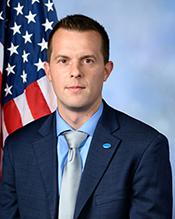
United States · Official source
1,021 records where Rep. Golden, Jared F. [D-ME-2] is listed as a sponsor, author, or other actor. Search with topics and years
United States · United States Congress · 26 February 2026
United States · United States Congress · 27 January 2026
United States · United States Congress · 22 January 2026
Gerald's Law Act This bill requires the Department of Veterans Affairs (VA) to provide a burial and funeral allowance for a veteran who dies in a home or other setting at which the veteran was receiving VA hospice care (if such care was directly preceded by VA hospital or nursing home care).
United States · United States Congress · 16 January 2026
United States · United States Congress · 13 January 2026
United States · United States Congress · 7 January 2026
This resolution expresses the sense of the House of Representatives that (1) Congress should adopt a fiscal target to reduce the federal budget deficit to 3% of gross domestic product or less as soon as possible and no later than the end of FY2030; and (2) after the target is achieved, Congress should continue to pursue further deficit reduction with the goal of achieving a balanced federal budget.
United States · United States Congress · 19 December 2025
United States · United States Congress · 18 December 2025
United States · United States Congress · 16 December 2025
Essential Caregivers Act of 2025 This bill prohibits certain health care facilities from limiting the access of essential caregivers to residents of those facilities, including during designated emergency periods. Specifically, the bill generally prohibits Medicare skilled nursing facilities, Medicaid nursing facilities, Medicaid intermediate care facilities, and associated inpatient rehabilitation facilities from restricting the access of essential caregivers to residents of the facilities, including during emergency periods in which visitation rights are otherwise restricted. During emergency periods, facilities may restrict access for an initial period of up to seven days and for one additional maximum seven-day period (if the additional period is approved by the state health department). Facilities may restrict access for a total of 7 days (or 14 days with the approval of the state health department) during an emergency period. Essential caregivers must agree to comply with any safety protocols set by the facility, which may be no more stringent for caregivers compared to those for staff. Caregivers who fail to comply with these requirements may be denied access, subject to an appeals process.
United States · United States Congress · 10 December 2025
United States · United States Congress · 9 December 2025
United States · United States Congress · 4 December 2025
United States · United States Congress · 4 December 2025
United States · United States Congress · 1 December 2025
United States · United States Congress · 25 November 2025
United States · United States Congress · 19 November 2025
United States · United States Congress · 19 November 2025
United States · United States Congress · 19 November 2025
United States · United States Congress · 17 November 2025
United States · United States Congress · 17 November 2025
United States · United States Congress · 10 November 2025
United States · United States Congress · 30 September 2025
$2.50 for America’s 250th Act This bill requires the minting of $2.50 coins to commemorate the 250th anniversary, or the semiquincentennial, of the signing of the Declaration of Independence. Specifically, the Department of the Treasury must mint and issue a $2.50 circulating coin upon determining that such minting is technically feasible, economically feasible, and not cost prohibitive. The design of such a coin during the first five years of its issuance must be as described by the bill, however, subsequent designs may be selected by Treasury to celebrate the founding of the United States. Treasury may also mint and issue $2.50 numismatic coins (i.e., collectible coins) in silver, clad, and other alloys, including gold.
United States · United States Congress · 26 September 2025
United States · United States Congress · 18 September 2025
United States · United States Congress · 18 September 2025
United States · United States Congress · 17 September 2025
United States · United States Congress · 17 September 2025
This joint resolution proposes a constitutional amendment authorizing Congress and the states to (1) regulate and impose reasonable viewpoint-neutral limitations on the raising and spending of money by candidates and others to influence elections; and (2) regulate and enact public campaign financing systems, including those designed to restrict the influence of private wealth by offsetting the raising and spending of money by candidates and others with increased public funding. The amendment grants Congress and the states the power to implement and enforce this amendment by legislation. They are allowed to distinguish between natural persons and corporations or other artificial entities created by law, including by prohibiting such entities from spending money to influence elections.
United States · United States Congress · 16 September 2025
Pay Our Troops Act of 2026 This bill provides continuing appropriations for military pay for any period during which interim or full-year appropriations for FY2026 are not in effect (i.e., a government shutdown). Specifically, the bill provides FY2026 continuing appropriations for the pay and allowances of (1) members of the Armed Forces, including reserve components, who perform active service during the period; and (2) civilian personnel and contractors of the Department of Defense (and the Department of Homeland Security in the case of the Coast Guard) who are providing support to such members of the Armed Forces. If a government shutdown occurs, the bill provides the continuing appropriations until the earlier of (1) the enactment into law of specified appropriations legislation, or (2) January 1, 2027.
United States · United States Congress · 16 September 2025
Faster Labor Contracts Act This bill establishes mandatory deadlines for parties negotiating an initial collective bargaining agreement (CBA) and provides for mediation and arbitration to finalize CBAs. Under the bill, CBA negotiations must begin within 10 days after an employer receives a written request from a newly recognized or certified bargaining representative. The bill provides that parties must make every reasonable effort to conclude and sign a CBA. Further, the bill provides that, if the parties have not reached an agreement after 90 days, either party may request mediation by the Federal Mediation and Conciliation Service (FMCS). The bill directs FMCS to use its best efforts to secure an agreement. If mediation does not result in an agreement within 30 days (or an additional period agreed to by both parties), FMSC must refer the parties to an arbitration panel to render a decision settling the dispute. The panel must consider specified factors, including the employer's financial prospects and employees' cost of living. The resulting CBA is binding on the parties for two years. (Parties may agree to amend the terms during the two-year period.) The bill specifies that (1) an employer must maintain current wages, hours, terms, and conditions of employment during negotiations; and (2) an employer's duty to collectively bargain continues even if a representative has been decertified. The Government Accountability Office must report to Congress regarding the average number of days between the certification or recognition of a bargaining representative and the date the initial CBA was executed.
United States · United States Congress · 15 September 2025
United States · United States Congress · 11 September 2025
This joint resolution proposes a constitutional amendment authorizing Congress and the states to set reasonable limits on the raising and spending of money by candidates and others to influence elections. The amendment grants Congress and the states the power to implement and enforce this amendment by legislation. They are allowed to distinguish between natural persons and corporations or other artificial entities created by law, including by prohibiting such entities from spending money to influence elections.
United States · United States Congress · 11 September 2025
United States · United States Congress · 9 September 2025
United States · United States Congress · 4 September 2025
Bipartisan Premium Tax Credit Extension Act This bill extends for one year, through 2026, temporary changes enacted by the American Rescue Plan Act of 2021 (ARPA) and the Inflation Reduction Act of 2022 (IRA) that generally expand eligibility for and increase the amount of the premium tax credit. Currently, eligible taxpayers may be able to claim the premium tax credit, which applies toward the cost of obtaining health insurance through health insurance exchanges. To be eligible for the premium tax credit, a taxpayer’s household income must meet or exceed 100% of the federal poverty level (FPL) and, after 2025, may not exceed 400% of the FPL (maximum income limit). For 2021-2025, the ARPA and IRA eliminated the maximum income limit, which generally expands eligibility for the premium tax credit. Further, under current law, the amount of the premium tax credit is (1) generally the plan premium (conditions apply), minus (2) the taxpayer’s household income multiplied by the applicable percentage. The applicable percentage is a specific percentage that varies depending on which of six income ranges (adjusted for inflation after 2025) the taxpayer’s household income falls within. For 2021-2025, the ARPA and IRA lowered the applicable percentages and eliminated the adjustment of the applicable percentages for inflation, which generally increases the amount of the premium tax credit. The bill extends for one year, through 2026, the elimination of the 400% maximum income limit, the lower applicable percentages, and the elimination of the inflation adjustment for the applicable percentages.
United States · United States Congress · 4 September 2025
United States · United States Congress · 15 August 2025
United States · United States Congress · 5 August 2025
United States · United States Congress · 29 July 2025
Ban Corporate PACs Act This bill prohibits for-profit corporations from establishing or operating a separate segregated political fund (commonly known as a political action committee or PAC). Existing funds must terminate not later than one year after the date of enactment of this bill.
United States · United States Congress · 29 July 2025
United States · United States Congress · 29 July 2025
United States · United States Congress · 25 July 2025
Standardizing Permitting and Expediting Economic Development Act or the SPEED Act This bill limits the scope of the National Environmental Policy Act of 1969 (NEPA) and modifies the environmental review of major federal actions under NEPA to generally limit the number of federal actions that trigger NEPA review and to expedite the review process. For example, the bill redefines major federal actions , including to specify that an agency may not determine that an action is a major federal action based solely on the provision of federal funds. It also excludes from the requirement for NEPA review certain proposed agency actions that have already been reviewed under another federal, state, or tribal environmental review statute that meets the requirements of NEPA. The bill directs an agency, when preparing an environmental document for a proposed agency action, to consider only those effects proximately caused by the immediate project or action under consideration. Agencies may not consider effects that are speculative, attenuated from the project or action, separate in time or place from the project or action, or in relation to separate projects or actions. The bill modifies the requirement for agencies to prepare an environmental assessment to apply to agency actions that are not likely to have a reasonably foreseeable significant effect on the quality of the human environment. (Currently, the requirement only applies to actions that do not have such an effect.) The bill makes a variety of other modifications to NEPA, including by limiting judicial review of NEPA cases.
United States · United States Congress · 23 July 2025
Processing Revival and Intrastate Meat Exemption Act or the PRIME Act This bill exempts from federal inspection requirements animals and meats that are slaughtered and prepared at custom animal slaughter facilities for distribution within the state. Under current law, a custom slaughter exemption applies if the meat is slaughtered exclusively for personal, household, guest, or employee uses. Specifically, the bill expands the federal inspection exemption to include the slaughter of animals or the preparation of carcasses, meat, and meat food products that are slaughtered and prepared at a custom slaughter facility in accordance with the laws of the state where the facility is located; and prepared exclusively for distribution to household consumers in the state or restaurants, hotels, boarding houses, grocery stores, or other establishments in the state that either prepare meals served directly to consumers or offer meat and food products for sale directly to consumers in the state. The bill does not preempt any state law concerning (1) the slaughter of animals or the preparation of carcasses, meat, and meat food products at a custom slaughter facility; or (2) the sale of meat or meat food products.
United States · United States Congress · 23 July 2025
United States · United States Congress · 23 July 2025
United States · United States Congress · 23 July 2025
United States · United States Congress · 22 July 2025
United States · United States Congress · 22 July 2025
United States · United States Congress · 22 July 2025
United States · United States Congress · 21 July 2025
Office of Rural Affairs Enhancement Act This bill requires the Small Business Administration (SBA) to use a competitive hiring process to select an assistant administrator for the Office of Rural Affairs. The assistant administrator must have experience (1) with rural affairs and issues relating to small businesses, and (2) providing development assistance to rural small businesses. Additionally, the bill requires the office to host webinars and regional outreach events for rural small businesses. The SBA must report annually about the office's activities.
United States · United States Congress · 21 July 2025