Bill· HRH.R. 5835 (119th)referred
REPO Implementation Act of 2025
United States · United States Congress · 24 October 2025
The world's political record
Person
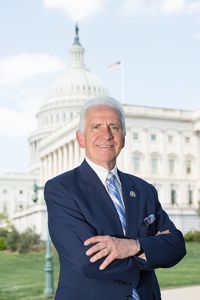
United States · Official source
4,157 records where Rep. Costa, Jim [D-CA-21] is listed as a sponsor, author, or other actor. Search with topics and years
United States · United States Congress · 24 October 2025
United States · United States Congress · 24 October 2025
Halting Education Loan Payments during Federal Employment Disruptions Act or the HELP FEDs Act This bill waives late fees, penalties, and other adverse actions for federal employees who miss student loan payments during a lapse in appropriations (i.e., government shutdown). The bill applies to education loans made, insured, or guaranteed under the Higher Education Act of 1965, including loans held by the Department of Education (ED) or contracted loan servicers. Under the bill, a federal employee who misses a student loan payment that is due during a period of involuntary disruption of pay (i.e., the employee did not receive scheduled wages due to a lapse in appropriations) may not be assessed a late fee or penalty or be subject to other adverse actions. The bill also prohibits federal employees from incurring additional interest on such loans during an involuntary disruption of pay. In addition, the bill requires ED to coordinate with credit reporting agencies and loan servicers to ensure that no adverse information related to delayed or missed student loan payments of a federal employee during an involuntary disruption of pay is furnished to any consumer reporting agency. The bill applies retroactively to any involuntary disruption of pay occurring on or after October 1, 2025.
United States · United States Congress · 21 October 2025
United States · United States Congress · 21 October 2025
United States · United States Congress · 14 October 2025
United States · United States Congress · 14 October 2025
United States · United States Congress · 14 October 2025
Home Energy Assistance in Times of Shutdown Act or the HEATS Act This bill provides appropriations for the Low Income Home Energy Assistance Program (LIHEAP) during any period in which there is a lapse in discretionary appropriations for any fiscal year (i.e., a government shutdown). Under LIHEAP, the federal government makes annual grants to states, tribes, and territories to operate home energy assistance programs for low-income households. The bill provides appropriations for LIHEAP payments to continue during a government shutdown.
United States · United States Congress · 10 October 2025
United States · United States Congress · 10 October 2025
United States · United States Congress · 8 October 2025
United States · United States Congress · 8 October 2025
United States · United States Congress · 8 October 2025
United States · United States Congress · 6 October 2025
This resolution supports the designation of National Hydrogen and Fuel Cell Day.
United States · United States Congress · 3 October 2025
United States · United States Congress · 3 October 2025
United States · United States Congress · 3 October 2025
United States · United States Congress · 30 September 2025
$2.50 for America’s 250th Act This bill requires the minting of $2.50 coins to commemorate the 250th anniversary, or the semiquincentennial, of the signing of the Declaration of Independence. Specifically, the Department of the Treasury must mint and issue a $2.50 circulating coin upon determining that such minting is technically feasible, economically feasible, and not cost prohibitive. The design of such a coin during the first five years of its issuance must be as described by the bill, however, subsequent designs may be selected by Treasury to celebrate the founding of the United States. Treasury may also mint and issue $2.50 numismatic coins (i.e., collectible coins) in silver, clad, and other alloys, including gold.
United States · United States Congress · 30 September 2025
Wildfire Recovery Act This bill provides flexibility to increase the federal cost share for the Fire Management Assistance Grant (FMAG) program of the Federal Emergency Management Agency (FEMA). It also requires updates to FMAG policy to remove limitations on reimbursement for predeployment of firefighting assets. Under current law, FEMA’s regulations require a 75% federal cost share for FMAG assistance and do not permit adjustments. The bill establishes FMAG’s 75% federal cost share as a minimum, providing flexibility for such percentage to be increased in certain instances. It also requires FEMA to establish by regulation criteria through which FEMA may recommend the President increase FMAG’s federal cost share above 75%. Such criteria must include a financial threshold, relating to the costs of state or local government response to a fire triggering FMAG assistance, above which FEMA may recommend the President increase the federal cost share. Also, currently, FMAG may reimburse costs for pre-positioning firefighting resources into areas of higher fire danger up to 21 days before a declared fire. However, under current FMAG policy, costs for pre-positioning state or local government-owned resources within their own state are ineligible. The bill requires FEMA to update FMAG grants policy to allow reimbursement for predeployment of domestic assets by state, local, or Indian tribal governments in a manner consistent with other FEMA programs.
United States · United States Congress · 30 September 2025
Federal Firefighter Paycheck Protection Act This bill provides continuing FY2026 appropriations to pay federal firefighters if a government shutdown is in effect. It also prohibits the firefighters from being subject to a reduction in force (RIF) during a government shutdown. Specifically, the bill provides continuing FY2026 appropriations to provide pay and allowances to federal firefighters during any period in which interim or full-year appropriations for FY2026 are not in effect (i.e., a government shutdown). The bill provides the appropriations until the earlier of (1) the enactment of specified appropriations legislation, or (2) January 1, 2027. The bill also prohibits federal firefighters from being removed from the civil service due to a RIF during a government shutdown.
United States · United States Congress · 30 September 2025
This resolution supports the designation of a National Animal Rescue Day to create awareness for animal rescue programs throughout the year and address the challenge of pet overpopulation through continued spaying and neutering.
United States · United States Congress · 30 September 2025
This resolution expresses support for the recognition of International Day of Awareness of Food Loss and Waste.
United States · United States Congress · 26 September 2025
United States · United States Congress · 23 September 2025
United States · United States Congress · 23 September 2025
United States · United States Congress · 18 September 2025
Aviation Funding Stability Act of 2025 This bill provides continuing appropriations to the Federal Aviation Administration (FAA) if (1) an appropriations bill for the FAA has not been enacted before a fiscal year begins, or (2) a joint resolution making continuing appropriations for the FAA is not in effect. Specifically, the bill provides appropriations from the Airport and Airway Trust Fund at the rate of operations that was provided for the prior fiscal year to continue programs, projects, and activities that were funded in the preceding fiscal year. The bill provides the appropriations until the earlier of (1) the date on which the applicable regular appropriations bill for the fiscal year or a joint resolution making continuing appropriations becomes law, or (2) the date that is 30 days after the first day of a lapse in appropriations.
United States · United States Congress · 18 September 2025
United States · United States Congress · 18 September 2025
United States · United States Congress · 18 September 2025
Redistricting Reform Act of 2025 This bill sets forth requirements for congressional redistricting and generally prohibits mid-decade redistricting. Specifically, the bill requires that congressional redistricting be conducted in accordance with a plan developed by (1) a state-established independent commission; or (2) if such a commission does not enact a plan, a three-judge panel from a U.S. District Court. This requirement does not apply to a state that has a plan developed and approved by an independent redistricting commission that complies with specified requirements. The bill outlines the criteria for a redistricting plan, including that congressional districts must be drawn to (1) ensure the practical ability of a protected group to participate in the political process, nominate candidates, and elect representatives of choice; and (2) represent communities of interest and neighborhoods. Additionally, the bill prohibits the use of a redistricting plan that was drawn with the intent (or has the effect of) materially favoring or disfavoring any political party. Further, the bill establishes the requirements for appointing members to a state-established independent redistricting commission, including diversity requirements. The Government Accountability Office must report on the extent to which these commissions meet the diversity requirements. The bill includes a provision to prevent states from redistricting more than once following an apportionment (i.e., mid-decade redistricting). The bill also directs the Election Assistance Commission to make payments to states to carry out congressional redistricting.
United States · United States Congress · 17 September 2025
United States · United States Congress · 17 September 2025
United States · United States Congress · 16 September 2025
United States · United States Congress · 15 September 2025
United States · United States Congress · 15 September 2025
George Floyd Justice in Policing Act of 2025 This bill addresses a wide range of policies and issues regarding policing practices and law enforcement accountability. It increases accountability for law enforcement misconduct, restricts the use of certain policing practices, enhances transparency and data collection, and establishes best practices and training requirements. The bill enhances existing enforcement mechanisms to remedy violations by law enforcement. Among other things, it does the following: lowers the criminal intent standard—from willful to knowing or reckless—to convict a law enforcement officer for misconduct in a federal prosecution, limits qualified immunity as a defense to liability in a private civil action against a law enforcement officer, and grants administrative subpoena power to the Department of Justice (DOJ) in pattern-or-practice investigations. It establishes a framework to prevent and remedy racial profiling by law enforcement at the federal, state, and local levels. It also limits the unnecessary use of force and restricts the use of no-knock warrants, chokeholds, and carotid holds. The bill creates a national registry—the National Police Misconduct Registry—to compile data on complaints and records of police misconduct. It also establishes new reporting requirements, including on the use of force, officer misconduct, and routine policing practices (e.g., stops and searches). Finally, it directs DOJ to create uniform accreditation standards for law enforcement agencies and requires law enforcement officers to complete training on racial profiling, implicit bias, and the duty to intervene when another officer uses excessive force.
United States · United States Congress · 15 September 2025
United States · United States Congress · 15 September 2025
This resolution expresses support for the designation of National Clean Energy Week.
United States · United States Congress · 11 September 2025
United States · United States Congress · 11 September 2025
United States · United States Congress · 10 September 2025
United States · United States Congress · 10 September 2025
Reforming and Enhancing Sustainable Updates to Laboratory Testing Services Act of 2025 or the RESULTS Act This bill requires the use of particular data from the private sector to inform Medicare payment rates for certain widely available laboratory tests. Specifically, the Centers for Medicare & Medicaid Services (CMS) must contract with an entity that maintains a database of claims data for clinical diagnostic laboratory tests that (1) are not advanced diagnostic tests, and (2) were furnished by more than 100 providers and suppliers of such services over a specified six-month period (i.e., widely available tests). The database must meet specified requirements, such as having data that is representative of the entire country and from more than 50 private payors and claims administrators. The contracted entity must be a nonprofit entity that is not affiliated with any government agency, any insurance issuer or provider, or any other organization in the health care sector. Beginning January 1, 2028, the CMS must use the information obtained from the database to inform Medicare payment rates for these widely available laboratory tests. The bill additionally specifies processes for determining payment rates for laboratory tests that are not advanced diagnostic tests, are not widely available, and lack adequate claims data. The CMS must use certain existing processes to set appropriate rates. The bill also delays scheduled payment reductions for laboratory tests until 2028 and allows for judicial and administrative review of payment rates.
United States · United States Congress · 10 September 2025
United States · United States Congress · 10 September 2025
United States · United States Congress · 9 September 2025
United States · United States Congress · 9 September 2025
United States · United States Congress · 8 September 2025
United States · United States Congress · 8 September 2025
United States · United States Congress · 8 September 2025
United States · United States Congress · 8 September 2025
United States · United States Congress · 4 September 2025
United States · United States Congress · 4 September 2025
Bipartisan Premium Tax Credit Extension Act This bill extends for one year, through 2026, temporary changes enacted by the American Rescue Plan Act of 2021 (ARPA) and the Inflation Reduction Act of 2022 (IRA) that generally expand eligibility for and increase the amount of the premium tax credit. Currently, eligible taxpayers may be able to claim the premium tax credit, which applies toward the cost of obtaining health insurance through health insurance exchanges. To be eligible for the premium tax credit, a taxpayer’s household income must meet or exceed 100% of the federal poverty level (FPL) and, after 2025, may not exceed 400% of the FPL (maximum income limit). For 2021-2025, the ARPA and IRA eliminated the maximum income limit, which generally expands eligibility for the premium tax credit. Further, under current law, the amount of the premium tax credit is (1) generally the plan premium (conditions apply), minus (2) the taxpayer’s household income multiplied by the applicable percentage. The applicable percentage is a specific percentage that varies depending on which of six income ranges (adjusted for inflation after 2025) the taxpayer’s household income falls within. For 2021-2025, the ARPA and IRA lowered the applicable percentages and eliminated the adjustment of the applicable percentages for inflation, which generally increases the amount of the premium tax credit. The bill extends for one year, through 2026, the elimination of the 400% maximum income limit, the lower applicable percentages, and the elimination of the inflation adjustment for the applicable percentages.
United States · United States Congress · 3 September 2025
CRP Improvement and Flexibility Act of 2025 This bill increases federal assistance and incentives for eligible participants and entities in the Conservation Reserve Program (CRP) of the Farm Service Agency. CRP is a land conservation program that provides an annual rental payment to farmers in exchange for farmers removing environmentally sensitive land from agricultural production and planting species that will improve environmental health and quality. The bill increases the CRP annual rental payment limitation from $50,000 to $125,000. The bill also permanently establishes a continuous enrollment procedure for land that will be enrolled under the State Acres for Wildlife Enhancement Initiative. Additionally, the bill provides federal cost sharing payments for the establishment of grazing infrastructure on all CRP contracts and practices, if grazing is included in the conservation plan and addresses a resource concern. It also provides federal cost sharing payments under CRP for management activities to implement the conservation plan that are not related to haying or grazing. Further, the bill allows emergency haying on CRP land during the primary nesting season in response to drought, flooding, wildfire, or other emergencies if certain conditions are met. It also modifies the conditions under which haying and grazing may be permitted on CRP land.