Bill· HRH.R. 7977 (119th)referred
Energy Bills Relief Act
United States · United States Congress · 18 March 2026
The world's political record
Person
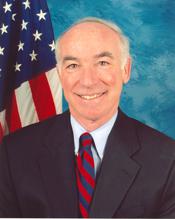
United States · Official source
3,882 records where Rep. Courtney, Joe [D-CT-2] is listed as a sponsor, author, or other actor. Search with topics and years
United States · United States Congress · 18 March 2026
United States · United States Congress · 17 March 2026
United States · United States Congress · 5 March 2026
United States · United States Congress · 4 March 2026
Democracy Is Strengthened by Casting Light On Spending in Elections Act of 2026 or the DISCLOSE Act of 2026 This bill addresses campaign finance, including by expanding the prohibition on campaign spending by foreign nationals, requiring additional disclosures of campaign expenditures, and requiring additional disclosures regarding certain political advertisements. Specifically, the bill expands existing foreign money prohibitions to include disbursements for paid web-based or digital communications and federal judicial nomination communications. It also prohibits foreign nationals from contributing to campaigns related to ballot initiatives and referenda. The Government Accountability Office must, for each four-year election cycle, study and report on the incidence of illicit foreign money in federal elections. Next, the bill makes it unlawful to establish or use a corporation, company, or other entity with the intent to conceal an election contribution or donation by a foreign national. A violator is subject to criminal penalties—a fine, a prison term of up to five years, or both. Covered organizations (e.g., corporations, labor organizations, and political organizations) must, within 24 hours, file reports with the Federal Election Commission to disclose campaign expenditures of more than $10,000 during an election cycle. The bill also requires organizations to provide additional disclosures regarding political advertisements, including the donors who contributed the most money to that organization in the last year.
United States · United States Congress · 26 February 2026
United States · United States Congress · 23 February 2026
United States · United States Congress · 20 February 2026
Airspace Location and Enhanced Risk Transparency Act of 2026 or the ALERT Act This bill addresses aviation safety by increasing requirements for aircraft tracking and communication using Automatic Dependent Surveillance-Broadcast (ADS-B) technology and expanding oversight. As background, ADS-B for broadcasting (Out) and receiving (In) transmits information (e.g., location and weather) among aircraft and air traffic control (ATC). The bill requires the Department of Defense (DOD) and the Department of Transportation (DOT) to enter into an agreement regarding the use of collision prevention technologies on DOD aircraft. The agreement must require the use of ADS-B Out as the default practice for DOD helicopters operating in the national airspace, unless such use would affect operational security. For DOD helicopters that are carrying out special missions in the Washington, DC, metropolitan area and are exempt from ADS-B Out transmission requirements, DOD must coordinate with DOT to conduct a safety risk assessment and implement appropriate mitigations. By December 31, 2031, DOD aircraft (other than certain special mission aircraft) must be equipped with and operating integrated ADS-B In technology. With respect to civil aircraft, by December 31, 2031, the Federal Aviation Administration (FAA) must generally require aircraft that are currently required to be equipped with ADS-B Out to also be equipped with ADS-B In. Additionally, among other requirements, the FAA must establish time-on-position limits for supervisory ATC personnel; establish a process to timely notify parties involved in certain near-miss incidents; and evaluate and revise, as necessary, helicopter routes around Ronald Reagan Washington National Airport.
United States · United States Congress · 20 February 2026
United States · United States Congress · 17 February 2026
Federal Extreme Risk Protection Order Act of 2026 This bill authorizes and establishes procedures for federal courts to issue federal extreme risk protection orders. Additionally, the bill establishes grants to support the implementation of extreme risk protection order laws at the state and local levels, extends federal firearms restrictions to individuals who are subject to extreme risk protection orders, and expands related data collection. Extreme risk protection order laws, or red flag laws, generally allow certain individuals (e.g., law enforcement officers or family members) to petition a court for a temporary order that prohibits an at-risk individual from purchasing and possessing firearms. Among its provisions, the bill authorizes a family or household member, or a law enforcement officer, to petition for a federal extreme risk protection order with respect to an individual who poses a risk to themselves or others; directs the Department of Justice to establish a grant program to help states, local governments, Indian tribes, and other entities implement extreme risk protection order laws; extends federal restrictions on the receipt, possession, shipment, and transportation of firearms and ammunition to individuals who are subject to extreme risk protection orders; and requires the Federal Bureau of Investigation to compile records from federal, tribal, and state courts and other agencies that identify individuals who are subject to extreme risk protection orders.
United States · United States Congress · 12 February 2026
United States · United States Congress · 11 February 2026
Department of Homeland Security Appropriations Act, 2026 This bill provides FY2026 appropriations for various agencies and offices within the Department of Homeland Security (DHS), except for U.S. Immigration and Customs Enforcement (ICE), U.S. Customs and Border Protection (CBP), and management and oversight activities of the Office of the Secretary. Specifically, the bill provides appropriations to DHS for the Federal Protective Service, the Office of Inspector General, the Transportation Security Administration, the U.S. Coast Guard, the U.S. Secret Service, the Cybersecurity and Infrastructure Security Agency, the Federal Emergency Management Agency (FEMA), U.S. Citizenship and Immigration Services, the Federal Law Enforcement Training Centers, and the Science and Technology Directorate. The bill does not provide appropriations for some agencies and activities that have been funded in prior DHS appropriations acts, including ICE, CBP, and management and oversight activities of the Office of the Secretary.
United States · United States Congress · 4 February 2026
Rebuild America's Schools Act of 2026 This bill provides support for long-term improvements to public elementary and secondary school facilities. First, the bill sets forth allocations to states and establishes a need-based grant program for local educational agencies (LEAs) to improve school facilities. Further, the bill specifies allowable uses of grant funds, including carrying out major repairs, improving indoor air quality, and making facilities accessible to individuals with disabilities. Additionally, the bill requires LEAs that receive funds for new construction, modernization, or renovation projects to comply with hazard-resistance building codes and performance criteria under the WaterSense program of the Environmental Protection Agency. Further, the bill requires such LEAs to adopt certain green practices (environmental standards) and requires the use of iron, steel, and manufactured products that are made in the United States (Buy America). The bill restores school infrastructure tax credit bonds. The bill also sets forth reporting requirements, including annual reports on grant program projects and a report by the Government Accountability Office that requires a study of the geographic distribution of projects, the impact of selected projects on student and staff health and safety, and the accessibility of projects to high-needs schools. The bill also establishes the Office of School Infrastructure and Sustainability within the Department of Education. Next, the bill extends through FY2031 the Impact Aid Construction program. Finally, the bill establishes a grant program to assist LEAs with repairing or replacing concrete foundations affected by pyrrhotite (an iron sulfide material linked to crumbling foundations).
United States · United States Congress · 3 February 2026
United States · United States Congress · 15 January 2026
United States · United States Congress · 15 January 2026
United States · United States Congress · 14 January 2026
United States · United States Congress · 13 January 2026
United States · United States Congress · 12 January 2026
United States · United States Congress · 8 January 2026
United States · United States Congress · 7 January 2026
This concurrent resolution directs the President to remove U.S. Armed Forces from Venezuela unless a declaration of war or authorization to use military force for such purpose has been enacted.
United States · United States Congress · 19 December 2025
United States · United States Congress · 18 December 2025
United States · United States Congress · 17 December 2025
United States · United States Congress · 16 December 2025
Essential Caregivers Act of 2025 This bill prohibits certain health care facilities from limiting the access of essential caregivers to residents of those facilities, including during designated emergency periods. Specifically, the bill generally prohibits Medicare skilled nursing facilities, Medicaid nursing facilities, Medicaid intermediate care facilities, and associated inpatient rehabilitation facilities from restricting the access of essential caregivers to residents of the facilities, including during emergency periods in which visitation rights are otherwise restricted. During emergency periods, facilities may restrict access for an initial period of up to seven days and for one additional maximum seven-day period (if the additional period is approved by the state health department). Facilities may restrict access for a total of 7 days (or 14 days with the approval of the state health department) during an emergency period. Essential caregivers must agree to comply with any safety protocols set by the facility, which may be no more stringent for caregivers compared to those for staff. Caregivers who fail to comply with these requirements may be denied access, subject to an appeals process.
United States · United States Congress · 16 December 2025
United States · United States Congress · 16 December 2025
United States · United States Congress · 10 December 2025
United States · United States Congress · 2 December 2025
United States · United States Congress · 1 December 2025
This concurrent resolution directs the President to remove U.S. Armed Forces from hostilities within or against Venezuela unless a declaration of war or authorization to use military force for such purpose has been enacted.
United States · United States Congress · 20 November 2025
United States · United States Congress · 19 November 2025
United States · United States Congress · 19 November 2025
United States · United States Congress · 18 November 2025
United States · United States Congress · 17 November 2025
This concurrent resolution directs the President to remove U.S. Armed Forces from hostilities with any presidentially designated terrorist organization in the Western Hemisphere unless a declaration of war or authorization to use military force for such purpose has been enacted.
United States · United States Congress · 17 November 2025
United States · United States Congress · 10 November 2025
United States · United States Congress · 7 November 2025
United States · United States Congress · 7 November 2025
USS Frank E. Evans Act This bill requires the Department of Defense to authorize inclusion on the Vietnam Veterans Memorial Wall in the District of Columbia of the names of the 74 crew members of the USS Frank E. Evans killed on June 3, 1969.
United States · United States Congress · 4 November 2025
Veterans Heroin Overdose Prevention Examination Act or the Veterans HOPE Act This bill requires the Department of Veterans Affairs (VA) to complete a review of the deaths of all covered veterans who died from opioid overdoses during the five-year period preceding the enactment of this bill. Covered veterans are those who received VA hospital care or medical services during the five-year period preceding the death of the veteran. The VA shall report on the results of the review and make such report publicly available.
United States · United States Congress · 31 October 2025
United States · United States Congress · 28 October 2025
United States · United States Congress · 3 October 2025
United States · United States Congress · 26 September 2025
United States · United States Congress · 23 September 2025
United States · United States Congress · 19 September 2025
United States · United States Congress · 19 September 2025
This joint resolution directs the President to remove U.S. Armed Forces from hostilities against any organization designated on or after February 20, 2025, as a foreign terrorist organization or specially designated global terrorist, any states in which such entities operate, or any non-state organization engaged in illegal drug trafficking unless a declaration of war or authorization to use military force for such purpose has been enacted. The resolution specifies that it shall not be construed to prevent the United States from defending itself from an armed attack or the threat of an imminent armed attack or from using the U.S. Armed Forces in support of civil authorities as part of authorized counternarcotics operations.
United States · United States Congress · 18 September 2025
United States · United States Congress · 18 September 2025
United States · United States Congress · 18 September 2025
United States · United States Congress · 17 September 2025