Bill· HRH.R. 2940 (119th)referred
Advancing Water Reuse Act
United States · United States Congress · 17 April 2025
The world's political record
Person
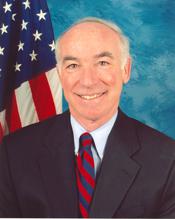
United States · Official source
3,882 records where Rep. Courtney, Joe [D-CT-2] is listed as a sponsor, author, or other actor. Search with topics and years
United States · United States Congress · 17 April 2025
United States · United States Congress · 10 April 2025
Strengthening Efforts for Relief and Vital Incentives for Community Service and Engagement Act or the SERVICE Act This bill makes changes to the Public Service Loan Forgiveness (PSLF) program. Under the current PSLF program, the Department of Education (ED) must cancel the balance of interest and principal due on a borrower's Federal Direct Loans after the borrower makes 120 monthly loan payments while employed in a public service job and, at the time of loan forgiveness, the borrower is employed in a public service job. Among other changes to the PSLF program, this bill reduces from 120 to 96 the number of monthly payments required for loan forgiveness; expands qualifying monthly payments, deferments, and forbearances allowed under the PSLF program; removes the requirement that a borrower must be employed in a public service job at the time of loan forgiveness; establishes a reconsideration process for borrowers who have their initial PSLF application denied; and prohibits interest capitalization on loans after deferment or forbearance. The bill directs ED to (1) establish an online portal that provides borrowers with information on loans and the PSLF program, and (2) establish and regularly update a database listing public service jobs. The bill allows an eligible teacher to use the same teaching service to qualify for both the Teacher Loan Forgiveness program and the PSLF program. The Government Accountability Office must study and report on the feasibility of establishing data matching agreements for PSLF that allows borrowers to forgo requesting employment certification from their employer.
United States · United States Congress · 10 April 2025
United States · United States Congress · 9 April 2025
Gas-Operated Semi-Automatic Firearms Exclusion Act or the GOSAFE Act This bill establishes a framework to regulate gas-operated semiautomatic firearms and large capacity ammunition feeding devices under federal firearms laws. First, the bill generally prohibits the import, sale, manufacture, transfer, receipt, or possession of a firearm that is or is modified to operate as a prohibited gas-operated semiautomatic firearm; a combination of parts that modify or can be assembled into a prohibited gas-operated semiautomatic firearm, or that produce an unlawful gas-operated semiautomatic cycling action; a device or combination of parts designed to materially increase the rate of fire of a semiautomatic firearm; or a firearm that is modified to materially increase the rate of fire. Second, the bill generally prohibits (1) the import, sale, manufacture, transfer, or receipt of a large capacity ammunition feeding device; or (2) the possession of a large capacity ammunition feeding device manufactured after the date of enactment. A violation is subject to criminal penalties—a fine, a prison term of up to 12 months, or both, for each violation. In addition, an individual who possesses a prohibited gas-operated semiautomatic firearm during a federal felony offense is subject to additional penalties—a fine, a mandatory minimum prison term of two years, or both. Finally, the bill allows a state or local government to use Edward Byrne Memorial Justice Assistance Grant Program funds to compensate individuals who surrender gas-operated semiautomatic firearms and large capacity ammunition feeding devices under a buy-back program.
United States · United States Congress · 9 April 2025
United States · United States Congress · 9 April 2025
Closing the Bump Stock Loophole Act of 2025 This bill generally prohibits the import, sale, manufacture, transfer, receipt, or possession of a device that is primarily designed, or redesigned, to increase the rate of fire when attached to a semiautomatic firearm; a device, part, or combination of parts that is designed and functions to increase the rate of fire of a firearm; or a semiautomatic firearm that has been modified to materially increase the rate of fire or to approximate the action or rate of fire of a machine gun. Additionally, the bill adds to the list of firearms subject to regulation under the National Firearms Act semiautomatic firearms that have been modified to materially increase the rate of fire or approximate the action or rate of fire of a machine gun.
United States · United States Congress · 9 April 2025
Hands Off Medicaid and SNAP Act of 2025 This bill establishes a budget point of order against considering budget reconciliation legislation in the House or the Senate that (1) reduces enrollment or benefits for individuals enrolled in the Medicaid program, or (2) reduces eligibility or benefits for households that participate in the Supplemental Nutrition Assistance Program (SNAP). (Under current law, reconciliation bills are considered by Congress using expedited legislative procedures that prevent a filibuster and restrict amendments in the Senate.) The point of order expires on January 20, 2029.
United States · United States Congress · 8 April 2025
United States · United States Congress · 8 April 2025
United States · United States Congress · 8 April 2025
United States · United States Congress · 2 April 2025
United States · United States Congress · 1 April 2025
New Producer Economic Security Act This bill establishes the New Producer Economic Security Program within the Farm Service Agency (FSA) to provide funding and grants to help new farmers, ranchers, and forest owners. Specifically, the FSA must make competitive grants to, enter into cooperative agreements with, or provide other capital support to eligible entities (e.g., state or local governments, Indian tribes, nonprofit organizations, and institutions of higher education). These entities must provide direct assistance to qualified farmers, ranchers, and forest owners (e.g., those who have not operated a farm or ranch for more than 10 consecutive years or are economically disadvantaged). The bill specifically excludes from assistance any foreign-based or foreign-owned corporation. The direct assistance may include payments to qualified beneficiaries to acquire real property (including air rights and water rights), secure clear title on heirs' property, and improve or remediate land, water, and soil. Eligible entities may also use grants (1) to provide direct assistance to qualified beneficiaries in assessing, purchasing, acquiring, or retaining eligible land; (2) for activities designed to support farm establishment and long-term viability; and (3) to provide technical assistance. The FSA must establish a stakeholder committee, and in collaboration with the committee, develop a process for evaluating and selecting applications submitted by eligible entities. The stakeholder committee must include perspectives reflecting the complexity of the rural and urban U.S. agricultural landscapes and the wide variety of agricultural production models.
United States · United States Congress · 1 April 2025
Workplace Violence Prevention for Health Care and Social Service Workers Act This bill requires the Department of Labor to address workplace violence in health care, social service, and similar sectors. Specifically, Labor must issue an occupational safety and health standard that requires certain employers to take actions to protect workers and other personnel from workplace violence. The standard applies to employers in the health care sector, in the social service sector, and in sectors that conduct activities similar to those in the health care and social service sectors. Among other elements, the standard must require each employer to (1) develop a workplace violence prevention plan, (2) promptly investigate incidents of workplace violence, and (3) provide relevant training and education to employees. The bill requires certain hospitals and skilled nursing facilities to comply with this standard as a condition of Medicare participation.
United States · United States Congress · 1 April 2025
Protect America's Workforce Act This bill nullifies the Executive Order titled Exclusions from Federal Labor-Management Relations Programs (issued on March 27, 2025), which excludes specified executive agencies and subdivisions from the Federal Service Labor-Management Relations Statute. The statute authorizes federal employees' participation in collective bargaining and enforces collective bargaining rights. The bill also specifies that a covered collective bargaining agreement in place as of March 26, 2025, shall have full force and effect through the stated term of the agreement.
United States · United States Congress · 1 April 2025
United States · United States Congress · 1 April 2025
Sanctioning Russia Act of 2025 This bill imposes penalties on certain persons (individuals and entities) if the President determines that the Russian government or a person acting at Russia's direction is involved with (1) refusing to negotiate a peace agreement with Ukraine; (2) violating a negotiated peace agreement; (3) initiating another invasion of Ukraine; or (4) overthrowing, dismantling, or seeking to subvert the Ukrainian government. If the President makes such a determination, the bill requires certain actions including the President must impose visa- and property-blocking sanctions on specified persons such as the Russian president, certain Russian military commanders, and any foreign person that knowingly provides defense items to the Russian armed forces; the President must increase the rate of duty on all goods and services imported from Russia into the United States to at least 500% relative to the value of such goods and services; the President must increase the rate of duty on all goods and services imported into the United States from countries that knowingly engage in the exchange of Russian-origin uranium and petroleum products to at least 500% relative to the value of such goods and services; the Department of the Treasury must impose property-blocking sanctions on any financial institution organized under Russian law and owned wholly or partly by Russia, and any financial institution that engages in transactions with those entities; and the Department of Commerce must prohibit the export, reexport, or in-country transfer to or in Russia of any U.S.-produced energy or energy product.
United States · United States Congress · 31 March 2025
United States · United States Congress · 27 March 2025
United States · United States Congress · 27 March 2025
United States · United States Congress · 27 March 2025
United States · United States Congress · 26 March 2025
Raise the Age Act of 2025 This bill establishes new restrictions on the sale or transfer of certain semiautomatic firearms to individuals under 21 years of age. Specifically, this bill makes it unlawful for a licensed gun dealer, importer, manufacturer, or collector to sell or deliver a semiautomatic center-fire rifle or semiautomatic center-fire shotgun that has (or has the capacity to accept) an ammunition feeding device with a capacity of more than five rounds to an individual who the licensee knows or has reasonable cause to believe is under age 21. The prohibition does not apply if the individual under age 21 is a full-time law enforcement officer or active-duty member of the Armed Forces. The bill also requires the Federal Bureau of Investigation to report on the operation of its public access line, including a description of information sharing protocols and recommendations for improving such protocols.
United States · United States Congress · 25 March 2025
United States · United States Congress · 24 March 2025
This joint resolution provides that the Equal Rights Amendment, which prohibits discrimination on the basis of sex, was ratified by three-fourths of the states and is therefore a valid constitutional amendment, regardless of any time limit that was in the original proposal. The Equal Rights Amendment was originally proposed to the states in 1972. The original proposal included a deadline for ratification of March 22, 1979; Congress subsequently extended the deadline to June 30, 1982. Although the requisite 38 states have ratified the amendment, three of these states did so after the deadlines, and five states subsequently rescinded their ratifications. The status of the amendment has been the subject of litigation.
United States · United States Congress · 21 March 2025
This resolution requests that the President provide, and directs the Department of Education (ED) to provide, to the House of Representatives all documents and materials related to the closure of ED; any reduction in force or other downsizing measures at ED; any actions taken pursuant to a specified March 3, 2025, communication to ED staff; any actions taken pursuant to any executive order directing the closure of ED; and any determinations made by the President, the Secretary of ED, or other ED staff that the staff remaining at ED after any reduction in force, other downsizing measure, or closure are sufficient to faithfully execute specified federal laws, including the Individuals with Disabilities Education Act, the Elementary and Secondary Education Act of 1965, and the Higher Education Act of 1965.
United States · United States Congress · 21 March 2025
United States · United States Congress · 18 March 2025
United States · United States Congress · 18 March 2025
Feed Hungry Veterans Act of 2025 This bill expands eligibility for the Supplemental Nutrition Assistance Program (SNAP) for certain disabled veterans, including those determined to be catastrophically disabled. In addition, those disabled veterans who are eligible for SNAP under this bill are exempt from the general SNAP work registration and employment and training requirements. The bill takes effect on October 1, 2030.
United States · United States Congress · 14 March 2025
United States · United States Congress · 14 March 2025
United States · United States Congress · 11 March 2025
Metastatic Breast Cancer Access to Care Act This bill expedites payment of Social Security Disability Insurance (SSDI) benefits and eligibility for Medicare coverage for those with metastatic breast cancer (i.e., breast cancer that has spread to other sites in the body). Specifically, the bill eliminates the 5-month waiting period for SSDI benefits and the subsequent 24-month waiting period for Medicare coverage for individuals with metastatic breast cancer. Under current law, individuals generally must wait 5 months after the onset of disability to begin receiving SSDI benefits and an additional 24 months to become eligible for Medicare.
United States · United States Congress · 11 March 2025
United States · United States Congress · 11 March 2025
Caring for Survivors Act of 2025 This bill increases the monthly rate of dependency and indemnity compensation payable to surviving spouses through the Department of Veterans Affairs (VA). Dependency and indemnity compensation is a monthly payment made to eligible survivors (i.e., spouses, parents, or children) of (1) certain veterans who died as a result of a service-connected condition; (2) service members killed while on active military duty or active or inactive duty for training; or (3) veterans who did not die from a service-connected condition, but were totally disabled by a service-connected disability for a certain period of time. The bill also (1) reduces, from 10 years to 5 years, the period of time that certain veterans must have been rated totally disabled due to a service-connected disability in order for a survivor to qualify for benefits; and (2) specifies the amount that is payable to survivors of veterans who were rated totally disabled for a period of less than 10 years before their death.
United States · United States Congress · 11 March 2025
United States · United States Congress · 10 March 2025
25th Anniversary of 9/11 Commemorative Coin Act This bill directs the Department of the Treasury to mint and issue coins to commemorate the 25th anniversary of the September 11, 2001, terrorist attacks on the United States and the establishment of the National September 11 Memorial and Museum at the World Trade Center. The sale of all coins issued under this bill must include a surcharge to be paid to the National September 11 Memorial and Museum at the World Trade Center to support operations and maintenance. However, if the issuance of this commemorative coin exceeds certain annual limits, no surcharge may be included.
United States · United States Congress · 10 March 2025
United States · United States Congress · 10 March 2025
American Teacher Act This bill establishes grants to increase the minimum salary of public elementary and secondary school teachers. It also authorizes a national campaign regarding the value of the teaching profession. First, the bill directs the Department of Education (ED) to award four-year grants to state educational agencies (SEAs) and, through them, subgrants to local educational agencies to establish a minimum annual salary of $60,000 (to be adjusted annually for inflation) for these teachers. Second, the bill directs ED to award grants to eligible SEAs to provide cost-of-living adjustments to the annual base salary of teachers. Finally, the bill authorizes ED to carry out a national campaign to (1) increase awareness about the importance of teachers and the value of the teaching profession, (2) encourage secondary school and college students to consider teaching as a professional career, and (3) diversify the pool of individuals who enter the teaching profession.
United States · United States Congress · 6 March 2025
Preventing Deepfakes of Intimate Images Act This bill makes it a crime to intentionally disclose (or threaten to disclose) a digital depiction that has been altered using digital manipulation of an individual engaging in sexually explicit conduct.
United States · United States Congress · 6 March 2025
United States · United States Congress · 5 March 2025
Protecting Americans’ Social Security Data Act This bill prohibits political appointees and special government employees from accessing Social Security data systems that contain personally identifiable information about Social Security beneficiaries. Specifically, political appointees and special government employees may not access systems maintained by the Social Security Administration (SSA) that issue or record Social Security account numbers, that are used to determine eligibility for or to pay Social Security benefits, or that otherwise contain personally identifiable information about individuals receiving or applying for benefits. The bill also establishes a civil right of action for an individual whose information was negligently accessed or disclosed in violation of these provisions. The individual may bring suit against the United States if the violator was a U.S. employee or officer, or against the violator if they were not a U.S. employee or officer. Such a claim must be brought within two years of the affected individual’s discovery of the violation. Upon a finding of liability, defendants are liable for specified monetary damages. If an individual is criminally charged or subject to proposed disciplinary or adverse action by a federal or state agency for having accessed or disclosed information in violation of these provisions, SSA must notify the individual whose information was accessed or disclosed of the violation as soon as practicable. Finally, the bill requires the SSA Office of the Inspector General to investigate and report to Congress on any unauthorized access to or disclosure of information in a beneficiary data system.
United States · United States Congress · 5 March 2025
TAP Promotion Act This bill requires that pre-separation counseling under the Transition Assistance Program include a presentation that promotes the benefits available to veterans from the Department of Veterans Affairs (VA). The bill also requires the VA to annually report on the presentation to (1) identify veterans service organizations that participate, (2) provide the number of members of the Armed Forces who attend, and (3) provide any recommendations for changes to the presentation.
United States · United States Congress · 5 March 2025
Keeping Our Field Offices Open Act This bill temporarily prohibits the closure or consolidation of, or other limitation of access to, Social Security Administration (SSA) offices and stations, and sets forth procedural requirements for future changes to office and station availability. Specifically, the bill prohibits through at least January 21, 2029, the closure or consolidation of, or other limitation of access to, SSA field offices, hearing offices, and resident stations. On or after that date, SSA must submit a report to Congress justifying its process for selecting stations and offices to be closed, consolidated, or limited. The prohibition is lifted 180 days after the submission of such report. The bill also sets forth requirements that must be met before SSA may close, consolidate, or otherwise limit access to an office or station after the initial moratorium expires. At least 120 days before such a change takes effect, SSA must provide public notice to individuals in affected areas, including information on how lost access to SSA services will be replaced. SSA must also conduct at least two public hearings on each such change. Further, SSA must provide a hearing to any individual who makes a timely showing that a determination to close, consolidate, or limit an office or station is arbitrary, capricious, or deficient in another specified manner. Finally, a closure, consolidation, or limitation may not result in the total number of SSA offices or stations falling below the number of such offices or stations in operation on January 20, 2025.
United States · United States Congress · 5 March 2025
John R. Lewis Voting Rights Advancement Act of 2025 This bill establishes new criteria for determining which states and political subdivisions must obtain preclearance before changes to voting practices may take effect. Preclearance is the process of receiving preapproval from the Department of Justice (DOJ) or the U.S. District Court for the District of Columbia before making legal changes that would affect voting rights. A state and all of its political subdivisions shall be subject to preclearance of voting practice changes for a 10-year period if, during the previous 25 years: 15 or more voting rights violations occurred in the state; 10 or more violations occurred, at least 1 of which was committed by the state itself; or 3 or more violations occurred and the state administers the elections. A political subdivision as a separate unit shall also be subject to preclearance for a 10-year period if three or more voting rights violations occurred there during the previous 25 years. States and political subdivisions that meet certain thresholds regarding minority groups must preclear covered practices before implementation, such as redistricting. States and political subdivisions must notify the public of changes to voting practices. The bill authorizes DOJ to require states or political subdivisions to provide certain documents or answers to questions for enforcing voting rights. The bill outlines factors courts must consider when hearing challenges to voting practices, such as the extent of any history of official voting discrimination in the state or political subdivision.
United States · United States Congress · 5 March 2025
United States · United States Congress · 3 March 2025
United States · United States Congress · 3 March 2025
Safe Schools Improvement Act This bill requires states to direct their local educational agencies (LEAs) to establish policies that prevent and prohibit bullying and harassment of elementary and secondary school students. In particular, these policies must prohibit bullying and harassment based on race, color, national origin, disability, religion, or sex. Sex includes sexual orientation, gender identity, and sex characteristics (including intersex traits). Further, LEAs must provide (1) students, parents, and educational professionals with annual notice of the conduct prohibited in their disciplinary policies; (2) students and parents with grievance procedures that target such conduct; and (3) the public with annual data on the incidence and frequency of that conduct at the school and LEA level. The Department of Education must conduct and report on an independent biennial evaluation of programs and policies to combat bullying and harassment in elementary and secondary schools. The National Center for Education Statistics must collect state data to determine the incidence and frequency of the conduct prohibited by LEA disciplinary policies.
United States · United States Congress · 27 February 2025
Governing Unaccredited Representatives Defrauding VA Benefits Act or the GUARD VA Benefits Act This bill imposes fines on individuals for soliciting, contracting for, charging, or receiving any unauthorized fee or compensation with respect to the preparation, presentation, or prosecution of any claim for Department of Veterans Affairs benefits. The attempted commission of such offenses is also punishable by fine.
United States · United States Congress · 27 February 2025
Keep Americans Safe Act This bill establishes a new criminal offense for the import, sale, manufacture, transfer, or possession of a large capacity ammunition feeding device (LCAFD). The bill does not prohibit certain conduct with respect to an LCAFD, including the following: importation, sale, manufacture, transfer, or possession related to certain law enforcement efforts, or authorized tests or experiments; importation, sale, transfer, or possession related to securing nuclear materials; and possession by a retired law enforcement officer. The bill permits continued possession of, but prohibits sale or transfer of, a grandfathered LCAFD. Newly manufactured LCAFDs must display serial number identification and the date of manufacture. Additionally, the bill allows a state or local government to use Edward Byrne Memorial Justice Assistance Grant Program funds to compensate individuals who surrender an LCAFD under a buy-back program.
United States · United States Congress · 27 February 2025
United States · United States Congress · 27 February 2025
Save America's Forgotten Equines Act of 2025 or the SAFE Act of 2025 This bill permanently prohibits the slaughter of equines (e.g., horses and mules) for human consumption. (Current law prohibits the slaughter of dogs and cats for human consumption. This bill extends the prohibition to equines.) Specifically, this bill prohibits a person from knowingly (1) slaughtering an equine for human consumption; or (2) shipping, transporting, possessing, purchasing, selling, or donating an equine to be slaughtered for human consumption or equine parts for human consumption. The bill subjects a violator to a fine. The bill applies to conduct in or affecting interstate or foreign commerce or within the special maritime and territorial jurisdiction of the United States. However, it does not apply to an activity carried out by an Indian for a religious ceremony. As background, in recent years, the appropriations acts have prohibited the Department of Agriculture (USDA) from using federal funds to inspect horses before they are slaughtered for human consumption. Therefore, there are currently no USDA-inspected horse slaughter facilities in the United States.
United States · United States Congress · 27 February 2025