Bill· HRH.R. 5360 (119th)open
AWARE Act
United States · United States Congress · 15 September 2025
The world's political record
Person
United States · Official source
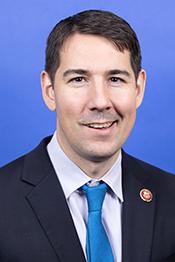
2,067 records where Rep. Harder, Josh [D-CA-9] is listed as a sponsor, author, or other actor. Search with topics and years
United States · United States Congress · 15 September 2025
United States · United States Congress · 15 September 2025
United States · United States Congress · 11 September 2025
United States · United States Congress · 11 September 2025
United States · United States Congress · 10 September 2025
United States · United States Congress · 9 September 2025
United States · United States Congress · 9 September 2025
United States · United States Congress · 4 September 2025
Bipartisan Premium Tax Credit Extension Act This bill extends for one year, through 2026, temporary changes enacted by the American Rescue Plan Act of 2021 (ARPA) and the Inflation Reduction Act of 2022 (IRA) that generally expand eligibility for and increase the amount of the premium tax credit. Currently, eligible taxpayers may be able to claim the premium tax credit, which applies toward the cost of obtaining health insurance through health insurance exchanges. To be eligible for the premium tax credit, a taxpayer’s household income must meet or exceed 100% of the federal poverty level (FPL) and, after 2025, may not exceed 400% of the FPL (maximum income limit). For 2021-2025, the ARPA and IRA eliminated the maximum income limit, which generally expands eligibility for the premium tax credit. Further, under current law, the amount of the premium tax credit is (1) generally the plan premium (conditions apply), minus (2) the taxpayer’s household income multiplied by the applicable percentage. The applicable percentage is a specific percentage that varies depending on which of six income ranges (adjusted for inflation after 2025) the taxpayer’s household income falls within. For 2021-2025, the ARPA and IRA lowered the applicable percentages and eliminated the adjustment of the applicable percentages for inflation, which generally increases the amount of the premium tax credit. The bill extends for one year, through 2026, the elimination of the 400% maximum income limit, the lower applicable percentages, and the elimination of the inflation adjustment for the applicable percentages.
United States · United States Congress · 4 September 2025
United States · United States Congress · 3 September 2025
United States · United States Congress · 3 September 2025
United States · United States Congress · 2 September 2025
United States · United States Congress · 2 September 2025
This resolution supports the designation of a National Military and Veterans Suicide Awareness Day.
United States · United States Congress · 2 September 2025
This bill directs the Agricultural Marketing Service to establish a grant program for commercial specialty crop producers to acquire equipment and provide related training. Funds must be used for mechanized or automated systems and tools that increase the efficiency of a task or reduce human labor for a specific activity (e.g., low-dust harvesting tools and equipment, sorting machines, and crop monitoring and analytics equipment and tools). The bill includes a minimum 50% cost-sharing requirement.
United States · United States Congress · 2 September 2025
United States · United States Congress · 26 August 2025
Specialty Crop Domestic Market Promotion and Development Program Act of 2025 This bill directs the Agricultural Marketing Service to establish a grant program to encourage the development, maintenance, and expansion of the commercial domestic market for domestically produced specialty crop commodities (e.g., for advertising or other demand-oriented, generic domestic promotion activities). Organizations eligible for the grant program include those that promote U.S. produced and grown specialty crop sales and are (1) U.S. agricultural trade organizations or regional state-related organizations that do not profit directly from U.S. specialty crop sales, (2) cooperative organizations or state agencies, or (3) certain private organizations. Specialty crop organizations operating under federal marketing orders are also eligible for the grant program.
United States · United States Congress · 22 August 2025
United States · United States Congress · 22 August 2025
United States · United States Congress · 19 August 2025
United States · United States Congress · 12 August 2025
United States · United States Congress · 12 August 2025
United States · United States Congress · 5 August 2025
United States · United States Congress · 5 August 2025
WWII Nurses Congressional Gold Medal Act This bill provides for the award of a Congressional Gold Medal to World War II Army and Navy Nurse Corps members in recognition of their critical military service and devotion to duty.
United States · United States Congress · 1 August 2025
United States · United States Congress · 1 August 2025
Wildfire Emergency Preparedness Act of 2025 This bill establishes grants, training, and interagency coordination for responding to wildfires and fires in the wildland-urban interface (WUI) (i.e., where undeveloped land or vegetation meets human infrastructure). It also requires measures for protecting the health of firefighters and emergency responders. The bill establishes an Under Secretary of Agriculture for Fire Coordination to manage coordination of government preparation and response to wildfires and WUI fires. Such office may award grants to fire departments and emergency medical services organizations for training firefighting personnel or obtaining personal protective equipment for responding to such fires. Also, the Forest Service must establish a national plan with guidelines for training structural (i.e., urban) firefighters to respond to wildfires and WUI fires. The Forest Service may provide grants to certain nonprofit organizations to carry out training programs pursuant to the plan. Upon request from agencies, the Department of Defense (DOD) may allow its firefighters to conduct operations or assist in responding to wildfires and WUI fires. Agencies must reimburse DOD for such services. Additionally, the National Institute for Occupational Safety and Health must perform research and development and report to Congress on protecting the respiratory health of firefighters and identifying certain hazardous substances in areas affected by wildfires and WUI fires. Also, task forces within the National Urban Search and Rescue Response System of the Federal Emergency Management Agency (FEMA) must train each member in peer mental health support and include members who are mental health practitioners.
United States · United States Congress · 29 July 2025
Ban Corporate PACs Act This bill prohibits for-profit corporations from establishing or operating a separate segregated political fund (commonly known as a political action committee or PAC). Existing funds must terminate not later than one year after the date of enactment of this bill.
United States · United States Congress · 29 July 2025
United States · United States Congress · 29 July 2025
Enhance Access To SNAP Act of 2025 or the EATS Act of 2025 This bill expands eligibility for the Supplemental Nutrition Assistance Program (SNAP) for certain students. Specifically, the bill removes the restriction on SNAP eligibility for students to allow otherwise eligible students who are attending institutions of higher education (IHEs) at least half time to participate in SNAP. Under current law, students 18-49 years old are restricted from participating in SNAP, with exceptions (e.g., caring for a child under the age of 6 or employed for at least 20 hours a week). The Consolidated Appropriations Act, 2021 temporarily exempted some students from certain SNAP eligibility requirements; these temporary student exemptions expired after the end of the COVID-19 public health emergency on May 11, 2023. Further, the bill provides that students enrolled at least half time in a recognized school, training program, or IHE constitute individual households (not residents of institutions ) and may be eligible for SNAP benefits. (Participation in SNAP is limited to households.)
United States · United States Congress · 29 July 2025
United States · United States Congress · 29 July 2025
United States · United States Congress · 25 July 2025
United States · United States Congress · 25 July 2025
United States · United States Congress · 23 July 2025
United States · United States Congress · 23 July 2025
This bill designates the facility of the United States Postal Service located at 6444 San Fernando Road in Glendale, California, as the "Paul Ignatius Post Office".
United States · United States Congress · 23 July 2025
United States · United States Congress · 23 July 2025
United States · United States Congress · 23 July 2025
United States · United States Congress · 23 July 2025
Healthy Drinking Water Affordability Act or the Healthy H2O Act This bill directs the Department of Agriculture (USDA) to establish a program under which USDA awards grants for improving the quality of drinking water in certain rural areas. Grants may be given to individuals or entities, such as home owners, renters, and licensed child-care facilities, that have demonstrated the presence of one or more health contaminants in their drinking water. Grants may also be given to nonprofit organizations to help individuals and entities test their water, analyze the results of the tests, and reduce the contamination.
United States · United States Congress · 23 July 2025
United States · United States Congress · 23 July 2025
Resident Physician Shortage Reduction Act of 2025 This bill increases the number of residency positions eligible for graduate medical education payments under Medicare for qualifying hospitals, including hospitals in rural areas and health professional shortage areas. The bill provides for an additional increase of 2,000 positions per fiscal year from FY2026-FY2032; during this period, each hospital may receive up to 75 additional positions in total under the bill and current law. Additionally, one-third of the positions that are made available under the bill must be allocated to hospitals that are already operating above applicable resident limits. The bill also requires the Government Accountability Office to report on strategies to increase the diversity of the health professional workforce, including with respect to representation from rural, low-income, and minority communities.
United States · United States Congress · 23 July 2025
United States · United States Congress · 22 July 2025
United States · United States Congress · 22 July 2025
United States · United States Congress · 22 July 2025
United States · United States Congress · 22 July 2025
United States · United States Congress · 21 July 2025
United States · United States Congress · 21 July 2025
United States · United States Congress · 17 July 2025
United States · United States Congress · 17 July 2025