Bill· HRH.R. 2257 (119th)referred
National Fallen Firefighters Memorial Coin Act
United States · United States Congress · 21 March 2025
The world's political record
Person
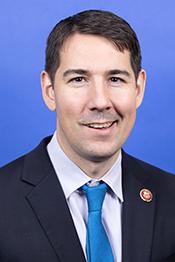
United States · Official source
2,067 records where Rep. Harder, Josh [D-CA-9] is listed as a sponsor, author, or other actor. Search with topics and years
United States · United States Congress · 21 March 2025
United States · United States Congress · 18 March 2025
Innovative Feed Enhancement and Economic Development Act of 2025 or the Innovative FEED Act of 2025 This bill provides for the regulation of zootechnical animal food substances as food additives. The bill defines zootechnical animal food substance as a substance that is added to the food or drinking water of animals and that affects only the animal's gastrointestinal tract, with the intended purpose of affecting the byproducts of the animal's digestion, reducing foodborne pathogens, or altering the animal's gastrointestinal biome. The definition does not include substances that are used to treat or prevent diseases in animals, hormones, or active ingredients of animal drugs. Labels for zootechnical animal food substances must include a disclaimer that the substance may not be used to treat or prevent diseases in animals.
United States · United States Congress · 18 March 2025
This resolution expresses the sense of Congress that Congress and the Administration must work together to pursue effective food and agricultural trade policies that include specified components. Among others, these components include (1) a renewed commitment to secure market access and maintain global competitiveness for the U.S. food and agriculture industries; and (2) consideration of comprehensive trade agreements, enforcement of existing trade agreements, and elimination of certain nontariff trade barriers.
United States · United States Congress · 18 March 2025
United States · United States Congress · 18 March 2025
United States · United States Congress · 18 March 2025
This bill designates the facility of the United States Postal Service located at 130 South Patterson Avenue in Santa Barbara, California, as the "Brigadier General Frederick R. Lopez Post Office Building".
United States · United States Congress · 18 March 2025
United States · United States Congress · 14 March 2025
United States · United States Congress · 14 March 2025
Crop Insurance for Future Farmers Act This bill amends the federal crop insurance program (FCIP) to increase the premium assistance rate for beginning and veteran farmers or ranchers. (FCIP offers subsidized crop insurance policies that producers can purchase to cover a wide variety of crops and livestock.) Specifically, the bill amends the amount of percentage points that are added to the premium assistance rate for beginning farmers or ranchers and veteran farmers or ranchers for an applicable insurance policy or plan (currently 10 percentage points) to provide 15 percentage points in each of the 1st and 2nd reinsurance years, 13 percentage points in the 3rd year, 11 percentage points in the 4th year, and 10 percentage points in each of the 5th through the 10th reinsurance years. Under the bill, farmers and ranchers, and veteran farmers and ranchers, are eligible to qualify for the program for 10 years, an increase from 5 years under current law. Specifically, to be considered a beginning farmer or rancher, a person must not have actively operated and managed a farm or ranch for more than 10 crop years. To be considered a veteran farmer or rancher, a veteran must have (1) not operated a farm or ranch for more than 10 crop years, or (2) first obtained veteran status in the past 10 years.
United States · United States Congress · 14 March 2025
Fair Access to Agriculture Disaster Programs Act This bill waives the adjusted gross income limitations for payments or benefits under specific Department of Agriculture (USDA) disaster assistance programs for a person or legal entity that derives a portion of their income from agriculture. Currently, a person or entity is not eligible to receive certain benefits during a crop, fiscal, or program year if their average gross income exceeds $900,000. Specifically, in the case of an excepted payment or benefit, the adjusted gross income limitation is waived if 75% or more of the average adjusted gross income for the person or entity is derived from farming, ranching, or silviculture activities. These activities include agritourism, direct-to-consumer marketing of agricultural products, and the sale of agricultural equipment owned by such person or entity. The bill applies to the USDA Livestock Indemnity Program; Livestock Forage Disaster Program; Emergency Assistance for Livestock, Honey Bees, and Farm-Raised Fish Program; Tree Assistance Program; and Noninsured Crop Disaster Assistance Program.
United States · United States Congress · 14 March 2025
United States · United States Congress · 14 March 2025
United States · United States Congress · 14 March 2025
United States · United States Congress · 14 March 2025
United States · United States Congress · 14 March 2025
Seizure Awareness and Preparedness Act This bill directs the Department of Education to award competitive grants to states and, through them, subgrants to local educational agencies (LEAs) for carrying out a program that supports elementary and secondary students who have epilepsy or a seizure disorder. Specifically, LEAs must use these subgrants to train school personnel on seizure awareness and preparedness that covers individualized health care plans and individualized emergency health care plans for students who have epilepsy or a seizure disorder.
United States · United States Congress · 14 March 2025
Homes for Every Local Protector, Educator, and Responder Act of 2025 or the HELPER Act of 2025 This bill establishes a program administered by the Department of Housing and Urban Development to provide mortgage assistance to law enforcement officers, elementary and secondary school teachers, firefighters, or other first responders. Specifically, these individuals may be eligible for a first-time mortgage on a primary family residence with no down payment. Instead, the mortgage is subject to a one-time, up-front mortgage insurance premium.
United States · United States Congress · 14 March 2025
National STEM Week Act This bill requires the National Science and Technology Council's Committee on STEM to designate a week each calendar year as National STEM Week. (STEM refers to science, technology, engineering, and mathematics.) During this established week, the committee must encourage educational institutions (i.e., elementary schools, secondary schools, and institutions of higher education) to participate in the week and also encourage families of students attending these educational institutions to participate in STEM activities. Additionally, the committee must encourage STEM industries to (1) engage with students enrolled in educational institutions by providing mentorship programs, site visits, and guest lectures; and (2) support STEM education initiatives at these educational institutions through funding, resources, and expertise. The committee must annually report to Congress on the activities conducted during the established week.
United States · United States Congress · 11 March 2025
Veterans Patient Advocacy Act This bill requires the Office of Patient Advocacy within the Veterans Health Administration to ensure that rural veterans may access the services of patient advocates. The bill also requires the Government Accountability Office to report on the implementation of such policies.
United States · United States Congress · 11 March 2025
United States · United States Congress · 11 March 2025
United States · United States Congress · 11 March 2025
Metastatic Breast Cancer Access to Care Act This bill expedites payment of Social Security Disability Insurance (SSDI) benefits and eligibility for Medicare coverage for those with metastatic breast cancer (i.e., breast cancer that has spread to other sites in the body). Specifically, the bill eliminates the 5-month waiting period for SSDI benefits and the subsequent 24-month waiting period for Medicare coverage for individuals with metastatic breast cancer. Under current law, individuals generally must wait 5 months after the onset of disability to begin receiving SSDI benefits and an additional 24 months to become eligible for Medicare.
United States · United States Congress · 11 March 2025
Resident Education Deferred Interest Act or the REDI Act This bill allows borrowers in medical or dental internships or residency programs to defer student loan payments until the completion of their programs.
United States · United States Congress · 11 March 2025
United States · United States Congress · 11 March 2025
Smoke Exposure Research Act of 2025 This bill directs the Agricultural Research Service (ARS) to conduct research relating to smoke exposure and wine grapes. This research must be done in coordination with land-grant colleges and universities that are located in California, Oregon, and Washington and have researched the effects of smoke exposure on viticulture and enology operations and practices. Specifically, ARS must conduct research to identify the compounds responsible for smoke exposure, conduct research to establish standard methodologies for sampling and testing smoke-exposed wine grapes and smoke-affected wines, establish a reliable database of background levels of smoke exposure compounds that occur naturally in wine grapes, develop risk assessment tools or mitigation methods to reduce or eliminate smoke exposure, and study compounds that can act as a barrier between wine grapes and smoke compounds.
United States · United States Congress · 11 March 2025
Caring for Survivors Act of 2025 This bill increases the monthly rate of dependency and indemnity compensation payable to surviving spouses through the Department of Veterans Affairs (VA). Dependency and indemnity compensation is a monthly payment made to eligible survivors (i.e., spouses, parents, or children) of (1) certain veterans who died as a result of a service-connected condition; (2) service members killed while on active military duty or active or inactive duty for training; or (3) veterans who did not die from a service-connected condition, but were totally disabled by a service-connected disability for a certain period of time. The bill also (1) reduces, from 10 years to 5 years, the period of time that certain veterans must have been rated totally disabled due to a service-connected disability in order for a survivor to qualify for benefits; and (2) specifies the amount that is payable to survivors of veterans who were rated totally disabled for a period of less than 10 years before their death.
United States · United States Congress · 10 March 2025
25th Anniversary of 9/11 Commemorative Coin Act This bill directs the Department of the Treasury to mint and issue coins to commemorate the 25th anniversary of the September 11, 2001, terrorist attacks on the United States and the establishment of the National September 11 Memorial and Museum at the World Trade Center. The sale of all coins issued under this bill must include a surcharge to be paid to the National September 11 Memorial and Museum at the World Trade Center to support operations and maintenance. However, if the issuance of this commemorative coin exceeds certain annual limits, no surcharge may be included.
United States · United States Congress · 10 March 2025
United States · United States Congress · 10 March 2025
United States · United States Congress · 10 March 2025
Patient Matching And Transparency in Certified Health IT Act of 2025 or the MATCH IT Act of 2025 This bill requires the Department of Health and Human Services (HHS) to establish a definition and standards for patient matching (i.e., the process of accurately matching patients with their medical records, including when records are exchanged between health care providers). It also requires the development of (1) a minimum data set for technology standards to increase patient matching, and (2) incentives for patient matching under Medicare. Specifically, the bill requires HHS to develop a uniform definition and standards for patient matching to track patient match rates and document improvement over time. The definition and standards must account for certain situations, including duplicate records and multiple matches. The bill also requires the Office of the National Coordinator for Health Information Technology (ONC) to adopt a minimum data set to help health care providers or health information systems achieve a patient match rate of 99.9%. The minimum data set and related standards must be incorporated into the U.S. Core Data for Interoperability and the Medicare Promoting Interoperability Program for health information technology. Additionally, the Centers for Medicare & Medicaid Services (CMS) must establish a voluntary bonus measure within the Medicare Promoting Interoperability Program to allow health care providers who have a patient match rate over a certain percentage to receive a payment adjustment. The ONC and CMS must develop a voluntary reporting program for providers to anonymously submit patient matching data to HHS.
United States · United States Congress · 6 March 2025
Modernizing Wildfire Safety and Prevention Act of 2025 This bill addresses wildfires by expanding emergency and disaster assistance, establishing scientific monitoring, and increasing assistance for firefighting personnel. The bill is based on recommendations in a 2023 report from the Wildland Fire Mitigation and Management Commission, a congressionally established group of public and private experts. The bill expands and expedites federal assistance for wildfire response, recovery, and mitigation by expanding presidential wildfire emergency and major disaster declarations to include natural hazard events stemming from the wildfire (e.g., landslides, floods) within three years after the fire, requiring payment to recipients within 90 days for certain emergency land restoration and disaster assistance for wildfires, and requiring increased accessibility of wildfire risk reduction and recovery grants. Additionally, it authorizes the Federal Emergency Management Agency to allow certain emergency and disaster grant recipients to use unexpended management cost funds for five years, including for capacity-building. The bill requires federal agencies to enhance scientific wildfire monitoring and analysis by establishing a Joint Office of the Fire Environment Center to provide information and services to support community decision-making, establishing a national smoke monitoring and alert system for wildfire smoke, and developing dynamic risk maps. The bill increases assistance for wildland firefighting personnel by establishing grants to colleges and training programs for educational or vocational programs in wildfire emergency management, increasing flexibility for wildland firefighters to retain retirement benefits, and establishing assistance (e.g., notification, counseling) for families of wildland firefighting personnel who are critically injured or killed.
United States · United States Congress · 6 March 2025
United States · United States Congress · 6 March 2025
United States · United States Congress · 6 March 2025
United States · United States Congress · 6 March 2025
Simplifying Veterans Assistance Act of 2025 This bill requires the Department of Veterans Affairs to provide specified guidance to entities seeking grants for the provision of comprehensive service programs to homeless veterans (e.g., rehabilitative services). Specifically, the VA must provide guidance and best practices on a publicly available VA website. Additionally, after the announcement of a funding notice and before the application deadline, the VA must offer at least two online information sessions for entities seeking grants.
United States · United States Congress · 6 March 2025
Veterans Homecare Choice Act of 2025 This bill includes any nurse registry as an eligible health care provider under the Veterans Community Care Program of the Department of Veterans Affairs. Under the bill, a nurse registry is a person who satisfies applicable state licensure requirements and procures, or attempts to procure, contracts or agreements on behalf of registered nurses, licensed practical nurses, certified nursing assistants, home health aides, companions, or homemakers under which such individuals may furnish health care-related or assistive services and receive compensation.
United States · United States Congress · 6 March 2025
Veteran Fraud Reimbursement Act of 2025 This bill modifies the procedures by which the Department of Veterans Affairs (VA) reissues misused benefits to a beneficiary, including by requiring the VA to establish methods and timing with respect to determining whether an instance of misuse by a fiduciary is the result of negligence by the VA. The bill also provides that if a beneficiary predeceases a reissuance, the VA must pay the amount to a surviving beneficiary in the same method as certain other VA benefits are paid upon the death of a beneficiary. Under the bill, the VA may not withhold the reissuing of a benefit payment by reason of a pending determination regarding the VA's negligence in relation to the instance of misuse by a fiduciary. Additionally, the VA is not required to make a determination regarding its negligence for each instance of misuse by a fiduciary of all or part of an individual's benefit paid to such fiduciary.
United States · United States Congress · 6 March 2025
United States · United States Congress · 5 March 2025
United States · United States Congress · 5 March 2025
John R. Lewis Voting Rights Advancement Act of 2025 This bill establishes new criteria for determining which states and political subdivisions must obtain preclearance before changes to voting practices may take effect. Preclearance is the process of receiving preapproval from the Department of Justice (DOJ) or the U.S. District Court for the District of Columbia before making legal changes that would affect voting rights. A state and all of its political subdivisions shall be subject to preclearance of voting practice changes for a 10-year period if, during the previous 25 years: 15 or more voting rights violations occurred in the state; 10 or more violations occurred, at least 1 of which was committed by the state itself; or 3 or more violations occurred and the state administers the elections. A political subdivision as a separate unit shall also be subject to preclearance for a 10-year period if three or more voting rights violations occurred there during the previous 25 years. States and political subdivisions that meet certain thresholds regarding minority groups must preclear covered practices before implementation, such as redistricting. States and political subdivisions must notify the public of changes to voting practices. The bill authorizes DOJ to require states or political subdivisions to provide certain documents or answers to questions for enforcing voting rights. The bill outlines factors courts must consider when hearing challenges to voting practices, such as the extent of any history of official voting discrimination in the state or political subdivision.
United States · United States Congress · 5 March 2025
United States · United States Congress · 4 March 2025
United States · United States Congress · 4 March 2025
United States · United States Congress · 3 March 2025
United States · United States Congress · 3 March 2025
This bill provides statutory authority for, and increases, the maximum monthly allowances for milk under the Special Supplemental Nutrition Program for Women, Infants, and Children (WIC). The WIC food packages provide supplemental foods designed to address the specific nutritional needs of income-eligible pregnant, breastfeeding, and non-breastfeeding postpartum individuals, infants, and children up to five years of age who are at nutritional risk. Currently, federal regulations list seven WIC food packages, which specify eligible foods (e.g., milk, fruits and vegetables) and their quantities (i.e., a maximum monthly allowance). Specifically, Food Package IV applies to children who are one year through four years old. Food Packages V through VII apply to pregnant, breastfeeding, and non-breastfeeding postpartum individuals. For Food Packages IV through VII, the bill establishes a maximum monthly allowance for milk of 16 to 24 quarts, depending on the food package, compared to 12 to 16 quarts under current regulations.
United States · United States Congress · 3 March 2025
United States · United States Congress · 3 March 2025
Harmful Algal Bloom Disaster Relief Act This bill explicitly authorizes the President to declare that a major disaster exists when algal blooms cause damage sufficient to warrant federal major disaster assistance.
United States · United States Congress · 3 March 2025
Safe Schools Improvement Act This bill requires states to direct their local educational agencies (LEAs) to establish policies that prevent and prohibit bullying and harassment of elementary and secondary school students. In particular, these policies must prohibit bullying and harassment based on race, color, national origin, disability, religion, or sex. Sex includes sexual orientation, gender identity, and sex characteristics (including intersex traits). Further, LEAs must provide (1) students, parents, and educational professionals with annual notice of the conduct prohibited in their disciplinary policies; (2) students and parents with grievance procedures that target such conduct; and (3) the public with annual data on the incidence and frequency of that conduct at the school and LEA level. The Department of Education must conduct and report on an independent biennial evaluation of programs and policies to combat bullying and harassment in elementary and secondary schools. The National Center for Education Statistics must collect state data to determine the incidence and frequency of the conduct prohibited by LEA disciplinary policies.
United States · United States Congress · 27 February 2025
United States · United States Congress · 27 February 2025
United States · United States Congress · 27 February 2025
Artificial Intelligence Accountability Act or the AI Accountability Act This bill requires the National Telecommunications and Information Administration (NTIA) to study and report on accountability measures for artificial intelligence (AI) systems. Under the bill, accountability measures are mechanisms designed to assure that a system is trustworthy, including audits, assessments, and certifications. Specifically, the NTIA must study, solicit stakeholder feedback about, and report to Congress on the incorporation of accountability measures into AI systems used by communications technologies (such as telecommunications networks and social media platforms) and the ways in which AI accountability measures reduce risks related to AI systems (e.g., cybersecurity risks), among other topics. The NTIA must also solicit stakeholder feedback and report to Congress on (1) information that should be available to individuals, communities, and businesses that interact with, are affected by, or study AI systems; and (2) methods for making that information available.