Bill· HRH.R. 1111 (119th)referred
Department of Peacebuilding Act of 2025
United States · United States Congress · 7 February 2025
The world's political record
Person
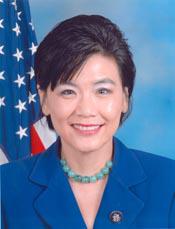
United States · Official source
5,660 records where Rep. Chu, Judy [D-CA-28] is listed as a sponsor, author, or other actor. Search with topics and years
United States · United States Congress · 7 February 2025
United States · United States Congress · 6 February 2025
Protecting Sensitive Locations Act This bill prohibits immigration enforcement actions within 1,000 feet of a sensitive location except in exigent circumstances, such as the imminent risk of death, violence, or physical harm to any person. Sensitive locations include health care facilities; schools and school bus stops; places that provide assistance for people such as children, pregnant women, and abuse victims; child care facilities; places that provide disaster or emergency services; places of worship; courthouses and lawyers’ offices; facilities used as polling places; certain labor union facilities; and public assistance offices. The prohibition shall apply to Department of Homeland Security officers and agents, as well as state employees pursuing immigration enforcement actions. If an enforcement action is carried out in violation of this prohibition (1) no information resulting from the action may be entered into the record in a resulting removal proceeding, and (2) the affected individual may move to immediately terminate such a proceeding. U.S. Immigration and Customs Enforcement and U.S. Customs and Border Protection shall annually report to Congress about enforcement actions taken at sensitive locations in the preceding year.
United States · United States Congress · 6 February 2025
Filipino Veterans Family Reunification Act of 2025 This bill exempts from immigrant visa limitations the children of certain individuals who were naturalized due to their military service during World War II. Specifically, this applies to the children of veterans who served honorably during World War II in the U.S. Armed Forces or in Filipino military units such as the Philippine Army, Philippine Scouts, or recognized guerilla units.
United States · United States Congress · 6 February 2025
Protect Our Letter Carriers Act of 2025 This bill requires or authorizes certain actions related to the U.S. Postal Service (USPS). The bill requires the Department of Justice to appoint an assistant U.S. attorney in each judicial district to coordinate and supervise the investigation and prosecution of various crimes related to postal services (for example, assault on a postal service employee, breaking into a post office, or obstruction of mails). The bill also requires the U.S. Sentencing Commission to amend sentencing guidelines to provide that the assault or robbery of a postal employee shall be treated the same as the assault of a law enforcement officer. Additionally, the bill authorizes appropriations for the USPS to install high security collection boxes and replace older versions of the universal mailbox key with electronic versions.
United States · United States Congress · 6 February 2025
Disaster Resiliency and Coverage Act of 2025 This bill establishes a grant program for certain hazard mitigation measures for homes in disaster risk areas and provides a tax credit for up to 30% of expenditures on such mitigation measures. It also excludes from taxable income certain payments for residential hazard mitigation and federal emergency agricultural assistance. The bill requires the Federal Emergency Management Agency (FEMA) to award grants to states and Indian tribal governments for specified hazard mitigation activities on residential properties at a high risk of experiencing a major disaster. FEMA must establish and periodically update disaster risk areas in which homes are eligible for the grant funding. Individual residential households, subject to certain income limitations, may receive up to $10,000 (adjusted for inflation) for eligible hazard mitigation activities, such as reinforcing a roof, installing a flood control system, or reducing flammable vegetation near the home. The bill also provides an income tax credit to individuals and businesses for up to 30% of expenditures on the specified residential mitigation activities eligible under the grant program. Additionally, under current law, payments for disaster relief and payments under federal hazard mitigation programs are excluded from taxable income. The bill specifically excludes from taxable income payments to an individual for hazard mitigation improvements to their residence under any program established or administered by a state or local government. The bill also excludes certain federal emergency and disaster agricultural assistance from taxable income as a type of disaster relief payment.
United States · United States Congress · 6 February 2025
Scientific Integrity Act This bill requires each federal agency that funds, conducts, or oversees scientific research to adopt and enforce a scientific integrity policy. Under the bill, among other parameters, such policies must (1) ensure that scientific conclusions are not based on political considerations, (2) prohibit the suppression or alteration of findings, and (3) permit researchers to disseminate their findings and engage with the scientific community as appropriate. Scientific integrity policies must also include a mechanism through which stakeholders may report violations of the policy. Agencies are required to submit their scientific integrity policies to the Office of Science and Technology Policy (OSTP) for approval. Approved policies must be made public, submitted to Congress, and periodically updated. Agencies may use their existing policies provided they satisfy the requirements of the bill. The Government Accountability Office must review implementation of the policies. Each agency is also required to (1) appoint a Scientific Integrity Officer, (2) establish a process for dispute resolution consistent with the scientific integrity policy, and (3) establish a specified training program for current and new employees.
United States · United States Congress · 6 February 2025
Taxpayer Data Protection Act This bill restricts access to any public money receipt or payment system belonging to the Department of the Treasury. Specifically, access is limited to authorized Treasury officers, employees, or contractors meeting certain performance standards who have held a qualified position for at least a year, or who hold other qualifications as provided by the bill. The bill specifically prohibits special government employees (i.e., temporary appointees hired to perform specific tasks) from having access to such systems. The bill also provides that an individual accessing such systems shall be treated as an executive branch employee for purposes of federal criminal conflict of interest laws. Treasury's Office of Inspector General must investigate and report on each instance of unauthorized use or other access of such payment systems.
United States · United States Congress · 6 February 2025
United States · United States Congress · 6 February 2025
United States · United States Congress · 5 February 2025
Love Lives On Act of 2025 This bill extends entitlement for various benefit programs and services for surviving spouses of deceased members of the Armed Forces or veterans. The bill provides that the remarriage of a surviving spouse must not bar the furnishing of dependency and indemnity compensation or special pension benefits to such spouse. Additionally, the Department of Defense may not terminate the payment of an annuity for a surviving spouse under the Survivor Benefit Plan solely because the surviving spouse remarries. The bill also expands the definition of a dependent under TRICARE to include a remarried widow or widower whose subsequent marriage has ended due to death, divorce, or annulment.
United States · United States Congress · 5 February 2025
AM Radio for Every Vehicle Act of 2025 This bill requires the Department of Transportation (DOT) to issue a rule requiring AM radio capabilities to be standard in all new passenger vehicles. (AM radio is often used to deliver emergency alerts and news and entertainment programming; some newer vehicles do not include AM equipment.) Specifically, this bill applies to passenger vehicles (1) manufactured in the United States for sale in the United States, imported into the United States, or shipped in interstate commerce; and (2) manufactured after the rule's effective date. The rule must require all such vehicles to have devices that can receive signals and play content transmitted by AM stations or digital audio AM stations installed as standard equipment and made easily accessible to drivers. Prior to the rule's effective date, manufacturers that do not include devices that can access AM radio as standard equipment (1) must inform purchasers of this fact through clear and conspicuous labeling, and (2) may not charge an additional or separate fee for AM radio access. DOT may assess civil penalties for any violation of the rule. The Department of Justice may also bring a civil action to enjoin a violation. The rule, including DOT’s authority to enforce it, must expire 10 years after the bill’s enactment. Further, the Government Accountability Office must study and report on the dissemination of emergency alerts to the public, including by conducting an assessment of AM radio relative to other Integrated Public Alert and Warning System communication technologies.
United States · United States Congress · 5 February 2025
United States · United States Congress · 5 February 2025
United States · United States Congress · 5 February 2025
United States · United States Congress · 5 February 2025
United States · United States Congress · 5 February 2025
United States · United States Congress · 4 February 2025
Crime Victims Fund Stabilization Act of 2025 This bill adds a new source of revenue for the Crime Victims Fund (CVF). Specifically, the bill requires certain civil monetary penalties collected from settlements and judgments in cases involving fraud and false claims against the federal government to be deposited into the CVF through FY2029. The CVF supports federal, state, and local programs and activities to compensate and assist victims of crimes. Currently, the CVF is funded by deposits from a variety of sources, including federal criminal fines, penalties, and assessments; forfeited bail bonds; and certain other gifts, donations, and bequests.
United States · United States Congress · 4 February 2025
United States · United States Congress · 4 February 2025
This resolution supports federal investment in public K-12 schools, affirms that the Department of Education (ED) plays a vital role in the public education system, and states that public education funding should not be diverted (e.g., through the use of vouchers) to privately run K-12 schools. The resolution also rejects any claim that the executive branch has the legal authority to (1) dismantle or relocate ED or any of its major offices; or (2) reduce federal funding for public education, block federal grants for education, or transfer funding burdens for education to state and local governments.
United States · United States Congress · 4 February 2025
Credit Union Board Modernization Act This bill reduces the required frequency of meetings held by the board of directors of certain credit unions. Under the bill, new credit unions and credit unions with a low soundness rating must meet monthly, as required under current law. All other credit unions must hold at least six meetings annually, with at least one meeting held during each fiscal quarter.
United States · United States Congress · 4 February 2025
Stop the Wait Act of 2025 This bill phases out the initial waiting period for Social Security Disability Insurance (SSDI) benefits and eliminates the waiting period for certain disabled individuals to become eligible for Medicare. Under current law, individuals generally must wait five months after the onset of disability to begin receiving SSDI benefits. The bill would gradually reduce this waiting period before eliminating it entirely in the year 2030. Further, the bill would eliminate the 24-month waiting period for certain disabled workers and other individuals to become eligible for Medicare. Under current law, individuals under the age of 65 may generally enroll in Medicare after they have been eligible for SSDI or Social Security child’s, widow’s, or widower’s benefits by reason of disability for 24 months. The bill would eliminate this waiting period for individuals for whom the annual cost of certain medical insurance would exceed a specified percentage of their household income (i.e., those who cannot afford minimum essential coverage). Medicare eligibility for these individuals must be available retroactively to the first month that an individual qualified for SSDI or Social Security child’s, widow’s, or widower’s benefits by reason of disability.
United States · United States Congress · 4 February 2025
National Origin-Based Antidiscrimination for Nonimmigrants Act or the NO BAN Act This bill imposes limitations on the President's authority to suspend or restrict aliens from entering the United States. It also prohibits religious discrimination in various immigration-related decisions, such as whether to issue an immigrant or nonimmigrant visa, unless there is a statutory basis for such discrimination. The President may temporarily restrict the entry of any aliens or class of aliens after the Department of State determines that the restriction would address specific and credible facts that threaten U.S. interests such as public safety. The bill also imposes limitations on such restrictions, such as requiring the President, State Department, and the Department of Homeland Security (DHS) to (1) only issue a restriction when required to address a compelling government interest, and (2) narrowly tailor the suspension to use the least restrictive means to achieve such an interest. Before imposing a restriction, the State Department and DHS shall consult with Congress. The State Department and DHS shall report to Congress about the restriction within 48 hours of the restriction's imposition. If such a report is not made, the restriction shall immediately terminate. Individuals or entities present in the United States and unlawfully harmed by such a restriction may sue in federal court. The bill transfers the authority to suspend the entry of aliens traveling to the United States on a commercial airline that failed to comply with regulations related to detecting fraudulent travel documents from the Department of Justice to DHS.
United States · United States Congress · 4 February 2025
This bill provides for the presentation of a Congressional Gold Medal to the Freedom Riders, in recognition of their contribution to civil rights by fighting for equality in interstate travel.
United States · United States Congress · 4 February 2025
Access to Counsel Act This bill provides various protections for covered individuals subject to secondary or deferred inspections when seeking admission into the United States. Covered individuals include U.S. nationals, lawful permanent residents, non-U.S. nationals ( aliens under federal law) in possession of a visa, returning asylees, and refugees. The Department of Homeland Security must ensure that a covered individual subject to secondary or deferred inspection has a meaningful opportunity to consult with counsel and certain related parties, such as a relative, within an hour of the start of the secondary inspection and as necessary during the inspection process. The counsel and related party must be allowed to advocate on behalf of the covered individual, including by providing evidence and information to the examining immigration officer. A lawful permanent resident subject to secondary or deferred inspection may not abandon lawful permanent resident status until the individual has had a meaningful opportunity to seek advice from counsel, unless the individual voluntarily and knowingly waives in writing this opportunity to seek counsel's advice.
United States · United States Congress · 4 February 2025
Rosa Parks Day Act This bill designates Rosa Parks Day as a federal holiday.
United States · United States Congress · 31 January 2025
Nancy Gardner Sewell Medicare Multi-Cancer Early Detection Screening Coverage Act This bill allows, beginning in 2028, for Medicare coverage and payment for multi-cancer early detection screening tests that are approved by the Food and Drug Administration and that are used to screen for cancer across many cancer types, if the Centers for Medicare & Medicaid Services determines such coverage is appropriate. Coverage is limited to those under a certain age (age 68 in 2028, increased by one year every year thereafter) and to one test every 11 months.
United States · United States Congress · 31 January 2025
Stop Antiabortion Disinformation Act or the SAD Act This bill prohibits deceptive advertising for reproductive health services. Specifically, the bill makes it unlawful for a person (i.e., individual, partnership, corporation, association, or organization) to deceptively advertise the reproductive health services they offer, including by misrepresenting that the person (1) offers or provides contraception or abortion services (or referrals for such contraception or abortion services), or (2) employs or offers access to licensed medical personnel. The bill provides for enforcement by the Federal Trade Commission. In addition to any other penalty, violations are subject to a civil penalty that may not exceed the greater of $100,000 (adjusted annually for inflation) or 50% of the revenue earned during the preceding 12-month period by the ultimate parent entity of the person who violated the bill.
United States · United States Congress · 31 January 2025
American Music Fairness Act of 2025 This bill establishes that the copyright holder of a sound recording shall have the exclusive right to perform the sound recording through an audio transmission. (Currently, the public performance right only covers performances through a digital audio transmission in certain instances, which means that nonsubscription terrestrial radio stations generally do not have to get a license to publicly perform a copyright-protected sound recording.) Under the bill, a nonsubscription broadcast transmission must have a license to publicly perform such sound recordings. The Copyright Royalty Board must periodically determine the royalty rates for such a license. When determining the rates, the board must base its decision on certain information presented by the parties, including the radio stations' effect on other streams of revenue related to the sound recordings. Terrestrial broadcast stations (and the owners of such stations) that fall below certain revenue thresholds may pay certain flat fees, instead of the board-established rate, for a license to publicly perform copyright-protected sound recordings.
United States · United States Congress · 31 January 2025
Smoke and Heat Ready Communities Act of 2025 This bill authorizes the Environmental Protection Agency (EPA) to make grants to air pollution control agencies to support the development and implementation of programs that support local communities in detecting, preparing for, communicating with the public about, or mitigating the environmental and public health aspects of wildfire smoke and extreme heat. The EPA must establish a formula to distribute the grants among air pollution control agencies. The bill requires the EPA to establish four Centers of Excellence for Wildfire Smoke and Extreme Heat at institutions of higher education to research (1) the effects of smoke emissions from wildland fires and extreme heat on public health, and (2) the means by which communities can better respond to impacts from such conditions. Additionally, the EPA must begin to carry out research to study the health effects of smoke emissions from wildland fires and extreme heat; develop and disseminate personal and community-based interventions to reduce exposure to, and health effects of, wildland fire smoke emissions and extreme heat; increase the quality of smoke and extreme heat monitoring and prediction tools and techniques; and develop implementation and communication strategies. The EPA must also establish a competitive grant program to assist certain entities (e.g., a state) in developing and implementing collaborative community plans for mitigating the impacts of smoke emissions from wildland fires and extreme heat.
United States · United States Congress · 31 January 2025
Aviation-Impacted Communities Act This bill increases access to noise mitigation measures for aviation-impacted communities. Under the bill, an aviation-impacted community is a community that is located not more than one mile from any point at which a commercial or cargo jet route is 3,000 feet or less above ground level. The bill expands noise mitigation program funding under the Airport Improvement Program to include aviation-impacted communities that are not currently within the 65 day-night average sound level (DNL) standard. The Federal Aviation Administration (FAA) must conduct outreach to aviation-impacted communities to inform them of the opportunity to be a designated community. A designated community must form a community board to provide information to airport operators and the FAA concerning aviation impacts (e.g., aircraft noise). A community board may petition the FAA to conduct a community assessment and, based on the assessment, the FAA must devise an action plan that alleviates or addresses the community’s concerns. In addition, the FAA must enter into an agreement with the National Academy of Sciences to conduct a study and provide the FAA with a framework and diagnostic tool for conducting community assessments. The FAA must provide grants for necessary noise mitigation in a designated community for residences, hospitals, nursing homes, adult or child day care centers, schools, and places of worship. Further, the FAA and airport operators must provide (1) noise mitigation grants for communities subject to significant frequency of overhead flights, and (2) noise mitigation for residences impacted by significant nighttime aircraft noise.
United States · United States Congress · 31 January 2025
This resolution expresses support for the designation of Earned Income Tax Credit Awareness Day. The resolution also calls for increasing awareness of (1) the earned income tax credit, which is refundable; (2) other refundable federal tax credits; and (3) free tax filing assistance.
United States · United States Congress · 28 January 2025
This resolution expresses the sense of the House of Representatives that Congress should ensure that the U.S. Postal Service is not privatized and remains an independent establishment of the federal government.
United States · United States Congress · 28 January 2025
Investing in Main Street Act of 2025 This bill authorizes certain banking entities to invest up to 15% of their capital and surplus in one or more small business investment companies (SBICs) or in any entity established to invest solely in SBICs. The current limit is 5%.
United States · United States Congress · 28 January 2025
Global Health, Empowerment and Rights Act This bill establishes that a foreign nongovernmental organization shall not be disqualified from receiving certain U.S. international development assistance solely because the organization provides medical services (including counseling and referral services) using non-U.S. government funds if the medical services do not violate the laws of the country in which they are being provided. Such foreign organizations shall not be subject to requirements relating to their use of non-U.S. funds for advocacy or lobbying activities other than those that apply to U.S. nongovernmental organizations receiving such assistance.
United States · United States Congress · 28 January 2025
Lunar New Year Day Act This bill establishes Lunar New Year Day as a federal holiday.
United States · United States Congress · 28 January 2025
Fred Korematsu Congressional Gold Medal Act of 2025 This bill provides for the award of a Congressional Gold Medal posthumously to Fred Korematsu in recognition of his contributions to civil rights, his loyalty and patriotism to the nation, and his dedication to justice and equality.
United States · United States Congress · 28 January 2025
This resolution recognizes the cultural and historical significance of the Lunar New Year. The resolution expresses, in observance of this Lunar New Year, the Year of the Snake, the deepest respect of the House of Representatives for Asian Americans and all individuals throughout the world who celebrate this significant occasion. The resolution wishes Asian Americans and all individuals who observe this holiday a happy and prosperous new year.
United States · United States Congress · 28 January 2025
Fire Information and Reaction Enhancement Act of 2025 or the FIRE Act of 2025 This bill establishes certain programs to improve wildfire forecasting and detection within the National Oceanic and Atmospheric Administration (NOAA). Specifically, NOAA is directed to establish one or more weather research testbeds with industry and academic partners. (Testbeds are collaborative spaces where researchers and forecasters work together to integrate new observation systems into models, test and streamline data assimilation methods, and otherwise improve weather products and services for the benefit of the public.) Further, NOAA is directed to establish an additional program to develop and extend accurate wildfire forecasts and warnings in order to reduce injury, loss of life, and property damage. Through this program, NOAA may develop, test, and deploy satellite detection, fuel moisture and danger assessments, and atmosphere and fire modeling, among other tools.
United States · United States Congress · 28 January 2025
United States · United States Congress · 28 January 2025
SNAP Benefits Fairness Act of 2025 This bill repeals the shelter deduction cap for the Supplemental Nutrition Assistance Program (SNAP) benefit, thereby allowing a household to deduct all allowable housing expenses (e.g., rent or mortgage, electricity, and water costs) that exceed 50% of a household's income after other deductions when calculating net income to determine SNAP benefits. Under current law, the shelter deduction is capped (unless at least one household member is an elderly or disabled individual), and the cap is adjusted annually for inflation. In FY2025, the shelter deduction is capped at $712 for households in the contiguous 48 states and the District of Columbia.
United States · United States Congress · 28 January 2025
Closing the College Hunger Gap Act This bill requires the Department of Education (ED) to send information regarding potential eligibility for assistance under the Supplemental Nutrition Assistance Program (SNAP) to certain college students. Specifically, ED must send this information, in both written and electronic form, to a student who submits the Free Application for Federal Student Aid (FAFSA) and has a negative or zero student aid index for the year. ED must also provide the student with contact information for the state agency that administers SNAP in the state in which the student resides. ED must consult with the Department of Agriculture and other applicable federal or state agencies to design the written and electronic communications regarding potential SNAP eligibility and the SNAP application process.
United States · United States Congress · 24 January 2025
United States · United States Congress · 24 January 2025
Performing Artist Tax Parity Act of 2025 This bill increases the income limit and makes other modifications to the above-the-line tax deduction for business expenses of qualified performing artists. (Above-the-line deductions are subtracted from gross income to calculate adjusted gross income.) Under current law, a qualified performing artist (who may deduct certain business expenses from gross income) is defined as an individual who (1) performs services in the performing arts as an employee for at least two employers during the tax year and receives at least $200 from each employer (minimum payment), (2) has business deductions attributable to such services exceeding 10% of the gross income received from such services, and (3) has adjusted gross income of $16,000 or less. The bill modifies the definition of a qualified performing artist (for purposes of the business expense deduction) to eliminate the $16,000 adjusted gross income limitation and increase the minimum payment amount to $500 (adjusted for inflation beginning in 2026). However, under the bill, the tax deduction for business expenses of qualified performing artists phases out for individuals with gross income exceeding $100,000 (or $200,000 for joint filers) such that the tax deduction completely phases out for individuals with gross income exceeding $120,000 (or $240,000 for joint filers). (The phase-out threshold is adjusted for inflation beginning in 2026.) Finally, the bill provides that commissions paid to a manager or agent by a qualified performing artist are deductible business expenses.
United States · United States Congress · 23 January 2025
Restricting First Use of Nuclear Weapons Act of 2025 This bill prohibits using federal funds to conduct a first-use nuclear strike unless Congress expressly authorizes such a strike pursuant to a declaration of war. A first-use nuclear strike is an attack using nuclear weapons against an enemy without confirming that there has been a nuclear strike against the United States, its territories, or its allies.
United States · United States Congress · 23 January 2025
This resolution supports the naming of new or undedicated Department of Veterans Affairs facilities after women veterans and minority veterans to reflect the diversity of all who have served in the Armed Forces.
United States · United States Congress · 22 January 2025
Assuring Medicare’s Promise Act of 2025 This bill increases the net investment tax for certain taxpayers and appropriates revenue from the net investment tax to the Federal Hospital Insurance Trust Fund (which finances Medicare Part A). The bill also requires the Internal Revenue Service (IRS) to issue additional guidance on the net investment tax. The bill requires individuals with a modified adjusted gross income (MAGI) exceeding $400,000 ($500,000 for joint filers and $250,000 for married individuals filing separately), estates, and trusts to pay a tax of 3.8% on the greater of their specified net income or net investment income, subject to limitations. (Under current law, individuals with a MAGI exceeding $200,000 [or $250,000 for joint filers], estates, and trusts pay a 3.8% tax on net investment income.) The bill defines specified net income by expanding the definition of net investment income to include gross income from any trade or business (unless subject to employment taxes), including interest, dividends, annuities, royalties, and rents; include net gain from the disposition of business property; eliminate the exclusion of income from the investment of working capital; and eliminate the exception related to certain active partnership or S corporation interests. The bill also expands the net investment tax definition of a trade or business , disallows net operating losses in calculating net investment income, includes certain foreign-sourced income in net investment income, and requires the IRS to issue guidance on the treatment of certain corporate distributions for purposes of the net investment tax.
United States · United States Congress · 22 January 2025
Neighbors Not Enemies Act This bill repeals provisions authorizing the President to apprehend and remove from the United States the citizens of a particular nation, if the United States has declared war against that nation or that nation has threatened an invasion against the United States.
United States · United States Congress · 22 January 2025
Close the Medigap Act of 2025 This bill (1) expands guaranteed issue rights with respect to Medigap policies (Medicare supplemental health insurance policies), (2) eliminates certain limitations on Medigap policies for newly eligible Medicare beneficiaries, and (3) modifies other provisions related to Medigap policies. (Guaranteed issue rights require that a policy be offered to any eligible applicant without regard to health status.)
United States · United States Congress · 22 January 2025
Supporting Accurate Views of Emergency Services Act of 2025 or the 911 SAVES Act This bill requires the Office of Management and Budget to categorize public safety telecommunicators as a protective service occupation under the Standard Occupational Classification system no later than 30 days after the enactment of this bill. (The Standard Occupational Classification system is a federal statistical standard used by federal agencies to classify workers into occupational categories for the purpose of collecting, calculating, or disseminating data.)
United States · United States Congress · 21 January 2025
Boundary Waters Wilderness Protection and Pollution Prevention Act This bill protects and preserves approximately 225,504 acres of federal land and waters in a specified area in the Rainy River Watershed of Superior National Forest in Minnesota from certain mining, such as sulfide-ore copper mining. (The area is upstream from the Boundary Waters Canoe Area Wilderness.) Specifically, the bill withdraws those acres from entry, appropriation, and disposal under the public land laws; location, entry, and patent under the mining laws; and operation of the mineral leasing, mineral materials, and geothermal leasing laws. However, the Forest Service is authorized to permit the removal of sand, granite, iron ore, and taconite from national forest system lands within such area if the removal is not detrimental to the water quality, air quality, and health of forest habitat within the Rainy River Watershed. Land or interest in land within such area that is acquired by the United States must be immediately withdrawn in accordance with this bill.