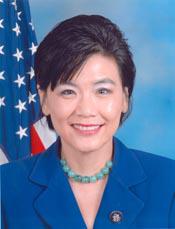
United States · United States Congress · 29 March 2023
National Plan to End Parkinson's Act This bill requires the Department of Health and Human Services (HHS) to carry out a project to prevent and cure Parkinson's disease (a progressive brain disorder that causes unintended or uncontrollable movements) and related conditions. Among other components of the project, HHS must (1) implement and periodically update a national plan to coordinate and guide efforts to prevent, slow the progression of, and cure the disease; and (2) improve diagnosis, treatment, and care of those with the disease. HHS must also annually assess the preparations for and response to the increased burden of Parkinson's disease. In addition, the bill establishes a council, comprised of federal and nonfederal stakeholders, to advise HHS on and make recommendations concerning the prevention and treatment of Parkinson's disease. The provisions of the bill terminate at the end of calendar year 2035.
United States · United States Congress · 29 March 2023
Rim of the Valley Corridor Preservation Act This bill adjusts the boundary of the Santa Monica Mountains National Recreation Area in California as depicted on a specified map to include the Rim of the Valley Unit. The Rim of the Valley Unit, and any lands or interests acquired by the United States and located within its boundaries, shall be administered as part of the recreation area. The Department of the Interior may acquire only through exchange, donation, or purchase from a willing seller any nonfederal land within the boundaries of the Rim of the Valley Unit.
United States · United States Congress · 29 March 2023
Resident Physician Shortage Reduction Act of 2023 This bill increases the number of residency positions eligible for graduate medical education payments under Medicare for qualifying hospitals, including hospitals in rural areas and health professional shortage areas. Current law provides for an increase of up to 200 positions per fiscal year beginning in FY2023, with a total increase of 1,000 positions; each hospital may receive up to 25 additional positions. Current law also provides for an additional increase of up to 200 positions for FY2026, with at least 100 of these positions for psychiatry or related specialties; each hospital may receive up to 10 additional positions. The bill provides for an additional increase of 2,000 positions per fiscal year from FY2025-FY2031; during this period, each hospital may receive up to 75 additional positions in total under the bill and current law. Additionally, one-third of the positions that are made available under the bill must be allocated to hospitals that are already operating above applicable resident limits. The bill also requires the Government Accountability Office to report on strategies to increase the diversity of the health professional workforce, including with respect to representation from rural, low-income, and minority communities.
United States · United States Congress · 29 March 2023
Restoring Fulbright Exchanges with China and Hong Kong Act This bill nullifies the portion of Executive Order 13936 that terminated the Fulbright exchange program with respect to exchanges with China and Hong Kong.
United States · United States Congress · 29 March 2023
New Way Forward Act This bill makes changes to immigration enforcement, including ending mandatory detention in certain cases. The Department of Homeland Security (DHS) may not enter into or extend any contract with any for-profit entity to own or operate a detention facility. The bill provides for various protections related to detaining non-U.S. nationals ( aliens under federal law), such as (1) requiring DHS to make an initial custody determination and establish probable cause within 48 hours of taking an individual into custody, (2) establishing in hearings related to such determinations a presumption that the individual be released, and (3) requiring immigration judges to impose the least restrictive detention conditions necessary. A DHS officer may not interrogate an individual as to immigration status based on factors such as the individual's race, religion, or spoken language. The bill removes mandatory detention requirements for certain individuals, such as asylum seekers with a credible fear of persecution. Certain individuals who were previously admitted into the United States may be removed only if removal proceedings commenced within five years of the individual becoming deportable or inadmissible. The bill also removes certain crime-related grounds of inadmissibility and deportability. The bill gives immigration judges discretion to provide relief from removal if the removal is not based on certain crime-related grounds. State or local officers are prohibited from performing certain immigration enforcement functions. The National Crime Information Center database may not contain an individual's immigration information. The bill repeals criminal penalties for improper entry or reentry into the United States.
United States · United States Congress · 28 March 2023
International Human Rights Defense Act of 2023 This bill establishes in the Department of State a permanent Special Envoy for the Human Rights of LGBTQI+ (lesbian, gay, bisexual, transgender, queer, or intersex) Peoples who shall serve as the principal State Department advisor regarding human rights for LGBTQI+ people and represent the United States in diplomatic matters relevant to the human rights of LGBTQI+ people. The special envoy shall periodically provide Congress with a U.S. global strategy to prevent and respond to criminalization, discrimination, and violence against LGBTQI+ people. The State Department and the U.S. Agency for International Development may provide assistance to prevent and respond to such activities against LGBTQI+ people. The bill also requires that specified annual country reports on human rights practices include information on criminalization, discrimination, and violence based on sexual orientation and gender identity.
United States · United States Congress · 28 March 2023
Protect Our Workers from Exploitation and Retaliation Act or the POWER Act This bill expands protections for non-U.S. nationals ( aliens under federal law) who are victims of crimes or serious workplace violations. U visas (nonimmigrant visas for certain crime victims) shall be available to individuals who have suffered substantial harm related to workplace claims. The Department of Homeland Security (DHS) may allow a non-U.S. national to work and temporarily remain in the United States if the individual (1) has filed for a U visa or T visa (nonimmigrant visas for victims of human trafficking), or (2) has filed or is a material witness to a workplace claim or civil claim arising from criminal activity and is helpful to authorities investigating the claim. The bill removes direct numerical limitations on U visas. A notice to an individual to appear at removal proceedings must contain specified certifications, if the individual was taken (1) at a facility where a workplace claim has been filed, or (2) as a result of information provided in retaliation against individuals exercising their legal rights. Specifically, the notice must state that (1) an adverse immigration determination may not be based solely on information furnished by the party engaged in the unlawful activity, and (2) the individual's information may not be disclosed. Such an individual may not be removed until law enforcement has had a chance to interview the individual. Removal proceedings against an individual who has filed or is a witness to a workplace claim must be stayed until the resolution of the claim, with limited exceptions.
United States · United States Congress · 28 March 2023
This bill provides for the award of a Congressional Gold Medal to Billie Jean King in recognition of her courageous and groundbreaking leadership in advancing equal rights for women in athletics, education, and society.
United States · United States Congress · 28 March 2023
Global Health, Empowerment and Rights Act This bill establishes that a foreign nongovernmental organization shall not be disqualified from receiving certain U.S. international development assistance solely because the organization provides medical services using non-U.S. government funds if the medical services do not violate the laws of the country in which they are being provided. Such foreign organizations shall not be subject to requirements relating to their use of non-U.S. funds for advocacy or lobbying activities, other than those that apply to U.S. nongovernmental organizations.
United States · United States Congress · 27 March 2023
Expanding Veterans' Options for Long Term Care Act This bill requires the Department of Veterans Affairs (VA) to implement a three-year pilot program to assess the effectiveness of providing assisted living services to eligible veterans, including by assessing the satisfaction of veterans participating in the pilot program. Eligible veterans are those who (1) are eligible for assisted living services as determined by the VA; and (2) are already receiving nursing home level care paid for by the VA, are eligible for such care from the VA, or exceed the requirements for domiciliary care paid for by the VA but do not meet the requirements for nursing home level care paid for by the VA. The Inspector General of the VA must report to Congress on the pilot program, and the VA must submit a follow-up plan to address any deficiencies that are identified in the report.
United States · United States Congress · 27 March 2023
This resolution expresses the House of Representative's resolve to take effective action on climate change to protect the mental health and well-being of current and future youth. It also supports the expansion of funding for climate education, resilience, and climate adaptation projects that benefit their mental health and well-being.
United States · United States Congress · 24 March 2023
Goldie's Act This bill expands enforcement provisions under the Animal Welfare Act (AWA). Specifically, the bill directs the Department of Agriculture (USDA) to document and record detailed descriptions of violations of the act observed during inspections and investigations. USDA must provide a copy of all records documenting violations to state, local, and municipal animal control or law enforcement officials within 24 hours of such inspections or investigations. Inspections must be held at least once a year of each research facility, the premises of each animal dealer, and each exhibitor of animals. If violations are found during inspections, then USDA must conduct any necessary follow-up inspections until all the violations are corrected. Inspectors must confiscate or destroy in a humane manner animals found to be suffering physical or psychological harm as a result of failure to comply with the AWA. Violators are subject to civil penalties as outlined in the bill.
United States · United States Congress · 24 March 2023
LA28 Olympic and Paralympic Games Commemorative Coin Act This bill directs the Department of the Treasury to mint coins in commemoration of the 2028 Olympic and Paralympic Games in Los Angeles, California. All surcharges received by Treasury from the sale of the coins shall be promptly paid by Treasury to the United States Olympic and Paralympic Properties for the objects and purposes related to the hosting of the 2028 Olympic and Paralympic Games and to aid in the execution of its legacy programs, including the promotion of youth sports in the United States. Treasury is encouraged to develop and execute a marketing and educational program to promote and sell the coins.
United States · United States Congress · 23 March 2023
Healthcare Ownership Transparency Act This bill requires health care corporations that participate in Medicare to disclose private equity interests and related financial information. Specifically, the bill requires corporations, as part of the Medicare enrollment and revalidation processes for providers and suppliers, to disclose information about debts, assets, financial transactions, and other information. Providers that are controlled by private equity funds (e.g., venture capital funds) must disclose similar information as well as specific information relating to the private equity fund, such as the percentage of equity contributed by the partners of the fund. The Government Accountability Office must use this information to periodically evaluate the extent to which health care consolidation is taking place and the effects of private equity in health care on costs, staffing, and other factors. The Department of Health and Human Services (HHS) must also establish a task force to address and limit the role of private equity and consolidation in health care. HHS may prohibit certain mergers or acquisitions until the task force has had sufficient time to assess whether there are abusive practices in specific health care sectors or by health care entities.
United States · United States Congress · 23 March 2023
Loan Forgiveness for Educators Act This bill expands loan forgiveness for educators by revising the Teacher Loan Forgiveness Program. The program provides loan forgiveness (up to $17,500) for teachers who are highly qualified, teach full-time in a low-income elementary or secondary school or educational service agency, and complete five years of consecutive service. Specifically, the bill renames the program as the Educator Loan Forgiveness Programs. Additionally, the bill expands the program by making additional loan types eligible for benefits under the program (e.g., parent PLUS loans). Further, the bill expands program eligibility to early childhood educators and program directors serving in early childhood education programs and school leaders serving in public high-need schools. The bill requires the Department of Education to make monthly student loan payments on behalf of the educator during qualifying service (i.e., employment as a full-time qualifying educator in a high-need school or an early childhood education program), provide complete loan forgiveness after five years of qualifying service, and take steps to notify borrowers about changes to the program.
United States · United States Congress · 22 March 2023
Housing is a Human Right Act of 2023 This bill establishes and expands programs to assist homeless and housing-unstable individuals and establishes new real property-related taxes to fund specified Department of Housing and Urban Development (HUD) programs. HUD must establish the Community Development Block Grant Plus Program for state and local governments to assist homeless and housing-unstable individuals as well as cost-burdened households. These funds may be used only for certain activities that assist these populations, including the construction of new affordable housing. The bill also establishes other grant programs to assist these individuals, such as by facilitating access to voting and libraries. Governmental entities may not receive assistance under the bill unless they have, or are working to implement, policies that (1) do not criminally punish homeless individuals for sleeping outside or on public property, and (2) comply with constitutional protections for these individuals' property. In addition, the bill establishes additional taxes on (1) the sale or exchange of real property if the amount realized from the transaction is at least $10 million, (2) the sale or exchange of real property involving an anonymous entity, and (3) rent received by landlords that own large amounts of dwelling units. The revenue from these taxes must be credited to various HUD programs in specified percentages. The Government Accountability Office must study (1) the allocation formula for Emergency Food and Shelter Program grants, and (2) recipient compliance with various grant program guidelines.
United States · United States Congress · 22 March 2023
Health Care Affordability Act of 2023 This bill revises the tax credit for health care premium assistance to expand the eligibility of low-income taxpayers for such credit and reduce the cost of health care premiums.
United States · United States Congress · 22 March 2023
Honoring Our Fallen Heroes Act of 2023 This bill extends death and disability benefits under the Public Safety Officers' Benefits Program (PSOB) to certain public safety officers who suffer from exposure-related cancer while on duty and their survivors. The PSOB program provides death, disability, and education benefits to public safety officers who are killed or injured in the line of duty and their survivors. The bill specifies that exposure-related cancer shall be presumed to constitute a personal injury in the line of duty if the public safety officer was exposed to or in contact with heat, radiation, or a carcinogen that is linked to an exposure-related cancer; the officer began serving as an officer not later than 5 years before the date of the diagnosis of an exposure-related cancer and the diagnosis occurred not later than 15 years after the last date of active service; and the exposure-related cancer directly and proximately resulted in the death or permanent and total disability of the officer. The Department of Justice's Bureau of Justice Assistance (BJA) must periodically review the definition of exposure-related cance r. It directs the BJA to add additional cancers to the definition under certain circumstances (e.g., a petition process).
United States · United States Congress · 22 March 2023
Water Affordability, Transparency, Equity, and Reliability Act of 2023 This bill increases funding for water infrastructure, including funding for several programs related to controlling water pollution or protecting drinking water. Specifically, it establishes a Water Affordability, Transparency, Equity, and Reliability Trust Fund. The fund may be used for specified grant programs. The bill increases the corporate income tax rate to 24.5% to provide revenues for the fund. In addition, the bill revises requirements concerning the clean water state revolving fund (SRF) and the drinking water SRF, including by prohibiting states from providing financial assistance using amounts from the clean water SRF for projects that will provide substantial direct benefits to new communities other than projects for constructing an advanced decentralized wastewater system. It also creates or reauthorizes several grant programs related to water infrastructure, such as grants for removing lead from drinking water.
United States · United States Congress · 22 March 2023
A. Donald McEachin Environmental Justice For All Act This bill establishes several environmental justice requirements, advisory bodies, and programs to address the disproportionate adverse human health or environmental effects of federal laws or programs on communities of color, low-income communities, or tribal and indigenous communities. Specifically, the bill expands Title VI of the Civil Rights Act of 1964 to prohibit federally funded programs, policies, practices, or activities from causing disparate impacts on the basis of race, color, or national origin. Aggrieved persons may seek legal remedy when faced with such discrimination. In addition, the bill directs agencies to follow certain requirements concerning environmental justice, including new environmental review requirements under the National Environmental Policy Act of 1969. Further, it creates a variety of advisory bodies and positions, such as the White House Environmental Justice Interagency Council. Among other things, the council must issue an environmental justice strategy. It also establishes requirements and programs concerning chemicals or toxic ingredients in certain products. For example, the bill (1) requires certain products (e.g., cosmetics) to include a list of ingredients or warnings; and (2) provides grants for research on designing safer alternatives to chemicals in certain consumer, cleaning, toy, or baby products that have an inherent toxicity or that are associated with chronic adverse health effects. Finally, it creates a variety of funding programs, such as a grant program to enhance access to park and recreational opportunities in an urban areas.
United States · United States Congress · 22 March 2023
Global Aircraft Maintenance Safety Improvement Act This bill addresses safety standards related to foreign aircraft repair stations. Specifically, the bill requires that all foreign aircraft repair stations be subject to at least one unannounced safety inspection each year. Further, mechanics and others working on U.S. registered aircraft at foreign repair stations are required to meet certain minimum certification or licensing standards. The bill also prohibits certain agreements, contracts, and application approvals related to maintenance in a country that the Federal Aviation Administration's (FAA's) International Aviation Safety Assessment program has classified as Category 2 (i.e., the country does not provide safety oversight in accordance with certain international standards). Air carriers must submit annual reports to the FAA with respect to heavy maintenance work on aircraft (including on-wing aircraft engines) performed outside the United States. The bill also prohibits FAA officials from traveling internationally if a previously mandated final rule on drug and alcohol testing of employees at repair stations has not been published, with specified exceptions. In addition, the bill requires the FAA to initiate rulemaking to require certain employees of foreign repair stations to undergo security threat assessments. Finally, the bill directs the FAA to convene a foreign repair station working group with other civil aviation authorities to conduct a review of the certification and oversight of the stations and to identify any future enhancements to strengthen oversight of such stations.
United States · United States Congress · 22 March 2023
Abortion is Health Care Everywhere Act of 2023 This bill authorizes using certain foreign assistance funds to provide comprehensive reproductive health care services in developing countries, including abortion services, training, and equipment. The bill also removes a statutory prohibition on using such funds in developing countries to (1) pay for abortions performed as a method of family planning, or (2) motivate or coerce any person to practice abortions.
United States · United States Congress · 21 March 2023
Electric Bicycle Incentive Kickstart for the Environment Act or the E-BIKE Act This bill allows individual taxpayers a new tax credit for 30% of the cost of a qualified electric bicycle. The bill defines qualified electric bicycle to mean a bicycle or tricycle that does not cost more than $8,000 and that is equipped with fully operable pedals, a saddle or seat for the rider, and an electric motor of less than 750 watts designed to assist in propelling the bicycle or tricycle under certain conditions The bill requires the Internal Revenue Service to establish a program to make advance payments of the credit and to publicly report on the number of taxpayers claiming the credit and the aggregate dollar amount of the credit, beginning in 2023 and 2024.
United States · United States Congress · 21 March 2023
Designates the facility of the United States Postal Service located at 6444 San Fernando Road in Glendale, California, as the "Paul Ignatius Post Office."
United States · United States Congress · 17 March 2023
Puppy Protection Act of 2023 This bill requires the Department of Agriculture to expand standards that govern the humane handling, care, treatment, and transportation of animals to include new requirements for commercial dog dealers. Specifically, the standards must require dog dealers to provide to dogs adequate housing, exercise, and veterinary care; appropriate and nutritious food; continuous access to potable water; and meaningful socialization with humans and compatible dogs for at least 30 minutes each day. The standards must also include requirements for breeders to use safe breeding practices and make all reasonable efforts to find humane placement for retired breeding dogs.
United States · United States Congress · 17 March 2023
New Deal for New Americans Act of 2023 This bill provides assistance to immigrants, including refugees, and addresses issues related to naturalization. The bill establishes the National Office of New Americans to (1) welcome and support immigrants, (2) promote and support immigrant integration, and (3) promote the pursuit of U.S. citizenship among immigrants. The bill also establishes grant programs for eligible entities that provide (1) legal services for immigrants, (2) English language education that focuses on integrating students into society, and (3) workforce development training that supports the economic integration of immigrants. The bill also reauthorizes the Citizenship and Integration Grant Program within U.S. Citizenship and Immigration Services (USCIS). USCIS shall establish a nonprofit entity to spur innovation in expanding citizenship preparation programs and to support assistance for immigrants seeking lawful permanent resident status or citizenship. The bill also requires the Department of Homeland Security to (1) report to Congress before increasing fees for immigration adjudication and naturalization services above the levels of such fees on January 1, 2019, and (2) waive or reduce certain immigration-related fees for low-income individuals. The bill also (1) waives the English proficiency requirement for the naturalization of certain lawful permanent residents, (2) repeals the public charge ground for deportation, (3) requires states to provide for automatic voter registration to qualifying new citizens unless that individual declines, and (4) sets a floor of 125,000 to the maximum number of refugees who may be admitted into the United States each year.
United States · United States Congress · 17 March 2023
This bill requires schools to substitute a nondairy beverage for fluid milk in the National School Lunch Program upon the request of a student or their parent or guardian. Under current law, schools participating in the program may provide a substitute at the request of a medical authority or the student's parent or guardian. The bill also removes current requirements that (1) the substitute request be based on an identified medical or other special dietary need that restricts the student's diet, and (2) the school food authority pay for any additional expenses resulting from providing the substitute that exceed the covered reimbursement amounts.
United States · United States Congress · 14 March 2023
America's Call To Improve Opportunities Now for National Service Act or the ACTION for National Service Act This bill reauthorizes and revises various national and community volunteer service programs. Specifically, it (1) renames the Corporation for National and Community Service as the AmeriCorps Administration, converts it from a government corporation into an executive department, and revises its membership, leadership, and authority; (2) reauthorizes programs carried out by the administration; (3) establishes a National Service Foundation to accept and administer gifts on behalf of the administration; (4) generally increases the living allowance amounts for program participants and excludes the amounts from taxable income; and (5) makes the national service educational award amount equal to twice the national average yearly cost for in-state tuition and fees at public, four-year institutions of higher education. Additionally, the bill creates an interagency Civilian Climate Corps, operated by the administration, to conduct service projects addressing climate change.
United States · United States Congress · 14 March 2023
Hello Girls Congressional Gold Medal Act of 2023 This bill provides for the award of a single Congressional Gold Medal in honor of the female telephone operators of the Army Signal Corps, commonly known as the Hello Girls , in recognition of their military service, devotion to duty, and 60-year struggle for veterans' benefits and recognition as soldiers.
United States · United States Congress · 14 March 2023
Secure Viable Banking Act or the SVB Act This bill increases the oversight of certain nonbank financial companies and bank holding companies by repealing Title IV of the Economic Growth, Regulatory Relief, and Consumer Protection Act (P.L. 115-174). (A nonbank financial company is a financial institution without a banking license that may be subject to supervision due to the company's size or risk profile. A bank holding company owns a controlling interest in one or more banks.) Specifically, the bill decreases from $250 billion to $50 billion the asset threshold at which enhanced prudential standards become mandatory, thereby requiring more companies to comply with these standards. These standards include stress testing, leverage limits, liquidity requirements, and resolution plan requirements (i.e., living will requirements). Under current law, the Federal Reserve has the discretion to determine the applicability of these standards to bank holding companies with assets between $100 billion and $250 billion. The bill also expands stress testing by increasing the number of board-run stress test scenarios from two to three; decreasing the asset threshold at which company-run stress tests are required from $250 billion to $10 billion; and requiring company-run stress tests to be performed annually or semiannually, depending on the amount of assets held. The bill also decreases from $50 billion to $10 billion the asset threshold for mandatory risk committees. Finally, the bill revises the supplemental leverage ratio applied to custodial banks and the asset treatment of certain municipal obligations.
United States · United States Congress · 10 March 2023
Designates the facility of the United States Postal Service located at 2300 Sylvan Avenue in Modesto, California, as the "Corporal Michael D. Anderson Jr. Post Office Building."
United States · United States Congress · 10 March 2023
This resolution recognizes the importance of sufficiently supporting public elementary and secondary schools to provide all students with a well-rounded education. Additionally, the resolution promotes the implementation of practices that reduce disparities, eliminate discrimination, and make schools safer, inclusive, and supportive for all students.
United States · United States Congress · 10 March 2023
Paycheck Fairness Act This bill addresses wage discrimination on the basis of sex, which is defined to include pregnancy, sexual orientation, gender identity, and sex characteristics. Specifically, it limits an employer's defense that a pay differential is based on a factor other than sex to only bona fide job-related factors in wage discrimination claims, enhances nonretaliation prohibitions, and makes it unlawful to require an employee to sign a contract or waiver prohibiting the employee from disclosing information about the employee's wages. The bill also increases civil penalties for violations of equal pay provisions. Additionally, the Equal Employment Opportunity Commission (EEOC) and the Office of Federal Contract Compliance Programs must train EEOC employees and other affected parties on wage discrimination. The bill directs the Department of Labor to (1) establish and carry out a grant program to provide training in negotiation skills related to compensation and equitable working conditions, (2) conduct studies to eliminate pay disparities between men and women, and (3) make available information on wage discrimination to assist the public in understanding and addressing such discrimination. The bill establishes the National Award for Pay Equity in the Workplace for an employer who has made a substantial effort to eliminate pay disparities between men and women. It also establishes the National Equal Pay Enforcement Task Force to address compliance, public education, and enforcement of equal pay laws. Finally, the bill requires the EEOC to issue regulations for collecting from employers compensation and other employment data according to the sex, race, and national origin of employees for use in enforcing laws prohibiting pay discrimination.
United States · United States Congress · 9 March 2023
Reducing Hereditary Cancer Act This bill provides for Medicare coverage of germline mutation testing for individuals with a personal or family history of a hereditary cancer gene mutation or suspected history of hereditary cancer, as well as for associated coverage of risk-reducing surgeries and screenings.
United States · United States Congress · 9 March 2023
This resolution expresses support for the goals and ideals of Endometriosis Awareness Month. Endometriosis is a painful condition in which the tissue that normally lines the inside of the uterus grows outside the uterus.
United States · United States Congress · 9 March 2023
Good Jobs for Good Airports Act This bill modifies pay, benefits, and labor standards for certain airport service workers. Airport service workers include security officers, food service workers, cleaning staff, ticketing agents, and retail service workers. Specifically, the bill prohibits small, medium, and large hub airports from accessing certain federal funds for airport projects unless the airports certify that such airport service workers are paid no less than the higher of $15 per hour; the applicable federal, state, or local minimum wage and fringe benefits; or the prevailing wage and fringe benefits required under the Service Contract Act, which the bill requires the Department of Labor to establish.
United States · United States Congress · 9 March 2023
Federal Firearm Licensee Act This bill makes various changes to the federal statutory framework governing the sale or disposition of firearms by federally licensed dealers, importers, and manufacturers (i.e., federal firearms licensees, or FFLs). Specifically, the bill establishes new requirements, including for FFLs to secure their business premises and conduct physical checks of their business inventories. It also expands the recordkeeping and reporting requirements with which FFLs must comply; broadens the authority of the Bureau of Alcohol, Tobacco, Firearms and Explosives to administer federal firearms laws and investigate violations; and increases penalties on FFLs for violations.
United States · United States Congress · 9 March 2023
Improving Access to Nutrition Act of 20 2 3 This bill repeals certain work requirements for the Supplemental Nutrition Assistance Program (SNAP). The requirements apply to able-bodied adults who are ages 18-49 and have no dependent children. Individuals who do not meet certain work requirements are generally prohibited from receiving more than 3 months of SNAP benefits over a 36-month period. Under current law, some of the work requirements under SNAP are temporarily suspended due to COVID-19.
United States · United States Congress · 9 March 2023
This resolution recognizes the disparity between wages paid to men and women, and its impact on women, families, and the nation and reaffirms Congress' commitment to supporting equal pay and to narrowing the gender wage gap.
United States · United States Congress · 9 March 2023
Stop Corporate Capture Act This bill modifies the process for federal agency rulemaking. Specifically, it (1) requires interested parties who submit a study or research as part of a comment to a proposed rule to disclose the source of the funding for the study or research, (2) limits the use of the negotiated rulemaking process to government agencies, (3) provides statutory authority for the judicial principle that requires courts to defer to an agency's reasonable or permissible interpretation of a federal law when the law is silent or ambiguous (i.e., the Chevron doctrine), and (4) establishes an Office of the Public Advocate to support public participation in the rulemaking process. Additionally, a public company that knowingly makes a false or misleading statement in a comment to a proposed rule is subject to a civil penalty of not less than $250,000 for a first violation and not less than $1 million for each subsequent violation. Finally, the bill provides agencies with the authority to reissue a rule that has been rescinded under a joint resolution of disapproval pursuant to the Congressional Review Act. For one year, beginning on the date of enactment of this bill, an agency may reinstate such a rule by publishing it in the Federal Register. After the one-year period, an agency may reinstate a rule using notice-and-comment rulemaking procedures.
United States · United States Congress · 9 March 2023
Renewing Immigration Provisions of the Immigration Act of 1929 This bill expands eligibility for a program that authorizes the Department of Homeland Security to, at its discretion, provide lawful permanent resident status to certain long-term residents of the United States, including individuals who are unlawfully present. Currently, this program, sometimes referred to as the Registry program, is only available to eligible non-U.S. nationals ( aliens under federal law) who entered the United States before January 1, 1972. The bill removes this entry cutoff date and opens up the program to eligible individuals who have resided in the United States for at least seven years. Existing requirements (e.g., the individual must not be inadmissible or deportable due to certain grounds related to crime or terrorism) continue to apply.
United States · United States Congress · 8 March 2023
Foster Youth and Driving Act This bill expands state foster care and adoption assistance programs to provide driving preparation assistance to foster youth and related training for foster parents. The bill further directs assistance to states and tribal organizations for age-appropriate foster youth to, among other things, obtain automobile insurance, complete driver's education, obtain a driver's license, and purchase a vehicle.
United States · United States Congress · 8 March 2023
Violet's Law This bill requires federal research facilities to facilitate the adoption or nonlaboratory placement of dogs, cats, nonhuman primates, guinea pigs, hamsters, and rabbits with animal rescue organizations, animal sanctuaries, animal shelters, or individuals. In order to be adopted or placed, the animals must no longer be needed for research and be suitable for release. To be suitable for release, the animal must be free of any infectious disease or physical abnormality that would endanger the animal, other animals, or public health.
United States · United States Congress · 8 March 2023
Vote at Home Act of 2023 This bill expands voting by mail in federal elections and provides for automatic voter registration through state motor vehicle authorities. Specifically, the bill prohibits states from imposing additional conditions or requirements on the eligibility of individuals to cast ballots by mail in federal elections, except states may impose a deadline for requesting the ballot and related voting materials and for returning a ballot. Further, states must mail ballots to individuals registered to vote in a federal election not later than two weeks before the election. In addition, the U.S. Postal Service must carry ballots for federal elections expeditiously and free of postage. Finally, the bill provides for automatic voter registration of individuals through state motor vehicle authorities.
United States · United States Congress · 8 March 2023
This resolution supports the goals of a feminist foreign policy (i.e., a foreign policy that requires analysis of and challenges to power structures and inequalities that are based on systems of discrimination). The resolution also supports the adoption of policies that promote gender equity and the participation of women and girls in public life.
United States · United States Congress · 8 March 2023
Worker Relief and Credit Reform Act of 2023 or the WRCR Act of 2023 This bill modifies the earned income tax credit to (1) make the credit available to certain students, (2) modify the age requirement for the credit, (3) include care-giving and learning as compensated work for purposes of the credit, (4) revise the definition of qualifying dependents eligible for the credit, (5) increase the credit for certain unmarried individuals with two or more qualifying children, and (6) require the Internal Revenue Service (IRS) to establish a program for making direct advance monthly payments of the credit to eligible taxpayers. The bill directs the IRS to establish a program to educate taxpayers about the availability of the earned income tax credit and the advance monthly payments of such credit.
United States · United States Congress · 7 March 2023
Philippine Human Rights Act This bill imposes limitations on providing assistance to the police or military of the Philippines. No federal funds may be used to provide such assistance until the Philippines government has taken certain actions, including (1) investigating and successfully prosecuting members of its military and police forces who have violated human rights; (2) withdrawing the military from domestic policing activities; and (3) establishing that it effectively protects the rights of journalists, civil society activists, and certain other groups. The President shall also direct U.S. representatives at multilateral development banks to vote against providing loans to the police or military of the Philippines.
United States · United States Congress · 7 March 2023
Berryessa Snow Mountain National Monument Expansion Act This bill modifies the boundary of the Berryessa Snow Mountain National Monument to include the Walker Ridge (Molok Luyuk) Addition, which is approximately 3,925 acres of federal land administered by the Bureau of Land Management (BLM) in Lake County, California. The Department of the Interior shall administer the addition as part of the monument. Interior and the Department of Agriculture (USDA) shall jointly develop a comprehensive management plan for the monument in accordance with, and in a manner that fulfills the purposes specified in, Presidential Proclamation 9298 of July 10, 2015, relating to the establishment of the monument. The BLM or the Forest Service shall enter into agreements, contracts, and other similarly cooperative and collaborative partnerships if requested by an affected federally recognized Indian tribe regarding management of the monument pursuant to the relevant federal authority.