Bill· HRH.R. 4395 (119th)referred
Stephanie Tubbs Jones Uterine Fibroid Research and Education Act of 2025
United States · United States Congress · 15 July 2025
The world's political record
Person
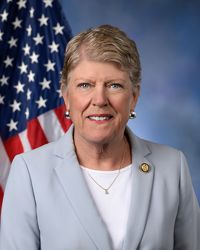
United States · Official source
4,393 records where Rep. Brownley, Julia [D-CA-26] is listed as a sponsor, author, or other actor. Search with topics and years
United States · United States Congress · 15 July 2025
United States · United States Congress · 14 July 2025
United States · United States Congress · 10 July 2025
CBP SPACE Act This bill expands the authorities for adjusting the rate for merchandise processing fees and the requirements for using certain customs user fees. It also prohibits U.S. Customs and Border Protection (CBP) from requiring sea ports of entry to provide or maintain certain facilities for CBP inspection services. Specifically, the bill authorizes the Department of the Treasury to adjust the ad valorem rate for merchandise processing and the related limits on the amount of the fees to offset CBP's capital costs for processing entries and releases of merchandise. (Currently, Treasury may only adjust the rate and limits to offset CBP's related salaries and expenses.) The bill also requires Treasury to use certain customs user fees to reimburse CBP for paying capital costs associated with passenger inspection services. Additionally, the bill (1) prohibits CBP from requesting or requiring a sea port of entry to provide or maintain administrative, training, or recreational facilities at the port for purposes of facilitating CBP's inspection services; and (2) requires CBP to submit an annual report to appropriate congressional committees on the amount and use of proceeds from merchandise processing fees.
United States · United States Congress · 10 July 2025
United States · United States Congress · 10 July 2025
United States · United States Congress · 10 July 2025
This resolution expresses support for the designation of Journeyman Lineworkers Recognition Day. (A journeyman lineworker is a person who builds and maintains electrical power systems.)
United States · United States Congress · 2 July 2025
This bill designates the facility of the United States Postal Service located at 1157 West Mission Avenue in Escondido, California, as the "Captain E. Royce Williams Post Office Building".
United States · United States Congress · 2 July 2025
United States · United States Congress · 2 July 2025
This bill designates the community-based outpatient clinic of the Department of Veterans Affairs in San Jose, California, as the Corporal Patrick D. Tillman Department of Veterans Affairs Clinic or the Pat Tillman VA Clinic.
United States · United States Congress · 30 June 2025
United States · United States Congress · 30 June 2025
United States · United States Congress · 30 June 2025
Extreme Risk Protection Order Expansion Act of 2025 This bill establishes grants to support the implementation of extreme risk protection order laws at the state and local levels, extends federal firearms restrictions to individuals who are subject to extreme risk protection orders, and expands related data collection. Extreme risk protection order laws, or red flag laws, generally allow certain individuals (e.g., law enforcement officers or family members) to petition a court for a temporary order that prohibits an at-risk individual from purchasing and possessing firearms. Among its provisions, the bill directs the Department of Justice to establish a grant program to help states, local governments, Indian tribes, and other entities implement extreme risk protection order laws; extends federal restrictions on the receipt, possession, shipment, and transportation of firearms and ammunition to individuals who are subject to extreme risk protection orders; and requires the Federal Bureau of Investigation to compile records from federal, tribal, and state courts and other agencies that identify individuals who are subject to extreme risk protection orders.
United States · United States Congress · 27 June 2025
Prohibition of Medicaid Funding for Conversion Therapy Act This bill prohibits state Medicaid programs from covering conversion therapy. The bill defines conversion therapy as any practice or treatment that seeks to change a person's sexual orientation or gender identity in exchange for monetary compensation.
United States · United States Congress · 27 June 2025
United States · United States Congress · 27 June 2025
United States · United States Congress · 26 June 2025
United States · United States Congress · 26 June 2025
United States · United States Congress · 26 June 2025
Bridge Corrosion Prevention and Repair Act of 2025 This bill establishes certain requirements to address corrosion control in bridge and railroad-bridge projects that receive federal assistance. Specifically, certified contractors must employ a substantial number of individuals who are certified by a qualified training program in corrosion control, mitigation, and prevention in order to work on certain aspects of bridge project activities. A certified contractor must also provide training for any non-certified coating applicators employed by the contractor to work on certain aspects of a project. The bill further requires bridge projects to implement a corrosion management system that utilizes industry-recognized standards and corrosion mitigation and prevention methods for construction, repair, and maintenance projects. In addition, the bill expands the scope of the Railroad Rehabilitation and Improvement Financing Program to include corrosion control work on rail bridges. (This program provides direct loans and loan guarantees for the development of railroad infrastructure.) The bill also requires the Department of Transportation to study and report on best practices for inspecting and addressing corrosion on weathering steel bridges. This report must be made available to state and local governments, metropolitan planning organizations, and regional organizations.
United States · United States Congress · 26 June 2025
United States · United States Congress · 26 June 2025
United States · United States Congress · 26 June 2025
United States · United States Congress · 26 June 2025
United States · United States Congress · 26 June 2025
United States · United States Congress · 26 June 2025
United States · United States Congress · 25 June 2025
United States · United States Congress · 24 June 2025
Women's Health Protection Act of 2025 This bill prohibits governmental restrictions on the provision of, and access to, abortion services. Before fetal viability, governments may not restrict providers from using particular abortion procedures or drugs, offering abortion services via telemedicine, or immediately providing abortion services if delaying risks the patient's health. Furthermore, governments may not require providers to perform unnecessary medical procedures, provide medically inaccurate information, or comply with credentialing or other conditions that do not apply to providers who offer medically comparable services to abortions. Additionally, governments may not require patients to make medically unnecessary in-person visits before receiving abortion services or disclose their reasons for obtaining services. After fetal viability, governments may not restrict providers from performing abortions when necessary to protect a patient's life and health. The same provisions that apply to abortions before viability also apply to necessary abortions after viability. Additionally, states may authorize post-viability abortions in circumstances beyond those that the bill considers necessary. Further, the bill recognizes an individual's right to interstate travel, including for abortion services. The bill also prohibits governments from implementing measures that are similar to those restricted by the bill or that otherwise target and impede access to abortion services, unless the measure significantly advances the safety of abortion services or health of patients and cannot be achieved through less restrictive means. The Department of Justice, individuals, or providers may sue states or government officials to enforce this bill, regardless of certain immunity that would otherwise apply.
United States · United States Congress · 24 June 2025
United States · United States Congress · 24 June 2025
United States · United States Congress · 24 June 2025
United States · United States Congress · 23 June 2025
United States · United States Congress · 23 June 2025
This concurrent resolution directs the President to remove U.S. Armed Forces from hostilities against Iran unless explicitly authorized by a declaration of war or a congressional authorization for use of military force against Iran. Elements of the U.S. Armed Forces needed to defend the United States, an ally, or a partner from imminent attack are not covered by this requirement provided the President complies with a specified provision of the War Powers Resolution. (The provision generally requires the President to remove U.S. Armed Forces from hostilities no more than 60 days after the President notifies or is required to notify Congress of such involvement, unless Congress authorizes such use. For more information on the War Powers Resolution, see CRS In Focus 13134 .)
United States · United States Congress · 23 June 2025
United States · United States Congress · 20 June 2025
United States · United States Congress · 17 June 2025
Increasing Behavioral Health Treatment Act This bill repeals restrictions that generally prohibit federal payment under Medicaid for services provided in institutions for mental diseases (IMDs) for individuals under the age of 65. (Currently, states may receive payment for such services through certain mechanisms, such as through a Medicaid demonstration waiver.) The bill also requires state Medicaid programs that cover IMD services to improve patient access to outpatient and community-based behavioral health care, expand crisis stabilization services, facilitate care coordination between providers and first responders, and report specified information relating to IMD utilization and costs.
United States · United States Congress · 12 June 2025
Enhancing Science, Treatment, and Upkeep of America’s Resilient and Important Estuarine Systems Act or the ESTUARIES Act This bill reauthorizes through FY2031 grants provided under the National Estuary Program to protect and restore estuaries of national significance. Estuaries are coastal waterbodies where freshwater from rivers and streams mixes with the ocean’s saltwater. Under the existing program, the Environmental Protection Agency provides grants for (1) developing and implementing comprehensive conservation and management plans for estuaries of national significance, and (2) addressing issues that threaten the ecological and economic well-being of such estuaries. The existing program provides grants to states, regional water pollution control agencies and entities, state coastal zone management agencies, interstate agencies, other public or nonprofit private agencies, institutions, organizations, and individuals.
United States · United States Congress · 12 June 2025
Military Access to Reproductive Care and Health for Military Servicemembers Act or the MARCH for Military Servicemembers Act This bill allows Department of Defense (DOD) funds and facilities to be used to perform abortions without restrictions on the reason. Currently, DOD funds and facilities may only be used to perform abortions if the abortion is due to rape, incest, or endangerment of the mother.
United States · United States Congress · 12 June 2025
United States · United States Congress · 12 June 2025
Improving Access to Medicare Coverage Act of 2025 This bill deems an individual receiving outpatient observation services in a hospital as an inpatient for purposes of satisfying the three-day inpatient hospital-stay requirement with respect to Medicare coverage of skilled nursing facility (SNF) services. (Generally, individuals must have been an inpatient at a hospital for at least three days in order to qualify for SNF services. An individual's time spent under observation at a hospital for purposes of determining whether the individual should be admitted does not count towards this requirement.)
United States · United States Congress · 12 June 2025
United States · United States Congress · 12 June 2025
United States · United States Congress · 12 June 2025
United States · United States Congress · 11 June 2025
United States · United States Congress · 11 June 2025
United States · United States Congress · 11 June 2025
United States · United States Congress · 11 June 2025
United States · United States Congress · 10 June 2025
Bipartisan Background Checks Act of 2025 This bill establishes new background check requirements for firearm transfers between private parties (i.e., unlicensed individuals). Specifically, it prohibits a firearm transfer between private parties unless a licensed gun dealer, manufacturer, or importer first takes possession of the firearm to conduct a background check. The prohibition does not apply to certain firearm transfers or exchanges, such as a gift between spouses.
United States · United States Congress · 10 June 2025
Enhanced Background Checks Act of 2025 This bill establishes more stringent background check requirements for proposed firearm transfers from a federal firearms licensee (e.g., a licensed gun dealer) to an unlicensed person. Specifically, it increases the amount of time, from 3 business days to a minimum of 10 business days, that a federal firearms licensee must wait to receive a completed background check prior to transferring a firearm to an unlicensed person. (This type of transaction is often referred to as a default proceed transaction.) If a submitted background check remains incomplete after 10 business days, then the prospective purchaser may submit a petition for a final firearms eligibility determination. If an additional 10 days elapse without a final determination, then the federal firearms licensee may transfer the firearm to the prospective purchaser. The Government Accountability Office must report on the extent to which the changes have prevented firearms transfers to prohibited persons. The Federal Bureau of Investigation must report on the number of petitions it receives for final federal firearms determinations. The Department of Justice, in consultation with the National Resource Center on Domestic Violence and Firearms, must report on further amendments to the background check process that would likely reduce the risk of death or great bodily harm to victims of domestic violence, domestic abuse, dating partner violence, sexual assault, and stalking.
United States · United States Congress · 10 June 2025
United States · United States Congress · 5 June 2025
United States · United States Congress · 5 June 2025