Bill· HRH.R. 2467 (119th)referred
America's Red Rock Wilderness Act
United States · United States Congress · 27 March 2025
The world's political record
Person
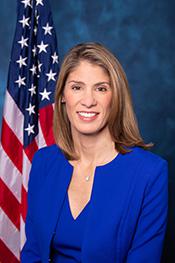
United States · Official source
1,707 records where Rep. Trahan, Lori [D-MA-3] is listed as a sponsor, author, or other actor. Search with topics and years
United States · United States Congress · 27 March 2025
United States · United States Congress · 26 March 2025
United States · United States Congress · 26 March 2025
Raise the Age Act of 2025 This bill establishes new restrictions on the sale or transfer of certain semiautomatic firearms to individuals under 21 years of age. Specifically, this bill makes it unlawful for a licensed gun dealer, importer, manufacturer, or collector to sell or deliver a semiautomatic center-fire rifle or semiautomatic center-fire shotgun that has (or has the capacity to accept) an ammunition feeding device with a capacity of more than five rounds to an individual who the licensee knows or has reasonable cause to believe is under age 21. The prohibition does not apply if the individual under age 21 is a full-time law enforcement officer or active-duty member of the Armed Forces. The bill also requires the Federal Bureau of Investigation to report on the operation of its public access line, including a description of information sharing protocols and recommendations for improving such protocols.
United States · United States Congress · 25 March 2025
United States · United States Congress · 24 March 2025
This joint resolution provides that the Equal Rights Amendment, which prohibits discrimination on the basis of sex, was ratified by three-fourths of the states and is therefore a valid constitutional amendment, regardless of any time limit that was in the original proposal. The Equal Rights Amendment was originally proposed to the states in 1972. The original proposal included a deadline for ratification of March 22, 1979; Congress subsequently extended the deadline to June 30, 1982. Although the requisite 38 states have ratified the amendment, three of these states did so after the deadlines, and five states subsequently rescinded their ratifications. The status of the amendment has been the subject of litigation.
United States · United States Congress · 21 March 2025
United States · United States Congress · 21 March 2025
This resolution expresses the sense of the House of Representatives that every individual has the right to emergency health care, including abortion care.
United States · United States Congress · 18 March 2025
Restore Protections for Dialysis Patients Act This bill specifies certain requirements for private health insurers regarding coverage of individuals with end stage renal disease (ESRD) who are also covered under Medicare. In particular, the bill specifies that insurers may not limit benefits, including limiting network composition, in a manner that will affect ESRD Medicare beneficiaries differently compared to others without ESRD. The bill additionally specifies that insurers are not required to include a particular renal dialysis provider or a particular number of such providers as part of their networks.
United States · United States Congress · 18 March 2025
Protecting Access to Ground Ambulance Medical Services Act of 2025 This bill extends the specialized rate increase for Medicare payment of ground ambulance services in rural areas for an additional three years (until January 1, 2028).
United States · United States Congress · 18 March 2025
United States · United States Congress · 18 March 2025
Preserving Patient Access to Home Infusion Act This bill specifically includes pharmacy services and home infusion drugs that are administered without a pump as part of covered home infusion therapy under Medicare. The bill also allows nurses and physician assistants to establish and review the plan of care for home infusion therapy, and it specifies that payment may be made regardless of whether a practitioner is physically present in the home at the time the drug is administered.
United States · United States Congress · 14 March 2025
Maintaining and Enhancing Hydroelectricity and River Restoration Act This bill establishes a new investment tax credit in the amount of 30% of the basis of any hydropower improvement property. The bill defines hydropower improvement property as property that adds or improves fish passage at a qualified dam; maintains or improves the quality of the water retained or released by a qualified dam; promotes downstream sediment transport and habitat maintenance; upgrades, repairs, or reconstructs a qualified dam to meet safety and security standards; improves public uses of, and access to, public waterways impacted by a qualified dam; removes an obsolete river obstruction; or places into service an approved remote dam. Further, written approval for hydropower improvement property must be obtained from the Federal Energy Regulatory Commission or state or local officials prior to January 1, 2032. The bill also allows an election to claim the investment tax credit for qualified progress expenses for some types of hydropower improvement property in advance of such property being placed into service. Any investment tax credit amount claimed for qualified progress expenses reduces the amount of the investment tax credit that may be claimed once the hydropower improvement property is placed into service. The bill authorizes certain entities, including tax-exempt and governmental entities, to treat the investment tax credit for hydropower improvement property as a payment of tax and receive a refund of any overpayment (also known as elective pay). Finally, the investment tax credit for hydropower improvement property may be transferred (i.e., sold).
United States · United States Congress · 14 March 2025
United States · United States Congress · 11 March 2025
United States · United States Congress · 11 March 2025
United States · United States Congress · 11 March 2025
United States · United States Congress · 11 March 2025
Metastatic Breast Cancer Access to Care Act This bill expedites payment of Social Security Disability Insurance (SSDI) benefits and eligibility for Medicare coverage for those with metastatic breast cancer (i.e., breast cancer that has spread to other sites in the body). Specifically, the bill eliminates the 5-month waiting period for SSDI benefits and the subsequent 24-month waiting period for Medicare coverage for individuals with metastatic breast cancer. Under current law, individuals generally must wait 5 months after the onset of disability to begin receiving SSDI benefits and an additional 24 months to become eligible for Medicare.
United States · United States Congress · 11 March 2025
United States · United States Congress · 11 March 2025
United States · United States Congress · 11 March 2025
Medicare Dental, Vision, and Hearing Benefit Act of 2025 This bill provides for Medicare coverage of dental, vision, and hearing care. Coverage includes (1) routine dental cleanings and exams, basic and major dental services, emergency dental care, and dentures; (2) routine eye exams, eyeglasses, and contact lenses; and (3) routine hearing exams, hearing aids, and exams for hearing aids. With respect to such care, the bill establishes special payment rules, limitations, and coinsurance requirements.
United States · United States Congress · 10 March 2025
United States · United States Congress · 10 March 2025
25th Anniversary of 9/11 Commemorative Coin Act This bill directs the Department of the Treasury to mint and issue coins to commemorate the 25th anniversary of the September 11, 2001, terrorist attacks on the United States and the establishment of the National September 11 Memorial and Museum at the World Trade Center. The sale of all coins issued under this bill must include a surcharge to be paid to the National September 11 Memorial and Museum at the World Trade Center to support operations and maintenance. However, if the issuance of this commemorative coin exceeds certain annual limits, no surcharge may be included.
United States · United States Congress · 10 March 2025
This resolution supports the designation of Barth Syndrome Awareness Day. Barth Syndrome is a rare, life-threatening genetic disorder of lipid metabolism that primarily affects males.
United States · United States Congress · 10 March 2025
United States · United States Congress · 6 March 2025
Access to Pediatric Technologies Act of 2025 This bill requires the Centers for Medicare & Medicaid Services (CMS) to establish, upon request, specific payment methodologies for qualifying pediatric technologies under the Medicare physician fee schedule. Qualifying pediatric technologies are medical devices that are (1) covered under Medicare, (2) approved by the Food and Drug Administration, (3) currently billed using a specified temporary billing code for emerging technologies, and (4) predominantly used or specifically designated for pediatric patients. The CMS must develop a payment methodology for a qualifying pediatric technology upon request from the manufacturer and based on available data, including pricing information and claims data. Manufacturers must include relevant information in their requests to enable the CMS to develop the corresponding methodologies.
United States · United States Congress · 6 March 2025
United States · United States Congress · 6 March 2025
United States · United States Congress · 6 March 2025
Children’s Health Insurance Program Permanency Act or the CHIPP Act This bill permanently extends the Children's Health Insurance Program (CHIP) and related measures, programs, and authorities. Specifically, the bill permanently funds CHIP and related programs that support the development of child health quality measures and outreach and enrollment efforts. The bill also permanently authorizes the Medicaid and CHIP express lane eligibility option, which allows states to use information from designated programs (e.g., the Supplemental Nutrition Assistance Program) to streamline eligibility determinations for children. Additionally, under the bill, states may expand eligibility to children whose family income exceeds the otherwise applicable limits.
United States · United States Congress · 5 March 2025
United States · United States Congress · 5 March 2025
United States · United States Congress · 5 March 2025
John R. Lewis Voting Rights Advancement Act of 2025 This bill establishes new criteria for determining which states and political subdivisions must obtain preclearance before changes to voting practices may take effect. Preclearance is the process of receiving preapproval from the Department of Justice (DOJ) or the U.S. District Court for the District of Columbia before making legal changes that would affect voting rights. A state and all of its political subdivisions shall be subject to preclearance of voting practice changes for a 10-year period if, during the previous 25 years: 15 or more voting rights violations occurred in the state; 10 or more violations occurred, at least 1 of which was committed by the state itself; or 3 or more violations occurred and the state administers the elections. A political subdivision as a separate unit shall also be subject to preclearance for a 10-year period if three or more voting rights violations occurred there during the previous 25 years. States and political subdivisions that meet certain thresholds regarding minority groups must preclear covered practices before implementation, such as redistricting. States and political subdivisions must notify the public of changes to voting practices. The bill authorizes DOJ to require states or political subdivisions to provide certain documents or answers to questions for enforcing voting rights. The bill outlines factors courts must consider when hearing challenges to voting practices, such as the extent of any history of official voting discrimination in the state or political subdivision.
United States · United States Congress · 5 March 2025
United States · United States Congress · 4 March 2025
United States · United States Congress · 3 March 2025
Consumer Safety Technology Act This bill (1) establishes a pilot program to explore the use of artificial intelligence to support the Consumer Product Safety Commission (CPSC), and (2) requires reports related to blockchain technology and digital tokens. Specifically, the CPSC must consult with relevant stakeholders, such as data scientists and product manufacturers, and use artificial intelligence for a least one of the following purposes: (1) tracking trends in injuries involving consumer products, (2) identifying consumer product hazards, (3) monitoring the sale of recalled consumer products, or (4) identifying consumer products that do not meet specified importation requirements related to product safety. The bill also requires (1) the Department of Commerce to report on existing and emerging uses of blockchain technology for consumer protection, and (2) the Federal Trade Commission to report on its efforts to prevent unfair or deceptive practices relating to digital tokens.
United States · United States Congress · 3 March 2025
Original Black History Month Resolution of 2025 This resolution recognizes the importance of commemorating Black History Month as it acknowledges the achievements of Black Americans throughout the nation's history.
United States · United States Congress · 3 March 2025
United States · United States Congress · 3 March 2025
Safe Schools Improvement Act This bill requires states to direct their local educational agencies (LEAs) to establish policies that prevent and prohibit bullying and harassment of elementary and secondary school students. In particular, these policies must prohibit bullying and harassment based on race, color, national origin, disability, religion, or sex. Sex includes sexual orientation, gender identity, and sex characteristics (including intersex traits). Further, LEAs must provide (1) students, parents, and educational professionals with annual notice of the conduct prohibited in their disciplinary policies; (2) students and parents with grievance procedures that target such conduct; and (3) the public with annual data on the incidence and frequency of that conduct at the school and LEA level. The Department of Education must conduct and report on an independent biennial evaluation of programs and policies to combat bullying and harassment in elementary and secondary schools. The National Center for Education Statistics must collect state data to determine the incidence and frequency of the conduct prohibited by LEA disciplinary policies.
United States · United States Congress · 27 February 2025
Keep Americans Safe Act This bill establishes a new criminal offense for the import, sale, manufacture, transfer, or possession of a large capacity ammunition feeding device (LCAFD). The bill does not prohibit certain conduct with respect to an LCAFD, including the following: importation, sale, manufacture, transfer, or possession related to certain law enforcement efforts, or authorized tests or experiments; importation, sale, transfer, or possession related to securing nuclear materials; and possession by a retired law enforcement officer. The bill permits continued possession of, but prohibits sale or transfer of, a grandfathered LCAFD. Newly manufactured LCAFDs must display serial number identification and the date of manufacture. Additionally, the bill allows a state or local government to use Edward Byrne Memorial Justice Assistance Grant Program funds to compensate individuals who surrender an LCAFD under a buy-back program.
United States · United States Congress · 27 February 2025
United States · United States Congress · 27 February 2025
Save America's Forgotten Equines Act of 2025 or the SAFE Act of 2025 This bill permanently prohibits the slaughter of equines (e.g., horses and mules) for human consumption. (Current law prohibits the slaughter of dogs and cats for human consumption. This bill extends the prohibition to equines.) Specifically, this bill prohibits a person from knowingly (1) slaughtering an equine for human consumption; or (2) shipping, transporting, possessing, purchasing, selling, or donating an equine to be slaughtered for human consumption or equine parts for human consumption. The bill subjects a violator to a fine. The bill applies to conduct in or affecting interstate or foreign commerce or within the special maritime and territorial jurisdiction of the United States. However, it does not apply to an activity carried out by an Indian for a religious ceremony. As background, in recent years, the appropriations acts have prohibited the Department of Agriculture (USDA) from using federal funds to inspect horses before they are slaughtered for human consumption. Therefore, there are currently no USDA-inspected horse slaughter facilities in the United States.
United States · United States Congress · 27 February 2025
United States · United States Congress · 27 February 2025
This joint resolution redesignates the memorial to Robert. E. Lee in Arlington National Cemetery as the Arlington House National Historic Site.
United States · United States Congress · 27 February 2025
Prevent All Soring Tactics Act of 2025 or the PAST Act of 2025 This bill increases protections for horses at shows, exhibitions, sales, or auctions (horse events) to prevent the practice of soring horses. Generally, the soring of horses includes certain actions taken on horses' limbs to produce higher gaits that may cause pain, distress, inflammation, or lameness. Specifically, the bill expands existing soring prohibitions under the Horse Protection Act, including by banning the use of certain action devices (e.g., nonprotective boots) on specified horse breeds. The bill also requires soring inspectors at horse events to be assigned by the Animal and Plant Health Inspection Service (APHIS) of the Department of Agriculture rather than appointed by the management of horse events. APHIS must also license, train, and oversee inspectors to detect and diagnose soring at such events. Additionally, the bill increases penalties for violations of the act. It also directs APHIS to disqualify horses found to be sore from being shown or exhibited for specified periods. Further, APHIS may permanently disqualify violators from participating in horse events after the third or any subsequent violation. By way of background, APHIS issued a rule in 2024 to increase efforts to protect horses from soring practices. However, in 2025, a court vacated parts of the rule as exceeding APHIS' statutory authority (e.g., prohibiting the use of certain action devices) while deeming other parts acceptable (e.g., establishing APHIS-designated inspectors). APHIS subsequently delayed the effective date of the rule to December 31, 2026.
United States · United States Congress · 27 February 2025
United States · United States Congress · 26 February 2025
United States · United States Congress · 26 February 2025
Respect, Advancement, and Increasing Support for Educators Act of 2025 or the RAISE Act of 2025 This bill establishes a refundable federal tax credit for eligible educators and increases and expands the federal tax deduction for certain classroom and professional development expenses. The bill also increases federal funding for programs that support effective instruction. Specifically, the bill allows (1) eligible educators (elementary and secondary public school teachers and early childhood educators) to claim a tax credit of $1,000, and (2) eligible educators employed at a qualifying school to claim an additional tax credit of up to $14,000 ($9,000 for an early childhood educator without a bachelor’s degree) based on the qualifying school’s student poverty ratio. The bill generally defines a qualifying school as a public elementary or secondary school served by a local education agency eligible for federal grants that support the education of disadvantaged children, an elementary school or secondary school funded by the Bureau of Indian Education, or an early childhood education program serving children who are eligible for certain financial or food assistance. Further, the bill increases to $500 ($300 in 2025) and continues to adjust annually the above-the-line tax deduction for certain classroom and professional development expenses of educators. The bill also expands eligibility for the credit to include early childhood educators. (Above-the-line tax deductions are subtracted from gross income to calculate adjusted gross income.) Finally, the bill provides additional funding for education programs, including teacher salary incentive grants and professional development, certificate, and credentialing programs.
United States · United States Congress · 26 February 2025
Telehealth Response for E-prescribing Addiction Therapy Services Act or the TREATS Act This bill permanently allows health care practitioners to prescribe certain controlled substances for treating substance use disorders via telehealth without evaluating the patient in person. Generally, a health care practitioner may not prescribe a controlled substance via telehealth unless they first conduct an in-person medical evaluation. Federal regulations currently provide a temporary exception to this requirement, allowing practitioners to prescribe schedule II-V controlled substances for legitimate medical purposes (such as treating substance use disorders) via telehealth without an in-person evaluation. However, this temporary regulatory flexibility expires on December 31, 2025. The bill permanently allows practitioners to prescribe schedule III-V controlled substances for the treatment of a substance use disorder via telehealth without conducting an in-person evaluation. In such instances, a practitioner may conduct a telehealth evaluation using audio-only or audio and video equipment.
United States · United States Congress · 26 February 2025
Promoting Access to Diabetic Shoes Act This bill allows a nurse practitioner or physician assistant to fulfill documentation requirements for coverage, under Medicare, of special shoes for diabetic individuals. Under current law, such requirements may be satisfied only by a physician.
United States · United States Congress · 26 February 2025
American Dream and Promise Act of 2025 This bill provides certain non-U.S. nationals ( aliens under federal law) with a path to receive permanent resident status and contains other immigration-related provisions. The Department of Homeland Security (DHS) or the Department of Justice (DOJ) shall provide conditional permanent resident status for 10 years to a qualifying individual who entered the United States as a minor and (1) is deportable or inadmissible, (2) has deferred enforced departure (DED) status or temporary protected status (TPS), or (3) is the child of certain classes of nonimmigrants. The bill imposes various qualifying requirements, such as the individual being continuously physically present in the United States since January 1, 2021, passing a background check, and being enrolled in or having completed certain educational programs. DHS shall remove the conditions placed on permanent resident status granted under this bill if the individual applies and meets certain requirements, such as completing certain programs at an educational institution, serving in the military, or being employed. Furthermore, DHS or DOJ shall provide lawful permanent resident status to certain individuals who had TPS, were eligible for TPS, or were eligible for DED status on certain dates. Such individuals must meet certain requirements and apply for such status within three years of this bill's enactment. This bill also repeals a restriction that bars a state from providing higher education benefits to undocumented individuals unless those benefits are available to all U.S. nationals without regard to residency in the state.
United States · United States Congress · 25 February 2025
Ethan's Law This bill establishes a framework to regulate the storage of firearms on residential premises at the federal, state, and tribal levels. At the federal level, the bill establishes statutory requirements for firearms on residential premises to be safely stored if a minor is likely to gain access without permission or if a resident is ineligible to possess a firearm. An individual who violates the requirements is subject to criminal penalties. A firearm stored in violation of the requirements is subject to seizure and forfeiture. At the state and tribal levels, the bill requires the Department of Justice to award grants to implement functionally identical requirements for the safe storage of firearms.