Bill· HRH.R. 5760 (118th)referred
Climate Resilience Workforce Act
United States · United States Congress · 27 September 2023
The world's political record
Person
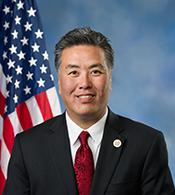
United States · Official source
4,125 records where Rep. Takano, Mark [D-CA-39] is listed as a sponsor, author, or other actor. Search with topics and years
United States · United States Congress · 27 September 2023
United States · United States Congress · 27 September 2023
This bill designates the U.S. courthouse at 350 W. First Street, Los Angeles, California, as the Felicitas and Gonzalo Mendez United States Courthouse.
United States · United States Congress · 27 September 2023
Alice Cogswell and Anne Sullivan Macy Act This bill expands special education and related services for children and youth who are deaf, hard of hearing, deafdisabled, blind, visually impaired, or deafblind. The bill establishes additional requirements for states to identify and evaluate children who are deaf, hard of hearing, deafdisabled, blind, visually impaired, or deafblind. A state's closure of a specialized school serving children who are blind or deaf shall count as a reduction of its financial support for special education and related services. The bill also authorizes support, including grants for training special education personnel, to be used in preparing individuals to become qualified teachers and early intervention specialists for children who are deaf, hard of hearing, deafdisabled, or deafblind. The bill establishes within the Department of Education the Anne Sullivan Macy Center on Visual Disability and Educational Excellence to better support students with visual disabilities.
United States · United States Congress · 27 September 2023
United States · United States Congress · 22 September 2023
United States · United States Congress · 22 September 2023
Tyler Clementi Higher Education Anti-Harassment Act of 2023 This bill addresses harassment at institutions of higher education (IHEs). Specifically, the bill requires each IHE to include in its annual security report a statement of policy regarding harassment on the basis of a student's actual or perceived race, color, national origin, sex (including sexual orientation, gender identity, pregnancy, childbirth, a medical condition related to pregnancy or childbirth, a sex stereotype, and sex characteristics, including intersex traits), disability, or religion. In addition, the Department of Education may award grants to IHEs to initiate, expand, or improve programs to (1) prevent the harassment of students; (2) provide counseling or redress services to students who have been harassed or accused of subjecting other students to harassment; or (3) educate and train students, faculty, or staff to prevent harassment or address harassment if it occurs.
United States · United States Congress · 21 September 2023
This resolution celebrates Hispanic Restaurant Week.
United States · United States Congress · 20 September 2023
Marijuana Opportunity Reinvestment and Expungement Act or the MORE Act This bill decriminalizes marijuana. Specifically, it removes marijuana from the list of scheduled substances under the Controlled Substances Act and eliminates criminal penalties for an individual who manufactures, distributes, or possesses marijuana. The bill also makes other changes, including the following: replaces statutory references to marijuana and marihuana with cannabis , requires the Bureau of Labor Statistics to regularly publish demographic data on cannabis business owners and employees, establishes a trust fund to support various programs and services for individuals and businesses in communities impacted by the war on drugs, imposes an excise tax on cannabis products produced in or imported into the United States and an occupational tax on cannabis production facilities and export warehouses, makes Small Business Administration loans and services available to entities that are cannabis-related legitimate businesses or service providers, prohibits the denial of federal public benefits to a person on the basis of certain cannabis-related conduct or convictions, prohibits the denial of benefits and protections under immigration laws on the basis of an event (e.g., conduct or conviction) relating to possession or use of cannabis that is no longer prohibited under the bill, establishes a process to expunge convictions and conduct sentencing review hearings related to federal cannabis offenses, and directs the Government Accountability Office to study the societal impact of cannabis legalization.
United States · United States Congress · 20 September 2023
United States · United States Congress · 19 September 2023
This resolution expresses support for the designation of National Voting Rights Month, encourages people to uphold the right to vote, encourages Congress to pass certain voting rights legislation, recommends the development of a curriculum in public schools and universities regarding voting, expresses appreciation for the U.S. Postal Service having issued a special Representative John R. Lewis stamp, and invites Congress to allocate funds for public service announcements regarding elections.
United States · United States Congress · 19 September 2023
United States · United States Congress · 19 September 2023
United States · United States Congress · 19 September 2023
John R. Lewis Voting Rights Advancement Act of 2023 This bill establishes new criteria for determining which states and political subdivisions must obtain preclearance before changes to voting practices may take effect. Preclearance is the process of receiving preapproval from the Department of Justice (DOJ) or the U.S. District Court for the District of Columbia before making legal changes that would affect voting rights. A state and all of its political subdivisions shall be subject to preclearance of voting practice changes for a 10-year period if, during the previous 25 years: 15 or more voting rights violations occurred in the state; 10 or more violations occurred, at least 1 of which was committed by the state itself; or 3 or more violations occurred and the state administers the elections. A political subdivision as a separate unit shall also be subject to preclearance for a 10-year period if three or more voting rights violations occurred there during the previous 25 years. States and political subdivisions that meet certain thresholds regarding minority groups must preclear covered practices before implementation, such as redistricting. States and political subdivisions must notify the public of changes to voting practices. The bill authorizes DOJ to require states or political subdivisions to provide certain documents or answers to questions for enforcing voting rights. The bill outlines factors courts must consider when hearing challenges to voting practices, such as the extent of any history of official voting discrimination in the state or political subdivision.
United States · United States Congress · 14 September 2023
United States · United States Congress · 14 September 2023
No Tax Breaks for Union Busting (NTBUB) Act This bill denies employers a tax deduction for any expenditures incurred for attempting to influence their employees with respect to labor organizations or labor organization activities, such as elections, labor disputes, and collective actions. The bill requires employers to report on their attempts to influence their employees with respect to labor organizations and their activities.
United States · United States Congress · 13 September 2023
Child Care Stabilization Act This bill provides additional funding through FY2028 for child care stabilization grants under which lead state agencies make subgrants to child care providers for personnel costs, facility costs, the purchase of personal protective equipment, and other costs related to providing child care services.
United States · United States Congress · 13 September 2023
No Tax Breaks for Union Busting (NTBUB) Act This bill denies employers a tax deduction for any expenditures incurred for attempting to influence their employees with respect to labor organizations or labor organization activities, such as elections, labor disputes, and collective actions. The bill requires employers to report on their attempts to influence their employees with respect to labor organizations and their activities.
United States · United States Congress · 12 September 2023
United States · United States Congress · 12 September 2023
Humane Cosmetics Act of 2023 This bill generally prohibits animal testing in the evaluation of cosmetic products, and it prohibits the sale or transport of cosmetics developed using animal testing, subject to civil penalties. These prohibitions begin one year after enactment. The bill specifies exceptions to these prohibitions, including if such animal testing (1) is conducted outside the United States to comply with a foreign regulatory authority; (2) is pursuant to a specified finding that there are no nonanimal alternatives to test the safety of a potentially dangerous cosmetic product or ingredient; (3) is of a product or ingredient for a drug or device subject to regulation by the Food and Drug Administration (FDA); or (4) is required for a noncosmetic purpose pursuant to a state, federal, or foreign regulatory authority. Further, no animal-testing evidence may be used to establish the safety of a cosmetic product or ingredient that is regulated by the FDA after the effective date of this bill, subject to limited exceptions.
United States · United States Congress · 12 September 2023
United States · United States Congress · 1 September 2023
Wildfire Smoke Emergency Declaration Act of 2023 This bill authorizes the President to declare a smoke emergency and provide emergency assistance to affected communities under specified circumstances. Specifically, the President, upon determining that there is, or anticipating that there will be, a significant decrease in air quality due to wildland fire smoke in one or more states, may declare a smoke emergency. The governor or other agency of a state that is or will be affected may request such a declaration. If the President declares a smoke emergency, the Federal Emergency Management Agency (FEMA) and other federal agencies may provide emergency assistance to states and local communities that are or will be affected by the emergency, including grants, equipment, supplies, and personnel and resources for establishing smoke shelters, air purifiers, and additional air monitoring sites. The Small Business Administration may provide grants to any small business concern that loses a significant amount of revenue due to wildland fire smoke in an area in which the President has declared a smoke emergency.
United States · United States Congress · 15 August 2023
Bayard Rustin Stamp Act This bill requires the U.S. Postal Service to issue a forever stamp depicting Bayard Rustin to honor his life and work.
United States · United States Congress · 11 August 2023
The resolution supports the goals of Warehouse Worker Recognition Week, acknowledges that warehouse workers are frontline workers, and recommits to working together to support the needs of these frontline workers.
United States · United States Congress · 4 August 2023
This resolution recognizes the importance of Chicano Heritage Month and asserts that Mexican Americans enhance the diversity and strength of the United States.
United States · United States Congress · 4 August 2023
Funding Early Childhood is the Right IDEA Act This bill authorizes through FY2028 specified provisions of the Individuals with Disabilities Education Act for early childhood education. Specifically, the bill authorizes Part B, Section 619 (grants to states for preschool programs serving children with disabilities ages three to five) and Part C (grants to aid states in implementing early intervention services for infants and toddlers with disabilities and their families).
United States · United States Congress · 1 August 2023
Rural Economic-development Assistance and Consultation to Help Our Tribes Act or the REACH Our Tribes Act This bill requires certain actions, particularly by the Department of Agriculture (USDA), for tribal consultation, data reporting, and interagency collaboration for economic development. Specifically, the bill requires USDA to establish a formal process for consultation with tribal governments on (1) annual budget requests; and (2) bills proposing the reauthorization of certain USDA programs over a period of multiple years with budgetary impacts, including bills providing for the reauthorization of USDA programs (commonly known as farm bills). USDA must report to Congress on this consultation process. Additionally, the bill requires USDA to establish a plan for analyzing and publicly reporting to tribal entities on funding provided through USDA programs for which tribal entities are eligible to apply. The bill also requires USDA, in consultation with the Department of Housing and Urban Development and the U.S. Economic Development Administration, to establish an interagency task force on economic development programs. This task force must (1) review guidance and application requirements for economic development programs administered by USDA, and (2) develop interagency agreements to reduce administrative and planning burdens for applicants to such programs and the federal agencies administering such programs. The Department of Commerce must establish a working group to develop and regularly update a comprehensive and public repository of federal economic development programs that are available to tribal entities.
United States · United States Congress · 1 August 2023
Original Slavery Remembrance Day Resolution This joint resolution designates a Slavery Remembrance Day annually and condemns slavery and its progenies.
United States · United States Congress · 27 July 2023
United States · United States Congress · 27 July 2023
Better Collaboration, Accountability, and Regulatory Enforcement for Animals Act of 2023 or the Better CARE for Animals Act of 2023 This bill modifies enforcement provisions under the Animal Welfare Act, including by allowing the Department of Justice (DOJ) to bring civil actions against violators of the act for appropriate relief, such as removing animals, revoking violators' licenses, or issuing civil penalties. DOJ must use the penalties to pay for the temporary care for animals pending the disposition of civil or criminal proceedings that allege violations of the act with respect to such animals.
United States · United States Congress · 27 July 2023
United States · United States Congress · 27 July 2023
Fair Access for Individuals to Receive Leave Act or the FAIR Leave Act This bill eliminates a limitation on the amount of leave that spouses working for the same employer may access under the Family and Medical Leave Act (FMLA). Under current law, an eligible individual may access up to 12 weeks of FMLA leave per year, but spouses with the same employer are required to share a total of 12 weeks of FMLA leave per year if the leave is taken for the birth of a child, the placement of a child with the employee for adoption or foster care, or to care for a parent with a serious health condition. The bill repeals this limitation, making each spouse eligible for up to 12 weeks of leave per year in these situations.
United States · United States Congress · 27 July 2023
Office of Technology Assessment Improvement and Enhancement Act This bill renames and revises the functions and duties of the Office of Technology Assessment which, composed of a Technology Assessment Board and a director, provides Congress with assessments of probable technology application impacts. (The office has not been funded since FY1996.) Specifically, the bill renames the office the Congressional Office of Technology, and it requires the office to undertake additional duties, such as providing to Members of Congress (1) certain information without the need for board review, (2) certain technical assistance on legislation related to science and technology without the need for board review, and (3) objective policy options on how Members may achieve goals with respect to science and technology policy. The bill authorizes individual Members of Congress to submit to the board a request that the office undertake an assessment activity. Additionally, the bill requires the Congressional Research Service and the Government Accountability Office to coordinate technology assessment activities with the office to avoid duplication or overlapping of research activities. The bill also (1) allows the office to temporarily appoint specified technical and professional personnel to work for the office, (2) requires the office to make the findings of completed analyses publicly available, (3) revises the appointment of board members, (4) requires the board to hold an annual meeting at which Members of Congress may appear and present information regarding technology assessment activities, and (5) requires the board to report annually on the activities of the office.
United States · United States Congress · 27 July 2023
Democracy Restoration Act of 2023 This bill addresses the voting rights of individuals convicted of a criminal offense and the restoration of their voting rights. First, the bill declares that the right of a U.S. citizen to vote in any election for federal office shall not be denied or abridged because that individual has been convicted of a criminal offense unless, at the time of the election, such individual is serving a felony sentence. Further, the bill provides for enforcement of, and remedies for violations of, the bill. In addition, it sets forth requirements for state and federal notification of individuals of the restoration of their voting rights. Finally, the bill prohibits federal funding of construction or improvement of a place of incarceration unless U.S. citizens incarcerated in that jurisdiction are notified, upon release, of their voting rights.
United States · United States Congress · 27 July 2023
Tax Fairness for Workers Act This bill allows an above-the-line tax deduction for union dues and expenses. (An above-the-line deduction is subtracted from gross income and is available whether or not a taxpayer itemizes other deductions.) The bill also reinstates the miscellaneous itemized tax deduction for unreimbursed expenses attributable to the performance of services as an employee (Under current law, all miscellaneous itemized deductions are suspended through 2025).
United States · United States Congress · 27 July 2023
Rebuild America's Schools Act of 2023 This bill provides support for long-term improvements to public elementary and secondary school facilities. First, the bill sets forth allocations to states and establishes a need-based grant program for local educational agencies (LEAs) to improve school facilities. Further, the bill specifies allowable uses of grant funds, including carrying out major repairs, improving indoor air quality, and making facilities accessible to disabled individuals. Additionally, the bill requires LEAs that receive funds for new construction, modernization, or renovation projects to comply with hazard-resistance building codes and performance criteria under the WaterSense program of the Environmental Protection Agency. Further, the bill requires such LEAs to adopt certain green practices (environmental standards) and requires the use of iron, steel, and manufactured products that are made in the United States (Buy America). The bill restores school infrastructure tax credit bonds. The bill also sets forth reporting requirements, including annual reports on grant program projects and a report by the Government Accountability Office that requires a study of the geographic distribution of projects, the impact of selected projects on student and staff health and safety, and the accessibility of projects to high-poverty schools. The bill also establishes the Office of School Infrastructure and Sustainability within the Department of Education. Next, the bill extends through FY2028 the Impact Aid Construction program. Finally, the bill establishes a grant program to assist LEAs with repairing or replacing concrete foundations affected by pyrrhotite (an iron sulfide material linked to crumbling foundations).
United States · United States Congress · 27 July 2023
This resolution condemns Iran for the 1988 massacre of political prisoners. It also urges the Biden Administration and U.S. allies to publicly condemn the massacre and to pressure Iran to provide information to the families of the victims.
United States · United States Congress · 27 July 2023
This concurrent resolution opposes actions that undermine Israel's future as a Jewish, democratic state. The resolution expresses that democracy is at the core of the special relationship between the United States and Israel, and that Congress stands with all Israelis seeking to defend liberal democracy, judicial review, and independent political institutions.
United States · United States Congress · 27 July 2023
Chyna Gibson Stop the Transgender Murder Epidemic Act of 2023 or the Chyna Gibson STME Act of 2023 This bill establishes a commission to address various issues facing gender-nonconforming, gender-expansive, and transgender women of color. The commission must be comprised of 13 members who are qualified based on their education, training, activism, or experience, particularly in the field of transgender studies and human rights. The commission may hold hearings and must report its findings and recommendations to Congress no later than 18 months after its first meeting.
United States · United States Congress · 27 July 2023
Student Loan Interest Elimination Act This bill makes changes to federal student loans, including to interest rates. Specifically, the bill directs the Department of Education (ED) to establish and implement procedures to (1) modify the terms of Federal Direct Loans so that beginning on July 1, 2024, no interest shall accrue on such a loan; and (2) allow a borrower to opt out of this loan modification. Additionally, ED must establish and implement procedures to (1) refinance eligible loans that are not Federal Direct Loans (e.g., privately held Federal Family Education Loans and Perkins Loans), and (2) allow a borrower to opt out of this loan refinancing. The bill outlines the terms and conditions of these refinanced loans, including by prohibiting ED from charging origination fees and specifying that no interest shall accrue on these loans. Next, the bill creates a tiered interest rate (based on the borrower's total adjusted available income) for federal student loans made on or after July 1, 2024. The bill caps this interest rate at 4%. The bill establishes the Education Affordability Trust Fund. ED must deposit all payments made on federal student loans into this trust fund. The Trust Fund Board, as established by this bill, must transfer the profits from investments of this trust fund to ED to pay for the administrative costs of carrying out federal student loan programs. The bill allows ED to use excess amounts of funds in the trust fund to carry out a Supplemental Pell Grant Program.
United States · United States Congress · 27 July 2023
National Office of New Americans Act This bill establishes the National Office of New Americans (NONA) within the Executive Office of the President to promote and support the integration of immigrants and refugees into the social, cultural, economic, and civic life of the United States. The NONA shall also establish the Federal Initiative on New Americans. The initiative shall establish a coordinated federal program to respond effectively to immigrant and refugee integration issues such as language learning, adult education and workforce training, health care, and naturalization.
United States · United States Congress · 26 July 2023
Lowering Drug Costs for American Families Act This bill expands the Medicare Drug Price Negotiation Program to include additional drugs and drugs that are covered under private insurance. It also extends certain rebate requirements for covered drugs under Medicare to drugs that are covered under private insurance. Current law requires the Centers for Medicare & Medicaid Services (CMS) to negotiate maximum prices for brand-name drugs that do not have other generic equivalents and that account for the greatest Medicare spending; the CMS must eventually negotiate the prices of 20 drugs that are covered under Medicare in 2029 and each year thereafter. The bill requires the CMS to negotiate the prices of 50 drugs beginning in 2029. It also applies the negotiated maximum prices under the program to drugs that are covered under private health insurance, unless the insurer opts out. The CMS, Department of Labor, and Department of Treasury must publish a list of insurers that choose to opt out; insurers must also publicly disclose their decision to opt out. Current law also requires drug manufacturers to issue rebates to the CMS for brand-name drugs without generic equivalents under Medicare that cost $100 or more per year per individual and for which prices increase faster than inflation. The bill extends these requirements to drugs that are covered under private insurance.
United States · United States Congress · 26 July 2023
United States · United States Congress · 26 July 2023
Providing Access to Treatment and Housing Act of 2023 or the PATH Act of 2023 This bill establishes a specific office and authorizes grants to support the provision of mental and behavioral health services for unhoused individuals. Specifically, the bill establishes the Center for Unhoused Individuals in the Substance Abuse and Mental Health Services Administration (SAMHSA). The center must develop policies and coordinate federal, state, and local action to expand unhoused individuals' access to mental, behavioral health, and housing services. The center may award grants to public and nonprofit entities to support these activities. SAMHSA must also award grants to state, local, and tribal governments to improve these services for unhoused individuals, with priority given to areas with high rates of housing instability and above-average housing costs.
United States · United States Congress · 26 July 2023
South Asian Heart Health Awareness and Research Act of 2023 This bill authorizes the Centers for Disease Control and Prevention to award supplemental grants to states for heart-disease research and awareness among communities disproportionately affected by heart disease, including the South Asian population of the United States.
United States · United States Congress · 26 July 2023
United States · United States Congress · 26 July 2023
Nonrestrictive Offshore Wind Act or the NOW Act This bill repeals certain requirements that the Department of the Interior must meet before issuing a lease for offshore wind development. Under the Inflation Reduction Act of 2022, Interior may not issue a lease unless (1) an offshore oil and gas lease sale has been held in the year prior to issuing the lease, and (2) Interior offers a specified minimum acreage for offshore lease sales in the previous year. The bill repeals those requirements.
United States · United States Congress · 26 July 2023
Comprehensive Legislation for Expanding and Advancing Nonrestrictive Energy Act or the CLEAN Energy Act This bill repeals certain requirements that the Department of the Interior must meet before issuing an onshore wind or solar right-of-way for wind or solar energy development on federal land. Under the Inflation Reduction Act of 2022, Interior may not issue a right-of-way for such development unless (1) an onshore oil and gas lease sale has been held in the 120 days prior to issuing the right-of-way, and (2) Interior offers a specified minimum acreage for oil and gas lease sales in the previous year. The bill repeals those requirements.
United States · United States Congress · 26 July 2023
Fair College Admissions for Students Act This bill prohibits an institution of higher education (IHE) that participates in federal student-aid programs from giving preferential treatment in the admissions process to applicants based on their relationships to donors or alumni of the IHE.
United States · United States Congress · 25 July 2023
United States · United States Congress · 25 July 2023
Scientific Integrity Act This bill revises provisions regarding the release of scientific research results by federal agencies. Each agency that funds, conducts, or oversees scientific research must (1) adopt and enforce a scientific integrity policy that includes certain requirements, such as restricting scientific conclusions from being based on political considerations; and (2) submit such policy to the Office of Science and Technology Policy (OSTP) for approval. Agencies must make their policies public, submit them to Congress, and periodically update them with OSTP's approval. The Government Accountability Office shall review implementation of the policies. Each agency shall (1) appoint a Scientific Integrity Officer, (2) establish a process for dispute resolution consistent with the scientific integrity policy, and (3) establish a specified training program for current and new employees.