Resolution· HRESH.Res. 514 (119th)referred
Commemorating 9 years since the Pulse nightclub shooting in Orlando, Florida, on June 12, 2016.
United States · United States Congress · 12 June 2025
The world's political record
Person
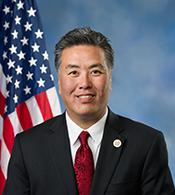
United States · Official source
4,125 records where Rep. Takano, Mark [D-CA-39] is listed as a sponsor, author, or other actor. Search with topics and years
United States · United States Congress · 12 June 2025
United States · United States Congress · 12 June 2025
United States · United States Congress · 10 June 2025
Bipartisan Background Checks Act of 2025 This bill establishes new background check requirements for firearm transfers between private parties (i.e., unlicensed individuals). Specifically, it prohibits a firearm transfer between private parties unless a licensed gun dealer, manufacturer, or importer first takes possession of the firearm to conduct a background check. The prohibition does not apply to certain firearm transfers or exchanges, such as a gift between spouses.
United States · United States Congress · 10 June 2025
Enhanced Background Checks Act of 2025 This bill establishes more stringent background check requirements for proposed firearm transfers from a federal firearms licensee (e.g., a licensed gun dealer) to an unlicensed person. Specifically, it increases the amount of time, from 3 business days to a minimum of 10 business days, that a federal firearms licensee must wait to receive a completed background check prior to transferring a firearm to an unlicensed person. (This type of transaction is often referred to as a default proceed transaction.) If a submitted background check remains incomplete after 10 business days, then the prospective purchaser may submit a petition for a final firearms eligibility determination. If an additional 10 days elapse without a final determination, then the federal firearms licensee may transfer the firearm to the prospective purchaser. The Government Accountability Office must report on the extent to which the changes have prevented firearms transfers to prohibited persons. The Federal Bureau of Investigation must report on the number of petitions it receives for final federal firearms determinations. The Department of Justice, in consultation with the National Resource Center on Domestic Violence and Firearms, must report on further amendments to the background check process that would likely reduce the risk of death or great bodily harm to victims of domestic violence, domestic abuse, dating partner violence, sexual assault, and stalking.
United States · United States Congress · 9 June 2025
United States · United States Congress · 6 June 2025
United States · United States Congress · 6 June 2025
Stop Troubling Retroactive Invoices for Veteran Expenses Act of 2025 or the STRIVE Act of 2025 This bill prohibits the Department of Veterans Affairs (VA), under certain conditions, from collecting copayments from a veteran for hospital care or medical services more than two years after the veteran receives the care or service. Specifically, the VA is prohibited from collecting any copayment from a veteran for hospital care or medical services after the end of the two-year period beginning on the date the veteran received the care or service if the VA did not provide the veteran with timely notice of the copay or provide notice that the aggregate copay amount exceeds $2,000, annually adjusted for inflation. The VA may waive the requirement for a veteran to make any copayment for hospital care or medical services whenever it determines the waiver is appropriate, regardless of whether a veteran submits a request for a waiver. Finally, the bill extends the limitation on pension amounts for certain hospitalized or institutionalized veterans through February 29, 2032. Currently, the limitation expires on November 30, 2031.
United States · United States Congress · 5 June 2025
United States · United States Congress · 4 June 2025
United States · United States Congress · 4 June 2025
United States · United States Congress · 4 June 2025
This resolution expresses the House of Representatives' grave concern with (1) the humanitarian crisis and acute suffering of Palestinian civilians in Gaza, and (2) the suffering of the hostages and hostage families. The resolution also calls on the White House, the Department of State, and other relevant federal agencies to use all available diplomatic tools to bring about the release of the hostages, the disbursement of food and humanitarian aid to Palestinian civilians, and a durable end to the Gaza conflict.
United States · United States Congress · 3 June 2025
United States · United States Congress · 29 May 2025
This bill authorizes the Department of Agriculture to waive the matching funds requirement for grants under the Specialty Crop Research Initiative. Currently, entities that receive grants under the initiative must provide nonfederal matching funds (including funds from an agricultural promotion, research, and information program) equal to not less than the amount of the grant.
United States · United States Congress · 29 May 2025
United States · United States Congress · 23 May 2025
United States · United States Congress · 23 May 2025
United States · United States Congress · 21 May 2025
United States · United States Congress · 21 May 2025
United States · United States Congress · 21 May 2025
This bill prohibits the President from selling, transferring, or exporting certain defense articles or services to Israel, except in specified circumstances. Defense articles covered by the prohibition include BLU-109 bunker busting bombs, Joint Direct Attack Munition (JDAM) assemblies, and 155mm artillery ammunition. Defense services directly related to such articles are also covered. The President may sell, transfer, or export such defense articles or services to Israel if (1) a law is enacted specifying the purposes for which such articles or services may be used, and (2) Israel provides written assurances that the defense articles or services will be used for those specific statutory purposes and in a manner consistent with certain other laws, including international human rights laws.
United States · United States Congress · 21 May 2025
College for All Act of 2025 This bill establishes measures to expand access to higher education, including by eliminating tuition and required fees for eligible students, revising the Federal Pell Grant program, and reauthorizing certain programs to assist students from disadvantaged backgrounds. Specifically, the bill provides funding to enable states and tribal colleges and universities, through a federal-state partnership, to eliminate tuition and required fees for (1) all students at community colleges and two-year tribal colleges and universities, and (2) working- and middle-class students at four-year public institutions of higher education and tribal colleges and universities. The bill provides funding to enable private, nonprofit historically Black colleges and universities and minority-serving institutions to eliminate tuition and required fees for eligible students. The bill permanently reauthorizes and otherwise revises the Federal Pell Grant program by providing funding to increase the maximum award for each eligible student, increasing the duration limit for the use of Pell Grants, allowing students to use their awards to cover living and nontuition expenses, and expanding eligibility to Dreamer students (i.e., students who have been granted Deferred Action for Childhood Arrivals status and who entered the United States before the age of 16) and students with other immigration statuses. Further, the bill requires the Department of Education to award grants to eligible states and tribal colleges and universities for improving student outcomes. The bill reauthorizes through FY2035 the Federal TRIO Programs and reauthorizes through FY2029 the Gaining Early Awareness and Readiness for Undergraduate Programs.
United States · United States Congress · 21 May 2025
United States · United States Congress · 21 May 2025
United States · United States Congress · 17 May 2025
United States · United States Congress · 15 May 2025
United States · United States Congress · 15 May 2025
Stronger Communities through Better Transit Act This bill requires the Department of Transportation (DOT) to establish a grant program to support operating projects for public transportation and related service improvements, particularly in underserved communities and areas of persistent poverty. Specifically, the bill requires DOT to allocate funding under the program for urbanized areas, states, and Indian tribes that are recipients of funds under either the Federal Transit Administration's (FTA's) Urbanized Area Formula Funding program or Formula Grants for Rural Areas program. Eligible recipients may use funding for operating costs associated with projects that improve public transportation service for transit-dependent populations and support increased transit ridership (e.g., service expansion, information technology enhancements, and workforce development). DOT must apportion the funding so that recipients receive funds that are proportional to their share of operating costs. The bill also provides for an increased federal cost share for operating assistance for projects or programs carried out in areas of persistent poverty or underserved communities. DOT must set up a multimodal access measurement interface for public agencies to aid transit agencies in determining and reporting on access to jobs and essential services. A grant recipient must (1) report specific information to the FTA for inclusion in the National Transit Database, and (2) survey transit riders and non-riding residents regarding transit service improvements. Further, the bill expands the purposes of the public transportation programs to include supporting public transportation's role in combating climate change through growing/retaining transit ridership.
United States · United States Congress · 14 May 2025
United States · United States Congress · 14 May 2025
Nurse Staffing Standards for Hospital Patient Safety and Quality Care Act of 2025 This bill requires hospitals to implement and submit to the Department of Health and Human Services (HHS) a staffing plan that complies with specified minimum nurse-to-patient ratios by unit. Hospitals must post a notice regarding nurse-to-patient ratios in each unit and maintain records of actual ratios for each shift in each unit. The bill also requires hospitals to follow certain procedures regarding how ratios are determined, and other staff are prohibited from performing nurse functions unless specifically authorized within a state's scope of practice rules. HHS must adjust Medicare payments to hospitals to cover additional costs attributable to compliance with these ratios. Nurses may object to, or refuse to participate in, an assignment if it would violate minimum ratios or if they are not prepared by education or experience to fulfill the assignment without compromising the safety of a patient or jeopardizing their nurse's license. Hospitals may not (1) take adverse actions against a nurse based on the nurse's reasonable refusal to accept an assignment; or (2) discriminate against individuals for good faith complaints relating to the care, services, or conditions of the hospital or related facilities. HHS may impose civil monetary penalties on hospitals violating the ratio requirements and must publish the names of such hospitals. The bill provides stipends to the nurse workforce loan repayment and scholarship program and expands the nurse retention grant program to include nurse preceptorship and mentorship projects.
United States · United States Congress · 13 May 2025
United States · United States Congress · 13 May 2025
United States · United States Congress · 13 May 2025
United States · United States Congress · 9 May 2025
United States · United States Congress · 8 May 2025
United States · United States Congress · 8 May 2025
This resolution recognizes the significance of Asian American, Native Hawaiian, and Pacific Islander Heritage Month as an important time to celebrate the significant contributions of Asian Americans, Native Hawaiians, and Pacific Islanders to the history of the United States.
United States · United States Congress · 8 May 2025
United States · United States Congress · 7 May 2025
United States · United States Congress · 7 May 2025
United States · United States Congress · 7 May 2025
United States · United States Congress · 5 May 2025
United States · United States Congress · 5 May 2025
United States · United States Congress · 1 May 2025
Community Services Block Grant Improvement Act of 2025 This bill reauthorizes the Community Services Block Grant (CSBG) program through FY2032 and makes certain changes to the program and associated eligibility requirements. The CSBG program supports various antipoverty activities, primarily through formula-based allotments to states, tribes, and territories, the majority of which must be made available in grants to eligible local entities. Specifically, the bill permanently sets the measure of eligibility for services, assistance, or resources provided directly to individuals or families under the program at 200% of the poverty line. (Under current law, the eligibility measure is temporarily set at 200% of the poverty line, an increase from the previous measure of 125% of the poverty line.) The bill also makes certain changes to the permitted uses of funding, including by allowing CSBG funds to be used to facilitate low-income individuals’ and communities’ access to high-speed broadband, digital literacy training, technical support, and other services. States may also use certain funds allocated for training and technical assistance to assist eligible entities in responding to statewide and regional conditions that create economic insecurity, including emergency conditions. The bill also expands requirements for the plans that states must submit to the Department of Health and Human Services in order to receive CSBG funds (e.g., transparency assurances), and sets deadlines by which states must make funds available to eligible entities. Finally, the bill repeals a provision that allowed states to use CSBG funds to offset revenue losses associated with state charity tax credits.
United States · United States Congress · 1 May 2025
United States · United States Congress · 30 April 2025
United States · United States Congress · 30 April 2025
United States · United States Congress · 30 April 2025
Assault Weapons Ban of 2025 This bill makes it a crime to knowingly import, sell, manufacture, transfer, or possess a semiautomatic assault weapon (SAW) or large capacity ammunition feeding device (LCAFD). The prohibition does not apply to a firearm that is (1) manually operated by bolt, pump, lever, or slide action, except for certain shotguns; (2) permanently inoperable; (3) an antique; (4) only capable of firing rimfire ammunition; or (5) a rifle or shotgun specifically identified by make and model. The bill also exempts from the prohibition the following, with respect to a SAW or LCAFD: importation, sale, manufacture, transfer, or possession related to certain law enforcement efforts, or authorized tests or experiments; importation, sale, transfer, or possession related to securing nuclear materials; and possession by a retired law enforcement officer. The bill permits continued possession, sale, or transfer of a grandfathered SAW, which must be securely stored. A licensed gun dealer must conduct a background check prior to the sale or transfer of a grandfathered SAW between private parties. The bill permits continued possession of, but prohibits sale or transfer of, a grandfathered LCAFD. Newly manufactured LCAFDs must display serial number identification. Newly manufactured SAWs and LCAFDs must display the date of manufacture. The bill also allows a state or local government to use Edward Byrne Memorial Justice Assistance Grant Program funds to compensate individuals who surrender a SAW or LCAFD under a buy-back program.
United States · United States Congress · 29 April 2025
Equality Act This bill prohibits discrimination based on sex, sexual orientation, or gender identity with respect to businesses, employment, housing, federally funded programs, and other settings. Specifically, the bill expands Title II and Title VI of the Civil Rights Act of 1964 to prohibit public accommodations and federally funded programs, respectively, from discriminating based on sex, sexual orientation, or gender identity. It also includes stores, transit services, recreational facilities, and establishments that provide health care, accounting, or legal services as public accommodations under Title II. The bill also expands Title IV (desegregation of public schools) and Title VII (employment discrimination) to specifically include sexual orientation and gender identity. (The Supreme Court held in Bostock v. Clayton County that Title VII's prohibition of employment discrimination based on sex also prohibits employment discrimination based on sexual orientation or gender identity.) The bill similarly expands the Fair Housing Act (discrimination in public and private housing) to include sexual orientation and gender identity. It also prohibits discrimination based on sexual orientation or gender identity by creditors and with respect to jury selection. The bill defines sex for purposes of the aforementioned provisions to include sex stereotypes, pregnancy, childbirth, sexual orientation, gender identity, and sex characteristics.
United States · United States Congress · 29 April 2025
United States · United States Congress · 29 April 2025
Medicare for All Act This bill establishes a national health insurance program that is administered by the Department of Health and Human Services (HHS). Among other requirements, the program must (1) cover all U.S. residents; (2) provide for automatic enrollment of individuals upon birth or residency in the United States; and (3) cover items and services that are medically necessary or appropriate to maintain health or to diagnose, treat, or rehabilitate a health condition, including hospital services, prescription drugs, mental health and substance abuse treatment, dental and vision services, long-term care, gender affirming care, and reproductive care, including contraception and abortions. The bill prohibits cost-sharing (e.g., deductibles, coinsurance, and copayments) and other charges for covered services. Additionally, private health insurers and employers may only offer coverage that is supplemental to, and not duplicative of, benefits provided under the program. Health insurance exchanges and specified federal health programs terminate upon program implementation. However, the program does not affect coverage provided through the Department of Veterans Affairs or the Indian Health Service. The bill also establishes a series of implementing provisions relating to (1) health care provider participation; (2) HHS administration; and (3) payments and costs, including the requirement that HHS negotiate prices for prescription drugs. Individuals who are age 18 or younger, age 55 or older, or already enrolled in Medicare may enroll in the program starting one year after enactment of this bill; other individuals may buy into the program at this time. The program must be fully implemented two years after enactment.
United States · United States Congress · 28 April 2025
Protecting America's Workers Act This bill expands the coverage of requirements governing workplace safety and health to include protection for federal, state, and local government employees. However, the bill does not cover working conditions otherwise covered by federal requirements for mine safety and health. The bill revises requirements governing worker protection, including by expanding protections for whistle-blowers, such as protections for employees who refuse to perform work because they reasonably believe the work would result in serious injury or illness and for employees who aid inspections; directing employers to furnish a hazard-free place of employment to all individuals performing work, not just employees; directing employers to report work-related deaths or certain injuries, illnesses, or hospitalizations; establishing rights for victims, or representatives of victims, with respect to inspections or investigations of work-related bodily injuries or deaths; and setting the permitted period for employers to correct serious, willful, or repeated violations while citations for the violations are being contested. The bill also revises enforcement and oversight of workplace safety, including by increasing civil and criminal penalties for certain violations, requiring the Department of Labor to investigate fatalities or significant incidents in the workplace, expanding enforcement requirements relating to state occupational safety and health plans, expanding requirements for workplace health hazard evaluations by the National Institute for Occupational Safety and Health, and requiring Labor to provide training programs concerning employee rights and employer responsibilities.
United States · United States Congress · 28 April 2025
United States · United States Congress · 24 April 2025