Resolution· HRESH.Res. 846 (119th)referred
Original National Domestic Violence Awareness Month Resolution of 2025
United States · United States Congress · 31 October 2025
The world's political record
Person
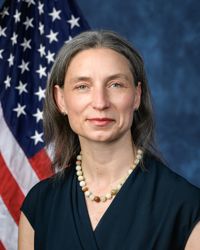
United States · Official source
401 records where Rep. Dexter, Maxine [D-OR-3] is listed as a sponsor, author, or other actor. Search with topics and years
United States · United States Congress · 31 October 2025
United States · United States Congress · 28 October 2025
United States · United States Congress · 8 October 2025
United States · United States Congress · 30 September 2025
Fair Pay for Federal Contractors Act of 2025 This bill provides back pay to employees of federal contractors who lost pay due to a lapse in appropriations (i.e., government shutdown) in FY2026. Specifically, the bill provides appropriations for federal agencies that are subject to a lapse in appropriations in FY2026 to adjust the price of contracts to compensate federal contractors for providing back pay to employees who were affected by the lapse in appropriations. The agencies must adjust the price of any contract for which the contractor stopped, suspended, delayed, or interrupted all or part of the work under the contract due to the lapse in appropriations. The price adjustment must compensate the contractor for reasonable costs incurred to (1) compensate employees who were furloughed or laid off, were not working, or experienced a reduction of hours or compensation due to the lapse in appropriations; or (2) restore paid leave taken by employees during the lapse in appropriations if the contractor required or permitted employees to use paid leave as a result of the lapse in appropriations. The maximum amount of weekly compensation of an employee for which an adjustment may be made under this bill may not exceed the lesser of (1) the employee's actual weekly compensation, or (2) $1,442 (or a lesser amount pro-rated for an employee who works less than 40 hours per week). The bill also requires the Office of Federal Procurement Policy to submit a report to Congress on the adjustments made under this bill.
United States · United States Congress · 30 September 2025
United States · United States Congress · 26 September 2025
National Guard Proper Use Act This bill prohibits, in accordance with the Posse Comitatus Act, members of the Armed Forces and members of the National Guard from being ordered to enforce immigration laws. Generally, the Posse Comitatus Act prohibits the use of the military for civil law enforcement purposes.
United States · United States Congress · 26 September 2025
United States · United States Congress · 26 September 2025
This bill prohibits the removal of federal employees from the civil service during a government shutdown due to a lapse in discretionary appropriations. If an employee is removed from the civil service in violation of this bill, the employee may elect to be reinstated with back pay on the date on which the lapse in appropriations ends.
United States · United States Congress · 23 September 2025
United States · United States Congress · 23 September 2025
United States · United States Congress · 19 September 2025
United States · United States Congress · 18 September 2025
United States · United States Congress · 18 September 2025
United States · United States Congress · 18 September 2025
United States · United States Congress · 18 September 2025
Protecting Free Vaccines Act This bill requires Medicare, Medicaid, the Children's Health Insurance Program (CHIP), and private health insurers to cover, without cost-sharing, vaccines that were recommended by the Centers for Disease Control and Prevention's Advisory Committee on Immunization Practices as of October 25, 2024. The requirement ends on January 1, 2030.
United States · United States Congress · 18 September 2025
United States · United States Congress · 17 September 2025
United States · United States Congress · 17 September 2025
United States · United States Congress · 16 September 2025
United States · United States Congress · 11 September 2025
United States · United States Congress · 11 September 2025
United States · United States Congress · 10 September 2025
United States · United States Congress · 9 September 2025
United States · United States Congress · 9 September 2025
United States · United States Congress · 8 September 2025
United States · United States Congress · 3 September 2025
United States · United States Congress · 3 September 2025
United States · United States Congress · 3 September 2025
United States · United States Congress · 29 August 2025
United States · United States Congress · 19 August 2025
Safe Air on Airplanes Act This bill directs the Federal Aviation Administration (FAA) to update regulations to phase out and prohibit bleed air systems in certain types of aircraft. In general, a bleed air system uses compressed air that is taken from an aircraft engine that is upstream of the combustion chamber and provides pressurized air for the aircraft’s environmental control system (e.g., ventilation). Under the bill, the FAA must prohibit new turbine and turboprop aircraft designs from using bleed air systems, require (beginning seven years after the bill’s enactment) that any bleed air system in a newly manufactured aircraft is fitted with a filter (i.e., a device that removes gaseous and particulate components of oil fumes), and provide for a phaseout (over a 30-year period) of the use of bleed air systems in existing turbine and turboprop aircraft designs.
United States · United States Congress · 19 August 2025
United States · United States Congress · 15 August 2025
United States · United States Congress · 15 August 2025
United States · United States Congress · 12 August 2025
United States · United States Congress · 5 August 2025
United States · United States Congress · 1 August 2025
United States · United States Congress · 1 August 2025
United States · United States Congress · 1 August 2025
Protecting Health Care and Lowering Costs Act 2025 This bill makes permanent temporary provisions that generally expand eligibility for and increase the amount of the premium tax credit. This bill also repeals multiple Medicaid, Medicare, and health-related tax provisions enacted by the One Big Beautiful Bill Act (OBBBA). Currently, eligible taxpayers may claim the premium tax credit, which applies toward the cost of obtaining health insurance through health insurance exchanges. To qualify, a taxpayer’s household income must meet or exceed 100% of the federal poverty level (FPL) and, after 2025, may not exceed 400% of the FPL (maximum income limit). For 2021-2025, the maximum income limit is eliminated, which generally expands eligibility for the premium tax credit. Further, under current law, the amount of the premium tax credit is partially based on the taxpayer’s household income multiplied by the applicable percentage. The applicable percentage varies depending on which of six income ranges (adjusted for inflation after 2025) the taxpayer’s household income falls within. For 2021-2025, the applicable percentages are lowered and the adjustment of the applicable percentages for inflation is eliminated, which generally increases the amount of the premium tax credit. The bill permanently eliminates the 400% maximum income limit, lowers the applicable percentages, and eliminates the inflation adjustment for the applicable percentages. Finally, the bill repeals multiple Medicaid, Medicare, and health-related tax provisions enacted by the OBBBA, including certain Medicare and Medicare eligibility and verification requirements, the reduced window for retroactive Medicaid coverage, and premium tax credit verification requirements.
United States · United States Congress · 1 August 2025
United States · United States Congress · 1 August 2025
Wildfire Emergency Preparedness Act of 2025 This bill establishes grants, training, and interagency coordination for responding to wildfires and fires in the wildland-urban interface (WUI) (i.e., where undeveloped land or vegetation meets human infrastructure). It also requires measures for protecting the health of firefighters and emergency responders. The bill establishes an Under Secretary of Agriculture for Fire Coordination to manage coordination of government preparation and response to wildfires and WUI fires. Such office may award grants to fire departments and emergency medical services organizations for training firefighting personnel or obtaining personal protective equipment for responding to such fires. Also, the Forest Service must establish a national plan with guidelines for training structural (i.e., urban) firefighters to respond to wildfires and WUI fires. The Forest Service may provide grants to certain nonprofit organizations to carry out training programs pursuant to the plan. Upon request from agencies, the Department of Defense (DOD) may allow its firefighters to conduct operations or assist in responding to wildfires and WUI fires. Agencies must reimburse DOD for such services. Additionally, the National Institute for Occupational Safety and Health must perform research and development and report to Congress on protecting the respiratory health of firefighters and identifying certain hazardous substances in areas affected by wildfires and WUI fires. Also, task forces within the National Urban Search and Rescue Response System of the Federal Emergency Management Agency (FEMA) must train each member in peer mental health support and include members who are mental health practitioners.
United States · United States Congress · 1 August 2025
United States · United States Congress · 29 July 2025
United States · United States Congress · 29 July 2025
United States · United States Congress · 29 July 2025
United States · United States Congress · 25 July 2025
United States · United States Congress · 23 July 2025
United States · United States Congress · 23 July 2025
United States · United States Congress · 23 July 2025
Resident Physician Shortage Reduction Act of 2025 This bill increases the number of residency positions eligible for graduate medical education payments under Medicare for qualifying hospitals, including hospitals in rural areas and health professional shortage areas. The bill provides for an additional increase of 2,000 positions per fiscal year from FY2026-FY2032; during this period, each hospital may receive up to 75 additional positions in total under the bill and current law. Additionally, one-third of the positions that are made available under the bill must be allocated to hospitals that are already operating above applicable resident limits. The bill also requires the Government Accountability Office to report on strategies to increase the diversity of the health professional workforce, including with respect to representation from rural, low-income, and minority communities.
United States · United States Congress · 22 July 2025
United States · United States Congress · 22 July 2025