Bill· HRH.R. 5275 (119th)referred
Diagnostic Accuracy in Sepsis Act of 2025
United States · United States Congress · 10 September 2025
The world's political record
Person
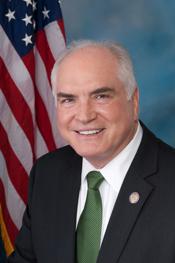
United States · Official source
2,567 records where Rep. Kelly, Mike [R-PA-16] is listed as a sponsor, author, or other actor. Search with topics and years
United States · United States Congress · 10 September 2025
United States · United States Congress · 10 September 2025
Reforming and Enhancing Sustainable Updates to Laboratory Testing Services Act of 2025 or the RESULTS Act This bill requires the use of particular data from the private sector to inform Medicare payment rates for certain widely available laboratory tests. Specifically, the Centers for Medicare & Medicaid Services (CMS) must contract with an entity that maintains a database of claims data for clinical diagnostic laboratory tests that (1) are not advanced diagnostic tests, and (2) were furnished by more than 100 providers and suppliers of such services over a specified six-month period (i.e., widely available tests). The database must meet specified requirements, such as having data that is representative of the entire country and from more than 50 private payors and claims administrators. The contracted entity must be a nonprofit entity that is not affiliated with any government agency, any insurance issuer or provider, or any other organization in the health care sector. Beginning January 1, 2028, the CMS must use the information obtained from the database to inform Medicare payment rates for these widely available laboratory tests. The bill additionally specifies processes for determining payment rates for laboratory tests that are not advanced diagnostic tests, are not widely available, and lack adequate claims data. The CMS must use certain existing processes to set appropriate rates. The bill also delays scheduled payment reductions for laboratory tests until 2028 and allows for judicial and administrative review of payment rates.
United States · United States Congress · 10 September 2025
Claiming Age Clarity Act This bill changes certain terms that are used by the Social Security Administration (SSA) to describe the ages at which a worker may claim Social Security retirement benefits. First, the SSA must use minimum monthly benefit age instead of early eligibility age . This refers to the earliest age (62 under current law) at which a worker may claim benefits. (Currently, the benefit amount of a worker who claims benefits early is reduced to account for the longer period during which the worker is expected to receive benefits.) Second, the SSA must use standard monthly benefit age instead of full retirement age and normal retirement age . These terms refer to the age at which a worker may claim benefits without a reduction in the benefit amount. (Currently, this age ranges from 65 to 67, depending on the worker's year of birth.) Finally, the SSA must use the term maximum monthly benefit age for any reference to age 70 as the maximum age at which a worker may receive delayed retirement credits. The SSA may not use the term delayed retirement credit. These terms refer to the mechanism that increases the benefit amount of a worker who delays claiming benefits after reaching the full retirement age. (Currently, a worker receives a credit for each month between the full retirement age and age 70 that the worker delays claiming benefits. Each credit increases the benefit amount that the worker will receive after claiming benefits by a specified percentage.)
United States · United States Congress · 2 September 2025
United States · United States Congress · 22 August 2025
United States · United States Congress · 29 July 2025
United States · United States Congress · 23 July 2025
Spotted Lanternfly Research and Development Act This bill includes combatting the spotted lanternfly (Lycorma delicatula) as a Department of Agriculture (USDA) high-priority research and extension area and reauthorizes other USDA research and extension initiatives. The bill specifically allows grants for developing and disseminating research-based tools and treatments to combat the spotted lanternfly, which is an invasive species native to Asia that feeds on a wide range of crops and plants (e.g., grapes, apples, hops, walnuts, and hardwood trees). Further, the bill reauthorizes USDA grants to support competitive specialized research and extension activities, including high-priority areas, through FY2030. The bill also specifically reauthorizes through FY2030 the Pulse Crop Health Initiative; the Comprehensive Food Safety Training Network; pollinator protection research and extension grants; increased USDA capacity and infrastructure to address and conduct research on colony collapse disorder and other pollinator issues; and a USDA-conducted nationwide honey bee pest, pathogen, health, and population status surveillance program.
United States · United States Congress · 23 July 2025
United States · United States Congress · 23 July 2025
United States · United States Congress · 22 July 2025
United States · United States Congress · 22 July 2025
United States · United States Congress · 22 July 2025
United States · United States Congress · 22 July 2025
United States · United States Congress · 21 July 2025
United States · United States Congress · 17 July 2025
United States · United States Congress · 17 July 2025
Holy Sovereignty Protection Act This bill provides that the U.S. citizenship of an individual elected as the Supreme Pontiff of the Roman Catholic Church may not be revoked and exempts such individual from federal income taxes for tax years during which the individual serves in such role for any part of the tax year. (As background, the income of a U.S. citizen generally is subject to U.S. income tax regardless of where such income is earned or received or where the individual resides.)
United States · United States Congress · 17 July 2025
United States · United States Congress · 16 July 2025
United States · United States Congress · 15 July 2025
Dignity for Immigrants while Guarding our Nation to Ignite and Deliver the American Dream Act of 2025 or as the DIGNIDAD (Dignity) Act of 2025 This bill addresses various immigration-related issues, including by requiring higher pay for U.S. Border Patrol agents, deferring the removal of eligible individuals without lawful immigration status, and implementing a mandatory electronic employment eligibility verification system patterned off the E-Verify system. The bill establishes several programs for individuals present in the United States without lawful status, including a path to lawful permanent resident status for qualified individuals, including those with deferred action for childhood arrival (DACA) status. In addition, the bill establishes the Dignity Program, which defers the removal of eligible individuals without lawful immigration status on a seven-year, renewable basis, provided individuals meet employment or education requirements, pay restitution, and satisfy other conditions. The bill also makes various changes to penalties and processes applicable to individuals entering the United States, for example by increasing the maximum criminal penalty for individuals previously removed or denied admission to the United States who attempt to reenter, authorizing the use of DNA testing to verify family relationships of immigrants, and establishing campuses at the border to process asylees. The Department of Homeland Security (DHS) must create, and U.S. employers must use, a nationwide electronic employment eligibility verification system. Furthermore, DHS may grant relatives of U.S. citizens relief from removal. The bill also increases the per country percentage ceiling for family-sponsored and employment-based visas.
United States · United States Congress · 14 July 2025
United States · United States Congress · 14 July 2025
United States · United States Congress · 10 July 2025
United States · United States Congress · 7 July 2025
United States · United States Congress · 27 June 2025
Treat and Reduce Obesity Act of 2025 This bill expands Medicare coverage of intensive behavioral therapy for obesity. Specifically, the bill allows coverage for therapy that is provided by (1) a physician who is not a primary care physician; or (2) other health care providers (e.g., physician assistants and nurse practitioners) and approved counseling programs, if provided upon a referral from, and in coordination with, a physician or primary care practitioner. Currently, such therapy is covered only if provided by a primary care practitioner. The bill also allows coverage under Medicare's prescription drug benefit of drugs used for the treatment of obesity or for weight loss management for individuals who are overweight.
United States · United States Congress · 27 June 2025
United States · United States Congress · 26 June 2025
United States · United States Congress · 26 June 2025
United States · United States Congress · 26 June 2025
United States · United States Congress · 25 June 2025
United States · United States Congress · 24 June 2025
United States · United States Congress · 11 June 2025
United States · United States Congress · 10 June 2025
United States · United States Congress · 10 June 2025
United States · United States Congress · 10 June 2025
United States · United States Congress · 10 June 2025
Stop Dangerous Sanctuary Cities Act This bill addresses issues related to state and local government cooperation with federal immigration enforcement efforts, including by prohibiting uncooperative jurisdictions from receiving certain grants. Specifically, the bill prohibits a sanctuary jurisdiction from receiving grants under certain Economic Development Assistance Programs and the Community Development Block Grant Program. Under the bill, a sanctuary jurisdiction is a state or local government that has in effect a statute, policy, or practice that prohibits or restricts (1) information sharing with another government entity about an individual's immigration status, or (2) compliance with a lawfully issued Department of Homeland Security (DHS) detainer request or notification of release request. When complying with a DHS-issued detainer, a state or local government shall be deemed to be acting as an agent of DHS with all authority available to DHS officers and employees. The bill also limits the legal liability of a state or local government for complying with a detainer.
United States · United States Congress · 6 June 2025
Expanding Access to Diabetes Self-Management Training Act of 2025 This bill expands Medicare coverage of diabetes outpatient self-management training. Specifically, the bill specifies that in addition to physicians, other health care practitioners may also provide such services. It also specifies that coverage includes an initial 10 hours of training until used, as well as an additional 2 hours of training per year. The bill also prohibits the Centers for Medicare & Medicaid Services from limiting training that is deemed medically necessary. Additionally, the Center for Medicare and Medicaid Innovation must test a model in which such training is provided virtually and evaluate any effects on costs, services, and health outcomes.
United States · United States Congress · 5 June 2025
Fighting Irrational Regulatory Enforcement to Avert Retailers’ Misfortune Act or the FIREARM Act This bill prohibits the Bureau of Alcohol, Tobacco, Firearms and Explosives (ATF) from bringing an enforcement action to revoke or deny renewal of a federal firearms license on the basis of a self-reported violation that is correctable, so long as the violation did not involve the transfer of a firearm to a prohibited person. The term self-reported violation means a violation of a statutory provision or implementing regulation by a federal firearms licensee (e.g., a gun dealer) that the licensee reports to the ATF before it is discovered during a compliance inspection. The bill applies retroactively.
United States · United States Congress · 5 June 2025
Accelerating Access to Dementia and Alzheimer’s Provider Training Act or the AADAPT Act This bill reauthorizes through FY2031 and revises the Technology-enabled Collaborative Learning Program, which is administered by the Health Resources and Services Administration. This program provides grants to support the use of technology that connects different health care professionals to improve access to health care, including specialty care, for certain rural and medically underserved populations. The bill explicitly adds dementia care to the types of specialty care that the program may address.
United States · United States Congress · 4 June 2025
United States · United States Congress · 3 June 2025
United States · United States Congress · 20 May 2025
Improving Seniors' Timely Access to Care Act of 2025 This bill establishes several requirements and standards relating to prior authorization processes under Medicare Advantage (MA) plans. Specifically, MA plans must (1) establish an electronic prior authorization program that meets specified standards; (2) annually submit to the CMS for publication specified prior authorization information, including the percentage of requests approved and the average response time; and (3) meet other standards, as set by the Centers for Medicare & Medicaid Services (CMS), relating to the quality and timeliness of prior authorization determinations. The CMS and the Office of the National Coordinator for Health Information Technology must publish on the CMS' website a report that analyzes the information received from MA plans, the feasibility of implementing real-time decision making with respect to prior authorization requests, and the impact of decisions that are made using artificial intelligence on patient access.
United States · United States Congress · 20 May 2025
United States · United States Congress · 20 May 2025
United States · United States Congress · 20 May 2025
United States · United States Congress · 15 May 2025
United States · United States Congress · 15 May 2025
US-Japan-ROK Trilateral Cooperation Act This bill requires the Department of State to seek to enter negotiations with the governments of Japan and South Korea with the goal of establishing regular trilateral meetings (referred to as the US-Japan-ROK Inter-Parliamentary Dialogue ) to facilitate closer cooperation on shared interests and values. The bill sets forth membership requirements for a group representing the United States in such meetings. The group must be composed of not more than eight Members of Congress appointed by congressional leaders to serve for a term of two years. The bill also sets forth guidance and requirements for meeting frequency and location, group leadership, gifts and donations, expenditures, and reports.
United States · United States Congress · 9 May 2025
United States · United States Congress · 8 May 2025
United States · United States Congress · 7 May 2025
United States · United States Congress · 6 May 2025