Bill· HJRESH.J.Res. 236 (101st)open
To designate the month of April, 1989, as "National Cancer Awareness Month".
United States · United States Congress · 11 April 1989
Designates the month of April 1989 as National Cancer Awareness Month.
The world's political record
Person
United States · Official source
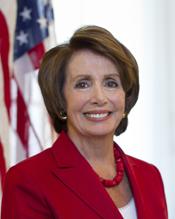
5,290 records where Rep. Pelosi, Nancy [D-CA-11] is listed as a sponsor, author, or other actor. Search with topics and years
United States · United States Congress · 11 April 1989
Designates the month of April 1989 as National Cancer Awareness Month.
United States · United States Congress · 11 April 1989
Declares that it is the sense of the Congress that the President should use full authority under specified provisions of the Fisherman's Protective Act of 1967 to prohibit importation of fishery products from each country that has failed to enter into and implement driftnet monitoring and enforcement agreements as provided in specified provisions of the Driftnet Impact Monitoring, Assessment, and Control Act of 1987.
United States · United States Congress · 10 April 1989
Wetlands No Net Loss Act of 1989 - Requires the Secretary of the Interior to designate a nonprofit organization as a Wetlands Preservation Trust if such organization: (1) is established for the purpose of acquiring ownership interests in wetlands, former wetlands, and related property and for restoring, creating, or preserving wetlands; and (2) meets, and submits an application in accordance with, the Secretary's requirements. Amends the Internal Revenue Code to create special rules for contributions of land to such Trusts. Applies the 50 percent limitation on charitable contribution deductions to contributions of wetlands to such Trusts. Permits a ten-year carryover for excess contributions. Extends the deadline for the exchange of property held for productive use or investment if such contributions are made as part of such exchanges. Permits the carryover of unused deductions on a taxpayer's last return if such taxpayer dies before the close of the last taxable year for which such deductions could have been allowed. Authorizes the Secretary, acting through the Office of Wetlands Identification and Preservation, to make grants to States from the Wetlands Preservation Account for the implementation of State Wetlands Conservation Plans. Outlines requirements of such Plans. Prohibits the Secretary from approving any Plan that: (1) excludes any area of State wetlands solely on the basis of that area being less than a minimum size; or (2) excludes from Plan administration areas of wetlands the preservation of which is significant for achieving the purposes of this Act. Amends the Fish and Wildlife Act of 1956 to require the Director of the U.S. Fish and Wildlife Service to establish the Office of Wetlands Identification and Preservation within the Service. Requires the Director, acting through the Office, to: (1) identify all U.S. wetlands and associated uplands which are suitable for preservation; (2) produce and make available to the public maps of such lands; and (3) carry out title III of the Emergency Wetland Resources Act of 1986 (State and Federal Wetland Acquisition). Authorizes the Director, acting through the Office, to enter into agreements with private persons to carry out wetlands preservation. Permits such agreements to provide for: (1) the transfer of wetlands to Trusts; and (2) technical assistance to owners of wetlands who enter into such preservation agreements. Establishes the Wetlands Preservation Account. Requires at least 60 percent of Account funds to be available for grants to States. Requires the Secretary of the Treasury to deposit into such Account amounts received in the form of: (1) criminal penalties for certain permit violations of the Federal Water Pollution Control Act; and (2) civil and administrative penalties under such Act. Directs the Secretary to transfer annually to the Account $300,000,000 from the Land and Water Conservation Fund. Authorizes appropriations. Requires the head of each executive agency to: (1) complete an inventory of all wetlands and associated uplands owned or managed by the agency; and (2) implement a plan for the protection of wetlands included in the inventory. Requires such agencies to submit such plans to the head of the Office and the Secretary of the Interior. Amends the Federal Water Pollution Control Act to transfer the authority to issue permits for discharge of dredge and fill material from the Secretary of the Army to the Secretary of the Interior, acting through the Office. Revises provisions regarding reporting requirements. Repeals a provision requiring the submission of comments on permit applications. Prohibits the Secretary of the Army from authorizing any dredging of wetlands under the Rivers and Harbors Appropriations Act of 1899 without the prior approval of the Secretary of the Interior. Requires the Director of the Office of Technology Assessment to study and report to the Congress on: (1) incentives under Federal and State laws for the protection and management of wetlands; (2) potential modifications to existing Federal laws to improve their effectiveness in creating such incentives and to increase the permanence of such protection; and (3) ways in which the Federal Government may encourage State and local governments to create additional incentives for the protection and management of wetlands by private individuals.
United States · United States Congress · 10 April 1989
Declares that the Congress approves, with certain exceptions, the designation of the Cordell Bank National Marine Sanctuary. Disapproves the designation of hydrocarbon (oil and gas) activities as activities which may be regulated within the Sanctuary. Directs the Secretary of Commerce to: (1) within 120 days, revise regulations to prohibit hydrocarbon activities in the Sanctuary; and (2) pending implementation of such revised regulations, prohibit such hydrocarbon activities.
United States · United States Congress · 6 April 1989
Missing Service Personnel Act of 1989 - Requires the responsible uniformed service commander, after receiving notice that a person under his command is missing, to conduct an informal investigation to determine such person's whereabouts and, if appropriate, to place such person in a missing status. Requires the commander, if a person has been placed in such status, to notify the officer holding general court-martial authority over such person (or, in the case of a missing civilian, the Secretary concerned), who shall convene a board of initial inquiry within 45 days. Requires such board to: (1) investigate evidence relating to the disappearance of such person; (2) recommend whether to continue such person in a missing status or make a finding that such person has deserted, is absent without leave, or is dead; and (3) report its recommendations and findings. Provides for the convening of a board of further inquiry, if a board of initial inquiry recommends that such person be continued in a missing status, within one year of such recommendation. Requires such board to analyze any information which has become available since the board of initial inquiry issued its report, to determine whether such person should be continued in a missing status or declared dead, and to report its findings. Directs the Secretary concerned, upon the written request of a member of the immediate family of a missing person who, before the date of the enactment of this Act, was determined by the Secretary to be dead, to: (1) convene a board of further inquiry to determine whether such finding of death should be upheld or such person should be placed in a missing status; and (2) report its findings. Requires the Secretary, within three years after a board of further inquiry recommends a missing status for any person, to reconvene such board to review such status. Specifies the composition of such boards. Directs the Secretary to invite each member of the immediate family of the missing person to the meetings of a board of initial inquiry unless attendance would place such member in danger. Requires the Secretary to: (1) invite family members of missing persons to meetings of boards of further inquiry; (2) schedule such meetings at convenient locations and times; (3) provide such family members with reasonable notice of such meetings; and (4) open such meetings to the general public. Authorizes each board to hold meetings, take testimony, receive evidence, and secure directly from any U.S. department or agency any information necessary to carry out its duties. Provides for the appointment of counsel by the officer or Secretary concerned to represent the missing person. Requires that, if a board determines that a missing person is dead, it shall include in its report a detailed description of the location and date of death, whether the body has been recovered, and whether a licensed practitioner of forensic medicine determined that the body recovered is that of the missing person. Prohibits any such board from declaring a missing person dead unless: (1) evidence other than the passage of a period of less than 50 years suggests that such person is dead; (2) no evidence which reasonably suggests that such person is alive is in the possession of the Government; (3) representatives of the Government have made a complete search of the area where such person was last seen (unless the United States is not granted access to such area); and (4) Government representatives have checked the records of the government or entity having control over the area where such person was last seen (unless the Government is not granted access to such records). Provides for judicial review of determinations of death upon the filing of a written petition by any member of the missing person's immediate family. Directs the Secretary of the uniformed service in which a missing person serves to make certain that such person's personnel file contains all information in the possession of Federal departments and agencies pertaining to the disappearance or whereabouts of such person. Requires the Secretary to make certain that, if classified information is withheld, such file contains: (1) a notice that the information exists; and (2) a notice of the date of the most recent review of the classification status of the information. Sets forth penalties for knowingly withholding information pertaining to the disappearance or whereabouts of a missing person from that person's personnel file. Requires the Secretary concerned to make the contents of such file available to a member of the immediate family of such person upon written request.
United States · United States Congress · 6 April 1989
National Presidential Debate Act of 1989 - Amends the Internal Revenue Code to require as a condition of eligibility to receive payments from the Presidential Election Campaign Fund that presidential candidates agree to participate in at least four debates of at least 90 minutes each, through a nonpartisan nonprofit entity, three of which must be in September and October preceding the relevant election. Requires a corresponding agreement by vice-presidential candidates, but for a minimum of only one debate.
United States · United States Congress · 5 April 1989
Authorizes the President to present a gold medal, on behalf of the Congress, to each of the following individuals in recognition of their contributions to this Nation's cultural heritage: (1) Frank Capra; (2) James Stewart; and (3) Fred Zinnemann. Requires the Secretary of the Treasury to design a different gold medal for each such individual. Authorizes appropriations. Authorizes the Secretary to strike and sell bronze duplicates of such medals at a price sufficient to cover the costs of such duplicates and the gold medals. Requires the appropriations to be reimbursed out of the sales proceeds. Designates all such medals as National Medals.
United States · United States Congress · 5 April 1989
Tropical Forest Protection Act of 1989 - Requires the Secretary of the Treasury to instruct the U.S. executive directors of specified multilateral development banks to promote the preservation of tropical forests or other endangered ecosystems and species in debtor developing countries by enabling such countries, through debt reduction or restructuring, to buy back private debt at discount rates in the secondary market if such countries: (1) convert an agreed upon amount of debt to local currency for use in "debt-for-nature swap" programs for the protection of such forests, ecosystems, or species; or (2) demonstrate a commitment to the protection of such forests in the form of such swaps for set asides or conservation easements. Directs the Secretary to instruct such directors to consult with one another to promote debt suspension in such countries as long as environmental protection commitments are maintained. Requires the Secretary to instruct the U.S. executive director to the International Bank for Reconstruction and Development to initiate discussions with other directors and management of the Bank and propose a three-year environmental sector lending program for countries with such commitments to: (1) reduce the future need for lending for reforestation and restoration of environmentally degraded areas; and (2) be based on the estimated long-term economic return expected from the sustainable use and protection of tropical forests and the benefits from maintenance of biological diversity and climate stabilization. Directs the Secretary to instruct such directors to promote policies which: (1) assist in strengthening nongovernmental organizations in such countries by providing technical assistance and support for environmental protection activities; and (2) encourage international collaboration for information exchange and project enhancement with environmental protection organizations.
United States · United States Congress · 5 April 1989
Healthy Birth Act of 1989 - Amends title V (Maternal and Child Health Services) of the Social Security Act to increase authorized appropriations for such program. Sets aside certain appropriated amounts for comprehensive State infant mortality initiatives and Federal activities in coordination with such initiatives. Prohibits Federal assistance for such a State initiative unless the State provides assurances that it will: (1) establish a toll-free telephone information and referral system for maternal and child health services; (2) provide technical assistance and public awareness activities regarding the maternal and child health handbook to be disseminated by the Secretary of Health and Human Services; (3) develop and expand maternal and child health home visiting programs; (4) establish a "one-stop shopping," client-centered program under which pregnant women and mothers can apply for a wide range of Government programs in a coordinated manner at a location at which social and health-related services are made available to pregnant women and infants; (5) evaluate the impact of such initiative; and (6) be able to continue such initiative without Federal assistance within five years of the first receipt of such assistance. Directs the Secretary to use a specified portion of set-aside amounts to: (1) provide technical assistance to State initiatives; (2) disseminate a maternal and child health handbook to all pregnant women and new parents; (3) establish a nationwide, toll-free telephone information and referral system for maternal and child health services; (4) develop a model, coordinated application and eligibility determination system for use by States under the Medicaid program (title XIX of the Act) and the special supplemental food program for women, infants, and children; (5) improve the integration and coordination of Federal programs serving pregnant women and children; and (6) monitor and evaluate State infant mortality initiatives. Requires the Secretary to give priority to the initiatives of States demonstrating the greatest need and an ability to implement such initiatives, while recognizing the need for an equitable distribution of assistance among the States.
United States · United States Congress · 5 April 1989
Consumer Products Safe Testing Act - Prohibits Federal department or agency heads from considering LD50 test results when determining product safety, labeling, or transportation requirements for purposes of Federal regulation. (LD50 is a procedure whereby toxicity is measured in terms of the median dose that will kill 50 percent of the test animals within a specified time.) Requires Federal department and agency heads to: (1) review and evaluate directives that call for the use of an animal toxicity test; and (2) promulgate regulations specifying the use of nonanimal alternatives. Requires that animal toxicity testing regulations be subject to periodic agency review and to public comment in certain cases.
United States · United States Congress · 5 April 1989
Emergency Phone System Equal Access Act - Amends the Communications Act of 1934 to require that any telecommunication system that is operated by a provider of public safety services, used to provide public safety emergency answering services, and manufactured, imported, or installed in the United States more than one year after the enactment of this Act be readily accessible to hearing- and speech-impaired individuals.
United States · United States Congress · 5 April 1989
Refuge Wildlife Protection Act of 1989 - Amends the National Wildlife Refuge System Administration Act to require that any wildlife management or other activity which affects wildlife in any area of the System be conducted in the most humane manner possible. Permits the Secretary of the Interior to authorize any killing of a member of a wildlife species within any area of the System, based upon evidence that such killing is necessary for the health and habitat of wildlife species within the area, to protect public health and safety, and that non-lethal management alternatives are not available. Requires the Secretary to provide the scientific information upon which the authorization is based as well as details such as the numbers to be killed. Authorizes public hearings on such decisions unless an emergency exists. Authorizes the Secretary to contract out such killing. Authorizes the Secretary to donate the carcass to a charitable organization for a charitable purpose.
United States · United States Congress · 5 April 1989
Amends the Internal Revenue Code to impose a three percent excise tax on wholesale sales of paper and paper products that do not contain the minimum amount of recycled materials in accordance with Environmental Protection Agency (EPA) guidelines. Increases the tax rate by one percent each year to reach a maximum 12 percent rate for sales during 2000 and thereafter. Directs the EPA Administrator to issue guidelines for products not already designated by relevant guidelines.
United States · United States Congress · 5 April 1989
Designates September 1989 as National Library Card Sign-Up Month.
United States · United States Congress · 5 April 1989
Declares that: (1) it is the sense of the House of Representatives that child survival and development programs are to be commended; (2) the House of Representatives reaffirms its goal of improvement of the survival rates, health, and development of people in all countries and urges the President to adopt this as a major priority; (3) the President is urged to propose to the Secretary General of the United Nations that he establish an independent advisory commission with regard to programs in primary health care, nutrition, basic education, and environment by members of the Grand Alliance for Children; and (4) the House of Representatives endorses the call for a World Summit on Children as an opportunity to attain specified goals, including the goals of Universal Childhood Immunization by 1990 and Health for All by the year 2000.
United States · United States Congress · 5 April 1989
Urges the Government of Iran to uphold the human rights of all its nationals, including members of the Baha'i faith, and to extend the rights guaranteed by the Universal Declaration of Human Rights. Calls upon the President to continue to: (1) emphasize human rights improvements as an important factor in the development of relations between the U.S. and Iranian Governments; (2) cooperate with other governments to initiate and support actions by the United Nations and its agencies to promote the protection of the religious rights of the Baha'is; and (3) provide, and urge others to provide, for refugee and humanitarian assistance for those Baha'is fleeing their homelands to escape religious repression.
United States · United States Congress · 5 April 1989
Expresses the sense of the Congress that: (1) there should be a significant increase in Federal funding for programs authorized under the Education of the Handicapped Act; and (2) appropriations made by the 101st Congress to assist States and localities in providing education to children and youth with handicaps should equal at least 15 percent of the national average per pupil expenditure.
United States · United States Congress · 4 April 1989
Employee Pension Protection Act of 1989 - Amends the Employee Retirement Income Security Act of 1974 (ERISA) to revise fiduciary standards applicable to pension plan assets to account for duties with respect to assets of terminated plans. Establishes fiduciary standards to apply to employer reversions upon plan termination, requiring an employer to establish and maintain a complete replacement plan or a substantial replacement plan in connection with the termination. Prescribes requirements to govern both types of plans. Links the establishment of either of these new plans to the amount of any employer reversion, requiring the new plans to have assets sufficient to pay all liabilities to participants and their beneficiaries. Considers any plan fiduciary or sponsor to be jointly and severally liable for violation of ERISA if requirements regarding complete replacement or substantial replacement plans upon plan termination are not met at any time during the five-year period beginning on the date of final distribution of assets from the terminated plan. Describes fiduciary duties to govern the distribution of plan assets to participants and beneficiaries upon plan termination in cases when the employer does not set up a replacement or substantial replacement plan. Institutes fiduciary duties with respect to distributions of plan assets upon termination in direct trustee-to-trustee transfers to individual retirement plans. Directs the Secretary of Labor to prescribe reporting requirements in connection with these transfers.
United States · United States Congress · 23 March 1989
Voluntary National Service and Education Demonstration Program Act of 1989 - Directs the Secretary of Education to carry out a voluntary national service and education demonstration program. Requires participants in such program to: (1) have attained 16 years of age but not 25 years of age; (2) have a certificate of graduation from a secondary school or equivalent or be school dropouts; (3) enter into appropriate agreements with State higher education agencies; and (4) be citizens or lawfully admitted to the United States for permanent residence. Requires each participant to perform at least two years of community service. Requires State higher education agencies to apply for participation in the demonstration program through the Secretary. Provides monthly stipends and educational benefits for community service participants. Includes in such benefits 18 months' tuition and stipends for higher education, apprenticeship, or secondary school graduation or equivalent programs. Requires the Secretary to report annually to the Congress on evaluations of the demonstration program. Authorizes appropriations for FY 1989 through 1994.
United States · United States Congress · 23 March 1989
Social Security Act Mental Health Amendments of 1989 - Amends titles XVI (Supplemental Security Income) (SSI), XVIII (Medicare), and XIX (Medicaid) of the Social Security Act to provide benefits for chronically mentally ill individuals. Requires State plans under title XIX to include case management services and home and community-based services for such individuals. Directs the Secretary of Health and Human Services to arrange for up to five States to conduct demonstration projects providing mental health services on a prepaid capitation basis to chronically mentally ill Medicaid beneficiaries. Requires any hospital receiving funds under titles XVIII or XIX to have a case plan established for, and a case manager assigned to such individuals prior to their discharge. Treats certain chronically mentally ill individuals about to be discharged from an institution as presumptively disabled for purposes of title XVI. Extends the period during which certain institutionalized mentally ill may receive SSI benefits if such individuals are expected to return home upon discharge. Provides Medicaid coverage for certain SSI recipients who are chronically mentally ill and would be institutionalized but for such coverage. Preserves the eligibility of such individuals for SSI benefits for the period during which they are in transitional living facilities. Requires the Secretary to enter into agreements with up to 18 public or private nonprofit agencies for the provision of representative payee services to SSI beneficiaries. Authorizes appropriations for FY 1990 through 1992 for payments to such agencies. Sets forth reporting requirements. Limits coverage of outpatient services relating to mental illness under part B (Supplementary Medical Insurance) of the Medicare program to a specified dollar amount.
United States · United States Congress · 23 March 1989
Emergency Refugee Act of 1989 - Authorizes additional FY 1989 refugee admissions from the Soviet Union, Eastern Europe, Vietnam, the Near East, and East Asia First Asylum countries. Transfers unused FY 1989 State legalization impact assistance grant (SLIAG) funds to cover specified costs related to such admissions. Authorizes additional SLIAG FY 1990 and 1991 appropriations. Authorizes FY 1990 and 1991 appropriations for anti-discrimination in employment activities. Authorizes SLIAG funds to be used for: (1) employment training and educational outreach programs for legalized aliens; and (2) State enforcement of anti-discrimination activities. Establishes an administrative appeals process for States applying for SLIAG assistance. Gives education priority under such grants to basic citizenship skills (English language and United States history and government).
United States · United States Congress · 23 March 1989
Housing for the Chronically Mentally Ill Act of 1989 - Amends the Housing and Community Development Act of 1974 to permit State mental health authorities, or other private nonprofit or public agencies designated by a State, to use vacant residential property to provide supervised living for the chronically mentally ill. Authorizes appropriations for FY 1990 and for each fiscal year thereafter. Amends the United States Housing Act of 1937 to authorize a housing voucher program for the chronically mentally ill. Increases specified budget authority for FY 1990 through 1992 for such purposes.
United States · United States Congress · 23 March 1989
Directs the Office of Personnel Management to establish a dependent care assistance program for Federal employees.
United States · United States Congress · 23 March 1989
Fair Election Act - Prohibits States from using any device to abridge or deny the right of an individual to be placed on, or to have such individual's political affiliation placed on, a ballot or similar voting materials in a Federal election. Allows States to impose specified prerequisites regarding petitions for placement on ballots. Allows States to waive such requirements for candidates or political affiliates which receive certain amounts of votes in the most recent election for President or the Senate.
United States · United States Congress · 23 March 1989
Declares it to be the policy of the United States that Federal records, books, and publications of enduring value be produced on acid-free permanent papers. Makes recommendations relating to such papers to Federal agencies and to American publishers. Recommends that the Secretary of State make known such national policy to foreign governments and appropriate international agencies. Directs the Librarian of Congress, the Archivist of the United States, the Director of the National Library of Medicine, and the Administrator of the National Agricultural Library to monitor progress in implementing such policy.
United States · United States Congress · 23 March 1989
Designates the week beginning September 1, 1989, as World War II Remembrance Week in commemoration of the 50th anniversary of the outbreak of that War.
United States · United States Congress · 23 March 1989
Designates the week beginning October 29, 1989, as Gaucher's Disease Awareness Week.
United States · United States Congress · 23 March 1989
Designates September 1989 as National Alcohol and Drug Treatment Month.
United States · United States Congress · 23 March 1989
Designates November 1989 as National Employee Assistance Programs Recognition Month.
United States · United States Congress · 22 March 1989
Child Investment and Security Act of 1989 - Title I: Prenatal Care - Amends title XIX (Medicaid) of the Social Security Act to phase-in mandatory State coverage of pregnant women and infants whose family income is below 200 percent of the Federal poverty level. Includes prenatal and postpartum home visitation services within such coverage. Deducts child and medical care costs from the income eligibility test. Requires the continuation of such coverage for women through the month in which the 60-day post-partum period expires, and for infants throughout their first year of life. Requires that States make ambulatory prenatal care available to a pregnant woman during a presumptive eligibility period which ends when she is determined to be ineligible for Medicaid benefits or 14 days after she is determined to be eligible, but fails to apply. Requires that States submit information to the Secretary of Health and Human Services, by April 1 of each year, pertaining to the supply of and demand for obstetrical and pediatric services and proposed Medicaid payment rates for such services so that the Secretary may determine whether such rates are sufficient to ensure that obstetrical and pediatric services will be at least as available to Medicaid beneficiaries as they are to the general population. Requires States to immediately revise rates determined to be insufficient. Amends title V (Maternal and Child Health Services) of the Act to increase authorized appropriations for the Maternal and Child Health Services Block Grant Program. Sets aside such additional appropriations for the expansion of prenatal care services for pregnant women and infants in target populations which include pregnant women and infants who are economically disadvantaged and who reside within areas or among populations suffering disproportionately high levels of infant mortality and inadequate maternity and infant care. Amends the Public Health Service Act to increase and permanently extend authorized appropriations for grants to community and migrant health centers for services promoting the reduction of infant mortality and the management of health services for pregnant women and infants. Title II: Preventive Child Health - Amends the Medicaid program to phase-in mandatory coverage of children under age eight whose family income is below 200 percent of the Federal poverty level. Requires States to receive and process the Medicaid applications of such children at locations which include locations other than those used for applications under part A (Aid to Families with Dependent Children) of title IV of the Act. Amends the Public Health Service Act to authorize appropriations for FY 1990 through 1993 for supplemental grants to public entities for the inclusion of immunization training and outreach services within their immunization programs. Title III: Special Supplemental Food Program for Women, Infants, and Children - Amends the Child Nutrition Act of 1966 to require the Secretary to allocate specified funds among States from FY 1990 through 1993 under the special supplemental food program for women, infants, and children (WIC). Title IV: Early Childhood Education - Amends the Head Start Act to increase and extend, through FY 1993, authorized appropriations for Head Start programs. Title V: Application Process for Certain Forms of Federal Assistance with Respect to Child Health - Directs the Secretary to develop a plan, to be implemented within nine months of this Act's enactment, for the use of a single, standardized application form for simultaneously requesting assistance for children under age six under the Social Security Act, the Public Health Service Act, the Child Nutrition Act of 1966, and the Head Start Act.
United States · United States Congress · 22 March 1989
Amends title V (Maternal and Child Health Services) of the Social Security Act to increase authorized appropriations for such program. Requires States, as a condition of receiving additional funds, to conduct a statewide needs assessment of maternity and infant care, including prenatal care and prevention of low birthweight and infant mortality, and to develop a plan to meet those needs. Changes State reporting requirements to monitor plan implementation results.
United States · United States Congress · 22 March 1989
National African-American Heritage Memorial Museum Act - Establishes within the Smithsonian Institution the National African-American Heritage Memorial Museum to be operated as a center and location for education, research, events, and collection and display of items and materials relating to the historical, cultural, economic, political, and other aspects of the scope of experiences of African-Americans. Requires the Board of Trustees of the National African-American Heritage Memorial Museum to report to the Congress and the President annually on its activities and operations. Authorizes appropriations.
United States · United States Congress · 22 March 1989
Hispanic-Serving Institutions of Higher Education Act of 1989 - Directs the Secretary of Education to provide financial and related assistance to Hispanic-serving institutions of higher education for the following types of programs for Hispanic students: (1) student financial aid; (2) recruitment and retention; (3) academic tutoring and counseling; (4) special educational initiatives, such as pre-freshman orientation in study skills and instruction in core curricula, and academic support for those in traditionally underrepresented fields such as mathematics, science, and engineering; and (5) collaboration with local educational agencies for dropout prevention and reentry. Defines Hispanic-serving institution of higher education as a public or private accredited institution with a four-year baccalaureate or a two-year associate degree program and with a student enrollment that is at least 25 percent Hispanic. Directs the Secretary to grant program awards for up to five years, subject to annual review. Authorizes appropriations for FY 1990 through 1994.
United States · United States Congress · 22 March 1989
International Security and Satellite Monitoring Act of 1989 - Establishes the Commission on International Security and Satellite Monitoring. Requires the Commission to: (1) study areas in which the sharing of information collected by civilian remote-sensing satellites could increase international security and stability, including environmental monitoring, disaster preparedness, drug trafficking, and weapons monitoring; (2) review the status of U.S. civilian remote-sensing programs to recommend development of a coordinated policy; and (3) determine how a revised open skies policy could enhance the national security strategy of the United States. Sets forth specific factors for the Commission to consider in conducting such study. Requires the Commission to transmit a report to the President and to the Congress containing a detailed statement of its findings, conclusions, and recommendations. Terminates the Commission two years after this Act's enactment. Authorizes appropriations.
United States · United States Congress · 22 March 1989
Designates the week of October 23 through October 29, 1989, as Eating Disorders Awareness Week.
United States · United States Congress · 22 March 1989
Designates the week of October 8 through 14, 1989, as National Week of Commitment to Helping the Homeless.
United States · United States Congress · 21 March 1989
American Indian Religious Freedom Act Amendments of 1989 - Amends the American Indian Religious Freedom Act to prohibit, absent a compelling Federal interest, the management of Federal lands that historically have been part of a Native American religion in a manner that would threaten the practice of such religion. Requires Federal agencies, in the event that such a threat is established and the Federal interest is compelling, to select a course of action that is the least intrusive on such practices.
United States · United States Congress · 21 March 1989
Indoor Air Quality Act of 1989 - Directs the Administrator of the Environmental Protection Agency to establish a national research, development, and demonstration program to assure the quality of indoor air, including coordinating and accelerating efforts related to the causes, detection, and correction of contaminated air. Requires such program to include information collection and dissemination, cooperative research, grants, studies, development of techniques, facility construction, and conferences. Requires that research focus on human health effects and the identification of types and levels of contaminants likely to cause harm, including the development of methodology and techniques for detection and control. Authorizes the Administrator to assist technology demonstration activities based on a technology's potential to cost effectively control sources of contaminants. Limits Federal funding to 75 percent of the costs of such projects. Requires the Administrator to publish: (1) general reports on the findings of such demonstration projects; and (2) bulletins assessing technology and management practices for controlling and measuring indoor air contaminants, which shall be provided to the Indoor Air Quality Information Clearinghouse. Directs the Administrator to develop protocols, within six months of this Act's enactment, for the measurement of radon gas in child care facilities and disseminate information regarding techniques for measuring and mitigating radon in such facilities. Authorizes the Administrator to take certain other actions conducive to the detection and reduction of radon in such facilities. Directs the Administrator to publish and biennially revise a list of contaminants known to occur in indoor air. Provides for additions to such list upon application of a State Governor. Requires the Administrator to publish advisory materials addressing the human health effects of listed contaminants which describe the properties, effects, risks, and concentrations of such contaminants. Directs the Indoor Air Panel of the EPA Science Advisory Board to assist in the listing and advisories. Requires advisories to be updated at least once every five years. Directs the Administrator to develop and publish a national indoor air quality response plan to reduce human exposure to the listed indoor air contaminants and reduce, to the fullest extent practicable, indoor air contaminant concentration levels to levels at which there is no known or anticipated human health effect, with an adequate margin of safety. Requires the response plan to identify the contaminant, the basis for the action, the nature of the response, the responsible Federal authority, the necessary financial resources, and the technological or legislative changes required for further reduction of the contaminant. Requires the Administrator and the Administrator of the General Services Administration (GSA) to develop and implement a program to respond to and reduce indoor air contamination in Federal buildings and to demonstrate methods of reducing indoor air contamination in new Federal buildings. Directs the Administrator of the GSA to prepare a specific response plan for Federal buildings which lists buildings and the reduction and response actions to be taken and identifies those buildings for which there is sufficient evidence of indoor air contamination to warrant their assessment under this Act's Building Assessment Demonstration Program. Exempts specified buildings for national security, demolition, or special use purposes. Requires the Administrator of the GSA to provide a method and format for filing comments and complaints concerning indoor air quality in Federal buildings. Requires response plans to be submitted to the Congress on a biennial basis. Directs the Administrator of the GSA to reserve 0.5 percent of any funds appropriated for construction of new Federal buildings for design and construction of measures to reduce indoor air contaminant concentrations within such buildings. Requires that any new EPA building be designed, constructed, maintained, and operated as a model to demonstrate principles and practices for protecting indoor air quality. Authorizes grants to States for the development and implementation of management strategies and indoor air quality assessment and response programs similar to those of the Federal program. Directs the Administrator to establish the Office of Indoor Air Quality within the EPA's Office of Air and Radiation to implement agency responsibilities under this Act. Establishes a Council on Indoor Air Quality to coordinate Federal indoor air quality activities and review and comment on the national indoor air response program and the Federal building response plan. Requires the Council to report to the Congress on a biennial basis. Directs the Administrator to establish a national indoor air quality clearinghouse which shall operate a toll-free hotline on indoor air quality. Requires the Director of the National Institute for Occupational Safety and Health to implement a Building Assessment Demonstration Program to support the development of methods, techniques, and protocols for assessing indoor air contamination in non-residential, non-industrial buildings and to provide contamination reduction assistance and guidance to building owners and occupants. Sets forth building assessment report requirements. Authorizes appropriations for FY 1990 through 1994.
United States · United States Congress · 21 March 1989
Title I: Statehood Centennial Coin - Statehood Centennial Commemorative Coin Act of 1989 - Directs the Secretary of the Treasury to mint and issue not more than a specified number of one-dollar silver coins and five-dollar palladium coins in commemoration of the 100th anniversary of the statehood of Idaho, Montana, North Dakota, South Dakota, Washington, and Wyoming. Sets forth certain features of such coins and provides for their design, issuance, and sale. Requires the Secretary to provide a specified amount of all surcharges to the Documents West exhibition program with the remaining amount of surcharges to be deposited in the Treasury to be used to reduce the national debt. Requires the Secretary to obtain silver for the one-dollar coins only from stockpiles established under the Strategic and Critical Materials Stock Piling Act. Requires the Secretary to obtain palladium for the five-dollar coins by purchase of palladium mined and refined in the United States. Grants the Comptroller General the right to examine records and other data of the Idaho Centennial Commission. Title II: Silver Proof Sets - Silver Coin Proof Set Act - Authorizes the Secretary to mint and issue silver coin proof sets. Sets forth certain specified features of such coins and provides for their sale to the public. Requires the Secretary to obtain silver for such coins by purchase from stockpiles established under the Strategic and Critical Materials Stock Piling Act and from Treasury stocks on hand.
United States · United States Congress · 21 March 1989
Anti-Terrorism Sanctions Act of 1989 - Requires the President to revoke the most-favored-nation trade status of certain foreign countries that repeatedly support international terrorism. Prohibits duty-free treatment for the products of such countries under the Trade Act of 1974 or the Caribbean Basin Economic Recovery Act. Prohibits the Secretary of Commerce from consulting with the governments of such countries regarding international travel and tourism. Allows the President to waive any sanction under this Act with respect to any foreign country if such waiver would be in the best interests of the United States. Requires the President to give 30 days' notice to the Congress concerning any waiver.
United States · United States Congress · 21 March 1989
Amends the Internal Revenue Code to disallow any income tax deduction for tobacco and tobacco product sales promotion expenses.
United States · United States Congress · 21 March 1989
Designates the month of November 1989 as National Diabetes Month.
United States · United States Congress · 20 March 1989
Young Americans Act of 1989 - Title I: Declaration of Objectives; Definitions - Sets forth the declaration of objectives and definitions under this Act. Title II: The Administration on Children, Youth, and Families - Establishes in the Office of the Secretary of Health and Human Services an Administration on Children, Youth, and Families which shall be headed by a Commissioner on Children, Youth, and Families. Directs the Commissioner to advise, consult, and cooperate with the head of each Federal agency or department proposing or administering programs or services substantially related to the purpose of this Act. Establishes a Federal Council on Children, Youth, and Families. Directs the Council to report annually to the President. Authorizes appropriations for FY 1990 through 1993. Directs the Secretary of Health and Human Services to issue regulations for the administration of this Act. Directs the Secretary to measure and evaluate the impact of all programs authorized under this Act. Directs the Commissioner to report annually to the President and the Congress on the activities carried out under this Act and other activities delegated by the Secretary to the Administration. Provides for advance funding. Title III: Grants for State and Community Programs for Children, Youth, and Families - Part A: General Provisions - Authorizes appropriations for FY 1990 through 1993 for grants under this title. Sets forth requirements for a State to be eligible to participate in grant programs. Requires designation of an independent State body to: (1) serve as an effective and visible advocate for children and youth by reviewing and commenting on all State plans, budgets, and priorities which affect children, youth, and their families and by providing technical assistance to those representing the needs of the young; (2) develop and administer the State plan; (3) coordinate all State activities related to the purpose of this Act; and (4) divide the State into district planning and service areas and designate area agencies for children, youth, and families. Requires State plans to be based upon needs as identified through analysis of updated "State of the Child" reports. Provides that State allotments may be used for grants to pay up to 75 percent of the cost of administration of a State plan. Part B: Supportive Services - Directs the Commissioner to make grants to States under approved State plans to demonstrate successful program approaches to service gaps identified through State and area planning and advocacy efforts. Lists eligible services. Provides that grants pay up to 85 percent of supportive services. Title IV: White House Conference on Young Americans - 1990 White House Conference on Young Americans - Directs the President to call a White House Conference on Young Americans in 1990. Provides that the Conference shall be planned and conducted under the direction of the Secretary of Health and Human Services in cooperation with the Commissioner on Children, Youth, and Families and the heads of other appropriate Federal agencies. Requires a final report of the Conference to the President within 180 days following its adjournment. Directs the Secretary, within 90 days after submission of the report, to transmit to the President and the Congress recommendations for administrative action and legislation necessary to implement the report's recommendations. Directs the Secretary to establish an advisory committee to the Conference and such other committees as may be necessary to assist in planning, conducting, and reviewing the Conference. Authorizes appropriations for FY 1990 and 1991 to carry out this title.
United States · United States Congress · 20 March 1989
Immigration Nursing Relief Act of 1989 - Amends the Immigration and Nationality Act to: (1) grant special immigrant status to certain alien nurses; and (2) provide for their temporary nonimmigrant admission. Directs the Secretary of Labor to provide for the appointment of an advisory group to advise the Secretary concerning the impact of this Act on the nursing shortage. Directs the Secretary to conduct a study and report to the Congress regarding the amendments made by this Act.
United States · United States Congress · 20 March 1989
Utah BLM Wilderness Act of 1989 - Title I: Designation of Wilderness - Designates the following lands in Utah as components of the National Wilderness Preservation System: (1) the Great Basin Wilderness; (2) the Zion and Mojave Desert Wilderness; (3) the Grand Staircase and Kaiparowits Plateau Wilderness; (4) the Escalante Canyons Wilderness; (5) the Henry Mountains Wilderness; (6) the Dirty Devil River Wilderness; (7) the Cedar Mesa Wilderness; (8) the Canyonlands Wilderness; (9) the San Rafael Swell Wilderness; and (10) the Book Cliffs and Uinta Basin Wilderness. Title II: Administrative Provisions - Directs the Secretary of the Interior to administer the wilderness areas designated under this Act.
United States · United States Congress · 20 March 1989
Comprehensive Alzheimer's Assistance, Research, and Education Act of 1989 (CARE) - Title I: Public Health Service Programs With Respect to Alzheimer's Disease - Amends the Public Health Service Act to create a new title on Alzheimer's disease. Authorizes the Secretary of Health and Human Services to make grants and enter into cooperative agreements to assist grantees in establishing and maintaining, with respect to Alzheimer's and related disorders, centers for: (1) conducting basic and clinical research, training, and dissemination of clinical information; (2) demonstrating advanced diagnostic, prevention, treatment, and management methods; (3) conducting programs of community education; and (4) maximizing research. Directs the Secretary, in carrying out these provisions, to consult with the directors of specified National Institutes of Health. Specifies purposes for which grant funds may and may not be used. Limits support for a center to five years, with extensions by the Secretary of up to five years if recommended by a technical and scientific peer review group. Authorizes the Secretary to make grants to and enter into cooperative agreements with entities receiving financial assistance under these provisions for off-site research on the diagnosis and treatment of Alzheimer's and related disorders. Authorizes appropriations for FY 1990 through 1992. Authorizes the Secretary, acting through the Director of the National Institutes of Health and the Director of the National Institute of Mental Health, to make grants and enter into contracts to enable grantees to conduct basic and clinical research regarding Alzheimer's and related disorders. Directs the Secretary, in carrying out these provisions, to consult with the directors of specified National Institutes of Health. Specifies the research areas to which minimum allocations of appropriated funds must be made. Authorizes appropriations for FY 1990 through 1992. Authorizes the Secretary, acting through the Director of the National Institute of Mental Health, to make grants and enter into contracts to enable grantees to conduct research and demonstration projects with respect to teaching the families of individuals with Alzheimer's or related disorders methods for providing appropriate care and managing stress. Authorizes appropriations for FY 1990 through 1992. Authorizes the Secretary, acting through the Commissioner on Aging, to make grants and enter into contracts to enable grantees to conduct demonstration projects with respect to teaching the families of individuals with Alzheimer's or related disorders methods for providing appropriate care and managing stress. Authorizes appropriations for FY 1990 through 1992. Authorizes the Secretary, acting through the Director of the National Institute on Aging, to make grants and enter into contracts to enable grantees to conduct long-term care research with respect to Alzheimer's disease and related disorders and with respect to the coordination of long-term care services. Authorizes appropriations for FY 1990 through 1992. Authorizes the Secretary, acting through the Director of the National Center for Health Services Research, to make grants and enter into contracts to enable grantees to conduct research with respect to developing methods for improving the delivery of supportive services to individuals with Alzheimer's disease or related disorders and with respect to the coordination of long-term care services. Authorizes appropriations for FY 1990 through 1992. Directs the Secretary to develop a plan for a research program for the study of Alzheimer's and related disorders. Specifies elements for which the plan must provide. Requires research under the plan to be carried out through the National Institutes of Health. Directs the Secretary to submit the plan to the President and the Congress. Directs the Secretary to make grants to States to plan, establish, and operate programs to provide specified services regarding Alzheimer's or related disorders. Specifies purposes for which grant funds may not be used. Limits grants to three years, subject to annual evaluation by the Secretary. Limits the amount of a grant and its portion of the costs of the program for which it is made. Directs the Secretary to annually evaluate the grant programs. Authorizes the Secretary to contract with private entities to conduct the evaluation. Authorizes appropriations for FY 1990 through 1992. Directs the Secretary, acting through the Administrator of the Alcohol, Drug Abuse, and Mental Health Administration, to require, as a condition of receiving funds under provisions of part B (Alcohol and Drug Abuse and Mental Health Services Block Grant) of the Public Health Service Act, that a State must agree that activities carried out under a specified provision will include increased provision of mental health services related to Alzheimer's and related disorders. Authorizes appropriations for FY 1990 through 1992. Authorizes the Secretary, acting through the Director of the National Institute on Aging, to make grants to assist grantees in providing training programs and continuing education programs, regarding Alzheimer's or related disorders, to health care professionals, health care paraprofessionals, and family caregivers. Specifies eligible types of grant recipients. Directs the Secretary to ensure that grants are geographically distributed. Authorizes the Secretary, acting through the Director of the National Institute on Aging, to make grants to the Alzheimer's centers established by this Act to assist in developing curricula for such training programs and continuing education programs. Authorizes appropriations for FY 1990 through 1992. Directs the Secretary, acting through the Administrator of the Health Resources and Services Administration, to initiate a study regarding specified health manpower needs related to Alzheimer's disease, related disorders, and other disorders requiring long-term care services. Authorizes appropriations for FY 1990 through 1992. Directs the Secretary to establish a National Alzheimer's Disease Education Program for: (1) promoting the coordination of health care financing, service, research, education, and training programs; (2) collecting, through the Clearinghouse on Alzheimer's Disease, information on research and treatment programs; (3) making such information available to specified groups and to the general public; and (4) providing technical assistance to States and public and private organizations. Authorizes appropriations for FY 1990 through 1992. Authorizes the Secretary, through the Director of the National Institute on Aging, to make grants to educate health care providers and the families of individuals with Alzheimer's disease or related disorders on caring for individuals with such diseases or disorders and on the availability of sources of assistance. Requires grants to be geographically distributed. Authorizes appropriations for FY 1990 through 1992. Title II: Improvement of Services Under Medicare and Medicaid Programs - Directs the Secretary of Health and Human Services to review the levels of reimbursement provided under title XVIII (Medicare) of the Social Security Act for home health services, extended care services, and inpatient hospital services relating to an advanced stage of Alzheimer's or a related disorder and adjust the levels to accurately reflect the reasonable amount required to provide adequately for services furnished. Requires each State plan approved under title XIX (Medicaid) of the Social Security Act to report to the Secretary on how the levels of reimbursement under the plan for home health services, nursing facility services, inpatient hospital services, and community-based care take into account special needs regarding an advanced stage of Alzheimer's or a related disorder. Directs the Secretary to modify contracts with utilization and quality control peer review organizations under part B (Peer Review) of title XI of the Social Security Act to ensure that the organizations conduct adequate and representative quality of care reviews on patients who require intensive home health services or extended care services. Requires States, as a condition of approval of a State plan under Medicaid, to provide assurances that the State is providing for the conduct of adequate and representative quality of care reviews on patients who require intensive home health services, nursing facility services, or other long-term care services. Directs the Secretary to review and report to the Congress regarding whether specified types of facilities participating under the Medicare or Medicaid program limit or restrict the services they provide to individuals with Alzheimer's or a related disorder. Directs the Secretary to provide for research and demonstration projects concerning methods of improving the delivery of health care services to Medicare and Medicaid beneficiaries with Alzheimer's disease or a related disorder. Specifies projects to be included. Directs the Secretary to provide for an evaluation of the research and demonstration projects and submit a report to the Congress. Authorizes appropriations for FY 1990 through 1992. Requires funds, to the extent that research and demonstration projects relate to Medicare beneficiaries, to be appropriated from the Federal Hospital Insurance Trust Fund and the Federal Supplementary Medical Insurance Trust Fund. Authorizes the Secretary to waive compliance with the requirements of part B (Peer Review) of title XI, title XVIII (Medicare), and title XIX (Medicaid) of the Social Security Act as necessary to conduct these research and demonstration projects.
United States · United States Congress · 20 March 1989
Africa Famine Recovery and Development Act - Amends the Foreign Assistance Act of 1961 to add a chapter dealing with Africa Famine Recovery and Development. Authorizes the President to provide project and program assistance for long-term development in sub-Saharan Africa. Requires the purpose of such assistance to be to help the poor majority of men and women in sub-Saharan Africa to participate in a process of long-term development through economic growth that is equitable, participatory, environmentally sustainable, and self-reliant. Provides that such assistance should also encourage private sector development and promote individual initiatives and help to reduce the role of central governments in areas more appropriate for the private sector. Declares that the general authorities and policies of the development assistance provisions of such Act apply to this Act. Requires the agency primarily responsible for administering development assistance programs (responsible agency) to: (1) take into account the local-level perspective of the rural and urban poor in sub-Saharan Africa during the planning and review of annual country planning documents for project assistance under this Act; (2) make available funds for a significant long-term expansion of development efforts by private and voluntary organizations which have demonstrated effectiveness in or commitment to the promotion of local grass-roots activities on behalf of long-term development in sub-Saharan Africa; and (3) consult with other organizations in order to identify relevant private and voluntary organizations. Encourages the responsible agency to review procedures for the development and evaluation of projects to be carried out by private and voluntary organizations and to simplify such procedures wherever appropriate. Requires the close consultation and involvement of local people in projects that have a local focus. Requires the responsible agency to ensure the participation and integration of African women in development projects assisted by this Act. Requires that the views of women as well as men be ascertained and factored into decisions relating to development activities which affect them. Requires the responsible agency to use the program assistance provided by this Act to: (1) meet the need for maintenance and rehabilitation within the critical sectoral priorities for long-term development; and (2) promote reform of national economic policies to support these priorities. Sets forth examples of national economic policy reforms which can be supported by assistance provided by this Act. Requires such reforms to include provisions to protect vulnerable groups, especially poor farmers and the urban poor, from possible negative consequences of such reforms. Requires assistance for such reforms to take account of the need for adjustments should recurrence of drought make it impossible to achieve the goals of the reforms. Designates as the critical sectoral priorities for long-term development: (1) increased agricultural production and the maintenance and restoration of renewable natural resources; (2) improved health conditions; (3) voluntary family planning services; (4) improved relevance and efficiency of education; and (5) development of income generating opportunities for the unemployed and underemployed. Imposes minimum levels of assistance for certain critical sectors. Directs the responsible agency to provide support for strengthening and developing selected African higher education institutions in order to address the problems of food production and distribution. Prohibits the responsible agency from using less than specified amounts for in-country natural resources and environmental training in sub-Saharan Africa. Requires the responsible agency to formulate coherent country development assistance strategies. Sets forth information such strategies must analyze and address. Requires the assistance provided under this Act to be concentrated in countries that will make the most effective use of such assistance. Specifies uses for local currencies generated by assistance provided under this Act and other Acts. Provides that funds made available under this Act may be used to assist the countries in sub-Saharan Africa to increase their capacity to participate in donor coordination mechanisms at the country, regional, and sector levels. Authorizes appropriations for FY 1990 through 1994 for long-term development assistance for sub-Saharan Africa and for funding activities of certain international organizations. Expresses the sense of the Congress that the authorization should be extended whenever appropriate. Limits transfers between accounts funded by this Act. Requires the Administrator of the Agency for International Development (AID) to develop a plan for organizational changes within AID in order to carry out the long-term development assistance program for sub-Saharan Africa with maximum effectiveness. Sets forth changes the Administrator shall consider. Requires the Administrator to consult with specified congressional committees about such changes. Authorizes the Administrator to transfer certain funds in order to increase the AID resources for development assistance activities for sub-Saharan Africa. Requires the Administrator to develop a plan for evaluating AID's progress in achieving the purposes of this Act. Requires the plan to provide for: (1) interim evaluations; (2) the establishment of specific criteria for measuring the performance of U.S. development assistance for the poor majority of men and women in sub-Saharan Africa; (3) the collection and monitoring of base-line data for future measurement of the effectiveness of such assistance; and (4) the measures by which the evaluations will be used to institutionalize learning within AID. Requires the plan to be developed in consultation with specified congressional committees. Expresses the sense of the Congress that there should be independent evaluations of AID's performance in providing development assistance to the poor majority of men and women in sub-Saharan Africa. Requires that assistance from other assistance and development programs be used to provide assistance to the poor majority in sub-Saharan Africa. Authorizes the President to make available such amounts from the funds made available by this Act as the President deems appropriate to support long-term development assistance for activities of international organizations which are consistent with the purpose of providing assistance for the poor majority in sub-Saharan Africa and which are undertaken in coordination with AID. Encourages the President to use the authorities provided in this Act in coordination with activities of the multilateral development banks in sub-Saharan Africa. Urges the President to provide debt rescheduling to a country in sub-Saharan Africa if: (1) that country had an average per capita income in 1984 of less that $550; and (2) at any time between October 1, 1989, and September 30, 1994, an International Monetary Fund standby agreement is in effect with respect to that country, a structural adjustment program of the International Development Association of the International Bank for Reconstruction and Development is in effect with respect to that country, or the President makes a specified finding regarding economic policy reforms in such country. Provides that the debt rescheduling is the granting of a five-year grace period on all payments to the United States on specified types of loans. Requires the President to notify specified congressional committees of any debt rescheduling granted under this Act. Requires that it be the policy of the United States that the funds made available by this Act are not to be used by a country to repay loans, with exceptions. Requires the annual report by the President to the Congress on foreign assistance programs to include a report on the progress made in carrying out this Act. Provides that reprogramming notification requirements do not apply to funds used to carry out this Act. Makes conforming amendments to various Acts. Declares that, where appropriate, African famine relief activities should serve as the foundation for long-term development activities undertaken pursuant to this Act. Provides for the transfer of certain funds so that they may be used for management support activities associated with long-term development assistance. Expresses the sense of the Congress that the purposes of the African Development Foundation are consistent with the purposes of this Act. Amends the African Development Foundation Act to authorize appropriations for the African Development Foundation for FY 1990 and 1991. Expresses the sense of the Congress that special efforts should be undertaken to reduce trade barriers and promote economic interchange between the United States and developing countries in sub-Saharan Africa.
United States · United States Congress · 20 March 1989
Beeper Abuse Prevention Act of 1989 - Amends the Communications Act of 1934 to direct the Federal Communications Commission to prescribe regulations to prevent the sale or rental to, or possession by, persons under 21 years of age of paging devices (beepers), except that such regulations shall permit: (1) parents or guardians to allow their children to possess and use such devices under supervision; and (2) a business enterprise to allow its employees under age 21 to possess and use such devices while carrying out a lawful business activity under the supervision of such enterprise. Provides that such regulations shall require: (1) persons engaged in sales or rentals of such devices to verify the identification and age of each person to whom such a device is sold or rented; and (2) parents or guardians who intend to permit their children to use such devices, or any business enterprises that intend to permit employees under age 21 to use such devices to disclose that information at the time of the purchase or rental. Outlines penalties for violations of such regulations. Authorizes the Commission to bring an action in any district court of the United States to enforce such regulations. Directs the Commission, no later than two years after the enactment of this Act, to report to the Congress on the enforcement of its provisions.
United States · United States Congress · 20 March 1989
Designates October 1989 as National Down Syndrome Month.
United States · United States Congress · 20 March 1989
Urges the British Government to ensure direct elections in 1991 and 1994 to the Legislative Council of Hong Kong. Calls upon the President to communicate to the People's Republic of China and the British Government the importance the United States attaches to the democratic and human rights of Hong Kong's citizens and the retention of Hong Kong's capitalist system.