Bill· HRH.R. 3481 (118th)referred
FAMILY Act
United States · United States Congress · 18 May 2023
The world's political record
Person
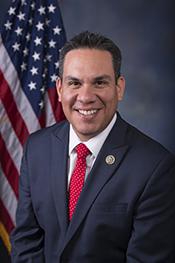
United States · Official source
1,927 records where Rep. Aguilar, Pete [D-CA-33] is listed as a sponsor, author, or other actor. Search with topics and years
United States · United States Congress · 18 May 2023
United States · United States Congress · 18 May 2023
Save America's Forgotten Equines Act of 2023 or the SAFE Act of 2023 This bill permanently prohibits the slaughter of equines (e.g., horses and mules) for human consumption. (Current law prohibits the slaughter of dogs and cats for human consumption. This bill extends the prohibition to equines.) Specifically, this bill prohibits a person from knowingly slaughtering an equine for human consumption; or shipping, transporting, possessing, purchasing, selling, or donating an equine to be slaughtered for human consumption or equine parts for human consumption. The bill subjects a violator to a fine. The bill applies to conduct in or affecting interstate or foreign commerce or within the special maritime and territorial jurisdiction of the United States. However, it does not apply to an activity carried out by an Indian for a religious ceremony. In recent years, appropriations acts have prohibited the Department of Agriculture (USDA) from using federal funds to inspect horses before they are slaughtered for human consumption. Therefore, there are currently no USDA-inspected horse slaughter facilities in the United States.
United States · United States Congress · 17 May 2023
United States · United States Congress · 17 May 2023
United States · United States Congress · 17 May 2023
This concurrent resolution affirms, more than 400 years after the arrival of the first slave ship, that the United States owes a debt of remembrance to those who lived through slavery or other historical injustices against people of color, as well as to their descendants. It also urges the establishment of a U.S. Commission on Truth, Racial Healing, and Transformation.
United States · United States Congress · 15 May 2023
Maternal Health for Veterans Act This bill requires the Department of Veterans Affairs (VA) to report annually through FY2028 on its activities relating to the coordination of maternity health care. The reports must also include (1) data on the maternal health outcomes of veterans who receive medical care or services from the VA or a non-VA provider that is authorized to provide care or services under VA programs, and (2) VA recommendations to improve the maternal health outcomes of veterans. The reports must be made publicly available. The bill also authorizes funding through FY2028 for VA programs relating to the coordination of maternity health care.
United States · United States Congress · 15 May 2023
Maternal Vaccination Act This bill includes a focus on pregnant and postpartum individuals in existing public health activities to increase vaccination rates. First, the Centers for Disease Control and Prevention must incorporate a focus on pregnant and postpartum individuals, including by disseminating information to obstetric health care providers, into its existing public awareness campaign about the importance of vaccinations. The bill also reauthorizes this campaign through FY2028. Second, the bill expressly allows certain project grants for preventive health services to be used for activities to increase vaccination rates of pregnant and postpartum individuals (and their children).
United States · United States Congress · 15 May 2023
Kira Johnson Act This bill establishes various grants for establishing or expanding programs to advance maternal health equity. Specifically, the Department of Health and Human Services (HHS) must award grants for community-based programs to improve maternal health outcomes for demographic groups with elevated rates of maternal mortality and morbidity, maternal health disparities, and other adverse outcomes; training for health care providers and others who work in maternity care settings on reducing and preventing racism, bias, and discrimination; and programs in hospitals, health systems, and other maternity care settings to establish processes to identify and address instances of racism or evidence of bias in maternity care (i.e., respectful maternity care compliance programs). HHS must contract with the National Academies of Sciences, Engineering, and Medicine to study issues related to the training programs, and the Government Accountability Office must study issues related to the respectful maternity care compliance programs.
United States · United States Congress · 15 May 2023
Data to Save Moms Act This bill expands data collection and research on maternal morbidity and mortality among racial and ethnic minority groups. Specifically, the bill adds requirements to certain grants awarded by the Centers for Disease Control and Prevention (CDC) for maternal mortality review committees. To the extent practicable, grant-funded committees must use the most up-to-date indicators of severe maternal morbidity; review deaths caused by suicide, overdose, or other behavioral health conditions attributed to or aggravated by pregnancy or childbirth; and consult with representatives of communities disproportionately affected by adverse maternal outcomes about nonclinical factors that may contribute to those outcomes. The CDC may also award grants to committees to increase their engagement with local communities, such as by bringing on community representatives as committee members. Additionally, the Centers for Medicare & Medicaid Services and the Agency for Healthcare Research and Quality must consult with stakeholders to review maternal health data collection processes and quality measures and make recommendations to improve them. The Department of Health and Human Services must also support studies on adverse maternal health outcomes among American Indian and Alaska Native populations and other racial and ethnic minority groups.
United States · United States Congress · 15 May 2023
Social Determinants for Moms Act This bill requires the Department of Health and Human Services (HHS) to establish a task force and a grant program to address social determinants of maternal health. These are nonmedical factors that impact maternal health outcomes, such as transportation, food security, and economic security. The task force, composed of federal and nonfederal stakeholders, must develop strategies and coordinate efforts to eliminate preventable maternal mortality, severe maternal morbidity, and maternal health disparities. Additionally, HHS must award grants to community-based organizations, nonprofits, tribal organizations, public health departments, or consortia of these entities to address social determinants of maternal health and eliminate disparities in maternal health outcomes.
United States · United States Congress · 15 May 2023
Innovative Maternal Payment and Coverage To Save Moms Act or the IMPACT to Save Moms Act This bill requires the Centers for Medicare & Medicaid Services (CMS) to establish a demonstration program to test alternative payment models under Medicaid and the Children's Health Insurance Program (CHIP) for maternity care. The CMS may consider payment models that include or are designed to address certain areas, such as improved maternal health outcomes for at-risk demographic groups, consideration of social determinants of health, or incorporation of diverse maternity care teams or settings. The CMS must evaluate the program's impact on maternal health outcomes, spending, patient experience, and other relevant areas.
United States · United States Congress · 15 May 2023
Maternal Health Pandemic Response Act This bill addresses data collection, public education, workplace safety, and other matters related to maternal health during public health emergencies. Specifically, the bill supports (1) various programs and initiatives carried out by the Centers for Disease Control and Prevention (CDC) to collect data about maternal health, including racial, ethnic, and other demographic data; and (2) research activities of the National Institute of Child Health and Human Development. Additionally, the CDC and the Centers for Medicare & Medicaid Services must make publicly available and periodically update pregnancy and postpartum data that is collected through federal surveillance systems during public health emergencies. The data must be disaggregated by factors such as race, ethnicity, insurance status, and location. Further, the CDC must carry out a program to educate pregnant individuals, their employers, and their health care providers about maternal and infant health risks during public health emergencies. The bill also requires the Department of Health and Human Services to convene a task force to develop recommendations on the provision of maternity care during public health emergencies with a particular focus on communities of color and rural populations.
United States · United States Congress · 15 May 2023
Protecting Moms and Babies Against Climate Change Act This bill establishes requirements and grants that address risks associated with climate change, particularly for vulnerable individuals (i.e., members of racial and ethnic minority groups, pregnant or postpartum individuals, and children younger than age three). Specifically, the Department of Health and Human Services (HHS) must establish a program to award grants to partnerships of community-based organizations and other entities to identify and address climate-change-related risks to these individuals at a county level. HHS must also establish a program to award grants to health professional schools for developing—and integrating into their curriculums—education and training on identifying risks associated with climate change for vulnerable individuals. In addition, the National Institutes of Health (NIH) must establish the Consortium on Birth and Climate Change Research. The consortium must coordinate research on such risks conducted and supported by various NIH institutes and offices. The Centers for Disease Control and Prevention must also develop a strategy to designate areas that have a high risk of adverse maternal and infant health outcomes among vulnerable individuals due to risks associated with climate change.
United States · United States Congress · 15 May 2023
Black Maternal Health Momnibus Act This bill directs multi-agency efforts to improve maternal health with a particular focus on racial and ethnic minority groups, veterans, and other vulnerable populations. The Department of Health and Human Services (HHS) must address the social determinants of maternal health (i.e., child care, housing, and other nonmedical factors that affect health outcomes). HHS and other departments must also carry out other actions to increase access to maternal health care and otherwise improve maternal health, such as growing and diversifying the maternal health workforce; establishing various grants and other programs, including ones related to maternal health disparities and maternal behavioral health; testing alternative payment models for perinatal care in Medicaid and the Children's Health Insurance Program (CHIP); addressing maternal health during public health emergencies; and supporting training, technology, and telehealth initiatives. The bill further provides for extended postpartum and breastfeeding eligibility for the Special Supplemental Nutrition Program for Women, Infants, and Children; increased research and data collection on maternal health indicators; activities to mitigate adverse maternal health outcomes associated with climate change; and expanded public education to improve maternal vaccination rates. The bill also addresses maternal health for incarcerated populations. For example, it (1) requires the Bureau of Prisons and the Department of Justice to establish programs to improve maternity care; and (2) reduces grants for criminal justice activities unless the recipient state or territory has a law to limit the use of restraints during pregnancy for incarcerated populations.
United States · United States Congress · 15 May 2023
Extending WIC for New Moms Act This bill amends the Special Supplemental Nutrition Program for Women, Infants, and Children (WIC) to extend the eligibility periods for breastfeeding and postpartum women. Specifically, a state program may elect to certify a breastfeeding woman for up to 24 months (currently 1 year) postpartum. The bill also expands the eligibility period for postpartum women to up to 24 months after termination of pregnancy (currently 6 months). The Department of Agriculture must submit a report to Congress evaluating the effect of these changes to the program on (1) maternal and infant health outcomes, (2) breastfeeding rates, and (3) qualitative evaluations of family experiences under WIC.
United States · United States Congress · 15 May 2023
Justice for Incarcerated Moms Act This bill establishes new requirements related to grants, programs, and reports to improve the treatment and care of pregnant and postpartum women who are incarcerated. Specifically, the bill requires the following: states must restrict the use of restraints on pregnant women in prison in order to receive full funding under the Edward Byrne Memorial Justice Assistance Grant program; the Bureau of Prisons must establish programs to optimize maternal health outcomes for pregnant and postpartum women in federal prisons; the Bureau of Justice Assistance must award state grants for programs to support pregnant and postpartum women in state and local prisons and jails; and the Government Accountability Office must report on adverse maternal and infant health outcomes among incarcerated individuals and infants born to such individuals, with a particular focus on racial and ethnic disparities.
United States · United States Congress · 11 May 2023
United States · United States Congress · 11 May 2023
Affordable Housing Credit Improvement Act of 2023 This bill revises provisions of the low-income housing tax credit and renames it as the affordable housing tax credit . The bill increases the per capita dollar amount of the credit and its minimum ceiling amount beginning in 2023 and extends the inflation adjustment for such amounts. The bill modifies tenant income eligibility requirements and the average income formula for determining such income. It also revises rules for student occupancy of rental units and tenant voucher payments, and prohibits any refusal to rent to victims of domestic abuse. The bill further modifies the credit to increase state allocations of the credit; repeal the qualified census tract population cap; prohibit consideration of local approval and local government contribution requirements for housing projects; increase the credit for certain projects designated to serve extremely low-income households; increase the credit for certain bond-financed projects designated by state agencies; eliminate the basis reduction for properties that receive certain energy-related tax benefits; and increase the population cap for difficult development areas (i.e., areas with high construction, land, and utility costs relative to area median gross income). The bill also includes Indian and rural areas as difficult development areas and modifies other requirements relating to casualty losses, tax-exempt bond financing, and foreclosures.
United States · United States Congress · 10 May 2023
U.S. Citizenship Act This bill establishes a path to citizenship for certain undocumented individuals. The bill also replaces the term alien with noncitizen in the immigration statutes and addresses other related issues. Specifically, the bill establishes a new status of lawful prospective immigrant . This status shall be available to an applying noncitizen who meets certain requirements, including being continually present in the United States from January 1, 2023, and passing background checks. After at least five years with this status, an eligible noncitizen may apply for and receive lawful permanent resident status. The bill also provides permanent resident status to certain applying noncitizens, specifically for eligible noncitizens who (1) entered the United States as a minor, (2) were eligible for temporary protected status or deferred enforced departure on January 1, 2017, or (3) worked a certain amount of agricultural labor in the five years before applying. Among other things, the bill also redefines for immigration purposes the term conviction to exclude convictions that have been expunged or vacated, requires the Department of State to implement a strategy to advance reforms in Central America and address key factors contributing to migration from the region to the United States, requires the State Department to establish refugee processing centers in Central America, requires U.S. Customs and Border Protection sectors and stations to have a certain number of employees with certain qualifications such as paramedic training, generally prohibits religious discrimination in granting or denying immigration benefits, and establishes grant programs for providing training and services to immigrants.
United States · United States Congress · 5 May 2023
Prevent All Soring Tactics Act of 2023 or the PAST Act of 2023 This bill addresses the practice of soring horses. The soring of horses includes various actions taken on horses' limbs to produce higher gaits that may cause pain, distress, inflammation, or lameness. Specifically, the bill expands soring regulation and enforcement at horse shows, exhibitions, sales, and auctions, including by establishing a new system for inspecting horses for soring. In addition, the bill increases penalties for violations.
United States · United States Congress · 5 May 2023
No Hungry Kids in Schools Act This bill directs the Department of Agriculture (USDA) to establish an option for states to utilize a statewide Community Eligibility Provision (CEP) for USDA school meal programs. (The CEP allows eligible schools, groups of schools, and school districts the option to offer free breakfast and lunch to all enrolled students without collecting household applications.) Specifically, USDA must establish a statewide CEP option that may be used by a state agency. The state agency must provide state (nonfederal) funding to local educational agencies to reimburse applicable schools at the free reimbursement rate for 100% of the meals served. Eligibility for the statewide CEP must be based on a statewide calculation of the percentage of identified enrolled students, regardless of a school's local educational agency. Further, the bill lowers the CEP participation threshold for a statewide CEP to an identified student percentage (ISP) of zero, from 40%. The ISP is the percentage of students who are eligible for free school meals without a household application, primarily those who are directly certified through the Supplemental Nutrition Assistance Program (SNAP). In addition, the bill specifies that the reimbursement multiplier for school meals remains at the current level of 1.6. The reimbursement multiplier is used to calculate how many meals will be reimbursed at the free meal rate.
United States · United States Congress · 28 April 2023
Federal Extreme Risk Protection Order Act of 2023 This bill authorizes and establishes procedures for federal courts to issue federal extreme risk protection orders. Additionally, the bill establishes grants to support the implementation of extreme risk protection order laws at the state and local levels, extends federal firearms restrictions to individuals who are subject to extreme risk protection orders, and expands related data collection. Extreme risk protection order laws, or red flag laws, generally allow certain individuals (e.g., law enforcement officers or family members) to petition a court for a temporary order that prohibits an at-risk individual from purchasing and possessing firearms. Among its provisions, the bill authorizes a family or household member, or a law enforcement officer, to petition for a federal extreme risk protection order with respect to an individual who poses a risk to themselves or others; directs the Department of Justice to establish a grant program to help states, local governments, Indian tribes, and other entities implement extreme risk protection order laws; extends federal restrictions on the receipt, possession, shipment, and transportation of firearms and ammunition to individuals who are subject to extreme risk protection orders; and requires the Federal Bureau of Investigation to compile records from federal, tribal, and state courts and other agencies that identify individuals who are subject to extreme risk protection orders.
United States · United States Congress · 28 April 2023
This resolution supports (1) the goals of Wildfire Preparedness Week; and (2) resources and educational initiatives that communicate how affected communities can take preventative measures such as instituting early warning systems and reducing unplanned human ignitions, as well as how to safely and efficiently evacuate people and their animals.
United States · United States Congress · 19 April 2023
Do No Harm Act This bill prohibits the application of the Religious Freedom Restoration Act of 1993 (RFRA) to specified federal laws or the implementation of such laws. Currently, RFRA prohibits the government from substantially burdening a person's exercise of religion even if the burden results from a rule of general applicability, except in furtherance of a compelling governmental interest when using the least restrictive means. Under the bill, RFRA is inapplicable to laws or the implementation of laws that protect against discrimination or require the promotion of equal opportunity (e.g., the Civil Rights Act of 1964); require employers to provide wages, other compensation, or benefits, including leave; protect collective activity in the workplace; protect against child labor, abuse, or exploitation; or provide for access to, information about, referrals for, provision of, or coverage for any health care item or service. The bill prevents RFRA from being used to deny (1) goods or services the government has agreed to provide to a beneficiary of or participant in a program or activity funded by a government contract, grant, agreement, or other award; or (2) a person's full and equal enjoyment of a government-provided good, service, benefit, facility, privilege, advantage, or accommodation. In order for a person to assert a RFRA claim or defense in a judicial proceeding, the government must be a party to the proceeding.
United States · United States Congress · 19 April 2023
United States · United States Congress · 13 April 2023
Safe Step Act This bill requires a group health plan to establish an exception to medication step-therapy protocol in specified cases. A medication step-therapy protocol establishes a specific sequence in which prescription drugs are covered by a group health plan or a health insurance issuer. A request for such an exception to the protocol must be granted if (1) an otherwise required treatment has been ineffective, (2) such treatment is expected to be ineffective and delaying effective treatment would lead to irreversible consequences, (3) such treatment will cause or is likely to cause an adverse reaction to the individual, (4) such treatment is expected to prevent the individual from performing daily activities or occupational responsibilities, (5) the individual is stable based on the prescription drugs already selected, or (6) there are other circumstances as determined by the Employee Benefits Security Administration. The bill requires a group health plan to implement and make readily available a clear process for an individual to request an exception to the protocol, including required information and criteria for granting an exception. The bill further specifies timelines under which plans must respond to such requests.
United States · United States Congress · 3 April 2023
Strengthening Medicare for Patients and Providers Act This bill modifies certain adjustments to payment amounts under the Medicare physician fee schedule. Payment amounts under the Medicare physician fee schedule are based on a service's relative value, a conversion factor, and a geographic adjustment factor. Current law provides for separate conversion factors for physicians that are qualifying participants in advanced alternative payment models (also known as qualifying APM participants) and for other physicians beginning in 2026, with an annual update of 0.75% and 0.25%, respectively. The bill replaces the separate conversion factors for qualifying APM participants and other physicians with a single conversion factor and provides for an update that is equal to the annual percentage increase in the Medicare Economic Index, beginning in 2024. (The Medicare Economic Index is a specialized index that is generally used to determine allowed charges for physician services based on annual price changes.)
United States · United States Congress · 30 March 2023
Enhanced Background Checks Act of 2023 This bill revises background check requirements applicable to proposed firearm transfers from a federal firearms licensee (e.g., a licensed gun dealer) to an unlicensed person. Specifically, it increases the amount of time, from 3 business days to a minimum of 10 business days, that a federal firearms licensee must wait to receive a completed background check prior to transferring a firearm to an unlicensed person. (This type of transaction is often referred to as a default proceed transaction.) If a submitted background check remains incomplete after 10 business days, then the prospective purchaser may submit a petition for a final firearms eligibility determination. If an additional 10 days elapse without a final determination, then the federal firearms licensee may transfer the firearm to the prospective purchaser. The Government Accountability Office must report on the extent to which the changes have prevented firearms transfers to prohibited persons. The Federal Bureau of Investigation must report on the number of petitions it receives for final federal firearms determinations. The Department of Justice, in consultation with the National Resource Center on Domestic Violence and Firearms, must report on further amendments to the background check process that would likely reduce the risk of death or great bodily harm to victims of domestic violence, domestic abuse, dating partner violence, sexual assault, and stalking.
United States · United States Congress · 30 March 2023
Women's Health Protection Act of 2023 This bill prohibits governmental restrictions on the provision of, and access to, abortion services. Before fetal viability, governments may not restrict providers from using particular abortion procedures or drugs, offering abortion services via telemedicine, or immediately providing abortion services if delaying risks the patient's health. Furthermore, governments may not require providers to perform unnecessary medical procedures, provide medically inaccurate information, or comply with credentialing or other conditions that do not apply to providers who offer medically comparable services to abortions. Additionally, governments may not require patients to make medically unnecessary in-person visits before receiving abortion services or disclose their reasons for obtaining services. After fetal viability, governments may not restrict providers from performing abortions when necessary to protect a patient's life and health. The same provisions that apply to abortions before viability also apply to necessary abortions after viability. Additionally, states may authorize post-viability abortions in circumstances beyond those that the bill considers necessary. Further, the bill recognizes an individual's right to interstate travel, including for abortion services. The bill also prohibits governments from implementing measures that are similar to those restricted by the bill or that otherwise single out and impede access to abortion services, unless the measure significantly advances the safety of abortion services or health of patients and cannot be achieved through less restrictive means. The Department of Justice, individuals, or providers may sue states or government officials to enforce this bill, regardless of certain immunity that would otherwise apply.
United States · United States Congress · 29 March 2023
Homeownership for DREAMers Act This bill prohibits federal mortgage providers from limiting insurance eligibility on the basis of the mortgagor's participation in the Deferred Action for Childhood Arrivals Program.
United States · United States Congress · 29 March 2023
Resident Physician Shortage Reduction Act of 2023 This bill increases the number of residency positions eligible for graduate medical education payments under Medicare for qualifying hospitals, including hospitals in rural areas and health professional shortage areas. Current law provides for an increase of up to 200 positions per fiscal year beginning in FY2023, with a total increase of 1,000 positions; each hospital may receive up to 25 additional positions. Current law also provides for an additional increase of up to 200 positions for FY2026, with at least 100 of these positions for psychiatry or related specialties; each hospital may receive up to 10 additional positions. The bill provides for an additional increase of 2,000 positions per fiscal year from FY2025-FY2031; during this period, each hospital may receive up to 75 additional positions in total under the bill and current law. Additionally, one-third of the positions that are made available under the bill must be allocated to hospitals that are already operating above applicable resident limits. The bill also requires the Government Accountability Office to report on strategies to increase the diversity of the health professional workforce, including with respect to representation from rural, low-income, and minority communities.
United States · United States Congress · 28 March 2023
International Human Rights Defense Act of 2023 This bill establishes in the Department of State a permanent Special Envoy for the Human Rights of LGBTQI+ (lesbian, gay, bisexual, transgender, queer, or intersex) Peoples who shall serve as the principal State Department advisor regarding human rights for LGBTQI+ people and represent the United States in diplomatic matters relevant to the human rights of LGBTQI+ people. The special envoy shall periodically provide Congress with a U.S. global strategy to prevent and respond to criminalization, discrimination, and violence against LGBTQI+ people. The State Department and the U.S. Agency for International Development may provide assistance to prevent and respond to such activities against LGBTQI+ people. The bill also requires that specified annual country reports on human rights practices include information on criminalization, discrimination, and violence based on sexual orientation and gender identity.
United States · United States Congress · 28 March 2023
This bill provides for the award of a Congressional Gold Medal to Billie Jean King in recognition of her courageous and groundbreaking leadership in advancing equal rights for women in athletics, education, and society.
United States · United States Congress · 24 March 2023
LA28 Olympic and Paralympic Games Commemorative Coin Act This bill directs the Department of the Treasury to mint coins in commemoration of the 2028 Olympic and Paralympic Games in Los Angeles, California. All surcharges received by Treasury from the sale of the coins shall be promptly paid by Treasury to the United States Olympic and Paralympic Properties for the objects and purposes related to the hosting of the 2028 Olympic and Paralympic Games and to aid in the execution of its legacy programs, including the promotion of youth sports in the United States. Treasury is encouraged to develop and execute a marketing and educational program to promote and sell the coins.
United States · United States Congress · 22 March 2023
Honoring Our Fallen Heroes Act of 2023 This bill extends death and disability benefits under the Public Safety Officers' Benefits Program (PSOB) to certain public safety officers who suffer from exposure-related cancer while on duty and their survivors. The PSOB program provides death, disability, and education benefits to public safety officers who are killed or injured in the line of duty and their survivors. The bill specifies that exposure-related cancer shall be presumed to constitute a personal injury in the line of duty if the public safety officer was exposed to or in contact with heat, radiation, or a carcinogen that is linked to an exposure-related cancer; the officer began serving as an officer not later than 5 years before the date of the diagnosis of an exposure-related cancer and the diagnosis occurred not later than 15 years after the last date of active service; and the exposure-related cancer directly and proximately resulted in the death or permanent and total disability of the officer. The Department of Justice's Bureau of Justice Assistance (BJA) must periodically review the definition of exposure-related cance r. It directs the BJA to add additional cancers to the definition under certain circumstances (e.g., a petition process).
United States · United States Congress · 22 March 2023
Reporting Efficiently to Proper Officials in Response to Terrorism Act of 2023 or the REPORT Act of 2023 This bill requires specified federal agencies to report to Congress concerning any act of terrorism that occurs in the United States. Whenever an act of terrorism occurs, the Department of Homeland Security (DHS), the Department of Justice (DOJ), the Federal Bureau of Investigation (FBI), and, as appropriate, the National Counterterrorism Center (NCC), must submit to Congress an unclassified report. Such report shall be posted on a publicly available website of the primary government agency. Such report shall (1) include a statement of the facts of the act of terrorism, (2) identify any gaps in homeland or national security to prevent future acts of terrorism, and (3) include any recommendations for additional measures to improve homeland or national security. If the reporting agencies determine that any information required to be reported could jeopardize an ongoing investigation or prosecution, such agencies may withhold such information from reporting and shall notify Congress of that determination. This bill shall terminate five years after its enactment.
United States · United States Congress · 21 March 2023
Designates the facility of the United States Postal Service located at 6444 San Fernando Road in Glendale, California, as the "Paul Ignatius Post Office."
United States · United States Congress · 17 March 2023
Puppy Protection Act of 2023 This bill requires the Department of Agriculture to expand standards that govern the humane handling, care, treatment, and transportation of animals to include new requirements for commercial dog dealers. Specifically, the standards must require dog dealers to provide to dogs adequate housing, exercise, and veterinary care; appropriate and nutritious food; continuous access to potable water; and meaningful socialization with humans and compatible dogs for at least 30 minutes each day. The standards must also include requirements for breeders to use safe breeding practices and make all reasonable efforts to find humane placement for retired breeding dogs.
United States · United States Congress · 14 March 2023
Hello Girls Congressional Gold Medal Act of 2023 This bill provides for the award of a single Congressional Gold Medal in honor of the female telephone operators of the Army Signal Corps, commonly known as the Hello Girls , in recognition of their military service, devotion to duty, and 60-year struggle for veterans' benefits and recognition as soldiers.
United States · United States Congress · 14 March 2023
Personal Health Investment Today Act of 2023 or the PHIT Act of 2023 This bill allows a medical care tax deduction for up to $1,000 ($2,000 for a joint return or a head of household) of qualified sports and fitness expenses per year. The bill defines qualified sports and fitness expenses as amounts paid exclusively for participating in a physical activity, including (1) fitness facility memberships, (2) physical exercise or activity programs, or (3) equipment for a physical exercise or activity program.
United States · United States Congress · 10 March 2023
Designates the facility of the United States Postal Service located at 2300 Sylvan Avenue in Modesto, California, as the "Corporal Michael D. Anderson Jr. Post Office Building."
United States · United States Congress · 10 March 2023
Paycheck Fairness Act This bill addresses wage discrimination on the basis of sex, which is defined to include pregnancy, sexual orientation, gender identity, and sex characteristics. Specifically, it limits an employer's defense that a pay differential is based on a factor other than sex to only bona fide job-related factors in wage discrimination claims, enhances nonretaliation prohibitions, and makes it unlawful to require an employee to sign a contract or waiver prohibiting the employee from disclosing information about the employee's wages. The bill also increases civil penalties for violations of equal pay provisions. Additionally, the Equal Employment Opportunity Commission (EEOC) and the Office of Federal Contract Compliance Programs must train EEOC employees and other affected parties on wage discrimination. The bill directs the Department of Labor to (1) establish and carry out a grant program to provide training in negotiation skills related to compensation and equitable working conditions, (2) conduct studies to eliminate pay disparities between men and women, and (3) make available information on wage discrimination to assist the public in understanding and addressing such discrimination. The bill establishes the National Award for Pay Equity in the Workplace for an employer who has made a substantial effort to eliminate pay disparities between men and women. It also establishes the National Equal Pay Enforcement Task Force to address compliance, public education, and enforcement of equal pay laws. Finally, the bill requires the EEOC to issue regulations for collecting from employers compensation and other employment data according to the sex, race, and national origin of employees for use in enforcing laws prohibiting pay discrimination.
United States · United States Congress · 8 March 2023
This resolution elects designated Members of the House of Representatives to the Committee on Agriculture; the Committee on Armed Services; the Committee on Foreign Affairs; the Committee on Science, Space, and Technology; and the Committee on the Budget.
United States · United States Congress · 7 March 2023
American Dream Employment Act of 202 3 This bill establishes that, for the purposes of eligibility to be an officer or employee of an office of Congress, an individual shall be treated as a U.S. citizen if that individual has (1) employment authorization under the Deferred Action for Childhood Arrivals program, (2) employment authorization under a grant of deferred enforced departure, or (3) temporary protected status. (Generally, these programs and statuses allow eligible aliens to remain and work in the United States.)
United States · United States Congress · 1 March 2023
Major Richard Star Act This bill provides that combat-disabled uniformed services retirees with fewer than 20 years of creditable service may concurrently receive, without reduction, veterans' disability compensation and retired pay or combat-related special compensation.
United States · United States Congress · 28 February 2023
Wounded Warrior Access Act This bill requires the Department of Veterans Affairs (VA) to establish and maintain a secure online tool or website to enable a claimant or their representative to make records requests related to VA claims and benefits. Requests for records must specify in which format the copy is desired. The VA must notify a requester within 10 days that their request has been received and must fulfill the request within 120 days. The bill also requires the VA to ensure that each time a claimant logs in to a website or online tool of the VA, the website or online tool displays in plain language (1) a warning regarding violations of laws related to agents and attorneys, (2) a link to an online tool to report violations, (3) a link to an online tool to search for a VA-recognized agent or attorney, and (4) a link to a website or online tool providing final decisions on discipline of agents and attorneys for violations.
United States · United States Congress · 28 February 2023
This bill provides for the presentation of a Congressional Gold Medal to the Freedom Riders, in recognition of their contribution to civil rights by fighting for equality in interstate travel.
United States · United States Congress · 28 February 2023
The original legislation awarding a historic Congressional Gold Medal, collectively, to Africans and their descendants enslaved within our country from August 20, 1619, to December 6, 1865 This bill provides for the award of a Congressional Gold Medal to the enslaved persons collectively in recognition of their service as the greatest contributors to the foundation of America's economic greatness.
United States · United States Congress · 28 February 2023
Richard L. Trumka Protecting the Right to Organize Act of 20 23 This bill expands various labor protections related to employees' rights to organize and collectively bargain in the workplace. Among other things, it (1) revises the definitions of employee , supervisor , and employer to broaden the scope of individuals covered by the fair labor standards; (2) permits labor organizations to encourage participation of union members in strikes initiated by employees represented by a different labor organization (i.e., secondary strikes); and (3) prohibits employers from bringing claims against unions that conduct such secondary strikes. The bill also allows collective bargaining agreements to require all employees represented by the bargaining unit to contribute fees to the labor organization for the cost of such representation, notwithstanding a state law to the contrary; and expands unfair labor practices to include prohibitions against replacement of, or discrimination against, workers who participate in strikes. The bill makes it an unfair labor practice to require or coerce employees to attend employer meetings designed to discourage union membership and prohibits employers from entering into agreements with employees under which employees waive the right to pursue or a join collective or class-action litigation. The bill further prohibits employers from taking adverse actions against an employee, including employees with management responsibilities, in response to that employee participating in protected activities related to the enforcement of the prohibitions against unfair labor practices (i.e., whistleblower protections). Such protected activities include providing information about a potential violation to an enforcement agency, participating in an enforcement proceeding, initiating a proceeding concerning an alleged violation or assisting in such a proceeding, or refusing to participate in an activity the employee reasonably believes is a violation of labor laws. Finally, the bill addresses the procedures for union representation elections, provides employees with the ability to vote in such elections remotely by telephone or the internet, modifies the protections against unfair labor practices that result in serious economic harm, and establishes penalties and permits injunctive relief against entities that fail to comply with National Labor Relations Board orders.
United States · United States Congress · 27 February 2023
This resolution elects designated Members of the House of Representatives to the Committee on Agriculture; the Committee on Armed Services; the Committee on the Budget; the Committee on Natural Resources; and the Committee on Science, Space, and Technology.