Amendment· HAMDTHAMDT 85 (119th)passed
Amendment prohibits the provision of gender transition procedures, including surgery or medication, through the Exceptional Family Medical Program.
United States · United States Congress
The world's political record
Person
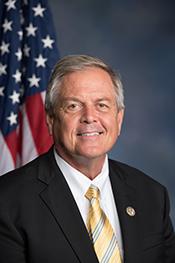
United States · Official source
2,211 records where Rep. Norman, Ralph [R-SC-5] is listed as a sponsor, author, or other actor. Search with topics and years
United States · United States Congress
United States · United States Congress · 1 October 2026
United States · United States Congress · 24 September 2026
United States · United States Congress · 24 September 2026
United States · United States Congress · 16 September 2026
United States · United States Congress · 15 September 2026
United States · United States Congress · 10 September 2026
United States · United States Congress · 3 September 2026
United States · United States Congress · 31 August 2026
United States · United States Congress · 23 July 2026
United States · United States Congress · 16 July 2026
United States · United States Congress · 14 July 2026
United States · United States Congress · 24 June 2026
United States · United States Congress · 18 June 2026
United States · United States Congress · 11 June 2026
United States · United States Congress · 8 June 2026
United States · United States Congress · 3 June 2026
United States · United States Congress · 3 June 2026
United States · United States Congress · 2 June 2026
United States · United States Congress · 21 May 2026
United States · United States Congress · 14 May 2026
United States · United States Congress · 14 May 2026
United States · United States Congress · 12 May 2026
United States · United States Congress · 7 May 2026
This resolution honors the contributions of small businesses in the United States and supports the designation of National Small Business Week.
United States · United States Congress · 4 May 2026
This resolution expresses support for police officers and other law enforcement personnel. The resolution further recognizes law enforcement officers across the United States in the pursuit of preserving safe and secure communities; the need to ensure that such officers have the equipment, training, and resources necessary to protect their health and safety while they are protecting the public; and the law enforcement community for acts of sacrifice and heroism. The resolution expresses condolences and appreciation to the loved ones of each law enforcement officer who has made the ultimate sacrifice in the line of duty.
United States · United States Congress · 4 May 2026
United States · United States Congress · 30 April 2026
United States · United States Congress · 20 April 2026
United States · United States Congress · 20 April 2026
United States · United States Congress · 9 April 2026
United States · United States Congress · 9 April 2026
United States · United States Congress · 26 March 2026
United States · United States Congress · 19 March 2026
United States · United States Congress · 18 March 2026
United States · United States Congress · 25 February 2026
Gun Owner Registration Information Protection Act This bill prohibits federal funding of, or support for, state databases that list (1) firearms lawfully owned or possessed by individuals, or (2) individuals who lawfully own or possess firearms.
United States · United States Congress · 24 February 2026
Stop the Sexualization of Children Act This bill prohibits the use of federal elementary and secondary education funds for sexually oriented material. Sexually oriented material is material that (1) includes any depiction, description, or simulation of sexually explicit conduct; or (2) involves gender dysphoria or transgenderism. Specifically, the bill prohibits the use of these funds to develop, implement, facilitate, host, or promote any program or activity for, or to provide or promote literature or other materials to, children under the age of 18 that includes sexually oriented material. This includes any program, activity, literature, or material that exposes children to nude adults, individuals who are stripping, or lewd or lascivious dancing. The bill does not prohibit the use of funds for the teaching of standard science coursework (e.g., biology, genetics, human health, and human anatomy), the texts of major world religions, classic works of literature or art (as defined by the bill), or security measures designed to help students recognize and safely respond to methods and attempts to sexually traffic children or groom children for sexual trafficking.
United States · United States Congress · 23 February 2026
United States · United States Congress · 20 February 2026
United States · United States Congress · 11 February 2026
United States · United States Congress · 30 January 2026
Safeguard American Voter Eligibility Act or the SAVE America Act This bill requires individuals to provide documentary proof of U.S. citizenship when registering to vote, and requires photo identification to vote, in federal elections. Specifically, the bill prohibits states from accepting and processing an application to register to vote in a federal election unless the applicant presents documentary proof of U.S. citizenship. The bill specifies what documents are considered acceptable proof of U.S. citizenship, such as identification that complies with the REAL ID Act of 2005 that indicates U.S. citizenship. Further, the bill (1) prohibits states from registering an individual to vote in a federal election unless, at the time the individual applies to register to vote, the individual provides documentary proof of U.S. citizenship; and (2) requires states to establish an alternative process to demonstrate U.S. citizenship. Each state must take affirmative steps on an ongoing basis to ensure that only U.S. citizens are registered to vote, which shall include establishing a program to identify individuals who are not U.S. citizens using information supplied by certain sources. Additionally, states must remove noncitizens from their official lists of eligible voters. The bill (1) provides for a private right of action for certain violations, and (2) establishes criminal penalties for certain offenses. Individuals voting in federal elections must present an eligible photo identification document. An individual who votes by absentee ballot must submit a copy of their identification document with both the request for, and the submission of, the absentee ballot.
United States · United States Congress · 30 January 2026
United States · United States Congress · 23 January 2026
United States · United States Congress · 22 January 2026
United States · United States Congress · 20 January 2026
United States · United States Congress · 13 January 2026
United States · United States Congress · 9 January 2026
United States · United States Congress · 7 January 2026
Main Street Capital Access Act or the Main Street Act This bill lessens and otherwise modifies banking regulations, including those regarding institution formation, supervision by federal financial regulators, and bank merger requirements. Under the bill, new banks have a three-year phase-in period to meet certain capital requirements. The bill also reduces the leverage ratio for certain rural community banks. Financial regulators must (1) tailor regulatory actions to limit burdens on financial institutions and must consider the institutions' risk profiles and business models, and (2) review their regulations more frequently and expand the scope of these reviews. The bill eases requirements regarding bank mergers, for example, by allowing financial regulators to approve certain bank mergers without considering if the merger is noncompetitive or monopolistic. The bill increases the dollar asset thresholds for various fees, reporting requirements, and other regulatory requirements so that more financial companies and banks are exempt from these requirements. For example, the bill increases the total asset threshold above which financial holding companies need Federal Reserve Board approval to acquire a company, thereby allowing for more acquisitions without board approval. The bill also raises certain asset thresholds so as to allow additional small bank holding companies to operate with higher debt levels and additional small banks to qualify for a longer examination cycle. The bill also provides flexibilities regarding the use of reciprocal deposits, the resolution of failed banks, and other regulated activities.
United States · United States Congress · 16 December 2025
Essential Caregivers Act of 2025 This bill prohibits certain health care facilities from limiting the access of essential caregivers to residents of those facilities, including during designated emergency periods. Specifically, the bill generally prohibits Medicare skilled nursing facilities, Medicaid nursing facilities, Medicaid intermediate care facilities, and associated inpatient rehabilitation facilities from restricting the access of essential caregivers to residents of the facilities, including during emergency periods in which visitation rights are otherwise restricted. During emergency periods, facilities may restrict access for an initial period of up to seven days and for one additional maximum seven-day period (if the additional period is approved by the state health department). Facilities may restrict access for a total of 7 days (or 14 days with the approval of the state health department) during an emergency period. Essential caregivers must agree to comply with any safety protocols set by the facility, which may be no more stringent for caregivers compared to those for staff. Caregivers who fail to comply with these requirements may be denied access, subject to an appeals process.
United States · United States Congress · 11 December 2025
United States · United States Congress · 9 December 2025
Rural Depositories Revitalization Study Act This bill requires federal banking agencies to study and report on approaches to support rural depository institutions. Specifically, the Federal Reserve Board, the Office of the Comptroller of the Currency, and the Federal Deposit Insurance Corporation must jointly (1) study and report on methods to improve the growth, capital adequacy, and profitability of rural depository institutions; and (2) identify statutes and regulations that limit such methods or prevent the establishment of new rural depository institutions.