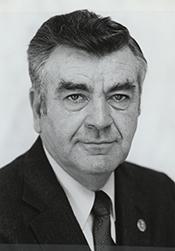
United States · United States Congress · 26 July 1991
Calls on the Government of Vietnam to: (1) make public the names of all individuals who continue to be held in "reeducation" camps or prisons in connection with suspected opposition to the Government; (2) release immediately all remaining long-term detainees from such camps or prisons; (3) grant exit permission to all Vietnamese who qualify for resettlement in the United States through the U.S. Special Released Reeducation Center Detainees Resettlement Program; and (4) end immediately all arrests or rearrests of detainees.
United States · United States Congress · 25 July 1991
Condemns the use of force to resolve political differences in Yugoslavia. Calls on the Yugoslav army to cease using force to address the current crisis and urges the Federal Yugoslav Government and the government of the Republic of Serbia to respond immediately to calls for negotiations leading to a peaceful settlement of differences. Urges the holding of free and democratic elections in the Republics of Serbia and Montenegro and in the provinces of Kosovo and Vojvodina. Declares that the President should immediately suspend assistance to Yugoslavia and requires the Secretary of the Treasury to instruct the U.S. representatives to international financial institutions to oppose assistance from such institutions to Yugoslavia. Urges that U.S. policy toward Yugoslavia be based on support for democracy, peaceful resolution of disputes, respect for human rights, and establishment of a market economy.
United States · United States Congress · 25 July 1991
Condemns Syria's denial of Syrian Jews' right to travel freely and calls upon the Syrian Government to: (1) immediately grant Syrian Jews the right to travel freely without imposing a fee; and (2) release all Jewish prisoners who were charged or suspected of traveling illegally. Urges the President to encourage U.S. allies and trading partners to make similar pleas to the Syrian Government. Calls upon the United Nations to send an official delegation to Syria to investigate the present condition of Syrian Jews.
United States · United States Congress · 16 July 1991
Workers' Political Rights Act of 1991 - Amends the Federal Election Campaign Act of 1971 to permit a labor organization to make political communications and establish and solicit contributions for a separate segregated political fund if it provides the employees it represents with written notification of specified information.
United States · United States Congress · 11 July 1991
Access to Life-Saving Therapies Act - Amends the Federal Food, Drug, and Cosmetic Act to direct the Secretary of Health and Human Services, through the Food and Drug Administration, to approve, at the request of the sponsor and on an expedited basis, a drug or biologic needed to treat or prevent a life threatening disease or seriously debilitating illness if the drug or biologic meets certain conditions, including some indications of effectiveness and safety and a lack of alternative satisfactory therapy. Deems an application under the amendments made by this Act approved unless other action is taken within 120 days. Prohibits any health insurance policy or plan from distinguishing, for the purpose of determining whether a drug is eligible for coverage or reimbursement, between a drug approved under the amendments made by this Act and one approved under specified other provisions of the Public Health Service Act. Mandates suspension of approval under the amendments made by this Act if at least two subsequent studies fail to confirm the initial safety and efficacy conclusions. Requires written informed consent for administration of a drug approved under amendments made by this Act.
United States · United States Congress · 11 July 1991
Congressional Budget Office Neutrality Act of 1991 - Amends the Congressional Budget Act to provide that appointment of the Director of the Congressional Budget Office be made after consideration of recommendations of the chairmen and ranking minority members of the House and Senate Budget Committees. (Current law specifies only the recommendations of such Committees). Requires the Director to carry out duties in an objective and nonpartisan manner. Prohibits the Office from altering information compiled at the request of a Member or committee of the Congress, unless such Member or Committee agrees to the change. Requires the Director to notify the House Committee on Standards of Official Conduct or the Senate Select Committee on Ethics of any attempt by any Member or congressional employee to unduly influence the Office with respect to the contents of its response to any request for information or any report. Requires cost analysis estimates of congressional legislation to include direct and indirect costs. Establishes a Congressional Budget Office Board to: (1) provide general oversight of Office operations; (2) approve in advance the undertaking of any studies and reports in addition to those required by law; and (3) provide general guidance to the Director in the formulation and implementation of procedures and policies. Directs the Office to establish an Economic Advisory Council to: (1) review and make recommendations to the Board on Office activities; (2) evaluate the quality and objectivity of Office research and reports; and (3) undertake additional tasks as the Board may direct. Subjects the appointment of the Director to approval by concurrent resolution of the Senate and of the House of Representatives.
United States · United States Congress · 26 June 1991
Religious Freedom Restoration Act of 1991 - Prohibits any agency, department, or official of the United States or any State (the government) from burdening a person's exercise of religion even if the burden results from a rule of general applicability, except that the government may burden a person's exercise of religion only if it demonstrates that application of the burden to the person: (1) is essential to further a compelling governmental interest; and (2) is the least restrictive means of furthering that compelling governmental interest. Sets forth provisions pertaining to judicial relief, attorney's fees, and applicability.
United States · United States Congress · 26 June 1991
World Cup USA 1994 Commemorative Coin Act - Directs the Secretary of the Treasury to issue a specified number of five-dollar gold coins, one-dollar silver coins, and half-dollar clad coins in commemoration of the 1994 World Cup and the unique appeal of soccer. Sets forth certain features of such coins and provides for their design, issuance, and sale. Requires that all sales include a surcharge of $35 per coin for the five-dollar coins, $7 per coin for the one-dollar coins, and $1 per coin for the half-dollar coins. Requires that all surcharges be paid to the Organizing Committee to organize and stage the 1994 World Cup. Requires that ten percent of such funds shall be made available through the U.S. Soccer Federation Foundation, Inc., for distribution to institutions for scholastic scholarships to qualified students.
United States · United States Congress · 26 June 1991
Constitutional Amendment - Requires the Congress and the President, prior to each fiscal year, to agree on an estimate of total receipts (except those derived from borrowing) for that fiscal year by enactment of a law devoted solely to that subject. Prohibits outlays for that year (except those for repayment of debt principal) from exceeding this amount unless the Congress, by a three-fifths roll call vote of each House, authorizes a specific excess of outlays over receipts. Requires a three-fifths roll call vote of each House to increase the public debt. Directs the President to submit a balanced budget to the Congress. Requires the approval of a majority of the total membership of each House by roll call vote before any bill to increase revenue may become law. Waives these provisions when a declaration of war is in effect. Makes this article effective beginning with FY 1995 or with the second fiscal year after its ratification, whichever is later.
United States · United States Congress · 25 June 1991
Authorizes the Board of Regents of the Smithsonian Institution to plan and design an extension of the National Air and Space Museum at Washington Dulles International Airport. Authorizes appropriations.
United States · United States Congress · 25 June 1991
Declares that the House of Representatives commends the reserve components of the U.S. armed forces who were called to active duty within the United States during the Persian Gulf conflict for their devoted service, efforts, and contributions to the achievement of victory in it.
United States · United States Congress · 20 June 1991
Shipbuilding and Repair Industry Free Trade Act of 1991 - Directs the Secretary of Commerce to annually determine and publish the net shipbuilding and repair subsidy provided, directly and indirectly, to each major shipbuilding and repair company in foreign countries meeting certain requirements. Requires the information submitted to the Secretary in connection with the determinations to be treated as proprietary if it meets certain requirements of the Tariff Act of 1930. Requires each company to repay to its government the total value of the aggregate subsidy provided, plus interest. Directs the Secretary to: (1) require certification from both the company and the foreign government that the payments have occurred; and (2) if requested, verify the repayment. Directs the Secretary, if a company has not complied, to direct the Commandant of the Coast Guard to collect an annual assessment on each vessel constructed or repaired by the company. Sets the amount of the assessment at the amount of the net subsidy, adjusted by partial repayments and increased by any previous unpaid assessment. Prohibits a vessel from entering a U.S. port until the assessment is paid in full. Amends the Tariff Act of 1930 to provide for the judicial review of subsidy assessment determinations by the U.S. Court of International Trade.
United States · United States Congress · 19 June 1991
Expresses the sense of the Congress that: (1) President Bush, Administration officials, and the President's emissary should be commended for their diplomatic initiatives to secure the release of Ethiopian Jews; (2) the Government of Israel should be commended for carrying out Operation Solomon, for its efforts to reunite Jews with their families, and for welcoming this community with open arms; (3) individuals and private voluntary organizations should be applauded for their support of the Jewish community in Ethiopia; and (4) the United States should make every effort to bring an end to the civil war in Ethiopia, increase support for famine relief, and ensure the release to Israel of Jews remaining in Ethiopia.
United States · United States Congress · 18 June 1991
James Madison-Bill of Rights Commemorative Coin Act - Directs the Secretary of the Treasury (the Secretary) to mint and issue five-dollar gold coins emblematic of the Bill of Rights, and one-dollar silver coins emblematic of James Madison. Sets forth guidelines for their sale and issuance, and for financial assurances. Mandates that the surcharges received by the Secretary shall be transmitted to the James Madison Memorial Fellowship Trust Fund. Authorizes audits by the Comptroller General. Provides a general waiver of procurement regulations when implementing this Act.
United States · United States Congress · 18 June 1991
Authorizes the President, on behalf of the Congress, to present to the Secretary of Defense, Richard B. Cheney, a gold medal in recognition of his exemplary performance as a leader in coordinating the planning, strategy, and execution of combat action by U.S. armed forces which led to the liberation of Kuwait. Authorizes appropriations. Authorizes the Secretary of the Treasury to provide for the sale of bronze duplicates of the medal.
United States · United States Congress · 13 June 1991
Thomas Jefferson Commemoration Act - Establishes the Thomas Jefferson Commemoration Commission to promote and coordinate activities in commemoration of the 250th anniversary of the birth of Thomas Jefferson. Requires the Commission to make interim and final reports to the President and the Congress on its activities. Terminates the Commission within 60 days after its final report. Authorizes appropriations for FY 1992 through December 31, 1993.
United States · United States Congress · 12 June 1991
Paperwork Reduction in Health Care Act of 1991 - Requires the Director of the Office of Management and Budget to: (1) identify, inventory, and assess the Federal paperwork burden associated with health care services; and (2) establish a goal for reducing such burden in each of FY 1992 through 1997 by at least five percent of the preceding fiscal year's paperwork burden.
United States · United States Congress · 6 June 1991
Federal Aid Surface Transportation Act of 1991 - Title I: Federal-Aid Highway Act of 1991 - Federal-Aid Highway Act of 1991 - Authorizes appropriations out of the Highway Account of the Highway Trust Fund (HTF) for: (1) the National Highway and Bridge System; (2) the Urban and Rural Highway and Bridge Program; (3) emergency relief; (4) the Federal Lands Highway Program; (5) the University Transportation Centers Program; (6) the Right-of-Way Revolving Fund; and (7) the Territorial Highway Program. Specifies that unobligated balances of funds apportioned or allocated to a State under Federal highway provisions before October 1, 1991, shall be available for obligation in such State under the law, regulations, policies, and procedures relating to the obligation and expenditure of those funds in effect on September 30, 1991. Repeals the FY 1993 authorization under the Federal-Aid Highway Act of 1956. Authorizes appropriations for Interstate construction to complete the Interstate System out of the Highway Account of the HTF for each of FY 1992 through 1995. Provides for certain allocations for Massachusetts for such fiscal years. Sets forth a formula for the apportionment of authorized funds for such fiscal years among the States. Authorizes appropriations out of the Highway Account of the HTF for highway projects for the Interstate Substitution Program. Sets forth provisions with respect to obligation ceilings for Federal-aid highway programs, distribution of and limitations on obligation authority, and redistribution of unused obligation authority. Declares that national resources should be focused upon preserving the nation's investment in its Interstate systems, that broad national defense, economic, safety, and international policy goals are advanced by efficient transportation systems, that national transportation investments should increasingly encourage domestic and international commerce and trade, and that, based on congressionally established national transportation policy and objectives, a new Federal high priority highway network should be designated. Establishes the National Highway and Bridge System, to consist of all currently designated Interstate highways, an appropriate portion of the rural and urban principal arterial routes, including toll facilities, and national defense highways, and routes which meet specified criteria (including nationally significant truck routes, routes that provide nationally significant commodities with access to markets, access points to significant national parks, facilities that will provide logical connection between major population centers and the National Highway and Bridge System, and major urban corridors). Specifies that the National Highway System shall be based on a functional reclassification of roads and streets in each State which shall be designated not later than September 30, 1993, in accordance with guidelines issued by the Secretary of Transportation, and that the Secretary may add segments to the National Highway System as necessary to meet National Highway Program objectives. Directs the Secretary to establish criteria for reviewing projects to be funded as part of the National Highway and Bridge System which: (1) define eligible projects to include rehabilitation, resurfacing, restoration, capacity expansion, operational improvement, safety, and new highway construction; (2) ensure as a first priority for the use of available funds the protection of investments made in the Interstate highways in each State and the provision of suitable traveling quality by such highways; (3) permit funding in urbanized areas to be used to improve highway and transit systems, where it can be shown that the improvement will increase the level of service within the corridor of the National Highway and Bridge System; and (4) permit the use of such funds for intercity rail projects and projects for access to ports, airports, and related facilities. Sets forth additional provisions with respect to the discharge of responsibilities by the Secretary for National Highway and Bridge System projects. Directs the Secretary to establish an Urban and Rural Highway and Bridge Program to provide a category of funds that minimizes Federal requirements and provides flexibility in the use of available funds for either highway or transit projects. Specifies: (1) that the Urban and Rural Highway and Bridge Program shall consist of all public highways (including bridges) functionally classified as arterials, urban collectors, and rural collectors other than those designated as part of the National Highway and Bridge System; (2) that each State shall establish guidelines for implementing this program; and (3) eligible highways and projects. Sets forth provisions with respect to the obligation of funds, and the Federal share of projects, for the construction of toll roads, bridges, tunnels, and ferries. Requires the Secretary, in each fiscal year, to allocate among the States amounts sufficient to ensure that: (1) the total of apportionments and minimum allocation for each State in each such fiscal year shall not be less than 90 percent (currently, 85 percent) of the percentage of estimated tax payments into the Highway Account of the HTF attributable to highway users in the State of total apportionments in each such fiscal year and allocations for the prior year; and (2) each State's total apportionment from the Highway Account of the HTF for the year is not less than that made during FY 1991 (excluding any Interstate construction funds in excess of FY 1992 one-half percent minimum, Interstate substitution, and amounts for demonstration or discretionary funding programs or projects). Directs the Secretary to cooperate with State and local officials in urbanized areas in the development of transportation plans and programs which are formulated with due consideration to comprehensive long-range land use plans, development objectives, innovative financing mechanisms, overall social, economic, environmental, and system performance, energy conservation goals and objectives and with due consideration to their probable effect on the future development of the area. Specifies that the transportation planning process, at a minimum, shall cover the existing urbanized area and the area expected to become urbanized within the forecast period, and that it may encompass the entire Metropolitan Statistical Area/Consolidated Metropolitan Statistical Area at the discretion of the Governor and the affected units of local government. Requires that transportation plans and programs in urbanized areas of more than 200,000 population be based on a continuing transportation planning process which: (1) is carried out by a metropolitan planning organization and is comprehensive to the degree appropriate based on the complexity of transportation problems in the area, including transportation-related air quality problems; and (2) considers all modes of transportation, including intermodal connectivity, the balance between future development and transportation needs, and an areawide multimodal congestion management system. Specifies that in nonattainment areas for transportation-related pollutants the multimodal congestion management system shall address air quality considerations and be coordinated with the process for development of the transportation element of the State Implementation Plan required by the Clean Air Act. Requires that the costs and impacts of proposed action on both mobility and air quality be evaluated. Bars the Secretary from approving any highway project in urbanized areas of more than 200,000 population that by reconstruction or new construction significantly increases the vehicle carrying capacity of a transportation corridor unless the project is consistent with the congestion management system. Directs the metropolitan planning organization to cooperate with the State in the development of a congestion management, bridge management, pavement management, safety management, and traffic monitoring system. Requires that: (1) a metropolitan planning organization be designated in each urbanized area by agreement among the units of general purpose local government and the Governor to carry out such transportation planning process; (2) such organization develop a transportation improvement program that includes all projects proposed for funding within the study area under the National Highway and Bridge Program, the Urban and Rural Highway and Bridge Program, and the Bridge Program; and (3) in urbanized areas of 200,000 population or less, such organization, the State, and transit operators, at a minimum, meet the requirements of this Act by the development of such a transportation improvement program (including consideration of transportation-related air quality problems.) Requires the Federal highway research program to include coordinated long-term programs of research: (1) on Intelligent Vehicle Highway Systems; and (2) for the development, use, and dissemination of performance indicators to measure the performance of the surface transportation system. Requires such program to continue those portions of the Strategic Highway Research Program that the Secretary deems important. Directs the Secretary to create and administer the Dwight David Eisenhower Transportation Fellowship Program, a program to attract qualified students to the field of transportation engineering and research. Provides for the funding of such program. Directs the Secretary to cooperate with the States in carrying out: (1) statewide transportation planning; and (2) State highway research. Sets forth provisions regarding State matching fund requirements and waiver of such requirements. Directs the Secretary: (1) in the Secretary's reports regarding future highway needs of the nation, to report as well on the condition and performance of the existing system and on the bridge needs of the nation; and (2) beginning with the report due in January 1995, to include the results of studies of the air quality impacts of transportation programs including the air quality benefits realized from transportation control measures required under the Clear Air Act. Establishes within the Department of Transportation a Bureau of Transportation Statistics, which shall pursue a comprehensive, long-term program for the collection and analysis of data relating to the performance of the national transportation system. Requires the Director of such Bureau to: (1) produce annually unbiased and comparable estimates of factors including productivity in the various portions of the transportation sector, traffic flow, travel times, travel costs of intracity commuting and intercity trips, frequency of vehicle and transportation facility repairs, accidents, and collateral damage to the human and natural environment; and (2) submit reports beginning on October 1, 1992, and every 12 months thereafter, to specified congressional committees describing the status of the U.S. transportation system. Authorizes the Secretary to: (1) undertake, on a cost-shared basis, collaborative research and development with non-Federal entities, including State, local, and foreign governments; and (2) enter into cooperative research and development agreements, except that the average Federal share in such agreements shall not exceed 50 percent (but allows the Secretary to approve a higher Federal level of participation where there is substantial public interest or benefit). Authorizes the Secretary to withhold project approvals on National Highway and Bridge Program projects for failure of a State to have a bridge management, pavement management, safety management, and congestion management system. Requires each State to have a traffic monitoring system to provide statistically-based traffic data. Sets forth provisions regarding: (1) acquisition of rights-of-way; (2) private, State, and local donations; (3) access to rights-of-way to accommodate needed passenger or commuter rail, high speed ground transportation systems (including magnetic levitation systems), and highway and nonhighway public mass transit facilities; and (4) the definition and scope of the Interstate System. Declares that: (1) the nation must redirect its efforts toward moving people, information, and goods rather than moving vehicles; (2) the new Federal program shall refocus national policies to respond to increasing inter-regional travel, relieving urban congestion, improving rural access, fostering intermodalism, enhancing air quality, conserving energy, and giving priority to projects that offer the best solutions to the transportation problems and environmental considerations of each region; and (3) the essential element for an effective future program is a new Federal, State, and local partnership that provides more funding, greater program flexibility, and greater program management and resource contribution responsibilities at the State and local levels. Sets forth provisions with respect to the apportionment of funds, including apportionment formulas under the: (1) National Highway and Bridge Program, based on the State's rural and urban lane miles, rural vehicle miles traveled, and diesel fuel consumption; and (2) Urban and Rural Highway and Bridge Program, in the ratio of tax payments of the Highway Account of the HTF attributable to the highway users of each State. Sets forth provisions with respect to: (1) project agreements and obligations of funds; (2) availability of funds; (3) the Federal share payable with respect to certain projects; (4) project litigation expenses; and (5) the allocation and administration of Federal lands highways funds, and the establishment of a coordinated Federal Lands Highways Program. Authorizes (subject to specified limitations): (1) States to use Federal highway funds to construct improved lanes, paths, or shoulders, traffic control devices, shelters, and parking facilities for bicycles and pedestrians, and carry out nonconstruction projects related to safe bicycle and pedestrian use; (2) the Secretary, where a highway bridge deck being replaced or rehabilitated with Federal financial participation is located on a highway on which bicycles or pedestrians are permitted to operate at each end of the bridge and the Secretary determines that the safe accommodation of bicycles or pedestrians can be provided at reasonable cost, to replace or rehabilitate such bridge, making such accommodations; (3) Federal lands highways funds to be used for the construction of pedestrian walkways and bicycle routes; and (4) a State to expend Urban and Rural Highway and Bridge Program funds for such construction. Provides for: (1) a functional reclassification of all public roads; (2) the transfer of funds for transit projects to, for administration by, the Urban Mass Transportation Administration; and (3) a recodification of Federal highway-related provisions. Requires that construction standards adopted for the National Highway and Bridge System be those approved by the Secretary in cooperation with the State highway departments and the American Association of State Highway and Transportation Officials (currently, with respect to construction standards for the Interstate System, cooperation with such Association is not required). Directs the Secretary to issue guidelines for minimizing soil erosion from highway construction. Bars the Secretary from approving projects that will result in the severance or destruction of an existing major route for nonmotorized transportation traffic and light motorcycles, unless the project provides a reasonable alternative route or an alternative route exists. Requires: (1) projects for resurfacing, restoring, or rehabilitating specified highways to be constructed in accordance with standards to preserve and extend highway service life and enhance highway safety; and (2) States to charge, at a minimum, fair market value for the sale, use, lease, or lease renewals of right-of-way airspace acquired as a result of a project funded in whole or in part with Federal assistance made available from the Highway Account of the HTF, with exceptions. Provides that: (1) Indian contractors certified by State transportation or highway departments shall receive preference in the award of contracts on Indian reservations to the maximum extent practicable; and (2) contracts for Urban and Rural Highway and Bridge Program projects may be entered into with the prior concurrence of the Secretary in the award. Authorizes: (1) the State transportation or highway department to include warranty or guarantee provisions in construction contracts which, if used, shall be for a specified construction product or feature and may not include routine maintenance; and (2) projects (currently, requires projects) approved to include the amount of any interest earned and payable on bonds issued by the State to the extent that the proceeds of the bonds have actually been expended in the construction of the project. Authorizes the Secretary, except for projects administered under the Urban and Rural Highway and Bridge Program, to make payments to a State for costs incurred on a project. (Current law authorizes payment to States for construction.) Specifies that total payments shall not exceed total costs incurred by the State for the project. Requires any State transportation or highway (currently, highway) department which submits plans for a National Highway and Bridge Program or Interstate System project (currently, Interstate System project) to make its certification and report, indicating that consideration was given to the economic, social, environmental, and other effects of the plan, highway location or design, and various alternatives which were raised during the hearing or which were otherwise considered (current law does not mention the latter requirement). Authorizes the Secretary to approve for Federal financial assistance from National Highway and Bridge Program funds: (1) projects designed to encourage the use of carpools, subject to specified limitations; and (2) the construction of exclusive or preferential high occupacy vehicle (HOV) lanes, highway traffic control devices, intercity and urban bus passenger loading areas and facilities, and fringe and transportation corridor parking to serve HOV, intercity bus, and public transportation passengers. Specifies that if fees are charged for the use of any carpool or other publicly owned parking facility constructed pursuant to Federal highway provisions, the revenue in excess of that required for maintenance and operation of the facility and the cost of providing shuttle service to and from the facility including compensation to any person for operating the facility and for providing shuttle service shall be used for purposes authorized under Federal highway provisions. Requires that National Highway and Bridge System funds be made available to finance the Federal share of projects for exclusive or preferential HOV, truck, and emergency vehicle routes or lanes. Permits such routes on the Interstate System to have less than four lanes of traffic. Prohibits the approval of HOV projects unless the Secretary has received assurances from the owner or operator of the facility that HOV vehicles will fully utilize the proposed project and that essential operations and enforcement support of the facility will be provided. Specifies that, in any case where sufficient land exists within the publicly acquired rights-of-way of the National Highway System to accommodate needed nonhighway public mass transit facilities and where the accommodation can be accomplished without impairing automotive safety or future highway improvements, the Secretary may authorize a State to make those lands and rights-of-way available without charge to a publicly owned mass transit authority for such purposes wherever the public interest will be served. Directs the Secretary to require assurance from any State desiring to avail itself of benefits under Federal highway provisions that employment in connection with proposed projects be provided without discrimination based on race, color, religion, national origin, age, disability, or sex (currently, specifies "without regard to race, color, creed, national origin, or sex"). Requires that not to exceed one fourth of one percent of the funds apportioned to a State be available for highway construction training. Prohibits discrimination on the basis of sex under programs or activities receiving Federal assistance. Repeals a requirement that each State certify that it is enforcing all speed limits on public highways and that the Secretary not approve projects in States failing to make such certification. Requires each State to establish a procedure to certify that highway bridge inspectors meet national qualifications. (Current law requires that standards established by the Secretary include a procedure for national certification of such inspectors.) Directs the Secretary to withhold ten percent of the amount to be appropriated to any State on the first day of each fiscal year in which the purchase or public possession in that State of any alcoholic beverage by a person who is less than 21 years of age is lawful (current law specifies five percent on the first day of the fiscal year succeeding the first fiscal year beginning after September 30, 1985, and ten percent after the second fiscal year beginning after such date). Specifies that funds withheld from apportionment shall be apportioned to the other States in compliance and remain available for the period of time applicable to the category of funds withheld (currently, treatment of such funds varies based on whether funds were withheld on or before September 30, 1988). Directs that construction estimated to cost $50,000 (currently, $15,000) or more per mile or per project for projects with a length of less than one mile on forest development roads and trails be advertised and let to contract, and allows projects with less than such cost, if no acceptable bid is received, to be done by the Secretary of Agriculture. Repeals provisions under the Territorial Highway Program: (1) that Federal financial assistance be granted on the basis of a Federal contribution of 100 percent of the cost of any project; and (2) under which the Governor must agree not to impose any toll, or permit any such toll to be charged, for use by vehicles or persons of any portion of the facilities constructed or operated to qualify for funding. Provides that, in addition to a specified percentage, sums provided (currently, two percent) for each fiscal year may be expended upon request of the Governor with the Secretary's approval under such Program. Requires (currently, authorizes the Secretary to make) expenditures with respect to the reconstruction of the Alaska-Canada international highway. Authorizes the Secretary to give priority of approval to, and expedite the construction of, projects that are recommended as important to the national defense. Modifies provisions regarding the National Highway Institute to: (1) require that private agencies and individuals pay the full cost of any education and training received by them; and (2) authorize the Institute to engage in all phases of contract authority for training purposes authorized under Federal highway provisions and to carry out its authority independently or in cooperation with any other branch of Government, authority, association, or person. Authorizes the Institute to establish and collect fees from any entity and place them in a special account.
United States · United States Congress · 3 June 1991
Amends Federal highway provisions to allow longer combination vehicles (LCVs) to continue to operate only if the Secretary of Transportation determines that such vehicles were authorized by State statute or regulation conforming to Federal law and were in actual, continuing lawful operation on June 1, 1991. Specifies that: (1) all such operations shall continue to be subject to, at the minimum, all State statutes, regulations, limitations, and conditions, including routing-specific and configuration-specific designations and all other restrictions (statutes and restrictions), in force on June 1, 1991; and (2) nothing in this Act shall prevent any State from further restricting or prohibiting the operation of LCVs whose continued operation is authorized under such provisions, with exceptions. Directs the Secretary, within 60 days, to publish in the Federal Register a complete list of such State statutes and restrictions, which shall become final 60 days after publication. Bars LCVs from operating except as provided in such list. Sets forth analogous restrictions with respect to cargo carrying unit limitations under Federal transportation provisions.
United States · United States Congress · 30 May 1991
Section 457 Reform and Simplification Act of 1991 - Amends the Internal Revenue Code to state that the accounting provisions applicable to the deferred compensation plans of State and local governments and of private tax-exempt organizations shall not apply to nonelective deferred compensation. Directs the Secretary of the Treasury to promulgate regulations defining nonelective deferred compensation. Applies such provisions retroactively to tax year 1988 and thereafter.
United States · United States Congress · 30 May 1991
Amends the Internal Revenue Code to apply the special rule for principal campaign committees on graduated tax rates to candidates for any Federal, State, or local elective public office. (Currently, such rule applies only to congressional candidates.)
United States · United States Congress · 23 May 1991
Benjamin Franklin Memorial Fire Service Bill of Rights Act - Title I: Minting of Benjamin Franklin National Memorial Commemorative Coin - Benjamin Franklin National Memorial Commemorative Coin Act - Directs the Secretary of the Treasury to issue: (1) five dollar gold coins emblematic of Benjamin Franklin's contributions to the advancement of science; (2) one dollar silver coins emblematic of Benjamin Franklin's contributions to the American Fire Service. Sets forth sale and issuance guidelines, including a general waiver of procurement regulations and surcharge distributions. Title II: Fire Service Bill of Rights - Fire Service Bill of Rights Act - Amends the Federal Fire Prevention and Control Act of 1974 to set forth a fire service bill of rights, including the right of responding fire services to: (1) know the kind of danger presented by hazardous materials they face in emergency responses; and (2) be fully informed of infectious diseases their members face during the course of life safety activities. Declares that the bill of rights does not create any private right of action.
United States · United States Congress · 23 May 1991
Federal Energy Savings Incentives Act of 1991 - Amends the National Energy Conservation Policy Act to direct the Secretary of Energy (the Secretary) to designate additional energy performance goals for each Federal agency for the years 1996 through 2000 so that Federal building energy consumption during FY 2000 is at least 20 percent less than that during FY 1985. Requires the head of each Federal agency (except the Department of Defense) to provide that two-thirds of the portion of its annual fiscal year appropriations which is equal to the energy cost savings the agency realized during such fiscal year shall remain available for obligation through the end of the following fiscal year, without additional authorization or appropriation. Directs the Secretary to permit each agency to participate in gas or electric utility incentive programs for either the management of electricity demand or for energy conservation. Grants the Secretary authority to permit the agencies to accept utility energy incentives to adopt technologies and practices that are cost-effective for the Federal Government. Directs the Secretary to adopt a simplified contracting method for shared energy savings contract services that will expedite their use with respect to Federal agencies, and will reduce the Federal administrative effort and cost. Sets forth implementation guidelines. Requires the President to submit to the Congress simultaneously with submission of the budget a statement of the amount of appropriations requested on an individual agency basis for: (1) utility fuel costs; and (2) compliance with specified Federal laws and regulations. Authorizes appropriations.
United States · United States Congress · 21 May 1991
Urges the Government of Iran to extend to the Baha'i community the rights guaranteed by the Universal Declaration of Human Rights and other international agreements to which Iran is a party. Calls upon the President to continue to: (1) urge the Government of Iran to emancipate the Baha'i community by granting such rights; (2) emphasize that the United States regards the human rights practices of such Government, particularly its treatment of the Baha'is and other religious minorities, as a significant element in the development of U.S.-Iranian relations; and (3) cooperate with other governments and international organizations in efforts to protect the religious rights of the Baha'is and other minorities in Iran.
United States · United States Congress · 20 May 1991
Farm Animal and Research Facilities Protection Act of 1991 - Amends title XIV of the Food Security Act of 1985 to add a new subtitle prohibiting (and establishing criminal penalties for) specified acts of destruction, theft, or damage to farm animal, research, and educational facilities. Directs the Secretary of Agriculture and the Attorney General to jointly conduct a study of the extent and effect of terrorism on animal research, production, and processing facilities. Grants jurisdiction for cases arising under these provisions to U.S. district courts. Establishes a private right of action.
United States · United States Congress · 17 May 1991
Pledge of Allegiance Commemorative Coin Act - Establishes the Pledge of Allegiance Commemorative Coin Advisory Board to: (1) consult with the Secretary of the Treasury (the Secretary) regarding coin design; (2) oversee the expenditure of funds provided to the U.S. Capitol Historical Society for assisting its educational programs and providing non-operating improvements to the Capitol; and (3) establish rules and operating procedures to implement this Act. Directs the Secretary to issue five-dollar gold coins, one-dollar silver coins, and half dollar clad coins emblematic of the Pledge of Allegiance to the Flag. Declares a general waiver of public contract procurement regulations governing coin mintage under this Act. Mandates that surcharges be distributed equally between the Treasury and the U.S. Capitol Historical Society. Provides for audits by the Comptroller General. Requires that: (1) all amounts received from the sale of coins be deposited in the coinage profit fund; and (2) the Secretary take actions to ensure that coin mintage and issuance under this Act will not result in any net cost to the Federal Government.
United States · United States Congress · 15 May 1991
Designates the week beginning July 21, 1991, as Korean War Veterans Remembrance Week. Requires the President to urge that the American flag be flown at half staff on July 27, 1991, in honor of those Americans who died as a result of their service in Korea.
United States · United States Congress · 8 May 1991
Expresses the gratitude of the Congress to this Nation's Federal civilian employees for their contributions to Operation Desert Shield and Operation Desert Storm. Commends and congratulates them on a job superbly done.
United States · United States Congress · 7 May 1991
Common Sense Budget Act of 1991 - Amends Federal law to require both the President and the Congress to draft a budget based on estimates of current fiscal year spending, proposing increases or decreases based on this level (rather than on an estimated baseline). Amends the Congressional Budget Act of 1974 to require the Congressional Budget Office to use such a current fiscal year baseline in its report to the congressional budget committees, projecting growth for entitlement and discretionary spending based on current fiscal year spending.
United States · United States Congress · 7 May 1991
Provides for the awarding of the Purple Heart to former prisoners of war held captive before April 25, 1962, on the same basis at it may be awarded former prisoners of war captured on or after such date.
United States · United States Congress · 1 May 1991
Expedited Consideration of Proposed Rescissions Act of 1991 - Amends the Congressional Budget and Impoundment Control Act of 1974 to require a special message, in the case of budget authority proposed to be rescinded or reserved, to include language amending the law authorizing such programs to allow them to continue to function at the proposed new level of budget authority. Allows the President to transmit to both Houses of the Congress, for expedited consideration, one or more special messages proposing to rescind all or part of any item of budget authority provided in an appropriation bill. Requires that such special message be transmitted not later than three days after the President approves the appropriation bill and be accompanied by a draft bill or joint resolution that would, if enacted, rescind the budget authority proposed to be rescinded. Sets forth House and Senate procedures for the expedited consideration of such a proposal.
United States · United States Congress · 30 April 1991
National Oceanic and Atmospheric Administration Authorization Act of 1991 - Title I: National Ocean Service - Authorizes appropriations to the Secretary of Commerce for the National Oceanic and Atmospheric Administration (NOAA) for: (1) mapping, charting, and geodesy; (2) observation and assessment; and (3) ocean and coastal management. Title II: National Marine Fisheries Service - Amends the National Oceanic and Atmospheric Administration Marine Fisheries Program Authorization Act to authorize appropriations to the Department of Commerce for the National Marine Fisheries Service for: (1) information collection and analysis; (2) conservation and management; and (3) State and industry assistance. Authorizes the Secretary to enter into agreements with, and provide financial assistance to, State, marine fisheries commissions, regional fishery management councils, and academic institutions for research on marine animals, endangered species, and fisheries conservation and management. Title III: Oceanic and Atmospheric Research - Authorizes appropriations to the Secretary for NOAA for: (1) climate and air quality research; and (2) atmospheric research. Requires the Office of the Chief Scientist of NOAA to submit to the Congress a plan for implementation of a nationwide climate services system and applied climatology program. Authorizes appropriations to the Secretary for NOAA for ocean and Great Lakes research. Authorizes appropriations to the Office of Oceanic and Atmospheric Research (OOAR) of NOAA for the Cooperative Institute for Limnology and Ecosystems Research. Authorizes appropriations to the Secretary for the OOAR for a large lakes research plan. Title IV: National Weather Service - Authorizes appropriations to the Secretary for NOAA's National Weather Service (NWS) for operations and research. Mandates establishment of: (1) an advisory committee on Atlantic tropical cyclone research and reconnaissance; and (2) a five-year program for data collection, research, and analysis on such cyclones. Authorizes appropriations to the Secretary for the NWS for public warning and forecast systems, including systems acquisition. Mandates an annual report to the Congress of an updated National Implementation Plan for the modernization of the NWS. Prohibits closing, consolidating, automating, or relocating National Weather Service Offices or National Weather Service Forecast Offices unless certain conditions are met. Title V: National Environmental Satellite, Data, and Information Service - Authorizes appropriations to the Secretary for NOAA for: (1) satellite observing systems; and (2) data and information services. Amends the Land Remote-Sensing Commercialization Act of 1984 to mandate that any license issued under specified provisions of that Act specify that the licensee shall promptly make available all unenhanced data which the Secretary of the Interior (currently, the Secretary of Commerce) may request under specified provisions of the Act relating to archiving of data. Amends provisions of the Act relating to archiving in order to transfer from the Secretary of Commerce to the Secretary of the Interior responsibility for: (1) providing for long-term storage, maintenance, and upgrading of the basic, global, land remote-sensing data set; (2) requesting data needed for the basic data set from a system operator; (3) making data which is in the public domain available to requesting parties; and (4) using existing Government facilities, to the extent practicable, to carry out these functions. Directs the Secretary of the Interior to consult with the Secretary of Commerce to ensure that archiving activities are consistent with the terms and conditions of any contract, agreement, or license under specified provisions of the Act. Title VI: Program Support - Authorizes appropriations to the Secretary for NOAA for: (1) executive direction and administrative activities; (2) acquisition, construction, maintenance, and operation of facilities; (3) marine services; and (4) reactivation and operation of a specified research vessel. Prohibits deactivation of any NOAA research vessel until an equivalent replacement is operational. Prohibits construction of any NOAA vessel or its major components in a foreign shipyard. Prohibits NOAA vessels homeported in the United States from being overhauled, repaired, or maintained in a foreign shipyard, except for voyage repairs. Directs the Secretary to consult with the Oceanographer of the Navy regarding interoperability of NOAA vessels with Navy vessels. Authorizes appropriations to the Secretary for modernization of the NOAA fleet. Mandates submission to the Congress of a detailed fleet replacement and modernization plan. Authorizes the Secretary to acquire NOAA vessels by purchase, lease, lease-purchase, or otherwise, under one or more multi-year contracts. Imposes requirements and conditions on such contracts. Amends provisions of the Merchant Marine Act, 1936 relating to capital construction funds to add vessels operating under an agreement with the Secretary for use by NOAA to the definitions of "eligible vessel" and "qualified vessel." Authorizes appropriations to the Secretary for NOAA for aircraft services. Title VII: Miscellaneous Provisions - Requires notice to specified congressional committees: (1) before the Secretary may carry out a major reorganization of, or reprogram over a specified amount of funds appropriated for, any NOAA program or activity; and (2) annually regarding any new NOAA program or activity. Requires the Comptroller General to submit to the Congress an audit of: (1) natural resource damage assessment and restoration activities of NOAA under specified Acts; and (2) the Damage Assessment and Restoration Revolving Fund. Directs the Secretary to report to the Congress on a two-year budget cycle for NOAA. Freezes the price of nautical charts or other nautical products produced or published by NOAA. Mandates a report to the Congress by the Committee on Earth and Environmental Sciences of the Federal Coordinating Council for Science, Engineering, and Technology regarding: (1) the most urgent current needs of oceanographic researchers for remote sensing capabilities and remotely sensed data; and (2) the major goals of satellite oceanography for the next ten years. Directs the Secretary to submit to specified congressional committees a report on how current and planned Federal satellite capabilities can aid in the enforcement of Federal fisheries laws and international fisheries conservation programs. Establishes in NOAA a Cooperative Institute of Fisheries Oceanography in partnership with Duke University and the Consolidated University of North Carolina. Authorizes appropriations. Directs the Secretary to acquire space from the Administrator of General Services in the area of Newport News-Norfolk, Virginia, for consolidating and meeting the long-term space needs of NOAA in a cost-effective manner. Authorizes exchange of Department of Commerce real property for other real property in the area. Directs the Secretary to complete and make publicly available a manual describing requirements for recipients of NOAA financial assistance. Prohibits, after enactment of this Act, subjecting such assistance to review by the Financial Assistance Review Board. Sets forth procedures applicable to nondiscretionary assistance programs. Declares that, notwithstanding any other provision of law, financial assistance provided under a program for which the recipient is specified by statute to be, or has customarily been, a State or an interstate fishery commission may be provided on a sole-source basis. Authorizes appropriations to the Secretary for implementing the Nonindigenous Aquatic Nuisance Prevention and Control Act of 1990. Prohibits using amounts appropriated under this Act for activities authorized separately under the Deep Seabed Hard Minerals Resources Act. Repeals the National Ocean Pollution Planning Act of 1978. Authorizes the Secretary to make a grant of a specified amount to a qualified institution to develop and promote innovative postsecondary education and research in seafood business management and vessel operations.
United States · United States Congress · 25 April 1991
Family Caregiver Support Act of 1991 - Amends the Social Security Act to add a new title XXI entitled "Grants to States for Family Caregiver Support Programs" to establish a program to enable States to furnish services to support informal caregivers of individuals with functional disabilities. Outlines State plan requirements for such caregiver support services, including requirements that: (1) States must support 50 percent of program administration costs; (2) services may not supplant Medicare or Medicaid (titles XVIII and XIX of the Social Security Act) or private insurance otherwise available to eligible recipients of services; and (3) persons with incomes exceeding 200 percent of the Federal poverty level must pay on a sliding fee scale established by the State, up to a maximum annual income of $75,000. Caps total annual Federal expenditures at $2,400 per eligible recipient. Authorizes appropriations to carry out the new title.