Bill· HRH.R. 5797 (118th)referred
Protecting Immigrants From Legal Exploitation Act of 2023
United States · United States Congress · 28 September 2023
The world's political record
Person
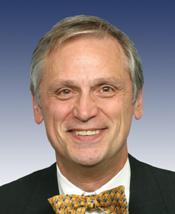
United States · Official source
8,560 records where Rep. Blumenauer, Earl [D-OR-3] is listed as a sponsor, author, or other actor. Search with topics and years
United States · United States Congress · 28 September 2023
United States · United States Congress · 28 September 2023
Green New Deal for Public Schools Act of 2023 This bill provides environmental and educational resources to public elementary and secondary schools and Bureau of Indian Education (BIE) schools. Specifically, the bill requires the Department of Energy's Office of Energy Efficiency and Renewable Energy to provide climate capital facilities grants to eligible entities (e.g., public schools and BIE schools). Grant recipients must use these funds to construct new, or convert existing facilities into, healthy zero-carbon schools. Healthy zero-carbon school refers to a school with highly energy-efficient facilities that produce or procure sufficient carbon-free and pollution-free renewable energy to meet the school's needs. The bill directs the Department of Education (ED) to award resource block grants to qualified local educational agencies (LEAs) to hire and retain educators and staff in high-need schools. ED must award grants to eligible consortia of LEAs for educational equity planning and implementation. ED must establish the Climate Change Resiliency Program to increase the resiliency of public and BIE schools during climate change-related events, natural disasters, and public health crises. Further, ED must establish a related grant program for state educational agencies. Grant recipients must use these funds for certain activities (e.g., green infrastructure projects). The bill establishes the Office of Sustainable Schools within ED to (1) administer the resource block grant and educational equity grant programs, and (2) coordinate with specified agencies and the White House Office of Domestic Climate Policy on climate capital facilities grants and the Climate Change Resiliency Program.
United States · United States Congress · 27 September 2023
United States · United States Congress · 27 September 2023
Addressing Whole Health in Medicare Advantage Act This bill allows Medicare Advantage plans to offer certain supplemental benefits that are currently only available to chronically ill enrollees to enrollees with low-income or who meet other criteria, such as socioeconomic risk factors.
United States · United States Congress · 27 September 2023
United States · United States Congress · 27 September 2023
Crop Insurance Transparency Act This bill requires the Department of Agriculture (USDA) to publicly disclose specific information about farmers and insurance providers participating in the federal crop insurance program (FCIP). (The FCIP helps make insurance coverage available to farmers from private sector insurers to help mitigate potential financial consequences of adverse growing and market conditions.) Specifically, USDA must annually disclose information on an individual or entity that obtained a federally subsidized crop insurance, livestock, or forage policy or plan of insurance, including their name, the amount of the premium subsidy received, and the federal portion of indemnities paid toward insured losses. USDA must also annually disclose information on each private insurance provider participating in the FCIP, including their name, the underwriting gains earned by the provider through participation in the program, the amount paid to cover administrative and operating expenses, and the federal portion of indemnities and reinsurance costs. The bill excludes from the disclosure requirements information that is related to individuals and entities covered by a catastrophic risk protection plan. (These plans are the minimum level of coverage offered under the program.)
United States · United States Congress · 27 September 2023
This resolution expresses concern about the practice of book banning in the United States.
United States · United States Congress · 26 September 2023
Bipartisan HSA Improvement Act of 2023 This bill allows an individual to contribute to a health savings account (HSA), as part of a high deductible health plan (HDHP), while also participating in a primary care service arrangement, receiving qualified items or services at an employer-sponsored on-site clinic, or if covered under a spouse’s flexible spending arrangement (FSA). Further, the bill allows individuals to rollover amounts in an FSA or health reimbursement arrangement (HRA) into an HSA. The bill defines a primary care service arrangement as one in which an individual is provided primary care services by a primary care practitioner for a periodic fixed fee of no more than $150 a month for an individual (or no more than $300 a month for an arrangement that covers more than one individual). Additionally, under the bill, qualified items or services received at an employer-sponsored, on-site clinic include physical exams, immunizations, nonprescription drugs or biologicals, treatment for injuries related to an individual’s employment, preventative care for chronic conditions, and vision and hearing screenings. The bill allows an individual to contribute to an HSA, as part of an HDHP, even if covered by a spouse’s FSA. However, amounts in the spouse’s FSA must be used to reimburse the spouse’s eligible medical expenses for the plan year before being rolled over into the individual’s HSA. Finally, individuals may be able to rollover up to the annual FSA contribution limit from an FSA or HRA into an HSA upon enrolling in an HDHP.
United States · United States Congress · 26 September 2023
United States · United States Congress · 26 September 2023
This resolution expresses support for the designation of National Clean Energy Week.
United States · United States Congress · 21 September 2023
Stop Campus Hazing Act This bill requires institutions of higher education (IHEs) that participate in federal student aid programs to report hazing incidents. Specifically, the bill requires each IHE to disclose hazing incidents that were reported to campus security authorities or local police agencies in its annual security report. The bill defines the term hazing to mean any intentional, knowing, or reckless act committed by a person against a student (regardless of that student's willingness to participate), that (1) is connected with an initiation into, an affiliation with, or the maintenance of membership in, an organization (e.g., a club, athletic team, fraternity, or sorority); and (2) causes or is likely to contribute to a substantial risk, above the reasonable risk encountered in the course of participation in the IHE or the organization, of physical injury, mental harm, or degradation. In addition, each IHE must develop and distribute as part of its annual security report a statement of policy regarding the following: (1) a comprehensive program to prevent hazing, which must include information on hazing awareness and hazing prevention; and (2) the IHE's current campus policies on hazing, which must include procedures that comply with specified collection and reporting requirements.
United States · United States Congress · 20 September 2023
Marijuana Opportunity Reinvestment and Expungement Act or the MORE Act This bill decriminalizes marijuana. Specifically, it removes marijuana from the list of scheduled substances under the Controlled Substances Act and eliminates criminal penalties for an individual who manufactures, distributes, or possesses marijuana. The bill also makes other changes, including the following: replaces statutory references to marijuana and marihuana with cannabis , requires the Bureau of Labor Statistics to regularly publish demographic data on cannabis business owners and employees, establishes a trust fund to support various programs and services for individuals and businesses in communities impacted by the war on drugs, imposes an excise tax on cannabis products produced in or imported into the United States and an occupational tax on cannabis production facilities and export warehouses, makes Small Business Administration loans and services available to entities that are cannabis-related legitimate businesses or service providers, prohibits the denial of federal public benefits to a person on the basis of certain cannabis-related conduct or convictions, prohibits the denial of benefits and protections under immigration laws on the basis of an event (e.g., conduct or conviction) relating to possession or use of cannabis that is no longer prohibited under the bill, establishes a process to expunge convictions and conduct sentencing review hearings related to federal cannabis offenses, and directs the Government Accountability Office to study the societal impact of cannabis legalization.
United States · United States Congress · 20 September 2023
Fresh Produce Procurement Reform Act of 2023 This bill directs the Agricultural Marketing Service (AMS) to establish a fresh produce program that serves individuals at risk of food and nutrition insecurity. Specifically, the AMS must enter into contracts with growers, distributors, food hubs, and others to procure U.S.- grown fresh produce (excluding legumes) for distribution to organizations that serve individuals at risk (e.g., nonprofit food banks and pantries, schools, child or senior care centers, and community-based organizations). Under the AMS contracts, the produce must meet specific requirements. For example, the produce must be grown in the United States, include locally grown produce, and include at least seven varieties of fresh produce that are distributed. The AMS must prioritize contracts with eligible growers, distributors, food hubs, and others that are (or source produce from) beginning farmers; small or mid-sized farms that are structured as family farms; or socially disadvantaged farmers, including women-owned and veteran-owned eligible entities. As part of the program, the AMS must provide (1) information to assist small farmers, beginning farmers, veteran farmers, and socially disadvantaged farmers in obtaining food safety certifications; (2) financial assistance for changes and upgrades to improve food safety; and (3) technical assistance to eligible fresh produce growers, distributors, food hubs, and others. In addition, the Government Accountability Office must submit a report to Congress that evaluates the effectiveness of the program with respect to, among other things, increasing low-income households' access to a wide variety of fresh produce and increasing the federal government's procurement of fresh produce.
United States · United States Congress · 20 September 2023
United States · United States Congress · 19 September 2023
United States · United States Congress · 19 September 2023
This resolution expresses support for the designation of National Voting Rights Month, encourages people to uphold the right to vote, encourages Congress to pass certain voting rights legislation, recommends the development of a curriculum in public schools and universities regarding voting, expresses appreciation for the U.S. Postal Service having issued a special Representative John R. Lewis stamp, and invites Congress to allocate funds for public service announcements regarding elections.
United States · United States Congress · 19 September 2023
John R. Lewis Voting Rights Advancement Act of 2023 This bill establishes new criteria for determining which states and political subdivisions must obtain preclearance before changes to voting practices may take effect. Preclearance is the process of receiving preapproval from the Department of Justice (DOJ) or the U.S. District Court for the District of Columbia before making legal changes that would affect voting rights. A state and all of its political subdivisions shall be subject to preclearance of voting practice changes for a 10-year period if, during the previous 25 years: 15 or more voting rights violations occurred in the state; 10 or more violations occurred, at least 1 of which was committed by the state itself; or 3 or more violations occurred and the state administers the elections. A political subdivision as a separate unit shall also be subject to preclearance for a 10-year period if three or more voting rights violations occurred there during the previous 25 years. States and political subdivisions that meet certain thresholds regarding minority groups must preclear covered practices before implementation, such as redistricting. States and political subdivisions must notify the public of changes to voting practices. The bill authorizes DOJ to require states or political subdivisions to provide certain documents or answers to questions for enforcing voting rights. The bill outlines factors courts must consider when hearing challenges to voting practices, such as the extent of any history of official voting discrimination in the state or political subdivision.
United States · United States Congress · 18 September 2023
Ban All Neurotoxic Organophosphate Pesticides From Our Food Act or the BAN OPs From Our Food Act This bill prohibits any organophosphate pesticides in food. (The Environmental Protection Agency banned chlorpyrifos, a type of organophosphate pesticide, from food in February 2022.)
United States · United States Congress · 18 September 2023
Global WASH in Healthcare Facilities Act of 2023 This bill requires the U.S. Agency for International Development (USAID) to implement an action plan to increase global access to safe water, sanitation, and hygiene (WASH) in healthcare facilities. USAID shall develop and submit to Congress such an action plan to (1) increase access to safe water in healthcare facilities; (2) enable handwashing at all points of care; (3) provide for the safe segregation, treatment, and disposal of healthcare and human waste; and (4) promote WASH behavior change.
United States · United States Congress · 14 September 2023
This resolution supports the designation of Public Radio Music Day. It also expresses deep appreciation for the role of public radio music stations in serving listeners, musicians, and hundreds of communities in the United States.
United States · United States Congress · 14 September 2023
This resolution expresses support for the designation of National Estuaries Week.
United States · United States Congress · 13 September 2023
United States · United States Congress · 12 September 2023
SSI Savings Penalty Elimination Act This bill increases resource limits used to determine eligibility for the Supplemental Security Income (SSI) program. SSI is a federal assistance program that provides monthly cash payments to aged, blind, or disabled individuals with limited income and resources. Specifically, the bill increases the resource limits from $2,000 to $10,000 for individuals and from $3,000 to $20,000 for married couples. The bill annually adjusts the limits for inflation.
United States · United States Congress · 12 September 2023
Humane Cosmetics Act of 2023 This bill generally prohibits animal testing in the evaluation of cosmetic products, and it prohibits the sale or transport of cosmetics developed using animal testing, subject to civil penalties. These prohibitions begin one year after enactment. The bill specifies exceptions to these prohibitions, including if such animal testing (1) is conducted outside the United States to comply with a foreign regulatory authority; (2) is pursuant to a specified finding that there are no nonanimal alternatives to test the safety of a potentially dangerous cosmetic product or ingredient; (3) is of a product or ingredient for a drug or device subject to regulation by the Food and Drug Administration (FDA); or (4) is required for a noncosmetic purpose pursuant to a state, federal, or foreign regulatory authority. Further, no animal-testing evidence may be used to establish the safety of a cosmetic product or ingredient that is regulated by the FDA after the effective date of this bill, subject to limited exceptions.
United States · United States Congress · 1 September 2023
Time Off to Vote Act This bill requires an employer, upon the request of an employee, to provide the employee with a minimum of two consecutive hours of paid leave in order to vote in a federal election. The employer may determine the two-hour period, excluding any lunch break or other break. Taking such leave shall not result in the employee losing accrued employment benefits. The bill makes it unlawful for an employer to interfere with the right to take such leave or for an employer to discriminate against an employee for taking such leave. Further, the bill makes it unlawful for any employer to retaliate against an employee for (1) opposing any practice made unlawful by this bill; (2) filing a charge, or instituting or causing to be instituted any proceeding, under or related to this bill; or (3) testifying or preparing to testify in an inquiry or proceeding relating to such leave. The bill specifies penalties for employers who violate these provisions.
United States · United States Congress · 25 August 2023
Voters on the Move Registration Act of 2023 This bill requires the Consumer Financial Protection Bureau to develop, and specified agencies to distribute, a statement providing individuals with information on how to register to vote and their voting rights. This information must be provided to individuals upon their participation in certain rental assistance programs or application for certain residential mortgages.
United States · United States Congress · 25 August 2023
People Over Long Lines Act or the POLL Act This bill sets forth provisions related to voting and the administration of federal elections. Specifically, the bill requires states to ensure that voters wait no more than 30 minutes at any polling place to cast their vote in a federal election, establishes a private right of action for voters who experience longer waiting times, and directs the Election Assistance Commission to make payments to eligible states to prevent unreasonable waiting times. Next, the bill requires each state to provide for the minimum required number of voting systems, poll workers, and other election resources for each polling location on the day of any federal election and each day of early voting. The Department of Justice's Civil Rights Division must issue uniform standards regarding the minimum number and distribution of such systems, workers, and other resources. The bill also prohibits a chief state election administration official from taking an active part in political management or in a political campaign with respect to any federal election over which the official has supervisory authority, with certain exceptions.
United States · United States Congress · 25 August 2023
Youth Voting Rights Act This bill expands voting access for youth. Specifically, the bill establishes a private right of action to enforce the Twenty-Sixth Amendment, which prohibits denying or abridging the right to vote based on age. Further, the bill authorizes the Department of Justice to enforce the Twenty-Sixth Amendment against age-based restrictions for voting by mail. Additionally, the bill directs each state to designate as voter registration agencies all offices within public institutions of higher education (IHEs) that provide assistance to students, implement a preregistration process to allow minors who are 16 years or older to register to vote in federal elections that take place when or after the preregistered individual turns age 18, and ensure the availability of polling places on campuses of IHEs (with the availability of waivers). The bill prohibits durational residency requirements for voting in all federal elections. Currently, this prohibition applies only to voting for the offices of President and Vice President. States and local jurisdictions with voter identification requirements must treat IHE-issued student identification cards as voter identification. The Election Assistance Commission (EAC) must make grants to states to increase the involvement of individuals under age 18 in public election activities. The Government Accountability Office must report to Congress on trends related to voter registration, absentee voting, and provisional voting. The EAC must also collect and make publicly available certain data from states.
United States · United States Congress · 25 August 2023
Sustaining Our Democracy Act This bill establishes and provides funds through FY2033 for the State Election Assistance and Innovation Trust Fund for purposes of promoting election activities. Specifically, the bill establishes the Democracy Advancement and Innovation Program, through which the Office of Democracy Advancement and Innovation (also established by this bill) shall make allocations to states for carrying out democracy promotion activities. These activities include improving the administration of federal elections, recruiting and training nonpartisan election officials and poll workers, and increasing voting access. The bill requires each state, in order to receive allocated funds, to (1) submit a plan for approval that describes how the state will distribute resources and carry out democracy promotion activities, and (2) establish uniform and nondiscriminatory state-based administrative complaint procedures. The bill prohibits states from using funds for certain activities, including any activity that diminishes the ability of any eligible voter to participate in the electoral process.
United States · United States Congress · 25 August 2023
Unhoused Voter Opportunity Through Elections Act or the Unhoused VOTE Act This bill expands voter registration and voting access for unhoused individuals. The bill specifies that no state or political subdivision may deny or abridge the right of any U.S. citizen to vote because the citizen resides at or in a nontraditional abode. Additionally, the bill requires jurisdictions that allow for ballot drop boxes to ensure that these drop boxes are available for in-person use and are accessible and clearly labeled. If a state requires individuals to show proof of residence in order to vote in a federal election, then the state must accept the individual’s written attestation of residence. A state may not prohibit an individual who is residing in a homeless shelter from using the shelter as the individual’s residence for purposes of voting in a federal election. The bill requires chief state election officials to conduct outreach to unhoused individuals. The bill directs the Election Assistance Commission to (1) develop best practices for election officials regarding voter registration and voting access for unhoused individuals, and (2) make grants to eligible states and local governments for programs and activities to support access to voting for unhoused individuals. The bill also revises the National Voter Registration Act of 1993, including by (1) treating emergency shelters as voter registration agencies, and (2) allowing an unhoused individual to use an unsheltered street location as the individual's place of residence for purposes of a voter registration application.
United States · United States Congress · 25 August 2023
Expanding the Voluntary Opportunities for Translations in Elections Act or the Expanding the VOTE Act This bill expands access to voting materials for individuals with limited proficiency in the English language. Section 203 of the Voting Rights Act of 1965 (VRA) requires covered states and political subdivisions to provide voting materials and other language assistance to persons who are American Indian, Asian American, Alaskan Natives, or of Spanish heritage and whose ability to speak or understand English limits electoral participation. A state or political subdivision that is subject to Section 203 is prohibited from providing English-only voting materials in an election. Among other requirements, this bill (1) requires the Department of Justice to issue a notice of prohibition, including the trigger threshold at which the prohibition applies, to certain states and political subdivisions; and (2) requires covered states and political subdivisions to provide written translations of all voting materials, with the consent of any applicable tribal government, to election workers. Additionally, the bill requires the Election Assistance Commission to make incentive grants for states and political subdivisions to provide translated voting materials. The bill also directs the Government Accountability Office to study and report on the impact of (1) reducing the threshold requirement under Section 203 of the VRA, and (2) expanding the definition of language minorities to include native speakers of additional languages.
United States · United States Congress · 22 August 2023
EQIP Improvement Act of 2023 This bill amends the Environmental Quality Incentives Program (EQIP) to reduce and remove certain payment requirements. (EQIP provides technical and financial assistance to agricultural producers and forest landowners to address natural resource concerns.) Specifically, the bill reduces the maximum payments available to a person or legal entity under EQIP to $150,000 per five-year period (from the current level of $450,000), thereby allowing for an increase in the overall number of participants in the program; reduces federal cost sharing to 40% (from 75%) for the costs associated with planning, installation, or maintenance for specified conservation practices (e.g., access roads, dams, and waste storage facilities); and removes a requirement that 50% of EQIP funding payments go to livestock production programs.
United States · United States Congress · 18 August 2023
United States · United States Congress · 15 August 2023
United States · United States Congress · 4 August 2023
Vaccine Access Improvement Act of 2023 This bill modifies the excise tax on certain vaccines to (1) automatically impose the tax on vaccines that the Department of Health and Human Services (HHS) adds to the Vaccine Injury Table, and (2) require HHS to notify the Department of the Treasury and Congress when new vaccines are added to the table. (The excise tax funds the National Vaccine Injury Compensation Program, which compensates people who have been injured by vaccines listed on the table.)
United States · United States Congress · 4 August 2023
Working for Immigrant Safety and Empowerment Act of 2023 or the WISE Act of 2023 This bill expands eligibility for U nonimmigrant visas (victims of criminal activity) and addresses related issues. Generally, U visas are for victims of specified crimes (e.g., rape, trafficking, or domestic violence) who assist with the investigation or prosecution of the crime. The bill adds hate crimes, child abuse, and elder abuse as crimes that may qualify a victim for a U visa. Furthermore, the Department of Homeland Security (DHS) must provide work authorization to U visa applicants, whereas currently DHS may grant work authorization but is not required to do so. The bill also eliminates the annual numerical cap on U visas. The bill establishes a rebuttable presumption that certain individuals, including U visa applicants and T visa (victims of human trafficking) applicants, shall not be detained while the application is pending. Additionally, the bill provides immigration-related protections, such as by extending the admission period and providing work authorization, to the spouse or child of a nonimmigrant visa holder who subjected that spouse or child to battery or extreme cruelty. Further, the bill prohibits, with some exceptions for exigent circumstances, U.S. Immigration and Customs Enforcement or U.S. Customs and Border Protection from conducting immigration enforcement actions within 1,000 feet of a school, health care facility, place of worship, or other location specified in the bill.
United States · United States Congress · 4 August 2023
United States · United States Congress · 4 August 2023
United States · United States Congress · 4 August 2023
Assault Weapons Excise Act This bill imposes an additional 1000% excise tax on large capacity ammunition feeding devices and semiautomatic assault weapons. It exempts from such additional tax devices and weapons acquired by the United States or by a state or local government.
United States · United States Congress · 1 August 2023
United States · United States Congress · 1 August 2023
Rural Economic-development Assistance and Consultation to Help Our Tribes Act or the REACH Our Tribes Act This bill requires certain actions, particularly by the Department of Agriculture (USDA), for tribal consultation, data reporting, and interagency collaboration for economic development. Specifically, the bill requires USDA to establish a formal process for consultation with tribal governments on (1) annual budget requests; and (2) bills proposing the reauthorization of certain USDA programs over a period of multiple years with budgetary impacts, including bills providing for the reauthorization of USDA programs (commonly known as farm bills). USDA must report to Congress on this consultation process. Additionally, the bill requires USDA to establish a plan for analyzing and publicly reporting to tribal entities on funding provided through USDA programs for which tribal entities are eligible to apply. The bill also requires USDA, in consultation with the Department of Housing and Urban Development and the U.S. Economic Development Administration, to establish an interagency task force on economic development programs. This task force must (1) review guidance and application requirements for economic development programs administered by USDA, and (2) develop interagency agreements to reduce administrative and planning burdens for applicants to such programs and the federal agencies administering such programs. The Department of Commerce must establish a working group to develop and regularly update a comprehensive and public repository of federal economic development programs that are available to tribal entities.
United States · United States Congress · 1 August 2023
This resolution expresses that the International Atomic Energy Agency plays an indispensable role in strengthening nuclear security and safety around the globe. The resolution also reaffirms that the United States has a vital interest in preventing the spread of nuclear weapons and securing nuclear materials.
United States · United States Congress · 1 August 2023
Original Slavery Remembrance Day Resolution This joint resolution designates a Slavery Remembrance Day annually and condemns slavery and its progenies.
United States · United States Congress · 28 July 2023
United States · United States Congress · 28 July 2023
Protect America's Children from Toxic Pesticides Act This bill amends the Federal Insecticide, Fungicide, and Rodenticide Act (FIFRA) for various purposes, including to modify definitions, cancel or limit the registration of certain pesticides and active ingredients, and create a cause of action for individuals for FIFRA violations. The Environmental Protection Agency (EPA) must immediately suspend the registration of any active ingredient or pesticide product that is banned or otherwise prohibited from entering the market by the European Union, one or more countries in the European Union, or Canada. The EPA must not permit the continued sale or use of existing stocks of a pesticide with a suspended or canceled registration or that is vacated or set aside by judicial decree. The bill implements a reporting requirement and other protections related to farmworkers who are exposed to certain pesticide elements (e.g., active ingredients) that result in illness, injury, disability, or death. Among other elements, the bill also creates a process by which an interested person may submit a rulemaking petition to designate an active ingredient or pesticide product as a dangerous pesticide; requires entities that have been granted conditional pesticide registrations to satisfy the conditions of the registration within two years; limits the ability of the EPA to grant emergency exemptions for certain active ingredients or pesticide products; cancels the registration of organophosphates, neonicotinoids, and paraquat; requires the disclosure of inert ingredients in the ingredient statement for pesticide products; and authorizes individuals to bring a civil action against the EPA for alleged failures to comply with provisions under FIFRA.
United States · United States Congress · 28 July 2023
Unhoused Persons Bill of Rights This resolution urges the United States to protect the civil and human rights of unhoused individuals, to establish regulations and enforcement tools to protect unhoused individuals from violations of civil and human rights, and to establish blanket legal protections for third parties providing goods or services to unhoused individuals. The resolution also urges the United States to establish a process to award appropriate damages, attorney's fees, and costs to a prevailing plaintiff in an action alleging a violation of the human and civil rights of unhoused individuals. Relatedly, the resolution urges the United States to allow the court in such an action to consider housing status and apply leniency in compiling records, receipts, and documentation from those plaintiffs. The resolution also expresses the intention of the House of Representatives to address the unhoused crisis in the United States by providing funding and imposing requirements on the Department of Housing and Urban Development and the Department of Health and Human Services.
United States · United States Congress · 27 July 2023
United States · United States Congress · 27 July 2023
Hemispheric Opportunity through Partnership Enhancement for Haitian Prosperity Act of 2023 or the HOPE for Haitian Prosperity Act of 2023 This bill extends trade preferences for certain U.S. imports of textile and apparel products from Haiti. Specifically, the bill extends through FY2035 the special duty-free rules for Haiti. It also extends through December 19, 2035, the duty-free treatment provided for certain apparel products assembled in and imported from Haiti. Furthermore, the bill also expands the definition of core labor standards to include a safe and healthy work environment. (Generally, in order to qualify for preferential treatment, the goods must come from a producer that complies with specified core labor standards. Currently, these core labor standards pertain to freedom of association, recognizing collective bargaining rights, eliminating forced labor, abolishing child labor, and eliminating employment discrimination.) Any interested party may file a request to have individual producers reviewed for compliance with the core labor standards and with Haitian labor standards and laws. The bill also requires the Office of the U.S. Trade Representative to provide technical assistance to Haitian government agencies, employers, labor unions, and others to increase and diversify exports to the United States.
United States · United States Congress · 27 July 2023
United States · United States Congress · 27 July 2023
Cannabis Users' Restoration of Eligibility Act or the CURE Act This bill prohibits a federal agency from considering past or present marijuana use to determine whether an individual is suitable for federal employment or eligible for a security clearance. It also establishes a review process for past applications. Under the bill, every federal agency must establish a process for reviewing any decision on or after January 1, 2008, to deny an individual (1) a security clearance, or (2) employment as a result of an adverse suitability determination. The process must be posted on the agency's website. The bill provides that an individual who was denied employment or a security clearance may ask the agency to review its decision. Within 90 days after the request is received, the agency must complete its review. If the denial was due to marijuana use, the agency must reconsider the security clearance or employment application. The bill specifies that the agency's decision may be appealed to the Merit Systems Protection Board.