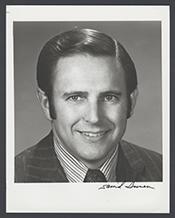
United States · United States Congress · 18 January 1979
Establishes a National Agricultural Cost of Production Board to review, and advise the Secretary of Agriculture concerning, the adequacy and accuracy of the cost-of-production formulas used by the Department of Agriculture in connection with the administration of its price support programs.
United States · United States Congress · 18 January 1979
Amends rule X of the Rules the House of Representatives to establish a standing Committee on Internal Security to investigate and report on Communist and other subversive activities affecting the internal security of the United States, including activities intended to overthrow or alter the form of government in the United States by unlawful means or which incite or employ violence or any unlawful means to obstruct the lawful authority of the government.
United States · United States Congress · 18 January 1979
Expresses the sense of Congress that the new Department of Labor health and safety training regulations for miners places an undue burden on small store, sand, and gravel surface mining operations and should not apply to operations with 35 or fewer employees.
United States · United States Congress · 15 January 1979
Solar Energy Bank Act - Establishes a Government corporation in the Department of Housing and Urban Development to be known as the Solar Energy Development Bank to make long-term, low-interest loans to encourage the use of solar energy in commercial and residential structures. Sets forth requirements for loan eligibility concerning the term and amount of the loan and necessary warranties for the solar energy systems covered by such loan. Prohibits conflicts of interest on the part of officers or employees of the Bank. Imposes criminal penalties for the furnishing of false or misleading information by applicants for loans under this Act. Establishes a seven-member Advisory Board to make annual reports to Congress and the President on the operation of the program established by this Act. Prohibits subsidy payments under this Act to any person who has received other Federal assistance for purchase and/or installation of energy systems similar to the solar systems assisted under this Act.
United States · United States Congress · 15 January 1979
Amends the Internal Revenue Code to exclude from gross income a corporate stock distribution to a stockholder based upon the reinvestment of stock dividends in the corporation by such stockholder pursuant to his election to participate in a qualified dividend reinvestment plan, as defined in this Act. Limits the amount of such exclusion to $1,500 per year. Establishes a rebuttable presumption that a distribution made by a corporation which purchases its common stock within one year of such distribution shall not be deemed a distribution pursuant to a qualified dividend reinvestment plan.
United States · United States Congress · 15 January 1979
Amends the Internal Revenue Code to require an annual cost-of-living adjustment, based on the Consumer Price Index, to the individual income tax rates and the personal exemption.
United States · United States Congress · 15 January 1979
Amends the Internal Revenue Code to exempt government chartered air museums operated exclusively for the care or use of antique, custom-built, racing, military or other special types of aircraft from the excise taxes on special fuels and the use of civil aircraft.
United States · United States Congress · 15 January 1979
Requires, upon application by the insured, waiver of the payment of premiums for National Service Life Insurance during any time after which the insured has attained the age of 70 and has paid premiums on the insurance for not less than 25 years.
United States · United States Congress · 15 January 1979
Grants a Federal charter to the Gold Star Wives of America. Declares that the purpose of such corporation is to aid widows and children of persons who died in the service of their country.
United States · United States Congress · 15 January 1979
Title I: Domestic Oil Pollution Liability, Compensation, and Fund - Establishes in the Treasury of the United States the Comprehensive Oil Spill Liability Fund for the purposes of paying for otherwise uncompensated losses resulting from oil pollution. Enumerates the sources of monies to be deposited in such fund, including a fee not to exceed three cents per barrel of oil, imposed upon owners of facilities receiving oil. Obligates owners of such oil to reimburse the refinery or terminal the full amount of the fee levied on such person's oil. Imposes a civil penalty on any person required to pay or collect such fees who fails to do so. Authorizes the Secretary of Transportation to issue obligations to the Secretary of the Treasury at times when fund assets are insufficient to meet fund liabilities. Lists the types of injuries which may be compensated under this Act and the potential claimants who have standing to assert claims involving each such type of damage. Imposes joint, several, and strict liability on the owners and operators of each pollution source. Specifies liability limits, except in cases of gross negligence or willful misconduct, for ships and other vessels. Directs the Secretary of Transportation to establish limits on the liability of classes of facilities used for transporting, producing, processing, storing, or transferring oil. Requires the owner or operator: (1) of any such facility; or (2) of any vessel which uses such facility or navigable waters of the United States, to establish and maintain evidence of financial responsibility in an amount sufficient to satisfy applicable liability limits. Directs the person in charge of a vessel or facility to immediately notify the Secretary of Transportation of any pollution incident in which the vessel or facility is involved. Specifies procedures whereby the Secretary may, in the absence of such an admission, designate and advertise pollution sources. Directs the Secretary, in instances in which (1) the owner and operator of a vessel or facility designated by the Secretary deny such vessel's or facility's involvement; (2) the source of the discharge is a public vessel; or (3) the Secretary is unable to designate the pollution source, to advertise claims with limited exceptions to be presented initially to the owner or operator, or to such person's guarantor. Permits claimants either to present a claim to the fund or to bring an action in an appropriate United States court if liability is denied or the claim is not settled within a specified period. Sets forth procedures for the disposition and appeal of claims submitted to the fund. Requires both the plaintiff and the defendant in a court action brought against an owner, operator, or guarantor to forward copies of all pleadings to the fund. Permits the fund to intervene in such actions. Subrogates any person or government entity, including the fund, paying compensation to all the claimant's claims and rights under this Act. Specifies procedures for and the measure of recovery in actions brought by the fund against owners, operators, or guarantors of alleged pollution sources. Declares that the rights and remedies under this Act shall be exclusive with respect to economic loss caused by oil pollution. Sets penalties for persons failing to comply with specified provisions in this Act. Directs the President to conduct a study to determine whether adequate private oil pollution protection is reasonably available to owners and operators of vessels and facilities. Title II: Effective Dates; Conforming Amendments - Specifies the effective date of this Act. Amends specified laws, including the Deepwater Port Act of 1974, the Federal Water Pollution Control Act, and the Trans-Alaska Pipeline Act, to conform with the the provisions of this Act.
United States · United States Congress · 15 January 1979
Title I: Authorizations and Miscellaneous Amendments - Amends the Small Business Act to authorize appropriations for specified programs and expenses of the Small Business Administration. States that all appropriations, whether specifically or generally authorized, shall remain available until expended. Authorizes the Administration to make disaster loans available to small business concerns affected by a shortage of energy-producing resources caused by a strike, boycott, or embargo unless such strike, boycott or embargo is directly against such small business concern. Makes specified low-interest disaster loans available until October 1, 1982. Amends the Small Business Investment Act of 1958 to repeal the authority of the Administration to invest sums from the revolving fund for surety bond guarantees in Treasury bonds, obligations, and other guaranteed debt securities. Authorizes such investments from the revolving fund for qualified contract guarantees. Transfers specified provisions of the Act which established an Office of Advocacy within the Small Business Administration to the Small Business Act. Title II: Small Business Development Centers - Authorizes the Small Business Administration to make grants to States, State agencies, regional entities, State-chartered development credit corporations, and institutions of higher learning to assist in establishing Small Business Development Centers. Requires such grants to be matched in equal amounts by funds from non-Federal sources. Establishes additional restrictions on such grants for fiscal years 1979 through 1982. States that Small Business Development Centers shall have a full-time staff, business and technology analysts, information and professional specialists, and access to laboratory and engineering facilities. Requires such Centers to provide small businesses with business and technology counseling, information on government regulations, library services, and comprehensive studies and surveys. Directs federally funded laboratories and innovation centers to cooperate with the Small Business Development Centers. Requires the Administrator of the Small Business Administration to appoint a Deputy Associate Administrator for Management and Technical Assistance to administer the Small Business Development Center program. Establishes a National Small Business Development Center Advisory Board consisting of nine civilian members. Sets forth provisions governing the appointment of members, a Chairman, meetings, and compensation of the Board. Directs the Small Business Administration to conduct an evaluation of the Development Center program and to submit a report to the appropriate committees of Congress within three years. Title III: White House Conference on Small Business - White House Conference on Small Business Act - Directs the President to convene a White House Conference on Small Business by June 30, 1980, to identify the problems of small business concerns and to make recommendations for executive and legislative action. Requires the Conference to submit a report to the President and the Congress within one year of the date it convenes. Requires the Small Business Administration to report to the Congress within three years on the status and implementation of the findings and recommendations of the Conference. Authorizes appropriations for the expenses of the Conference.
United States · United States Congress · 15 January 1979
Adds to the Congressional Budget Act of 1974 a new title (Title XI: Regulatory Budget Procedure) to require Congress, on or before September 15 of each year, to complete action on a concurrent resolution which establishes a regulatory budget for each Federal agency that sets the maximum costs of compliance with all rules and regulations declared by the agency. Directs the President to establish a Business Advisory Council to include representatives of each major industrial and commercial sector, and each geographic region, to provide such information, advice and consultation as he may require to develop and carry out regulatory costs analysis procedures. Directs the President, in consultation with the Council, to formulate the criteria for determining the costs of compliance with Federal rules and regulations. Requires the head of each agency, using such criteria, to conduct a study of the costs of compliance with rules and regulations set forth by the agency and to submit such reports to the President, Congress, and the Comptroller General. Directs the Comptroller General to review such agency reports and to submit its findings to Congress. Requires the President to include regulatory budget recommendations in the Budget to Congress. Directs Congress to utilize such findings and recommendations in developing the regulatory budget for each agency. Requires Congressional committee reports on bills or resolutions to contain a statement of the estimate of the costs of compliance with agency rules or regulations to carry out the provisions of such bill or resolution. Sets forth the rules for consideration of any bill, resolution, or amendment that would cause the level of costs of compliance for any agency to exceed the maximum costs of compliance as established in the regulatory budget for the agency.
United States · United States Congress · 15 January 1979
Amends the Internal Revenue Code to repeal the carryover basis provisions enacted by the Tax Reform Act of 1976 which provide that beneficiaries receiving property from a decedent's estate will retain the decedent's basis in the property. Restores prior law which "stepped up" or "stepped down" the property's basis to its market value at the time of death without imposing tax consequences on the appreciation or depreciation the property underwent while held by the decedent.
United States · United States Congress · 15 January 1979
Military Registration and Mobilization Assessment Act of 1979 - Directs the President to: (1) report to the Congress by June 30, 1979, on the plans for a modern and efficient system of selective service registration; (2) commence military selective service registration by October 1, 1979; and (3) establish a National Advisory Committee to make recommendations for achieving adequate military medical personnel. Requires the Secretary of Defense, in the Secretary's annual report to Congress on military manpower requirements, to include an assessment of the Nation's capabilities to mobilize such additional manpower as may be needed to meet national security requirements under emergency situations, including the feasibility of a program for three months of active duty assignment for selected persons, followed by a three-year reserve obligation. Amends the Military Selective Service Act of 1967 to transfer the personnel and funds of the Selective Service System to the Department of Defense. Stipulates that enlisted or appointed military personnel when released from active duty shall be transferred to a reserve component for three years, or as otherwise obligated by law, whichever is longer. Authorizes regulations to grant the Selective Service System access to age and address information in the records of any school, any agency of the United States, or any agency or political subdivision of any State for the sole purpose of conducting selective service registration.
United States · United States Congress · 15 January 1979
Constitutional Amendment - Prohibits compelling a student to attend a public school other than the one nearest his residence which is located within the school district in which the student resides and which provides the course of study pursued by such student. Grants Congress the power to enforce by appropriate legislation the provisions of this amendment, and to insure equal educational opportunities for all students wherever located.
United States · United States Congress · 15 October 1978
Expresses the sense of the House of Representatives that Reverend Sun Myung Moon return to the United States prior to October 31, 1978, appear before the Subcommittee on International Organizations investigating Korean-American relations, and fully respond to all questions of the subcommittee.
United States · United States Congress · 6 October 1978
Constitutional Amendment - Requires Congress to assure that the total outlays of the Government, during any fiscal year, do not exceed the total receipts of the Government during such fiscal year. States that by the fourth fiscal year after the ratification of this amendment the budget shall be balanced. Permits expenditures to exceed national revenues in time of declared emergency, but states that such expenditures shall never exceed receipts by more than ten percent. Provides that during the fifth fiscal year beginning after the ratification of this amendment and for the next 19 succeeding fiscal years thereafter, the total receipts of the Government shall exceed outlays by an amount equal to five percent of the Federal indebtedness at the beginning of the fifth year fiscal year.
United States · United States Congress · 4 October 1978
Constitutional Amendment - Provides that total expenditures shall not exceed total revenues for any fiscal year. Authorizes the suspension of such prohibition in time of war or by a vote of two-thirds of the members of the Senate and the House. Directs the amount of any annual deficit be considered an expenditure of the United States in the following fiscal year. Permits the Congress to apportion any annual deficit over the four following fiscal years, or to include such deficit in the gross Federal debt. Directs the Board of Governors of the Federal Reserve System to reduce the public debt of the United States through open-market operations.
United States · United States Congress · 2 October 1978
Prohibits the Secretary of Agriculture from taking any action under the Wholesome Meat Act or any other law to prohibit the sale, distribution, or use of nitrites as a food preservative solely on the basis of any carcinogenic effect in humans that nitrites may be represented to have, unless validated evidence is made available to the Secretary which proves beyond a reasonable doubt that nitrites as a food preservative have a significant carcinogenic effect on humans. States that such prohibition shall not apply if the Secretary determines, and publishes in the Federal Register, that a food preservative is commercially available: (1) which may be used in the place of nitrites; (2) which is effective in the protection of public health from botulism and other forms of food poisoning; and (3) the use of which is economically feasible for meat processors and the consumer. Requires the Secretary to conduct or support (by grant or contract) research and development activities for a food preservative alternative to nitrites.
United States · United States Congress · 2 October 1978
Prohibits the Secretary of Agriculture and the Secretary of Health, Education, and Welfare, from taking any action under the Wholesome Meat Act, the Federal Food, Drug, and Cosmetic Act, or any other law to prohibit the sale, distribution, or use of nitrites as a food preservative solely on the basis of any carcinogenic effect in humans that nitrites may be represented to have, unless validated evidence is made available to the Secretaries which proves beyond a reasonable doubt that nitrites as a food preservative have a significant carcinogenic effect on humans. States that such prohibition shall not apply if the Secretaries determine, and publish in the Federal Register, that a food preservative is commercially available: (1) which may be used in the place of nitrites; (2) which is effective in the protection of public health from botulism and other forms of food poisoning; and (3) the use of which is economically feasible for meat processors and the consumer. Requires the Secretaries to conduct or support (by grant or contract) research and development activities for a food preservative alternative to nitrites.
United States · United States Congress · 19 September 1978
Prohibits the Secretary of Agriculture from taking any action under the Wholesome Meat Act or any other law to prohibit the sale, distribution, or use of nitrites as a food preservative solely on the basis of any carcinogenic effect in humans that nitrites may be represented to have, unless validated evidence is made available to the Secretary which proves beyond a reasonable doubt that nitrites as a food preservative have a significant carcinogenic effect on humans. States that such prohibition shall not apply if the Secretary determines, and publishes in the Federal Register, that a food preservative is commercially available: (1) which may be used in the place of nitrites; (2) which is effective in the protection of public health from botulism and other forms of food poisoning; and (3) the use of which is economically feasible for meat processors and the consumer. Requires the Secretary to conduct or support (by grant or contract) research and development activities for a food preservative alternative to nitrites.
United States · United States Congress · 18 September 1978
Endangered Species Act Amendments - Amends the Endangered Species Act of 1973 to revise the procedures to be followed by the Secretary of the Interior in issuing regulations under the Act. Establishes an intergovernmental review board for the purpose of considering an application, upon the recommendation of the Secretary of Interior, for exemption from the requirement of the Act that Federal agencies take no action which would jeopardize the continued existence of any endangered species. Specifies that the review board shall make its recommendations to the Endangered Species Committee, established by this Act. Establishes the Endangered Species Committee to make a final determination whether or not to grant an exemption to the requirements of this Act. Specifies that this decision shall be made within 90 days of receiving the recommendation of the review board. Prohibits the Endangered Species Committee from granting an exemption if the Secretary of State has determined the proposed agency action to be in violation of any international obligation. Sets forth the procedure for judicial reviews of the Endangered Species Committee decisions. Declares that the President may grant exceptions to the requirements of this Act in the case of major disaster areas. Authorizes the Secretary to approve and assist in the implementation of any State program for the conservation of endangered and threatened species. Declares that no civil penalty shall be imposed for violation of the requirements of this Act if committed on a good-faith belief that the violator was acting to protect himself, a family member, or any other individual from bodily harm. Exempts certain raptors legally held in captivity on the effective date of this Act from certain restrictions of the Act relating to possession and dealing in endangered species. Authorizes appropriations necessary to carry out the purposes of this Act.
United States · United States Congress · 12 September 1978
Amends the Internal Revenue Code to permit the Secretary of the Treasury, upon the written request of the Secretary of Health, Education, and Welfare, to disclose the tax return information of any individual taxpayer who has applied for a student loan under the Higher Education Act of 1965 solely for the use of the Secretary in verifying information on such taxpayer's application. Permits the Commissioner of Education to release such information to educational institutions participating in the student loan program. Permits the Secretary of the Treasury to disclose the Commissioner the address of any individual taxpayer who has defaulted on a student loan. Permits the Commissioner to release addresses to participating educational institutions solely for use in locating defaulters. Amends Title XI (General Provisions) of the Social Security Act to authorize the Secretary of Health, Education, and Welfare to disclose to the Commissioner of Education, upon his written request, the mailing address of any social security benefit recipient who has defaulted on a student loan. Permits the Commissioner to release addresses to educational institutions participating in the student loan program.
United States · United States Congress · 12 September 1978
Amends Part A of Title IV (Aid to Families with Dependent Children) of the Social Security Act to direct the Secretary of the Treasury to pay to a State: (1) 90 percent of the expenditures for development of mechanized claims processing and information retrieval systems to provide for the effective administration of the State plan under such Title; (2) 75 percent of State expenditures for the operation of such systems; and (3) 90 percent of State expenditures for the establishment and operation of a State Aid to Families with Dependent Children fraud control unit. Defines such a unit.
United States · United States Congress · 12 September 1978
Requires each State as a condition of eligibility for Federal funds under Title IV (Aid to Families with Dependent Children) and Title XIX (Medicaid), to annually match its welfare rolls against all relevant State and Federal records, including: (1) Federal employment records; (2) State and local employment records; (3) wage reports under the social security, supplemental security income, and railroad retirement programs, and under other Federal benefit programs. Directs that the privacy of the individuals involved be maintained to the maximum extent possible.
United States · United States Congress · 12 September 1978
Directs the Secretary of Health, Education, and Welfare to establish an effective means of obtaining from States and political subdivisions of States records as to deaths and of reviewing such records to prevent illegal payments under the Social Security Act to or on behalf of persons who have died.
United States · United States Congress · 12 September 1978
Authorizes the appropriation of funds necessary for the Inspector General of the Department of Health, Education, and Welfare (HEW) to: (1) carry out investigations of fraud and abuse of HEW programs including Medicaid and Medicare; (2) perform other prescribed duties of the Office of Inspector General; and (3) conduct and submit to Congress a study on fraud and abuse in the areas of drug purchases, respiratory therapy, and student financial aid programs.
United States · United States Congress · 7 September 1978
Soft Drink Interbrand Competition Act - Declares that exclusive territorial arrangements made as a part of a licensing agreement for the manufacture, distribution, or sale of a trademarked soft drink product are lawful under the antitrust laws provided such product is in substantial and effective competition with other products of the same general class.
United States · United States Congress · 7 September 1978
Anti-Inflation Tax Reduction and Reform Act - Amends the Internal Revenue Code to provide cost-of-living adjustments for the individual income tax rates and withholding tables.
United States · United States Congress · 17 August 1978
Urges the prompt appointment of the National Commission on Social Security established by the Social Security Amendments of 1977. Resolves that the Congress request such Commission to study the feasibility of converting the present old-age, survivors, and disability insurance programs of the Social Security Act into self-renewing investment funds which will fulfill the purpose of the present program with a substantial reduction in taxes.
United States · United States Congress · 16 August 1978
Sales Representatives Protection Act - Requires a principal who, without good cause, terminates or fails to renew a contract between such principal and a sales representative, or reduces the rate of commission for orders solicited on behalf of such principal, to indemnify the representative according to this Act. Requires a principal who reduces the size of the geographic territory assigned to a representative for a specified account, which results in a specified reduction in commissions, to indemnify such representative. Sets forth formulae for the indemnification of such representatives. Requires a principal to furnish specified information to a sales representative concerning orders placed through the representative's account and a monthly accounting of commissions due such representative. Allows a plaintiff to bring an action to enforce any rights or liabilities created by this Act in a United States district court. Stipulates the procedure for such action.
United States · United States Congress · 9 August 1978
Endangered Species Act Amendments - Amends the Endangered Species Act of 1973 to restate the findings of Congress and to declare that in any determination of threatened or endangered species status it is the policy of the United States to protect the species to the maximum extent practicable while providing for a balancing of interests between the benefits to be derived from man's activities and the continued survival of the species. Redefines the term "conservation" to mean the use of methods which are prudent and reasonable to save an endangered species, rather than methods which are necessary. Eliminates natural occurences affecting the continued existence of a species as a factor that can be considered by the Secretary of the Interior in deciding whether a species is endangered. Directs the Secretary to determine the critical habitat of any endangered species and defines critical habitat for such purpose. States that no species shall be listed as endangered or threatened until the Secretary has prepared an economic impact statement which includes specified analyses of the economic impact of a decision to list a species as endangered or threatened. Provides that the determination to list a species as endangered shall be deemed to be a major Federal action significantly affecting the quality of the human environment within the meaning of the National Environmental Policy Act of 1969. Establishes an Endangered Species Committee. Directs the Committee to review applications submitted by Federal agencies regarding proposed agency actions to determine whether an exemption from the requirement of the Act that Federal agencies take no actions which would jeopardize endangered species or their critical habitats should be granted. Stipulates that such an exemption may be granted only after a public hearing and findings that: (1) there is no reasonable and prudent alternative to the agency action; (2) the action is of regional or national significance; (3) the economic benefits of the action clearly outweigh the benefits of alternative courses of action consistent with conserving the species or its critical habitat; and (4) the action is in the public interest. States that no final determination of the Committee regarding an exemption shall be considered a major Federal action for purposes of the National Environmental Policy Act. Authorizes the President to grant exemptions from the Act in any area which he has declared to be a major disaster area under the Disaster Relief Act of 1974 specified findings are made. Stipulates that no civil penalties shall be imposed under the Act, and that it is a defense to a criminal prosecution under the Act, if a defendant can show that he committed the act which is a violation with a good faith belief that he was acting to protect any human being from any endangered or threatened species.
United States · United States Congress · 8 August 1978
Medicare Home Health Amendments - Amends Title XVIII (Medicare) of the Social Security Act to remove the 100 visit limitation presently applicable to home health care services under such Title. Eliminates prior hospitalization as a condition of eligibility for home health care services under part A (Hospital Insurance Benefits for the Aged and Disabled) of such Title. Eliminates confinement to home as a requirement for receiving home health care services under part B (Supplementary Medical Insurance Benefits for the Aged and Disabled) of such Title. Includes "periodic chore services" within those home health services for which payment may be made under the supplementary medical insurance program.
United States · United States Congress · 7 August 1978
Amateur Sports Act - Title I: Declaration of Policy - Makes findings and states that the policy of Congress is to promote amateur athletics and protect the right of amateur athletes to participate in athletic competition. Title II: Olympic Committee Reorganization - Amends the corporate charter of the Olympic Committee to (1) provide for a principal place of business of the United States Olympic Committee (Corporation); (2) set forth the objectives and purposes of the Corporation; (3) set forth the powers of the Corporation; (4) provide reasonable representation for specified individuals and organizations in establishing and maintaining provisions for the governance and conduct of its affairs; and (5) subject to civil liability any person who uses an Olympic designation without authority to promote a private financial interest. Permits contributors or suppliers of goods or services to use the name of the United States Olympic Committee or its designation to advertise that such goods or services have been furnished to, approved, or selected by the Corporation. Requires the Corporation to establish in its constitution and bylaws provisions for the resolution of disputes involving the opportunity of an amateur athlete or other specified individuals to participate in sanctioned athletic competitions. Authorizes the Corporation to recognize as a national governing body any amateur sports organization (but only one for each sport) which submits an application for recognition and complies with eligibility requirements. Sets forth such eligibility requirements. Sets forth the duties and powers of a national governing body and the requirements which an amateur sports organization must meet to hold an athletic competition or sponsor athletes in competition and be sanctioned by a national governing body. Grants to the Corporation the power of review over the actions of any national governing body and invests a United States district court with jurisdiction to enjoin any action of a national governing body inconsistent with the terms of the Corporate charter. Sets forth procedures for the Corporation in (1) processing a complaint against a national governing body by an individual athlete or an amateur sports organization; (2) revoking recognition of a national governing body; and (3) replacing an incumbent national governing body. Provides for arbitration of a determination of the Corporation. Authorizes the Secretary of Commerce to lend financial assistance to the Corporation in developing amateur athletics in the United States. Authorizes appropriations for carrying out the work of the national governing bodies. Directs the Secretary to conduct a feasibility study to determine the most appropriate means of providing funding to the Corporation for the construction and operation of training centers and sports medicine research facilities.
United States · United States Congress · 4 August 1978
Sugar Stabilization Act - Title I: International Sugar Agreement - Authorizes the President to limit the entry, or withdrawal from warehouse, for consumption in the United States, of sugar from any country not a member of the International Sugar Organization, and otherwise to regulate foreign trade in sugar to implement the International Sugar Agreement. Establishes civil penalties for the violation of such regulations. Requires the President to submit to Congress an annual report on the Agreement. Title II: Domestic Sugar Program - Directs the Secretary of Agriculture to determine, during the July preceding the commencement of each (October 1 to September 30) sugar supply year, the amount of sugar needed to meet the requirements of consumers in the United States. Sets the price of 16 cents per pound of sugar, raw value, delivered to New York (including freight and the applicable tariff and fees) as the price objective for the sugar supply year 1978. Establishes formulae for determining the price objectives for succeeding sugar supply years. Authorizes the Secretary: (1) to establish, and to adjust, a quota for the entry of sugar from foreign countries; and (2) to impose an import fee in order to attain the established price objective. Prohibits filling of the established quota by direct-consumption sugar, except in specified circumstances. Permits the Secretary to suspend such quota and fees under specified circumstances. Authorizes the Secretary to impose a quota on the entry of sugar-containing products. Prohibits: (1) the entry of sugar, liquid sugar, or sugar-containing products after the import quotas have been filled; (2) the importation of certain sugar or liquid sugar into the Virgin Islands in excess of 100 pounds annually; and (3) the exportation of certain sugar from the United States. Regulates the exportation of sugar. Sets forth items to which the sugar quota shall not apply. Title III: General Provisions - Requires every producer of sugar beets and sugarcane for sugar to pay a specified minimum wage to each person employed on the farm in the production, cultivation, and harvesting of such crops. Establishes a civil cause of action against any producer who fails to pay minimum wages, allowing the employees affected to collect the amount of unpaid wages, plus an equal amount as liquidated damages. Prohibits a producer from discharging or discriminating against any employee who has participated in any way in an investigation or proceeding against the producer under this title. Prohibits a producer from charging farm employees any amount in excess of the reasonable cost of furnishing goods or services customarily furnished to employees engaged in the production. Directs the Secretary to issue regulations to assure that producers furnish workmen's compensation insurance to such employees. Requires persons engaged in the manufacture, marketing, transport, or industrial use of sugar to furnish the Secretary with specified information. Prohibits investment in sugar by officials engaged in the administration of this Act, and establishes penalties for the violation of such prohibition. Authorizes the President to suspend the operation of Title II of this Act in a national emergency. Authorizes the Secretary: (1) to conduct surveys and investigations to carry out this Act; and (2) to announce a daily spot price for raw sugar in specified circumstances. Terminates the authority of the Secretary under this Act on September 30, 1983.
United States · United States Congress · 3 August 1978
Endangered Species Act Amendments - Amends the Endangered Species Act of 1973 to restate the findings of Congress and to declare that in any determination of threatened or endangered species status it is the policy of the United States to protect the species to the maximum extent practicable while providing for a balancing of interests between the benefits to be derived from man's activities and the continued survival of the species. Redefines the term "conservation" to mean the use of methods which are prudent and reasonable to save an endangered species, rather than methods which are necessary. Eliminates natural occurences affecting the continued existence of a species as a factor that can be considered by the Secretary of the Interior in deciding whether a species is endangered. Directs the Secretary to determine the critical habitat of any endangered species and defines critical habitat for such purpose. States that no species shall be listed as endangered or threatened until the Secretary has prepared an economic impact statement which includes specified analyses of the economic impact of a decision to list a species as endangered or threatened. Provides that the determination to list a species as endangered shall be deemed to be a major Federal action significantly affecting the quality of the human environment within the meaning of the National Environmental Policy Act of 1969. Establishes an Endangered Species Committee. Directs the Committee to review applications submitted by Federal agencies regarding proposed agency actions to determine whether an exemption from the requirement of the Act that Federal agencies take no actions which would jeopardize endangered species or their critical habitats should be granted. Stipulates that such an exemption may be granted only after a public hearing and findings that: (1) there is no reasonable and prudent alternative to the agency action; (2) the action is of regional or national significance; (3) the economic benefits of the action clearly outweigh the benefits of alternative courses of action consistent with conserving the species or its critical habitat; and (4) the action is in the public interest. States that no final determination of the Committee regarding an exemption shall be considered a major Federal action for purposes of the National Environmental Policy Act. Authorizes the President to grant exemptions from the Act in any area which he has declared to be a major disaster area under the Disaster Relief Act of 1974 specified findings are made. Stipulates that no civil penalties shall be imposed under the Act, and that it is a defense to a criminal prosecution under the Act, if a defendant can show that he committed the act which is a violation with a good faith belief that he was acting to protect any human being from any endangered or threatened species.
United States · United States Congress · 1 August 1978
Amends the Agricultural Act of 1949 to repeal the requirement that interest rates on cotton price support loans be based on the lowest current interest rate on ordinary obligations of the United States, in order to insure that such interest rates are not less favorable to producers than the interest rates for such loans on other commodities.
United States · United States Congress · 1 August 1978
Amends the Packers and Stockyards Act of 1921 to authorize the use of value based or percentage tariffs by firms selling livestock on a commission basis. Directs the Secretary of Agriculture to appoint an interagency task force within the Department of Agriculture for the purpose of analyzing and recommending methods by which any livestock sellers may furnish to livestock marketing agencies, dealers or packers, who purchase livestock or provide marketing services, information concerning the existence of any lien or security interest in or against such livestock. Requires submission of a report of the task force's findings and conclusions to the appropriate committees of Congress.
United States · United States Congress · 31 July 1978
Endangered Species Act Amendments - Amends the Endangered Species Act of 1973 to restate the findings of Congress and to declare that in any determination of threatened or endangered species status it is the policy of the United States to protect the species to the maximum extent practicable while providing for a balancing of interests between the benefits to be derived from man's activities and the continued survival of the species. Redefines the term "conservation" to mean the use of methods which are prudent and reasonable to save an endangered species, rather than methods which are necessary. Eliminates natural occurences affecting the continued existence of a species as a factor that can be considered by the Secretary of the Interior in deciding whether a species is endangered. Directs the Secretary to determine the critical habitat of any endangered species and defines critical habitat for such purpose. States that no species shall be listed as endangered or threatened until the Secretary has prepared an economic impact statement which includes specified analyses of the economic impact of a decision to list a species as endangered or threatened. Provides that the determination to list a species as endangered shall be deemed to be a major Federal action significantly affecting the quality of the human environment within the meaning of the National Environmental Policy Act of 1969. Establishes an Endangered Species Committee. Directs the Committee to review applications submitted by Federal agencies regarding proposed agency actions to determine whether an exemption from the requirement of the Act that Federal agencies take no actions which would jeopardize endangered species or their critical habitats should be granted. Stipulates that such an exemption may be granted only after a public hearing and findings that: (1) there is no reasonable and prudent alternative to the agency action; (2) the action is of regional or national significance; (3) the benefits of the action clearly outweigh the benefits of alternative courses of action consistent with conserving the species or its critical habitat; and (4) the action is in the public interest. States that no final determination of the Committee regarding an exemption shall be considered a major Federal action for purposes of the National Environmental Policy Act. Authorizes the President to grant exemptions from the Act in any area which he has declared to be a major disaster area under the Disaster Relief Act of 1974 if he makes specified findings. Stipulates that no civil penalties shall be imposed under the Act, and that it is a defense to a criminal prosecution under the Act, if a defendant can show that he committed the act which is a violation with a good faith belief that he was acting to protect any human being from any endangered or threatened species.