Resolution· HRESH.Res. 476 (111th)passed
Celebrating the goals and ideals of "Black Music Month".
United States · United States Congress · 21 May 2009
Celebrates the 30th anniversary of the month of June as Black Music Month.
The world's political record
Person
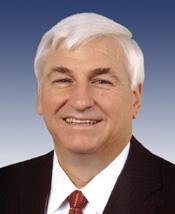
United States · Official source
1,234 records where Rep. Boyd, Allen [D-FL-2] is listed as a sponsor, author, or other actor. Search with topics and years
United States · United States Congress · 21 May 2009
Celebrates the 30th anniversary of the month of June as Black Music Month.
United States · United States Congress · 21 May 2009
Congratulates and salutes the Aircraft Owners and Pilots Association (AOPA) for celebrating its 70th anniversary. Commends the AOPA for: (1) creating the AOPA Air Safety Foundation nearly 60 years ago to improve general aviation safety; (2) helping lead the recovery of the United States general aviation light aircraft manufacturing industry; and (3) setting the stage for development of the Next Generation Air Transportation System.
United States · United States Congress · 20 May 2009
Congratulates the Sailors of the United States Submarine Force upon the completion of 1,000 Ohio-class ballistic missile submarine (SSBN) deterrent patrols. Honors and thanks the crews of such submarines and their families for their continued dedication and sacrifice.
United States · United States Congress · 19 May 2009
Federal Real Property Disposal Enhancement Act of 2009 - Requires the Administrator of the General Services Administration (GSA) to: (1) issue guidance for federal agency real property plans, including recommendations on how to identify and dispose of excess properties, evaluate disposal costs and benefits, and prioritize disposal decisions based on agency missions and anticipated future need for holdings; (2) report to specified congressional committees annually for five years on agency efforts to reduce their real property assets; and (3) assist agencies in the identification and disposal of excess real property. Includes among the amounts the Administrator is authorized to obligate from proceeds from the disposition of excess real property: (1) amounts to pay the costs related to identifying and preparing properties to be reported excess by another agency; and (2) amounts to pay the costs associated with the reversion, custody, and disposal of reverted real property. Revises requirements for federal agency retention of proceeds from the transfer or sale of excess real property. Provides that requirements under the McKinney Vento Homeless Assistance Act for the use of public buildings and real property to assist the homeless shall not apply to certain non-excess federal buildings or real property selected for demolition.
United States · United States Congress · 18 May 2009
Designates the facility of the United States Postal Service located at 19190 Cochran Boulevard FRNT in Port Charlotte, Florida, as the "Lieutenant Commander Roy H. Boehm Post Office Building."
United States · United States Congress · 14 May 2009
Agricultural Job Opportunities, Benefits, and Security Act of 2009 or the AgJOBS Act of 2009 - Directs the Secretary of Homeland Security (DHS) to confer "blue card status" upon an alien who: (1) has performed agricultural employment in the United States for at least 863 hours or 150 work days during the 24-month period ending on December 31, 2008, or earned at least $7,500 from U.S. agricultural employment; (2) applied for such status during the 18-month application period beginning on the first day of the seventh month that begins after the date of enactment of this Act; (3) is otherwise admissible to the United States; and (4) has not been convicted of any felony or a misdemeanor, an element of which involves bodily injury, threat of serious bodily injury, or harm to property in excess of $500. Limits the number of blue cards that may be issued during the five-year period beginning on the date of the enactment of this Act. Directs the Secretary to adjust a blue card alien (and spouse and minor children) to permanent resident status if the alien has fulfilled specified periods of agricultural employment. Amends the Social Security Act to exempt blue card aliens from prosecution for social security-related identity or payment false statements if such conduct occurred prior to the granting of blue card status. Amends the Immigration and Nationality Act to revise H-2A visa (agricultural labor or temporary or seasonal services) provisions. Replaces the existing labor certification requirement with a labor attestation requirement containing: (1) a description of the nature and location of the job; (2) the job's expected beginning and ending dates; (3) the number of jobs; and (4) specified labor assurances respecting job opportunities covered by collective bargaining agreements and non-covered job opportunities.
United States · United States Congress · 14 May 2009
Renewable Fuel Standard Improvement Act - Amends the Clean Air Act to: (1) include the Secretaries of Agriculture and Energy in renewable fuel program activities under such Act; (2) revise the definition of "lifecycle greenhouse gas emissions" to base the measurement of such emissions on recent observable data and consideration of regional differences of renewable fuel production, rather than on indirect land use changes; and (3) expand the definition of "renewable biomass."
United States · United States Congress · 7 May 2009
Bureau of Alcohol, Tobacco, Firearms, and Explosives Reform and Firearms Modernization Act of 2009 - Amends the federal criminal code to revise the civil penalties for violations of firearms law and the procedures for assessing such penalties. Requires fines to be based upon the nature and severity of the violation, the size of the firearms business involved, and the prior record of the firearm's licensee. Prohibits consideration of the amount of fines or license revocations imposed by agents of the Bureau of Alcohol, Tobacco, Firearms, and Explosives (ATF) in the retention, promotion, or transfer of such agents. Revises the definition of "willfully" for purposes of firearms violations and standards for criminal violations of firearms recordkeeping requirements. Requires the Attorney General to: (1) make preliminary determinations on firearms license applications and notify applicants in writing of a proposed denial; and (2) establish guidelines for ATF inspections, examinations, or investigations of possible firearms violations. Permits an owner of a firearms business whose license is expired, surrendered, or revoked 60 days to liquidate inventory. Allows purchasers of existing firearms businesses the right to cure firearms violations attributable to such businesses. Allows the transfer, possession, and importation of machineguns for industry testing, research and training, national security services, and motion picture or television production. Eliminates the requirement of written permission for the use of a handgun for lawful purposes by a minor (under age 18) where a parent or legal guardian is present at all times during such use. Prohibits the Attorney General from electronically retrieving inactive firearms licensee information by name or personal identification code. Directs the Attorney General to authorize the importation of all frames or receivers of rifles, or barrels for firearms other than handguns, if the importation is for repair or replacement purposes.
United States · United States Congress · 5 May 2009
New Frontier Congressional Gold Medal Act - Authorizes the President to present gold medals, on behalf of Congress, to: (1) the astronauts of the Apollo 11 mission to the surface of the moon, Neil A. Armstrong (the first human to walk on the moon), Edwin E. "Buzz" Aldrin Jr. (pilot of the lunar module Eagle and second person to walk on the moon), and Michael Collins (pilot of their command module Columbia) in recognition of the first lunar landing, on July 20, 1969; and (2) John Herschel Glenn, the first American to orbit the Earth, on February 20, 1962.
United States · United States Congress · 4 May 2009
Commends the students of the first graduating class at the University of California, Merced, the class of 2009, for their pioneering spirit, dedication, efforts, and desire to help establish an institution that puts Merced on the road to opportunity and promises to inspire the educational dreams of young people in this underserved region for generations to come.
United States · United States Congress · 30 April 2009
Iran Refined Petroleum Sanctions Act of 2009 - Expresses the sense of Congress that: (1) diplomatic efforts to address Iran's illicit nuclear efforts, unconventional and ballistic missile development programs, and support for international terrorism are more likely to be effective if the President is empowered with explicit authority to impose additional sanctions on the government of Iran; (2) U.S. concerns regarding Iran are strictly the result of that government’s actions; and (3) the people of the United States have feelings of friendship for the people of Iran and regret that developments in recent decades have created impediments to that friendship. States that it should be U.S. policy to: (1) support international diplomatic efforts to end Iran's uranium enrichment program and its nuclear weapons program; (2) encourage foreign governments to direct state-owned and private entities to cease all investment in, and support of, Iran's energy sector and all exports of refined petroleum products to Iran; (3) impose sanctions on the Central Bank of Iran and any other Iranian financial institution engaged in proliferation activities or support of terrorist groups; and (4) work with allies to protect the international financial system from deceptive and illicit practices by Iranian financial institutions involved in proliferation activities or support of terrorist groups. Amends the Iran Sanctions Act of 1996 to direct the President to impose two or more current sanctions under such Act if a person has, with actual knowledge, made an investment of $20 million or more (or any combination of investments of at least $5 million which in the aggregate equals or exceeds $20 million in any 12-month period) that directly and significantly contributed to Iran's ability to develop its petroleum resources. (Under current law the sanction thresholds are $40 million, $10 million, and $40 million, respectively.) Directs the President to impose: (1) sanctions established under this Act (in addition to any current sanctions imposed under the Iran Sanctions Act of 1996) if a person has, with actual knowledge, sold, leased, or provided to Iran any goods, services, technology, information, or support that would allow Iran to maintain or expand its domestic production of refined petroleum resources, including any assistance in refinery construction, modernization, or repair; and (2) sanctions established under this Act if a person has, with actual knowledge, provided Iran with refined petroleum resources or engaged in any activity that could contribute to Iran's ability to import refined petroleum resources, including providing shipping, insurance, or financing services for such activity. Establishes additional sanctions prohibiting specified foreign exchange, banking, and property transactions. Includes references to refined petroleum resources in a presidential report to Congress requesting waiver of sanctions for purposes of national interest. Requires that the President immediately investigate a person upon receipt of credible information that such person is engaged in prohibited investment or other activity. Defines "credible information" as public or classified information or reporting supported by other substantiating evidence. Includes among the exceptions to the imposition of sanctions a situation in which the President determines in writing that the person to which the sanctions would otherwise be applied is: (1) a citizen or resident of a country that is a participant in the Proliferation Security Initiative; or (2) a foreign person organized under the laws of such country and is a subsidiary of a U.S. person. Directs the President to report to the appropriate congressional committees every six months regarding any person who has: (1) provided Iran with refined petroleum resources; (2) sold, leased, or provided to Iran any goods, services, or technology that would allow Iran to maintain or expand its domestic production of refined petroleum resources; or (3) engaged in any activity that could contribute to the enhancement of Iran's ability to import refined petroleum resources. States that the term "petroleum resources" includes petroleum, petroleum by-products, oil or liquefied natural gas, oil or liquefied natural gas tankers, and products used to construct or maintain pipelines used to transport oil or compressed or liquefied natural gas. (Under current law the definition of the term "petroleum resources" is limited to petroleum and natural gas resources.) Defines "petroleum by-products" as gasoline, kerosene, distillates, propane or butane gas, diesel fuel, residual fuel oil, and other goods classified in headings 2709 and 2710 of the Harmonized Tariff Schedule of the United States.
United States · United States Congress · 30 April 2009
Celebrates the life of Millard Fuller, the founder of Habitat for Humanity. Honors Millard Fuller for three decades of leadership and service through Habitat for Humanity. Urges the people of the United States to recognize and pay tribute to Millard Fuller's life and legacy of service by carrying on his vision for a kinder, gentler world.
United States · United States Congress · 30 April 2009
Expresses support for the goals and ideals of National Hurricane Preparedness Week. Encourages the staff of the National Oceanic and Atmospheric Administration (NOAA), especially the National Weather Service and the National Hurricane Center, and other appropriate federal agencies to continue their outstanding work of educating people about hurricane preparedness. Urges the people of the United States to recognize such week as an opportunity to learn more about the Center's work in forecasting hurricanes and educating citizens about the potential risks of the storms.
United States · United States Congress · 30 April 2009
Celebrates the role of mothers in the United States and supports the goals and ideals of Mother's Day.
United States · United States Congress · 28 April 2009
Government Efficiency, Effectiveness, and Performance Improvement Act of 2009 - Expresses the sense of Congress that each federal agency head should consult with the congressional committees with jurisdiction over the agency each fiscal year regarding the agency's performance plan. Requires each agency head, in collaboration with the Director of the Office of Management and Budget (OMB), to conduct an assessment of each agency program at least once every five fiscal years, assessing the program's purpose, strategic plan and objectives, organizational design, management, efficiency, and effectiveness in achieving its performance objectives and identifying strengths and weaknesses and factors affecting program success. Requires the Director to: (1) make available, by May 1 of each year, a list of programs to be assessed and the criteria and methodology that will be used; (2) submit in a report to Congress, at the same time the President submits the annual federal budget, assessment results, including an identification of program best practices for allocating resources and recommendations for modifications focusing on opportunities for consolidation and integration of programs and authorities; and (3) develop an improvement plan, which the agency head shall implement, that responds to the assessment report and identifies follow-up actions to improve program performance. Changes: (1) the date by which the heads of each federal agency are required to submit strategic plans for program activities to September 30 of each year following a presidential election; and (2) the period of coverage for strategic plans from five to four years. Provides for: (1) designation of agency performance improvement officers to supervise an agency's performance management activities; and (2) establishment of a Performance Improvement Council to make recommendations concerning, and to monitor, performance management and evaluation of program performance.
United States · United States Congress · 27 April 2009
Fiscal Honesty and Accountability Act of 2009 - Amends the Balanced Budget and Emergency Deficit Control Act of 1985 (Gramm-Rudman-Hollings Act) to extend Pay-As-You-Go (PAYGO) requirements through FY2014 and enforcement mechanisms through FY2018. Requires the Directors of the Congressional Budget Office (CBO) and of the Office of Management and Budget (OMB) each to report to the House Committee on the Budget on how to broaden the PAYGO sequestration base and make it more fair and equitable. Extends through FY2013 the spending limits (spending caps) for the discretionary categories in new budget authority and outlays. Amends the Congressional Budget and Impoundment Control Act of 1974 to address issues of emergency spending by requiring: (1) Committee on the Budget guidelines; (2) a separate House vote on an emergency designation; and (3) detailed reserve funds for emergencies in the President's budget request to Congress. Prescribes a procedure for adjustments in committee allocations resulting from such spending in joint budget resolutions. Amends the Congressional Budget Act of 1974 (CBA) to prohibit floor amendments to amendments reported by the Committee on the Budget (or from the consideration of which the Committee has been discharged) with respect to legislation for emergency reserve funds for certain military operations. Prohibits consideration of an amendment to a joint budget resolution which changes the amount of budget authority and outlays set forth in the CBA for the emergency reserve fund. Requires reports on legislation which provide new budget, spending, or credit authority, or otherwise provide an increase or decrease in revenues or tax expenditures, to include a CBO projection of the cost of debt servicing (interest). Amends the CBA concerning: (1) CBO cost analysis (scoring) for conference reports; (2) legislation which evades specified budget enforcement mechanisms; and (3) legislation which is unreported by committee (for purposes of budget point of order rules). Amends the Rules of the House of Representatives concerning: (1) budget compliance statements (permitting inclusion of budgetary implications); (2) requirements for budget act waivers (inclusion mandatory for bill consideration); and (3) a separate vote to waive a major budget act point of order.
United States · United States Congress · 23 April 2009
Star-Spangled Banner Commemorative Coin Act - Directs the Secretary of the Treasury to mint and issue $5 gold coins and $1 silver coins in commemoration of the bicentennial of the writing of the Star-Spangled Banner . Requires a coin design emblematic of the War of 1812, and in particular of, the Battle for Baltimore that formed the basis for the Star-Spangled Banner. Limits the period for coin issuance to calendar year 2012. Imposes a surcharge of $35 per coin for the $5 coins and $10 per coin for the $1 coins, which shall be distributed to the Maryland War of 1812 Bicentennial Commission for the purpose of supporting bicentennial activities, educational outreach activities, and preservation and improvement activities pertaining to the sites and structures relating to the War of 1812.
United States · United States Congress · 23 April 2009
Supports designation of National Travel and Tourism Week.
United States · United States Congress · 21 April 2009
Directs the President pro tempore of the Senate and the Speaker of the House of Representatives to make appropriate arrangements for the award of a single gold medal in honor of the Women Airforce Service Pilots (WASP) collectively, in honor of their pioneering military service and exemplary record, which forged revolutionary reform in the U.S. Armed Forces. Expresses the sense of Congress that the Smithsonian Institution shall make the medal available for display elsewhere, particularly at other locations associated with the WASP.
United States · United States Congress · 21 April 2009
Expresses the heartfelt sympathy of the House of Representatives for the victims and families of the shootings in Geneva and Coffee Counties in Alabama on March 10, 2009. Conveys the gratitude of the House to the city and county officials, and all the police, fire, sheriff, and emergency medical teams who responded swiftly to the scene and helped prevent further violence.
United States · United States Congress · 2 April 2009
Preserve Patient Access to Reputable DMEPOS Providers Act of 2009 - Amends title XVIII (Medicare) of the Social Security Act to declare that the surety bond requirement under the Medicare program for suppliers of durable medical equipment, prosthetics, orthotics, and supplies (DMEPOS) shall apply only to a state-licensed retail pharmacy if there has been a final adverse action that is not subject to administrative or judicial appeal taken against such pharmacy during the 10-year period preceding the issuance (or renewal) of the provider number involved. (Thus exempts from the surety bond requirement any state-licensed retail pharmacy that has not been subject to such an adverse action for at least 10 years. Such adverse actions refer to: (1) a Medicare-imposed revocation of any Medicare billing privileges; (2) suspension or revocation of a license to provide health care by any state licensing authority; (3) revocation or suspension by an accreditation organization; (4) conviction of a federal or state felony offense within the last 10 years preceding enrollment, revalidation, or re-enrollment; or (5) an exclusion or debarment from participation in a federal or state health care program.)
United States · United States Congress · 2 April 2009
Directs the Secretary of the Army to enter into an agreement with the National Research Council of the National Academy of Sciences to conduct a comprehensive study of the water management, needs, and conservation of the Apalachicola-Chattahoochee-Flint River System. Requires that the study include: (1) a summary of the existing body of scientific knowledge on the ecology, hydrology, geomorphology, and biogeochemistry of the Apalachicola River and the greater River System, the ecosystem services provided by that River, the impact of variation in freshwater flow on the ecology of the river and downstream coastal ecosystems, and how to restore the natural hydraulic function of the System; (2) assessments of models that serve as the basis for the master manuals of the System, of water availability, supply options, demand-management alternatives, and socioeconomic factors that influence uses in the System, and of policies, regulations, and other factors that affect federal water project operations; and (3) recommendations for an approach to determine water limits that recognize the needs of all water users along the System and for additional measures to address the long-term watershed management needs of the System.
United States · United States Congress · 2 April 2009
Muscogee Nation of Florida Federal Recognition Act - Extends federal recognition to the Muscogee Nation of Florida (the Nation). Makes the Nation and its members eligible for all services and benefits provided by the federal government to federally recognized Indian tribes. Considers, for the purpose of the delivery of federal services to members, the service area of the Nation to be: (1) the community of Bruce in Walton County, Florida; and (2) an area in Florida in which members reside that is bordered on the west by the Escambia River and on the east by the St. Marks River. Requires that the constitution and bylaws of the Nation be the constitution and bylaws of the Nation's Tribal Council dated January 21, 2001 (including amendments). Instructs the Secretary of the Interior, upon receipt of a written request of the Tribal Council, to hold a referendum for members to adopt a new constitution and bylaws. Specifies the role and duties of the Tribal Council. Requires that the membership roll of the Nation be determined in accordance with the membership criteria established by the ordinance of the Nation numbered 04-01-100 and dated February 7, 2004. Authorizes the Secretary to take land in trust on behalf of the Nation.
United States · United States Congress · 2 April 2009
Expresses the sense of the House of Representatives that the Secretary of the Navy should name an appropriate Navy ship in honor of Marine Corps General Clifton B. Cates of Tiptonville, Tennessee.
United States · United States Congress · 30 March 2009
Safe and Efficient Transportation Act of 2009 - Allows a state to authorize the operation of a vehicle with a maximum gross weight (including enforcement tolerances) in excess of certain federal weight limitations on Interstate Highway System (IHS) routes in the state if: (1) the vehicle is equipped with at least six axles; (2) the weight of any single axle does not exceed 20,000 pounds; (3) the weight of any tandem axle does not exceed 34,000 pounds; (4) the weight of any group of three or more axles does not exceed 51,000 pounds; and (5) the gross weight of the vehicle does not exceed 97,000 pounds. Directs the Secretary of Transportation to establish a safe and efficient vehicle bridge infrastructure improvement program. Requires the Secretary to apportion amounts from the Safe and Efficient Vehicle Trust Fund to states for eligible bridge replacement or rehabilitation projects. Amends the Internal Revenue Code to: (1) impose an overweight vehicle tax on any vehicles that exceed federal weight limitations operating on the IHS; and (2) establish the Safe and Efficient Vehicle Trust Fund.
United States · United States Congress · 26 March 2009
Breast Cancer Education and Awareness Requires Learning Young Act of 2009 or EARLY Act - Amends the Public Health Service Act to direct the Secretary of Health and Human Services (HHS), acting through the Director of the Centers for Disease Control and Prevention (CDC), to conduct a national evidence-based education campaign: (1) to increase public awareness regarding the threats posed by breast cancer to young women, including the particular risks faced by certain ethnic and cultural groups; and (2) focusing on awareness of risk factors and achieving early detection through community-centered informational forums, public service advertisements, and media campaigns. Directs the Secretary to award grants to entities to establish national multimedia campaigns that: (1) will encourage young women to be aware of their personal risk factors, strategies for increasing early detection and self awareness, evidence based preventative lifestyle changes, and other appropriate breast cancer early detection and risk reduction strategies; (2) will encourage young women of specific higher-risk populations to talk to their medical practitioners about those risks and methods for appropriate screening and surveillance; and (3) may include advertising through specified media. Requires the Secretary, acting through the Director, to: (1) establish an advisory committee to assist in creating and conducting the public education campaign; (2) conduct an education campaign to increase awareness among health care professionals; and (3) conduct prevention research. Directs the Secretary to award grants to organizations and institutions to provide to young women diagnosed with breast cancer substantive assistance and health information from credible sources on: (1) education and counseling regarding fertility preservation; (2) social, emotional, psychosocial, financial, lifestyle, and caregiver support; (3) familial risk factors; and (4) risk reduction strategies to reduce recurrence or metastasis.
United States · United States Congress · 24 March 2009
Breast Cancer Patient Protect Act of 2009 - Amends the Employee Retirement Income Security Act of 1974 (ERISA), the Public Health Service Act, and the Internal Revenue Code to require a group health plan that provides medical and surgical benefits to ensure that inpatient (and in the case of a lumpectomy, outpatient) coverage and radiation therapy are provided for breast cancer treatment. Prohibits such a plan from: (1) restricting benefits for any hospital length of stay to less than 48 hours in connection with a mastectomy or breast conserving surgery or 24 hours in connection with a lymph node dissection, insofar as the attending physician, in consultation with the patient, determines such stay to be medically necessary; or (2) requiring that a provider obtain authorization from the plan or issuer for prescribing any such length of stay. Requires such a plan or issuer to: (1) provide notice to each participant and beneficiary regarding the coverage required under this Act; and (2) ensure that coverage is provided for secondary consultations. Prohibits a group health plan from taking specified actions to avoid the requirements of this Act. Applies such requirements to health insurance issuers offering coverage in the individual market. Allows a health insurance issuer that provides individual health insurance coverage to nonrenew or discontinue an individual's coverage based on the intentional concealment of material facts regarding a health condition related to the condition for which coverage is being claimed.
United States · United States Congress · 19 March 2009
Equity and Access for Podiatric Physicians Under Medicaid Act- Amends title XIX (Medicaid) of the Social Security Act to include podiatrists as physicians in order to cover their services under the Medicaid program.
United States · United States Congress · 18 March 2009
Flexibility in Rebuilding American Fisheries Act of 2009 - Amends the Magnuson-Stevens Fishery Conservation and Management Act to require fishery management plans, amendments, or regulations for overfished fisheries to specify a time period for ending overfishing and rebuilding the fishery that is as short as practicable (currently, as short as possible). Modifies the exceptions to the requirement that such period not exceed ten years. Requires consideration, in evaluating progress to end overfishing and rebuild overfished stocks, of factors other than commercial and recreational fishing. Requires, when the Secretary of Commerce extends the period under specified provisions, that the maximum rebuilding time not exceed the sum of the initial ten-year period, the expected time to rebuild the stock absent any fishing mortality and under prevailing environmental conditions, and the mean generation time of the stock.
United States · United States Congress · 18 March 2009
Amends the Consumer Product Safety Improvement Act of 2008 to exempt off-highway vehicles from children's product lead limits. Defines "off-highway vehicle" as: (1) any motorized vehicle designed to travel on two, three, or four wheels and having a seat designed to be straddled by the operator and handlebars for steering control; and (2) a snowmobile. Allows the Consumer Product Safety Commission (CPSC) to exempt a specific product or material from the limits if it finds that lead in the product or material will not result in the absorption of lead (under current law, of any lead) into the human body, taking into account normal and reasonably foreseeable use and abuse of the product by a child.
United States · United States Congress · 18 March 2009
Recognizes the 65th anniversary of the Allied amphibious landing on D-Day, June 6, 1944, at Normandy, France, during World War II. Expresses gratitude and appreciation to the members of the U.S. Armed Forces who participated in the D-day operations.
United States · United States Congress · 17 March 2009
Pathway for Biosimilars Act - Amends the Public Health Service Act to allow a person to submit an application for licensure of a biological product based on its similarity to a licensed biological product (the reference product). Requires the Secretary of Health and Human Services to approve the application if: (1) the biological product is biosimilar to the reference product with respect to each condition of use for which the reference product is approved; and (2) the applicant consents to the inspection of the facility that is the subject of the application. Sets forth requirements for a determination by the Secretary that a biological product is interchangeable with a reference product. Prohibits a biological product from being evaluated against more than one reference product. Prohibits licensure under this Act of a biological product containing specified agents or toxins or a schedule I or II controlled substance unless the Secretary determines there would be no increased risk to the security or health of the public from licensing such a biological product. Prohibits the Secretary from making approval of an application under this Act effective until 12 yeas after the date on which the reference product was first licensed. Provides for confidentiality of information received pursuant to this Act. Sets forth provisions governing patent infringement actions related to this Act. Deems as patent infringement the submission of a statement under this Act by the applicant setting forth reasons why the making, use, or sale of the biosimilar product would not infringe the patent, or why the patent is invalid or unenforceable, if the purpose of such submission is to obtain approval to engage in the commercial manufacture, use, or sale before the expiration of such patent.
United States · United States Congress · 17 March 2009
Securing America's Future Economy Commission Act or SAFE Commission Act - Establishes the Securing America's Future Economy (SAFE) Commission to develop legislation designed to address: (1) the unsustainable imbalance between long-term federal spending commitments and projected revenues; (2) increases in net national savings to provide for domestic investment and economic growth; (3) the implications of foreign ownership of federally issued debt instruments; and (4) revision of the budget process to place greater emphasis on long-term fiscal issues. Requires the Commission to: (1) develop one or two methods for estimating the cost of legislation as an alternative to the current Congressional Budget Office (CBO) method; and (2) hold at least one town-hall style public hearing within each federal reserve district. Requires the Commission to submit a legislative proposal to Congress and the President. Authorizes the President to submit to Congress an alternative proposal. Authorizes the Committee on the Budget of either chamber to publish its own alternative proposal in the Congressional Record. Sets forth procedures for consideration of such legislation. Requires CBO to prepare a long-term cost estimate and have it published in the Congressional Record as expeditiously as possible whenever requested to do so by the Commission, the President, or the chairman or ranking minority member of the Committee on the Budget of either chamber.
United States · United States Congress · 16 March 2009
Designates the facility of the United States Postal Service located at 37926 Church Street in Dade City, Florida, as the "Sergeant Marcus Mathes Post Office."
United States · United States Congress · 11 March 2009
Complete Streets Act of 2009 - Requires each state to have in effect within two years a law, or each state department of transportation and metropolitan planning organization (MPO) an explicit policy statement, that requires all federally-funded transportation projects, with certain exceptions, to accommodate the safety and convenience of all users in accordance with certain complete streets principles. Defines "complete streets principles" as federal, state, local, or regional level transportation laws, policies, or principles which ensure that the safety and convenience of all users of a transportation system, including pedestrians, bicyclists, public transit users, children, older individuals, motorists, and individuals with disabilities, are accommodated in all phases of project planning and development. Allows such law or policy to make project-specific exemptions from such principles only if: (1) affected roadways prohibit specified users by law from using them, the cost of a compliance project would be excessively disproportionate to the need, or the population and employment densities or level of transit service around a roadway is so low that there is no need to implement such principles; and (2) all such exemptions are properly approved. Requires: (1) the Secretary to establish a method for ensuring compliance by state departments of transportation and MPOs with complete streets principles; and (2) states to require every agency responsible for a project within an approved transportation improvement program to review and certify project compliance with complete streets principles. Requires states noncompliant with complete streets principles to use a portion of their surface transportation program funds to carry out a highway safety program. Requires the Architectural and Transportation Barriers Compliance Board to issue final standards for accessibility of new construction and alterations of pedestrian facilities for public rights-of-way. Requires the Secretary to conduct research regarding complete streets to: (1) assist states, MPOs, and local jurisdictions in developing and implementing complete streets-compliant plans, projects, procedures, policies, and training programs; and (2) establish benchmarks for, and provide technical guidance on, implementing complete streets policies and principles.
United States · United States Congress · 9 March 2009
Labeling Education and Nutrition Act of 2009 or the LEAN Act of 2009 - Amends the Federal Food, Drug, and Cosmetic Act to authorize a food service establishment to provide nutrition information for a food item by: (1) providing calories and nutrient information required for food intended for human consumption; (2) disclosing such information in written form; and (3) making such disclosure available upon request prior to purchase. Requires the labeling of a standard food item served or offered for sale in a food service establishment that is part of a chain that operates 20 or more establishments under the same trade name to disclose, in a clear and conspicuous manner, prior to the point of purchase: (1) the number of calories on a menu board, on a sign meeting certain requirements, in the menu, or as part of or supplement to the menu; (2) specified nutrient information, in writing and upon request; (3) a statement directing the consumer to the availability of additional nutrient information; and (4) a statement providing suggested daily caloric intake, on a menu or menu board that does not list calories. Declares a person to have knowingly or willfully violated the requirements of this Act if the person: (1) purposefully fails to make a disclosure required by this Act; or (2) makes a disclosure with the intent to deceive. Provides that a reasonable basis determination of nutrition information shall be required only once per standard food item if certain requirements are met. Preempts state laws not identical to this Act.
United States · United States Congress · 5 March 2009
Iran Sanctions Enabling Act of 2009 - States that it is the policy of the United States to support the decision of state and local governments and educational institutions to divest from, and to prohibit the investment of assets they control in, persons that have investments of more than $20 million in Iran's energy sector. Authorizes a state or local government to adopt and enforce measures to divest its assets from, or prohibit the investment of assets they control in, such persons, including financial institutions which extend them credit to so invest. Amends the Investment Company Act of 1940 to shield any registered investment company from civil, criminal, or administrative action based upon its divesting from, or avoiding investing in, securities issued by such persons. Expresses the sense of Congress that a fiduciary of an employee benefit plan under the Employee Retirement Income Security Act of 1974 (ERISA) may divest plan assets from, or avoid investing plan assets in, a person that has investments of more than $20 million in Iran's energy sector without breaching his or her fiduciary duties under ERISA, if such determination is based on credible information and in accordance with federal law.
United States · United States Congress · 5 March 2009
Children's Access to Reconstructive Evaluation & Surgery (CARES) Act of 2009 - Amends the Public Health Service Act, the Employee Retirement Income Security Act of 1974 (ERISA), and the Internal Revenue Code to require a group health plan that covers surgical benefits to also cover outpatient and inpatient diagnosis and treatment of a congenital or developmental deformity, disease, or injury of a minor child (defined as child under the age of 22). Requires that such coverage: (1) be subject to pre-authorization or pre-certification requirements of the plan or issuer; and (2) include any surgical treatment deemed by the treating physician to be medically necessary to approximate a normal appearance. Defines "treatment" to include reconstructive surgical procedures that are performed on abnormal structures of the body caused by congenital defects, abnormalities, trauma, infection, tumors, or disease, including: (1) procedures that do not materially affect the function of the body part being treated; and (2) procedures for secondary conditions and follow-up treatment. Excludes cosmetic surgery performed to reshape normal structures of the body to improve appearance or self-esteem.
United States · United States Congress · 5 March 2009
National MS and Parkinson's Disease Registries Act - Amends the Public Health Service Act to require the Secretary of Health and Human Services (HHS), acting through the Director of the Agency for Toxic Substances and Disease Registry, to: (1) develop a system to collect data on multiple sclerosis (MS) and a system to collect data on Parkinson's disease; (2) establish a national surveillance system for the collection and storage of data for each such disease, including population-based registries of U.S. cases of MS and Parkinson's disease; (3) provide analysis regarding expansion of national disease surveillance systems for other neurological diseases and disorders; and (4) establish the Advisory Committee on Neurological Disease Registries. Allows the Secretary, acting through the Director, to provide for the collection, analysis, and reporting of data on MS and Parkinson's disease. Requires the Secretary, acting through the Director, to: (1) identify, build upon, expand, and coordinate existing data and surveillance systems, surveys, registries, and other federal public health and environmental infrastructure wherever possible; and (2) provide for research access to Parkinson's disease and MS data. Requires the Secretary to ensure that epidemiological and other types of information collected are made available to agencies such as the National Institutes of Health (NIH), the Food and Drug Administration (FDA), the Department of Veterans Affairs (VA), and the Department of Defense (DOD).
United States · United States Congress · 3 March 2009
Designates the facility of the United States Postal Service located at 2351 West Atlantic Boulevard in Pompano Beach, Florida, as the "Elijah Pat Larkins Post Office Building."
United States · United States Congress · 2 March 2009
Directs the Speaker of the House of Representatives and the President Pro Tempore of the Senate to arrange for the presentation of a congressional gold medal to Arnold Palmer (golf professional) in recognition of his service to the nation in promoting excellence and good sportsmanship.
United States · United States Congress · 26 February 2009
Medal of Honor Commemorative Coin Act of 2009 - Directs the Secretary of the Treasury to mint and issue $5 gold coins and $1 silver coins emblematic of the design selected by the Secretary, after consultation with the Boards of the Congressional Medal of Honor Society and the Congressional Medal of Honor Foundation, in honor of the distinguished service of the American military men and women who have been Medal of Honor recipients. Limits the period for coin issuance to calendar year 2011. Imposes a surcharge of $35 per coin for the $5 coin and $10 per coin for the $1 coin, to be distributed to the Congressional Medal of Honor Foundation to help finance educational, scholarship, and outreach programs of the Foundation.
United States · United States Congress · 26 February 2009
Federal Reserve Transparency Act of 2009 - Repeals the authority of the Comptroller General to carry out an onsite examination of an open insured bank or bank holding company only if the appropriate federal regulatory agency has consented in writing. (Retains the authority of the Comptroller General to audit a federal agency.) Directs the Comptroller General to complete, before the end of 2010, an audit of the Board of Governors of the Federal Reserve System and of the federal reserve banks, followed by a detailed report to Congress.
United States · United States Congress · 25 February 2009
Community Pharmacy Fairness Act of 2009 - Entitles independent pharmacies negotiating contract terms with a health plan for the provision of health care items or services to the same treatment under the antitrust laws as the treatment to which bargaining units recognized under the National Labor Relations Act are entitled. Treats such a pharmacy as an employee engaged in concerted activities in connection with such negotiations. Exempts actions taken in good faith reliance on this Act from being subject to criminal sanctions or civil penalties beyond actual damages incurred. Provides that this Act does not exempt from application of antitrust laws any agreement or unlawful conspiracy that: (1) would have the effect of boycotting any independent pharmacy; (2) would exclude, limit the participation or reimbursement of, or otherwise limit the scope of services to be provided by any independent pharmacy or group of independent pharmacies with respect to the performance of services that are within their scope of practice as defined or permitted by relevant law or regulation; (3) allocates a market among competitors; (4) unlawfully ties the sale or purchase of one product or service to the sale or purchase of another product or service; or (5) monopolizes or attempts to monopolize a market. Requires the Comptroller General to study the impact of this Act after five years. Provides that this Act does not preclude the Federal Trade Commission (FTC) or the Department of Justice (DOJ) from overseeing the conduct of independent pharmacies covered under this Act.
United States · United States Congress · 25 February 2009
5-Star Generals Commemorative Coin Act - Requires the Secretary of the Treasury to mint and issue $5 gold coins, $1 silver coins, and half-dollar clad coins in recognition of five United States Army Five-Star Generals: George Marshall, Douglas MacArthur, Dwight Eisenhower, Henry "Hap" Arnold, and Omar Bradley, alumni of the United States Army Command and General Staff College, Fort Leavenworth, Kansas. Requires the design of the coins to include portraits of the generals. Restricts the issuance of such coins to calendar 2013. Requires specified surcharges in the sale of such coins, which shall be paid promptly to the Command and General Staff College Foundation to help finance its support of the College.
United States · United States Congress · 25 February 2009
Organized Retail Crime Act of 2009 - Amends the federal criminal code to define "organized retail crime" as: (1) the stealing, embezzlement, obtaining by fraud, false pretenses, or other illegal means of retail merchandise in quantities that would not normally be purchased for personal use or consumption for the purpose of reselling or otherwise reentering such retail merchandise in commerce; or (2) the recruitment of persons to participate in such criminal activities. Modifies the crime of transporting and selling or receiving stolen goods to include activities involving organized retail crime and the facilitation of such crime through the operation of an online marketplace. Expands the crime of fraud involving access devices to include the use of gift cards, a Universal Product Code label, or a radio frequency identification transponder to obtain goods or services illegally. Imposes reporting and other requirements on operators of online marketplaces and high volume (at least $12,000 annually) sellers relating to the sale of goods and services suspected of being acquired through organized retail crime. Requires the U.S. Sentencing Commission to review and, if appropriate, amend its guidelines for persons convicted of offenses involving organized retail crime. Provides for civil forfeiture of any property used to commit or facilitate organized retail crime. Allows a business whose goods or services were sold or used in the facilitation of organized retail crime through the operation of an online marketplace to obtain injunctive relief and compensatory damages.
United States · United States Congress · 25 February 2009
Lyme and Tick-Borne Diseases Prevention, Education, and Research Act of 2009 - Requires the Secretary of Health and Human Services to establish the Tick-Borne Diseases Advisory Committee. Requires the Committee to advise the Secretary and the Assistant Secretary for Health regarding how officials can: (1) ensure interagency coordination and communication and minimize overlap regarding efforts to address tick-borne diseases; (2) identify opportunities to coordinate efforts with other federal agencies and private organizations addressing such diseases; (3) ensure interagency coordination and communication with constituency groups; (4) ensure that a broad spectrum of scientific viewpoints is represented in public heath policy decisions and that information disseminated to the public and physicians is balanced; and (5) advise relevant federal agencies on priorities related to Lyme and tick-borne diseases. Requires the Secretary, acting through the appropriate federal officials, to provide for the coordination of all federal programs and activities related to Lyme and other tick-borne diseases and the conduct or support of specified activities, including: (1) developing sensitive and accurate diagnostic tools and tests, (2) improving the efficient utilization of diagnostic testing currently available; (3) accurately determining the prevalence of such diseases; (4) evaluating the feasibility of creating a national uniform reporting system; (5) providing and promoting access to a clearinghouse of information on such diseases; (6) increasing public education related to such diseases; (7) creating a physician education program; (8) establishing epidemiological research objectives to determine the long term course of illness for Lyme disease; and (9) determining the effectiveness of different treatment modalities by establishing treatment outcome objectives
United States · United States Congress · 25 February 2009
Military Spouses Residency Relief Act - Amends the Servicemembers Civil Relief Act to prohibit, for purposes of voting for a federal, state, or local office, deeming a person to have lost a residence or domicile in a state, acquired a residence or domicile in any other state, or become a resident in or of any other state solely because the person is absent from a state because the person is accompanying the person's spouse who is absent from the state in compliance with military or naval orders. Prohibits a servicemember's spouse from either losing or acquiring a residence or domicile for purposes of taxation because of being absent or present in any U.S. tax jurisdiction solely to be with the servicemember in compliance with the servicemember's military orders if the residence or domicile is the same for the servicemember and the spouse. Prohibits a spouse's income from being considered income earned in a tax jurisdiction if the spouse is not a resident or domiciliary of such jurisdiction when the spouse is in that jurisdiction solely to be with a servicemember serving under military orders. Suspends land rights residency requirements for spouses accompanying servicemembers serving under military orders.
United States · United States Congress · 23 February 2009
Amends the Internal Revenue Code to: (1) increase the allowable amount of the railroad track maintenance tax credit; (2) revise the types of expenditures eligible for such credit; and (3) extend such credit through 2012.
United States · United States Congress · 13 February 2009
Firearms Interstate Commerce Reform Act - Amends the federal criminal code to: (1) allow licensed firearms importers, manufacturers, dealers, or collectors (licensees) to sell or deliver any firearm (currently, rifles or shotguns) to a resident of a state other than the state in which the licensee is located or temporarily located if the licensee meets with the purchaser to complete the sale or delivery and the transaction complies with the laws of the state in which the transfer is conducted and the purchaser's state of residence; and (2) eliminate the requirement that a licensee must conduct business at a gun show only in the state that is specified on the licensee's license. Provides that nothing in this Act shall be construed to prohibit the sale or other disposition of a firearm or ammunition: (1) between licensed firearms dealers at any location in any state; or (2) by a licensed importer, manufacturer, or dealer to an unlicensed person at a temporary location in any state.