Bill· HRH.R. 1123 (119th)referred
To abolish the United States Agency for International Development, and for other purposes.
United States · United States Congress · 7 February 2025
The world's political record
Person
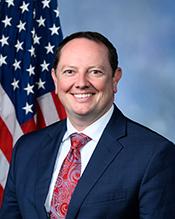
United States · Official source
446 records where Rep. Burlison, Eric [R-MO-7] is listed as a sponsor, author, or other actor. Search with topics and years
United States · United States Congress · 7 February 2025
United States · United States Congress · 7 February 2025
Abolish the Fogarty International Center Act of 2025 This bill abolishes the John E. Fogarty International Center for Advanced Study in the Health Sciences. (The Fogarty International Center is a research center at the National Institutes of Health that focuses on global health research and international collaboration activities.)
United States · United States Congress · 7 February 2025
No Kill Switches in Cars Act This bill repeals a requirement that the National Highway Traffic Safety Administration prescribe a federal motor vehicle safety standard that requires certain passenger vehicles to be equipped with advanced drunk and impaired driving prevention technology. Currently, there is no federal motor vehicle safety standard that requires the technology. In general, advanced drunk and impaired driving prevention technology is a passive system that (1) monitors a driver's performance to identify driver impairment, or (2) accurately detects whether a driver's blood alcohol concentration is equal to or greater than 0.08%. The system must also prevent or limit vehicle operation if the system determines the driver may be intoxicated or impaired.
United States · United States Congress · 6 February 2025
United States · United States Congress · 6 February 2025
United States · United States Congress · 5 February 2025
AM Radio for Every Vehicle Act of 2025 This bill requires the Department of Transportation (DOT) to issue a rule requiring AM radio capabilities to be standard in all new passenger vehicles. (AM radio is often used to deliver emergency alerts and news and entertainment programming; some newer vehicles do not include AM equipment.) Specifically, this bill applies to passenger vehicles (1) manufactured in the United States for sale in the United States, imported into the United States, or shipped in interstate commerce; and (2) manufactured after the rule's effective date. The rule must require all such vehicles to have devices that can receive signals and play content transmitted by AM stations or digital audio AM stations installed as standard equipment and made easily accessible to drivers. Prior to the rule's effective date, manufacturers that do not include devices that can access AM radio as standard equipment (1) must inform purchasers of this fact through clear and conspicuous labeling, and (2) may not charge an additional or separate fee for AM radio access. DOT may assess civil penalties for any violation of the rule. The Department of Justice may also bring a civil action to enjoin a violation. The rule, including DOT’s authority to enforce it, must expire 10 years after the bill’s enactment. Further, the Government Accountability Office must study and report on the dissemination of emergency alerts to the public, including by conducting an assessment of AM radio relative to other Integrated Public Alert and Warning System communication technologies.
United States · United States Congress · 5 February 2025
Protection of Women in Olympic and Amateur Sports Act This bill requires certified national governing bodies (NGBs) of amateur sports (e.g., USA Gymnastics) to prohibit a person whose sex is male from participating in an amateur athletic competition that is designated for females, women, or girls. Under the bill, male means an individual who has, had, will have—or would have, but for a developmental or genetic anomaly or historical accident—the reproductive system that at some point produces, transports, and utilizes sperm for fertilization.
United States · United States Congress · 5 February 2025
Fair Access to Banking Act This bill places restrictions on certain banks, credit unions, and payment card networks if they refuse to do business with a person who complies with the law. Restrictions include prohibiting the use of electronic funds transfer systems and lending programs, termination of an institution's depository insurance, and specified civil penalties. Banks and other specified financial institutions are allowed to deny financial services to a person only if the denial is justified by a documented failure of that person to meet quantitative, impartial, risk-based standards established in advance by the institution. This justification may not be based upon reputational risks to the institution. The bill establishes the right for a person to bring a civil action for a violation of this bill.
United States · United States Congress · 5 February 2025
This resolution prohibits the Office of the Chief Administrative Officer of the House of Representatives from accepting, distributing, or delivering Chinese Communist Party-controlled publications (e.g., China Daily).
United States · United States Congress · 4 February 2025
United States · United States Congress · 31 January 2025
United States · United States Congress · 31 January 2025
Protect Our Communities from DUIs Act This bill makes driving while intoxicated or impaired a ground for (1) barring a non-U.S. national ( alien under federal law) from admission into the United States, or (2) deporting the individual. The bar to admission shall apply to an individual who has been convicted of the offense or has admitted to having committed the acts which constitute the elements of the offense. As a ground for deportability, the individual must have been convicted of the offense.
United States · United States Congress · 31 January 2025
United States · United States Congress · 31 January 2025
This bill terminates the Department of Education on December 31, 2026.
United States · United States Congress · 28 January 2025
Achieving Choice in Education Act or the ACE Act This bill expands the expenses that may be paid for with tax-free distributions from a qualified tuition program (known as a 529 plan) to include certain elementary, secondary, and homeschool education expenses and makes other changes related to 529 plans. The bill also limits the tax exclusion for interest on state or local bonds. Under current law, 529 plan distributions are excluded from gross income if they are used to pay for qualified higher education expenses, which includes up to $10,000 (per year and per beneficiary) for tuition at an elementary or secondary public, private, or religious school. The bill expands the expenses that may be paid for with tax-free 529 plan distributions to include homeschooling tuition and the following expenses related to elementary, secondary, and homeschool education: curriculum, books, instructional and online educational materials, tutoring or educational classes outside the home, testing fees, fees for dual enrollment in a higher education institution, and educational therapies for disabled students. The bill also increases the amount of tax-free 529 plan distributions that may be used to pay for elementary, secondary, and homeschool education expenses to $20,000. The bill increases the annual gift tax exclusion by $20,000 for contributions made to a 529 plan. (Under current law, up to $19,000 may be excluded from taxable gifts in 2025.) Finally, the bill limits the tax exclusion for interest on state or local bonds to bonds issued by states that meet minimum school choice requirements or political subdivisions of such states.
United States · United States Congress · 28 January 2025
Personalized Care Act of 2025 This bill expands health saving account (HSA) eligibility, increases HSA contribution limits, and makes other HSA-related changes. The bill also expands the definition of medical care for purposes of the itemized tax deduction for unreimbursed medical expenses. The bill eliminates the requirement that an individual must be covered by a high-deductible health plan to establish and contribute to an HSA. Under the bill, an eligible individual is defined as (1) a health care sharing ministry participant, or (2) individual covered under a group or individual health plan; health insurance (including a short-term limited duration and medical indemnity plan); or a government plan (including Medicare Part A and B, Medicaid, the Children’s Health Insurance Program, certain military and government employee health benefit programs, and the Indian Health Service and tribal organization programs). The bill increases annual HSA contribution limits to $10,800 (from $4,300 in 2025) for self-only coverage and $29,500 (from $8,550 in 2025) for family coverage, adjusted annually for inflation. The bill expands the qualified medical expenses that may be paid for with HSA distributions to include health insurance payments (e.g., premiums), direct care fees, and certain amounts paid by health care sharing ministry participants. The bill decreases the penalty to 10% (from 20%) for nonqualified HSA distributions. Finally, under the bill, direct care fees and fees paid for membership in a health care sharing ministry qualify as medical care for purposes of the itemized tax deduction for unreimbursed medical expenses.
United States · United States Congress · 28 January 2025
Securing America's Land from Foreign Interference Act This bill requires the President to take actions as necessary to prohibit members of the Chinese Communist Party (and entities owned, controlled, or influenced by the party) from purchasing real estate located in the United States, U.S. territories, or U.S. possessions.
United States · United States Congress · 28 January 2025
United States · United States Congress · 24 January 2025
Life at Conception Act This bill declares that the right to life guaranteed by the Constitution is vested in each human being at all stages of life, including the moment of fertilization, cloning, or other moment at which an individual comes into being. Nothing in this bill shall be construed to authorize the prosecution of any woman for the death of her unborn child.
United States · United States Congress · 23 January 2025
This resolution supports the designation of National School Choice Week.
United States · United States Congress · 23 January 2025
United States · United States Congress · 23 January 2025
United States · United States Congress · 23 January 2025
Main Street Tax Certainty Act This bill makes permanent the qualified business income (QBI) tax deduction. Under current law, individuals, estates, and trusts may deduct the lower of (1) 20% of QBI from a qualified business, qualified real estate investment trust dividends, and qualified publicly traded partnership income; or (2) 20% of taxable income less net capital gain. (Some limitations apply.) However, under current law, the QBI tax deduction expires after December 31, 2025.
United States · United States Congress · 23 January 2025
This resolution expresses (1) the sense of the House of Representatives that the sermon given at the National Prayer Service on January 21st, 2025, at the National Cathedral was a display of political activism, and (2) that the House condemns the message of Right Reverend Mariann Edgar Budde.
United States · United States Congress · 22 January 2025
United States · United States Congress · 21 January 2025
FACE Act Repeal Act of 2025 This bill repeals provisions of federal criminal law that prohibit conduct intended to injure, intimidate, or interfere with persons who are seeking to (1) obtain or provide reproductive health services, or (2) exercise their right of religious freedom at a place of religious worship.
United States · United States Congress · 21 January 2025
Birthright Citizenship Act of 2025 This bill limits birthright citizenship by redefining what it means to be subject to the jurisdiction of the United States. Currently, a person born in the United States and subject to U.S. jurisdiction is entitled to citizenship. Under the bill, a person is subject to U.S. jurisdiction if he or she is born to a parent who is (1) a U.S. citizen or national, (2) a lawful permanent resident residing in the United States, or (3) a non-U.S. national ( alien under federal law) with a lawful immigration status who is performing active service in the Armed Forces. The bill does not affect the citizenship or nationality status of any person born before the bill's enactment date.
United States · United States Congress · 20 January 2025
No Retaining Every Gun In a System That Restricts Your Rights Act This bill modifies the retention requirements for firearm transaction records of federal firearms licensees (FFLs) that go out of business. Current law generally requires FFLs that go out of business to deliver their firearm transaction records to the Bureau of Alcohol, Tobacco, Firearms and Explosives (ATF). This bill removes the requirement for FFLs that go out of business to deliver their firearm transaction records to the ATF. Further, the bill requires the ATF to destroy all out-of-business records it has collected from FFLs.
United States · United States Congress · 16 January 2025
Federal Agency Sunset Commission Act of 2025 This bill provides for the establishment of the Federal Agency Sunset Commission to submit to Congress a schedule for review and abolishment of each agency, including each advisory committee. The schedule for review shall be in the form of a joint resolution. Each agency shall be abolished unless reauthorized by Congress. For each agency, the commission must schedule a date of abolishment to occur at least once every 12 years. The commission must (1) review and evaluate the efficiency and public need for each agency using specified criteria; (2) analyze the authority claimed by the executive branch but not specifically authorized by statute; (3) recommend whether each agency should be abolished, reorganized, or continued; and (4) report to Congress on introduced legislation that would establish a new agency or a new program. The Government Accountability Office and the Congressional Budget Office, in cooperation with the Congressional Research Service, shall prepare an inventory of federal programs to assist Congress and the commission in carrying out this bill. The bill provides for expedited congressional consideration of the schedule for review and abolishment.
United States · United States Congress · 16 January 2025
Stopping Home Office Work's Unproductive Problems Act of 2025 or the SHOW UP Act of 2025 This bill requires each executive agency (other than the Government Accountability Office) to establish as its current policies the telework policies that were in place on December 31, 2019. Agencies may not implement expanded telework policies unless the Office of Personnel Management certifies that such policies, among other requirements, will have a positive effect on the agency's mission and operational costs.
United States · United States Congress · 16 January 2025
Chiropractic Medicare Coverage Modernization Act of 2025 This bill expands Medicare coverage of chiropractic services to include all services provided by chiropractors, rather than only subluxation corrections through manual manipulation of the spine.
United States · United States Congress · 16 January 2025
Offshore Lands Authorities Act of 2025 This bill limits the withdrawal of unleased lands of the Outer Continental Shelf (OCS) from areas that may be leased for mineral development and nullifies certain past withdrawals. The OCS includes the federally managed ocean area extending from the outer boundaries of state-controlled waters (generally 3 nautical miles [nmi] from shore) to 200 nmi from shore, with some exceptions. Specifically, the bill limits the President's authority to restrict offshore development of minerals, such as oil and gas, on the OCS. For example, the bill (1) caps the number of acres of OCS lands that a President may withdraw from areas that may be leased; (2) prohibits withdrawals from being made for a period longer than 20 years; (3) prohibits the President from making withdrawals of unleased land that conflict with areas included in lease sales scheduled under approved oil and gas leasing programs; and (4) prohibits the President from withdrawing unleased lands unless the Department of the Interior has completed assessments addressing issues such as mineral resources and the national security, economic, and energy value of the identified mineral deposits. The President must also obtain congressional approval before withdrawing more than 500,000 acres cumulatively. Further, the bill gives Congress the authority to review and disapprove withdrawals by enacting a joint resolution. In addition, the bill nullifies certain presidential memoranda and executive orders related to withdrawing unleased land from areas that may be leased for the development of oil, gas, or other minerals on the OCS.
United States · United States Congress · 15 January 2025
Pony Up Act This bill requires the U.S. Postal Service (USPS) to pay a citizen for late payment fees or penalties incurred due to late delivery of mail by USPS. Late delivery of mail means that (1) USPS received a bill or notice of bill at least 12 days prior to the payment due date and delivered such bill or notice of bill less than 6 days prior to the payment due date; or (2) USPS received a payment at least 5 days prior to the payment due date and delivered such payment after the due date. USPS is not required to pay a citizen for late payment fees or penalties when a bill, notice of bill, or payment is delayed for reasons outside of USPS control (for example, if a major disaster or emergency declared by the President caused the delay).
United States · United States Congress · 15 January 2025
Repealing Big Brother Overreach Act This bill repeals the Corporate Transparency Act. The act requires existing companies and newly created companies to report beneficial ownership information to the Department of the Treasury’s Financial Crimes Enforcement Network for purposes of addressing the financing of terrorism and money laundering.
United States · United States Congress · 15 January 2025
Miracle on Ice Congressional Gold Medal Act This bill provides for the award of Congressional Gold Medals to the members of the 1980 U.S. Olympic men's ice hockey team in recognition of the team's achievement at the 1980 Winter Olympic Games.
United States · United States Congress · 15 January 2025
This joint resolution nullifies the rule titled Energy Conservation Program: Energy Conservation Standards for Consumer Gas-fired Instantaneous Water Heaters and submitted by the Department of Energy (DOE) on December 26, 2024. Under the rule, DOE adopted amended energy conservation standards for gas-fired instantaneous water heaters to achieve the maximum improvement in energy efficiency that DOE determined was technologically feasible and economically justified.
United States · United States Congress · 14 January 2025
No Taxpayer Funding for the World Health Organization Act This bill prohibits the United States from providing any assessed or voluntary contributions to the World Health Organization.
United States · United States Congress · 13 January 2025
United States · United States Congress · 9 January 2025
No Tax Dollars for Terrorists Act This bill requires the Department of State to develop and implement a strategy to discourage foreign countries and nongovernmental organizations from providing financial or material support to the Taliban, including by using U.S.-provided foreign assistance to discourage countries and organizations from providing such support to the Taliban. The State Department must report to Congress on (1) foreign countries and nongovernmental organizations that have provided financial or material support to the Taliban and U.S. efforts to oppose such support; (2) the strategy to discourage such support and a plan for the strategy's implementation; (3) U.S.-funded direct cash assistance programs in Afghanistan; and (4) the Afghan Fund, including Taliban influence over Da Afghanistan Bank (the Afghan central bank).
United States · United States Congress · 9 January 2025
Restoring Fuel Market Freedom Act of 2025 This bill repeals multiple fuel-related federal tax credits and the credit or refund of federal fuel excise taxes paid on certain fuels used for nontaxable purposes. Specifically, the bill repeals the business tax credit for clean fuel production (tax credit for the production of clean fuels produced after 2024 and sold before 2028); business tax credit for second-generation biofuel producers (tax credit for the production before 2025 of fuel derived from qualified feedstocks that meets certain other requirements); business tax credit for biodiesel fuels (tax credit for biodiesel fuel sold or used before 2025); business tax credit for sustainable aviation fuel (tax credit for sustainable aviation fuel sold or used before 2025); and tax credit for alcohol fuel, biodiesel, and alternative fuel mixtures (tax credit for alcohol fuel, biodiesel, and alternative fuel mixtures sold or used before 2025). Finally, the bill repeals expired provisions that allow a credit or refund of excise taxes paid on alcohol, biodiesel, alternative fuel, or sustainable aviation fuel that is used for nontaxable purposes.
United States · United States Congress · 9 January 2025
Return Excessive Migrants and Asylees to International Neighbors in Mexico Act of 2025 or the REMAIN in Mexico Act of 2025 This bill requires the Department of Homeland Security (DHS) to implement the Migrant Protection Protocols as outlined in the January 25, 2019, memo titled Policy Guidance for Implementation of the Migrant Protection Protocols . (The protocols generally required aliens who are not clearly admissible, including those seeking asylum, arriving by land along the U.S.-Mexico border to be returned to Mexico while their immigration proceedings are pending, rather than remain in the United States. On January 21, 2021, DHS stopped applying the protocols to newly-arrived individuals.)
United States · United States Congress · 9 January 2025
Healthcare Freedom Act of 2025 This bill renames health savings accounts (HSAs) as health freedom accounts (HFAs), modifies the eligibility requirements and contribution limits for such accounts, and expands the definition of qualified medical expenses. The bill also eliminates the exclusion from income of employer contributions to a health plan for certain individuals. Under current law, individuals may establish and contribute to an HSA if covered under an HSA-eligible high-deductible health plan (HDHP). For 2025, HSA contributions are limited to $4,300 for self-only coverage or $8,550 for family coverage (adjusted annually). Individuals 55 or older may make an additional HSA contribution of up to $1,000 per year. Further, HSA distributions are tax-free if used to pay for qualified medical expenses. The bill allows individuals to establish and contribute to an HFA without being enrolled in an HDHP, contribute up to $12,000 ($24,000 for joint filers) per year to an HFA (adjusted annually), and contribute an additional $5,000 per year to an HFA if 55 or older. The bill also expands the definition of qualified medical expenses to include expenses related to direct primary care, health care sharing ministries, and medical cost sharing organizations. For individuals hired at least five years after the bill's enactment (1) employer contributions to an HFA may be excluded from the employee's income, and (2) the bill eliminates the exclusion from income of employer contributions to other health plans. (Under current law, employer contributions to a health plan generally are not included in the individual’s income.)
United States · United States Congress · 9 January 2025
Gulf of America Act of 2025 This bill renames the Gulf of Mexico as the Gulf of America and directs federal agencies to update their documents and maps to incorporate the new name.
United States · United States Congress · 7 January 2025
Abolish the ATF Act This bill abolishes the Bureau of Alcohol, Tobacco, Firearms and Explosives.
United States · United States Congress · 6 January 2025
This joint resolution proposes an amendment to the Constitution establishing term limits for individuals serving in the Senate and the House of Representatives. The proposed amendment makes an individual who has served two terms in the Senate ineligible for appointment or election to the Senate and an individual who has served three terms as a Member of the House of Representatives ineligible for election to the House of Representatives. The joint resolution provides that the amendment shall be valid when ratified by the legislatures of three-fourths of the states within seven years after the date of its submission for ratification. Under Article V of the Constitution, both chambers of Congress may propose an amendment by a vote of two-thirds of all Members present for such vote. A proposed amendment must be ratified by the states as prescribed in Article V and as specified by Congress.
United States · United States Congress · 6 January 2025
This resolution rescinds subpoenas and recommendations issued by the House Select Committee to Investigate the January 6th Attack on the United States Capitol. Specifically, the resolution rescinds subpoenas issued on September 23, 2021, October 6, 2021, and February 9, 2022, to Steve Bannon, Mark Meadows, Peter Navarro, and Dan Scavino. The resolution also withdraws, dismisses, and concludes resolutions that the House find Steve Bannon, Mark Meadows, Peter Navarro, and Dan Scavino in contempt of Congress.
United States · United States Congress · 3 January 2025
Ensuring United Families at the Border Act This bill addresses the treatment of children who are non-U.S. nationals ( aliens under federal law), including by statutorily establishing that there is no presumption that such a child (other than an unaccompanied child) should not be detained for immigration purposes. Specifically, the bill states that the detention of such minors shall be governed by specified sections of the Immigration and Nationality Act and not any other provision of law, judicial ruling, or settlement agreement. (A 1997 settlement agreement, commonly known as the Flores agreement, imposes requirements relating to the treatment of detained alien minors, including requiring such minors to be released or placed in a nonsecure facility after a certain amount of time in detention.) If an adult enters the United States unlawfully with their child, the Department of Homeland Security must detain the adult and child together if the only criminal charge against the adult is a misdemeanor for unlawful entry. This bill also prohibits states from imposing licensing requirements on immigration detention facilities used to detain minors or families with minors.
United States · United States Congress · 3 January 2025
Responsible Borrower Protection Act of 2025 This bill prohibits the Federal Housing Finance Agency, the Federal National Mortgage Association (Fannie Mae), and the Federal Home Loan Mortgage Corporation (Freddie Mac) from implementing changes to the single-family home loan pricing framework for upfront fees on certain home loans, announced in January 2023. The changes revise the fee charts that provide percentage adjustments based on a borrower's credit score and other risk factors. Overall, these changes increase the percentage adjustments, with variations based on the particular risk profile of the loan.
United States · United States Congress · 3 January 2025
WHO Withdrawal Act This bill requires the President to immediately withdraw the United States from the World Health Organization (WHO) and prohibits using any federal funds to provide for U.S. participation in the WHO. The bill also repeals the 1948 act authorizing the United States to join the WHO.
United States · United States Congress · 3 January 2025
Constitutional Concealed Carry Reciprocity Act This bill establishes a federal statutory framework to regulate the carry or possession of concealed firearms across state lines. Specifically, an individual who is eligible to carry a concealed firearm in one state may carry or possess a concealed handgun (other than a machine gun or destructive device) in another state that allows its residents to carry concealed firearms. It sets forth requirements for lawful concealed carry across state lines. The bill preempts most state and local laws related to concealed carry and establishes a private right of action for a person adversely affected by interference with a concealed-carry right established by this bill.