Bill· HJRESH.J.Res. 288 (99th)open
A joint resolution to designate the month of November 1985 as "National Hospice Month".
United States · United States Congress · 15 May 1985
Designates the month of November 1985 as National Hospice Month.
The world's political record
Person
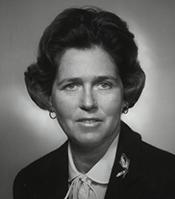
United States · Official source
1,562 records where Rep. Byron, Beverly B. [D-MD-6] is listed as a sponsor, author, or other actor. Search with topics and years
United States · United States Congress · 15 May 1985
Designates the month of November 1985 as National Hospice Month.
United States · United States Congress · 9 May 1985
Amends the Tariff Act of 1930 to include in the definition of "subsidy" (for countervailing duty purposes) any resource input subsidy as provided for under the provisions of this Act. States that a "resource input subsidy" is found to exist if: (1) (a) a product is provided or sold by a government-regulated or controlled entity within a country for input use within such country at a domestic price that is lower than the fair market value of the input product and is not freely available to U.S. producers; and (b) a product would, if sold at the fair market value, constitute a significant portion of the total cost of the manufacture or production of the merchandise in or for which the input product is used; or (2) under specified circumstances, the right to remove or extract such product is provided or sold by a government or a government-regulated or controlled entity within a country. Sets forth the method of calculation for the amount of a resource input subsidy. Defines "fair market value" and "input use" for purposes of this Act. Requires injury determinations by the U.S. International Trade Commission to be made in all countervailing duty investigations relating to the existence of resource input subsidies.
United States · United States Congress · 9 May 1985
Authorizes the Secretary of the Air Force to enter into agreements with the State of Illinois or appropriate units of local government to permit the joint use of Scott Air Force Base for military and civilian aviation purposes. Renames Scott Air Force Base as the Mel Price Air Force Base and Airport Illinois.
United States · United States Congress · 9 May 1985
Designates the week of May 11 through May 17, 1985, as Handicapped Awareness Week.
United States · United States Congress · 8 May 1985
Authorizes the Society of the Third Infantry Division to erect a memorial on public grounds in the District of Columbia or its environs in honor of the men of the "Rock of the Marne" of the Third Infantry Division who served in both World Wars, Korea, and maintaining peace. Authorizes the Secretary of the Interior to select a site for the memorial subject to the approval of the National Commission of Fine Arts, the National Capital Planning Commission, and, under certain circumstances, the Mayor of the District of Columbia. Subjects the design and plans for the memorial to the approval of the Secretary, the National Commission of Fine Arts, and the National Capital Planning Commission. Directs that the maintenance and care of the memorial shall be the Secretary's responsibility unless the memorial is on public grounds under the jurisdiction of the District of Columbia in which case such duties fall on the District of Columbia. Provides that funds of the United States or the District of Columbia may not be used to erect the memorial. Directs that the authority to establish the memorial is contingent upon its erection beginning within five years with funds sufficient to ensure its completion.
United States · United States Congress · 8 May 1985
Amends the Internal Revenue Code to allow an individual taxpayer an income tax deduction for contributions to a savings account established to pay the educational expenses (tuition, supplies, meals, and lodging) of the taxpayer's dependent child at an institution of higher education or a vocational school. Limits the amount of such deduction to $1,000 (adjusted for inflation) for each account per calendar year. Disallows any deduction for contributions to an account for individuals who have attained age 19. Provides that no account may have more than one beneficiary and that no individual may be a beneficiary of more than one account. Permits the deferral of income tax on income accumulated in such education savings accounts as long as such amounts are used exclusively for educational expenses. Specifies penalties for the use of account funds for other than educational purposes. Requires that the trustee of an education savings account file reports with the Secretary of the Treasury on the maintenance of the account. Imposes penalties for not filing required reports. Extends the deduction for contributions to an education savings account to taxpayers who do not otherwise itemize deductions. Excludes from the gross income of account beneficiaries any distributions from the account made on their behalf which are used for educational expenses.
United States · United States Congress · 8 May 1985
Amends the Internal Revenue Code to allow individual taxpayers who have attained the age of 18 an income tax deduction for contributions (cash or readily tradeable securities) to a savings account established for the exclusive purpose of financing the taxpayer's first principal residence. Limits the aggregate amount allowable as a deduction under this Act to any individual for any taxable year to 15 percent of such individual's adjusted gross income. Provides that the amount allowable as a deduction to all taxpayers for amounts paid or transferred to a house savings account may not exceed $1,500 ($3,000 for accounts of married couples). Provides for a $15,000 maximum lifetime deduction ($30,000 for joint returns), with annual inflation adjustments. Limits to ten years the period during which deductible contributions may be made to housing savings accounts. Prohibits any individual from being a beneficiary of more than one account. Excludes distributions from a housing savings account from the gross income of its beneficiary if such distributions are used exclusively for the purchase of a principal residence. Exempts a housing savings account from taxation. Provides for the forfeiture of such exemption where the taxpayer uses the account for certain prohibited purposes. Imposes a penalty on distributions from an account which are used for a prohibited purpose. Requires the trustee of a housing savings account to file a report on the maintenance of the account. Imposes a penalty for the failure to file any required report.
United States · United States Congress · 8 May 1985
Expresses the sense of the House of Representatives that the administration should comply with the automatic appropriation and earmarking provisions of the Wallop/Breaux Sport Fish Restoration Trust Fund. States that funds owed to the States from such Fund should not be withheld or delayed.
United States · United States Congress · 7 May 1985
Designates October 1985 as Displaced Homemakers Awareness Month.
United States · United States Congress · 30 April 1985
Truth in Savings Act - Requires each advertisement, announcement, or solicitation made by any depository institution regarding the rate of interest payable on any account to: (1) state the annual percentage yield and the method of compounding interest; (2) state the annual rate of simple interest and the period such interest is in effect; (3) state the frequency of interest payments; (4) give equal prominence to all annual percentage yields and annual rates of simple interest; and (5) include specified statements explaining how fees and penalties could affect the annual yield and how the yield on accounts which mature in less than one year is determined on the basis of compounding for an entire year. Requires the annual percentage yield to be stated before the annual rate of simple interest. Requires an institution to give a person a written summary of such information concerning an offered account upon request. Requires each depository institution to maintain a written schedule of all fees, charges, and terms and conditions applicable to each type of account and service routinely offered. Requires that such schedule be disclosed to potential customers and requesting individuals and mailed to account holders. Directs the Board of Governors of the Federal Reserve System to prescribe: (1) uniform terminology to be used by depository institutions to describe interest rates and other terms affecting account earnings; and (2) uniform methods of calculating annual rates of simple interest and annual percentage yields. Provides for the enforcement of this Act.
United States · United States Congress · 30 April 1985
Comprehensive Alzheimer's Assistance, Research, and Education Act of 1985 - Title I : Amendment to the Public Health Service Act - Amends the Public Health Service Act to establish a National Alzheimer's Education Program to: (1) coordinate education and training programs of the National Institutes of Health (NIH), the Veterans Administration, other Federal entities, State and local governments, and private organizations; (2) establish an information clearinghouse; (3) provide information to health care providers, organizations, patients, and the general public; and (4) provide technical assistance to States and public and private organizations in the collection and dissemination of information. Authorizes appropriations for FY 1986 through 1988 for such purposes. Directs the Secretary of Health and Human Services to make grants to States to plan, establish, and operate programs to: (1) coordinate the development and operation of diagnostic, treatment, care management, respite care, legal counseling, and education services provided by public and private organizations within the State; (2) provide respite care to patients with Alzheimer's disease and related disorders; (3) provide information to health care providers, organizations, and the general public on treatment and related services for patients and their families; (4) coordinate the development and operation of continuing education for health care providers on the diagnosis, treatment, and care management of Alzheimer's disease and related disorders; (5) review State policies on the financing and reimbursement of health care costs for such patients; (6) review State nursing home regulations as they apply to such patients; and (7) coordinate with the National Alzheimer's Education Program. Limits Federal grants for such programs to the lesser of one half the cost or $1,000,000. Authorizes appropriations for FY 1986 through 1988. Directs the Secretary to establish a plan for a research program for the study of Alzheimer's disease and related disorders. Directs the Secretary to make grants and enter into contracts with public and private entities for ten to 20 Alzheimer's disease research centers. Authorizes appropriations for FY 1986 through 1988. Provides for the recovery from Alaska of Federal grants provided under the Public Health Service Act if within 20 years from the date of completion of a medical facility, such facility ceases to be a publicly owned facility operated for the care or treatment of patients under Alaska's mental health program. Title II: Medicare and Medicaid Research, Demonstrations, and Waivers - Directs the Secretary to conduct research, waiver, and demonstration projects under the Medicare and Medicaid provisions of the Social Security Act to determine the: (1) coverage of alternative methods of health care for patients with Alzheimer's disease and related disorders; (2) coverage of nursing home care; and (3) appropriate reimbursement levels for nursing homes with such patients. Title III: Report - Directs the Secretary to report to the Congress within two years after the date of enactment.
United States · United States Congress · 29 April 1985
Designates the week beginning on April 13, 1986, as National Garden Week. Urges the wearing of garden flowers during that week as a symbol of appreciation for the contributions of the Nation's gardeners.
United States · United States Congress · 25 April 1985
Expresses the sense of the Congress that the President should establish a task force of expert farmers to address the long-range concerns of the U.S. agricultural industry.
United States · United States Congress · 24 April 1985
Designates November 30, 1985, as National Mark Twain Day.
United States · United States Congress · 24 April 1985
Establishes in the legislative branch of the Government the Perot Commission on Americans Missing in Southeast Asia to conduct an investigation and report to the Congress its findings with respect to the existence and the release of prisoners of war in Southeast Asia. Sets forth specified administrative procedures and powers of the Commission. Requires the Commission to terminate 30 days after the filing of its report to the Congress or on January 3, 1987, whichever occurs first.
United States · United States Congress · 23 April 1985
Authorizes the President, on behalf of the Congress, to present a gold medal honoring George Gershwin to his sister, Frances Gershwin Godowsky, and a gold medal honoring Ira Gershwin to his widow, Lenore Gershwin. Directs the Secretary of the Treasury to provide for the sale of bronze duplicates of the medal. Authorizes appropriations.
United States · United States Congress · 22 April 1985
Deplores the production and deployment of Soviet offensive land-based nuclear weapons as constituting a threat to world peace. Expresses the sense of the Congress that the United States should base its deterrence posture upon both an effective retaliatory capability and a strategic defense capability. Urges the President to pursue research and development programs that give the United States the capability to produce and deploy systems that enhance U.S. retaliatory and defensive capabilities, including the deployment of a ballistic missile defense system.
United States · United States Congress · 18 April 1985
Directs the Postmaster General to issue a stamp commemorating the 40th anniversary of the Blue Angels. Specifies the design and denomination of the stamp. Establishes the dates within which the stamp shall be issued and directs that it be sold for a period set by the Postmaster General.
United States · United States Congress · 17 April 1985
Amends the Internal Revenue Code to establish an applicable test rate of nine percent for determining whether there is imputed interest in the case of seller-financed property. Permits a lower test interest rate of 80 percent of the Federal Treasury rate where such rates are lower than the nine percent test rate. Provides for a blended test rate for instances where the loan amount exceeds $4,000,000. Provides that in determining whether wraparound financing meets such testing rate, the test shall be applied to the net rate of interest on the seller's equity in the financing after deducting the existing third party financing. Authorizes the imputation of interest in seller-financed property sales of $4,000,000 or less of ten percent or 90 percent of the Federal Treasury rates, whichever is less, where the test interest rates have not been met. Allows for a blended imputed interest rate where the debt amount exceeds $4,000,000. Requires that all loan amounts from a single transaction or series of related transactions be aggregated for purposes of determining the loan amount. Provides that the imputed interest rules will not apply to assumptions of loans unless the terms and conditions of such debt obligations are modified in connection with the assumption. Repeals the provisions of the Code limiting the amount of interest expense a purchaser of personal use property may deduct for tax purposes. Excepts debt instruments arising from the sale or exchange of a residence from the imputed interest provisions where the obligor of the instrument uses the property as his other residence. Provides that the imputed interest rules shall not apply in the case of sales or exchanges of property where the borrowed amount does not exceed $4,000,000. Requires the interest on the obligation issued in connection with such sales or exchanges to be taken into account by both the buyer and the seller on the cash receipts and disbursement method of accounting unless both buyer and seller agree to use the accrual receipts and disbursement method of accounting.
United States · United States Congress · 17 April 1985
Directs the President to take steps to ensure: (1) substantial equivalence between the number, status, and privileges and immunities of Soviet officers or employees in the United States and the number, status, and privileges and immunities of U.S. officers and employees in the Soviet Union; and (2) that comparable restrictions regarding travel, accommodations and facilities are imposed on Soviet officers and employees living in the United States as are imposed on U.S. officers and employees living in the Soviet Union. Requires the President to report to the Congress on actions taken to carry out this Act.
United States · United States Congress · 4 April 1985
Designates the week of May 18 through May 24, 1985, as National Food Bank Week.
United States · United States Congress · 3 April 1985
Agriculture Act of 1985 - Title I: Dairy - Amends the Agricultural Act of 1949 to set milk price support levels at 90 percent of the previous three year average. Provides for: (1) automatic price support revisions on April 1 and October 1 of 1986 through 1989; and (2) additional adjustments based on Government purchase levels. Extends authority through 1989 for: (1) the dairy indemnity program; and (2) the program of dairy product transfers to the military and veterans' hospitals. Amends specified milk marketing order provisions. Title II: Wool and Mohair - Amends the National Wool Act of 1954 to extend the wool program through 1989. Title III: Wheat - Amends the Agricultural Act of 1949 to set loan and purchase levels for the 1986 through 1989 wheat crops at 75 percent of the preceding five year average, excluding high and low years. Limits annual adjustments to not more than ten percent. Sets 1986 target prices at not less than 1985 levels. Sets target prices beginning in 1987 at 110 percent of the preceding five year average, excluding high and low years. Limits annual adjustments to not more than five percent. Authorizes the Secretary of Agriculture to require compliance with an acreage reduction or paid land diversion program as a condition of eligibility for program benefits. Requires the Secretary to implement an acreage reduction program if carryover stocks exceed four percent of annual world utilization. Suspends specified marketing quota and producer certificate provisions. Title IV: Feed Grains - Amends the Agricultural Act of 1949 to set loan and purchase levels for the 1986 through 1989 corn crops at 75 percent of the preceding five year average, excluding high and low years. Limits annual adjustments to not more than ten percent. Sets loans and purchase levels for grain sorghum, barley, oats, and rye in relation to corn levels. Sets 1986 target prices at not less than 1985 levels. Sets target prices beginning in 1987 at 110 percent of the preceding five year average, excluding high and low years. Limits annual adjustments to not more than five percent. Authorizes the Secretary to require compliance with an acreage reduction or paid land diversion program as a condition of eligibility for program benefits. Requires the Secretary to implement an acreage reduction program if carryover stocks exceed four percent of annual world utilization. Title V: Cotton - Suspends specified base acreage allotment and marketing quota provisions for the 1986 through 1989 upland cotton crops. Amends the Agricultural Act of 1949 to set upland cotton loan rates at the lower of: (1) 85 percent of the average U.S. spot market price (weighted by market and month) for the preceding five years, excluding the high and low years; or (2) 90 percent of the average of comparable cotton prices, quoted C.I.F. northern Europe. Limits annual adjustments to not more than ten percent. Sets 1986 target prices at not less than 1985 levels. Sets target prices beginning in 1987 at 110 percent of the same average market price used to determine loan rates. Limits annual adjustments to not more than five percent. Directs the President to establish a special limited global import quota for upland cotton if average spot prices exceed specified levels. Authorizes the Secretary to require compliance with an acreage reduction or paid land diversion program as a condition of eligibility for program benefits. Requires the Secretary to implement an acreage reduction program if upland cotton carryover stocks exceed normal supply by more than 15 percent. Title VI: Rice - Amends the Agricultural Act of 1949 to set loan and purchase levels for the 1986 through 1989 rice crops at 75 percent of the preceding five year average, excluding high and low years. Limits annual adjustments to not more than ten percent. Sets 1986 target prices at not less than 1985 levels. Sets target prices beginning in 1987 at 110 percent of the preceding five year average, excluding high and low years. Limits annual adjustments to not more than five percent. Authorizes the Secretary to require compliance with an acreage reduction or paid land diversion program as a condition of eligibility for program benefits. Requires the Secretary to implement an acreage reduction program if rice carryover stocks exceed normal supply by more than 15 percent. Title VII: Peanuts - Amends the Agricultural Act of 1949 to establish the national poundage quota for the 1986 through 1989 peanut crops at the level of the previous three-year average of domestic edible and seed use. Authorizes modifications of up to five percent. Extends price support provisions for the 1986 through 1989 peanut crops. Permits changes in support levels based upon changes in the price paid index. Title VIII: Soybeans - Amends the Agricultural Act of 1949 to set loan and purchase levels for the 1986 through 1989 soybean crops at 75 percent of the preceding five year average, excluding high and low years. Stipulates that such level may not be less than $5.02 per bushel. Limits annual support reductions to not more than ten percent or below $4.50 per bushel. Title IX: Sugar - Amends the Agricultural Act of 1949 to set loan levels for the 1986 through 1989 sugarcane crops at 18 cents per pound. Bases sugar beet support levels on sugarcane prices. Title X: Miscellaneous - Subtitle A: Advance Diversion Payments - States that if the secretary makes land diversion payments to assist in adjusting acreage for the 1986 through 1989 crops of wheat, feed grains, cotton, or rice, at least 50 percent of such payment shall be made available as soon as possible after program signup. Subtitle B: Grain Reserves - Terminates the producer-owned reserve storage program. Subtitle C: Miscellaneous Commodity Provisions - Limits annual deficiency payments to $50,000 per person for the 1986 through 1989 crop years. Subtitle D: General Provisions - Extends the special grazing and hay program through 1989. Title XI: Agricultural Export and Public Law 480 - Subtitle A: Export Provisions - Amends the Food for Peace Act of 1966 to extend authority through 1989 for the Agricultural Export Credit Revolving Fund. Exempts export sales financed or guaranteed by the Commodity Credit Corporation (CCC) from cargo preference laws. Amends the Agriculture and Food Act of 1981 to exempt the special standby export subsidy program from cargo preference laws. Directs the Secretary to use bonus commodities from CCC to offset the adverse effects of competing countries' subsidies and currency exchanges. Exempts such exports from cargo preference laws. Subtitle B: Public Law 480 - Amends the Agricultural Trade Development and Assistance Act of 1954 to increase minimum export tonnage levels. Exempts such exports from cargo preference laws. Extends such programs through 1989. Title XII: Resource Conservation - Subtitle A: Conservation Reserve - Directs the Secretary to establish a conservation reserve program to convert cropland and highly erodible land to less intensive use. Subtitle B: Program Eligibility on Highly Erodible Land - Makes any person who cultivates crops on highly erodible land ineligible for price support and other agricultural loans and benefits. Subtitle C: General Provisions - Authorizes appropriations. Title XIII: Effective Date - Makes the provisions of this Act effective upon enactment, unless otherwise so provided.
United States · United States Congress · 3 April 1985
American Footwear Industry Recovery Act of 1985 - Limits the imports of nonrubber footwear into the United States to 450,000,000 pairs per 12 month period for eight years. Directs the Secretary of Commerce (the Secretary) to allocate the import limitations among foreign countries, taking into consideration: (1) average levels of imports for the period 1978 through 1982; (2) findings of unfair trade practices with respect to nonrubber footwear products; (3) recent market trends; and (4) such other considerations as the Secretary deems appropriate. Directs the Secretary and the Secretary of the Treasury to take all necessary actions to enforce this Act. Authorizes the Secretaries to issue such implementing regulations as necessary to effect the purposes of this Act and to enforce its provisions.
United States · United States Congress · 3 April 1985
Designates the week beginning September 22, 1985, as National Adult Day Care Center Week.
United States · United States Congress · 2 April 1985
Amends the Contract Work Hours and Safety Standards Act and the Walsh-Healey Act to require overtime compensation only for hours of employment in excess of 40 hours in a workweek for employees of Federal Government contractors or subcontractors.
United States · United States Congress · 28 March 1985
Military Lands Withdrawal Act of 1985 - Withdraws the following public lands for use by the military departments for training and weapons testing: (1) McGregor Range, Otero County, New Mexico; (2) Nellis Air Force Range, Clark, Nye, and Lincoln Counties, Nevada; (3) Fort Wainwright Maneuver Area, Fourth Judicial District, Alaska; (4) Fort Greely Maneuver Area, Big Delta Area, and Fort Greely Air Drop Zone, Granite Creek Area, Alaska; (5) Luke Air Force Range, Maricopa, Pima, and Yuma Counties, Arizona; and (6) Bravo-20 Bombing Range, Churchill County, Nevada. Directs the Secretary of the Interior to file a map and legal description of each such area with the Congress. Requires maps and legal descriptions of such areas to be made available to the public. Directs the Secretary to manage the withdrawn lands for grazing, wildlife habitat, control of predatory animals, and the prevention and suppression of brush and range fires resulting from nonmilitary activities. Makes such uses secondary to the military uses. Permits the Secretary to issue leases, easements, rights-of-way, or other authorizations only with the concurrence of the Secretary of the military department concerned. Authorizes the Secretary of the military department concerned to close withdrawn lands to the public to the degree required by public safety or national security. Directs the Secretary of the Interior to develop a management plan for each area within five years of this Act's enactment. Directs the Secretary of the military department concerned to prevent and control fires which result from military activities. Authorizes such Secretary to request assistance from the Bureau of Land Management on a reimbursable basis. States that the withdrawal of Nellis and Luke Air Force Ranges does not affect the status of the Desert National Wildlife Range, Nevada, or the Cabeza Prieta National Wildlife Refuge, Arizona. Directs the Secretary of the Interior, the Army, and the State of Alaska to develop within one year of this Act's enactment a wildlife management and conservation agreement for lands withdrawn by this Act in Alaska. Requires that such lands be available to the public for recreation and hunting and trapping to the extent possible. Directs the Secretary of the Interior to report to the Congress within ten years of enactment on the mineral potential of the withdrawn lands comprising Luke Air Force Range, Arizona. Permits the opening of such lands to mining if the Congress adopts a joint resolution to that effect within 11 years of this Act's enactment. Reserves water rights to the military department concerned on: (1) McGregor Range, New Mexico; (2) Fort Wainwright Maneuver Area, Alaska; and (3) Fort Greely, Alaska. Authorizes the Secretary of such department to acquire additional rights as necessary. Terminates these public land withdrawals after 25 years. Requires the Secretary of the military department concerned to notify the Secretary of the Interior at least three years before such termination if the military department has a continuing need for the withdrawn lands. Authorizes the Secretary of the Interior to refuse to accept withdrawn lands for relinquishment if such lands are contaminated with explosives or hazardous materials and the Secretary of the military department concerned determines the otherwise mandatory decontamination is not feasible. Requires such Secretary to reevaluate the feasibility of decontaminating unacceptable lands every five years. Requires the Secretary of the Interior to make public any order to accept back jurisdiction of previously withdrawn lands.
United States · United States Congress · 28 March 1985
Satellite Television Viewing Rights Act of 1985 - Amends the Communications Act of 1934 to allow any person to receive encrypted satellite cable programming decoded for private viewing upon compliance with prices, terms, and conditions established in the marketplace or by the Federal Communications Commission (FCC). Prohibits any person from: (1) denying the availability of such programming for private viewing; (2) substantially restricting the availability of such programming for private viewing through pricing or other terms or conditions; (3) discriminating in price between different distributors offering comparable distribution services; or (4) requiring a person to purchase or lease decoding equipment from a specific source in order to receive such programming. Directs the FCC, if petitioned, to establish reasonable prices, terms, and conditions for the private viewing of such programming in a market by any person who: (1) has been denied viewing rights for at least ten days; (2) has been offered such rights on terms or conditions which substantially restrict the availability of programming; (3) resides in the franchised area of a cable television system where the operator is the sole source of such programming; or (4) resides outside of the franchised area of a cable system where the price for viewing rights is higher than the price paid by subscribers within the market. Sets forth factors to be considered by the FCC in establishing prices.
United States · United States Congress · 28 March 1985
Expresses the sense of the Congress that National Guard and reserve members should be recognized for the essential role they play in the national defense. Urges and requests employers and supervisors to abide by Federal law and grant a leave of absence for military training to members of the Guard and reserves and provide such employees equal consideration for job benefits and promotions.
United States · United States Congress · 28 March 1985
Designates the month of October 1985 as National Make-A-Wish Month.
United States · United States Congress · 27 March 1985
Amends the Deficit Reduction Act of 1984 to exclude from gross income for Federal income tax purposes the interest on any federally-guaranteed obligation issued to finance a solid waste disposal facility (to the extent that the aggregate of the face amounts of such obligations does not exceed a specified amount) if a State public authority has committed facility development funds, expended such funds, and issued the obligation by specified dates.
United States · United States Congress · 26 March 1985
Designates the Study Center for Trauma and Emergency Medical Systems at the Maryland Institute for Emergency Medical Services Systems at the University of Maryland as the National Study Center for Trauma and Emergency Medical Systems.
United States · United States Congress · 26 March 1985
Recognizes the pause for the Pledge of Allegiance as part of the celebration of National Flag Day and urges all Americans to participate by reciting the Pledge in unison at a specified time on that day.
United States · United States Congress · 26 March 1985
Authorizes and requests the President to designate the month of January 1986 as National Eye Health Care Month.
United States · United States Congress · 25 March 1985
Designates May 1985 as Very Special Arts U.S.A. Month.
United States · United States Congress · 19 March 1985
Textile and Apparel Trade Enforcement Act of 1985 - Limits the total quantity of 1985 imports of textiles and textile products from a major exporting country to the lesser of an amount equal to 101 percent: (1) of the total quantity of textile products imported from such country if the total had increased by six percent annually (one percent annually for wool products) during 1981 through 1984; or (2) if the United States has an agreement with such country providing for an annual growth rate of less than six percent, of the total quantity of such products from such country imported during 1984. Limits the total quantity of 1985 imports of textiles and textile products from an exporting country to an amount equal to the total quantity of such products imported from such country during 1984 plus: (1) 15 percent of such quantity in the case of a category that is not an import sensitive category; or (2) one percent in the case of an import sensitive category. Provides for changing the classification of a country, except for a Caribbean country, from an exporting country to a major exporting country if the total textile imports from such country equals or exceeds one and one-quarter percent of all textiles imported into the United States. Sets forth a formula for adjusting the growth of textile imports annually. Sets forth certain minimum quantities of textile imports that all countries shall be allowed to export to the United States. Requires the Secretary of Commerce to enforce this Act. Directs the Secretary, within six months of enactment of this Act, to establish an import licensing system under which an importer of textiles will be required to present an import permit as a condition of entry of such textiles. Directs the President to report to the Congress annually on the administration of this Act.
United States · United States Congress · 19 March 1985
Amends the Federal Employees Flexible and Compressed Work Schedules Act of 1982 to make permanent the authority of Federal agencies to use flexible and compressed work schedules.
United States · United States Congress · 19 March 1985
Amends the Agriculture and Food Act of 1981 to provide that a buyer in the ordinary course of business who buys farm products from a seller engaged in farming operations shall take free of any seller-created security interest even though the buyer knows of its existence, unless within 12 months before the sale the buyer: (1) received notice of the security interest and of any payment obligations imposed by the secured party as conditions for waiver or release of the security interest and (2) has failed to perform such obligations. Sets forth parallel provisions for commission merchants or selling agents.
United States · United States Congress · 19 March 1985
Amends the Railroad Retirement Act of 1974 to allow a retired railroad worker to be employed in any non-railroad employment and still qualify for an annuity, subject to specified deductions, including reduction of certain benefits by $1 for every $2 earned from the last non-railroad employment.
United States · United States Congress · 7 March 1985
Amends the Federal Employees Flexible and Compressed Work Schedules Act of 1982 to make permanent the authority of Federal agencies to use flexible and compressed work schedules.
United States · United States Congress · 7 March 1985
Designates the month of April 1985 as Fair Housing Month.
United States · United States Congress · 5 March 1985
Extends through FY 1991 the revenue sharing program for local governments.
United States · United States Congress · 5 March 1985
Approves the obligation of funds available for FY 1985 for the procurement of additional operational MX missiles.
United States · United States Congress · 5 March 1985
Authorizes and requests the President to designate May 1985 as National Physical Fitness and Sports Month.
United States · United States Congress · 4 March 1985
Designates the month of October 1985 as National Spina Bifida Month.
United States · United States Congress · 28 February 1985
Amends the Employee Retirement Income Security Act of 1974 (ERISA) to provide that ERISA does not preempt State laws: (1) which protect the freedom of choice of an individual under an employee benefit plan to select any licensed health practitioner to perform health services covered by such plan; or (2) which require surety bonds, cash or security deposits, or other financial guarantees or assurances to protect employee benefit plans from insolvency.
United States · United States Congress · 27 February 1985
Designates October 16, 1985, as World Food Day.
United States · United States Congress · 26 February 1985
Designates the week beginning on May 5, 1985, as National Asthma and Allergy Awareness Week.
United States · United States Congress · 25 February 1985
Amends the Internal Revenue Code to authorize the Secretary of the Treasury to prescribe regulations exempting retirees or individuals age 65 or over from interest penalties with respect to any underpayment of estimated tax. Requires that such underpayment be due to reasonable cause (defined to include mistake or ignorance of the law) and not to willful neglect.
United States · United States Congress · 25 February 1985
Authorizes the Armored Force Monument Committee, the United States Armor Association, the World Wars Tank Corps Association, the Veterans of the Battle of the Bulge, the 11th Armored Cavalry Regiment Association, the Tank Destroyer Association, the 1st, 2nd, 3rd, 4th, 5th, 6th, 7th, 8th, 9th, 10th, 11th, 12th, 13th, 14th, and 16th Armored Division Associations, and the Council of Armored Division Associations to erect a memorial in or near Arlington National Cemetery, Virginia, to honor and commemorate the American Armored Force. Directs the Secretary of the Interior, with the approval of the National Commission of Fine Arts and the National Capital Planning Commission, to select the site and approve the design and plans. Obligates the United States to expenses of maintenance only. Requires the commencement of the erection of the memorial within five years with a certification of sufficiency of funds necessary before commencement.
United States · United States Congress · 21 February 1985
High Technology Research and Scientific Education Act of 1985 - Title I: The Credit for Increasing Research Activities - Amends the Internal Revenue Code to make permanent the tax credit for research and development (R&D) expenditures. Modifies the definition of qualified research for purposes of the R&D credit to narrow the category of eligible activities for which the credit is allowable. Provides that in-house and contract research expenses paid or incurred by a regular corporation (not an S corporation, a personal holding company, or a service corporation) will constitute qualified research expenses for R&D credit purposes if the corporation undertakes the research with the intention to use the result thereof in the active conduct of a present or future trade or business. Provides that in the case of research being conducted in partnership form, research expenses will constitute qualified research expenses if they are incurred by the partnership in carrying on a trade or business as applied at the partnership level, and the credit is apportioned among the partners in accordance with general partnership rules. Provides exceptions to this general rule where: (1) there is a joint venture enterprise of regular corporations; or (2) not all of the members of the joint venture are regular corporations, but each member's own trade or business would satisfy the trade or business test with respect to the partnership's research expenditures. Provides that for these two exceptions the research expenses will flow through to the partners, with the trade or business test being applied at the partner level. Title II: Promotion of University Research and Scientific Investigation - Establishes a new income tax credit equal to 20 percent of that portion of a corporation's payments to universities (and other qualified non-profit tax-exempt organizations for basic research) which exceeds a fixed, historical "minimum university basic research" floor. Defines the "minimum university basic research" floor as one percent of the annual average of the corporate taxpayer's combined qualified in-house research expenses, contract research expenses and university basic research payments for the base period composed of the period from 1981 through 1983. Provides that the amounts of research expenses which fall below the floor shall remain eligible for the present R&D credit and are included in the corporation's base period for purposes of calculating the present R&D credit. Treats the amounts which exceed the "minimum university basic research" floor as ineligible for the present R&D credit and excludes such amounts from the corporate taxpayer's base year research expenses for purposes of calculating the corporations R&D credit under present law. Provides that a corporation's payments to universities for basic research that is eligible for the new tax credit shall be reduced to the extent that the corporation's general (i.e., not designated for research purposes) charitable giving to all universities falls below historical levels (the annual average of undesignated payments for three of the immediately preceding four years as selected by the taxpayer). Makes additions to the list of organizations to which corporate payments for basic research may be made and be eligible for the tax credit. Allows a corporation an income tax deduction for contributions of scientific or technical property to an institution of higher education. Defines scientific property to mean tangible personal property (including computer software) used in a trade or business, which is donated for the direct education of students or faculty, for research and experimentation, or for research training in the United States in mathematics, the physical, biological, or chemical sciences, engineering, or advanced computer sciences. Sets forth a formula for determining the amount of the allowable deduction for contributions of scientific property. Provides for an income tax exclusion for the scholarships, fellowship grants, student loan forgiveness, or stipends of a graduate student in mathematics, engineering, computer science, or the physical or biological sciences. Provides that such tax exclusion is not forfeited merely because the student is required, as a condition of the scholarship or fellowship, to perform future service in teaching or research.