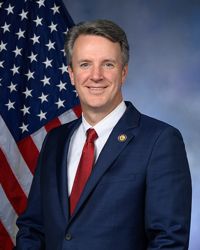
United States · United States Congress · 13 February 2025
This resolution supports the designation of National FFA (Future Farmers of America) Week. It also celebrates the 90th anniversary of New Farmers of America (NFA), which served Black vocational agriculture students in segregated public schools until NFA and FFA became one organization in 1965. The resolution also commemorates the 75th anniversary of the federal charter for the Future Farmers of America.
United States · United States Congress · 12 February 2025
United States-Israel Defense Partnership Act of 2025 This bill requires or authorizes certain actions to increase defense-related cooperation between the United States and Israel. Specifically, the bill requires the Department of Defense (DOD) to establish a cooperative program, with the concurrence of Israel's Ministry of Defense (MOD), to develop and deploy advanced technologies for countering unmanned systems that threaten the United States and Israel; establish in Israel an office of the Defense Innovation Unit (an organization that focuses on rapidly fielding and scaling commercial technology across the U.S. military); and seek to engage Israel's MOD on the ascension of Israel into the national technology and industrial base (currently defined in law as the persons and organizations engaged in research, development, production, integration, services, or information technology activities conducted within the United States, the United Kingdom, Australia, New Zealand, and Canada). The bill authorizes DOD, upon request of Israel's MOD, to jointly conduct research, development, test, and evaluation (RDT&E) of emerging technologies such as artificial intelligence and robotics to meet defense challenges. Additionally, the bill extends the authority for DOD to (1) carry out RDT&E on a joint basis with Israel to establish anti-tunnel and counter unmanned aerial systems capabilities through 2028, and (2) transfer defense articles intended for use as reserve stocks for Israel through January 1, 2029.
United States · United States Congress · 12 February 2025
Alternatives to Prevent Addiction In the Nation Act or the Alternatives to PAIN Act This bill reduces cost-sharing and prohibits the imposition of certain utilization requirements under the Medicare prescription drug benefit for certain non-opioid pain management drugs. Specifically, the bill requires such drugs to be covered without a deductible and to be placed on the lowest cost-sharing tier (if any). The bill also prohibits the imposition of prior authorization requirements (i.e., requiring prior approval from a plan) or step therapy requirements (i.e., requiring the use of alternative drugs before a drug is covered under a plan) with respect to such drugs.
United States · United States Congress · 12 February 2025
Give Kids a Chance Act of 2025 This bill expands the Food and Drug Administration’s (FDA’s) authority with respect to research on rare pediatric diseases, including by permitting the FDA to take enforcement action against drug sponsors that fail to satisfy pediatric study requirements and by reauthorizing programs that support pediatric research. Specifically, the bill modifies requirements relating to molecularly targeted pediatric cancer investigations to permit research on new drugs in combination with active ingredients that have already been approved, provided certain conditions are met; permits the FDA to take enforcement action against drug sponsors that fail to comply with pediatric study requirements, if such sponsors demonstrated a lack of due diligence in satisfying the requirement; renews the FDA’s authority to award priority review vouchers to sponsors of new products intended to treat rare pediatric diseases through September 30, 2029; and reauthorizes through FY2027 certain funding for the National Institutes of Health to support priority pediatric research. The bill also provides statutory authority for the FDA’s interpretation of the orphan drug exclusivity period. The bill specifies, consistent with FDA regulations, that the seven-year market exclusivity period for drugs for rare diseases or conditions (i.e., orphan drugs) prohibits the approval of the same drug for the same approved use or indication with respect to the disease or condition. (In Catalyst Pharmaceuticals, Inc. v. Becerra , a court rejected the FDA’s interpretation and held that orphan drug exclusivity extends to all uses or indications for the disease or condition.)
United States · United States Congress · 12 February 2025
Security And Fairness Enhancement for America Act of 2025 or SAFE for America Act of 2025 This bill eliminates the diversity visa program. This program provides up to 55,000 visas annually to individuals from countries with low rates of immigration to the United States.
United States · United States Congress · 11 February 2025
Protecting Privacy in Purchases Act This bill prohibits payment card networks from using merchant codes that distinguish firearms retailers from general-merchandise retailers or sporting-goods retailers. The Department of Justice must enforce this bill and report annually on the resulting investigations and cases.
United States · United States Congress · 11 February 2025
This bill repeals the Impoundment Control Act of 1974 (ICA). The ICA generally limits the authority of the President to impound (i.e., withhold from obligation or expenditure) funds that have been appropriated by Congress and establishes related procedures. It also establishes expedited legislative procedures that Congress may use to consider legislation to enact rescissions proposed by the President.
United States · United States Congress · 10 February 2025
Alpha-gal Allergen Inclusion Act This bill expands the definition of major food allergen to include galactose-alpha-1,3-galactose (commonly known as alpha-gal ). Under current law, food labels generally must identify each major food allergen found in labeled food products. (Certain tick bites cause an allergic condition known as alpha-gal syndrome that can result in an allergy to the alpha-gal molecule, which is found in red meat and other products made from mammals.)
United States · United States Congress · 7 February 2025
No Kill Switches in Cars Act This bill repeals a requirement that the National Highway Traffic Safety Administration prescribe a federal motor vehicle safety standard that requires certain passenger vehicles to be equipped with advanced drunk and impaired driving prevention technology. Currently, there is no federal motor vehicle safety standard that requires the technology. In general, advanced drunk and impaired driving prevention technology is a passive system that (1) monitors a driver's performance to identify driver impairment, or (2) accurately detects whether a driver's blood alcohol concentration is equal to or greater than 0.08%. The system must also prevent or limit vehicle operation if the system determines the driver may be intoxicated or impaired.
United States · United States Congress · 7 February 2025
Family Farm and Small Business Exemption Act This bill restores an exemption for certain family farms and small businesses on the Free Application for Federal Student Aid (FAFSA) form. The bill applies to the net worth of (1) a family farm on which the family resides, or (2) a small business with not more than 100 full-time or full-time equivalent employees that is owned and controlled by the family. Prior to recent changes made to the FAFSA, the net worth of these family farms and small businesses were excluded as assets when calculating a student's financial need to determine federal student aid eligibility. Beginning with the 2024-2025 academic year, the net worth of these farms and businesses are treated as an asset and therefore included in the calculation. This bill restores the exemption to exclude such net worth from the calculation.
United States · United States Congress · 7 February 2025
Freedom to Invest in Tomorrow’s Workforce Act This bill expands the expenses eligible for tax-free withdrawals from a qualified tuition program (known as a 529 plan) to include tuition, fees (including test fees), books, supplies, equipment, and other expenses related to the enrollment or attendance in a recognized postsecondary credentialing program. Under the bill, a recognized postsecondary credentialing program includes certain programs identified by a state as providing training services, a program listed in the Web Enabled Approval Management System (WEAMS) maintained by the Department of Veterans Affairs, certain examinations required to obtain or maintain a credential, and other reputable credentialing programs. Further, under the bill, such programs must be designed for an individual to obtain an industry-recognized postsecondary employment credential (e.g., project management professional certificate, advanced emergency medical technician certificate, and welding supervisor certificate), a certificate of completion of a registered and certified apprenticeship, an occupational or professional license issued or recognized by a state or the federal government (and any certification required for obtaining such license), or an associate or baccalaureate degree.
United States · United States Congress · 6 February 2025
Veterans 2nd Amendment Protection Act This bill prohibits the Department of Veterans Affairs (VA) from transmitting certain information to the National Instant Criminal Background Check System (NICS) utilized by licensed importers or dealers of firearms. Specifically, the bill prohibits the VA from transmitting personally identifying information of a veteran or a beneficiary to the NICS solely on the basis that such veteran or beneficiary has an appointed fiduciary to manage their benefits, unless there is an order or finding of a judicial authority that such veteran or beneficiary is a danger to themselves or others.
United States · United States Congress · 6 February 2025
No Censors on our Shores Act This bill makes certain non-U.S. nationals ( aliens under federal law) who were involved in conduct that would have been in violation of the First Amendment to the Constitution if it had occurred in the United States (1) inadmissible for entry into the United States, and (2) deportable. Specifically, the bill applies to an individual who, while serving as a foreign government official, carried out or was responsible for activity against a U.S. citizen located in the United States that would have violated the First Amendment if committed by a U.S. government official in the United States.
United States · United States Congress · 6 February 2025
Amateur Radio Emergency Preparedness Act This bill limits the adoption and enforcement of private land use restrictions (e.g., rules of a homeowners' association) that prohibit, restrict, or impair the installation, maintenance, or operation of an amateur station antenna on property controlled by an amateur radio operator. Private land use restrictions are deemed to prohibit, restrict, or impair the installation, maintenance, or operation of an amateur station antenna if they unreasonably delay, prevent, or increase the cost or difficulty of such installation, maintenance, or operation; or if they prevent or degrade the reception or transmission of a signal acceptable to the operator. However, the bill permits certain private land use restrictions, including restrictions that require amateur station antennas (1) to be maintained in a structurally safe condition; or (2) to be installed in compliance with manufacturer specifications, applicable zoning ordinances, amateur radio tower ordinances, and building codes. The bill also establishes certain limits on the adoption and enforcement of private land use restrictions that require an amateur radio operator to obtain prior approval before installing an amateur station antenna, and exempts certain categories of amateur station antenna from prior approval requirements altogether. Finally, the bill sets forth procedures for the enforcement of these provisions and provides a private right of action for individuals harmed by violations of the provisions.
United States · United States Congress · 5 February 2025
AM Radio for Every Vehicle Act of 2025 This bill requires the Department of Transportation (DOT) to issue a rule requiring AM radio capabilities to be standard in all new passenger vehicles. (AM radio is often used to deliver emergency alerts and news and entertainment programming; some newer vehicles do not include AM equipment.) Specifically, this bill applies to passenger vehicles (1) manufactured in the United States for sale in the United States, imported into the United States, or shipped in interstate commerce; and (2) manufactured after the rule's effective date. The rule must require all such vehicles to have devices that can receive signals and play content transmitted by AM stations or digital audio AM stations installed as standard equipment and made easily accessible to drivers. Prior to the rule's effective date, manufacturers that do not include devices that can access AM radio as standard equipment (1) must inform purchasers of this fact through clear and conspicuous labeling, and (2) may not charge an additional or separate fee for AM radio access. DOT may assess civil penalties for any violation of the rule. The Department of Justice may also bring a civil action to enjoin a violation. The rule, including DOT’s authority to enforce it, must expire 10 years after the bill’s enactment. Further, the Government Accountability Office must study and report on the dissemination of emergency alerts to the public, including by conducting an assessment of AM radio relative to other Integrated Public Alert and Warning System communication technologies.
United States · United States Congress · 5 February 2025
Cost Estimates Improvement Act This bill requires cost estimates prepared by the Congressional Budget Office or the Joint Committee on Taxation to include the costs of servicing the public debt.
United States · United States Congress · 5 February 2025
Protection of Women in Olympic and Amateur Sports Act This bill requires certified national governing bodies (NGBs) of amateur sports (e.g., USA Gymnastics) to prohibit a person whose sex is male from participating in an amateur athletic competition that is designated for females, women, or girls. Under the bill, male means an individual who has, had, will have—or would have, but for a developmental or genetic anomaly or historical accident—the reproductive system that at some point produces, transports, and utilizes sperm for fertilization.
United States · United States Congress · 5 February 2025
Voter Eligibility Verification Act of 2025 This bill requires the Department of Homeland Security to respond within 15 days of receiving a request from certain state officials for the immigration status of an individual on a list of potential voters.
United States · United States Congress · 5 February 2025
Fair Access to Banking Act This bill places restrictions on certain banks, credit unions, and payment card networks if they refuse to do business with a person who complies with the law. Restrictions include prohibiting the use of electronic funds transfer systems and lending programs, termination of an institution's depository insurance, and specified civil penalties. Banks and other specified financial institutions are allowed to deny financial services to a person only if the denial is justified by a documented failure of that person to meet quantitative, impartial, risk-based standards established in advance by the institution. This justification may not be based upon reputational risks to the institution. The bill establishes the right for a person to bring a civil action for a violation of this bill.
United States · United States Congress · 4 February 2025
Crime Victims Fund Stabilization Act of 2025 This bill adds a new source of revenue for the Crime Victims Fund (CVF). Specifically, the bill requires certain civil monetary penalties collected from settlements and judgments in cases involving fraud and false claims against the federal government to be deposited into the CVF through FY2029. The CVF supports federal, state, and local programs and activities to compensate and assist victims of crimes. Currently, the CVF is funded by deposits from a variety of sources, including federal criminal fines, penalties, and assessments; forfeited bail bonds; and certain other gifts, donations, and bequests.
United States · United States Congress · 4 February 2025
No User Fees for Gun Owners Act This bill prohibits a state or local government from imposing any insurance requirement, tax, user fee, or similar charge on the manufacture, import, acquisition, transfer, or continued ownership of a firearm or ammunition. The bill includes an exception for a generally applicable sales tax that is assessed against firearms or ammunition in the same proportion to which the tax applies to other goods or services.
United States · United States Congress · 31 January 2025
Nancy Gardner Sewell Medicare Multi-Cancer Early Detection Screening Coverage Act This bill allows, beginning in 2028, for Medicare coverage and payment for multi-cancer early detection screening tests that are approved by the Food and Drug Administration and that are used to screen for cancer across many cancer types, if the Centers for Medicare & Medicaid Services determines such coverage is appropriate. Coverage is limited to those under a certain age (age 68 in 2028, increased by one year every year thereafter) and to one test every 11 months.
United States · United States Congress · 31 January 2025
IGO Anti-Boycott Act This bill penalizes U.S. persons (individuals or entities) that participate in certain boycotts imposed by international governmental organizations (IGOs). The bill expands an existing law that prohibits various actions by U.S. persons in relation to boycotts imposed by foreign governments on a country that is friendly to the United States and not itself the object of a U.S. boycott. This bill applies those prohibitions to similar boycotts imposed by IGOs. Prohibited actions include (1) refusing to do business with companies organized under the laws of the boycotted country, if the refusal is pursuant to an agreement with or request from the country or IGO imposing the boycott; (2) furnishing information about whether any person has a business relationship with or in the boycotted country; and (3) furnishing information about whether someone is associated with charitable or fraternal organizations that support the boycotted country. Criminal penalties for willful violations of this law include fines of up to $1 million. In addition to such fines, individuals may be imprisoned for up to 20 years. Civil penalties may include fines and revocations of export licenses for certain national security-related items. The bill also requires the President to annually submit to Congress and make available to the public a report describing these boycotts and listing the foreign countries and international organizations involved in fostering or imposing them.
United States · United States Congress · 31 January 2025
Protect Our Communities from DUIs Act This bill makes driving while intoxicated or impaired a ground for (1) barring a non-U.S. national ( alien under federal law) from admission into the United States, or (2) deporting the individual. The bar to admission shall apply to an individual who has been convicted of the offense or has admitted to having committed the acts which constitute the elements of the offense. As a ground for deportability, the individual must have been convicted of the offense.
United States · United States Congress · 28 January 2025
This resolution expresses support for the designation of CTE (chronic traumatic encephalopathy) and RHI (repeated head impacts) Awareness Day. CTE is a brain condition thought to be related to repeated head injuries.
United States · United States Congress · 28 January 2025
287(g) Program Protection Act This bill requires the Department of Homeland Security (DHS) to allow qualified state and local law enforcement agencies to perform certain immigration enforcement activities if the agency requests such authority. DHS may refuse to grant the request only if there is a compelling reason. Currently, DHS is authorized to grant such authority but is not required to do so. DHS must annually report on (1) the performance of these enforcement activities, and (2) the plans to expand these activities to additional states and localities.
United States · United States Congress · 24 January 2025
CBO Show Your Work Act This bill requires the Congressional Budget Office (CBO) to make available to Congress and the public each fiscal model, policy model, and data preparation routine that the CBO uses to estimate the costs and other fiscal, social, or economic effects of legislation. For each estimate of the costs and other fiscal effects of legislation, the CBO must also disclose, in a manner sufficient to permit replication by individuals not employed by the CBO, the data, programs, models, assumptions, and other details of the computations used to prepare the estimate. For data that may not be disclosed, the CBO must make available to Congress and the public a complete list of all data variables for the data; descriptive statistics for all data variables for the data, to the extent that the descriptive statistics do not violate the rule against disclosure; a reference to the statute requiring that the data not be disclosed; and contact information for the individual or entity who has unrestricted access to the data.
United States · United States Congress · 24 January 2025
Life at Conception Act This bill declares that the right to life guaranteed by the Constitution is vested in each human being at all stages of life, including the moment of fertilization, cloning, or other moment at which an individual comes into being. Nothing in this bill shall be construed to authorize the prosecution of any woman for the death of her unborn child.
United States · United States Congress · 23 January 2025
This resolution reaffirms the importance of the alliance between the United States and South Korea, particularly with regard to security in the Indo-Pacific. The resolution also celebrates the important contributions of Korean Americans to American society and supports the goals of Korean Culture-Kimchi Day.
United States · United States Congress · 23 January 2025
Federal Insurance Office Elimination Act This bill eliminates the Federal Insurance Office (FIO) within the Department of the Treasury. The bill also removes the FIO director as a nonvoting member of the Financial Stability Oversight Council.
United States · United States Congress · 23 January 2025
Support And Value Expectant Moms and Babies Act of 2025 or the SAVE Moms and Babies Act of 2025 This bill prohibits the Food and Drug Administration (FDA) from approving any new drug (either as a brand-name drug or a generic) intended to terminate a pregnancy and imposes additional restrictions on such drugs that are already approved. Under the bill, an already-approved drug intended to terminate a pregnancy may be dispensed to a patient only with a prescription. Furthermore, the FDA may not approve any labeling change that would authorize (1) using the drug after 70 days of gestation, or (2) dispensing the drug by any means other than in-person administration by the prescribing health care practitioner. The FDA must also impose additional restrictions on such already-approved drugs, including by (1) requiring the prescribing health care practitioner to receive a special certification, (2) prohibiting the practitioner from also acting as the dispensing pharmacist, and (3) requiring the practitioner to have the ability to provide surgical intervention to the patient. The bill also rescinds any investigational use exemption already granted to such a drug if the bill would have prohibited the FDA from granting the exemption. (Currently, the FDA may grant an exemption to certain market approval requirements if a drug is intended solely for use in safety and effectiveness investigations.)
United States · United States Congress · 23 January 2025
Main Street Tax Certainty Act This bill makes permanent the qualified business income (QBI) tax deduction. Under current law, individuals, estates, and trusts may deduct the lower of (1) 20% of QBI from a qualified business, qualified real estate investment trust dividends, and qualified publicly traded partnership income; or (2) 20% of taxable income less net capital gain. (Some limitations apply.) However, under current law, the QBI tax deduction expires after December 31, 2025.
United States · United States Congress · 23 January 2025
End Unaccountable Amnesty Act This bill revises, restricts, and repeals various laws and programs addressing the admissibility and deportability of certain non-U.S. nationals ( aliens under federal law). The bill includes changes to the Temporary Protected Status (TPS) program, the treatment of unaccompanied children, and removal proceedings. Under current law, the Department of Homeland Security (DHS) may grant a foreign state Temporary Protected Status (TPS), which protects qualified nationals of that foreign state from removal from the United States. The bill instead requires an act of Congress to grant TPS to a foreign state. The bill limits TPS status to 12 months, subject to extension. The bill also generally requires the return of unaccompanied inadmissible children to their country of nationality or last habitual residence, among other changes. Under current law, DHS is authorized (not required) to return these children, and only if their country of nationality or last habitual residence is contiguous to the United States. The bill also repeals the law allowing for the cancellation of removal or adjustment of the immigration status of qualifying non-U.S. nationals. Under the bill, certain forms of identification, including a Notice to Appear issued by DHS, are no longer valid documents for purposes of airport security checkpoints. The bill also limits the ability of DHS to grant parole (temporary admission granted on a case-by-case basis). For example, the bill limits the granting of parole to a list of specific situations, such as the imminent death of a close family member.
United States · United States Congress · 23 January 2025
China Exchange Rate Transparency Act of 2023 This bill requires the U.S. Executive Director at the International Monetary Fund (IMF) to use the voice and vote of the United States to advocate for increased exchange rate transparency from China. Some areas of focus for this advocacy are (1) Chinese exchange rate arrangements, including any indirect foreign exchange market intervention through Chinese financial institutions or state-owned enterprises; (2) enhanced multilateral and bilateral surveillance by the IMF; and (3) stronger consideration of China's performance as a responsible stakeholder in the international monetary system when evaluating quota and voting shares at the IMF. The requirements of the bill expire seven years and 30 days after the date of the bill's enactment or earlier if China meets certain conditions regarding its exchange rate policies.
United States · United States Congress · 22 January 2025
Reining In Federal Licensing Enforcement Act of 2025 or the RIFLE Act of 2025 This bill revises the federal statutory framework governing the licensing, inspection, and enforcement of federally licensed dealers, importers, and manufacturers of firearms (i.e., federal firearms licensees, or FFLs) by the Bureau of Alcohol, Tobacco, Firearms and Explosives (ATF). With respect to an application for a license, this bill requires the ATF to make a preliminary determination, provide notice of a proposed denial, and allow the applicant to request a hearing. With respect to inspections, this bill requires the ATF to establish standards for how it inspects, examines, or investigates FFLs for possible violations. With respect to the enforcement of violations, this bill establishes a new framework. The new framework establishes a presumption that a violation by an FFL is not willful and requires the ATF to provide notice of and work with an FFL to rectify a violation. In the case of a violation that is willful, the ATF has the burden of proving by clear and convincing evidence that the violation was committed willfully. The term willfully means that the person had actual knowledge of a legal duty, understood the obligation imposed by the legal duty, and deliberately disregarded the legal duty. The ATF may pursue revocation of an FFL’s license, but only after (1) providing notice and an opportunity to comply; and (2) finding that a lesser administrative action (e.g., warning, warning letter, or warning conference) is not likely to lead to future compliance.