Law· HJRESH.J.Res. 259 (99th)enacted
A joint resolution to designate November 30, 1985, as "National Mark Twain Day".
United States · United States Congress · 24 April 1985
Designates November 30, 1985, as National Mark Twain Day.
The world's political record
Person
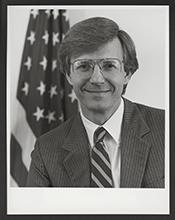
United States · Official source
1,073 records where Rep. Coleman, E. Thomas [R-MO-6] is listed as a sponsor, author, or other actor. Search with topics and years
United States · United States Congress · 24 April 1985
Designates November 30, 1985, as National Mark Twain Day.
United States · United States Congress · 24 April 1985
Designates the month of March 1986 as National Hemophilia Month.
United States · United States Congress · 24 April 1985
Constitutional Amendment - Prohibits the total appropriations of the Congress from exceeding estimated revenues. Authorizes the suspension of such prohibition in time of war or national emergency. Prohibits any increase in the national debt as it exists on the date this article is ratified. Sets forth a schedule for repayment of the national debt.
United States · United States Congress · 24 April 1985
Establishes in the legislative branch of the Government the Perot Commission on Americans Missing in Southeast Asia to conduct an investigation and report to the Congress its findings with respect to the existence and the release of prisoners of war in Southeast Asia. Sets forth specified administrative procedures and powers of the Commission. Requires the Commission to terminate 30 days after the filing of its report to the Congress or on January 3, 1987, whichever occurs first.
United States · United States Congress · 23 April 1985
Authorizes the President, on behalf of the Congress, to present a gold medal honoring George Gershwin to his sister, Frances Gershwin Godowsky, and a gold medal honoring Ira Gershwin to his widow, Lenore Gershwin. Directs the Secretary of the Treasury to provide for the sale of bronze duplicates of the medal. Authorizes appropriations.
United States · United States Congress · 23 April 1985
Expresses the sense of the Congress that: (1) the English language is the official language of the United States; and (2) no language other than the English language is recognized as the official language of the United States.
United States · United States Congress · 22 April 1985
Student Loan Collection Improvement Amendments of 1985 - Title I: Guaranteed Student Loan Program - Amends the Higher Education Act of 1965 (HEA) to revise title IV, part B provisions for the Federal Insured Student Loan (FISL) program and the Guaranteed Student Loan (GSL) program. Revises GSL provisions for agreements with State and nonprofit private institutions for subsidy payments on loans insured under the student loan insurance program of such State or institution to grant lenders the option of requiring endorsement of the loan by a co-signer. Deletes a 15-year limitation on the period of the loan. Revises provisions for disbursement of loans to require that the funds borrowed be disbursed by check: (1) sent to the eligible institution the student attends or plans to attend, and made payable to the order of the student and such institution as copayees, with the endorsement of both parties required; or (2) in cases where the loan is an auxiliary loan to a parent, sent to the borrower and made payable to the order of the borrower, with the endorsement of the borrower required, and a notice of disbursement sent by the lender or the Secretary of Education to the eligible institution. Requires that such agreements provide for: (1) independent financial and compliance audits of the guarantee agency, with regard to its performance under such an agreement, at least once every two years (except with regard to a guarantee program of a State which is audited under specified Federal requirements for single audits, in which case such audit shall be deemed to satisfy the requirements of this clause (1) for the period of time covered by such audit); and (2) recovery by the Secretary from the guarantee agency of amounts, plus interest, determined by such audits to be owing. Provides that, notwithstanding any provision of State law that would set an earlier deadline for filing suit, any suit for the collection of the amount due from a FISL or GSL borrower may be filed during a six-year period: (1) after the date a guarantee agency reimburses the previous holder of the loan for its loss on account of the borrower's default; and (2) after the date on which the loan is assigned to the Secretary. Provides that, notwithstanding any provision of State law to the contrary, in collecting any obligation arising from a loan made under FISL or GSL provisions, a guarantee agency which has an agreement with the Secretary shall not be subject to a defense raised by any borrower based on: (1) a claim of infancy; or (2) the action or omission of an eligible institution or lender, if such agency did not have actual notice of such defense when such agency reimbursed the previous holder of the loan for its loss. Revises provisions for payment of excess recovery to the insured to include reasonable administrative and collection costs, to the extent set forth in regulations issued by the Secretary, in the costs of the Secretary's recovery on any FISL loan. Requires, under GSL provisions (as well as under current FISL provisions), each guarantee agency (as well as the Secretary) to enter into cooperative agreements with credit bureau organizations to exchange information concerning student borrowers. Deletes FISL program requirements: (1) for notice to the borrower before certain information is disclosed; (2) for establishment of a system for prompt notification of borrowers; and (3) relating to other conditions under Federal law, for Federal agency disclosure of individual records. Provides that a guarantee agency (or a credit bureau organization) which discloses or receives such information shall not be considered a Government contractor within the meaning of specified Federal law relating to Federal agency disclosure of individual records. Authorizes the Secretary and each guarantee agency to disclose specified information concerning student borrowers to the eligible institutions such borrowers attend or previously attended. Allows, notwithstanding specified provisions of the Fair Credit Reporting Act, a consumer reporting agency to make a report containing information received from the Secretary or a guarantee agency regarding the status of a borrower's account on a loan under the FISL or GSL program for a period of up to seven years after: (1) the date on which the Secretary or the agency paid a claim to the holder on the guarantee; or (2) October 1, 1984, with regard to an account on a loan which the Secretary or the agency has paid a claim but not reported the account to a consumer reporting agency on or before such date. Provides that, notwithstanding any provision of State law to the contrary, in collecting any obligation arising from a loan made under GSL provisions, the United States shall not be subjected to a defense raised by any borrower on either a claim of infancy or the action or omission of an eligible institution or lender, if the Secretary and the Secretary's agents did not have actual notice of such defense when the Secretary reimbursed the previous holder of the loan for its loss. Authorizes the Secretary to impose a civil penalty of up to $25,000 for each of specified violations or failures to carry out student aid provisions or regulations or misrepresentations of financial charges by a lender or guarantee agency. Authorizes the Secretary to compromise such penalties. Title II: National Direct Student Loan Program - Revises HEA provisions for the National Direct Student Loan (NDSL) program. Requires NDSL agreements to provide that where a note or written agreement evidencing a loan is in default despite due diligence on the part of the institution to collect such loan: (1) if the institution has failed to maintain an acceptable collection record generally with respect to NDSL loans, the Secretary may require such institution to assign its rights under such note or agreement to the United States, without recompense; or (2) if the institution has not failed to maintain an acceptable NDSL collection record, the Secretary may allow it to assign its rights under such note or agreement to the United States, without recompense. Sets forth provisions relating to the seven-year period of reporting on the status of NDSL borrowers' accounts by consumer reporting agencies. (Such provisions are similar to those for such reporting on GSL accounts under title I of this Act, with the exception of clause (2) of the following sentence.) Allows, notwithstanding specified provisions of the Fair Credit Reporting Act, a consumer reporting agency to make a report containing information received from the Secretary or a guarantee agency regarding the status of a borrower's account on a loan under the FISL or GSL program for a period of up to seven years after: (1) the date on which the Secretary or the agency paid a claim to the holder on the guarantee; or (2) the date the Secretary first reports the account to a consumer reporting agency, if that account has not been previously reported by any other holder of the note. Requires each institution to include in its information to NDSL student borrowers a description of any penalty imposed as a consequence of default (such as liability for expenses reasonably incurred in attempts by the Secretary or institutions to collect on a loan). Revises required terms of NDSL loans to grant institutions the option of requiring NDSL loans to be endorsed by a cosigner. Makes mandatory, rather than discretionary, the assessment of a charge for failure of an NDSL borrower to pay all or part of an installment when due. Requires that such charge include the expenses reasonably incurred in attempting such collection with respect to such loan. Authorizes the Secretary, in attempting to collect any defaulted NDSL loan, to use any collection means available to the United States, including referral to the Attorney General for litigation. Directs the Secretary to continue to collect any loan assigned under provisions for assignment of rights to the United States until all appropriate collection efforts, as determined by the Secretary, have been expended. Provides for a six-year statute of limitations on specified collection suits for NDSL loans, similar to that provided by the GSL amendments under title I of this Act. Title III: General Provisions - Revises general provisions for student assistance programs under HEA. Revises provisions for student eligibility for any grant, loan, or work assistance under HEA to require that a student not owe a refund on grants previously received at any institution, or be in default on any loan from a student loan fund at any institution, or a loan made, insured, or guaranteed by the Secretary for attendance at any institution. Provides for a six-year statute of limitations on specified collection suits for refunds due from a student on a grant made or work assistance awarded under HEA. Requires borrowers who have defaulted on student loans under HEA to pay reasonable collection costs, in addition to other charges specified under HEA, notwithstanding State law. Authorizes the Secretary to prescribe regulations for recovery by the Secretary from the eligible institution of amounts, plus interest, determined by specified audits to be owing. Title IV: Application Provisions - Sets forth the effective dates of specified amendments made by this Act.
United States · United States Congress · 22 April 1985
Prohibits imports of beef, bananas, or sugar from Nicaragua until the President finds that the policies of the Nicaraguan Government regarding opposition to the resistance forces and a democratic government are consistent with its obligations under the terms of the Nicaraguan revolution and the promises made to the Organization of American States.
United States · United States Congress · 18 April 1985
Soil Conservation Act of 1985 - Makes any person who cultivates crops on highly erodible land ineligible as to those crops for: (1) price supports or payments; (2) farm storage facility loans; (3) crop insurance; (4) disaster payments; or (5) specified other agricultural loans. Exempts crops planted: (1) on land cultivated from 1976 through 1985; (2) before enactment of this Act; (3) under specified conservation systems; or (4) in reliance on a Soil Conservation Service determination that such land was not highly erodible. Directs the Secretary of Agriculture to complete certain soil capability surveys as soon as practicable. Directs the Secretary to establish a conservation reserve program to assist producers in conserving soil and water resources on highly erodible land. Directs the Secretary through FY 1990 to enter into long-term (ten years or more) contracts under which the Secretary shall pay an annual fee, share conservation costs, and provide technical assistance in return for converting such cropland into less intensive use such as pasture, permanent grass, or trees. Limits annual payments to any one person to $50,000. Directs the Secretary to provide safeguards to protect the interests of tenants and sharecroppers. Authorizes the Secretary to carry out such program through the Commodity Credit Corporation. Authorizes appropriations.
United States · United States Congress · 17 April 1985
Amends the Internal Revenue Code to establish an applicable test rate of nine percent for determining whether there is imputed interest in the case of seller-financed property. Permits a lower test interest rate of 80 percent of the Federal Treasury rate where such rates are lower than the nine percent test rate. Provides for a blended test rate for instances where the loan amount exceeds $4,000,000. Provides that in determining whether wraparound financing meets such testing rate, the test shall be applied to the net rate of interest on the seller's equity in the financing after deducting the existing third party financing. Authorizes the imputation of interest in seller-financed property sales of $4,000,000 or less of ten percent or 90 percent of the Federal Treasury rates, whichever is less, where the test interest rates have not been met. Allows for a blended imputed interest rate where the debt amount exceeds $4,000,000. Requires that all loan amounts from a single transaction or series of related transactions be aggregated for purposes of determining the loan amount. Provides that the imputed interest rules will not apply to assumptions of loans unless the terms and conditions of such debt obligations are modified in connection with the assumption. Repeals the provisions of the Code limiting the amount of interest expense a purchaser of personal use property may deduct for tax purposes. Excepts debt instruments arising from the sale or exchange of a residence from the imputed interest provisions where the obligor of the instrument uses the property as his other residence. Provides that the imputed interest rules shall not apply in the case of sales or exchanges of property where the borrowed amount does not exceed $4,000,000. Requires the interest on the obligation issued in connection with such sales or exchanges to be taken into account by both the buyer and the seller on the cash receipts and disbursement method of accounting unless both buyer and seller agree to use the accrual receipts and disbursement method of accounting.
United States · United States Congress · 15 April 1985
States that the House of Representatives supports Solidarity Sunday for Soviet Jewry on May 5, 1985.
United States · United States Congress · 4 April 1985
Amends the Library Services and Construction Act (the Act) to revise the definitions of "long-range program" and "Indian tribe." Makes specified requirements for maintenance of funding levels for public library systems applicable to Hawaiian native programs. Provides that, for purposes of basic State plan requirements, "limited English-speaking proficiency" shall be determined according to its definition under the Bilingual Education Act. Specifies that certain references under provisions relating to administrative costs are to titles I, II, and III of the Act. Excludes the amount made available for Indian tribes and Hawaiian natives from certain determinations for purposes of reservation of portions of State allotments for major urban resource libraries. Makes inapplicable in the case of Indian tribes and Indians in California, Oklahoma, and Alaska any provisions of title IV (Library Services for Indian Tribes) which require that services be provided on or near Indian reservations, or to only those Indians who live on or near Indian reservations. Amends the General Education Provision Act to authorize appropriations for the Minority Institutions Science Improvement Program for FY 1985 and 1986. Amends the Harry S Truman Memorial Scholarship Act to remove the dollar limitation on stipends paid under such Act. Authorizes the Harry S Truman Scholarship Foundation to prescribe regulations governing the amount of such stipends.
United States · United States Congress · 4 April 1985
Designates the week of May 18 through May 24, 1985, as National Food Bank Week.
United States · United States Congress · 3 April 1985
Narcotics Importation, Manufacture, and Control Act - Amends the Controlled Substances Import and Export Act to increase the criminal penalties for: (1) importing or exporting controlled substances; (2) bringing or possessing on board a vessel, aircraft, or vehicle a controlled substance; and (3) manufacturing or distributing a controlled substance. Prohibits granting a suspended or probationary sentence for persons convicted of such offenses. Denies such persons eligibility for parole. Permits imposing criminal penalties for attempts or conspiracies to commit such offenses. Requires such penalties to be imposed in the same manner and to the same extent as is prescribed for actually committing the offenses involved. Prohibits granting a suspended or probationary sentence for persons convicted of such attempts or conspiracies and denies such persons eligibility for parole if such sentences and parole are precluded for actually committing the offenses involved. Requires that any person who manufactures a controlled substance shall be imprisoned for the entire maximum term of imprisonment for such violation. Prohibits granting a suspended or probationary sentence and denies such persons eligibility for parole.
United States · United States Congress · 3 April 1985
American Footwear Industry Recovery Act of 1985 - Limits the imports of nonrubber footwear into the United States to 450,000,000 pairs per 12 month period for eight years. Directs the Secretary of Commerce (the Secretary) to allocate the import limitations among foreign countries, taking into consideration: (1) average levels of imports for the period 1978 through 1982; (2) findings of unfair trade practices with respect to nonrubber footwear products; (3) recent market trends; and (4) such other considerations as the Secretary deems appropriate. Directs the Secretary and the Secretary of the Treasury to take all necessary actions to enforce this Act. Authorizes the Secretaries to issue such implementing regulations as necessary to effect the purposes of this Act and to enforce its provisions.
United States · United States Congress · 3 April 1985
Amusement Ride Safety Commission Joint Resolution - Establishes a National Commission on Amusement Ride Safety to conduct an investigation of the scope and adequacy of safety measures employed to protect the public from unreasonable risks of injuries from amusement rides. Directs the Commission to review; (1) Federal, State, and local laws; (2) voluntary safety standards; and (3) self-regulation measures. Directs the Commission to determine the uniformity of application and quality of enforcement of such laws, standards, and self-enforcement mechanisms. Directs the Commission to transmit to the President and the Congress a final report, not later than 18 months after enactment of this resolution. Grants the Commission the power to hold hearings, subpoena witnesses, and order any person to give testimony by deposition.
United States · United States Congress · 28 March 1985
Designates the month of October 1985 as National Make-A-Wish Month.
United States · United States Congress · 21 March 1985
Designates the month of October 1985 as National Head Injury Awareness Month.
United States · United States Congress · 20 March 1985
Amends the Internal Revenue Code to allow a defined contribution retirement plan of a rural electric cooperative to include a qualified cash or deferred arrangement.
United States · United States Congress · 19 March 1985
Directs the President to designate May 1985 as Older Americans Month.
United States · United States Congress · 7 March 1985
Agricultural Export Expansion Act of 1985 - Prohibits the cargo preference laws from applying to export activities of the Commodity Credit Corporation (CCC) or the Department of Agriculture under which: (1) stocks of farm commodities or the products thereof acquired by the CCC are made available to U.S. exporters, users, or foreign purchasers for the maintenance or expansion of export markets for U.S. farm commodities; (2) commercial credit guarantees are blended with direct interest-free credits from the CCC to reduce the interest rate on export sales of U.S. farm commodities; or (3) the CCC or the Department of Agriculture promotes the export of U.S. farm commodities on a commercial basis.
United States · United States Congress · 7 March 1985
Amends the Higher Education Act of 1965 (the Act) to revise title I provisions. Retitles title I (currently "Continuing Postsecondary Education Program and Planning") as "Targeted Educational Outreach and Informational Programs." Retitles and replaces part A (currently "Commission on National Development in Postsecondary Education") with new provisions for "Postsecondary Education Innovation and Expansion Grants." Directs the Secretary of Education to carry out a program, in accordance with such title I part A, to assist eligible postsecondary institutions to establish programs to enhance the educational opportunities available to adult learners. Directs the Secretary, from specified sums, to award grants to institutions with applications meeting specified criteria for such assistance. Sets the maximum award that may be made under a single application under part A at $200,000 (or $300,000 in the case of an application from a combination of eligible institutions), which may remain available for expenditure for not more than a three-year period. Makes institutions of higher education, as defined under general provisions of the Act, and combinations of such institutions eligible to apply for such assistance. Sets forth permissible uses of such grant funds. Authorizes appropriations for FY 1986 through 1990 to carry out part A. Retitles and replaces part B (currently "Education Outreach Programs") with new provisions for "Postsecondary Outreach Grants." Directs the Secretary, in accordance with such title I part B, to carry out a program to assist postsecondary institutions to establish and carry out programs designed to encourage the establishment and growth of off-campus educational programs. Authorizes the Secretary to award grants to institutions with applications meeting specified criteria for assistance. Sets the maximum award that may be made under a single application under part B at $200,000 (or $300,000 in the case of an application from a combination of eligible institutions), which may remain available for expenditure for not more than a three-year period. Makes institutions of higher education, as defined under general provisions of the Act, or combinations of such institutions, eligible for such assistance. Sets forth permissible uses of such grant funds. Authorizes appropriations for FY 1986 through 1990 to carry out part B. Eliminates provisions for the National Advisory Council on Continuing Education. Sets forth new title I part C provisions for "Research Program Grants." Authorizes the Secretary to make grants to, and contracts with, institutions of higher education, public and private institutions and organizations, and States, or any combination thereof, to support the purposes of such part C by providing assistance to such educational institutions for specified educational research, development, information, and training activities relating to postsecondary education for adult learners. Sets forth application requirements for such grants and contracts. Sets the maximum award that may be made under a single application under part C at $200,000 (or $300,000 in the case of an application from a combination of eligible institutions), which may remain available for expenditure for not more than a three-year period. Sets forth permissible uses of funds under part C. Authorizes appropriations for FY 1986 through 1990 to carry out part C. Sets forth a new title I part D ("Defined Term") which defines the term "adult learner" for purposes of title I.
United States · United States Congress · 7 March 1985
Designates April 2, 1985, as Education Day, U.S.A.
United States · United States Congress · 4 March 1985
Designates the month of October 1985 as National Spina Bifida Month.
United States · United States Congress · 28 February 1985
Employee Educational Assistance Act of 1985 - Amends the Internal Revenue Code to extend indefinitely the income tax exclusion for employee educational assistance programs. (Present law terminates such exclusion as of December 31, 1985.) Limits the maximum amount of such exclusion (beginning in 1986) to $5,000 of amounts paid or expenses incurred for educational assistance furnished to an employee during a calendar year. Exempts graduate students engaged in teaching or research activities from such maximum limit. Provides for annual cost-of-living adjustments in such maximum limit beginning in 1987.
United States · United States Congress · 28 February 1985
Designates the week beginning on October 6, 1985, as Mental Illness Awareness Week.
United States · United States Congress · 26 February 1985
Designates the month of May 1985 as Better Hearing and Speech Month.
United States · United States Congress · 25 February 1985
Authorizes the Armored Force Monument Committee, the United States Armor Association, the World Wars Tank Corps Association, the Veterans of the Battle of the Bulge, the 11th Armored Cavalry Regiment Association, the Tank Destroyer Association, the 1st, 2nd, 3rd, 4th, 5th, 6th, 7th, 8th, 9th, 10th, 11th, 12th, 13th, 14th, and 16th Armored Division Associations, and the Council of Armored Division Associations to erect a memorial in or near Arlington National Cemetery, Virginia, to honor and commemorate the American Armored Force. Directs the Secretary of the Interior, with the approval of the National Commission of Fine Arts and the National Capital Planning Commission, to select the site and approve the design and plans. Obligates the United States to expenses of maintenance only. Requires the commencement of the erection of the memorial within five years with a certification of sufficiency of funds necessary before commencement.
United States · United States Congress · 21 February 1985
Designates August 4, 1985, as Freedom of the Press Day.
United States · United States Congress · 19 February 1985
Liberty Double-Eagle Bullion Coin Act - Requires the Secretary of the Treasury to mint and issue gold double-eagle coins. Sets forth specifications for and the design of such coins. Makes such coins legal tender. Permits the sale of such coins at a price equal to the cost of minting and issuing such coins plus a surcharge equal to the amount by which the fair market value of gold bullion held by the United States and used in the minting of the coins exceeds the statutory maximum value of any gold certificates outstanding against the bullion. Requires the revenue from such surcharges to be used to reduce the national debt. Authorizes appropriations.
United States · United States Congress · 19 February 1985
Designates April 1985 as National School Library Month.
United States · United States Congress · 7 February 1985
Emergency Agricultural Credit Act of 1985 - Directs the Secretary of Agriculture to guarantee (75 percent of the principal) agricultural production loans made in 1985. Limits such aggregate guaranteed principal to $3,000,000,000. Amends the Consolidated Farm and Rural Development Act to authorize the Secretary to make production loans through 1987 (at a reduced interest rate).
United States · United States Congress · 7 February 1985
Proclaims March 20, 1985, as National Agriculture Day.
United States · United States Congress · 6 February 1985
Authorizes and requests the President to designate the week of June 16 through June 22, 1985, as National Safety in the Workplace Week.
United States · United States Congress · 4 February 1985
Designates May 1985 as Nation Community College Month.
United States · United States Congress · 31 January 1985
Establishes a presumption of service-connection for disability purposes for former prisoners of war suffering from the following conditions, manifest to a degree of ten percent or more after active service: (1) chronic liver disease; (2) organic residuals of hypothermia; (3) gastro-intestinal disorders; (4) arthritis; (5) cardiovascular conditions; (6) peripheral neuropathy; (7) immunological dysfunctions; or (8) chronic pulmonary disease. Decreases from six months to 30 days the amount of time a former prisoner of war must have been incarcerated to be eligible for outpatient dental services.
United States · United States Congress · 22 January 1985
Repeals the requirement added by the Tax Reform Act of 1984 relating to the maintenance of contemporaneous records with respect to: (1) business travel expenses, including automobile expenses; (2) business entertainment expenses; and (3) expenses for gifts.
United States · United States Congress · 22 January 1985
National Commission on Neurofibromatosis Act - Directs the Secretary of Health and Human Services to establish within 60 days a National Commission on Neurofibromatosis which shall formulate a plan to identify the research needed to develop an effective treatment and a cure for neurofibromatosis. Sets forth operating and related provisions. Authorizes the Commission to transmit interim reports. Requires the Commission to make a final report to the President and to each House of the Congress within two years. Terminates the Commission three months after submission of the final report. Authorizes appropriations.
United States · United States Congress · 21 January 1985
Amends the Steel Import Stabilization Act to direct the U.S. Trade Representative, in negotiating with Japan and South Korea on steel products import limits, to negotiate the apportionment of the aggregate limit among specified subcategories of steel products. Directs the U.S. Trade Representative to apportion the aggregate limit if such negotiations are not successfully concluded within 30 days of the enactment of this Act. Sets forth such subcategories.
United States · United States Congress · 21 January 1985
Amends the Internal Revenue Code to exempt agricultural vehicles from the limitation on the investment tax credit and depreciation for property used for personal purposes.
United States · United States Congress · 3 January 1985
Amends the Internal Revenue Code to repeal rules relating to the determination of the issue price of certain debt instruments issued for property. Amends the Tax Reform Act of 1984 to repeal the revisions made to rules for the imputation of interest on certain deferred payments. Provides that the Internal Revenue Code shall be applied and administered as if such revisions had not been enacted.
United States · United States Congress · 3 January 1985
Designates: (1) the week beginning January 19, 1987, as Shays' Rebellion Week; and (2) Sunday, January 25, 1987, as Shays' Rebellion Day.
United States · United States Congress · 3 January 1985
Authorizes and requests the President to designate the period from Mother's Day to Father's Day, May 12 to June 16, 1985, as Family Reunion Month.
United States · United States Congress · 3 January 1985
Constitutional Amendment - Requires the Congress, prior to each fiscal year, to adopt a statement of receipts and outlays for that year in which total outlays are not greater than total receipts. Permits the Congress in such statement to provide for a specific excess of outlays over receipts by a three-fifths vote directed solely to that subject. Requires the President and the Congress to ensure that actual outlays do not exceed the outlays set forth in such statement. Prohibits total receipts for any fiscal year set forth in such statement from increasing by a rate greater than the rate of increase in national income in the last calendar year ending before such fiscal year, unless the Congress passes by a three-fifths vote a bill directed solely to approving specific additional receipts and such bill has become law. Requires the President, prior to each fiscal year, to transmit to the Congress a proposed statement of receipts and outlays for that year consistent with the provisions of this article. Permits the Congress to waive the provisions of this Act with respect to any fiscal year in which a declaration of war is in effect. Declares that total receipts shall include all receipts of the United States, except those derived from borrowing and total outlays shall include all outlays of the United States except those for repayment of debt principal.
United States · United States Congress · 3 January 1985
Constitutional Amendment - Provides for the appointment of electors to represent the insular areas constituting the Virgin Islands, American Samoa, Guam, and the Commonwealth of the Northern Mariana Islands.
United States · United States Congress · 3 January 1985
Establishes the Joint Committee on Intelligence. Declares that such committee has exclusive legislative jurisdiction with respect to any intelligence activity of the Federal Government and authorizations for appropriations for specified agencies and intelligence-related activities. Directs the joint committee to classify its information and records and to establish guidelines for their maintenance, use, and availability. Sets forth procedures for the disclosure of such information. Directs the joint committee to establish and carry out rules and procedures necessary to prevent the unauthorized disclosure of information. Makes conforming amendments to the Rules of the House of Representatives, including abolishing the Permanent Select Committee on Intelligence, and the National Security Act of 1947.
United States · United States Congress · 25 September 1984
Expresses the sense of the House of Representatives that the President should direct appropriate members of the administration to: (1) pursue discussions with Canada directed toward resolving problems relating to U.S. imports of Canadian pork; and (2) use all available authorities to protect the economic viability of the U.S. pork industry and to promote free and fair trade.
United States · United States Congress · 9 August 1984
Designates the month of October 1984 as National Head Injury Awareness Month.
United States · United States Congress · 26 July 1984
Agricultural Patent Reform Act of 1984 - Amends the patent laws to extend the terms of patents which encompass specified products or methods for using a product, including methods of manufacturing which primarily use recombinant DNA technology, any of which are subject to certain nonpatent regulatory review periods. Sets forth the terms and conditions of such extension, including a five year limitation on the extension and a 25 year maximum patent term from the earliest filing. Directs the Commissioner of Patents to notify the appropriate Federal agency upon receipt from a product sponsor of a notice of extension. Requires the notified agency to determine the applicable regulatory review period and whether, within that period, the sponsor acted with due diligence. Provides for notice and informal hearings for persons interested in such determinations. Grants a product sponsor the opportunity to designate any data submitted during the regulatory review period as a trade secret or confidential. Directs the Commissioner, upon a final determination of the applicable regulatory review period, to issue to the owner of record of a patent a certificate of extension stating the fact and length of the extension and identifying the product and the use and the claim to which such extension is applicable. Makes such certificate a part of the original patent. Limits the application of such patent term extension to patents for: (1) any new animal drug or antibiotic subject to regulation under the Federal Food, Drug, and Cosmetic Act; (2) any veterinary biological product subject to regulation under the Virus-Serum-Toxin Act; (3) any pesticide subject to regulation under the Federal Insectide, Fungicide, and Rodenticide Act; and (4) any chemical substance or mixture subject to regulation under the Toxic Substances Control Act.
United States · United States Congress · 25 July 1984
Amends the Internal Revenue Code to repeal rules relating to the determination of the issue price of certain debt instruments issued for property. Amends the Tax Reform Act of 1984 to repeal the revisions made to rules for the imputation of interest on certain deferred payments. Provides that the Internal Revenue Code shall be applied and administered as if such revisions had not been enacted.