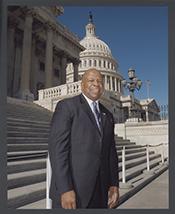
United States · United States Congress · 25 June 2019
Public Service Freedom to Negotiate Act of 2019 This bill prohibits strikes by certain individuals and requires the issuance of rules that provide for federal minimum standard collective bargaining rights and procedures. The Federal Labor Relations Authority (FLRA) shall determine for each state whether the laws of such state substantially provide for each of the minimum standard collective bargaining rights and procedures specified by this bill, including the right of public employees and supervisory employees to self-organize, form or join a labor organization, or collectively bargain. The FLRA must issue rules and take actions to establish and administer bargaining rights and procedures for those states that do not substantially provide for them. No employers, emergency services employees, or law enforcement officers may engage in a lockout, strike, or any other organized job action that would probably result in a measurable disruption of the delivery of emergency or public safety services. Furthermore, no labor organization may be the cause of a violation of such prohibition.
United States · United States Congress · 24 June 2019
Local Public Health And Safety Protection Act This bill authorizes the Department of Justice to make grants to states that allow local governments to impose firearms laws that are more restrictive than state firearms laws. A state that receives a grant must award subgrants to localities to help implement the more restrictive firearms laws.
United States · United States Congress · 20 June 2019
Lady Liberty Act of 2019 This bill sets a floor of 110,000 for the maximum number of refugees who may be admitted into the United States each fiscal year. Under current law, the President sets the annual cap on refugee admissions at the beginning of each fiscal year. (The cap for FY2020 is 18,000, and the cap for FY2019 was 30,000.)
United States · United States Congress · 20 June 2019
Stopping Bad Robocalls Act This bill updates various policies and regulations relating to robocalls. Specifically, the bill requires the Federal Communications Commission (FCC) to protect consumer privacy as it relates to robocalls. The FCC must update regulations involving certain robocalls that are exempt from criminal liability to include specific requirements identifying classes of parties who may make such calls, parties who may be called, and how many times they may be called. Additionally, the bill removes the requirement that a citation be issued prior to a forfeiture penalty being imposed in cases where violations involving illegal robocalls have been intentional and where inaccurate caller identification information has been provided. The bill also implements a three-year statute of limitation for such violations requiring notice, and a four-year statute of limitation where an intentional violation has occurred. The FCC must promulgate regulations to address requirements for effective call authentication technology as well as to establish a process to streamline the ways in which a private entity may voluntarily share with FCC information relating to an illegal call or text or for calls with misleading or inaccurate caller identification information. Finally, the bill requires the FCC to ensure robocall blocking services provided on an opt-out basis are provided free of cost with transparency and redress options for consumers and callers.
United States · United States Congress · 20 June 2019
Stop Child Summer Hunger Act of 201 9 This bill requires the Department of Agriculture to establish a program providing eligible households with summer Electronic Benefits Transfer (EBT) cards in order to give children access to food during the summer months to (1) reduce or eliminate children's food insecurity and hunger, and (2) improve their nutritional status. An "eligible household" is a household that includes one or more children who are eligible to receive free or reduced price meals under the school lunch or breakfast programs. The amount on each summer EBT card is set at $150 per child in 2020, with adjustments thereafter reflecting changes in reimbursement rates for school meals under the school lunch program. If children are enrolled to receive free or reduced price meals under the school lunch or breakfast programs, they must be enrolled in this program without further application. Summer EBT cards may be used only to purchase food from retail food stores that have been approved for participation in the supplemental nutrition assistance program (SNAP, formerly known as the food stamp program).
United States · United States Congress · 19 June 2019
This resolution recognizes the historical significance and supports the continued celebration of Juneteenth Independence Day, which commemorates the end of slavery in the United States.
United States · United States Congress · 14 June 2019
This resolution reaffirms the bipartisan commitment to promoting the safety, health, education, and well-being of refugees and persons displaced by war, persecution and violence. It also calls upon the Department of State and the Ambassador to the United Nations to continue supporting robust funding for refugee protection and humanitarian response overseas and resettlement in the United States.
United States · United States Congress · 13 June 2019
Global Respect Act This bill imposes visa-blocking sanctions on foreign persons responsible for or complicit in violating the human rights of individuals due to actual or perceived sexual orientation, gender identity, or sex characteristics. The President shall report and periodically update a list of foreign persons responsible for such human rights violations and apply sanctions accordingly. The Department of State shall designate at least one senior officer who shall be responsible for tracking violence and discrimination against individuals based on actual or perceived sexual orientation, gender identity, or sex characteristics in foreign countries.
United States · United States Congress · 12 June 2019
Humanitarian Standards for Individuals in Customs and Border Protection Custody Act This bill imposes requirements and standards related to the care of aliens in U.S. Customs and Border Protection (CBP) custody. CBP shall conduct an initial health screening of each alien in custody to identify those with acute conditions and high-risk vulnerabilities and to provide appropriate healthcare. CBP shall conduct the screening within 12 hours of each alien's initial detention, and within 3 hours for certain priority individuals such as children, pregnant women, and those with disabilities. The bill imposes various requirements related to the services, personnel, and infrastructure for providing such screenings, such as providing interpreters, chaperones, and mental health treatment when necessary. CBP shall ensure detainees have access to drinking water, toilets, sanitation facilities, hygiene products, food, and shelter. The bill imposes certain standards relating to such requirements, such as the minimum amount of drinking water and space for each detainee. The Department of Homeland Security (DHS) shall enter into memoranda of understanding with various emergency government relief agencies to address instances when surge capacity is necessary. The Inspector General of DHS shall conduct unannounced inspections of ports of entry, border patrol stations, and detention facilities and report the results to Congress. The Government Accountability Office shall assess CBP's management of such facilities and whether CBP and DHS processes are in compliance with this bill's requirements.
United States · United States Congress · 12 June 2019
No Federal Funds for Public Charge Act of 2019 This bill prohibits the use of federal funds to implement, administer, enforce, or carry out the proposed Department of Homeland Security rule entitled Inadmissibility on Public Charge Grounds . The rule makes aliens who are likely at any time to become a public charge and receive certain public benefits inadmissible.
United States · United States Congress · 11 June 2019
Land and Water Conservation Fund Permanent Funding Act This bill makes permanent, beginning in FY2020, funding for the Land and Water Conservation Fund (LWCF). The President shall annually submit to Congress specified details regarding the allocation of funds to the LWCF. Congress may provide for alternate allocations using specified procedures.
United States · United States Congress · 11 June 2019
Restoring Overtime Pay Act of 2019 This bill requires the Department of Labor to update the salary threshold applicable to bona fide executive, administrative, and professional employees for purposes of determining eligibility for overtime pay. The bill adopts rulemaking promulgated by Labor in 2016 that established the threshold for exempting such employees from overtime requirements at the 40th percentile of earnings for full-time salaried employees in the lowest-wage census region. The bill also requires updates to the threshold amount every three years. In addition, the Bureau of Labor Statistics shall publish quarterly on its public website data on the weekly earnings of nonhourly, full-time salaried workers by census region.
United States · United States Congress · 10 June 2019
Mental Health Parity Compliance Act This bill revises the mental health parity rules to require private health insurance plans that offer both medical and mental health coverage to prepare a comparative analysis of nonquantitative treatment limitations (NQTLs). (NQTLs are limitations on the scope or duration of benefits for treatment, such as preauthorization requirements.) The comparative analysis must be available for the Department of Health and Human Services upon request and must include (1) a description of the NQTL and the specific services to which it applies, (2) the factors used to determine when the NQTL will apply, and (3) a description of how the NQTLs applicable to mental health or substance use disorder benefits are comparable to, and no more stringent than, the NQTLs applicable to medical or surgical benefits, among other information.
United States · United States Congress · 10 June 2019
This resolution expresses support for the people of Sudan and their right to peacefully assemble and express their demands for political change. It condemns the government of Sudan's use of violence and arbitrary detention against peaceful protesters, and calls for an immediate transfer of power by the military to an inclusive, civilian-led government.
United States · United States Congress · 10 June 2019
This bill directs the Department of Defense to modernize its forms and surveys that contain terms or classifications that may be considered racially or ethnically insensitive.
United States · United States Congress · 6 June 2019
This resolution authorizes the House Committee on the Judiciary to initiate or intervene in federal judicial proceedings to enforce compliance with certain subpoenas issued to Attorney General William Barr and former White House Counsel Donald McGahn. Additionally, the resolution provides explicit authority for each congressional committee, if authorized by the Bipartisan Legal Advisory Group, to initiate or intervene in federal judicial proceedings to enforce compliance with congressional subpoenas.
United States · United States Congress · 5 June 2019
Domestic Terrorism Documentation and Analysis of Threats in America Act or the Domestic Terrorism DATA Act This bill establishes new requirements to expand the availability of information on domestic terrorism, as well as the relationship between international terrorism and domestic terrorism. Specifically, the bill requires the Department of Homeland Security (DHS), the Department of Justice, and the Federal Bureau of Investigation to submit joint reports on domestic terrorism. Additionally, the Science and Technology Directorate within DHS must do the following: create a National Center for the Study of Domestic Terrorism to advance research on trends in domestic terrorism, and report on international terrorism that has a nexus to such trends.
United States · United States Congress · 5 June 2019
Improving Seniors' Timely Access to Care Act of 2019 This bill establishes several prohibitions, requirements, and standards relating to prior authorization processes under Medicare Advantage (MA) plans. Specifically, the bill prohibits MA plans from instituting additional prior authorization requirements for surgeries (including related items) that are furnished to a patient during other surgeries for which prior authorization was not required or was already received. Additionally, MA plans must (1) establish an electronic prior authorization program that meets specified standards, including the ability to provide real-time decisions in response to requests for items and services that are routinely approved; (2) annually publish specified prior authorization information, including the percentage of requests approved and the average response time; and (3) meet other standards, as set by the Centers for Medicare & Medicaid Services, relating to the quality and timeliness of prior authorization determinations.
United States · United States Congress · 5 June 2019
"Six Triple Eight" Congressional Gold Medal Act of 2019 This bill directs the Speaker of the House of Representatives and the President pro tempore of the Senate to arrange for the award of a Congressional Gold Medal in honor of the women of the 6888th Central Postal Directory Battalion (commonly known as the "Six Triple Eight") in recognition of their pioneering military service, devotion to duty, and contributions to increase the morale of personnel stationed in the European theater of operations during World War II. The medal shall be given to the Smithsonian Institution and made available for display and research.
United States · United States Congress · 4 June 2019
Federal Extreme Risk Protection Order Act of 2019 This bill authorizes and establishes procedures for federal courts to issue extreme risk protection orders. An extreme risk protection order is a federal court order that prohibits a person from purchasing, possessing, or receiving a firearm or ammunition. A family or household member, or a law enforcement officer, may petition for an extreme risk protection order with respect to an individual who poses a risk to themselves or others. The bill also expands the categories of persons who are prohibited from purchasing, shipping, transporting, possessing, or receiving a firearm or ammunition. Specifically, it adds, as a new category, persons who are subject to an extreme risk protection order.
United States · United States Congress · 4 June 2019
Woman on the Twenty Act This bill requires that all $20 Federal Reserve notes printed after December 31, 2022, prominently feature a portrait of Harriet Tubman on their front face. The bill also instructs the Department of the Treasury to release to the public by December 31, 2020, the preliminary design of the $20 Federal Reserve note that shall prominently feature a portrait of Harriet Tubman.
United States · United States Congress · 23 May 2019
Parren Mitchell Minority Business Education and Empowerment Act of 2019 This bill requires the Small Business Administration to award grants through FY2022 to historically black colleges and universities to (1) establish entrepreneurship curricula for undergraduate or graduate studies, and (2) place small business development centers on the physical campuses of such institutions.
United States · United States Congress · 23 May 2019
National Historical Publications and Records Commission Reauthorization Act of 2019 This bill reauthorizes the National Historical Publications and Records Commission for FY2020-FY2025 and adds the Council of State Archivists as a member of the commission.
United States · United States Congress · 23 May 2019
Women's Health Protection Act of 2019 This bill prohibits state or local governments from imposing certain restrictions on access to abortion services. Specifically, state or local government may not require unnecessary tests or procedures in connection with the provision of abortion services, the same health care provider who provides abortion services to perform such tests or procedures, providers to offer medically inaccurate information to patients before or during abortion services, providers to refrain from prescribing certain drugs, certain hospital facility transfer agreements, one or more medically unnecessary in-person visits, or patients to disclose the reason for seeking abortion services. The bill also prohibits limitations or requirements that both single out and impede access to abortion services based on a number of factors (e.g., restrictions that are reasonably likely to decrease the availability of abortion services in a state). A state or local government also may not prohibit abortions prior to fetal viability nor prohibit abortions after fetal viability in cases where the health care provider determines that continuing the pregnancy poses a risk to the patient's life or health. Additionally, the Department of Justice, individuals, or health care providers may bring a lawsuit to prospectively enjoin a limitation or restriction that is prohibited by this bill. The bill further requires the government defending such a limitation or restriction to show that (1) it significantly advances the safety of abortion services or patient health, and (2) such advancement cannot be met by a less-restrictive measure.
United States · United States Congress · 23 May 2019
Democracy Is Strengthened by Casting Light On Spending in Elections Act of 2019 or the DISCLOSE Act of 2019 This bill expands prohibitions and requires additional disclosures related to political spending. Specifically, foreign nationals are further restricted regarding their involvement in election related activity, including by prohibiting their participation in the decision-making process regarding an election expenditure. Existing foreign money prohibitions are expanded to prohibit disbursements for paid internet or digital communications. The Federal Election Commission must perform an audit after each election cycle to determine the incidence of illicit foreign money. In general, organizations making political expenditures must disclose donors who have contributed $10,000 or more during an election cycle. Certain of these organizations, including corporations, must also disclose their beneficial owners. The bill requires organizations to provide additional disclosures on certain political ads, including the donors who contributed the most money to that organization in the last year.
United States · United States Congress · 21 May 2019
This concurrent resolution expresses support for efforts to ensure that all women have access to comprehensive, preventative, and affordable health care services and are able to receive unbiased information about those services.
United States · United States Congress · 20 May 2019
Fairness and Accuracy in Employment Background Checks Act of 2019 This bill directs the Department of Justice (DOJ) to establish and enforce procedures to ensure the prompt exchange of accurate records and information for employment-related purposes through the Federal Bureau of Investigation background check system. DOJ must also report to Congress on all federal statutes, regulations, and policies providing employment restrictions and disqualifications based on criminal records.
United States · United States Congress · 16 May 2019
Miranda Vargas School Bus Driver Red Flag Act or Miranda's Law This bill directs the Federal Motor Carrier Safety Administration to issue a final regulation requiring the implementation of a national employer notification service that states may access. The term "employer notification service" means a service that automatically provides a report to an employer (with notice and a copy of the report to the employee involved) on the change in the status of the driving record or license of an employee who has a commercial driver's license due to a conviction, license suspension or revocation, or any other action taken against the driving privilege.
United States · United States Congress · 16 May 2019
This resolution honors retired Representative John Conyers, Jr., on the occasion of his 90th birthday and extends congratulations and best wishes from the House of Representatives to Representative Conyers in celebration of a distinguished legislative career.
United States · United States Congress · 15 May 2019
Restoring Justice for Workers Act This bill prohibits predispute arbitration agreements that require arbitration of an employment dispute. It allows a postdispute arbitration agreement if the employee enters into it voluntarily without coercion and is informed in writing of rights and protections under such agreement. An employer may not retaliate against an employee for refusing to enter into an agreement for arbitrating an employment dispute.
United States · United States Congress · 14 May 2019
Pregnant Workers Fairness Act This bill prohibits employment practices that discriminate against making reasonable accommodations for job applicants or employees affected by pregnancy, childbirth, or related medical conditions. Specifically, the bill declares that it is an unlawful employment practice to (1) fail to make reasonable accommodations to known limitations of such job applicants or employees, unless the accommodation would impose an undue hardship on an entity's business operation; (2) deny employment opportunities based on the need of the entity to make such reasonable accommodations to an applicant or employee; (3) require such job applicants or employees to accept an accommodation that they do not want, if such accommodation is unnecessary to perform the job; (4) require such employees to take paid or unpaid leave if another reasonable accommodation can be provided to their known limitations; or (5) take adverse action in terms, conditions, or privileges of employment against an employee requesting or using such reasonable accommodations. The bill sets forth enforcement procedures and remedies under various statutes that cover different types of employees in relation to such unlawful employment practices. The Equal Employment Opportunity Commission must provide examples of reasonable accommodations that shall be provided to affected job applicants or employees unless the employer can demonstrate that doing so would impose an undue hardship. The bill prohibits state immunity under the Eleventh Amendment to the Constitution from an action for a violation of this bill.
United States · United States Congress · 14 May 2019
Disarm Hate Act The bill expands the categories of persons who are prohibited from receiving or possessing a firearm. Specifically, it prohibits firearm sale or transfer to and receipt, possession, shipment, or transport by a person (1) who has been convicted of a misdemeanor hate crime, or (2) who has received an enhanced hate crime misdemeanor sentence.
United States · United States Congress · 14 May 2019
Protecting the Rights Of Towns against federal Enforcement contrary to Constitutional Tenets for Immigration Act of 2019 or the PROTECT Immigration Act of 2019 This bill establishes that the authority to investigate, apprehend, or detain aliens for the purposes of immigration enforcement is limited to immigration officers and authorized Department of Homeland Security employees, except when such authority is provided to other individuals under specified statutes. Specifically, this restriction does not apply in certain instances involving (1) an actual or imminent mass influx of aliens, (2) persons bringing in and harboring aliens in violation of immigration laws, and (3) an alien illegally present in the United States who had previously left or was deported after being convicted of a felony. The bill repeals authority allowing the Department of Justice to enter into agreements authorizing state or local government employees to perform immigration enforcement functions.
United States · United States Congress · 10 May 2019
Election Security Act of 2019 This bill addresses election security through grant programs and requirements for voting systems and paper ballots. The bill establishes requirements for voting systems, including that systems (1) use individual, durable, voter-verified paper ballots; (2) make a voter's marked ballot available for inspection and verification by the voter before the vote is cast; (3) ensure that individuals with disabilities are given an equivalent opportunity to vote, including with privacy and independence, in a manner that produces a voter-verified paper ballot; and (4) be manufactured in the United States. The National Science Foundation must award grants to study, test, and develop accessible voter-verified paper ballot voting and best practices to enhance the accessibility of such voting for individuals with disabilities, for voters whose primary language is not English, and for voters with difficulties in literacy. The Election Assistance Commission (EAC) must award grants to states to (1) replace certain voting systems, carry out voting system security improvements, and implement and model best practices for ballot design, ballot instructions, and the testing of ballots; and (2) conduct risk-limiting audits. The bill provides for information sharing with states regarding threats to election infrastructure. The Department of Homeland Security must issue a national strategy to protect against cyberattacks, influence operations, disinformation campaigns, and other activities that could undermine the security and integrity of democratic institutions. The EAC must provide for the testing of voting system hardware and software and decertify such technology that does not meet guidelines.
United States · United States Congress · 10 May 2019
This resolution condemns the government of Turkey's stated plan to acquire a missile defense system from Russia and expresses support for a U.S. government offer to sell an alternative system to Turkey instead. The resolution also calls for terminating Turkey's participation in the industrial program supporting the F-35 Joint Strike Fighter if it acquires the Russian missile system.
United States · United States Congress · 9 May 2019
Promoting Reentry Through Education in Prisons Act of 2019 or the PREP Act This bill establishes, within the Bureau of Prisons, an Office of Correctional Education. The office must provide educational services to incarcerated individuals in federal prisons and correctional institutions.
United States · United States Congress · 9 May 2019
CASH Act or the Cash Always Should be Honored Act This bill makes it unlawful for a physical retail establishment to refuse to accept any U.S. coin or currency for the products or services it offers for sale.
United States · United States Congress · 8 May 2019
Comprehensive Addiction Resources Emergency Act of 2019 This bill establishes various programs to address substance use disorder and opioid addiction, including grants for treatment, recovery, and harm reduction services as well as a program to distribute overdose reversal drugs.
United States · United States Congress · 8 May 2019
Home Health Payment Innovation Act of 2019 This bill makes a series of changes relating to payment and coverage of home health services under Medicare and Medicare Advantage (MA). Specifically, the bill allows the home-confinement requirement (also known as the homebound requirement) for home health services to be waived under Medicare and MA. Currently, as a condition of eligibility for such services, a physician must certify that an individual has difficulty leaving home without assistance (e.g., a wheelchair, special transportation, or help from another person) due to an illness or injury. The bill also alters the payment methodology under the Medicare prospective payment system for home health services, including by eliminating the requirement that such methodology include certain behavioral assumptions regarding the implementation of specified changes to units of payment and case-mix adjustment factors.
United States · United States Congress · 8 May 2019
Honest Ads Act This bill applies requirements, limitations, and protections regarding political advertising in traditional media to internet or digital political advertising. The bill sets forth special rules for disclosure statements for certain internet or digital ads. Each television or radio station, provider of cable or satellite television, or online platform must ensure that the political advertising it hosts is not directly or indirectly purchased by a foreign national. Online platforms must publish a record of requests to purchase political advertising.
United States · United States Congress · 7 May 2019
Interim Stay Authority To Protect Whistleblowers Act This bill authorizes the general counsel of the Merit Systems Protection Board to temporarily act as a member of the board when dealing with matters related to the staying of certain personnel actions, and it authorizes a single member of the board to carry out certain board duties in the event of a lack of quorum.
United States · United States Congress · 7 May 2019
Prevent Blood Loss with Emergency Equipment Devices Act of 2019 or the Prevent BLEEDing Act of 2019 This bill authorizes the use of Department of Homeland Security (DHS) grant funds for certain anti-blood loss purposes. Specifically, a grant under the Urban Area Security Initiative or the State Homeland Security Grant Program may be used to purchase or distribute anti-blood loss supplies (tourniquets, gauze, dressings, or other appropriate materials) for use in medical emergencies in places where people gather; to provide training on the proper use of anti-blood loss supplies to enhance public safety; or to make grants to an eligible entity for such purposes. DHS shall (1) allocate such funds by a formula developed by DHS that takes into consideration the relative populations of each geographic area for which a grant is made; and (2) conduct outreach to inform state, local, and tribal governments and high-risk urban areas that apply for grants under that initiative or program of the availability of funds under this bill.
United States · United States Congress · 7 May 2019
Beyond the Box for Higher Education Act of 2019 This bill removes drug conviction questions from the Free Application for Federal Student Aid (FAFSA). It also requires the Department of Education to issue guidance and recommendations for institutions of higher education to remove criminal and juvenile justice questions from their admission applications.
United States · United States Congress · 7 May 2019
Data Breach Prevention and Compensation Act of 2019 This bill establishes an Office of Cybersecurity within the Federal Trade Commission (FTC). The office must supervise the data security of credit reporting agencies, including through annual examinations. The office must also investigate and enforce suspected violations by credit reporting agencies. The bill also requires notification to the FTC, relevant law enforcement and intelligence agencies, consumers, and the public of a data breach affecting a credit reporting agency.
United States · United States Congress · 3 May 2019
This resolution celebrates the 100th anniversary of the passage and ratification of the Nineteenth Amendment to the Constitution, providing for women's suffrage. The resolution also reaffirms the desire of Congress to continue strengthening democratic participation.
United States · United States Congress · 2 May 2019
School-Based Allergies and Asthma Management Program Act This bill preferences for grants under the children's asthma treatment program states that require schools to establish allergy and asthma management programs that include individual action plans for students diagnosed with allergies or asthma.
United States · United States Congress · 2 May 2019
Protecting the Right to Organize Act of 2019 This bill amends the National Labor Relations Act and related labor laws to extend protections to union workers. Specifically, it revises the definition of "employee" and "supervisor" to prevent employers from classifying employees as exempt from labor law protections, expands unfair labor practices to include prohibitions against replacement of or discrimination against workers who participate in strikes, makes it an unfair labor practice to require or coerce employees to attend employer meetings designed to discourage union membership, permits workers to participate in collective or class action litigation, allows injunctions against employers engaging in unfair labor practices involving discharge or serious economic harm to an employee, expands penalties for labor law violations, including interference with the National Labor Relations Board or causing serious economic harm to an employee, and allows any person to bring a civil action for harm caused by labor law violations or unfair labor practices.
United States · United States Congress · 2 May 2019
Waiver Accountability and Transparency Act This bill imposes requirements related to U.S. Immigration and Customs Enforcement (ICE) granting waivers to immigration detention facilities that do not meet certain standards. ICE shall publicly post within three days of submission each waiver request, request justification, assessment, final decision, and rationale for whether the waiver was granted or denied. ICE shall grade each waiver request from 1 to 3, with 3 being the most serious and including those with issues impacting due process, medical safety, and security. For grade 3 waivers, all parties involved, including ICE, must sign off on a corrective action plan, which shall include a timeline and plan to make the facility compliant with the relevant standards. A waiver may not be approved for longer than 90 days, and waivers may be reapproved every 90 days. After one year, any reapproval shall be approved by the Department of Homeland Security (DHS) and ICE, and DHS and ICE shall jointly publish the justification for the reapproval. ICE shall periodically report to Congress and publicly post online financial penalties imposed on a facility. DHS shall periodically report to Congress and publicly post online an analysis of sample of cases where facility failed to meet a standard but DHS declined to impose a penalty. The Government Accountability Office shall periodically conduct a study on the waiver process and the ability of DHS to hold contractors accountable.
United States · United States Congress · 2 May 2019
Mainstreaming Addiction Treatment Act of 2019 This bill removes the requirement that a health care practitioner apply for a separate waiver through the Drug Enforcement Administration to dispense certain narcotic drugs (e.g., buprenorphine) for maintenance or detoxification treatment (i.e., substance use disorder treatment). Further, the bill directs the Substance Abuse and Mental Health Services Administration to conduct a national campaign to educate health care practitioners and encourage them to integrate substance use disorder treatment into their practices.