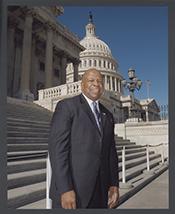
United States · United States Congress · 10 April 2014
Protecting Educational Loans for Underserved Students Act - Amends title IV (Student Assistance) of the Higher Education Act of 1965 to establish criteria for the Secretary of Education to use in determining whether the credit history of applicants for William D. Ford Federal Direct PLUS loans renders them ineligible for such loans. (Federal Direct PLUS loans are provided to graduate or professional degree students and the parents of dependent undergraduate students.) Directs the Secretary to consider an applicant to have an adverse credit history on the basis of his or her credit report, absent a determination that the applicant has extenuating circumstances, if : (1) the applicant is 90 or more days delinquent on the repayment of a debt exceeding $2,000; or (2) during the three years before the credit report date, the applicant has been subject to a default determination, bankruptcy discharge, foreclosure, repossession, tax lien, wage garnishment, or write-off of a title IV debt. Requires applicants that have been subject to such actions to participate in loan counseling provided by the applicable institution of higher education before becoming eligible for Federal Direct PLUS loans. Prohibits the Secretary from: (1) denying a Federal Direct PLUS loan to an applicant for having debt that is unrelated to title IV loans and is in collection or has been charged off, provided the applicant participates in such loan counseling; or (2) using the applicant's lack of a credit history as a reason to deny a Federal Direct PLUS loan to such applicant. Requires the Secretary to retain a record of the Secretary's basis for determining that an applicant has extenuating circumstances that make the applicant eligible for a Federal Direct PLUS loan despite having an adverse credit history. Makes the Secretary's determination that an applicant does not have an adverse credit history effective for the two years following such determination.
United States · United States Congress · 10 April 2014
Democracy Restoration Act of 2014 - Declares that the right of a U.S. citizen to vote in any election for federal office shall not be denied or abridged because that individual has been convicted of a criminal offense unless, at the time of the election, such individual is serving a felony sentence in a correctional institution or facility. Provides for enforcement of, and remedies for violations of, this Act. Sets forth requirements for state and federal notification of individuals of the restoration of their voting rights pursuant to this Act. Prohibits any state, local government, or other person from receiving or using any federal grant amounts to construct or improve a place of incarceration unless that person has in effect a program to notify each U.S. citizen incarcerated in that person's jurisdiction, upon release from such incarceration, of that individual's rights under this Act. Prohibits this Act from being construed to prohibit a state from enacting any state law that affords the right to vote in any election for federal office on terms less restrictive than those terms established by this Act. Declares that the rights and remedies established by this Act shall be in addition to all other rights and remedies provided by law and shall not supersede, restrict, or limit the application of the Voting Rights Act of 1965 or the National Voter Registration Act of 1993.
United States · United States Congress · 9 April 2014
Horse Transportation Safety Act of 2014 - Prohibits a person from transporting a horse in interstate commerce in a motor vehicle (except a vehicle operated exclusively on rail or rails) containing two or more levels stacked on top of one another. Sets forth civil penalties for persons who knowingly violate such prohibition.
United States · United States Congress · 7 April 2014
Hezbollah International Financing Prevention Act of 2014 - States that it shall be U.S. policy to: (1) prevent Hezbollah's global logistics and financial network from operating in order to curtail funding of its domestic and international activities; and (2) utilize diplomatic, legislative, and executive avenues to combat Hezbollah's criminal activities in order to block that organization's ability to fund its global terrorist activities. Directs the President to report to Congress: (1) a list of satellite, broadcast, or other providers that knowingly transmit the content of al-Manar TV; and (2) the identity of those providers that have or have not been sanctioned pursuant to Executive Order 13224. Directs the Secretary of the Treasury to prohibit or impose strict conditions on the opening or maintaining in the United States of a correspondent account or a payable-through account by a foreign financial institution that knowingly: (1) facilitates the activities of Hezbollah or its agents, instrumentalities, affiliates, or successors; (2) facilitates the activities of a person acting on behalf of or owned or controlled by an agent, instrumentality, affiliate, or successor; (3) engages in money laundering to carry out such an activity; (4) facilitates a significant transaction or provides significant financial services to carry out such an activity, including services that involve a transaction of gold, silver, platinum, or other precious metals; or (5) facilitates any of these activities, conspires to facilitate or participate in such an activity, or is owned or controlled by a foreign financial institution that knowingly engages in such an activity. Directs the Secretary of the Treasury to prescribe reporting, information sharing, and due diligence requirements for domestic financial institutions that maintain a correspondent account or payable-through account in the United States for a foreign financial institution. Authorizes the Secretary to waive such requirements if in the U.S. national security interests, and with congressional notification. Directs the Secretary of the Treasury to identify to Congress every 180 days each foreign central bank that carries out an activity prohibited under this Act. Sets forth penalty requirements for specified violations under this Act. Directs the President to designate Hezbollah as: (1) a significant foreign narcotics trafficker if Hezbollah meets meets the criteria set forth under the Foreign Narcotics Kingpin Designation Act, and (2) a significant transnational criminal organization if Hezbollah meets the criteria set forth under specified executive orders and statutes. Requires the President to report to Congress which of these criteria the President determines that Hezbollah has not met, if it does not. Directs the Secretary of State to report to Congress regarding Hezbollah's involvement in the trade in rough diamonds outside of the Kimberly Process Certification Scheme. Declares that nothing in this Act shall apply to authorized U.S. intelligence activities. States that any requirement of this Act shall cease to be in effect 30 days after the President certifies to Congress that Hezbollah: (1) is no longer designated as a foreign terrorist organization; (2) is no longer listed in the Annex to Executive Order 13224 (blocking property and prohibiting transactions with persons who commit or support terrorism); and (3) poses no significant threat to U.S. national security, interests, or allies.
United States · United States Congress · 7 April 2014
Emergency Unemployment Compensation Extension Act of 2014 - Amends the Supplemental Appropriations Act, 2008 (SAA, 2008) to extend emergency unemployment compensation (EUC) payments for eligible individuals to weeks of employment ending on or before June 1, 2014. Amends the Assistance for Unemployed Workers and Struggling Families Act to extend until May 31, 2014, requirements that federal payments to states cover 100% of EUC. Amends the Unemployment Compensation Extension Act of 2008 to exempt weeks of unemployment between enactment of this Act and November 30, 2014, from the prohibition in the Federal-State Extended Unemployment Compensation Act of 1970 (FSEUCA of 1970) against federal matching payments to a state for the first week in an individual's eligibility period for which extended compensation or sharable regular compensation is paid if the state law provides for payment of regular compensation to an individual for his or her first week of otherwise compensable unemployment. (Thus allows temporary federal matching for the first week of extended benefits for states with no waiting period.) Amends the FSEUCA of 1970 to postpone similarly from December 31, 2013, to May 31, 2014, termination of the period during which a state may determine its "on" and "off" indicators according to specified temporary substitutions in its formula. Amends the SAA, 2008 to appropriate funds out of the employment security administration account through the first five months of FY2015 to assist states in providing reemployment and eligibility assessment activities. Requires the provision of such activities to an individual, at a minimum, within a time period after he or she begins to receive Tier-1 EUC benefits, and if applicable, again within a time period after he or she begins to receive Tier-3 EUC benefits. Requires the Secretary of Labor to determine appropriate time periods. Specifies the purposes of the activities, namely to: better link the unemployed with the overall workforce system by bringing individuals receiving unemployment insurance benefits in for personalized assessments and referrals to reemployment services; and provide them with early access to specific strategies that can help get them back into the workforce faster, including through: (1) the development of a reemployment plan, (2) provision of access to relevant labor market information, (3) provision of access to information about industry-recognized credentials that are regionally relevant or nationally portable, (4) provision of referrals to reemployment services and training, and (5) an assessment of the individual's on-going eligibility for unemployment insurance benefits. Amends the Railroad Unemployment Insurance Act to extend through May 31, 2014, the temporary increase in extended unemployment benefits. Makes a change in application of a certain requirement (nonreduction rule) to a state that has entered a federal-state EUC agreement, under which the federal government would reimburse the state's unemployment compensation agency making EUC payments to individuals who have exhausted all rights to regular unemployment compensation under state or federal law and meet specified other criteria. (Under the nonreduction rule such an agreement does not apply with respect to a state whose method for computing regular unemployment compensation under state law has been modified to make the average weekly unemployment compensation benefit paid on or after June 2, 2010, less than what would have been paid before June 2, 2010.) Declares that the nonreduction rule shall not apply to a state which has enacted a law before December 1, 2013, that, upon taking effect, would violate the nonreduction rule. Allows a state whose agreement was terminated, however, to enter into a subsequent federal-state EUC agreement on or after enactment of this Act if, taking into account this inapplicability of the nonreduction rule, it would otherwise meet the requirements for an EUC agreement. (Thus allows such a subsequent EUC agreement to permit payment of less than the average weekly unemployment compensation benefit paid on or after June 2, 2010.) Prohibits the use of federal funds to: (1) make payments of unemployment compensation to any individual whose adjusted gross income in the preceding year was at least $1 million, or (2) determine whether or not this prohibition applies to an individual. Requires the Comptroller General (GAO) to: study the use of work suitability requirements to strengthen them to ensure that unemployment insurance benefits are being provided to individuals who are actively looking for work and truly want to return to the labor force; and brief Congress on the ongoing study, including preliminary recommendations for appropriate legislation and administrative action. Amends the Employee Retirement Income Security Act of 1974 (ERISA) and the Internal Revenue Code to revise the applicable percentages for determining minimum funding standards for single-employer defined benefit pension plans (funding stabilization). Exempts plans providing accelerated benefit distributions from the application of such standards. Amends ERISA, with respect to pension insurance premiums paid by a designated payor (i.e., the contributing sponsor or plan administrator for a single employer pension plan and the plan administrator for the multiemployer plan) to the Pension Benefit Guaranty Corporation (PBGC). Allows a designated payor to elect to prepay, during any plan year, the applicable PBGC flat dollar insurance premium due for up to five consecutive subsequent plan years specified in the election. Amends the Consolidated Omnibus Budget Reconciliation Act of 1985 to extend through FY2024 the authority of the Secretary of the Treasury to collect customs user fees for the processing of certain merchandise. Amends the Internal Revenue Code to provide that a bona fide volunteer providing firefighting and prevention services, emergency medical services, or ambulance services to a state or local government or tax-exempt organization shall not be counted in determining the number of full-time employees of an employer for purposes of the employer mandate to provide minimum essential health care coverage under the Patient Protection and Affordable Care Act. Excludes services rendered as a bona fide volunteer to any governmental entity and any tax-exempt organization (specified employer) from the determination of the number of full-time employees of an employer for purposes of such mandate. Defines "bona fide volunteer" as an employee whose only compensation from a specified employer is in the form of: (1) reimbursement for (or reasonable allowance for) reasonable expenses incurred in the performances of volunteer services; or (2) reasonable benefits and nominal fees, customarily paid in connection with the performance of volunteer services.
United States · United States Congress · 3 April 2014
Proprietary Education Oversight Coordination Improvement Act - Establishes the Proprietary Education Oversight Coordination Committee to: coordinate federal oversight of proprietary institutions of higher education (IHEs); coordinate federal activities to protect students from unfair, deceptive, abusive, unethical, fraudulent, or predatory practices, policies, or procedures of proprietary IHEs; encourage information sharing among federal agencies regarding federal investigations, audits, or inquiries of such IHEs; increase coordination and cooperation between federal and state agencies to improve oversight and accountability of proprietary IHEs; and develop best practices and consistency among federal and state agencies in the dissemination of consumer information regarding such IHEs. Requires the Committee to: (1) meet at least once each quarter of each fiscal year; and (2) meet at least once each fiscal year, and otherwise interact regularly, with state attorneys general, state approval agencies, veterans service organizations, and consumer advocates. Directs the Committee to submit, and make publicly available, an annual report to Congress that includes: (1) recommendations for legislative and administrative actions the Committees deems necessary to improve the enforcement of applicable federal laws, increase the accountability of proprietary IHEs to students and taxpayers, and ensure the promotion of quality education programs; and (2) specified financial and consumer information regarding such IHEs. Requires the Committee, each academic year, to publish the For-Profit College Warning List for Parents and Students, which is to be comprised of proprietary IHEs: that have engaged in illegal activity during the previous academic year as determined by a federal or state court; that have entered into a settlement resulting in a monetary payment; that have had any higher education program withdrawn or suspended; or for which the Committee has sufficient evidence of widespread or systemic unfair, deceptive, abusive, unethical, fraudulent, or predatory practices, policies, or procedures that threaten the academic success, financial security, or general best interest of students.
United States · United States Congress · 2 April 2014
New Markets Tax Credit Extension Act of 2014 - Amends the Internal Revenue Code to: (1) make permanent the new markets tax credit, (2) provide for an inflation adjustment to the limitation amount for such credit after 2013, and (3) allow an offset against the alternative minimum tax (AMT) for such credit (determined with respect to qualified equity investments initially made after the enactment of this Act).
United States · United States Congress · 1 April 2014
Alzheimer's Accountability Act of 2014 - Amends the National Alzheimer's Project Act to require the Director of the National Institutes of Health (NIH), for each fiscal year through FY2025, to submit to the President for review and transmittal to Congress, after reasonable opportunity for comment (but without change) by the Secretary of Health and Human Services (HHS) and the Advisory Council on Alzheimer's Research, Care, and Services, an annual budget estimate (including regarding personnel needs) for the NIH initiatives under the Act.
United States · United States Congress · 27 March 2014
Eliminates the time limit for ratification of the equal rights amendment (prohibits discrimination on account of sex) proposed to the states in House Joint Resolution 208 of the 92nd Congress, as agreed to in the Senate on March 22, 1972. Declares that such amendment shall be part of the Constitution whenever ratified by the legislatures of three-fourths of the several states.
United States · United States Congress · 26 March 2014
Federal Adjustment of Income Rates Act of 2014 or the FAIR Act - Increases the rates of basic pay for federal employees under the General Schedule and for prevailing rate employees by 3.3 % for 2015.
United States · United States Congress · 11 March 2014
Smart Savings Act - Makes the default investment in the Thrift Savings Plan (TSP) an age-appropriate target date asset allocation investment fund (L Fund), instead of the Government Securities Investment Fund (G Fund), if no election has been made for the investment of available funds. Retains the Government Securities Investment Fund as the default fund for members of the uniformed services. Requires TSP participants whose default fund is an age-appropriate L Fund to sign a risk acknowledgement prior to enrollment.
United States · United States Congress · 11 March 2014
All Circuit Review Extension Act - Extends from two to five years after the effective date of the Whistleblower Protection Enhancement Act of 2012 (i.e., December 27, 2012), the period allowed for: (1) filing a petition for judicial review of Merit Systems Protection Board decisions in whistleblower cases, and (2) any review of such a decision by the Director of the Office of Personnel Management (OPM).
United States · United States Congress · 11 March 2014
Federal Register Modernization Act - Requires the Federal Register to be published (e.g., by electronic means), rather than printed, and that documents in the Federal Register be made available for sale or distribution to the public in published form. Revises requirements for the filing of documents with the Office of the Federal Register for inclusion in the Federal Register and for the publication of the Code of Federal Regulations to reflect the publication requirement.
United States · United States Congress · 6 March 2014
Lake Berryessa Recreation Enhancement Act of 2014 - Transfers the administrative jurisdiction over specified water and land that is within or adjacent to Lake Berryessa in California from the Bureau of Reclamation to the Bureau of Land Management (BLM) for administration as the Lake Berryessa Recreation Area. Directs the Secretary of the Interior to act in accordance with any existing agreement with any organization for the management of campgrounds and marinas located in the Area. Authorizes the Secretary to develop a management plan for the Area as a new document or by adopting the recreational use plan adopted by the Bureau of Reclamation on June 2, 2006. Declares that, nothing in this Act or any subsequent management plan shall impair the ability of the Bureau of Reclamation and its managing partners to operate, maintain, or manage Monticello Dam, Lake Berryessa, and other Solano Project facilities in accordance with that project's authorized purposes. Requires the Commissioner of Reclamation to continue to administer and operate the Dam and any power facility related to it. Authorizes the Secretary to establish, modify, charge, and collect recreation or concession fees at the Area in accordance with the Federal Lands Recreation Enhancement Act. Permits the Secretary to retain such fees for purposes of managing the Area.
United States · United States Congress · 6 March 2014
Stop Overdose Stat Act or the S.O.S. Act - Requires the Secretary of Health and Human Services (HHS), acting through the Director of the Centers for Disease Control and Prevention (CDC), to: (1) award grants or enter into cooperative agreements to enable eligible entities to reduce deaths occurring from drug overdoses, and (2) give priority to eligible public health agencies or community-based organizations that have expertise in preventing deaths occurring from overdoses in high risk populations. Conditions receipt of a grant or agreement on an entity agreeing to: (1) use it for purchasing and distributing the drug naloxone, (2) report to the Secretary and the coordinating center (established under this Act) on the results of the activities supported, and (3) make available non-federal contributions of at least 50% of the federal funds provided. Requires a recipient to use such grant or agreement for: (1) educating prescribers and pharmacists about overdose prevention and naloxone prescription; (2) training first responders, other individuals in a position to respond to an overdose, and law enforcement and corrections officials on the effective response to individuals who have overdosed on drugs; (3) implementing and enhancing programs to provide overdose prevention, recognition, treatment, and response; and/or (4) expanding such activities. Requires the Director to establish and provide for the operation of a coordinating center responsible for: (1) collecting, compiling, disseminating, and evaluating data on such activities; (2) developing best practices for preventing deaths occurring from drug overdoses; and (3) making such best practices specific to the type of community involved. Requires the Director to award grants or cooperative agreements to improve drug overdose surveillance and reporting capabilities. Amends the Public Health Service Act to require the Secretary to develop and submit to Congress a plan to reduce the number of deaths occurring from overdoses, to include implementation of a campaign to educate prescribers and the public about overdose prevention and naloxone prescription. Requires the Director of the National Institute on Drug Abuse to: (1) prioritize and conduct or support research on drug overdose and overdose prevention, and (2) support research on the development of formulations of naloxone and dosage delivery devices specifically intended to be used for the prehospital treatment of unintentional drug overdose.
United States · United States Congress · 5 March 2014
Humane Cosmetics Act - Prohibits: (1) any entity from conducting or contracting for cosmetic animal testing in the United States, in or affecting interstate commerce, effective on the date that is one year after enactment of this Act; and (2) selling, offering for sale, or transporting in interstate commerce any cosmetic if the final product or any component was developed or manufactured using cosmetic animal testing conducted or contracted for after such date, effective three years after this Act's enactment.
United States · United States Congress · 28 February 2014
West Hunter Street Baptist Church Study Act - Directs the Secretary of the Interior to conduct a special resource study of the historic West Hunter Street Baptist Church located at 775 Martin Luther King Jr. Drive, S.W., Atlanta, Georgia, to evaluate the national significance of the Church and to determine the suitability and feasibility of designating such area as a unit of the National Park System.
United States · United States Congress · 26 February 2014
Streamlining Energy Efficiency for Schools Act of 2014 - Amends the Energy Policy and Conservation Act to direct the Secretary of Energy (DOE), acting through the Office of Energy Efficiency and Renewable Energy, to act as the lead federal agency for coordinating and disseminating information on existing federal programs and assistance that may be used to help initiate, develop, and finance energy efficiency, renewable energy, and energy retrofitting projects for schools. Requires the Secretary to: (1) carry out a review of existing programs and financing mechanisms available in or from appropriate federal agencies with jurisdiction over energy financing and facilitation that are currently used or may be used for such purposes; (2) establish a federal cross-departmental collaborative coordination, education, and outreach effort to streamline communication and promote available federal opportunities and assistance for such projects that enables states, local educational agencies, and schools to use existing federal opportunities more effectively and to form partnerships with governors, state energy programs, local educational, financial, and energy officials, state and local officials, nonprofit organizations, and other appropriate entities to support project initiation; (3) provide technical assistance for states, local educational agencies, and schools to help develop and finance projects that meet specified requirements; (4) develop and maintain a single online resource website with contact information for relevant technical assistance and support staff in the Office for states, local educational agencies, and schools to effectively access and use federal opportunities and assistance to develop such projects; and (5) establish a process for recognition of schools that have successfully implemented such projects and are willing to serve as resources for other local educational agencies and schools to assist initiation of similar efforts.
United States · United States Congress · 11 February 2014
First Rhode Island Regiment Congressional Gold Medal Act - Requires the Speaker of the House of Representatives and the President pro tempore of the Senate to award a congressional gold medal to the First Rhode Island Regiment, collectively, in recognition of their dedicated service during the Revolutionary War. Authorizes the Secretary of the Treasury to strike and sell bronze duplicates of such medal at a price sufficient to cover the costs of such medals.
United States · United States Congress · 11 February 2014
Directs the Speaker of the House of Representatives and the President pro tempore of the Senate to arrange for the presentation, on behalf of Congress, of a gold medal to the Freedom Riders in recognition of their contribution to civil rights, which inspired a movement to equality in interstate travel. Requires such medal to be given to the Smithsonian Institution, where it will be available for display and research. Expresses the sense of Congress that the medal should be made available for display elsewhere, particularly at locations associated with the Freedom Riders.
United States · United States Congress · 10 February 2014
Honoring Our Fallen TSA Officers Act - Amends the Omnibus Crime Control and Safe Streets Act of 1968 to include within the definition of "public safety officers," in order for them to receive death benefits under the Act, Transportation Security Administration (TSA) employees who are performing their official duties related to protecting the nation's transportation systems.
United States · United States Congress · 10 February 2014
Security Clearance Reform Act of 2014 - Directs the President to submit a strategic plan to the House Committee on Oversight and Government Reform and the Senate Committee on Homeland Security and Governmental Affairs and the intelligence committees of Congress (appropriate congressional committees) to improve security clearance and background investigation activities. Sets forth the required contents of such plan, including the development of a continuous evaluation or monitoring system of information used for security clearances, improvement of information sharing procedures between agencies, and the reduction or elimination of databases and information sources that cannot be accessed and processed electronically. Prohibits the Director of the Office of Personnel Management (OPM) from awarding a contract to any entity for investigative support services or background investigation fieldwork services if such entity has another contract in effect with the federal government to provide such services. Requires the OPM Director to report to the appropriate congressional committees listing any state or local entity covered by the definition of "criminal justice agency" that has failed to cooperate with three or more criminal history record information requests of the Director. Reduces criminal justice grant funding to state and local entities that fail to substantially comply with such requests.
United States · United States Congress · 5 February 2014
Government By the People Act of 2014 - Amends the Internal Revenue Code (IRC) to allow a refundable credit of 50% of qualified congressional House campaign contributions paid or incurred during the taxable year (contributions of cash by an individual to a House candidate or a political committee established and maintained by a national political party if the contribution is not prohibited under the Federal Election Campaign Act of 1971 [FECA], to be known as "My Voice Federal" contributions). Directs the Government by the People Oversight Commission, established by this Act, to launch a pilot program under which it shall select three eligible states to operate a voucher pilot program. Requires a state under a voucher pilot program to provide each qualified individual during the election cycle, upon his or her request, with a "My Voice Voucher" worth $50 (in either paper or electronic form), which will be assigned a routing number. Authorizes the individual, using the assigned routing number, to submit the My Voice Voucher, in either electronic or paper form, to qualified federal election candidates, allocating a portion of its value in $5 increments. Requires the Commission to pay any candidate who transmits a My Voice Voucher that portion of its value which the individual allocated to the candidate. Considers this transaction a contribution by the individual to the candidate for purposes of FECA. Requires a state operating a voucher pilot program also to permit an individual to revoke a My Voice Voucher within two days after submitting it to a candidate. Requires such a state to establish a commission or designate an existing entity to oversee and implement the program in the state, except that no such commission or entity may be composed of elected officials. Amends FECA with respect to: benefits for participating House of Representatives candidates; Federal Election Commission (FEC) payments to such candidates; candidate use of payments; qualified small dollar contributions, expenditures, and fundraising requirements; certification of participating candidates; campaign administration; prevention of the unnecessary spending of public funds; establishment of the Freedom From Influence Fund in the Treasury and of a Government by the People Oversight Commission in the FEC; remittal of unspent funds to the Freedom From Influence Fund after an election; eligibility of participating candidates for additional payments; civil penalties for violation of contribution and expenditure requirements; a Commission action appeals process; and contributions and expenditures by multicandidate and political party political committees on behalf of participating candidates. Prohibits a certified participating candidate's authorized committee from establishing a joint fundraising committee with any political committee other than another authorized committee of the candidate. Prohibits a certified participating candidate from establishing, financing, maintaining, or controlling a leadership PAC (political action committee). Prohibits use of contributions by a participating candidate for any purposes other than an election campaign. Revises bundler disclosure requirements to repeal a specified exception and so require disclosure of persons who provided bundled contributions to the reporting committee. Amends FECA to empower the FEC to petition the U.S. Supreme Court for a writ of certiorari to appeal a civil action to enforce the Act. Requires all political committee designations, statements, and reports required to be filed under FECA to be filed: (1) directly with the FEC; and (2) in electronic form accessible by computers. Reduces from 48 hours to 24 hours after their receipt the deadline for the FEC to make designations, statements, reports, or notifications available to the public in the FEC office and on the Internet. Amends the Communications Act of 1934 to set a station's lowest unit price for preemptible use as the charge for a broadcast by the national committee of a political party for an affiliated candidate. Authorizes the FEC to revoke a broadcast station license or construction permit only for at least three willful failures to allow reasonable access to, or to permit purchase of reasonable amounts of time for the use of, a broadcasting station or cable system by a legally qualified candidate for federal office. Amends the IRC to allow tax payers to designate that a specified portion of any overpayment of tax be contributed to the Freedom From Influence Fund.
United States · United States Congress · 28 January 2014
Concussion Awareness and Education Act of 2014 - Amends the Public Health Service Act to require the Director of the Centers for Disease Control and Prevention (CDC) to: (1) establish and oversee a national system to accurately determine the incidence of sports-related concussions, and (2) begin implementation of such system within one year of this Act's enactment. Requires the data collected to include: the incidence of sports related concussions in individuals 5 through 21 years of age; demographic information of the injured individuals; pre-existing conditions of the injured individuals; the concussion history of the injured individuals; the use of protective equipment and impact monitoring devices; the qualifications of personnel diagnosing the concussions; and the cause, nature, and extent of the concussive injury. Requires the Director of the National Institutes of Health (NIH) and the Secretary of Defense (DOD), acting in coordination, to conduct or support: (1) research designed to establish metrics and markers of concussion diagnosis, prognosis, and recovery in youth and to inform the creation of guidelines for the management of short- and long-term sequelae of concussion in youth; (2) studies to assess short- and long-term cognitive, emotional, behavioral, neurobiological, and neuropathological consequences of concussions and repetitive head impacts over a life span; and (3) research on age- and sex-related biomechanical determinants of injury risk for concussion in youth. Directs the Secretary of Defense to conduct a scientific evaluation of the effectiveness of techniques, rules, and playing, practice, and training standards in reducing concussions and sequelae for sports and physical training at military service academies and for military personnel. Calls for the National Collegiate Athletic Association to undertake a scientific evaluation of the effectiveness of age-appropriate techniques, rules, and playing and practice standards in reducing sports-related concussions and sequelae. Requires: (1) the Director of NIH to maintain a national brain tissue and biological sample repository to collect, archive, and distribute material for research on concussions; (2) such Director and the Secretary of Defense to develop standards, best practices, and guidelines for the rules of play and training, respectively, for sports, athletic, and military training and engagement that are designed to prevent or reduce the incidence of concussions and that include standards for effective protective equipment and recommendations on impact-monitoring systems; and (3) the Director of CDC to develop and disseminate to the public information regarding concussions. Establishes a Concussion Research Commission, which shall study the programs and activities conducted pursuant to this Act and formulate systemic recommendations to increase knowledge about, and change the culture surrounding, concussions.
United States · United States Congress · 16 January 2014
Voting Rights Amendment Act of 2014 - Amends the Voting Rights Act of 1965 with respect to the requirement that a federal court retain jurisdiction for an appropriate period to prevent commencement of new devices to deny or abridge the right to vote. Expands the types of violations triggering the authority of a court to retain such jurisdiction to include certain violations of the Act as well as violations of any federal voting rights law that prohibits discrimination on the basis of race, color, or membership in a language minority group. Excludes from the list of violations triggering jurisdiction retention authority any voting qualification or prerequisite which results in a denial or abridgement of the right to vote that is based on the imposition of a requirement that an individual provide a photo identification as a condition of receiving a ballot for voting in a federal, state, or local election. Revises requirements for determining which states and political subdivisions are covered or not covered by criteria for declaratory judgments that they have not used devices to deny or abridge the right to vote. Subjects to the requirements for making such a determination any state (and all of its political subdivisions) during a calendar if 5 or more voting rights violations occurred in the state during the previous 15 years, at least one of which was committed by the state itself (as opposed to a political subdivision within it). Specifies application of such new coverage requirements to any specific political subdivision if: (1) 3 or more voting rights violations occurred in it during the previous 15 calendar years; or (2) 1 or more voting rights violations occurred in it during the previous 15 calendar years and the subdivision had persistent, extremely low minority turnout during that period. Provides that, if a state obtains a declaratory judgment that it has not used a device to deny or abridge the right to vote, the requirements for a new declaratory judgment generally will not apply, unless the new coverage requirements of this Act apply to the state solely on the basis of voting rights violations occurring after the declaratory judgment was issued. Prescribes transparency requirements, including reasonable public notice, regarding any changes to: (1) voting prerequisites, standards, or procedures; (2) polling place resources; or (3) demographics and electoral districts. Modifies authority to assign observers, including authorizing the assignment of observers to enforce bilingual election requirements. Revises requirements for injunctive relief, including its scope and the persons authorized to seek relief as well as the grounds for granting it.
United States · United States Congress · 9 January 2014
Emergency Unemployment Compensation Extension Act - Amends the Supplemental Appropriations Act, 2008 to extend emergency unemployment compensation (EUC) payments for eligible individuals to weeks of employment ending on or before April 1, 2014. Amends the Assistance for Unemployed Workers and Struggling Families Act to extend until March 31, 2014, requirements that federal payments to states cover 100% of EUC. Amends the Unemployment Compensation Extension Act of 2008 to exempt weeks of unemployment between enactment of this Act and September 30, 2014, from the prohibition in the Federal-State Extended Unemployment Compensation Act of 1970 (FSEUCA of 1970) against federal matching payments to a state for the first week in an individual's eligibility period for which extended compensation or sharable regular compensation is paid if the state law provides for payment of regular compensation to an individual for his or her first week of otherwise compensable unemployment. (Thus allows temporary federal matching for the first week of extended benefits for states with no waiting period.) Amends the FSEUCA of 1970 to postpone similarly from December 31, 2013, to March 31, 2014, termination of the period during which a state may determine its "on" and "off" indicators according to specified temporary substitutions in its formula. Amends the Supplemental Appropriations Act, 2008 to appropriate funds out of the employment security administration account through the first quarter of FY2015 to assist states in providing reemployment and eligibility assessment activities. Amends the Railroad Unemployment Insurance Act to extend through March 31, 2014, the temporary increase in extended unemployment benefits. Makes a change in application of a certain requirement (nonreduction rule) to a state that has: (1) entered a federal-state EUC agreement, under which the federal government would reimburse the state's unemployment compensation agency making EUC payments to individuals who have exhausted all rights to regular unemployment compensation under state or federal law and meet specified other criteria; and (2) enacted a law before December 1, 2013, that, upon taking effect, would violate the nonreduction rule. (Under the nonreduction rule such an agreement does not apply with respect to a state whose method for computing regular unemployment compensation under state law has been modified to make the average weekly unemployment compensation benefit paid on or after June 2, 2010, less than what would have been paid before June 2, 2010.) Declares that the nonreduction rule shall not apply to a state which has enacted a law before December 1, 2013, that, upon taking effect, would violate the nonreduction rule. Allows such a state, however, to enter into a subsequent federal-state EUC agreement on or after enactment of this Act if, taking into account this inapplicability of the nonreduction rule, it would otherwise meet the requirements for an EUC agreement. (Thus allows such a subsequent EUC agreement to permit payment of less than the average weekly unemployment compensation benefit paid on or after June 2, 2010.)
United States · United States Congress · 9 January 2014
Pat Summitt Congressional Gold Medal Act - Directs the Speaker of the House of Representatives and the President pro tempore of the Senate to arrange for the presentation of a congressional gold medal to Pat Summitt in recognition of her career in women's team sports and her courage in speaking out about her battle with Alzheimer's disease. Authorizes the Secretary of the Treasury to strike and sell bronze duplicates of such medal at a price sufficient to cover the cost of both the gold and bronze medals.
United States · United States Congress · 12 December 2013
Federal Death Penalty Abolition Act of 2013 - Repeals death penalty provisions for a wide range of homicide-related offenses under the Immigration and Nationality Act, the federal criminal code, the Controlled Substances Act, and other statutes relating to aircraft hijacking, espionage and treason, and offenses punished under the Uniform Code of Military Justice. Prohibits the sentencing to death or execution of any person for any violation of federal law after the enactment of this Act. Commutes death penalties imposed prior to the enactment of this Act to life imprisonment without the possibility of parole.
United States · United States Congress · 12 December 2013
Family and Medical Insurance Leave Act of 2013 - Establishes the Office of Paid Family and Medical Leave within the Social Security Administration (SSA), to be headed by the Deputy Commissioner of SSA. Entitles every individual to a family and medical leave insurance (FMLI) benefit payment for each month beginning on the first day of the first month in which the individual meets the criteria specified below and ending 365 days later (benefit period), not to exceed 60 qualified caregiving days per period. Qualifies for such a benefit payment any individual who: is insured for disability insurance benefits under the Social Security Act at the time his or her application is filed; has earned income from employment during the 12 months before filing it; has filed an application for a FMLI benefit in accordance with this Act; and was engaged in qualified caregiving, or anticipates being so engaged, during the 90-day period before the application is filed or within 30 days after. Defines "qualified caregiving" as any activity engaged in by an individual, other than regular employment, for a reason for which an eligible employee would be entitled to leave under the Family and Medical Leave Act of 1993 (FMLA). Prescribes a formula for determination of an individual's monthly FMLI benefit payment, as well as for the maximum and the minimum monthly benefit amounts. Requires a FMLI benefit payment to be coordinated with any periodic benefits received from temporary disability insurance or family leave insurance programs under any state law or plan, local government, or an instrumentality of two or more states. Prescribes criteria that makes an individual ineligible for a FMLI benefit payment. Specifies prohibited acts by an employer, and penalties for violations. Establishes the Federal Family and Medical Leave Insurance Trust Fund in the Treasury. Requires FMLI benefit payments to be made only from this Fund. Prohibits the use of amounts from the Social Security Trust Fund or appropriated to the SSA to administer Social Security programs for FMLI benefits or administration. Amends the Internal Revenue Code to impose a tax on every individual and employer, all self-employment income, and every railroad employee, employee representative, or railroad employer to finance the Federal Family and Medical Leave Insurance Trust Fund in the Treasury for FMLI benefits.
United States · United States Congress · 11 December 2013
21st Century Glass-Steagall Act of 2013 - Amends the Federal Deposit Insurance Act to prohibit an insured depository institution from: (1) being or becoming an affiliate of any insurance company, securities entity, or swaps entity; (2) being in common ownership or control with any insurance company, securities entity, or swaps entity; or (3) engaging in any activity that would cause the insured depository institution to qualify as an insurance company, securities entity, or swaps entity. Prohibits any individual who is an officer, director, partner, or employee of any securities entity, insurance company, or swaps entity, except in specified circumstances, from serving simultaneously as an officer, director, employee, or other institution-affiliated party of any insured depository institution. Makes certain technical and conforming amendments to the Banking Act of 1933 and the Revised Statutes of the United States to limit the business of national banks to receiving deposits, extending credit, discounting and negotiating evidences of debt, loaning money on personal security, engaging in coin and bullion exchange, and investing in investment securities. Limits the purchase and sale of investment securities and stock by a national banking association to the accounts of customers, but in no case for its own account. Prohibits an association from underwriting any issue of securities or stock. Prohibits a national banking association from investing in structured or synthetic products, defined as financial instruments in which a return is calculated based on the value of, or by reference to the performance of, a security, commodity, swap, other asset, or an entity, or any index or basket composed of such items. Amends the Home Owners' Loan Act to repeal the authority of federal savings associations to invest in, redeem, or hold shares or certificates issued by any open-end management investment company registered with the Securities and Exchange Commission (SEC) if their portfolios are restricted by the management company's investment policy solely to investments that a federal savings association by law or regulation may deal in. Amends the Bank Holding Company Act of 1956 with respect to prohibitions against bank holding company ownership or control of voting share interests in nonbanking organizations. Revises exemptions from such prohibitions in the case of nonbanking organizations thewhose activities are so closely related to banking as to be a proper incident to them. Specifies activities of a nonbanking organization that shall not be considered closely related to banking, and so disqualify a bank holding company from owning or controlling voting share interests in such an organization. Includes among such nonbanking activities: (1) serving as an investment advisor to an investment company, (2) agency transactional services for customer investments, (3) investment transactions as principal, and (4) management consulting and counseling activities. Exempts from application of the prohibitions against nonbanking activities, with respect to a bank holding company, the purchase, as an end user, of swaps to hedge against certain exposures, including changes in either interest rates or in the value of currency. Prohibits a bank holding company from engaging in the business of a securities or a swaps entity, including: (1) dealing or making markets in securities, repurchase agreements, exchange traded and over-the-counter swaps, and structured or synthetic products; (2) engaging in proprietary trading; (3) owning, sponsoring, or investing in a hedge fund, or private equity fund, or any other fund which exhibits the characteristics of a fund that takes on proprietary trading activities or positions; (4) holding ineligible securities or derivatives; and (5) engaging in either market-making or prime brokerage activities. Requires the appropriate federal regulatory agency to pursue certain actions to enforce this Act. Amends the Bank Holding Company Act of 1956 to repeal provisions (of the Gramm-Leach-Bliley Act) that: (1) permit a financial holding company to engage in activities that are either financial in nature or constitute expanded financial activities, (2) prescribe corrective actions for financial holding companies that fail to meet certain requirements, (4) authorize certain financial holding companies to retain limited nonfinancial activities and affiliations, and (5) authorize certain financial holding companies to own or control shares of a company engaged in activities related to the trading, sale, or investment in commodities and underlying physical properties that were not previously permissible for bank holding companies. Amends the Revised Statutes of the United States to repeal the authority of national banks to control or hold an interest in financial subsidiaries. Amends the International Banking Act of 1978 to repeal the permission granted certain foreign banks to continue to engage in nonbanking activities in the United States. Revises bankruptcy law to repeal the prohibition against staying, avoiding, or limiting the exercise of a contractual right of financial entities to either liquidate, terminate, or accelerate the following financial instruments: a securities contract, a repurchase agreement, a swap agreement, a master netting agreement, and across contracts. Repeals requirements for the timing of damage measurement in connection with such financial instruments, including commodity contracts and forward contracts.
United States · United States Congress · 11 December 2013
Net Price Calculator Improvement Act - Amends the Higher Education Act of 1965 to establish the minimum requirements for the net price calculator that each institution of higher education (IHE) receiving federal funds under title IV (Student Assistance) of the Act must include on its website. (An IHE's "net price" is the average yearly price actually charged to first-time, full-time undergraduate students receiving student aid at the school after deducting such aid.) Requires the link for the calculator to be clearly labeled and conspicuously posted on an IHE's website. Requires each calculator's results page to include: the net price of attending the IHE; the cost of attending the IHE; the estimated total need- and merit-based grant aid, from federal, state, and institutional sources, that may be available to first-time, full-time undergraduate students enrolled at the IHE; the percentage of such students enrolled at the school who receive any of that grant aid; and a notice that an estimate of an individual's net price is non-binding and subject to change. Requires calculators that estimate a user's eligibility for veterans' education benefits or educational benefits for active duty service members to clearly distinguish those benefits from other grant-aid. Requires calculators that do not make such estimates to provide users with notice of, and a link to information concerning, those benefits. Directs IHEs to populate their calculators with data from not later than two academic years prior to the most recent academic year. Requires the calculators to: (1) clearly indicate which questions need to be completed for a net price estimate, (2) clearly mark requests for contact information as optional, and (3) prohibit personally identifiable information from being sold or made available to third parties. Authorizes the Secretary of Education to develop a universal net price calculator that enables users to answer one set of questions and receive net prices for any IHE that is required to have a net price calculator.
United States · United States Congress · 11 December 2013
Two-Midnight Rule Delay Act of 2013 - Prohibits the Secretary of Health and Human Services (HHS) from enforcing the two-midnight rule to a hospital for which payment is made under title XVIII (Medicare) of the Social Security Act for admissions occurring before October 1, 2014. (The two-midnight rule allows Medicare coverage of only hospital stays for which a physician admits to a hospital a beneficiary expected to require care that crosses two midnights, but generally denies coverage of care expected to require less than a two-midnight stay.) Applies such prohibition to Medicare review contracts. Prohibits Medicare review contractors from denying a claim for inpartient hospital services furnished by a hospital, or inpatient critical access hospital services furnished by a critical access hospital, for discharges occurring before October 1, 2014: (1) for medical necessity due to the length of an inpatient stay in such hospital or due to a determination that the services could have been provided on an outpatient basis; or (2) for requirements for orders, certifications, or recertifications, and associated documentation relating to such matters. Prohibits the Secretary from increasing the sample of claims selected for prepayment review under the Medicare Probe and Educate program above the number and type established by the Secretary as of November 4, 2013. Directs the Secretary to develop: (1) a Medicare hospital payment methodology for short inpatient hospital stays; (2) general equivalency maps to link the relevant International Statistical Classification of Diseases and Related Health Problems (ICD)-10 codes (used to report medical diagnoses and inpatient procedures) to relevant Current Procedural Terminology (CPT) codes, and the relevant CPT codes to relevant ICD-10 codes, in order to permit comparison of inpatient hospital services and hospital outpatient department servives; and (3) a second crosswalk between Diagnosis-Related Group (DRG) codes for inpatient hospital services and Ambulatory Payment Class codes for outpatient hospital services.
United States · United States Congress · 9 December 2013
Redesignates the lock and dam located in Modoc, Illinois, commonly known as the Kaskaskia Lock and Dam, as the "Jerry F. Costello Lock and Dam."
United States · United States Congress · 9 December 2013
Breast Cancer Awareness Commemorative Coin Act - Directs the Secretary of the Treasury to mint and issue up to 500,000 $1 silver coins emblematic of the fight against breast cancer. Instructs the Secretary to select the design for the coins based upon the winning design from a juried, compensated design competition following certain specifications. Restricts the period of coin issuance to the one-year period beginning on January 1, 2018. Requires all sales of such coins to include a surcharge of $10 per coin. Prescribes a surcharge distribution formula.
United States · United States Congress · 9 December 2013
States that the House of Representatives has learned with profound sorrow of the death of Nelson Mandela, former President of the Republic of South Africa. Tenders its sympathies to the members of his family and his fellow citizens. Honors the life, accomplishments, and legacy of Nelson Mandela and for his friendship to the United States. Requests the Secretary of State to communicate these expressions of sentiment to Nelson Mandela's family and to the Parliament of the Republic of South Africa. Requests that when the House adjourns today it do so as a mark of respect to the memory of Nelson Mandela.
United States · United States Congress · 5 December 2013
Anti-Spoofing Act of 2013 - Amends the Communications Act of 1934 to expand the prohibition on the provision of inaccurate caller identification information (which makes it unlawful to cause a caller identification service to knowingly transmit misleading or inaccurate caller identification information with the intent to defraud, cause harm, or wrongfully obtain anything of value) to persons outside the United States if the recipient is within the United States. Directs the Federal Communications Commission (FCC) to prescribe regulations requiring a provider of a spoofing service to verify that any person who uses the service is informed of any applicable federal or state law. Defines "spoofing service" as a service that permits a user to knowingly cause any caller identification service to transmit misleading or inaccurate caller identification information. Excludes from such definition a service that transmits or displays without alteration caller identification information generated by another person. Revises the definitions of "caller identification information" and "caller identification service" to include text messages by means of a telephone number and text messaging services. Expands the categories of IP-enabled voice services that are subject to such prohibition.
United States · United States Congress · 5 December 2013
Monuments Men Recognition Act of 2013 - Directs the Speaker of the House of Representatives and the President pro tempore of the Senate to make arrangements for the presentation of a single congressional gold medal in commemoration of the Monuments Men (men and women who served in the Monuments, Fine Arts, and Archives [MFA] Section under the Allied Armies during World War II) in recognition of their heroic role in the preservation, protection, and restitution of monuments, works of art, and artifacts of cultural importance during and following the War. Requires the Medal's display at the Smithsonian Institution. Expresses the sense of Congress that the medal should be made available for display elsewhere, particularly at locations associated with the Monuments Men and that preference should be given to locations affiliated with the Smithsonian Institution. Permits the Secretary of the Treasury to strike and sell duplicates in bronze of the gold medal, at a price sufficient to cover the costs of the medals.
United States · United States Congress · 21 November 2013
Know Before You Owe Private Student Loan Act of 2013 - Amends the Truth in Lending Act to require a lender, before issuing a private education loan for a student attending an institution of higher education (IHE), to obtain the IHE's certification of: (1) the student's enrollment status, (2) the student's cost of attendance, and (3) the difference between that cost and the student's estimated financial assistance. Eliminates the requirement that such lenders obtain a self-certification form from the private education loan applicant. Allows a lender to issue such loan without a certification if there is no response from the relevant IHE within 15 business days of the lender's request for the certification. Requires private educational lenders to: (1) send loan statements to borrowers at least once every three months a student is enrolled at an IHE; (2) notify the relevant IHE, in writing, of the loan amount and the student to whom it applies no later than the date funds are issued; and (3) submit an annual report to the Bureau of Consumer Financial Protection (CFPB) containing information the CFPB requires concerning private student loans. Amends title IV (Student Assistance) of the Higher Education Act of 1965 to require IHEs, before providing lenders with certifications, to determine whether students have exhausted their options for title IV assistance and notify borrowers of: (1) the availability of such assistance, (2) their ability to choose their own private educational lender, (3) the impact of the proposed private education loan on their eligibility for other financial assistance, and (4) their right to accept or reject a private education loan within 30 days of the lender's approval of their application and to cancel the loan within 3 business days of its consummation.
United States · United States Congress · 21 November 2013
Minority Diabetes Initiative Act - Amends the Public Health Service Act to allow the Secretary of Health and Human Services (HHS) to make grants to public and nonprofit private health care providers to provide treatment for diabetes in minority communities. Requires the Secretary to ensure that such grants cover a variety of diabetes-related health care services, including routine care for diabetic patients, public education on diabetes prevention and control, eye care, foot care, and treatment for kidney disease and other complications of diabetes.
United States · United States Congress · 21 November 2013
Prohibits any prevailing rate employee in a federal agency, between January 1 and September 30, 2014, from being paid an amount exceeding specified limits resulting from an applicable wage survey adjustment. Prohibits the percentage increase in wages paid to a prevailing wage employee in FY2014 from being less than the percentage increase in the basic pay of other federal employees in the same pay locality.
United States · United States Congress · 20 November 2013
Universal Racial Profiling Elimination Standards, and Procedures for Effective Constitutional Rights Training Act or the Universal RESPECT Act - Prohibits federal law enforcement agents from engaging in racial profiling. Requires: (1) the Attorney General to review all applicable law enforcement policies and procedures to ensure that they are sufficient to eliminate racial profiling while performing official law enforcement duties, and (2) the Secretary of Homeland Security (DHS) to ensure that no recipient of covered federal law enforcement assistance engages in racial profiling. Directs the Officer for Civil Rights and Civil Liberties and the Director of the Federal Law Enforcement Training Center (FLETC) to develop and incorporate any necessary changes to all training, curriculum, and professional certification classes to ensure consistency with the requirements of this Act. Requires: (1) the Director to identify, develop, and update model practices that prevent racial profiling; and (2) the Federal Law Enforcement Training Accreditation Board (FLETAB) to incorporate such practices into the law enforcement community through the Federal Law Enforcement Training Accreditation Model Practice Clearinghouse and other means. Directs FLETAB to: (1) develop a standard of review of anti-racial profiling components of law enforcement training curricula, and (2) deny accreditation or reaccreditation to academies, programs, and instructors not meeting such standard. Requires: (1) the Officer and the Office for State and Local Government Coordination to review the Peace Officer Standards and Training (POST) or equivalent program of the states to assess the anti-racial profiling education component of such curricula, and (2) the Secretary to notify states of deficiencies in the curriculum and to make available to the states assistance to develop sufficient curriculum to meet minimum anti-racial profiling standards. Amends the Homeland Security Act of 2002 to require state, local, and tribal government recipients of DHS grants for law enforcement to certify that they do not engage in racial profiling. Directs the Officer and the FLETC to develop guidance, outreach, training, and programs that include civil rights and civil liberties training, in particular programs designed to prevent racial profiling. Directs the Secretary to: (1) develop and distribute to state, local, and tribal authorities courses and materials that comply with the Grant Programs Directorate Information Bulletin No. 373 or successor bulletin for integration into the curricula for recruits and recurrent training for experienced law enforcement officers; and (2) make available to the states assistance to develop sufficient curriculum to meet minimum anti-racial profiling standards. Requires guidance for DHS grants for law enforcement to inform recipients that expenditures on any training, programs, presentations, and speakers that are acquired from an entity other than DHS must be approved in advance by the Chief Privacy Officer and the Office for Civil Rights and Civil Liberties. Grants the Officer primary jurisdiction over all matters relating to the review, implementation, and oversight of the requirements of this Act. Requires the Officer: (1) using information gained by investigations of complaints and information indicating possible abuses of civil rights or civil liberties by DHS employees and officials or that are related to DHS activities, to make recommendations to DHS for improvements in policy, supervision, training, and practice related to civil rights or civil liberties or for the relevant office to review the matter and take appropriate action; and (2) to review and assess information alleging abuses of civil rights, civil liberties, and racial and ethnic profiling by law enforcement agencies receiving grants or assistance from DHS. Requires each DHS component and executive agency to ensure that it provides the Officer with access to requested information within 30 days after the Officer requests it. Authorizes the Officer to require access by subpoena to any institution or entity outside of the federal government and any record relating to such institution or entity that is the subject of or related to an investigation. Authorizes the Officer to: (1) request the assistance of the Inspector General to investigate compliance with civil rights protection standards and complaints of racial profiling by law enforcement agencies; and (2) suspend the eligibility of a state, local, or tribal law enforcement agency to receive grants or training at federal law enforcement training facilities for violating this Act until the practices of the agency are brought into compliance. Requires law enforcement entities receiving grants or training from DHS to: (1) collect data on all routine or spontaneous investigatory activities, (2) provide that the data collected shall include detail sufficient to permit an analysis of whether a law enforcement agency is engaging in racial profiling, (3) utilize a standardized form that shall be made available to law enforcement agencies, (4) maintain all data collected for not less than four years, and (5) protect the privacy of individuals whose data is collected. Directs the Officer to receive and maintain data from the states on: (1) the implementation of racial profiling education curricula in state POSTor equivalent state-level program peace officer certification, (2) the adoption rate by state POST programs of the FLETAB model practices on racial profiling, (3) the number of credible complaints of improper racial profiling practices filed against state law enforcement entities, (4) the disposition of such complaints, and (5) the disciplinary action by state law enforcement entities against officers and agents adjudicated guilty of improper racial profiling practices. Requires the Secretary's annual report on the Officer to include a section related to the enforcement of this Act.
United States · United States Congress · 20 November 2013
Emergency Unemployment Compensation Extension Act of 2013 - Amends the Supplemental Appropriations Act, 2008 to extend emergency unemployment compensation (EUC) payments for eligible individuals to weeks of employment ending on or before January 1, 2015. Amends the Assistance for Unemployed Workers and Struggling Families Act to extend until December 31, 2014, requirements that federal payments to states cover 100% of EUC. Amends the Unemployment Compensation Extension Act of 2008 to exempt weeks of unemployment between enactment of this Act and June 30, 2015, from the prohibition in the Federal-State Extended Unemployment Compensation Act of 1970 (FSEUCA of 1970) against federal matching payments to a state for the first week in an individual's eligibility period for which extended compensation or sharable regular compensation is paid if the state law provides for payment of regular compensation to an individual for his or her first week of otherwise compensable unemployment. (Thus allows temporary federal matching for the first week of extended benefits for states with no waiting period.) Amends the FSEUCA of 1970 to postpone similarly from December 31, 2013, to December 31, 2014, termination of the period during which a state may determine its "on" and "off" indicators according to specified temporary substitutions in its formula. Amends the Supplemental Appropriations Act, 2008 to appropriate funds out of the employment security administration account through FY2015 to assist states in providing reemployment and eligibility assessment activities. Amends the Railroad Unemployment Insurance Act to extend through December 31, 2014, the temporary increase in extended unemployment benefits.
United States · United States Congress · 20 November 2013
Improper Payments Agency Cooperation Enhancement Act of 2013 - Amends the Improper Payments Elimination and Recovery Improvement Act of 2012 to require the Commissioner of the Social Security Administration (SSA) to: (1) establish and maintain the National Deaths Registry to provide information relating to the deaths of individuals for the purpose of supporting the Do Not Pay Initiative and otherwise preventing, identifying, or recovering improper payments; (2) enter into cooperative agreements with federal agencies, including Inspectors General, and states, local and tribal governments to provide information in the Registry to such agencies and entities to prevent and recover improper payments; and (3) implement procedures for identifying and correcting errors in the Registry. Directs the Director of the Office of Management and Budget (OMB) to identify each agency that operates or maintains a database relating to federal beneficiaries and annuity recipients. Requires each agency to establish: (1) a data matching procedure to compare agency information with information in the Registry, and (2) a procedure for prompt reporting to the Commissioner of information relating to the death of a recipient of federal benefits or a retirement annuity. Directs the Secretary of the Treasury to report to Congress on data analytics performed as part of the Do Not Pay Initiative and the metrics used in determining whether the analytic and investigatory efforts have reduced improper payments or awards. Directs OMB to convene a task force of agencies to: (1) identify ways to improve the sharing of information relating to deaths of individuals receiving a federal retirement annuity, (2) share best practices for identifying deceased annuitants, and (3) report to Congress on such efforts. Requires the U.S. Postal Service (USPS) to provide agencies access to information on delivery addresses, including Commercial Mail Receiving Agency lists of known locations of commercial mail boxes, for purposes of improved detection, prevention, and recovery of improper payments.
United States · United States Congress · 20 November 2013
Collegiate Student Athlete Protection Act - Amends the Higher Education Act of 1965 to require an institution of higher education that has an athletic program that annually receives $10 million or more in income derived from media rights for television coverage of the institution's athletic program, in order to be an eligible institution for the purposes of federal student assistance and work-study programs, to comply with the following requirements: a student who has contracted to receive athletically related student aid (student athlete) and who subsequently becomes medically ineligible to participate in the athletic program due to injury or illness shall receive institutional student aid equivalent to the aid the student athlete would have received if he or she had not suffered such injury or illness, as well as continued academic supports, for a period that, combined with the time the student previously received athletically related student aid, is equal to five academic years or until the student completes his or her undergraduate degree, whichever time period is shorter; a student athlete who is maintaining academic standing consistent with the requirements for graduation, but who will not receive such aid for all or part of an academic year because he or she was involuntarily dismissed from the athletic program for reasons other than violating academic or disciplinary standards, shall, for the same time period, be provided with institutional student aid equivalent to the aid the student athlete would have received if he or she had not been dismissed; a student athlete who is maintaining required academic standing, but who has exhausted his or her athletic eligibility before completing an undergraduate degree, shall be provided with institutional student aid equivalent to the aid the student athlete would have received if the student's athletic eligibility were not exhausted, for one year or until the student completes an undergraduate degree, whichever time period is shorter (except when the athletically related student aid was for participation in a team sport if such team has a graduation success rate of 70% or higher); at the beginning of each academic year, each first-year and third-year student athlete shall attend and complete an Athletics Participation Readiness workshop that shall include information about financial aid, debt management, budgeting, time management, and the long-term dangers of concussions and head injuries; a student athlete who faces loss or reduction of student aid for a violation of a disciplinary standard of the institution shall be provided the opportunity for a formal administrative hearing, not less than one appeal, and other due process procedures as required; a request for transfer submitted to the institution by a student athlete shall be granted or denied no later than seven business days after submission; each student athlete who is eligible to receive a Federal Pell Grant shall be provided with institutional aid sufficient to cover insurance premiums, deductibles, and other cost sharing or out of pocket expenses, including copayments, during the period of the student's participation in an athletic program and, if such student athlete suffers an injury or illness from participation in an athletic program that requires ongoing medical treatment, institutional aid sufficient to cover such costs for at least two years after the student graduates or separates from the institution; the institution shall have venue-specific emergency action plans and written policies and guidelines related to exercise and supervision for any student athlete deemed to have a potentially life threatening medical condition; and the institution shall provide annual baseline concussion testing of each student athlete on the active roster of each team participating in a contact or collision sport or a limited-contact or impact sport before such student athlete may participate in any contact drills or activities.
United States · United States Congress · 20 November 2013
Permanently Protecting Tenants at Foreclosure Act of 2013 - Amends the Protecting Tenants at Foreclosure Act of 2009 to repeal its sunset date December 31, 2012 (thus making the Act permanent). Establishes a private right of action to enforce compliance with such Act.
United States · United States Congress · 20 November 2013
Makes it out of order in the House of Representatives to consider a concurrent resolution providing for adjournment unless the House has adopted a conference report on S.Con.Res. 8, establishing a budget for the federal government, by December 13, 2013.
United States · United States Congress · 19 November 2013
21st Century Investment Act of 2013 - Amends the Internal Revenue Code to: (1) make permanent the tax credit for increasing research activities; (2) allow an increased 25% tax credit rate for research expenses incurred in the United States; and (3) increase to 15%, through 2022, the tax deduction for income attributable to domestic manufacturing production activities for which substantially all of the research and development occurred in the United States.
United States · United States Congress · 15 November 2013
Technology, Equality and Accessibility in College and Higher Education Act or the TEACH Act - Directs the Access Board to develop accessibility guidelines for electronic instructional materials and related information technologies in institutions of higher education (IHEs). Requires those guidelines to: (1) include performance criteria to ensure that electronic instructional materials and related information technologies are accessible to the blind and disabled; (2) be consistent with the standards for technical and functional performance criteria issued pursuant to the Rehabilitation Act of 1973; and (3) be, to the extent practicable, consistent with national and international accessibility standards for those materials and technologies. Directs the Access Board to review and, as appropriate, amend the guidelines every three years to reflect technological advances or changes in electronic instructional materials and related information technologies. Deems IHEs that use electronic instructional materials and related information technologies that comply with the guidelines to be in compliance with nondiscrimination provisions under the Rehabilitation Act of 1973 and the Americans with Disabilities Act of 1990.