Bill· HJRESH.J.Res. 337 (100th)open
A joint resolution designating January 8, 1988, as "National Skiing Day".
United States · United States Congress · 21 July 1987
Designates January 8, 1988, as National Skiing Day.
The world's political record
Person
United States · Official source
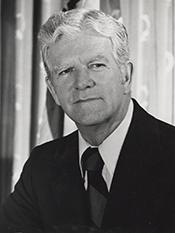
1,659 records where Rep. Daniel, W. C. (Dan) [D-VA-5] is listed as a sponsor, author, or other actor. Search with topics and years
United States · United States Congress · 21 July 1987
Designates January 8, 1988, as National Skiing Day.
United States · United States Congress · 21 July 1987
Designates October 15, 1987, as National Safety Belt Use Day. Authorizes and requests the President to issue a proclamation calling on the people to wear safety belts and have their children use child safety seats, and encouraging public safety and law enforcement agencies to promote these devices.
United States · United States Congress · 15 July 1987
Prohibits the Department of Defense (DOD) from purchasing any product manufactured or assembled by Toshiba America, Incorporated, or Toshiba Corporation for the purpose of resale of such product in a military exchange store or in any other resale activity operated by DOD.
United States · United States Congress · 14 July 1987
Designates November 15 through November 22, 1987, as National Arts Week.
United States · United States Congress · 14 July 1987
Expresses the sense of the Congress that: (1) the Sendero Luminoso (Shining Path) guerrillas in Peru should be condemned for their brutality and nihilistic ends; (2) the Shining Path should end its opposition to the Andean development plan of President Garcia of Peru and should engage in the existing political debate of Peru; (3) the President should convey to President Garcia and the people of Peru the United States' commitment to Peruvian democracy; and (4) the President should urge the cooperation of our allies in efforts to promote a democratic and peaceful Peru.
United States · United States Congress · 9 July 1987
Urges the administration to continue to reject efforts by Canadian negotiators to: (1) have the U.S. cabotage trades, including the transport of energy resources, opened to Canadian vessels; and (2) eliminate the ad valorem duty on vessel repairs performed in Canadian shipyards.
United States · United States Congress · 8 July 1987
Amends the Federal Election Campaign Act to declare that contributions, gifts, or payments by union members or by officials or employees of national banks or corporations to a separate fund which is used for political purposes must be voluntary and unrelated to monies required as a condition of employment. Declares it to be unlawful to use monies paid to an organization as a condition of employment, or money or anything of value secured by force, job discrimination, or financial reprisal, for any type of election or campaign activity by such organization.
United States · United States Congress · 1 July 1987
Nuclear Waste Policy Commission Act of 1987 - Prohibits any expenditures from the Nuclear Waste Fund (or any other source) for site-specific activities until the Nuclear Waste Policy Review Commission (established by this Act) has submitted a specified report to the Congress, and the Congress authorizes the resumption of such activities after reviewing the report. Establishes the Nuclear Waste Policy Review Commission and makes it responsible to the Congress. States that the Commission's function shall be to examine the Nation's progress in the disposal of high-level radioactive waste and spent nuclear fuel and to make recommendations to the Congress. Details the scope of the Commission's review. Outlines the manner in which the Commission shall administer its affairs. Requires the Commission to submit a comprehensive report to the Congress within 18 months after the date of enactment of this Act. Authorizes appropriations to implement this Act for FY 1988 through 1990.
United States · United States Congress · 1 July 1987
Prohibits the Secretary of Defense or the Secretary of a military department (the Secretaries) from entering into an overseas contract if such contract contains any provision which allows for the payment of contractor employee severance pay greater than the prevailing severance pay in the United States. Prohibits the Secretaries from entering into an overseas contract for the provision of banking services if such contract contains any provision which allows the contractor to be reimbursed by the Secretary for: (1) losses arising from uncollectible checks and loans made by authorized bank employees; and (2) any reasonable costs incurred in the collection of delinquent loans and dishonored checks.
United States · United States Congress · 30 June 1987
Designates the week beginning September 6, 1987, as National Pedestrian Safety Week.
United States · United States Congress · 25 June 1987
Expresses the sense of the House of Representatives that the President and the Secretary of State should express to the Soviets: (1) U.S. opposition to the Soviet Union's treatment of Leonid Brailovsky and all those who have applied to emigrate from the Soviet Union; (2) the U.S. desire that the Soviets allow Leonid Brailovsky and his family to emigrate to the United States; and (3) the U.S. desire that the Soviet Union cease the harassment of Soviet Jews and Christians seeking to emigrate.
United States · United States Congress · 24 June 1987
Designates 1987 as the Year of the Hawaiian.
United States · United States Congress · 18 June 1987
National Training Incentives Act of 1987 - Declares that it is the policy and responsibility of the Federal Government to encourage cooperation between employers and employees to promote training programs which will assist employees, should they be displaced from the work force, in training for a trade or occupation for which present and future employment opportunities exist. Title I: Amendments to Internal Revenue Code of 1986 Relating to Employee Training - Amends the Internal Revenue Code to establish an employee training credit for employers. Adds such employee training credit to those credits which are included in the current year business credit for purposes of determining the general business income tax credit for a taxable year. Makes such employee training credit for any taxable year equal to 25 percent of the excess, if any, of: (1) the qualified training expenses of the taxpayer for such taxable year, over (2) the base period training expenses of such taxpayer. Defines "qualified training expenses" as the aggregate amount of expenses paid or incurred by the taxpayer during the taxable year in connection with the training of employees under approved training programs. Defines "base period training expenses" as the average of the qualified training expenses for each year in the base period. Defines "base period" as the five taxable years of the taxpayer immediately preceding the taxable year for which the determination is being made ("the determination year"). Sets forth transitional rules for the first four determination years beginning after December 31, 1984. Sets minimum base period training expenses by providing that, in the case of any determination year of the taxpayer for which the qualified training expenses exceed 200 percent of the base period training expenses, "50 percent of such qualified training expenses" shall be substituted for "the base period training expenses" in the formula to determine the amount of the credit. Defines "approved training program," for purposes of such employee training credit, to include: (1) any apprenticeship program registered or approved by Federal or State agencies; (2) any employer-designed or employer-sponsored training program which meets certain requirements prescribed by the Secretary of Labor (Secretary); (3) any cooperative education; (4) any training program designated by the Secretary which is carried out under the supervision of an institution of higher education; or (5) any other training program approved by the Secretary. Sets forth the special tax rules for the aggregation of qualified training expenses, allocations of such credits, and adjusted to such employee training credit amount for acquisitions and dispositions of a trade or business. Specifies that the employee training credit shall be in addition to any other deduction or credit allowed for the same expenses under the Federal tax law. Amends the Internal Revenue Code to exempt from any penalty tax early withdrawal from an individual retirement plan of a displaced worker if such withdrawals are made to pay training expenses, do not exceed the allowable amount, and are made in accordance with the requirements of this Act. Title II: Withdrawals from Individual Retirement Accounts and Annuities for Job Training for Displaced Workers - Entitles a displaced worker to apply to the Secretary of Labor (Secretary) for certification of such individual's status as a displaced worker. Defines a "displaced worker" as any individual, as of the time of application for a certificate, who has at least 20 quarters of coverage under title II (Old Age, Survivors and Disability Insurance) of the Social Security Act, who has received employment counseling within the past year from an agency approved by the Secretary, and who is in one of the following categories: (1) receiving regular State unemployment compensation; (2) exhausted the right to receive such compensation; (3) unemployed, or received notification of termination of employment within six months, due to permanent closure of a plant or facility; or (4) unemployed for six months or more and with limited opportunity for employment in a similar trade or occupation within a reasonable commuting distance. Permits displaced workers to withdraw amounts from their individual retirement account or annuity (IRA) to pay the expense (tuition, fees, books, supplies, or required equipment) of an eligible training program. Limits the amounts of such IRA withdrawal to $5,000 per year (with cost-of-living adjustments), minus aggregate amounts distributed for training expense payments in the four immediately preceding taxable years. Requires withdrawals from an IRA for training expenses to be made only through the use of a voucher issued by the account trustee or insurance company custodian upon presentation to such trustee or custodian by the displaced worker of a displaced worker certificate and an invoice or statement evidencing that such worker has enrolled in an eligible training program. Sets forth requirements for the presentation and redemption of vouchers for payment of job training expenses. Prohibits depository institutions from assessing any penalty against a displaced worker for early withdrawals from an IRA to pay such training expenses. Permits adjustments in the rate of return on certain investments when IRA funds are withdrawn to pay such training expenses. Treats participation by a displaced worker in an eligible training program at a qualified institution as being in training with the approval of the State agency for purposes of State unemployment compensation law. Defines "eligible training program" as a training program offered by an institution of higher education, a postsecondary vocational institution, a proprietary institution of higher education, or any other institution approved by the Secretary which prepares students for gainful employment in a trade or occupation in which present and future employment opportunities exist. Requires the Secretary to promulgate regulations for: (1) the application of an educational institution for qualification of its training program; and (2) criteria for determining whether such a job training program qualified as an eligible training program under the terms of this Act. Directs the Secretary, for purposes of determining whether certain job training programs qualify as eligible training programs, to consider any determination relating to such programs made by: (1) the Administrator of Veterans Affairs or a State approving agency for veterans' educational programs; (2) a private industry council established under the Job Training Partnership Act or other official or group empowered to make determinations under such Act; (3) the Secretary of Education; (4) any State education agency; or (5) a nationally recognized accrediting agency which the Secretary determines to be reliable in evaluating the quality of job training programs. Sets forth nondiscrimination requirements for institutions offering such job training programs. Requires the Secretary to minimize the amount of paperwork and time necessary to certify any individual as a displaced worker or any training program as an eligible training program. Title III: State Employment Service Responsibilities - Directs the Secretary of Labor to allocate funds to States to reimburse administrative costs of public employment offices which provide certification for displaced workers, labor market and training information, and job search services. Authorizes appropriations for such purpose for FY 1988 and thereafter. Directs the Secretary to submit a report to the Congress on a nationwide computerized job bank and matching program authorized under the Job Training and Partnership Act. Title IV: Miscellaneous Provisions - Amends the Job Training Partnership Act to direct the private industry councils established under such Act to make information on job training programs available throughout their service delivery areas. Exempts such councils from limitations on expenditures imposed by such Act in providing such information. Excludes from the computation of the amount of the expected family contribution to a student for Pell Grant purposes any unemployment compensation received by such student or any IRA distribution used to pay training expenses of such student, provided such student is certified as a displaced worker under the terms of this Act.
United States · United States Congress · 17 June 1987
Constitutional Amendment - Requires the Congress and the President, prior to each fiscal year, to agree, by enactment of a joint resolution, on an estimate of total receipts for that fiscal year. Prohibits outlays for that year from exceeding such estimated receipts unless the Congress, by a three-fifths rollcall vote of each House, provides for a specific excess of outlays over receipts. Requires the Congress, whenever actual outlays exceed actual receipts for any fiscal year, to provide by law for the repayment of such excess in the ensuing fiscal year. Requires a three-fifths rollcall vote of each House to increase the public debt. Directs the President to submit to the Congress a proposed budget for each fiscal year in which total outlays do not exceed total receipts. Requires the approval by a majority of the total membership of each House by rollcall vote before any bill to increase revenue may become law. Waives this article for any fiscal year in which a declaration of war is in effect. Declares that total receipts shall include all receipts of the United States, except those derived from borrowing, and total outlays shall include all outlays of the United States, except those for repayment of debt principal.
United States · United States Congress · 16 June 1987
Authorizes and requests the President to designate December 1987 as Made in the U.S.A. Month.
United States · United States Congress · 11 June 1987
Requires a member of the armed forces to receive special pay during the period in which such member is performing duty in or over the Persian Gulf or in the vicinity of the Persian Gulf while assigned to a naval vessel or other unit. Terminates such provision in the event that the President determines that members performing such duty are no longer subject to the threat of physical harm or imminent danger due to war, terrorism, or other similar conditions.
United States · United States Congress · 11 June 1987
Designates the month of August 1987 as National Child Support Enforcement Month.
United States · United States Congress · 11 June 1987
Designates the two week period of July 13 through July 26, 1987, as United States Olympic Festival-1987 Celebration. Designates July 17, 1987, as United States Olympic Festival-1987 Day.
United States · United States Congress · 11 June 1987
Designates the week beginning September 4, 1988, as National Bowling Week.
United States · United States Congress · 11 June 1987
Declares that the United States should enter into negotiations with countries which participate in a common defense alliance with the United States, particularly members of the North Atlantic Treaty Organization (NATO) and Japan, for the purpose of a more equitable apportionment of the burden of financial support for the alliance.
United States · United States Congress · 10 June 1987
Amends the Internal Revenue Code to extend through 1992 the period during which qualified mortgage bonds may be issued. (Under current law, authority to issue these bonds expires as of 1989.)
United States · United States Congress · 9 June 1987
Designates July 25, 1987, as Clean Water Day.
United States · United States Congress · 9 June 1987
Designates November 14, 1987, as National Philanthropy Day.
United States · United States Congress · 4 June 1987
Waste Reduction Clearinghouse Act of 1987 - Directs the Administrator of the Environmental Protection Agency to establish within the Agency the Office of Waste Reduction to administer the Waste Reduction Clearinghouse. Establishes such Clearinghouse within the Agency to collect and disseminate information on waste reduction (hazardous waste) technical assistance and grant programs at the State level. Requires that such Clearinghouse provide on-line computer access for the public. Requires the Administrator to establish and collect fees and charges on the transfer of hazardous waste, such fees and charges to be deposited into the Waste Reduction Account to finance the Clearinghouse. Authorizes appropriations.
United States · United States Congress · 4 June 1987
Designates May 9 through May 15, 1988, as National Stuttering Awareness Week.
United States · United States Congress · 4 June 1987
Amends rule XIII of the Rules of the House of Representatives to require each House committee that reports legislation requiring employers to provide new employee benefits to include in such report an analysis of the impact of the legislation on employers (especially small businesses), the economy (in terms of international competitiveness), and employees (in terms of lost jobs).
United States · United States Congress · 3 June 1987
Retirement and Survivor Annuities for Bankruptcy Judges and Magistrates Act of 1987 - Establishes a new retirement system for bankruptcy judges and magistrates with 14 or more years of service, or at least eight years of service, upon attaining age 65. Entitles a bankruptcy judge or magistrate who has served at least five years to disability retirement. Provides for cost-of-living adjustments in such retirement system. Requires each bankruptcy judge or magistrate who elects an annuity under this Act to notify the Director of the Administrative Office of the United States Courts. Declares that such judge or magistrate shall not be entitled to an annuity under the civil service systems. Declares this Act applicable to service on or after October 1, 1979. Establishes transition provisions for incumbent judges and magistrates. Provides survivors' annuities for bankruptcy judges, magistrates, and incumbents. Authorizes the recall of retired bankruptcy judges and magistrates into service.
United States · United States Congress · 3 June 1987
Designates the week of November 1 through November 7, 1987, as National Watermen's Recognition Week.
United States · United States Congress · 3 June 1987
Designates the week beginning October 18, 1987, as Financial Independence Week. Urges all citizens to pursue financial independence through sound planning and management of their individual resources.
United States · United States Congress · 2 June 1987
De Soto National Trail Study Act of 1987 - Amends the National Trails System Act to designate the De Soto Trail, extending through Florida, Georgia, South Carolina, North Carolina, Tennessee, Alabama, Mississippi, Arkansas, Texas, and Louisiana, for study for inclusion in such System.
United States · United States Congress · 2 June 1987
Designates the week of December 13 through December 19, 1987, as National Drunk and Drugged Driving Awareness Week.
United States · United States Congress · 2 June 1987
Designates August 11, 1987, as National Neighborhood Crime Watch Day.
United States · United States Congress · 2 June 1987
Designates August 1987 as Cajun Music Month.
United States · United States Congress · 27 May 1987
Hostile Foreign Takeover Moratorium Act - Makes congressional findings concerning the financing of corporate takeovers and the resulting loss of jobs and dislocations to local and regional economies and to the national economy. Amends the Securities Exchange Act of 1934 to place a six-month moratorium on tender offers for any equity securities by any foreign person if any part of the consideration to be paid: (1) is cash, unless the person has cash or cash equivalents equal to the aggregate amount of such cash consideration; or (2) is to be financed by means of a loan, borrowing, or the issuance of debt securities. Provides that such moratorium shall not apply if the acceptance of such offer has been recommended and approved by the directors of the person to be acquired. Authorizes the Securities and Exchange Commission to enforce the provisions of this Act.
United States · United States Congress · 21 May 1987
Directs the Secretary of the Interior to acquire by purchase specified lands adjacent to the boundary of the Saint Croix National Scenic Riverway in Douglas County, Wisconsin, to be administered as part of the Riverway. Authorizes appropriations.
United States · United States Congress · 21 May 1987
Title I: Establishment of National Postsecondary Education Trust - Parental Assistance for Tuition Investment Act of 1987 - Establishes the National Postsecondary Education Trust. Creates a Board of Trustees of the Trust, to be composed of: (1) the Secretaries of Education and the Treasury, serving ex officio; and (2) five representatives of postsecondary education institutions and five members of the general public (not more than half of whom may be from the same political party), who shall be appointed by the President, by and with the advice and consent of the Senate. Creates under the jurisdiction and control of the Board an Advance Tuition Payment Fund. Sets forth the general duties of the Board, including holding the funds of the Trust, establishing necessary policy and procedures for operating the Trust, paying money directly to postsecondary institutions, collecting necessary fees for its operation, imposing reasonable time limits on use of tuition benefits, and other related administrative matters. Directs the Secretary of the Treasury, as Managing Trustee, to invest portions of Fund moneys in interest-bearing obligations of the United States or in obligations guaranteed by the United States. Sets forth restrictions on uses of the Fund. Requires the Board to make annual reports to the Congress. Allows a purchaser to enter into an agreement with the Trust, on behalf of itself and the Federal Government, for the purchase of an advance tuition payment plan for use by a qualified beneficiary to pay a portion of the costs of tuition and fees required to attend a postsecondary education institution to which the qualified beneficiary is admitted. Sets forth required contents and design of advance tuition payment plan agreements. Directs the Trust to provide that a purchaser may purchase an advance payment tuition plan for an eligible beneficiary at any time following the beneficiary's birth. Sets forth conditions for termination of agreements and for refunds upon termination. Sets forth certain restrictions. Authorizes appropriations. Provides that at such time as the Trust is capable of self-support the annual report shall indicate no need for subsequent appropriations. Title II: Tax Treatment of Advance Tuition Payment Plans - Amends the Internal Revenue Code to allow a tax deduction in an amount equal to the amount paid in cash during the year to the National Postsecondary Education Trust pursuant to any advance tuition payment plan agreement. Allows such deduction only if: (1) the taxpayer is the qualified beneficiary under the agreement and is not the dependent of another taxpayer; or (2) the taxpayer is entitled to a deduction with respect to the qualified beneficiary under such agreement for the taxable year. Limits maximum deductible payments per beneficiary to $2,000 for any taxable year and $48,000 for all taxable years. Sets forth certain adjustable gross income limitations above which such maximum deductible amounts are to be reduced. Disallows such deduction for the taxable year in which the beneficiary dies or attains age 25 or for any year thereafter. Disallows such deduction to a taxpayer who is a dependent of another taxpayer. Disallows such deduction with respect to a beneficiary who is the spouse of the taxpayer, unless the taxpayer is entitled to an exemption for the spouse and files a joint return. Deems payments to an advance tuition payment plan agreement as payments for the preceding taxable year if they are made not later than the time prescribed by law for filing the return. Provides that the deduction for payment under advance tuition payment plan agreements is also allowable to taxpayers who do not itemize deductions. Excludes from gross income any amount paid from the National Postsecondary Education Trust to any postsecondary education institution pursuant to any advance tuition payment plan agreement. Includes in the gross income of the person to whom the amount is paid any other amount paid from the National Postsecondary Education Trust which is not described in the preceding sentence. Adds a ten percent penalty tax for such refunds from the Trust, except where the beneficiary under the agreement dies.
United States · United States Congress · 21 May 1987
Expresses the sense of the Congress that: (1) the English language is the official language of the United States; and (2) no language other than the English language is recognized as the official language of the United States.
United States · United States Congress · 20 May 1987
Designates the week of October 11 through October 17, 1987, as National Job Skills Week.
United States · United States Congress · 18 May 1987
Designates August 1, 1987, as Helsinki Human Rights Day. Requests the President to: (1) reassert American commitment to the Helsinki Accords; (2) raise the issue of noncompliance with such Accords with the Soviet Union, Bulgaria, Czechoslovakia, the German Democratic Republic, Hungary, Poland, and Romania; (3) convey to all signatories of such Accords that respect for human rights and fundamental freedoms is vital to progress in the ongoing Helsinki process; (4) convey to U.S. allies the necessity of unity regarding such Accords; (5) continue his efforts to achieve the release of political prisoners of the Soviet Union, increase in Soviet emigration, resolution of family reunification cases, and cessation of radio transmission jamming; (6) seek the inclusion, in any concluding document agreed to in Vienna, of a mechanism to sustain human rights progress after the Vienna Conference on Security and Cooperation in Europe; and (7) convey to signatory states the desire of the United States for a result at Vienna that will not favor military security at the expense of human rights.
United States · United States Congress · 18 May 1987
Expresses the sense of the House of Representatives that Federal excise taxes should not be increased as a method of reducing the Federal budget deficit.
United States · United States Congress · 11 May 1987
Provides that each item of any joint resolution making continuing appropriations that is agreed to in the same form by both Houses of the Congress shall be enrolled as a separate bill or joint resolution for presentation to the President (line-item veto).
United States · United States Congress · 11 May 1987
Designates the week of November 22 through November 28, 1987, as National Adoption Week.
United States · United States Congress · 8 May 1987
Amends the Federal criminal code with respect to the special forfeiture of collateral profits of crime to remove the requirement that the underlying offense result in physical harm to an individual.
United States · United States Congress · 7 May 1987
Amends Federal veterans' benefits provisions to direct (current law authorizes) the Administrator of Veterans Affairs to pay travel expenses of certain veterans and their eligible dependents to or from a Veterans Administration facility or other authorized place in connection with rehabilitation, counseling, or medical treatment or care. Defines those veterans entitled to such payment, including: (1) those veterans financially unable to meet such travel costs; and (2) those veterans unable to bear the cost of special transportation necessitated due to a medical disability. Limits such payments in the case of travel by a privately-owned vehicle to the cost of similar public transportation for such travel. Limits such payment to the actual cost incurred for such travel.
United States · United States Congress · 7 May 1987
Restores, on an interim basis, certain recently amended procedures for determining the maximum attorney's fees which may be awarded to representatives of Old Age, Survivors and Disability Insurance (title II of the Social Security Act) claimants for services rendered before the Secretary of Health and Human Services. Directs the Secretary to conduct a study and report to the Congress regarding procedures for determining such fees.
United States · United States Congress · 7 May 1987
Davis-Bacon Reform Act of 1987 - Amends the Davis-Bacon Act to increase from $2,000 to $250,000 the threshold amount subjecting certain contracts to such Act and requiring them to specify the minimum wages to be paid to laborers and mechanics. Directs the Secretary of Labor to establish as the prevailing wage for a class of laborers or mechanics the entire range of wages being paid to a corresponding class of such workers in the particular urban or rural subdivision of the State in which the work is to be performed. Sets out the means for determining such prevailing wage in cases when more than a single wage is being paid to corresponding classes of workers. Excludes from the computation of wages the basic hourly rates of pay for workers on local Federal projects. Establishes a separate classification for helpers of laborers or mechanics, with their prevailing wages to be determined on the basis of the corresponding class of helpers. Prohibits the division of contracts into units of $250,000 or less for purposes of avoiding wage computation under such Act. Directs the Secretary of Labor and the U.S. Comptroller General to submit to the Congress annual reports describing the effects of the Davis-Bacon Act, the Copeland Act, and this Act on local wages and on local and national economies. Amends the Copeland Act to require certain contractors or subcontractors to furnish compliance statements concerning weekly wages at the beginning, midpoint, and conclusion of the period covered by the contract, instead of every week as the wages are paid.
United States · United States Congress · 7 May 1987
Designates the week of April 24 through April 30, 1988, as National Eating Disorders Awareness Week.
United States · United States Congress · 6 May 1987
Designates October 1987 as Polish American Heritage Month.
United States · United States Congress · 6 May 1987
Designates the week beginning on the third Sunday of September 1987 and 1988 as National Adult Day Care Center Week.
United States · United States Congress · 5 May 1987
Amends the Public Health Service Act to prohibit the Secretary of Health and Human Services, acting through the Director of the Centers for Disease Control, from making certain grants regarding acquired immune deficiency syndrome (AIDS), under existing provisions of such Act, to a public entity established by a State which does not by law require testing for the etiologic agent for AIDS of any individual who: (1) is receiving medical treatment for any venereal disease; (2) is between 15 and 49 years of age and is admitted to any hospital; (3) applies for a marriage license; or (4) is convicted of prostitution or the intravenous use of any drug.