Bill· HJRESH.J.Res. 188 (99th)open
A joint resolution to designate April, 1985 as "Fair Housing Month".
United States · United States Congress · 7 March 1985
Designates the month of April 1985 as Fair Housing Month.
The world's political record
Person
United States · Official source
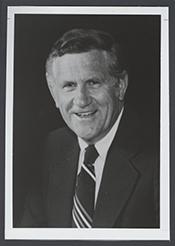
2,232 records where Rep. Dannemeyer, William E. [R-CA-39] is listed as a sponsor, author, or other actor. Search with topics and years
United States · United States Congress · 7 March 1985
Designates the month of April 1985 as Fair Housing Month.
United States · United States Congress · 7 March 1985
Designates April 2, 1985, as Education Day, U.S.A.
United States · United States Congress · 7 March 1985
States that the Congress: (1) reaffirms the Organization of American States declaration that the solution to Nicaragua's political problems is within the exclusive jurisdiction of the Nicaraguan people; (2) urges the President to grant political recognition to the democratic Nicaraguan Resistance; and (3) urges the President and the Organization of American States to support the Resistance.
United States · United States Congress · 5 March 1985
Designates the week of August 25 through August 31, 1985, as National CPR Awareness Week.
United States · United States Congress · 5 March 1985
Authorizes and requests the President to designate May 1985 as National Physical Fitness and Sports Month.
United States · United States Congress · 4 March 1985
Congressional Pay Reform Act of 1985 - Amends the Legislative Reorganization Act of 1946 to specify that pay adjustments for Members of Congress shall become effective on March 1 following the beginning of the next Congress after the Congress during which such adjustment is approved. Amends the Federal Salary Act to require the President to transmit to the Congress within a specified time period, recommendations for rates of pay of Members of Congress legislative and judicial employees. (Currently such recommendations are included in the Federal budget.) Prohibits the House of Representatives and the Senate from considering any bill or joint resolution carrying an appropriation for compensation of Members of Congress for any fiscal year if such bill or joint resolution carries an appropriation, or a limitation of appropriations, for any other purpose. Requires a recorded vote on such bill or resolution.
United States · United States Congress · 28 February 1985
Regulatory Oversight and Control Act of 1985 - Title I: Agency Rulemaking Improvements - Requires each executive agency and each independent regulatory agency to include in the notice of a proposed rule an explanation of the agency's determination as to whether the rule is a major rule. Directs each agency, before or upon publishing notice of a proposed rulemaking proceeding for a major rule, to issue statements concerning: (1) the need for the rule; (2) the reasonable alternative approaches; (3) regional differences; (4) the benefits, costs, and effectiveness of the proposed rule and alternatives; (5) the advantages and disadvantages of adopting performance standards rather than design standards; (6) the technical information the agency will rely on in making the rule; and (7) the statutory authority of the agency to regulate any areas previously regulated only by State law. Requires that each agency issue additional statements upon providing notice of the promulgation of a major rule, including a statement of its determination that the benefits of the rule will justify the costs of the rules and that the rule will achieve rulemaking objectives in a more cost effective manner than the alternatives. Directs each agency to: (1) include in the notice of each proposed and final major rule, instructions on how the public may obtain copies of agency statements on such rule; (2) send a copy of all statements required at the notice and publication of a major rule to the President; and (3) include such statements and any technical information considered in the rulemaking file. Requires agencies to provide for oral presentations at informal public hearings as part of the rulemaking proceedings for major rules. Directs agencies to allow cross-examination of persons presenting information if necessary to resolve significant issues of fact. Directs agencies to regulate such public hearings so as to ensure orderly and expeditious proceedings. Allows an agency to delay completing the rulemaking requirements of this Act if it publishes a finding that complying with such requirements before making the rule would be impracticable, unnecessary, or contrary to the public interest. Requires an agency to complete such requirements as soon as practicable after promulgating the rule unless the rule will expire within two years. Sets forth provisions governing the judicial review of agency compliance with rulemaking and rule review requirements of this Act and the President's compliance with oversight requirements. Directs the President to: (1) establish procedures for agency implementation of the requirements of this title; (2) afford the public an opportunity to comment on such procedures before adoption; and (3) monitor, review, and comment on agency compliance with such requirements. Permits the Comptroller General to review agency compliance with this Act. Requires each agency to publish in the Federal Register, semiannually, a regulatory agenda containing a list of all rules the agency expects to propose, promulgate, repeal, modify, or review in the next year and specified information concerning such rules. Requires publication of the agendas of all agencies in a single issue of the Federal Register. Directs each agency to publish for public comment a proposed schedule for the review of its existing major rules and other rules that may be added by the agency or the President. Declares that each such rule shall cease to be effective not more than ten years after the date the final schedule is published. Directs each agency to publish its responses to public comments upon publishing the final schedule. Requires an agency to include with the publication of a major rule the date, within ten years, on which the rule will expire and the date by which the rule must be reviewed. Directs each agency to: (1) publish a notice of the initiation of the review of a rule; (2) describe the costs, benefits, problems, and alternatives to the rule; (3) provide a period for public comment; and either (4) conduct a rulemaking proceeding to reissue or amend the rule; or (5) publish an explanation of its decision to allow the rule to expire. Allows agencies to alter review schedules if the President agrees. Eliminates the exemption of rules concerning loans, grants, and benefits from notice and comment rulemaking requirements. Requires that the notice of a proposed rulemaking include: (1) a statement of the objectives of the rule; (2) a statement that the agency seeks proposals from the public of alternative methods; and (3) a statement of where the file of the rulemaking proceeding may be inspected or how file copies may be obtained. Requires an agency to: (1) provide a period of at least 60 days after publishing a notice of proposed rulemaking for the public to submit comments on a proposed rule; and (2) include the agency's response to such comments in the statement published with the adopted rule. Prohibits an agency from relying on any material of central relevance in a rulemaking if the material is not included in the rulemaking file or the public has not had an opportunity to comment on the material. Directs each agency to maintain a public file on each rulemaking proceeding. Allows an agency to exclude from such file any material relied upon which is exempt from public disclosure under the Freedom of Information Act, if a statement of the basis for such exclusion is included. Requires a court reviewing an agency action: (1) not to accord any presumption in favor of or against agency action; (2) in determining questions of law other than statutory jurisdiction, to give the agency's interpretation such weight as it warrants considering the agency's authority under law; (3) in making determinations concerning statutory jurisdiction, to determine whether the action is within the agency's jurisdiction on the basis of the statutory language or other indications of legislative intent; and (4) in determining whether the adoption of a rule is in accordance with law, to consider whether there is substantial support in the rulemaking file for the agency's factual determinations. Declares that when proceedings for review of the same agency action are instituted in two or more courts of appeals within ten days, the Administrative Office of the United States Courts shall select, by a system of random selection, the court in which the record shall be filed. Authorizes the courts to postpone the effective date of the agency action as necessary to permit designation of the court of record. Prohibits agencies from paying expenses of persons participating or intervening in agency proceedings except as specifically authorized by statute. Title II: Congressional Review of Agency Rules - Requires each agency to transmit a copy of each rule it promulgates to the House of Representatives and the Senate. Declares that such rule shall be considered only as a recommendation of the agency to Congress. Prohibits a major rule from taking effect unless a joint resolution approving the rule is enacted within 90 days. Prohibits a rule other than a major rule from taking effect if a joint resolution disapproving the rule is enacted within 90 days. Prohibits an agency from promulgating a new rule that is substantially the same as a major rule that was not approved or any other rule that was disapproved. Directs the Comptroller General, at the request of a committee of either House which has primary legislative jurisdiction over a rule or on his or her own initiative, to inform such committee as to whether the rule is consistent with the statutory authority under which it was promulgated. Exempts an emergency rule from such congressional review requirements if the agency submits to the appropriate congressional committees a written notice of: (1) its determination that the rule is an emergency rule; (2) the time period (limited to 210 days) during which the rule will be effective; and (3) its intention to issue a final rule, if necessary, when such emergency rule expires. Sets forth House and Senate procedure for the consideration of such resolutions of approval or disapproval. Declares that: (1) congressional inaction on or rejection of a resolution disapproving a rule shall not be deemed an expression of approval of that rule; and (2) enactment of a resolution approving a major rule shall not be construed to create any presumption of validity with respect to such rule and shall not affect the judicial review of such rule. Title III: Regulatory Oversight and Control Amendments to House Rules - Amends the Rules of the House of Representatives to establish a Regulatory Review Calendar to which all resolutions for the approval or disapproval of agency rules shall be referred. Provides for the consideration of the resolutions on such Calendar on the first and third Monday and the second and fourth Tuesday of each month. Declares that it shall be in order during the reading of a general appropriation bill to consider any germane amendment proposing a limitation restricting the implementation of an agency rule, other than a major rule, for which a resolution of disapproval has not been considered by the House, or has been passed by the House but not enacted, within the time required under this Act. Requires each standing committee of the House to consider and adopt its oversight plans in a meeting which is open to the public by March 1 of the first session of a Congress. Directs each such committee to: (1) consult with other congressional committees with jurisdiction over the same areas to assure that such areas are reviewed in the same Congress and that there is maximum coordination and cooperation between such committees in conducting such review; (2) give priority to the review of programs under permanent budget or statutory authority; and (3) attempt to ensure that all laws, programs, activities, and agencies within its jurisdiction are reviewed at least once every ten years. Requires each committee to submit its final plans to the Committee on Government Operations which shall report all such plans to Congress with recommendations to assure the effective coordination of such plans. Authorizes the Speaker of the House, with the approval of the House, to appoint special ad hoc committees to review specific matter within the jurisdiction of two or more standing committees. Requires each committee to include in its biennial report to the House separate sections summarizing the legislative and oversight activities of that committee. Declares that it shall not be in order in the House to consider a primary expense resolution for any committee that has not submitted its oversight plans to the Committee on Government Operations.
United States · United States Congress · 28 February 1985
Directs the President to report quarterly to the Congress on all outstanding loans, loan guarantees, credits, and grants issued by the Federal Government or by a multilateral organization of which the United States is a member to the government of a Communist country or to any person on behalf of (or any entity controlled by) a Communist country. Specifies information to be included in the report.
United States · United States Congress · 28 February 1985
Designates the week beginning on October 6, 1985, as Mental Illness Awareness Week.
United States · United States Congress · 28 February 1985
Designates the week beginning September 8, 1985, as National Osteopathic Medicine Week.
United States · United States Congress · 27 February 1985
Tobacco Deregulation Act of 1985 - Amends the Agricultural Act of 1949 to repeal tobacco price support provisions. Amends the Agricultural Adjustment Act of 1938 to repeal tobacco acreage allotment and marketing quota provisions. Amends the Food and Agriculture Act of 1965 to repeal tobacco allotment transfer provisions. Amends the Agricultural Trade Development and Assistance Act of 1954 (P.L. 480) to exclude tobacco from specified concessional export provisions. Amends the Commodity Credit Corporation Charter Act to prohibit the Commodity Credit Corporation from assisting tobacco production. Amends the Agricultural Adjustment Act, as reenacted with amendments by the Agricultural Marketing Agreement Act of 1937, to prohibit the issuance of tobacco marketing orders. Repeals the Tobacco Control Act. Withdraws congressional consent from any interstate compact regulating tobacco production and commerce.
United States · United States Congress · 27 February 1985
Designates 1985 as the Oil Heat Centennial Year.
United States · United States Congress · 26 February 1985
Designates the week beginning on May 5, 1985, as National Asthma and Allergy Awareness Week.
United States · United States Congress · 25 February 1985
Amends the Internal Revenue Code to exempt from the windfall profit tax an amount of crude oil equal to an amount of residual fuel oil used in enhanced recovery processes. Defines "enhanced recovery process" as any process: (1) for increasing the ultimate total recovery of oil from a reservoir which is designed to modify any property of any fluid in the reservoir or the reservoir rock; or (2) for displacing or controlling the flow rate or flow pattern in the reservoir.
United States · United States Congress · 25 February 1985
Provides that each item of any general or special appropriation bill and any bill or joint resolution making supplemental, deficiency, or continuing appropriations that is agreed to in the same form by both Houses of the Congress shall be enrolled as a separate bill or joint resolution for presentation to the President (line-item veto).
United States · United States Congress · 25 February 1985
Authorizes the Armored Force Monument Committee, the United States Armor Association, the World Wars Tank Corps Association, the Veterans of the Battle of the Bulge, the 11th Armored Cavalry Regiment Association, the Tank Destroyer Association, the 1st, 2nd, 3rd, 4th, 5th, 6th, 7th, 8th, 9th, 10th, 11th, 12th, 13th, 14th, and 16th Armored Division Associations, and the Council of Armored Division Associations to erect a memorial in or near Arlington National Cemetery, Virginia, to honor and commemorate the American Armored Force. Directs the Secretary of the Interior, with the approval of the National Commission of Fine Arts and the National Capital Planning Commission, to select the site and approve the design and plans. Obligates the United States to expenses of maintenance only. Requires the commencement of the erection of the memorial within five years with a certification of sufficiency of funds necessary before commencement.
United States · United States Congress · 21 February 1985
High Technology Research and Scientific Education Act of 1985 - Title I: The Credit for Increasing Research Activities - Amends the Internal Revenue Code to make permanent the tax credit for research and development (R&D) expenditures. Modifies the definition of qualified research for purposes of the R&D credit to narrow the category of eligible activities for which the credit is allowable. Provides that in-house and contract research expenses paid or incurred by a regular corporation (not an S corporation, a personal holding company, or a service corporation) will constitute qualified research expenses for R&D credit purposes if the corporation undertakes the research with the intention to use the result thereof in the active conduct of a present or future trade or business. Provides that in the case of research being conducted in partnership form, research expenses will constitute qualified research expenses if they are incurred by the partnership in carrying on a trade or business as applied at the partnership level, and the credit is apportioned among the partners in accordance with general partnership rules. Provides exceptions to this general rule where: (1) there is a joint venture enterprise of regular corporations; or (2) not all of the members of the joint venture are regular corporations, but each member's own trade or business would satisfy the trade or business test with respect to the partnership's research expenditures. Provides that for these two exceptions the research expenses will flow through to the partners, with the trade or business test being applied at the partner level. Title II: Promotion of University Research and Scientific Investigation - Establishes a new income tax credit equal to 20 percent of that portion of a corporation's payments to universities (and other qualified non-profit tax-exempt organizations for basic research) which exceeds a fixed, historical "minimum university basic research" floor. Defines the "minimum university basic research" floor as one percent of the annual average of the corporate taxpayer's combined qualified in-house research expenses, contract research expenses and university basic research payments for the base period composed of the period from 1981 through 1983. Provides that the amounts of research expenses which fall below the floor shall remain eligible for the present R&D credit and are included in the corporation's base period for purposes of calculating the present R&D credit. Treats the amounts which exceed the "minimum university basic research" floor as ineligible for the present R&D credit and excludes such amounts from the corporate taxpayer's base year research expenses for purposes of calculating the corporations R&D credit under present law. Provides that a corporation's payments to universities for basic research that is eligible for the new tax credit shall be reduced to the extent that the corporation's general (i.e., not designated for research purposes) charitable giving to all universities falls below historical levels (the annual average of undesignated payments for three of the immediately preceding four years as selected by the taxpayer). Makes additions to the list of organizations to which corporate payments for basic research may be made and be eligible for the tax credit. Allows a corporation an income tax deduction for contributions of scientific or technical property to an institution of higher education. Defines scientific property to mean tangible personal property (including computer software) used in a trade or business, which is donated for the direct education of students or faculty, for research and experimentation, or for research training in the United States in mathematics, the physical, biological, or chemical sciences, engineering, or advanced computer sciences. Sets forth a formula for determining the amount of the allowable deduction for contributions of scientific property. Provides for an income tax exclusion for the scholarships, fellowship grants, student loan forgiveness, or stipends of a graduate student in mathematics, engineering, computer science, or the physical or biological sciences. Provides that such tax exclusion is not forfeited merely because the student is required, as a condition of the scholarship or fellowship, to perform future service in teaching or research.
United States · United States Congress · 21 February 1985
Designates August 4, 1985, as Freedom of the Press Day.
United States · United States Congress · 21 February 1985
Designates March 22, 1985, as National Energy Education Day.
United States · United States Congress · 20 February 1985
Designates 1985 as the 75th Anniversary of the Boy Scouts of America.
United States · United States Congress · 19 February 1985
Malt Beverage Interbrand Competition Act - Declares that no antitrust law shall prohibit the importer, brewer, or trademark licensee of a trademarked malt beverage, when such beverage has substantial competition from other malt beverages in an area, from: (1) entering into an agreement granting a wholesale distributor the exclusive right to sell such beverage within any defined geographic area within a State; or (2) limiting such distributor to the sale of such beverage for ultimate resale to consumers in such area. Declares that this Act shall not affect any provision of State law.
United States · United States Congress · 19 February 1985
Liberty Double-Eagle Bullion Coin Act - Requires the Secretary of the Treasury to mint and issue gold double-eagle coins. Sets forth specifications for and the design of such coins. Makes such coins legal tender. Permits the sale of such coins at a price equal to the cost of minting and issuing such coins plus a surcharge equal to the amount by which the fair market value of gold bullion held by the United States and used in the minting of the coins exceeds the statutory maximum value of any gold certificates outstanding against the bullion. Requires the revenue from such surcharges to be used to reduce the national debt. Authorizes appropriations.
United States · United States Congress · 19 February 1985
Amends rule X of the Rules of the House of Representatives to require each standing committee to review, on a continuing basis and when considering public bills or resolutions, those portions of the President's Private Sector Survey on Cost Control (Grace Commission report) pertaining to such committee's jurisdiction. Amends rule XI to require each committee report on a public bill or resolution to contain: (1) an identification of each recommendation of the Survey to be implemented and the resulting estimated program cost savings or revenue enhancement; and (2) a statement setting forth the disposition of each recommendation pertaining to such bill or resolution.
United States · United States Congress · 7 February 1985
Nuclear Powerplant Standardization Act of 1985 - Title I: Licensing and Regulatory Process - Amends the Atomic Energy Act of 1954 to require the Nuclear Regulatory Commission to establish procedures, standards, and criteria permitting the approval of standardized ten-year facility designs. Declares that a design approval shall be considered to be a license for the purpose of such Act. Requires the Commission to establish procedures for an additional ten-year renewal of such a design approval. Requires the Commission to establish procedures, standards, and criteria permitting the approval of a site or sites for one or more utilization or production facilities for industrial or commercial purposes for a period of ten years. Authorizes the Commission, after a determination that a proposed site is suitable, to issue a permit which shall be considered to be a license. Requires the Commission to establish procedures for a ten-year renewal of site permits. Requires that before issuance of construction and operating licenses: (1) an opportunity be provided for public hearings; and (2) the applicant establish competency to construct and operate the facility in conformity with the application. Requires the holder of a license to notify the Commission of the proposed date of initial operation at least nine months before commencement. Directs the Commission to adopt regulations establishing criteria to govern all modifications of Commission regulatory requirements. Declares that the Commission, in making any determination under this Act, need not consider or reconsider any issue that has been resolved in any other proceeding under this Act, in the absence of significant new information substantially affecting the conclusions reached in the other proceeding. Title II: Technical and Conforming Amendments - Amends the Atomic Energy Act of 1954 to conform to the provisions of this Act.
United States · United States Congress · 7 February 1985
Amends the patent laws to make it an infringement of patent to use, sell, or import into the United States without authority a product produced by a patented process. Places the burden of proof upon the party asserting that a product was not produced with the patented process in an infringement action where the court finds a substantial likelihood that the product was so produced and the claimant has exhausted all means of discovery.
United States · United States Congress · 7 February 1985
Revises Federal procedures regarding the establishment of interstate cost estimates to direct the Secretary of Transportation to apportion such estimates for construction funds and substitute highway and urban transit projects on October 1 of 1985-1988 if the Congress has not approved such estimates by that time.
United States · United States Congress · 7 February 1985
Designates the month of October 1985 as National Foster Grandparent Month.
United States · United States Congress · 6 February 1985
Amends the Internal Revenue Code to extend the targeted jobs income tax credit from 1985 to 1990. Increases the amount of wages which may be taken into account for such credit from $6,000 to $10,000 per year. Revises the definition of "members of economically disadvantaged families" to increase from 70 percent to 80 percent of the Bureau of Labor Statistics' lower living standard the amount of income a family may have in order to qualify as a member of a targeted group.
United States · United States Congress · 6 February 1985
Makes provisions of the Voting Rights Act of 1965 that require that ballots and other election materials be available in a language other than English inapplicable to elections taking place after enactment of this Act. Declares that nothing in this Act prohibits States from providing such materials in another language if required by local conditions.
United States · United States Congress · 6 February 1985
Designates November 1985 as American Liver Foundation National Liver Awareness Month.
United States · United States Congress · 6 February 1985
Authorizes and requests the President to designate the week of June 16 through June 22, 1985, as National Safety in the Workplace Week.
United States · United States Congress · 6 February 1985
Authorizes and requests the President to designate the last Friday of April each year as National Arbor Day.
United States · United States Congress · 4 February 1985
Energy Consumer Regulatory Reform Act of 1985 - Amends the Energy Conservation and Production Act and the Energy Reorganization Act of 1974 by repealing provisions relating to energy conservation improvements to buildings. Repeals provisions of the National Energy Conservation Policy Act and the Energy Security Act relating to residential energy conservation service and commercial and apartment energy conservation service. Repeals energy efficiency standards and requirements for consumer products other than automobiles under the Energy Policy and Conservation Act. Amends the Public Utility Regulatory Policies Act of 1978 to repeal retail regulatory policies for electric and gas utilities. Repeals provisions of the Energy Conservation and Production Act relating to electric utility rate design initiatives. Amends the Energy Policy and Conservation Act by repealing provisions relating to State energy conservation programs and general emergency energy authorities. Repeals the Emergency Energy Conservation Act of 1979.
United States · United States Congress · 4 February 1985
Expresses the sense of the Congress that: (1) the President should urge Canada to discontinue imposing taxes on travel literature imported from the United States; and (2) a reciprocal tax imposed on imported Canadian literature may be appropriate if Canada continues to impose such taxes.
United States · United States Congress · 31 January 1985
Scout Commemorative Coins Act - Amends Federal law to direct the Secretary of the Treasury to mint and issue Boy Scouts of America and Girl Scouts of the United States of America half dollar coins commemorating the 75th anniversary of the Scouts of America. Limits the number of coins that may be minted and sets forth certain features of such coins. Directs the Secretary to sell the minted coins for a certain price or for a price equivalent to the average cost of minting and distributing such coins. Authorizes appropriations.
United States · United States Congress · 31 January 1985
Designates the week of November 11 through November 17, 1985, as National Reye's Syndrome Week.
United States · United States Congress · 31 January 1985
Amends rule XLIX of the Rules of the House of Representatives to require a two-thirds vote on legislation that increases the statutory limit on the public debt.
United States · United States Congress · 30 January 1985
Amends the Internal Revenue Code to provide that the use of law enforcement, fire protection, and emergency medical vehicles by government employees shall be treated as a nontaxable fringe benefit.
United States · United States Congress · 30 January 1985
Designates the month of November 1985 as National Alzheimer's Disease Month.
United States · United States Congress · 30 January 1985
Authorizes and requests the President to designate April 21 through April 28, 1985, as Jewish Heritage Week.
United States · United States Congress · 24 January 1985
Amends the Federal criminal code to establish criteria for the imposition of the death penalty for treason and espionage. Requires the Government, for an offense punishable by death, to serve notice upon the defendant a reasonable time before trial or acceptance of a plea that it intends to seek the death penalty, as well as notice of the aggravating factors upon which it will rely. Requires a separate sentencing hearing before a jury or the court upon motion by the defendant when the defendant is found guilty or pleads guilty to an offense punishable by death. Provides that no presentence report shall be prepared in such cases. Allows the defendant and the Government to present any information relevant to sentencing, without regard to the rules of evidence, but permits information to be excluded where its probative value is substantially outweighed by the danger of unfair prejudice, confusion of the issues, or misleading of the jury. Specifies mitigating factors which the defendant must establish by a preponderance of the information and aggravating factors which the Government must prove beyond a reasonable doubt. Sets forth special aggravating factors with respect to the crimes of treason and espionage. Includes among the mitigating factors that the defendant was less than 18 years old at the time of the crime. Conditions imposition of the death penalty on a unanimous finding by the jury that: (1) some aggravating factor exists in addition to a threshold factor; and (2) the aggravating factor sufficiently outweighs any mitigating factor found to exist. Directs the court to impose the death penalty upon a finding that such sentence is justified. Requires the court to instruct the jury not to consider the race, color, national origin, creed, or sex of the defendant in its consideration of the death sentence. Limits the circumstances under which the offense of delivering defense information to aid foreign governments is punishable by death. Establishes procedures for appeal from a death sentence. Requires the court of appeals, upon considering the record and the information and procedures of the sentencing hearing, and any special finding, to affirm the decision if: (1) the sentence was not imposed under influence of passion, prejudice, or arbitrariness; and (2) the information supports the finding of aggravating factors or the absence of mitigating factors. Requires the court to provide a written explanation of its determination.
United States · United States Congress · 24 January 1985
Directs the Secretary of Transportation (upon request of a State Governor) to permit maximum State speed limits of 65 miles per hour on rural segments of the Interstate System if the Secretary determines that such an increase is not likely to have a significant adverse effect on highway safety. Requires the Secretary to give interested parties notice and opportunity for comment before making such determination. Prescribes certain factors which must be considered by a State Governor and the Secretary before such a determination is made. Requires the Governor of a State in which a higher speed limit has been permitted to report to the Secretary every five years regarding such factors. Directs the Secretary to withdraw the higher speed limit permission if it is determined that the standards upon which such permission was based are no longer being met. Provides that such withdrawal may only be made: (1) after the Secretary has afforded interested parties notice and opportunity for comment; and (2) after a State has had reasonable time to comply with the standards for increased speed limits.
United States · United States Congress · 24 January 1985
Amends the Internal Revenue Code to exclude from gross income a corporate stock distribution to a stockholder based upon the reinvestment of stock dividends in the corporation by such stockholder pursuant to his election to participate in a qualified dividend reinvestment plan. (Present law limits such exclusion to dividend reinvestment in stock of public utilities.) Limits the amount of such exclusion to $1,500 per taxable year ($3,000 in the case of a joint return.)
United States · United States Congress · 24 January 1985
Designates the week beginning May 5, 1985, as National Correctional Officers Week.
United States · United States Congress · 24 January 1985
Expresses the sense of the Congress that the President should: (1) ensure that U.S. officials carry out the pledge to resolve the issue of the Americans still missing and unaccounted for in Indochina; (2) work for the immediate release of any Americans still held captive and the return of the remains of those who died in Southeast Asia; and (3) make every effort to secure the further cooperation of Laos and Vietnam in resolving this issue.
United States · United States Congress · 22 January 1985
Repeals the requirement added by the Tax Reform Act of 1984 relating to the maintenance of contemporaneous records with respect to: (1) business travel expenses, including automobile expenses; (2) business entertainment expenses; and (3) expenses for gifts.
United States · United States Congress · 22 January 1985
Preborn Children's Civil Rights Act of 1985 - Prohibits Federal involvement in the performance of abortions, except that Federal funds may be used for medical procedures required to prevent the death of the mother or the preborn child. Includes the following activities within the scope of this provision: (1) use of appropriated funds to counsel or encourage an abortion; (2) use of appropriated funds to reimburse or refer for abortions; (3) use of funds for research with respect to abortion; or (4) contracting for insurance which pays or reimburses for abortion. Prohibits any institution receiving Federal funds from discriminating against any employee, applicant, or student because of such person's opposition to abortion. Prohibits the granting of attorney fees in a civil action involving a law, ordinance, or regulation prohibiting abortion. Provides for Supreme Court review with regard to a law, ordinance, or regulation prohibiting abortion which a lower Federal court declares unconstitutional.
United States · United States Congress · 22 January 1985
Amends the Internal Revenue Code to make permanent the deduction for charitable contributions by taxpayers who do not itemize deductions.
United States · United States Congress · 22 January 1985
Designates October 26, 1985, as Mule Appreciation Day.
United States · United States Congress · 22 January 1985
Proclaims September 8 through September 14, 1985, as National Independent Retail Grocer Week.