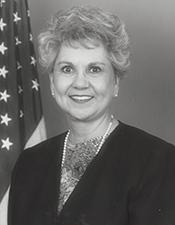
United States · United States Congress · 1 March 1999
American Land Sovereignty Protection Act - Amends the National Historic Preservation Act Amendments of 1980 to prohibit the Secretary of the Interior from nominating any Federal lands for inclusion on the World Heritage List pursuant to the Convention Concerning the Protection of the World Cultural and Natural Heritage unless: (1) the Secretary publishes a finding that commercially viable uses of nominated lands and lands within ten miles of them will not be adversely affected by such inclusion; (2) the Secretary has reported to the Congress on the lands' natural resources and the impact that the inclusion would have on existing and future uses of such lands; and (3) such nomination is specifically authorized by a law. Authorizes the President to submit proposals for legislation authorizing such a nomination after publication of the Secretary's finding. Requires the Secretary to object to the inclusion of any property in the United States on the list of World Heritage in Danger (established under the Convention) unless the Secretary: (1) has reported to the Congress on the necessity for such inclusion, the natural resources associated with the property, and the impact such inclusion would have on existing and future uses of such property; and (2) is specifically authorized to assent to the inclusion by a joint resolution of the Congress enacted after the report is submitted. Directs the Secretary to submit an annual report to specified congressional committees on the management of each World Heritage Site within the United States. (Sec. 4) Prohibits any Federal official from nominating any lands in the United States for designation as a Biosphere Reserve under the Man and Biosphere Program of the United Nations Educational, Scientific, and Cultural Organization. Provides that any such designation before enactment of this Act shall not have any force or effect, unless the Biosphere Reserve: (1) is specifically authorized by a law enacted before December 31, 2000; (2) consists solely of federally owned lands; and (3) is subject to a management plan that specifically ensures that the use of intermixed or adjacent non-Federal property is not limited or restricted as a result of that designation. Directs the Secretary of State to report annually to specified congressional committees information on the management of each Biosphere Reserve within the United States. (Sec. 5) Prohibits any Federal official from nominating, classifying, or designating any Federal land located within the United States for a special or restricted use under any international agreement for conserving, preserving, or protecting the terrestrial or marine environment, flora, or fauna (with specified exceptions) unless specifically authorized by law, but authorizes the Secretary to submit proposals for authorizing legislation. Provides that any such nomination, classification, or designation of private or State or local lands shall have no force or effect without the owner's consent or specific authorization by State or local law, respectively.
United States · United States Congress · 1 March 1999
Nullifies any reservation of funds during FY 1999 for guaranteed loans under the Consolidated Farm and Rural Development Act for qualified beginning farmers and ranchers. Provides guaranteed loan priority for such farmers and ranchers.
United States · United States Congress · 1 March 1999
Prohibits the United States from supporting the admission of China into the World Trade Organization (WTO) unless the Congress passes a joint resolution, according to specified procedures, allowing the United States to support such admission. Directs the President to: (1) notify the Congress if China becomes a member of the WTO without the support of the United States; and (2) submit notice of the withdrawal of the United States from the WTO Agreement. Makes a conforming amendment to the Uruguay Round Agreements Act.
United States · United States Congress · 1 March 1999
Senior Citizens' Freedom to Work Act of 1999 - Amends title II (Old Age, Survivors and Disability Insurance) (OASDI) of the Social Security Act to repeal the limitation on the amount of outside income which beneficiaries who have attained retirement age may earn (earnings test) without incurring a reduction in benefits.
United States · United States Congress · 25 February 1999
Freedom to E-File Act - Directs the Secretary of Agriculture to establish in the Department of Agriculture a public use electronic filing and information retrieval system.
United States · United States Congress · 25 February 1999
State and Local Investment Opportunity Act of 1999 - Amends the Internal Revenue Code to increase the State ceiling on private activity bonds. Provides for inflation adjustment.
United States · United States Congress · 24 February 1999
Combined Sewer Overflow Control and Partnership Act of 1999 - Amends the Federal Water Pollution Control Act to require each permit, order, or decree issued pursuant to such Act for a discharge from a combined storm and sanitary sewer to conform to the Combined Sewer Overflow Control Policy signed by the Administrator of the Environmental Protection Agency on April 11, 1994. Authorizes the Administrator, notwithstanding specified compliance schedules and permit limitations, to issue or execute a permit, order, or decree for discharges from such sewers that includes a schedule for compliance with a long-term control plan for a term of up to 15 years. Provides for extensions of such term, as appropriate. Modifies any administrative or judicial decree or order issued before this Act's enactment date that establishes any deadline or schedule for the construction of treatment works for control of any discharge from a municipal combined sewer system to extend such deadlines or schedules to conform with this Act, at the request of the municipal owner or operator. Prohibits any permit, order, or decree issued pursuant to the Act from requiring compliance with water quality based requirements contained in a long-term control plan under the Control Policy unless the Administrator has completed the water quality standards-designated use review process called for in the Control Policy. Authorizes the Administrator to make grants to municipalities for planning, design, and construction of facilities to intercept, transport, control, or treat combined storm and sanitary sewer flows. Authorizes appropriations for FY 2000 through 2002. Directs the Administrator to report biennially to the Congress on recommended funding levels for the two fiscal years following the date of a report on activities relating to combined storm and sanitary sewer flows.
United States · United States Congress · 24 February 1999
Veterans Tobacco-Related Illness Benefits Restoration Act of 1999 - Repeals a Federal provision which prohibits a veteran's disability or death from being considered to have resulted from a personal injury suffered or a disease contracted in the line of duty on the basis that it resulted from the use of tobacco products during the veteran's military, naval, or air service. Provides that such repeal shall apply to any claim for compensation received by the Secretary of Veterans Affairs before or after enactment of this Act. Prohibits the Director of the Office of Management and Budget from making any estimate of changes in direct spending outlays under provisions of the Balanced Budget and Emergency Deficit Control Act of 1985 (Gramm-Rudman-Hollings Act) for any fiscal year resulting from the enactment of this Act.
United States · United States Congress · 23 February 1999
Federal Protective Service Reform Act of 1999 - Amends the Act of June 1, 1948, to redesignate special policemen of the General Services Administration (GSA) as police officers. (Sec. 3) Extends the powers of sheriffs and constables granted to such police officers upon Federal property under the GSA Administrator's control to any area within 500 feet from such property and makes such powers concurrent with State and local law enforcement authorities in the area in which the property is located. Empowers such police officers to: (1) carry firearms; (2) petition Federal courts for and execute arrest and search warrants; (3) make arrests without a warrant; and (4) conduct investigations, on and off the property of offenses on such property; and (5) coordinate with other law enforcement agencies that have intelligence gathering authority for the protection of such persons and property. Authorizes police officers to exercise any power granted in such an area if: (1) the officer reasonably believes that the action is necessary to prevent or stop a felony in progress; (2) the felony is being committed in the presence of the officer; and (3) there is a known, immediate threat. (Sec. 4) Increases the maximum penalty for violations of any rules or regulations with respect to Federal property. (Sec. 5) Empowers special agents with the same authority outside Federal property as police officers have. (Sec. 6) Directs the Administrator to establish the Federal Protective Service (FPS) as a separate operating service of GSA. Provides for the FPS to be headed by a Commissioner who: (1) shall be appointed by and report directly to the Administrator; and (2) has at least five years of professional law enforcement experience in a command or supervisory position. Requires the Commissioner to: (1) assist the Administrator; (2) serve as the principal U.S. law enforcement officer and security official with respect to the protection of Federal officers and employees in such property; (3) render assistance to other Federal, State, and local law enforcement agencies upon request; and (4) coordinate his or her activities with those of the Commissioner of the Public Buildings Service. (Sec. 7) Requires FPS police officers' and criminal investigators' pay and benefits to be determined in accordance with a pay and benefits package established by the Administrator that is equivalent to the pay scale and benefits package applicable to U.S. Secret Service Uniformed Division members. (Sec. 8) Requires there to be at least 730 full-time police officers in the FPS one year after the enactment of this Act. Prohibits any reduction in such number of officers unless specifically authorized by law. Directs the Comptroller General to study and report on the feasibility of merging all building security forces of the executive branch within and under the FPS's supervision. (Sec. 9) Directs the Commissioner to prescribe standards for the contracting of security personnel for Federal property. Provides for such standards to ensure that contract personnel receive adequate training and are subject to the same background check requirements as FPS police officers.
United States · United States Congress · 23 February 1999
Authorizes the payment of dependency and indemnity compensation to the surviving spouse of a veteran who died while totally disabled from a service-connected disability, who was a former prisoner of war who died after September 30, 1999, and who had been diagnosed as having one of the diseases specified as being service-connected (and therefore compensable) under veterans' disability compensation or benefits provisions.
United States · United States Congress · 23 February 1999
Amends the Older Americans Act of 1965 to extend through FY 2002 the authorization of appropriations for: (1) the Federal Council on the Aging; (2) administration; (3) grants for State and community programs on aging; (4) the availability of surplus commodities; (5) training, research, and discretionary projects and programs; (6) community service employment for older Americans; (7) grants for Native Americans; (8) allotments for Vulnerable Elder Rights Protection activities; and (9) the Native American program.
United States · United States Congress · 23 February 1999
Commends Sheikh Hamad bin Khalifa al-Thani, the Emir of Qatar, for his leadership and commitment to suffrage and the principles of democracy. Congratulates the citizens of Qatar as they celebrate the historic election for a central municipal council. Reaffirms the U.S. commitment to encouraging the suffrage of women, democratic ideals, and peaceful development throughout the Middle East.
United States · United States Congress · 12 February 1999
TABLE OF CONTENTS: Title I: Research on Lupus Title II: Delivery of Services Regarding Lupus Lupus Research and Care Amendments of 1999 - Title I: Research on Lupus - Amends the Public Health Service Act to require the Director of the National Institute of Arthritis and Musculoskeletal and Skin Diseases to expand and intensify research and related activities of the Institute regarding lupus. Requires the Director to: (1) coordinate such activities with similar activities conducted by other national research institutes and agencies of the National Institutes of Health; and (2) conduct or support research to expand the understanding of the causes of, and to find a cure for, lupus, including research to determine the reasons underlying the elevated prevalence of the disease among African-American and other women. Authorizes appropriations. Title II: Delivery of Services Regarding Lupus - Mandates grants for the establishment, operation, and coordination of effective and cost-efficient systems for the delivery of essential services to individuals with lupus and their families. Regulates charges (whether they are characterized as enrollment fees, premiums, deductibles, cost sharing, copayments, coinsurance, or other charges) imposed by grantees on service recipients. Authorizes technical assistance. Authorizes appropriations.
United States · United States Congress · 12 February 1999
Amends the Poultry Products Inspection Act to include within the definition of poultry birds of the order Ratitae (ostriches, emus, rheas) that are raised for commercial distribution as human food.
United States · United States Congress · 11 February 1999
Small Watershed Rehabilitation Amendments of 1999 - Amends the Watershed Protection and Flood Prevention Act to authorize the Secretary of Agriculture to provide financial assistance to an eligible local organization to cover a portion of the total costs incurred for the rehabilitation of structural measures originally constructed as part of a covered water resource project (except that the local organization shall be responsible for securing all land, easements, or rights-of-ways necessary for the project). Limits the amount of Federal funds that may be made available to such an organization for construction of a particular rehabilitation project to 65 percent of the total rehabilitation costs, but not exceed 100 percent of actual construction costs incurred, and makes the local organization responsible for resource rights costs and all Federal, State, and local permits. Authorizes the Secretary, acting through the Natural Resources Conservation Service, to provide technical assistance to a requesting organization in planning, designing, and implementing rehabilitation projects. Prohibits any assistance authorized under this Act from being used to perform operation and maintenance activities. Outlines assistance application requirements. Directs the Secretary to establish a system of approving rehabilitation assistance requests from eligible organizations equitably. Authorizes appropriations for FY 2000 through 2009 to provide financial and technical assistance. Earmarks funds authorized for the first two fiscal years for an assessment by the Secretary of the rehabilitation needs of covered projects. Requires: (1) the Secretary to maintain a database to track the benefits derived from rehabilitation projects and expenditures and report annually to the Congress on the status of activities conducted; and (2) eligible local organizations that received assistance to report to the Secretary on the status of rehabilitation efforts undertaken using financial assistance after the completion of the specific projects for which assistance was provided.
United States · United States Congress · 11 February 1999
Bond Fairness and Protection Act of 1999 - Amends the Internal Revenue Code, with respect to tax-exempt bond financing of certain electric facilities, to exclude a permitted open access transaction (as defined by this Act) from the definition of private business use. Permits, as specified, termination of tax-exempt bond financing for certain electric output facilities.
United States · United States Congress · 10 February 1999
TABLE OF CONTENTS: Title I: Outer Continental Shelf Impact Assistance Title II: State, Local, and Urban Conservation and Recreation Title III: Wildlife Conservation and Restoration Conservation and Reinvestment Act of 1999 - Title I: Outer Continental Shelf Impact Assistance - Establishes the Outer Continental Shelf Impact Assistance Fund (OCSIAF) to provide impact assistance to coastal States from a portion (27 percent) of allocable new OCS revenues (payments received by the United States as royalties, net profit share payments, and related late-payment interest from natural gas and oil leases under the Outer Continental Shelf Lands Act). Prohibits placement in the Fund of OCS revenues from a leased tract (or portion) located in a geographic area subject to a leasing moratorium on January 1, 1999, unless the lease was issued before the moratorium and was in production on such date. (Sec. 103) Sets forth a formula for use by the Secretary of the Interior to determine the portion of the allocable share of new revenues attributable to each coastal State and county eligible to receive impact assistance payments. Mandates that such OCS funds be expended by the eligible coastal States and counties for certain environmental projects and activities. Requires: (1) the Governor of every OCSIAF recipient State to develop (and certify to the Secretary) a State plan for the use of such funds; (2) an eligible county to submit for the Governor's approval a plan setting forth the projects and activities for which it proposes to expend OCSIA funds; and (3) the Governor of each recipient State to account to the Congress for all OCSIAF monies received for the previous fiscal year. Title II: State, Local, and Urban Conservation and Recreation - Amends the Land and Water Conservation Fund Act of 1965 (LWCFA) to require an amount equal to 23 percent of specified Outer Continental Shelf revenues to be credited to a separate account in the Land and Water Conservation Fund (LWCF) in the Treasury in each fiscal year through September 30, 2015. (Sec. 202) Makes such funds available, without further appropriation, to carry out LWCFA in the next succeeding fiscal year. Provides that, if such revenues in a fiscal year exceed $900 million, such excess shall be available, without further appropriation, in the next succeeding fiscal year for obligation or expenditure as payments in lieu of taxes. Authorizes appropriations to maintain a certain minimum total annual income of the LWCF. Makes certain amounts covered into the LWCF available for expenditure without appropriation. Sets forth formulae for allocation of such funds for: (1) Federal acquisition of certain lands, waters, or interests; (2) financial assistance to the States for land acquisition, urban conservation, and recreation projects; and (3) local governments through the Urban Parks and Recreation Recovery Program of the Department of the Interior. Provides for an LWCFA allocation of funds to Indian tribes and Alaska Native Village Corporations. Requires States to make at least 50 percent of the annual State apportionment under LWCFA available as grants to local governments. Replaces, within a five-year period, LWCFA requirements for comprehensive State plans with requirements for State action agendas. Allows each State to define its own priorities and criteria for selection of outdoor recreation and conservation acquisition and development projects eligible for LWCFA grants so long as it provides for public involvement in this process and publishes an accurate and current State Action Agenda for Community Recreation and Conservation. Requires such Agendas to: (1) be strategic, originating in broad-based and long-term needs, but focused on actions that can be funded over the next four years, and be updated every four years; (2) consider all providers of recreation and conservation lands, and correlate with other State, regional and local plans for parks, recreation, open space, and wetlands conservation; (3) address wetlands as important outdoor recreation and conservation resources, and incorporate a State wetlands priority conservation plan consistent with the national plan developed under the Emergency Wetlands Resources Act; and (4) be guided in part by recovery action programs developed by urban localities under the Urban Park and Recreation Recovery Act. Revises LWCFA conditions for approval of conversions. (Sec. 203) Amends the Urban Park and Recreation Recovery Act (UPRRA) to provide (in addition to the current types of at-risk recreation grants and recovery action program grants) for matching capital grants to local governments in the form of: (1) development grants for development and construction on existing or new neighborhood recreation sites, including indoor and outdoor recreation facilities, support facilities, and landscaping, but excluding routine maintenance and upkeep activities; and (2) acquisition grants for purchasing new parkland to be permanently dedicated and made accessible for public recreation use. Revises UPRRA requirements for: (1) eligibility; (2) matching grants; (3) coordination; and (4) conversion approval. Repeals the limitation on the use of UPRRA funds for acquisition of land or interests in land. (Sec. 205) Establishes a Habitat Reserve Program (HRP) within the Department of the Interior to be administered by the Secretary of the Interior in association with the applicable State fish and wildlife department in the State where the affected land is located. Requires lands eligible for enrollment in the HRP to be privately owned and designated by the State agency as necessary to preserve the existence of one or more species listed under the Endangered Species Act, and their owners and operators to have voluntarily entered into partnership agreements with the Secretary and the State agency. Prescribes: (1) limitations on lands eligible for enrollment in the HRP; (2) HRP contract requirements; (3) HRP management plans; (4) HRP contract duration; and (5) payments to owners or operators of lands included in the HRP. Title III: Wildlife Conservation and Restoration - Amends the Federal Aid in Wildlife Restoration Act (FAWRA) to require an amount equal to ten percent of specified Outer Continental Shelf revenues to be deposited in a new subaccount in the Federal aid to wildlife restoration fund (FAWRF), to be invested and to be made available without further appropriation, for apportionment in the next succeeding fiscal year for State wildlife conservation and restoration programs. Provides that all interest on such amounts shall be available without further appropriations, for obligation or expenditure for purposes of the North American Wetlands Conservation Act of 1989. (Sec. 305) Sets forth requirements for: (1) allocation of such subaccount receipts; (2) applications for approval of, and development grants for, State wildlife conservation and restoration programs; and (3) coordination. (Sec. 306) Allows certain subaccount funds for such a State wildlife conservation and restoration program to be used for law enforcement and education. (Sec. 307) Prohibits a State from receiving FAWRA matching funds if it diverts any funds from wildlife conservation purposes.
United States · United States Congress · 10 February 1999
Post Office Community Partnership Act of 1999 - Modifies Federal postal law to revise requirements for the closing or consolidation of a post office and apply them, as well, to its relocation or construction. Requires a 60-day notice before an office's relocation, closing, consolidation, or construction. Requires such notice to be: (1) hand delivered or delivered by mail; and (2) published in one or more newspapers of general circulation within the zip codes served by such post office. Sets forth provisions which: (1) allow any person served by the post office to offer an alternative relocation, closing, consolidation, or construction proposal within such 60-day period; and (2) require the Postal Service to conduct a hearing, if requested by such person, to allow the individual to present oral or written testimony. Revises the factors to be considered in deciding whether or not to relocate, close, consolidate, or construct a post office to include: (1) the extent to which the post office is part of a core downtown business area; (2) the sentiment of the community; (3) the adequacy of the existing post office; and (4) whether all reasonable alternatives to relocation, closing, consolidation, or construction have been explored. Requires the Postal Service to respond in a consolidated report to all of the alternative proposals offered within the 60-day notification period by persons served by the post office in question. Requires the Postal Service to follow a community's public participation procedures to address the relocation, closing, consolidation, or construction of buildings in the community if such procedures are more stringent than those provided in this Act. Provides that nothing in this Act shall be construed to apply to a temporary customer service facility used for less than 60 days. Allows for a one-time suspension of this Act with respect to a single emergency for any specific post office for a maximum 180-day period.
United States · United States Congress · 10 February 1999
Marriage Tax Elimination Act of 1999 - Amends the Internal Revenue Code to revise standard deduction amounts and individual income tax rate bracket amounts, including providing that amounts for married filing jointly categories shall be twice that of amounts for single filers.
United States · United States Congress · 9 February 1999
Safe Seniors Assurance Study Act of 1999 - Directs the Secretary of Health and Human Services (HHS) to conduct a study for a report to Congress on the mortality and adverse outcomes rates of Medicare (title XVIII of the Social Security Act (SSA)) patients by providers of anesthesia services (service providers). Provides that if the HHS Secretary determines that lack of physician supervision of service providers results in an adverse impact on outcome rates of Medicare patients, then such providers under Medicare or Medicaid (SSA title XIX) shall be supervised by a physician in the same manner as they are supervised under HHS regulations in effect on January 1, 1999.
United States · United States Congress · 8 February 1999
Amends the Energy Policy and Conservation Act to repeal restrictions on certain plumbing products and appliances, including showerheads, faucets, water closets, and urinals.
United States · United States Congress · 4 February 1999
Amends Federal law to add Martin Luther King, Jr.'s birthday (the third Monday in January) to the list of days on which the U.S. flag should especially be displayed.
United States · United States Congress · 4 February 1999
TABLE OF CONTENTS: Title I: Protection Against Scams on Seniors Title II: Telemarketing Fraud Over the Internet Title I: Protection Against Scams on Seniors - Protection Against Scams on Seniors Act of 1999 - Directs the Secretary of Health and Human Services, acting through the Assistant Secretary for Aging, to publicly disseminate by specified means in each State certain information designed to educate senior citizens and raise awareness about the dangers of telemarketing fraud. Authorizes appropriations. Title II: Telemarketing Fraud Over the Internet - Amends the Federal criminal code to include within its criminal fraud protections transmissions made over the Internet. Directs the Federal Trade Commission to initiate a rulemaking proceeding to set forth the application of the Federal Trade Commission Act to deceptive acts or practices in U.S. commerce in connection with the promotion, advertisement, sale offer, or sale of goods or services through the use of the Internet, including the initiation, transmission, and receipt of unsolicited commercial electronic mail.
United States · United States Congress · 4 February 1999
Faces of AIDS Stamp Act of 1999 - Amends Federal law to require the Postal Service to establish a special rate of postage for first class mail that is up to 25 percent higher than the regular rate as a voluntary alternative that the public may use to contribute to funding for Acquired Immune Deficiency Syndrome (AIDS) research and education. Requires 50 percent of collected amounts to be paid to the National Institutes of Health (NIH) and the remainder to the Department of Health and Human Services (HHS) for AIDS awareness education grant programs. Expresses the sense of the Congress that nothing in this Act should: (1) cause a net decrease in total funds received by NIH, HHS, or any other Federal agency or instrumentality below the level that would have otherwise been received but for this Act's enactment; or (2) affect first-class or other regular postage rates. Requires special postage stamps to be made available to the public.
United States · United States Congress · 4 February 1999
Honoring American Military Women for Their Service in World War II Resolution - Honors the women who served the United States in military capacities during World War II. Recognizes that these women contributed vitally to the victory of the United States and the Allies in the war.
United States · United States Congress · 3 February 1999
Fairness and Voluntary Arbitration Act - Requires each party to a sales and service contract that provides for the use of arbitration in resolving controversies to have the option to reject arbitration as the means of settling a controversy. Requires the arbitrator, whenever arbitration is elected to settle a dispute under such a contract, to provide the parties with a written explanation of the factual and legal basis for the award.
United States · United States Congress · 3 February 1999
Stand Down Authorization Act - Authorizes the Secretary of Veterans Affairs: (1) to carry out Stand Down events (events to provide veterans who are without a home, unemployed, experiencing health or social adjustment challenges, or otherwise in need with one to three days of safety and security and access to food, shelter, clothing, benefits certification, health care, or any other appropriate form of assistance); and (2) in connection with such events, to provide outreach services, use Department of Veterans Affairs personal property, and provide any other appropriate benefit or service. Directs the Secretary to establish and implement a pilot program under which the Secretary shall carry out a single Stand Down event in each State in each calendar year, beginning in 2000. Requires an annual report to the Congress on pilot program implementation and recommendations for legislation.
United States · United States Congress · 3 February 1999
Designates 911 as the universal wireless emergency telephone number within the United States. Requires any Federal department, agency, officer, or instrumentality, or any State or local government, that establishes or operates a wireless communications system for use by the public to report emergencies to ensure that such system accommodates such number and uses it for reporting emergencies.
United States · United States Congress · 3 February 1999
Hope for Children Act - Amends the Internal Revenue Code to: (1) increase the amount allowable for qualified adoption expenses; (2) permanently extend the credit for adoption expenses; and (3) adjust the limitations on such credit for inflation.
United States · United States Congress · 2 February 1999
TABLE OF CONTENTS: Title I: Child Care and Development Services Title II: Strengthening the 21st Century Community Learning Centers Act Title III: Crime Prevention Program America After School Act - Title I: Child Care and Development Services - Amends the Child Care and Development Block Grant Act of 1990 to authorize and to make appropriations for FY 2000 through 2004 for new and expanded programs for child care and development services, including direct services provided outside of normal school hours, to promote the health and academic achievement of school age children, and assist the children in avoiding high risk behaviors. (Sec. 104) Requires each State that receives a block grant under such Act to use certain reserved funds to make grants to elementary or secondary schools or community-based organizations to expand the availability and affordability of quality child care and development services, especially direct services provided outside of normal school hours (including before- and after-school care and weekend, holiday, and summer care) for school age children. Requires grant preference to entities that: (1) serve communities with a high rate of poverty and a high incidence of at-risk children; and (2) propose programs that make certain transportation services available to the children served. Requires the use of grant funds for direct services outside of normal school hours, related quality services, and indirect services. Title II: Strengthening the 21st Century Community Learning Centers Act - Amends the 21st Century Community Learning Centers Act to require that discretionary grants be awarded to local educational agencies (LEAs) for supporting certain programs of public elementary schools or secondary schools, including middle schools, that serve communities with substantial needs for expanded learning opportunities for children and youth. (Sec. 201) Increases the maximum duration of such a grant from three to five years. (Sec. 202) Requires the LEA to demonstrate that it will provide specified portions of the annual costs of project-assisted activities from sources other than such grant funds. (Sec. 203) Requires the use of grant funds to establish or expand community learning centers that provide activities that offer expanded learning opportunities for children and youth in the community (such as activities conducted before or after school), and which may include any of the currently authorized activities. (Sec. 204) Authorizes continuation awards of FY 1998 grants. (Sec. 205) Extends the authorization of appropriations for such Act. Title III: Crime Prevention Program - Amends the Juvenile Justice and Delinquency Prevention Act of 1974 to establish the After School Crime Prevention program. Directs the Administrator of the Office of Juvenile Justice and Delinquency Prevention to make grants to public and private agencies to fund effective after school juvenile crime prevention programs. Requires grantees to make available non-Federal matching funds in percentages determined by the Administrator. Requires grant priority to programs that: (1) are targeted to high crime neighborhoods or at-risk juveniles; (2) operate during the period immediately following normal school hours; (3) provide educational or recreational activities designed to encourage law-abiding conduct, reduce the incidence of criminal activity, and teach juveniles alternatives to crime; and (4) coordinate with State or local juvenile crime control and juvenile offender accountability programs. (Sec. 301) Authorizes appropriations.
United States · United States Congress · 2 February 1999
Directs the President to impose quotas, tariff surcharges, or negotiate enforceable voluntary export restraint agreements in order to ensure that the volume of imported steel products (semifinished, plates, sheets and strips, wire rods, wire and wire products, rail type products, bars, structural shapes and units, pipes and tubes, iron ore, and coke products) during any month does not exceed the average volume of imported steel for the 36-month period preceding July 1997. Directs the Secretaries of the Treasury and of Commerce to implement a program for administering and enforcing the restraints on such imports. Authorizes the Customs Service to refuse entry into the U.S. customs territory for a three year period of any steel products that exceed the allowable levels of such products.
United States · United States Congress · 2 February 1999
Makes veterans who have been awarded the Purple Heart eligible for veterans' hospital care and medical services. Provides such veterans with a priority in the veterans' system of annual patient enrollment.
United States · United States Congress · 2 February 1999
TABLE OF CONTENTS: Title I: General Management Improvements Title II: Improving Federal Debt Collection Practices Title III: Sale of Nontax Debts Owed to United States Title IV: Treatment of High Value Nontax Debts Title V: Federal Payments Government Waste, Fraud, and Error Reduction Act of 1999 - Title I: General Management Improvements - Amends requirements regarding certain Federal agencies' (executive departments as well as the Environmental Protection Agency and the National Aeronautics and Space Administration) audited financial statements, including to: (1) extend the deadline for the preparation and submission of the first of such statements; and (2) provide for submission of such statements to the Congress and the Director of the Office of Management and Budget (Director). (Currently, such statements are to be submitted to the Director.) (Sec. 102) Excludes lodging provided under Federal travel and subsistence expense provisions from an exception which prohibits agency heads from requiring employees or members of the uniformed services to occupy quarters on a rental basis. Directs each head of an executive agency to require, with respect to travel by agency employees in the performance of their duties, the use by such employees of travel management centers, authorized travel agents, and electronic reservation and payment systems for the purpose of improving efficiency and economy regarding travel by agency employees. Requires the Administrator of General Services to develop a plan regarding implementation of this requirement and to report to the Congress on such plan and the means by which such agency heads plan to ensure that employees use travel management centers, travel agents, and electronic reservation and payment systems. Directs the Administrator to develop a mechanism to ensure that employees of executive agencies are not inappropriately charged State and local taxes on travel expenses. Requires the Administrator to report to the Congress on the steps taken and proposed to be taken to carry out such requirement. Title II: Improving Federal Debt Collection Practices - Makes technical amendments to financial management provisions relating to claims of the U.S. Government, including those that permit a State to collect by administrative offset certain payments under the Social Security Act, Black Lung Benefits Act, or railroad retirement laws for past due child support being enforced by a State. Sets forth provisions relating to the collection by private collection contractors through the use of garnishment of any debt owed to the United States, including to prohibit a private collection contractor, in attempting to collect through the use of garnishment any such debt, from being precluded from verifying the debtor's current employer, the location of the payroll office of the debtor's current employer, the period the debtor has been employed by the current employer, and the compensation received by the debtor from such employer. Requires collection contracts to include conditions under which contractors are: (1) subject to penalties for failures to comply with applicable law or for unreasonable or abusive collection practices; or (2) absolved from liability or contract penalties in connection with collecting a debt by actions required by such contracts. Amends provisions relating to contracts for collection services to authorize the Attorney General to make contracts retaining private counsel to furnish legal services in the case of any monetary claim, including claims for civil fines or penalties. (Under current law, such contracts are made only in the case of any claim of indebtedness owed the United States.) (Sec. 202) Bars certain delinquent Federal debtors from being eligible for the award or renewal of any: (1) Federal financial assistance in the form of a loan (other than a disaster loan), loan insurance, or guarantee; or (2) Federal permit or license. (Sec. 203) Prohibits an executive, judicial, or legislative agency head from discharging a nontax debt or terminating collection action on such a debt unless: (1) it has been referred to a private collection contractor, a debt collection center, or to the Attorney General for litigation; (2) it has been sold without recourse; (3) administrative wage garnishment has been undertaken; or (4) there is bankruptcy, death, or disability. Permits the agency head to waive the application of such requirement with respect to any nontax debt, or class of nontax debts, if the waiver is in the best interest of the United States. Title III: Sale of Nontax Debts Owed to United States - Allows an executive, judicial, or legislative agency head to sell, using competitive procedures, any nontax debt owed to the United States that is administered by the agency. Specifies that such sales shall: (1) be for cash or cash and a residuary equity, joint venture, or profit participation, if the proceeds will be greater than the proceeds from a sale solely for cash; (2) be without recourse against the United States, but may include the use of guarantees if authorized by law; and (3) transfer to the purchaser all U.S. rights to demand payment of the debt, other than with respect to a residuary equity, joint venture, or profit participation. (Sec. 302) Sets forth requirements for the sale of certain: (1) delinquent nontax loans; (2) loans; and (3) nontax debts or class of debts. Title IV: Treatment of High Value Nontax Debts - Requires each agency head that administers a program that gives rise to a delinquent high value nontax debt (a nontax debt having an outstanding value that exceeds $1 million) to submit an annual report to the Congress that lists each such debt. (Sec. 402) Requires the Inspector General of each agency to: (1) review such applicable annual report to the Congress and make such recommendations as necessary to improve the agency's performance; (2) periodically review and report to the Congress on the agency's nontax debt collection management practices; and (3) as part of such reviews, examine agency efforts to reduce the aggregate amount of high value nontax debts that are resolved in whole or in part by compromise, default, or bankruptcy. (Sec. 403) Requires an agency head authorized to collect a delinquent high value nontax debt to promptly seek seizure and forfeiture of assets pledged to the United States in any transaction giving rise to such a debt. Directs an agency, upon determining that seizure or forfeiture is not appropriate, to include a justification for such determination in the annual report. Title V: Federal Payments - Includes within requirements of the Director's regulations regarding Federal payments that a required payment date may be waived to provide for early payment in cases where an agency will implement an electronic payment technology which improves agency cash management and business practice. Permits an executive agency head, subject to an agreement between the agency head and the applicable financial institution, to accept an electronic payment, including debit and credit cards, to satisfy a nontax debt owed to the agency.
United States · United States Congress · 2 February 1999
Military Pay and Retirement Reform Act of 1999 - Waives during FY 2000 any required adjustment in the rates of monthly military basic pay in conformance with the General Schedule of the Federal Government. Increases such pay by 4.4 percent, effective on January 1, 2000. Provides an increase in such pay as of July 1, 2000, for officers and enlisted personnel within specified pay grades. Repeals a Federal provision which provides a formula reduction in the retired pay of military personnel who first become members after July 31, 1986, and had creditable military service of less than 30 years. Directs the Secretary of Defense to increase the annual retired pay of such members under a revised formula which takes into account annual cost-of-living increases.
United States · United States Congress · 2 February 1999
Recognizes the unique obstacles that women face in ensuring retirement security and survivor and disability stability and the essential role that social security plays in guaranteeing inflation-protected financial stability for women throughout their entire old age, and expresses the sense of the House of Representatives that the Congress and the President should take these factors into account when considering proposals to reform the social security system.
United States · United States Congress · 19 January 1999
Women's Health and Cancer Rights Act of 1999 - Amends the Employee Retirement Income Security Act of 1974, as amended by the Omnibus Consolidated and Emergency Supplemental Appropriations Act, 1999, and the Public Health Service Act, as amended by the Omnibus Consolidated and Emergency Supplemental Appropriations Act, 1999, to require certain group health plans, and health insurance issuers providing coverage under a group plan, to ensure specified minimum coverage regarding: (1) breast cancer mastectomies, lumpectomies, and lymph node dissections; and (2) secondary consultations by specialists. Prohibits: (1) changing coverage terms and conditions based on a participant's or beneficiary's decision to request less than the minimum coverage; and (2) certain penalties or incentives to providers or specialists. Amends: (1) the Public Health Service Act to apply the same requirements to health insurance issuers in the individual market; and (2) the Internal Revenue Code to apply those requirements to group health plans.
United States · United States Congress · 19 January 1999
Medicare Insulin Pump Coverage Act of 1999 - Amends title XVIII (Medicare) of the Social Security Act to cover insulin infusion pumps as items of durable medical equipment.
United States · United States Congress · 19 January 1999
Mandates Information Act of 1999 - Amends the Congressional Budget Act of 1974 to require the Director of the Congressional Budget Office (CBO), in preparing estimates of the direct costs of all Federal private sector mandates, to estimate also, if feasible, the indirect impact of such mandates on consumers, workers, and small businesses, including any disproportionate impact in particular regions or industries. Prohibits such estimate from being considered in determining whether the direct costs of all such mandates will exceed the threshold specified under current law. Revises provisions concerning legislation subject to a point of order to: (1) define the point of order for a determination by the Director of the Congressional Budget Office that it is not feasible to determine the economic impact of a Federal mandate; and (2) replace certain references to Federal intergovernmental mandates with references to Federal mandates with respect to legislation reported by the Appropriations Committee. Provides a point of order against consideration of legislation that would increase the direct costs of Federal private sector mandates (excluding direct costs attributable to revenue resulting from tax or tariff provisions of any such measure if it does not raise net tax and tariff revenues over the five-fiscal- year period beginning with the first fiscal year such measure affects such revenues) by an amount that causes the stated threshold of $100 million per fiscal year to be exceeded. Revises the definition of "Federal intergovernmental mandate" to mean any provision in legislation, statute, or regulation that relates to a then-existing Federal program under which $500 million or more is provided annually to State, local, or tribal governments under entitlement authority, and that meets certain other criteria, if such legislation, statute, or regulation does not provide participating State, local, or tribal governments with new or expanded authority (currently, if such governments lack such authority) to amend their financial or programmatic responsibilities to continue providing required services affected by the legislation, statute, or regulation.
United States · United States Congress · 19 January 1999
Directs the Secretary of the military department concerned to ensure that any person who first becomes a member of the armed forces on or after the date of enactment of this Act is provided a written statement of all the benefits that will be provided to such person upon retirement from the armed forces. Prohibits any such statement from including a reservation of the right to change any such benefit. Requires any such person who subsequently retires from the armed forces to receive the benefits as described in the original statement.
United States · United States Congress · 19 January 1999
Medicare Common Sense Hospital Payment Act of 1999 - Amends title XVIII (Medicare) of the Social Security Act, as amended by the Balanced Budget Act of 1997, to repeal a specified restriction on Medicare payment for certain hospital discharges to post-acute care.
United States · United States Congress · 19 January 1999
Amyotrophic Lateral Sclerosis (ALS) Treatment and Assistance Act of 1999 - Amends title II (Old Age, Survivors and Disability Insurance) of the Social Security Act (SSA) to provide for a waiver of the 24-month waiting period for Medicare coverage for individuals disabled by amyotrophic lateral sclerosis, also known as ALS or Lou Gehrig's Disease. Amends SSA title XVIII (Medicare) to provide for Medicare coverage of any drug approved by the Food and Drug Administration for use in the treatment or alleviation of ALS-related symptoms.
United States · United States Congress · 6 January 1999
Genetic Information Nondiscrimination in Health Insurance Act of 1999 - Amends the Employee Retirement Income Security Act of 1974 to prohibit a group health plan or a health insurance issuer offering group coverage from discriminating on the basis: (1) of genetic information; or (2) that the participant or beneficiary has requested or received genetic services. Regulates genetic information collection and disclosure by plans and issuers. Provides for compensatory, consequential, and punitive damages. Amends the Public Health Service Act to prohibit a group health plan, a health insurance issuer offering group coverage, or a health issuer in the individual market from so discriminating. Regulates genetic information collection and disclosure by plans and issuers. Provides for compensatory, consequential, and punitive damages. Amends title XVIII (Medicare) of the Social Security Act to prohibit an issuer of a Medicare supplemental policy from so discriminating. Provides for compensatory, consequential, and punitive damages. Amends the Internal Revenue Code to prohibit a group health plan or a health insurance issuer offering group coverage from so discriminating. Regulates genetic information collection and disclosure by plans and issuers.