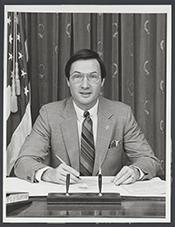
United States · United States Congress · 4 February 1985
Synthetic Fuels Corporation Fiscal Responsibility Act - Amends the United States Synthetic Fuels Corporation Act of 1980 to terminate the authority of the United States Synthetic Fuels Corporation (the Corporation) to enter into any awards or commitments for financial assistance. Directs the Corporation's Board of Directors to submit a final report to the Congress regarding the status of the Corporation within 60 days after enactment of this Act. Prohibits the Corporation from expending any funds or acting in furtherance of any commitment made after February 5, 1985, unless a joint resolution approving such transaction is enacted. Requires the Secretaries of Energy and of the Treasury and the Administrator of the Environmental Protection Agency to agree on a Memorandum of Understanding which includes a plan for: (1) the abolition of the Corporation; and (2) for the administration of synthetic fuels projects which will continue after the abolition of the Corporation.
United States · United States Congress · 4 February 1985
Amends title II (Old Age, Survivors and Disability Insurance) of the Social Security Act to prohibit the payment of title II benefits to individuals who have been deported pursuant to the Immigration and Nationality Act because of activities conducted under the direction of association with the Nazi government of Germany or its allies.
United States · United States Congress · 31 January 1985
Amends the Housing and Community Development Act of 1974 regarding urban development action grant criteria to require at least one-half of aggregate grant amounts to be made solely on the basis of specified criteria, of which job creation, especially for low-income persons and minorities, shall be given priority. Requires a report to the Congress.
United States · United States Congress · 31 January 1985
Scout Commemorative Coins Act - Amends Federal law to direct the Secretary of the Treasury to mint and issue Boy Scouts of America and Girl Scouts of the United States of America half dollar coins commemorating the 75th anniversary of the Scouts of America. Limits the number of coins that may be minted and sets forth certain features of such coins. Directs the Secretary to sell the minted coins for a certain price or for a price equivalent to the average cost of minting and distributing such coins. Authorizes appropriations.
United States · United States Congress · 31 January 1985
Social Security Benefit Termination Reform Act of 1985 - Amends title II (Old Age, Survivors and Disability Insurance) of the Social Security Act to provide that monthly insurance benefits shall be paid for the month in which a beneficiary dies. Requires that the amount of such benefits be proportionate to the number of days of such month preceding the date of the beneficiary's death.
United States · United States Congress · 31 January 1985
Provides for a 15-year delimiting period for a veteran to complete a program of education. Extends through 1989 the delimiting period for veterans no longer eligible for such assistance solely because of the current ten-year delimiting period.
United States · United States Congress · 31 January 1985
Amends rule XLIX of the Rules of the House of Representatives to require a two-thirds vote on legislation that increases the statutory limit on the public debt.
United States · United States Congress · 30 January 1985
Requires the Secretary of Health and Human Services to conduct a study on the collection of information by the Department of Health and Human Services in order to determine what information is being collected from the same class of individuals more than once. Requires: (1) the Secretary to report to the Congress on such study; and (2) such report to include detailed recommendations for more efficient information collection.
United States · United States Congress · 30 January 1985
Directs the President to: (1) secure from the Indochina nations a full accounting of Americans captured or missing as a result of the Vietnam conflict; and (2) work for the release of captive Americans and the return of the remains of those American servicemen and civilians who died in Southeast Asia. Requires the President to submit two reports to Congress on American POW/MIAs in Southeast Asia.
United States · United States Congress · 24 January 1985
Designates the U.S. Post Office Building, Flushing, New York, as the Benjamin S. Rosenthal Post Office Building. Requires the Postmaster General to install an appropriate plaque indicating such designation.
United States · United States Congress · 24 January 1985
Amends the Federal criminal code to establish criteria for the imposition of the death penalty for Federal crimes. Requires the Government for any offense punishable by death to serve notice upon the defendant a reasonable time before trial or acceptance of a plea that it intends to seek the death penalty and the aggravating factors upon which it will rely. Requires a separate sentencing hearing before a jury, or the court upon motion by the defendant, when the defendant is found guilty or pleads guilty to an offense punishable by death. Allows the defendant and the Government to present any information relevant to sentencing, without regard to the rules of evidence, but permits information to be excluded where its probative value is substantially outweighed by the danger of unfair prejudice, confusion of the issues, or misleading of the jury. Specifies mitigating factors which the defendant must establish by a preponderance of the information and aggravating factors which the Government must prove beyond a reasonable doubt. Includes as threshold, aggravating factors for homicide that the defendant: (1) intentionally killed the victim; (2) intentionally inflicted serious bodily injury which resulted in the death of the victim; (3) intentionally participated in an act which he reasonably should have known would create grave risk of death to a person and the victim did die as a direct result of the act; or (4) attempted to kill the President of the United States. Sets forth special aggravating factors with respect to the crimes of treason, espionage, homicide, and attempted murder of the President. Includes among the mitigating factors that the defendant was less than 18 years old at the time of the crime. Directs the court, or the jury by unanimous vote, to impose the death penalty upon a finding that such sentence is justified based on consideration of both the aggravating and mitigating factors. Requires the court to instruct the jury not to consider the race, color, national origin, creed, or sex of the defendant in its consideration of the sentence. Limits the circumstances under which the offense of delivering defense information to aid foreign governments is punishable by death. Allows the death penalty to be imposed for: (1) the murder of foreign officials, Federal judges, Federal law enforcement officers, or Federal penal or correctional employees; and (2) an offense of kidnapping resulting in the death of any person. Eliminates the death penalty for the crime of rape. Authorizes the death penalty for the crime of attempting to kill the President of the United States if the attempt results in bodily injury to the President or otherwise comes dangerously close to causing his death. Establishes procedures for appeal from a death sentence. Requires the Court of Appeals, upon considering the record and the information and procedures of the sentencing hearing, to affirm the decision if: (1) the sentence was not imposed under influence of passion, prejudice, or arbitrariness; and (2) the information supports the finding of aggravating factors or the absence of mitigating factors. Requires the court to provide a written explanation of its determination. Provides for the death penalty for murders committed by prisoners in Federal correctional institutions.
United States · United States Congress · 24 January 1985
Amends the Federal criminal code to establish criteria for the imposition of the death penalty for treason and espionage. Requires the Government, for an offense punishable by death, to serve notice upon the defendant a reasonable time before trial or acceptance of a plea that it intends to seek the death penalty, as well as notice of the aggravating factors upon which it will rely. Requires a separate sentencing hearing before a jury or the court upon motion by the defendant when the defendant is found guilty or pleads guilty to an offense punishable by death. Provides that no presentence report shall be prepared in such cases. Allows the defendant and the Government to present any information relevant to sentencing, without regard to the rules of evidence, but permits information to be excluded where its probative value is substantially outweighed by the danger of unfair prejudice, confusion of the issues, or misleading of the jury. Specifies mitigating factors which the defendant must establish by a preponderance of the information and aggravating factors which the Government must prove beyond a reasonable doubt. Sets forth special aggravating factors with respect to the crimes of treason and espionage. Includes among the mitigating factors that the defendant was less than 18 years old at the time of the crime. Conditions imposition of the death penalty on a unanimous finding by the jury that: (1) some aggravating factor exists in addition to a threshold factor; and (2) the aggravating factor sufficiently outweighs any mitigating factor found to exist. Directs the court to impose the death penalty upon a finding that such sentence is justified. Requires the court to instruct the jury not to consider the race, color, national origin, creed, or sex of the defendant in its consideration of the death sentence. Limits the circumstances under which the offense of delivering defense information to aid foreign governments is punishable by death. Establishes procedures for appeal from a death sentence. Requires the court of appeals, upon considering the record and the information and procedures of the sentencing hearing, and any special finding, to affirm the decision if: (1) the sentence was not imposed under influence of passion, prejudice, or arbitrariness; and (2) the information supports the finding of aggravating factors or the absence of mitigating factors. Requires the court to provide a written explanation of its determination.
United States · United States Congress · 24 January 1985
Repeals the requirement added by the Tax Reform Act of 1984 relating to the maintenance of contemporaneous records with respect to: (1) business travel expenses, including automobile expenses; (2) business entertainment expenses; and (3) expenses for gifts.
United States · United States Congress · 24 January 1985
Congressional and Judicial Equal Employment Opportunity Act of 1985 - Amends the Civil Rights Act of 1964 to require that personnel actions affecting employees or applicants in the legislative and judicial branches of the Government be free from any discrimination based on race, color, national origin, religion, sex, handicap, or age. Allows Members of Congress to take into consideration an individual's domicile and political affiliation. Establishes within the judicial branch an Employment Review Board. Provides that members of the board be appointed from the retired judges of the Supreme Court and Courts of Appeals. Authorizes an aggrieved individual to file a written complaint with the Board. Establishes procedures for the Board to investigate, settle, hear, and determine the claims alleged. Provides that if a violation is found an order for relief may compel the defendant to: (1) employ or reinstate such individual on such terms and conditions as may be appropriate; (2) pay compensatory damages; (3) pay punitive damages; and (4) pay fees and allowances of witnesses and reasonable attorneys' fees. Authorizes the U.S. Court of Appeals for the District of Columbia Circuit to review, enjoin, set aside, suspend, modify, or enforce orders of the Board. Requires members of the Board to submit written reports to the Committee on Standards of Official Conduct of the House of Representatives and the Senate Select Committee on Ethics describing complaints during the reporting period involved.
United States · United States Congress · 24 January 1985
Constitutional Amendment - States that the right to life is the paramount and most fundamental right of a person. Defines "person" to include the unborn for the purposes of the right to life guarantee. Makes such amendment inapplicable to laws permitting medical procedures required to prevent the death of the mother.
United States · United States Congress · 24 January 1985
States that the Congress supports the President's commitment to arms control policies that provide for substantial reductions in strategic nuclear weapons and their delivery systems; the elimination of such weapons; and the development and deployment of nonnuclear defensive technologies that would ensure the safety of the United States and its allies and that would neutralize a terrorist nuclear missile attack. States that the Congress supports the President in the negotiation of new arms control agreements with the Soviet Union under which compliance is verifiable, which offset reductions in offensive weapons with sufficient defensive weapons, and which eliminate nuclear weapons from the arsenals of all nations.
United States · United States Congress · 24 January 1985
Expresses the sense of the Congress that the President should: (1) ensure that U.S. officials carry out the pledge to resolve the issue of the Americans still missing and unaccounted for in Indochina; (2) work for the immediate release of any Americans still held captive and the return of the remains of those who died in Southeast Asia; and (3) make every effort to secure the further cooperation of Laos and Vietnam in resolving this issue.
United States · United States Congress · 24 January 1985
States that the Congress adopts as an objective the release of all Americans still held captive in Southeast Asia and the full accounting of those still missing. Supports the President's leadership with respect to those Americans and efforts in impressing upon the Southeast Asian nations the determination of the United States to resolve this issue. Encourages the President to continue to use all means to secure a full accounting of those Americans still missing and to inform the Congress of the progress regarding this matter.
United States · United States Congress · 22 January 1985
Repeals the requirement added by the Tax Reform Act of 1984 relating to the maintenance of contemporaneous records with respect to: (1) business travel expenses, including automobile expenses; (2) business entertainment expenses; and (3) expenses for gifts.
United States · United States Congress · 22 January 1985
Preborn Children's Civil Rights Act of 1985 - Prohibits Federal involvement in the performance of abortions, except that Federal funds may be used for medical procedures required to prevent the death of the mother or the preborn child. Includes the following activities within the scope of this provision: (1) use of appropriated funds to counsel or encourage an abortion; (2) use of appropriated funds to reimburse or refer for abortions; (3) use of funds for research with respect to abortion; or (4) contracting for insurance which pays or reimburses for abortion. Prohibits any institution receiving Federal funds from discriminating against any employee, applicant, or student because of such person's opposition to abortion. Prohibits the granting of attorney fees in a civil action involving a law, ordinance, or regulation prohibiting abortion. Provides for Supreme Court review with regard to a law, ordinance, or regulation prohibiting abortion which a lower Federal court declares unconstitutional.
United States · United States Congress · 22 January 1985
National Commission on Neurofibromatosis Act - Directs the Secretary of Health and Human Services to establish within 60 days a National Commission on Neurofibromatosis which shall formulate a plan to identify the research needed to develop an effective treatment and a cure for neurofibromatosis. Sets forth operating and related provisions. Authorizes the Commission to transmit interim reports. Requires the Commission to make a final report to the President and to each House of the Congress within two years. Terminates the Commission three months after submission of the final report. Authorizes appropriations.
United States · United States Congress · 22 January 1985
Constitutional Amendment - Defines "person" to include the unborn for the purpose of the right to life guarantee. Exempts from applicability of this amendment laws permitting medical procedures required to prevent the death of the mother.
United States · United States Congress · 22 January 1985
Expresses the sense of the Congress that the Federal Home Loan Bank Board should delay until June 30, 1985, the effective date of its proposed regulations regarding limitations on direct investment in real estate, service corporations, and equity securities by federally insured savings and loan associations. Directs the Committee on Banking, Housing, and Urban Affairs of the Senate and the Committee on Banking, Finance, and Urban Affairs of the House of Representatives to examine alternatives to the proposed regulations which will ensure safety and sound investment activities.
United States · United States Congress · 21 January 1985
Repeals the requirement added by the Tax Reform Act of 1984 relating to the maintenance of contemporaneous records with respect to: (1) business travel expenses, including automobile expenses; (2) business entertainment expenses; and (3) expenses for gifts.
United States · United States Congress · 21 January 1985
National Agricultural Soil Protection Act of 1985 - Directs the Secretary of Agriculture to enter into long-term contracts with producers to convert highly erodible land from crop use to soil conservation use (including haying, grazing, and wild living resource conservation). Provides producers with: (1) cash or in kind payments of between 50 and 80 percent of conservation conversion costs, limited to an annual maximum per-acre amount equal to the county's average per-acre land value; and (2) five to ten percent bonuses for conservation conversions in specially designated areas. Permits advance and installment payments. Directs the Secretary to: (1) provide technical assistance; and (2) ensure that the amount of converted acreage in any county shall not cause adverse economic effects in such county. Makes any producer who breaches such a contract ineligible for other price support benefits for three years. Redesignates the existing position of Under Secretary of Agriculture for International Affairs and Commodity Programs as the Assistant Secretary of Agriculture for International Affairs. Places the Foreign Agricultural Service and the Office of International Cooperation and Development under the direct supervision of such Assistant Secretary. Redesignates the existing position of Assistant Secretary of Agriculture for Natural Resources and Environment as the Under Secretary of Agriculture for Commodity Programs, Natural Resources, and Extension. Places the Agricultural Stabilization and Conservation Service, the Soil Conservation Service, the Forest Service, and the Extension Service under the direct supervision of such Under Secretary. Makes conforming amendments to the Agricultural Trade Act of 1978 and other Federal laws.
United States · United States Congress · 21 January 1985
Amends the Internal Revenue Code to provide an additional ten percent investment tax credit (for a total of 20 percent) for expenditures for soil and water conservation property. Defines "soil and water conservation property" to mean irrigation property and that portion of the basis of qualified land which is attributable to conservation improvements made by the taxpayer. Requires that the qualified land be classified as highly erodible land. Provides that soil and water conservation property does not include that portion of the basis of property which is financed by any grant from the Government. Provides that the useful life of soil and water conservation property will be seven years. Provides that soil or water conservation property shall cease to qualify for the investment tax credit provided by this Act if the taxpayer discontinues the business of farming within five years after the date on which the property was placed in service. Provides that the amount of the tax deduction allowed under the accelerated cost recovery system for irrigation property qualified under this Act shall be determined according to a straight line method of depreciation.
United States · United States Congress · 3 January 1985
National Observance Advisory Act - Establishes the President's Advisory Commission on National Observances to establish criteria for recommending to the President that a proposed national observance be approved or disapproved.
United States · United States Congress · 3 January 1985
Amends the Federal criminal code to establish criteria for the imposition of the death penalty for Federal crimes. Requires the Government, for any offense punishable by death, to serve notice upon the defendant a reasonable time before trial or acceptance of a plea of guilty that it intends to seek the death penalty and the aggravating factors upon which it will rely. Requires a separate sentencing hearing before a jury, or the court upon motion by the defendant, when the defendant is found guilty or pleads guilty to an offense punishable by death. Provides that no presentence report shall be prepared in such cases. Allows the defendant and the Government to present any information relevant to sentencing, without regard to the rules of evidence, but permits information to be excluded where its probative value is substantially outweighed by the danger of unfair prejudice, confusion of the issues, or misleading of the jury. Specifies mitigating factors which the defendant must establish by a preponderance of the information and aggravating factors which the Government must prove beyond a reasonable doubt. Includes as threshold, aggravating factors for homicide that the defendant: (1) intentionally killed the victim; (2) intentionally inflicted serious bodily injury which resulted in the death of the victim; (3) intentionally participated in an act which he reasonably should have known would create grave risk of death to a person and the victim did die as a direct result of the act; or (4) attempted to kill the President of the United States. Sets forth special aggravating factors with respect to the crimes of treason and espionage. Includes among the mitigating factors that the defendant was less than 18 years old at the time of the crime. Conditions imposition of the death penalty on a unanimous finding by the jury that: (1) some aggravating factor exists in addition to a threshold factor; and (2) the aggravating factors sufficiently outweigh any mitigating factor found to exist. Directs the court to impose the death penalty upon a finding that such sentence is justified. Requires the court to instruct the jury not to consider the race, color, national origin, creed, or sex of the defendant in its consideration of the death sentence. Limits the circumstances under which the offense of delivering defense information to aid foreign governments is punishable by death. Allows the death penalty to be imposed for the murder of foreign officials and for an offense of kidnapping resulting in the death of any person. Eliminates the death penalty for the crime of rape. Authorizes the death penalty for the crime of attempting to kill the President of the United States if the attempt results in bodily injury to the President or otherwise comes dangerously close to causing his death. Establishes procedures for appeal from a death sentence. Requires the Court of Appeals, upon considering the record and the information and procedures of the sentencing hearing, to affirm the decision if: (1) the sentence was not imposed under influence of passion, prejudice, or arbitrariness; and (2) the information supports the finding of aggravating factors or the absence of mitigating factors. Requires the court to provide a written explanation of its determination.
United States · United States Congress · 3 January 1985
Amends the Internal Revenue Code to repeal rules relating to the determination of the issue price of certain debt instruments issued for property. Amends the Tax Reform Act of 1984 to repeal the revisions made to rules for the imputation of interest on certain deferred payments. Provides that the Internal Revenue Code shall be applied and administered as if such revisions had not been enacted.
United States · United States Congress · 3 January 1985
Federal Constitution Convention Amendment Act - Sets forth procedures for holding constitutional conventions for proposing amendments to the Constitution. Requires that both Houses of the Congress agree to a concurrent resolution calling for a convention whenever they determine that at least two-thirds of the States have submitted valid applications for the calling of a constitutional convention upon the same subject. Entitles each State to the same number of delegates at such convention as it has Senators and Representatives in the Congress, with one delegate elected from each congressional district and two at large. Authorizes the convention to propose constitutional amendments by a two-thirds vote of the total number of delegates. Provides that an amendment shall become valid when ratified by three-fourths of the States. Permits a State to rescind its ratification.
United States · United States Congress · 3 January 1985
Requires that each State establish and maintain an approved workfare program as a condition of its eligibility for Federal payments or other assistance under the: (1) program of aid to families with dependent children under the Social Security Act; (2) food stamp program under the Food Stamp Act of 1977; and (3) public housing and assisted housing programs under the United States Housing Act of 1937. Requires that such State workfare program shall require every State resident applying for or receiving aid under such Federal public assistance program to perform work in return for, and as a condition for, such aid. Directs the appropriate Federal agencies to promulgate guidelines for approval, supervision, and oversight of such State workfare programs. Exempts from required participation in such programs those who are: (1) under age 18 or over age 65; (2) disabled; (3) regularly employed for at least 40 hours a week; or (4) primarily responsible for the care of a child less than three years old (or for the care of a child more than two but less than six years old if suitable child care is not available at reasonable cost). Requires that each State workfare program must provide that if any individual who is required to participate in such program refuses to accept a bona fide offer of qualified employment or to perform qualified employment, in any month, neither such individual nor any other person in the family or household of which such individual is a member shall be eligible to receive any aid under such Federal public assistance programs for that month. Requires that State workfare programs include provision for job counseling, assistance in obtaining employment outside the program, and job search activities. Provides for: (1) Federal matching funds to cover administrative costs of such State programs; (2) Federal cut-offs of funds to State agencies for failure to comply with this Act; and (3) Federal agency reports to Congress on such State programs. Authorizes appropriations.
United States · United States Congress · 3 January 1985
Amends titles II (Old Age, Survivors and Disability Insurance), IV (Grants to States for Aid and Services to Needy Families With Children and for Child-Welfare Services), V (Maternal and Child Health Services Block Grant), and XVI (Supplemental Security Income) of the Social Security Act to strike out the words "crippled" and "crippling" wherever they appear and insert instead the words "handicapped" and "disability," respectively.
United States · United States Congress · 3 January 1985
Requires the Administrator of General Services to establish policies and procedures for: (1) the care and custody of property seized by any Federal agency or forfeited to the United States; (2) the transfer of forfeited property among Federal agencies, Government corporations, the District of Columbia government, and certain requisitioning non-Federal agencies; and (3) the disposal of forfeited property. Requires the net proceeds from any disposition or transfer of forfeited property, with specified exceptions, to be covered into the Treasury as miscellaneous receipts.