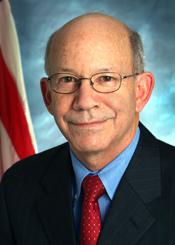
United States · United States Congress · 16 November 2012
Equitable Access to Care and Health Act or the EACH Act - Amends the Internal Revenue Code, with respect to minimum essential health care coverage requirements added by the Patient Protection and Affordable Care Act, to allow an additional religious exemption from such requirements for individuals whose sincerely held religious beliefs would cause them to object to medical health care provided under such coverage. Defines "medical health care" to mean voluntary health treatment by or supervised by a medical doctor that would be covered under minimum essential coverage that: (1) includes voluntary acute care treatment at hospital emergency rooms, walk-in clinics, or similar facilities; and (2) excludes treatment not administered or supervised by a medical doctor, physical examinations or treatment required by law or third parties, and vaccinations.
United States · United States Congress · 21 September 2012
Stewart Lee Udall Congressional Gold Medal Act - Directs the Speaker of the House of Representatives and the President pro tempore of the Senate to make appropriate arrangements for the posthumous presentation, on behalf of Congress, of a gold medal of appropriate design in commemoration of Stewart Lee Udall, in recognition of his contributions to the nation.
United States · United States Congress · 21 September 2012
Internet Radio Fairness Act of 2012 - Amends federal copyright law to direct the President, with advice and consent of the Senate, to appoint the three Copyright Royalty Judges (CRJs) who serve on the Copyright Royalty Board. (Currently, the Librarian of Congress appoints CRJs after consultation with the Register of Copyrights.) Increases the years of legal experience and other qualifications necessary to serve as a CRJ. Amends the Digital Millennium Copyright Act with respect to the standards applied by CRJs to establish compulsory licensing royalty rates for the public performance of sound recordings by noninteractive digital audio services. Replaces the standard that CRJs apply to establish rates for eligible nonsubscription transmissions (including Internet radio, commonly referred to as webcasting) and new subscription services with the standard currently used to establish rates for subscription services (digital cable radio) and satellite digital audio radio services (satellite radio) existing on or before July 31, 1998. (Replaces a standard based on the rates and terms that would have been negotiated in the marketplace between a willing buyer and seller with a standard that requires CRJs to consider a broader set of objectives.) Authorizes a minimum annual administrative fee of up to $500 to be included in such rates. Sets forth a similar rate-setting methodology for compulsory licenses of ephemeral recordings (reproductions of sound recordings used by licensees to facilitate transmission) with authorization for a minimum annual fee (currently, a requirement for a fee of unspecified duration). Places the burden of proof on sound recording copyright owners to establish that the fees and terms they are seeking satisfy the requirements amended by this Act and do not exceed the fees to which most copyright owners and users would agree under competitive market circumstances. Defines "competitive market circumstances" as circumstances in which a licensee enters into a license for the noninteractive performance of sound recordings with a licensor that does not possess market power resulting from the aggregation of copyrights, either by a licensing collective or individual copyright owners. Directs CRJs to consider: (1) the public's interest in both the creation of new sound recordings of musical works and in fostering online and other digital performances of sound recordings; (2) the income necessary to provide a reasonable return on all relevant investments, including investments in prior periods for which returns have not been earned; (3) the value of any promotional benefit or other non-monetary benefit conferred on the copyright owner by the performance; and (4) the contributions made by the digital audio transmission service to the content and value of its programming. Requires CRJs to establish license fee structures that foster competition among the licensors of sound recording performances and between sound recording performances and other programming. Prohibits CRJs from: (1) disfavoring percentage of revenue-based fees, and (2) taking into account the rates and terms in licenses for interactive services or the determinations rendered by CRJs prior to the enactment of the this Act. Permits certain transmitting organizations entitled to transmit a performance to the public to make more than one (currently, no more than one) copy or phonorecord embodying a performance or display of a work for its own transmissions, archival preservation, or security. (Removes a requirement that such a copy or phonorecord be destroyed within six months from the first transmission to the public unless preserved exclusively for archival purposes.) Sets forth limitations on the antitrust exemptions for sound recording copyright owners acting jointly or through common agents or collectives. Specifies activities to be deemed a restraint of trade in violation of the Sherman Act. Requires common agents or collectives representing copyright owners of sound recordings, in order to obtain authority to negotiate certain statutory licenses for digital sound recordings, to make available via the Internet the list of sound recording copyright owners represented and sound recordings licensed by the organization. Revises evidentiary, procedural, and judicial review standards applicable to CRJs' proceedings and determinations. Requires, in proceedings to determine the terms and rates of royalty payments for digital performances of sound recordings, that participants in the voluntary negotiation period disclose: (1) previous license agreements entered into by the participant, its members, or participant-represented licensors or licensees during a specified preceding five-year period; or (2) other documents relied upon in their ratemaking proposals. Directs the Librarian of Congress to submit recommendations to Congress on how the federal government can facilitate, and possibly establish, a global music registry that is sustainably financed and consistent with World Intellectual Property Organization obligations. Sets forth transitional rules for proceedings pending and CRJs in office during the enactment of this Act.
United States · United States Congress · 21 September 2012
Computers in Our Communities Act - Amends the Internal Revenue Code to extend through 2013 the tax deduction allowed to corporate taxpayers for charitable contributions of computer inventory for educational purposes.
United States · United States Congress · 20 September 2012
Pest Elimination Services Transparency and Terminology or the PESTT Act - Amends the Rural Development, Agriculture, and Related Agencies Appropriations Act, 1988, with respect to nuisance animal control activities and agreements of the Department of Agriculture (USDA), to define "urban rodent control" (excepted from such activities) as efforts to directly control any mammal in the order Rodentia in a location that is not an airport or in a rural area. Requires the Comptroller General to submit a report to Congress on activities carried out by the Wildlife Services program of the Animal and Plant Health Inspection Service that: (1) identifies activities that can be carried out by private sector entities, (2) prioritizes those vital to the protection of public health and safety and agricultural production and that can be performed by such entities, and (3) recommends ways to avoid duplication by the Wildlife Services program and the private sector.
United States · United States Congress · 13 September 2012
Amends the Horse Protection Act (HPA) to direct the Secretary of Agriculture to prescribe regulatory requirements for the Department of Agriculture (USDA) to license, train, assign, and oversee persons who are to be hired by the management of horse shows, exhibitions, sales, or auctions and are qualified to detect and diagnose sore horses or otherwise inspect horses at such events. (The soring of horses refers to the application of blistering agents, burns, lacerations, sharp objects, or other substances or devices to a horse's limb to produce a higher gait by making it painful for the horse to step down.) Replaces the current horse inspector appointment process under which the management of a horse show, exhibition, sale, or auction appoints inspectors with a new process requiring the Secretary to assign USDA-licensed inspectors after receiving notice that management intends to hire such inspectors. Specifies that the term "management" includes sponsoring organizations and event managers. Directs the Secretary to disqualify a horse the Secretary determines is sore for specified minimum time periods that increase after the first, second, and third instance. Prohibits a person from causing or directing a horse to become sore for the purpose of any horse show, exhibition, sale, or auction or allowing any such activity respecting a horse which is sore by the owner of such horse. Expands a list of activities designated as unlawful conduct under such Act to include a prohibition on showing, exhibiting, selling, or auctioning a Tennessee Walking, a Racking, or a Spotted Saddle horse with: (1) an action device; or (2) a weighted shoe, pad, wedge, hoof band, or other device or material if it is constructed to artificially alter the gait of such horses and is not strictly protective or therapeutic. Defines "action device" as any boot, collar, chain, roller, or other device that encircles or is placed upon the lower extremity of the leg of a horse in such a manner that it can: (1) rotate around the leg or slide up and down the leg, so as to cause friction; or (2) strike the hoof, coronet band, fetlock joint, or pastern of the horse. Increases the maximum criminal penalties and maximum civil liability penalties to the United States for certain HPA violations. Expands the categories of activities the Secretary may disqualify a violator of such Act from participating in to include: (1) transporting or arranging for the transportation of a horse to or from a show, exhibition, sale, or auction; (2) personally giving instructions to an exhibitor; (3) being knowingly present in a warm-up area, inspection area, or other area that spectators are not permitted; or (4) financing the participation of other individuals. Permits the Secretary to permanently disqualify a person with at least three violations after notice and an opportunity for a hearing.
United States · United States Congress · 10 September 2012
Revitalizing the Economy of Fisheries in the Pacific Act of 2012 or REFI Pacific Act of 2012 - Directs the Secretary of Commerce (upon receipt of such assurances as the Secretary considers appropriate to protect the interests of the United States) to issue a loan to refinance the existing debt obligation funding the fishing capacity reduction program for the Pacific Coast Groundfish Fishery implemented under the Department of Commerce and Related Agencies Appropriations Act, 2003. Requires such loan to have a maturity that expires 45 years after the date of issuance. Prohibits the fee with respect to such loan from exceeding 3% of the ex-vessel value of all fish harvested from each fishery for which the loan is issued.
United States · United States Congress · 10 September 2012
Commends the Boys & Girls Clubs of America for their work serving youth and strengthening our communities. Recognizes the importance of high-impact youth mentoring in ensuring positive outcomes for youth of all backgrounds. Supports youth mentoring as a strategy to reduce anti-social and risky youth behavior and develop productive, contributing young adults. Encourages the Boys & Girls Clubs of America to continue and expand programs that expose young people to Science, Technology, Engineering and Math (STEM). Commits to finding ways to increase the federal strategic and financial partnerships between the Boys & Girls Clubs of America and various federal agencies and departments in order to serve even more young people.
United States · United States Congress · 2 August 2012
Transparency for Lethal Control Act - Directs the Secretary of Agriculture (USDA), through the Animal and Plant Health Inspection Service, to submit an annual report to Congress (and make such report publicly available on the Internet) on the animals killed during the preceding year under the wildlife services program or by a state or local entity acting in cooperation with or on behalf of such program.
United States · United States Congress · 2 August 2012
Vietnam Veterans Donor Acknowledgment Act of 2012 - Instructs the Secretary of the Interior to acknowledge a donor contribution to the Vietnam Veterans Memorial Visitor Center inside such Center in the form of a permanent statement or credit line that expresses appreciation for such contribution, if: (1) the donor or the Vietnam Veterans Memorial Fund, Inc. provides the Secretary with an acceptable plan describing the statement or credit line and the funding to create it; and (2) the Secretary, in consultation with the National Capital Planning Commission and Commission of Fine Arts, determines the statement or credit line to be short, discrete, unobtrusive, and without an advertising slogan or company logo.
United States · United States Congress · 2 August 2012
Expresses the sense of the House of Representatives that Congress should reject the provisions of H.R. 6083, as ordered reported by the House Committee on Agriculture, that reduce the availability or amount of benefits provided under the supplemental nutrition assistance program (SNAP, formerly the food stamp program) in effect under the Food and Nutrition Act of 2008.
United States · United States Congress · 1 August 2012
Saving High-Tech Innovators from Egregious Legal Disputes Act of 2012 - Amends federal patent law to allow a court, upon finding that a party does not have a reasonable likelihood of succeeding in an action disputing the validity or alleging infringement of a computer hardware or software patent, to award the recovery of full litigation costs to the prevailing party, including reasonable attorney's fees, other than the United States.
United States · United States Congress · 1 August 2012
Marine Debris Emergency Act of 2012 - Amends the Marine Debris Research, Prevention, and Reduction Act to authorize the Administrator of the National Oceanic and Atmospheric Administration (NOAA) to declare a marine debris emergency upon determining that marine debris: (1) is an immediate threat to living marine resources, the marine environment, navigation safety, or public health of the United States; and (2) requires federal resources to supplement the state and local resources available to alleviate such threat. Authorizes: (1) a governor of a state to request that the Administrator declare such an emergency in such state or a region that includes such state; and (2) the Administrator to request that the governor provide information on the nature and immediacy of the threat and the nature and amount of state and local resources that have been or will be committed to alleviating it. Directs the Administrator, within 30 days after receiving a governor's request, to either grant the request or explain why it was not granted. Directs the Administrator: (1) in evaluating marine debris grant applications, to give preference to projects to address marine debris emergencies, including projects to address marine debris that has introduced or is likely to introduce marine invasive species into the United States; and (2) within 60 days after receipt of an application for such a grant, to approve or disapprove the application and to disperse funds to an approved grantee. Directs the Administrator to take steps to encourage marine debris grant recipients to: (1) educate staff and volunteers who are engaged in marine debris response efforts on the potential threats that marine debris and marine invasive species may pose to the United States with respect to living marine resources, the marine environment, navigation, and public health; and (2) coordinate their response efforts with relevant federal, state, local, and nongovernmental entities.
United States · United States Congress · 26 July 2012
Fair Minimum Wage Act of 2012 - Amends the Fair Labor Standards Act of 1938 (FLSA) to increase the federal minimum wage for employees to: (1) $8.10 an hour on the first day of the third month after the enactment of this Act; (2) $8.95 an hour after one year; (3) $9.80 an hour after two years; and (4) the amount determined by the Secretary of Labor (based on increases in the Consumer Price Index) after three years, and annually thereafter. Increases the federal minimum wage for tipped employees to $3.00 an hour for one year on the first day of the third month after the enactment of this Act. Provides a formula for subsequent annual adjustments of the wage increase to ensure that it remains equal to 70% of the wage in effect under FLSA for other employees. Directs the Secretary of Labor, 60 days before any increase in the minimum wage, to publish it in the Federal Register and on the Department of Labor's website.
United States · United States Congress · 24 July 2012
Saving Essential American Sailors Act or SEAS Act - Amends the Moving Ahead for Progress in the 21st Century Act (MAP-21) to repeal the Act's repeal of the agricultural export requirements that: (1) 25% of the gross tonnage of certain agricultural commodities or their products exported each fiscal year be transported on U.S. commercial vessels, and (2) the Secretary of Transportation (DOT) finance any increased ocean freight charges incurred in the transportation of such items. Revives and reinstates those repealed requirements to read as if they were never repealed.
United States · United States Congress · 19 July 2012
Public Lands Renewable Energy Development Act of 2012 - Amends the Energy Policy Act of 2005 to require amounts received through FY2020 (currently, through FY2010) from leases under the Geothermal Steam Act of 1970 to be available to the Secretary of the Interior to spend in such amounts as are provided in advance appropriations acts for implementing such Acts. Requires the Secretary of Interior to establish a wind and solar leasing pilot program under which lease sales are conducted on covered public lands administered by the Secretary to carry out wind and solar energy projects. Requires the Secretary of the Interior and the Secretary of Agriculture (USDA) to jointly determine as to whether to expand the pilot program to apply to all covered public lands. Defines "covered land" to mean land that is: (1) public land administered by the Secretary of the Interior, or National Forest System land administered by the Secretary of Agriculture; and (2) not excluded from development of solar or wind energy under a final land use plan established under the Federal Land Policy and Management Act of 1976, a final land and resource management plan established under the National Forest Management Act of 1976, or federal law. Establishes in the Treasury the Renewable Energy Resource Conservation Fund to be administered by the Secretary of the Interior for mitigating the impacts of renewable energy on federal land and carrying out any activity authorized under the Land and Water Conservation Fund Act of 1965, with the exception of the acquisition of land, water, or interests therein within that state. Requires the Secretaries to determine the feasibility of carrying out a mitigation banking program on federal lands administered by the Secretaries to offset the impacts of wind or solar energy on such lands.
United States · United States Congress · 18 July 2012
Expresses the sense of the House of Representatives that any deal on taxes and spending to replace the Budget Control Act of 2011 should: (1) not cut Medicare, Medicaid, or Social Security benefits; (2) contain serious revenue increases, including closing corporate tax loopholes and increasing individual income tax rates for the highest earners; (3) significantly reduce defense spending to focus the U.S. Armed Forces on combating 21st century risks; and (4) promote economic growth and expanded economic opportunity by including strong levels of job-creating federal investments in areas such as infrastructure and education, and by promoting private investment.
United States · United States Congress · 12 July 2012
Customs Training Enhancement Act - Directs the Commissioner of the U.S. Customs and Border Protection (CBP) to establish educational seminars at U.S. ports of entry to improve the ability of CBP personnel to classify and appraise articles imported into the United States in accordance with U.S. customs laws, including their ability to identify and prevent the mislabeling and transshipment of such articles.
United States · United States Congress · 12 July 2012
Families Flying Together Act of 2012 - Directs the Secretary of Transportation (DOT) to issue regulations directing each air carrier to: (1) establish a policy to ensure that a family that purchases tickets for a flight is seated together during that flight, and (2) make the policy available to the public on the air carrier's website. Defines "family" to mean a grouping of individuals that, at a minimum, includes: (1) a child age 12 years or younger; and (2) an individual age 18 years or older and responsible for accompanying that child, including a parent or legal guardian of that child.
United States · United States Congress · 12 July 2012
Victory for Veterans Stamp Act of 2012 - Directs the Postal Service to issue a special stamp, to be called the Victory for Veterans Stamp, at a cost of 25 cents each. Makes such Stamp invalid for postage. Requires Stamp sale proceeds to be used as follows: (1) one-third for funding Department of Veterans Affairs (VA) veterans' vocational rehabilitation programs, (2) one-third to the general fund of the Treasury for deficit reduction, and (3) one-third for the Postal Service for modernization and fiscal administration. Requires such Stamp to be made available to the public within six months after the enactment of this Act.
United States · United States Congress · 27 June 2012
Behavioral Health Information Technology Act of 2012 - Amends the Public Health Service Act to include as a health care provider behavioral and mental health professionals, substance abuse professionals, psychiatric hospitals, certain community mental health centers, and residential or outpatient mental health or substance abuse treatment facilities. Amends title XVIII (Medicare) of the Social Security Act (SSA), with respect to incentives for meaningful use of certified electronic health records (EHR) technology under the pay schedule for physician's services, to include as eligible professionals clinical psychologists providing qualified psychologist services. Makes inpatient psychiatric hospitals eligible for payment for inpatient hospital services. Amends SSA title XIX (Medicaid) to treat as Medicaid providers: (1) public and certain private hospitals that are principally psychiatric hospitals, (2) certain community mental health centers, and (3) certain residential or outpatient mental health or substance abuse treatment facilities. Makes eligible professionals under the Medicaid program certain clinical psychologists providing qualified psychologist services. Authorizes a covered entity to submit to a Patient Safety Organization information on electronic health record (EHR)-related adverse events with respect to certified EHR technology the entity has used or provided. Specifies covered entities as certain EHR users, health information exchange entities, and health care professionals who use EHR technology. Defines an EHR-related adverse event as a defect, malfunction, or error in the certified health information technology or electronic health record used by a provider, or in the input or output of data maintained through such technology or record, that results or could reasonably result in harm to a patient. Limits electronic discovery (e-discovery) in any health care lawsuit against a covered entity relating to an Reallotted adverse event involving certified EHR technology to information: (1) related to that event, and (2) from the period in which the event occurred. Prohibits a claimant from commencing a lawsuit more than three years after the manifestation of injury or one year after the claimant discovers, or should have discovered, the injury, whichever occurs first. Requires tolling of this limitation, however, to the extent that the claimant is able to prove: (1) fraud; (2) intentional concealment; or (3) the presence of a foreign body, with no therapeutic or diagnostic purpose or effect, in the injured person. Subjects each party to such a lawsuit which is not a covered entity to proportionate liability only. Allows punitive damages against a covered entity only upon proof by clear and convincing evidence that the entity acted with reckless disregard for the claimant's health or safety. Shields covered entities, employees, agents, and representatives from civil liability for libel or slander arising from information or entries made in certified EHR technology, or transferred to another eligible provider, if the information, entries, or transfer were made in good faith and without malice.
United States · United States Congress · 26 June 2012
Federal Reserve Independence Act - Amends the Federal Reserve Act regarding class A membership on the board of directors of a Federal Reserve Bank to require the Board of Governors of the Federal Reserve System (Federal Reserve Board) to designate members from among persons who are not employed in any capacity by a stockholding bank. Requires the Federal Reserve Board to designate the class B members of such board of directors (class B members represent the public). Prohibits employees of any Federal Reserve Board-regulated entity from serving on the board of directors of any Reserve Bank. Prohibits any employee of the Federal Reserve System or any board member of a Reserve Bank from owning stock or investing in any company regulated by the Federal Reserve Board. Directs the Comptroller General to report annually to Congress to ensure implementation of this Act.
United States · United States Congress · 19 June 2012
Amends the Organic Foods Production Act of 1990 to require all persons, including producers, handlers, and certifying agents, required to report information to the Secretary of Agriculture (USDA) under such Act to maintain all contracts, agreements, receipts, and other records associated with the organic certification program for 5 years (10 years for a certifying agent). Authorizes investigative and enforcement actions for violations of such Act.
United States · United States Congress · 18 June 2012
Recognizes and commends the nation's Catholic sisters, whose inspiring legacy of service continues to enrich our nation. Honors the contributions of Catholic sisters to this country. Stands in solidarity with Catholic sisters' mission to work toward a more just society for all of God's people.
United States · United States Congress · 7 June 2012
National Desert Storm and Desert Shield War Memorial Act - Authorizes the National Desert Storm Memorial Association to establish a commemorative work on federal land in the District of Columbia to commemorate and honor those who, as members of the Armed Forces, served on active duty in support of Operation Desert Storm or Operation Desert Shield. Prohibits the use of federal funds to pay any expense to establish the commemorative work.
United States · United States Congress · 31 May 2012
Forest Products Fairness Act of 2012 - Amends the Farm Security and Rural Investment Act of 2002 to include in the definition of "biobased product" forest products that meet biobased content requirements, notwithstanding the market share the product holds, the product's age, or whether the market for the product is new or emerging. Defines "forest product" as a product made from materials derived from the practice of forestry or the management of growing timber, including: (1) pulp, paper, paperboard, pellets, and wood products; and (2) any recycled products derived from forest materials.
United States · United States Congress · 31 May 2012
Calls for: (1) the House of Representatives to conduct analyses and hearings to assess the financial and technical resources required to realize the goals of the Integrated Public Alert and Warning System; and (2) the appropriate House committees, upon completion of the hearings, to jointly propose legislation, and utilize other available means and technologies, to provide for a comprehensive public alert and warning system for the United States.
United States · United States Congress · 17 May 2012
Investing in Our Student's Future Act - Amends title IV (Student Assistance) of the Higher Education Act of 1965 to make the 3.4% interest rate on Direct Stafford loans first disbursed to undergraduate students between July 1, 2011, and July 1, 2012, applicable to Direct Stafford loans first disbursed to undergraduate students on or after July 1, 2012. Amends the Internal Revenue Code to increase the top marginal income tax rate for individuals by 1%, beginning in calendar year 2013.
United States · United States Congress · 17 May 2012
Voter Empowerment Act of 2012 - Voter Registration Modernization Act of 2012 - Amends the National Voter Registration Act of 1993 (NVRA) to require each state to make available official public websites for online voter registration. Authorizes automated voter registration of certain individuals and establishes other initiatives to promote voter registration, such as same day registration and voter registration of individuals under 18 years of age. Amends the federal criminal code to prohibit hindering, interfering with, or preventing voter registration. Amends the Help America Vote Act of 2002 (HAVA) to establish requirements for states to promote access to voter registration and voting for individuals with disabilities, including a single office for providing related information. Directs the Election Assistance Commission (EAC) to make grants to eligible states to conduct pilot programs enabling individuals with disabilities to register to vote and vote privately and independently at their own residences (including by telephone). Amends HAVA to reauthorize the program of grants to state and local governments to assure voting access for individuals with disabilities. Amends the federal criminal code to prohibit state or local election officials from preventing an individual from registering or voting in any federal election (voter caging), or from permitting a formal challenge under state law to an individual's registration status or eligibility to vote, if the basis for such decision is evidence consisting of: (1) a voter caging document or voter caging list, (2) an unverified match list, (3) an error or omission on voter application or registration documents that is not material to an individual's eligibility to vote, or (4) any other evidence so designated by the Commission. Amends the federal criminal code to prohibit a person, including an election official, from knowingly and willfully attempting to or depriving or defrauding the residents of a state of their free and fair exercise of the right to vote by the communication of election-related information that is known by the person to be materially false, fictitious, or fraudulent. Increases the penalty for voter intimidation. Declares that the right of an individual U.S. citizen to vote in any federal election shall not be denied or abridged because that individual has been convicted of a criminal offense unless he or she is serving a felony sentence in a correctional institution at the time of the election. Prescribes enforcement of this right by public or private civil action. Requires each state to notify in writing any individual convicted of a criminal offense under state law, upon release from state custody or upon sentence to probation, that he or she has the right to vote in a federal election and so may register to vote. Voter Confidence and Increased Accessibility Act of 2012 - Amends HAVA to revise requirements for the audit capacity of voting systems, particularly those for a permanent paper record. Requires the voting system to require the use of an individual, durable, voter-verified paper ballot of the voter's vote that shall be marked and made available for inspection by the voter before the voter's vote is cast and counted, and which shall be counted by hand or read by an optical character recognition device or other counting device. Requires the voting system to provide the voter with an opportunity to correct any system-made error in the voter-verified paper ballot before it is permanently preserved. Requires the Director of the National Science Foundation (NSF) to make grants to eligible entities to study, test, and develop accessible ballot voting, verification, and casting mechanisms and devices and best practices to enhance the accessibility of paper ballot voting and verification mechanisms for individuals with disabilities, for voters whose primary language is not English, and for voters with difficulties in literacy. Prescribes requirements for: (1) publication of poll tapes, (2) treatment of ballots cast at early voting sites and of absentee ballots, and (3) the counting of provisional ballots that will be treated as votes. Prescribes laboratory conflict-of-interest requirements and prohibitions. Requires the NSF Director to make grants to eligible entities to conduct research on the development of election-dedicated voting system software. Requires each state, except when the winning candidate had no opponent or received 80% or more of the votes, to administer audits of federal election results, without advance notice to the precincts selected, consisting of random hand counts of the voter-verified paper ballots. Requires the Election Auditor of a state, as soon as practicable after the completion of an audit, to submit the results to EAC for publication. Prohibits certification of the results of any election until completion of audits. Amends HAVA to: (1) add requirements for counting provisional ballots, (2) require each state to allow early voting and facilitate the ability of voters to vote by mail. Amends the Servicemembers Civil Relief Act to extend the guarantee of voting residency to family members of absent military personnel. Amends the Uniformed and Overseas Citizens Absentee Voting Act (UOCAVA) with respect to pre-election reports on availability and transmission of absentee ballots. Revises the 45-day absentee ballot transmission rule. Permits: (1) use of a single absentee ballot application for subsequent elections, and (2) application of the UOCAVA to Commonwealth of Northern Mariana Islands. Entitles to leave a federal employee who serves as a poll worker. Directs the EAC to: (1) make a grant to each eligible state for poll-worker recruitment and training, and (2) develop materials for a model state poll worker training program. Amends HAVA to make available to any person aggrieved by a violation of uniform and nondiscriminatory election technology and administration requirements the option to file a complaint with the Attorney General or pursue a private right of action to enforce such requirements. Amends the Federal Election Campaign Act of 1971 to make it unlawful for a chief state election administration official, unless he or she or a family member is a candidate, to take an active part in political management or in a political campaign for federal office over which such official has supervisory authority. Amends the NVRA to treat universities as voter registration agencies. Amends the HAVA to establish minimum notification requirements on behalf of voters affected by polling place changes. Directs the Attorney General to: (1) coordinate the establishment of a state-based response system for responding to questions and complaints from individuals voting or seeking to vote, or registering to vote or seeking to, in federal elections; (2) establish and operate a toll-free telephone service to connect directly to such response system; and (3) appoint a Voter Hotline Task Force. Amends HAVA to: (1) reauthorize and extend the EAC, and (2) repeal its exemption from certain government contracting requirements.
United States · United States Congress · 17 May 2012
Voter Confidence and Increased Accessibility Act of 2011 [ sic ] - Amends the Help America Vote Act of 2002 (HAVA) to revise requirements for the audit capacity of voting systems, particularly those for a permanent paper record. Requires the voting system to require the use of an individual, durable, voter-verified paper ballot of the voter's vote that shall be marked and made available for inspection by the voter before the voter's vote is cast and counted, and which shall be counted by hand or read by an optical scanner or other counting device. Requires the voting system to provide the voter with an opportunity to correct any system-made error in the voter-verified paper ballot before it is permanently preserved. Requires each paper ballot used to be: (1) suitable for a manual audit, and (2) counted by hand in any recount or audit conducted with respect to any federal election. Sets forth a special rule for treatment of disputes when paper ballots have been shown to be compromised. Requires the Director of the National Science Foundation (NSF) to make grants to eligible entities to study, test, and develop accessible ballot voting, verification, and casting mechanisms and devices and best practices to enhance the accessibility of paper ballot voting and verification mechanisms for individuals with disabilities, for voters whose primary language is not English, and for voters with difficulties in literacy. Specifies additional voting system requirements and prohibitions. Requires the NSF Director to make grants to eligible entities to conduct research on the development of election-dedicated voting system software. Makes available additional funding to enable states to meet the costs of the requirements imposed by this Act. Provides for complaints to the Attorney General by persons aggrieved by violations of HAVA. Requires each state to administer audits of federal election results, without advance notice to the precincts selected, consisting of random hand counts of the voter-verified paper ballots. Makes an exception from this requirement for elections in which the winning candidate had no opponent or received 80% or more of the vote total. Prescribes requirements for determination of the number of ballots counted under the audit. Prescribes the process for administering audits. Requires the Election Auditor of a state, as soon as practicable after the completion of an audit, to submit the results to the Election Assistance Commission (EAC) for publication. Prohibits certification of the results of any election until completion of audits. Provides for payments to states for the costs of conducting audits. Exempts from this Act any election for which a recount under state law will commence before certification of the election results. Repeals the EAC's exemption from certain federal government contracting requirements.
United States · United States Congress · 15 May 2012
Arms Sale Responsibility Act of 2012 - Expresses the sense of Congress that it should be U.S. policy to adhere to a policy of restraint in transferring conventional arms if evidence exists of substantial risk that such arms will be used to commit or facilitate serious violations of international human rights law or international humanitarian law. Urges the President, in negotiating any conventional arms control agreement, to: (1) encourage the national control list of each party to an agreement to cover all types of weaponry, munitions, armaments and related material used for potentially lethal force in military and law enforcement operations; (2) assess each application or proposal to export or internationally transfer arms on a case-by-case basis; (3) deny an arms transfer authorization if there is a substantial risk that the arms will be used to commit or facilitate violations of international human rights law or international humanitarian law; (4) require import and transit state authorizations and certified end use assurances before issuing an export license or authorization for any international transfer of conventional arms; and (6) require each party to an agreement to establish a legal framework for lawful brokering and shipping activities relating to conventional arms transfers. Prohibits, with certain exemptions, the transfer of defense articles or defense services to the government of a foreign country under the Foreign Assistance Act of 1961 or the Arms Export Control Act unless the President certifies to Congress that such government is not: (1) engaging in gross violations of internationally-recognized human rights, and (2) identified by the Secretary of State as having governmental armed forces or government supported armed groups that recruit or use child soldiers.
United States · United States Congress · 15 May 2012
Bulletproof Vest Partnership Grant Act of 2012 - Amends the Omnibus Crime Control and Safe Streets Act of 1968 to extend through FY2016 the grant program for armor vests for law enforcement officers.
United States · United States Congress · 9 May 2012
Password Protection Act of 2012 - Amends the federal criminal code to subject to a fine any employer who knowingly and intentionally: (1) compels or coerces any person to provide the employer with a password or similar information to access a protected computer not owned by such employer; or (2) discharges, disciplines, discriminates, or threatens to take such actions, against any person who fails to authorize access to such computer, has filed a complaint or instituted a proceeding regarding such action, or testified or is about to testify in any such proceeding. Declares that nothing in this Act shall be construed to limit the authority of a court of competent jurisdiction to grant equitable relief in a civil action, if the court believes that the information sought to be obtained is relevant to protecting the intellectual property, a trade secret, or confidential business information of the party seeking relief. Exempts an employer's actions from such prohibition if: (1) the employer discharges or disciplines an individual for good cause; (2) a state enacts a law that specifically waives such prohibition with respect to a particular class of state or agency employees and the employer's action relates to an employee in such class; or (3) an executive agency, military department, or other executive branch entity specifically waives the prohibition with respect to a particular class of employees who may have access to classified information.
United States · United States Congress · 8 May 2012
Bring Jobs Home Act - Amends the Internal Revenue Code to: (1) grant business taxpayers a tax credit for up to 20% of insourcing expenses incurred for eliminating a business located outside the United States and relocating it within the United States, and (2) deny a tax deduction for outsourcing expenses incurred in relocating a U.S. business outside the United States. Requires an increase in the taxpayer's employment of full-time employees in the United States in order to claim the tax credit for insourcing expenses.
United States · United States Congress · 27 April 2012
Prohibits the Secretary of Agriculture (USDA) from making payments, either directly or through the Commodity Credit Corporation (CCC), to the Brazilian Cotton Institute.
United States · United States Congress · 27 April 2012
Gluten in Medicine Identification Act of 2012 - Amends the Federal Food, Drug, and Cosmetic Act to deem to be misbranded any drug intended for human use that contains an ingredient (other than a polyol) that constitutes or is derived from a grain or starch-containing ingredient and whose label fails to include a parenthetical statement identifying the source of the ingredient so constituted or derived.
United States · United States Congress · 25 April 2012
Stop the Rate Hike Act of 2012 - Amends title IV (Student Assistance) of the Higher Education Act of 1965 to make the 3.4% interest rate on Direct Stafford loans first disbursed to undergraduate students between July 1, 2011, and July 1, 2012, applicable to Direct Stafford loans first disbursed to undergraduate students between July 1, 2011, and July 1, 2013. Amends the Internal Revenue Code to deny the major integrated oil companies the tax deduction for income attributable to the domestic production of oil and gas.
United States · United States Congress · 19 April 2012
Instructs the Commodity Futures Trading Commission (CFTC) to use its authority (including emergency powers) to: (1) to curb immediately the role of excessive speculation in any contract market within its jurisdiction and control that is serving as a platform for the trading of energy futures or swaps; and (2) eliminate excessive speculation, price distortion, sudden or unreasonable fluctuations, unwarranted changes in prices, or other unlawful activity that is causing major market disturbances that prevent the market from accurately reflecting the forces of supply and demand for energy commodities.
United States · United States Congress · 30 March 2012
Requiring Easy and Accurate Labeling of Beef Act or the REAL Beef Act - Amends the Federal Meat Inspection Act to require a package or other container of meat at the final point of sale that contains low-temperature rendered product (lean finely textured beef) to bear a label stating that it contains such product.
United States · United States Congress · 28 March 2012
Restore Main Street's Credit Act of 2012 - Amends the Federal Credit Union Act to exclude from the definition of "member business loan" (and related loan limits) an extension of credit made to a Main Street business (an organization, other than a nonprofit organization, with 20 or fewer full-time employees that possesses, occupies, or leases property other than a home for its business's operations). Instructs the National Credit Union Administration Board (NCUAB) to issue guidelines for extensions of credit made by an insured credit union to a Main Street business in order to promote: (1) appropriate levels of such extensions within the credit union's total lending portfolio, and (2) the credit union's cooperative nature and its safety and soundness.
United States · United States Congress · 27 March 2012
Violence Against Women Reauthorization Act of 2012 - Amends the Violence Against Women Act of 1994 (VAWA) to add or expand definitions of several terms for purposes of such Act, including : (1) "culturally specific services" to mean community-based services that offer culturally relevant and linguistically specific services and resources to culturally specific communities; (2) "personally identifying information or personal information" with respect to a victim of domestic violence, dating violence, sexual assault, or stalking; and (3) "youth" to mean a person who is 11 to 24 years old. Modifies or expands grant conditions under such Act, including requirements relating to: (1) nondisclosure of personally identifying information or other client information, (2) information sharing between grantees and subgrantees, (3) civil rights and nondiscrimination, (4) audits, and (5) nonprofit organizations. Requires the Office on Violence Against Women of the Department of Justice (DOJ) to establish a biennial conferral process with state and tribal coalitions, technical assistance providers, and other key stakeholders on the administration of grants and related matters. Makes specified provisions of this Act effective at the beginning of the fiscal year following the enactment of this Act. Title I: Enhancing Judicial and Law Enforcement Tools to Combat Violence Against Women - Amends the Omnibus Crime Control and Safe Streets Act of 1968 to authorize appropriations through FY2017 for grants to combat violent crime against women (STOP grants). Expands the purposes for which STOP grants may be used to include training of law enforcement personnel and prosecutors, addressing backlogs of sexual assault evidence collection kits, and providing protections for male victims of sexual assault crimes. Revises the application process for STOP grants. Requires states receiving funds under the STOP grant program to develop and submit to the Attorney General implementation plans for using grant funds. Amends the Omnibus Crime Control and Safe Streets Act of 1968 to expand the grant program to encourage governmental entities to treat domestic violence, dating violence, sexual assault, and stalking as serious violations of criminal law. Requires such entities to use grant funds for: (1) training programs with respect to domestic violence and sexual assaults against women; (2) developing best practices for responding to domestic violence and sexual assault crimes; (3) developing, implementing, or enhancing sexual assault nurse examiner programs and Sexual Assault Response Teams; (4) providing human immunodeficiency virus testing programs; and (5) identifying and inventorying backlogs of sexual assault evidence collection kits. Requires not less than 25% of grant funding to be used for projects that address sexual assault. Extends the authorization of appropriations for such grant program through FY2017. Amends the Violence Against Women Act of 2000 to expand the availability of competent pro bono legal assistance to victims of domestic violence, dating violence, sexual assault, or stalking and to authorize appropriations for such assistance through FY2017. Revises the grant programs for supporting families with a history of domestic violence, dating violence, sexual assault, or stalking to authorize the Attorney General to make grants to improve the response of the civil and criminal justice system to such families and to train court personnel in assisting such families. Extends through FY2017 the authorization of appropriations for: (1) the training of probation and parole officers to manage sex offenders, and (2) the Court-Appointed Special Advocate program. Amends the federal criminal code with respect to the crime of stalking to prohibit the use of any interactive computer or electronic communication service to stalk victims. Revises and reauthorizes through FY2017 the grant program for outreach strategies targeted at adult or youth victims of domestic violence, dating violence, sexual assault, or stalking in underserved populations. Eliminates the requirement that recipients of grants to combat violent sex crimes against women include linguistically specific services in administering such grants. Title II: Improving Services for Victims of Domestic Violence, Dating Violence, Sexual Assault, and Stalking - Amends VAWA to extend through FY2017 grant programs to: (1) assist states, Indian tribes, and U.S. territories to establish, maintain, and expand rape crisis centers and other programs to assist victims of sexual assault; and (2) assist victims of domestic violence and other sexual assault crimes in rural areas. Amends the Victims of Trafficking and Violence Protection Act of 2000 to extend through FY2017 the authorization of appropriations for grants to end violence against women with disabilities. Amends VAWA to authorize appropriations through FY2017 for the grant program to end elder abuse, including domestic violence, dating violence, sexual assault, stalking, exploitation, and neglect, and to provide training for law enforcement agencies to better serve victims of abuse in later life. Directs the Attorney General in awarding grants to end elder abuse to give priority to proposals for serving culturally specific and underserved populations. Title III: Services, Protection, and Justice for Young Victims of Violence - Amends the Public Health Service Act to: (1) include tribal or territorial sexual assault coalitions in the grant program for rape prevention and education, and (2) extend through FY2017 the authorization of appropriations for grants for rape prevention and education programs conducted by rape crisis centers. Establishes a minimum allocation of grant funding for states, the District of Columbia, Puerto Rico, and each U.S. territory. Amends VAWA to replace certain grant programs for the protection of young victims of violent crimes with a program requiring the Attorney General, in collaboration with the Secretary of Health and Human Services (HHS) and the Secretary of Education, to award grants to enhance the safety of youth and children who are victims of, or exposed to, domestic violence, dating violence, sexual assault, or stalking and to prevent future violence. Authorizes appropriations for FY2013-FY2017. Amends the Violence Against Women and Department of Justice Reauthorization Act of 2005 to revise, expand, and reauthorize through FY2017 the grant program for combatting violent crimes on college campuses. Amends the Higher Education Act of 1965 to expand requirements for the disclosure of campus security policies and crime statistics by institutions of higher education to require education programs to: (1) promote the awareness of rape and other violent sex crimes, (2) require disclosure of disciplinary proceedings, and (3) establish procedures for the protection of the confidentiality of crime victims. Title IV: Violence Reduction Practices - Amends the Violence Against Women and Department of Justice Reauthorization Act of 2005 to authorize appropriations for FY2013-FY2017 for grants from the Centers for Disease Control and Prevention (CDC) to academic institutions and organizations to conduct research that examines best practices for reducing and preventing violence against women and children. Reduces the amount of such funding by 50% of the level for FY2007-FY2011. Amends VAWA to authorize the Attorney General, in consultation with the HHS Secretary and the Secretary of Education, to award grants to prevent domestic violence, dating violence, sexual assault, and stalking by taking a comprehensive approach that focuses on youth, children exposed to violence, and men as leaders and influencers of social norms (SMART Prevention grants). Authorizes appropriations for such grant program through FY2017. Title V: Strengthening the Healthcare System's Response to Domestic Violence, Dating Violence, Sexual Assault, and Stalking - Amends the Public Health Service Act to reauthorize, revise, and consolidate grant programs that address domestic violence, dating violence, sexual assault, and stalking by developing or enhancing and implementing: (1) interdisciplinary training for health professionals, public health staff, and allied health professionals; (2) education programs for health profession students to prevent and respond to domestic violence, dating violence, sexual assault, and stalking; and (3) comprehensive statewide strategies to improve the response of clinics, public health facilities, hospitals, and other health settings to domestic violence, dating violence, sexual assault, and stalking. Permits grant funds to be used for the development, expansion, and implementation of sexual assault forensic medical examination or sexual assault nurse examiner programs. Requires grantees to: (1) provide patients with advance notice about any circumstances under which information may be disclosed, such as mandatory reporting laws; and (2) give patients the option to receive information and referrals without affirmatively disclosing abuse. Requires the HHS Secretary to give preference to grant applicants based on the strength of their evaluation strategies, with priority given to outcome-based evaluations. Revises requirements for training and education grants to require that grantees be: (1) a nonprofit organization with a history of effective work in the field of training health professionals with an understanding of, and clinical skills pertinent to, domestic violence, dating violence, sexual assault, or stalking and lifetime exposure to violence and abuse; (2) an accredited school of allopathic or osteopathic medicine, psychology, nursing, dentistry, social work, or allied health; (3) a health care provider membership or professional organization or a health care system; or (4) a state, tribal, territorial, or local entity (currently, grantees must be a school of allopathic or osteopathic medicine). Requires grantees to represent a team of entities that include at least one of each of: (1) an accredited school of allopathic or osteopathic medicine, psychology, nursing, dentistry, social work, or other health field; (2) a health care facility or system; and (3) a government or nonprofit entity with a history of effective work in the fields of domestic violence, dating violence, sexual assault or stalking. Revises the training and education grant program to remove the matching requirement. Revises the public health response grant program to remove requirements that: (1) a grant award cannot exceed two years, and (2) funds must be distributed equally between state and local programs. Authorizes the Secretary to make grants or enter into contracts to provide technical assistance with respect to the planning, development, and operation of any program, activity, or service carried out under this title. Requires the Secretary to: (1) make publicly available materials developed by grantees under this title, including materials on training, best practices, and research and evaluation; and (2) publish a biennial report on the distribution of funds under this title and the programs and activities supported by such funds. Makes the grant program on research of effective interventions in the health care setting permissible, rather than required. Authorizes the Secretary to use not more than 20% of funds available under this title for research and evaluation of: (1) grants awarded under this title; and (2) other training for health professionals and effective interventions in the health care setting that prevent domestic violence, dating violence, and sexual assault across the lifespan, prevent the health effects of such violence, and improve the safety and health of individuals who are currently being victimized. Allows research grant funds to be used to research the impact of adverse childhood experiences on adult experience with domestic violence, dating violence, sexual assault, stalking, and adult health outcomes, including how to reduce or prevent the impact of adverse childhood experiences through the health care setting. Removes provisions permitting research grant funds to be used for: (1) research and testing of best messages and strategies to mobilize public and health care provider action concerning the prevention of domestic, dating, or sexual violence; or (2) measuring the comparative effectiveness and outcomes of efforts to reduce violence and increase women's safety. Title VI: Safe Homes for Victims of Domestic Violence, Dating Violence, Sexual Assault, and Stalking - Amends VAWA with respect to housing rights of victims of domestic violence, dating violence, sexual assault, and stalking. Prohibits denial or termination of housing assistance on the basis of being such a victim under specified federal housing programs (covered programs), including the low-income housing tax credit program, if the applicant or tenant otherwise qualifies for such admission, assistance, participation, or occupancy. Prohibits denial of assistance, tenancy, or occupancy rights to assisted housing based solely on certain criminal activity directly related to domestic violence engaged in by a member of the individual's household or by any guest or other person under the individual's control, if the tenant or an affiliated individual is the victim or threatened victim. Defines "affiliated individual" as: (1) a spouse, parent, brother, sister, or child of that individual, or someone to whom such individual stands in loco parentis; or (2) any other individual, tenant, or lawful occupant living in the individual's household. Allows a public housing agency (PHA) or an owner or manager of assisted housing to bifurcate a housing lease in order to evict, remove, or terminate assistance to any tenant or lawful occupant who engages in criminal activity directly relating to domestic violence, dating violence, sexual assault, or stalking against an affiliated individual or other individual, without evicting or otherwise penalizing a victim of such criminal activity who is also a tenant or lawful occupant. Requires specified accommodation of any tenants remaining after the eviction of the sole tenant eligible to receive assistance under a covered housing program. Authorizes a PHA or an owner or manager of assisted housing to: (1) require certified documentation from any applicant claiming protection under this Act, or (2) deny or terminate any assistance if such documentation is not produced. Requires each executive department carrying out a covered housing program to adopt a model emergency transfer plan, meeting specified criteria, for PHAs and owners or managers of assisted housing to use in allowing tenants who are victims of domestic violence, dating violence, sexual assault, or stalking to transfer to another available and safe dwelling unit of assisted housing. Requires the Secretary of Housing and Urban Development (HUD) to establish policies and procedures under which a victim requesting such a transfer may receive section 8 (voucher program) assistance under the United States Housing Act of 1937. Makes conforming amendments to the United States Housing Act of 1937. Revises eligibility requirements for transitional housing assistance grants for child victims of domestic violence, dating violence, sexual assault, or stalking to specify that any victims are eligible. Authorizes the use of such grants for support services designed to enable a minor, an adult, or a dependent to secure employment, including employment counseling, occupational training, job retention counseling, and counseling concerning re-entry into the workforce. Extends the authorization of appropriations for such grants, but at decreased levels, for FY2013-FY2017. Extends the authorization of appropriations, but also at decreased levels, for FY2013-FY2017 for: (1) collaborative grants to increase the long-term stability of victims, and (2) grants to combat violence against women in public and assisted housing. Title VII: Economic Security for Victims of Violence - Amends VAWA to extend through FY2017 the authorization of appropriations for the grant program to establish and operate a national resource center on workplace responses to assist victims of domestic and sexual violence. Title VIII: Protection of Battered Immigrants - Amends the Immigration and Nationality Act to expand the definition of nonimmigrant U-visa (victims of certain crimes) to include victims of stalking. Directs the Secretary of Homeland Security (DHS) to report to Congress regarding the number of aliens: (1) applying for and granted or not granted nonimmigrant status based upon being victims of trafficking or other criminal activities such as domestic violence or sexual exploitation, and (2) granted continued U.S. presence. Makes a child of an alien who was a self-petitioner under VAWA who filed a pending or approved petition for classification or application for adjustment of status or other benefit eligible for lawful permanent resident status under such alien's petition. Excludes from the public charge bar to admission an alien who is: (1) a VAWA self-petitioner, (2) a U-visa applicant, or (3) a battered spouse or child. Provides that, beginning in FY2013, if fiscal year U-visa limitations are met, up to 5,000 additional visas of the aggregate number of visas that were available and not issued in FY2006-FY2011 may be issued until the end of the fiscal year. States that an unmarried alien who seeks to accompany or follow to join a parent granted U-visa status who was under 21 years of age on the date on which the parent petitioned for such status shall continue to be classified as a child if the alien attains 21 years of age after the parent's petition was filed but while it was pending. Extends the conditions under which the waiver of the two-year waiting period for permanent resident status application may be granted to a battered alien spouse. Expands the scope of criminal-related information that must be disclosed by a U.S. citizen petitioning for a nonimmigrant K-visa (alien fiancee or fiance). Amends the International Marriage Broker Regulation Act of 2005 to require DHS to: (1) conduct a background check of the National Crime Information Center's Protection Order Database on each K-visa petitioner, and (2) include any appropriate information in the criminal background information provided to the alien fiance/fiancee. Prohibits an international marriage broker from providing any individual or entity with information about an individual under the age of 18. Requires a broker to obtain a valid copy of each foreign national client's birth certificate or other official proof of age document. Establishes criminal penalties for specified broker violations. Requires the Government Accountability Office (GAO) to report to Congress on the impact of this section on the K-visa process. Amends the the Consolidated Natural Resources Act of 2008 to permit U- and T-visa (victims of human trafficking) holders in the Commonwealth of the Northern Mariana Islands to count their time physically present in the Commonwealth toward the three-year continuous U.S. presence required for adjustment to permanent resident status. Title IX: Safety for Indian Women - Amends the Omnibus Crime Control and Safe Streets Act of 1968 to include sex trafficking as a target of the grants to Indian tribal governments to combat violent crime against Indian women. Allows those grants to be used to: (1) address the needs of youth who are victims of, or exposed to, domestic violence, dating violence, sexual assault, sex trafficking, or stalking; and (2) develop and promote best practices for responding to domestic violence, dating violence, sexual assault, sex trafficking, and stalking. Allows tribal coalition grants to be used to develop and promote state, local, and tribal legislation and policies that enhance best practices for responding to violent crimes against Indian women. Requires the Attorney General to award such grants annually to each tribal coalition that meets certain criteria under VAWA, is recognized by the Office on Violence Against Women, and serves Indian tribes Requires that tribal coalition grants also be provided to organizations that propose to incorporate and operate a tribal coalition in areas where Indian tribes are located but no tribal coalition exists. Prohibits more than 10% of the tribal coalition grant funds appropriated for each of FY2013-FY2017 from being made available to such organizations. Amends the Violence Against Women and Department of Justice Reauthorization Act of 2005 to include the Secretary of the Interior, in addition to the HHS Secretary and the Attorney General, as a participant in consultations with Indian tribes regarding the administration of tribal funds and programs, enhancement of Indian women's safety, and federal response to violent crimes against Indian women. Directs the Attorney General to submit an annual report to Congress regarding the recommendations made by Indians on those subjects during consultations. Gives Indian tribes criminal jurisdiction over domestic violence, dating violence, and violations of protective orders that occur on their lands. Makes that jurisdiction concurrent with federal and state jurisdiction. Authorizes the Attorney General to award grants to Indian tribes to assist them in exercising such jurisdiction, providing indigent defendants with free legal counsel, and securing the rights of victims of such crimes. Authorizes appropriations for FY2013-FY2017 for such grant program, and to provide participating Indian tribes with training, technical assistance, data collection, and an evaluation of their criminal justice systems. Gives Indian courts civil jurisdiction to issue and enforce protection orders. Excludes Indian courts in Alaska from that jurisdiction, except with respect to the Metlakatla Indian Community, Annette Islands Reserve. Amends the federal criminal code to increase the maximum federal penalties for assault convictions. Subjects individuals who commit an assault resulting in substantial bodily injury to a spouse, intimate partner, or a dating partner to a fine or imprisonment for up to five years, or both. Subjects individuals who assault a spouse, intimate partner, or dating partner by strangling, suffocating, or attempting to strangle or suffocate, by a fine or imprisonment up to 10 years, or both. Makes federal felony assault penalties applicable to Indians. Subjects individuals convicted under tribal law of repeat domestic violence or stalking offenses to maximum federal penalty provisions for repeat offenders. Amends the Violence Against Women and Department of Justice Reauthorization Act of 2005 to require the National Institute of Justice to include women in Alaska Native Villages and sex trafficking in its study of violence against Indian women. Reauthorizes appropriations for the study for FY2013-FY2014. Reauthorizes appropriations for the national tribal sex offender registry and the tribal protection order registry for FY2013-2017. Makes Indian tribes' criminal jurisdiction over domestic violence, dating violence, and violations of protection orders that occur on their lands effective two years after this Act's enactment. Gives them the opportunity to participate in a pilot project that allows them to exercise that jurisdiction sooner. Extends the Indian Law and Order Commission's reporting deadline by one year. Directs the Attorney General to report to Congress within one year of this Act's enactment on whether the Alaska Rural Justice and Law Enforcement Commission should be continued. Title X: Other Matters - Amends the federal criminal code to provide that the prohibition against sexual abuse of a ward in official detention or under official supervision or control shall apply: (1) during or after arrest; (2) after release pretrial; (3) while on bail, probation, supervised release, or parole; or (4) after release following a finding of juvenile delinquency or pending any further judicial proceedings. Increases penalties for criminal civil rights violations involving sexual abuse. Amends the Civil Rights of Institutionalized Persons Act to allow a prisoner in federal custody to bring a suit against the United States for a mental or emotional injury if such injury resulted from the commission of a sexual act (currently, requires a prior showing of a physical injury). Amends the Prison Rape Elimination Act of 2003 to direct the DHS Secretary to publish a final rule adopting national standards for the detection, prevention, reduction, and punishment of rapes and sexual assaults in detention facilities against aliens detained for a violation of U.S. immigration laws. Requires the HHS Secretary to publish a similar final rule for the protection of unaccompanied alien children in custodial facilities. Amends the Telecommunications Act of 1934, with respect to obscene or harassing telephone calls, to: (1) remove the intent to annoy requirement in the definition of such crime; and (2) include any specific person as an intended victim of such crime (currently, any person at the called number or who receives the communication). Amends VAWA to extend through FY2017 the grant programs for: (1) improving and implementing processes for entering data on stalking and domestic violence into crime information databases, and (2) appointing victim/witness counselors for the prosecution of sex crimes and domestic violence crimes. Amends the Victims of Child Abuse Act of 1990 to authorize appropriations for FY2013-FY2017 for child abuse and neglect technical assistance and training programs for judicial personnel and attorneys practicing in juvenile and family courts.
United States · United States Congress · 22 March 2012
VA Enrollment Act - Includes among veterans eligible to receive reimbursement from the Department of Veterans Affairs (VA) for emergency treatment services provided in a non-VA facility those who enroll in the VA health care system within 30 days after receiving such emergency treatment.
United States · United States Congress · 22 March 2012
Veterans Co-Pay Fairness Act - Directs the Secretary of Veterans Affairs (VA), in the case of a veteran entitled to benefits under part A (Hospital Insurance) of title XVIII (Medicare) of the Social Security Act or enrolled under Medicare part B (Supplemental Security Income), to reimburse such veteran for the Medicare deductibles, copayments, or coinsurance applied against such veteran with respect to emergency medical treatment items and services provided in non-VA facilities.
United States · United States Congress · 21 March 2012
Moving Ahead for Progress in the 21st Century or MAP-21 - Authorizes appropriations out of the Highway Trust Fund (HTF) (other than the Mass Transit Account) equal to current federal highway spending levels plus inflation for FY2012 and FY2013 for: (1) certain new and existing core federal-aid highway programs, and (2) Federal Highway Administration (FHWA) administrative expenses. Revises the National Highway System (NHS) program. Prescribes requirements for acceleration of project delivery. Jason's Law - Declares a national priority to address specified kinds of projects for the shortage of long-term parking for commercial motor vehicles on the NHS. Resources and Ecosystems Sustainability, Tourist Opportunities, and Revived Economies of the Gulf Coast States Act of 2012 - Establishes a Gulf Coast Restoration Trust Fund for deposit of administrative and civil penalties paid in connection with the Deepwater Horizon incident. Amends the Federal Water Pollution Control Act to require Gulf Coast state allocation and expenditures from the Fund for specified recovery activities. Establishes within the National Oceanic and Atmospheric Administration (NOAA) a Gulf Coast Ecosystem Restoration Science, Observation, Monitoring, and Technology Program. Extends the Land and Water Conservation Fund through FY2022. America Fast Forward Financing Innovation Act of 2011 [ sic ]- Amends the the Transportation Infrastructure Finance and Innovation Act to revise the Department of Transportation (DOT) program of direct loans, loan guarantees, and credit for surface transportation projects. Federal Public Transportation Act of 2012 - Amends the Transportation Equity Act for the 21st Century (TEA-21) and the Safe, Accountable, Flexible, Efficient Transportation Equity Act: A Legacy for Users (SAFETEA-LU) to repeal specified programs and revise other specified public transportation policies and programs. Motor Vehicle and Highway Safety Improvement Act of 2012 or Mariah's Act - Authorizes appropriations for specified highway safety programs and grants through FY2013. Directs the Secretary of Transportation to: (1) improve public accessibility to information on the publicly accessible vehicle safety databases of the National Highway Traffic Safety Administration (NHTSA), and (2) establish within NHTSA a Council for Vehicle Electronics, Vehicle Software, and Emerging Technologies to build, integrate, and aggregate NHTSA expertise in passenger motor vehicle electronics and other new and emerging technologies. Requires the Secretary to issue a final rule to establish frontal crash protection requirements for child restraint systems for children weighing over 65 pounds. Commercial Motor Vehicle Safety Enhancement Act of 2012 - Revises requirements for: (1) commercial motor vehicle registration, (2) commercial motor vehicle safety, and (3) driver safety. Safe Roads Act of 2012 - Directs the Secretary to establish a national clearinghouse for records relating to alcohol and controlled substances testing of commercial motor vehicle operators. Revises requirements for enforcement of various specified regulations regarding commercial motor vehicles. Motorcoach Enhanced Safety Act of 2012 - Directs the Secretary to prescribe regulations requiring: (1) installation of safety belts in motorcoaches at each designated seating position, and (2) other elements of motorcoach safety. Prescribes additional registration requirements for household goods motor carriers. Surface Transportation and Freight Policy Act of 2012 - Declares a national surface transportation and freight policy. Directs the Secretary to develop and implement a National Surface Transportation and Freight Performance Plan. Hazardous Materials Transportation Safety Improvement Act of 2012 - Revises hazardous material (hazmat) transportation safety requirements. National Rail System Preservation, Expansion, and Development Act of 2012 - Revises requirements regarding: (1) federal and state roles in rail planning and development tools, (2) the Northeast Corridor Infrastructure and Operations Advisory Commission and Amtrak, (3) rail safety, and (4) freight rail. Sport Fish Restoration and Recreational Boating Safety Act of 2012 - Amends the Federal Aid in Fish Restoration Act to extend through FY2013 allocations to states for fish restoration and management projects. Highway Investment, Job Creation, and Economic Growth Act of 2012 - Extends Highway Trust Fund expenditure authority and related highway taxes. Amends the Internal Revenue Service to require transfers of specified funds and taxes as well as a 100% levy on payments to Medicare providers and suppliers. Transportation Research and Innovative Technology Act of 2012 - Authorizes appropriations for FY2012-FY2013 for specified transportation research and innovative technology programs, including intelligent transportation systems research. Reauthorizes certain programs and activities under the Secure Rural Schools and Community Self-Determination Act of 2000, the Internal Revenue Code, and federal civil service law (regarding phased retirement). Authorizes certain special measures to counter money laundering and efforts to impede significantly U.S. tax enforcement. Revises requirements for overflights of National Parks.
United States · United States Congress · 20 March 2012
Workforce Investment Act of 2012 - Amends the Workforce Investment Act of 1998 (WIA) to revise requirements and reauthorize appropriations for: (1) WIA title I, workforce investment systems for job training and employment services; and (2) WIA title II, adult education and family literacy education programs. Revises member composition of state and local workforce investment boards to require at least 20% of the board be composed of representatives of the workforce within the state. Revises requirements for a five-year state worker investment plan. Revises requirements for the state unified plan for adult education and literacy programs. Revises requirements for: (1) local workforce investment areas, boards, and plans; (2) one-stop delivery systems; and (3) the allotment of federal funds among states for statewide youth (including disadvantaged youth) activities and statewide workforce investment activities, Native American workforce investment programs, and adult and dislocated worker employment and training activities. Defines "core programs" to mean: (1) youth workforce investment activities and adult and dislocated worker employment and training activities, (2) adult education and literacy activities, (3) employment services, and (4) vocational rehabilitation services. Establishes unified state and local performance accountability measures for the core programs. Directs the Secretary of Labor to allocate federal funds for the costs of infrastructure associated with one-stop centers for job training and employment services. Revises requirements and reauthorizes appropriations for the Job Corps program. Prescribes a special rule to make Armed Force veterans eligible for the Job Corps if certain requirements are met. Directs the Secretary of Labor and the Secretary of Education to establish jointly a demonstration College Corps project to provide certain at-risk youth intensive education and skills training to prepare them for college and for high-skilled employment. Directs the Secretary of Labor to establish annually performance indicators for Job Corps centers and for recruitment and career transition service providers serving the Job Corps program. Revises requirements for the Native American, migrant and seasonal farmworker, and veterans' workforce investment programs. Requires the establishment of performance accountability measures for such programs. Repeals the youth opportunity grant program. Replaces demonstration, pilot, multiservice, research, and multistate work investment projects with innovation work investment projects. Subjects such projects to certain performance accountability measures. Directs the Secretary of Labor and the Secretary of Education to provide for the competitive award of: (1) transition grants to states to assist them in making the transition to meeting the requirements of this Act; (2) workforce innovation and best practices grants to state partnerships or regional entities for workforce investment projects to target services to low-income individuals, low-skill individuals, long-term unemployed, and other populations with barriers to employment; and (3) youth innovation and best practices grants to states or local boards and other specified entities for innovative strategies and activities to improve education and employment outcomes for eligible youth. Converts the national emergency grants program into a national dislocated worker grants program. Authorizes the Secretary of Labor to award national dislocated worker grants to provide disaster relief employment in a disaster area of a state. Revises and reauthorizes appropriations for the YouthBuild program. Reauthorizes appropriations for the Native American, migrant and seasonal farmworker, and veterans' workforce investment programs. Establishes an Office of Disability Employment Policy within the Department of Labor. Directs the Secretary of Labor and the Secretary of Education to award competitive grants to: (1) institutions of higher education for educational or career training programs for workers; (2) state or local organizations in partnership with community colleges and other training providers for pay-for-performance projects and pay-for-success job training projects; (3) state or local governments to provide job training or recruiting activities necessary to provide skilled workers for businesses that are considering relocating back to the United States; and (4) institutions of higher education in partnership with local or regional economic development entities to provide training in starting a small business and entrepreneurship. Directs the Secretary of Labor to award grants to states for integrated English literacy and civics education. Amends the Wagner-Peyser Act to authorize use of a state's allotment of public employment services funds to provide unemployment insurance claimants and other unemployed individuals with referrals to, and application assistance for, training and education resources and programs, including student assistance under Federal Pell Grants of the Higher Education Act of 1965, educational assistance under the Montgomery GI Bill and the Post-9/11 Veterans Educational Assistance, state student higher education assistance, and training and education programs under WIA titles I and II, and title I of the Rehabilitation Act of 1973. Directs the Secretary of Labor to establish a pilot program of competitive grants to state employment agencies to carry out pilot projects that enhance the professional development and the provision of public employment services by agency staff. Replaces the nationwide employment statistics system, which the Secretary of Labor is required to oversee, with a nationwide labor market information system. Establishes the Workforce Information Advisory Council. Amends the Rehabilitation Act of 1973 to transfer the Rehabilitation Services Administration from the Office of the Secretary of Education and reestablish it in the Office of Special Education and Rehabilitation Services. Revises requirements for: (1) state plans for vocational rehabilitation services to individuals with disabilities, (2) eligibility for vocational rehabilitation assistance and individualized plans for employment for disabled individuals, (3) monitoring and review of vocational rehabilitation programs, and (4) state allotments for such programs. Requires: (1) states to make certain funds available to designated state units for pre-employment transition services for students with disabilities who are transitioning to employment from education or training, and (2) each local office of a state unit to designate at least one Local Pre-Employment Transition Coordinator for students with disabilities. Directs the Secretary of Labor and the Secretary of Education to each designate a National Pre-Employment Transition Coordinator for Students with Disabilities. Revises American Indian vocational rehabilitation services grant program eligibility requirements to permit grants to be renewed for an additional 5-years, provided certain conditions are met. Revises requirements and reauthorizes appropriations for the National Institute on Disability and Rehabilitation Research. Reauthorizes appropriations for: (1) vocational rehabilitation services grants to individuals with disabilities who are migrant or seasonal farmworkers, (2) recreational programs for individuals with disabilities, (3) the National Council on Disability, (4) the Architectural and Transportation Barriers Compliance Board, and (5) employment opportunities for individuals with disabilities. Authorizes appropriations to assist states in developing collaborative programs to provide supported employment services for individuals (including youth) with the most significant disabilities to enable them to achieve supported employment in competitive integrated employment. Establishes within the Department of Education an Independent Living Administration (ILA), independent of the Rehabilitation Services Administration. Revises requirements for a state plan for state independent living services for individuals with significant disabilities, including through establishment of additional centers for independent living or focused outreach to serve underserved populations. Directs the ILA Director (currently, the Commissioner of the Rehabilitation Services Administration) to make allotments to states for independent living services to individuals with significant disabilities. Revises the composition and functions of State Independent Living Councils. Revises requirements and reauthorizes appropriations for: (1) the centers for independent living grant program, and (2) independent living services for older individuals who are blind grant program. Directs the Secretary of Labor, acting through the Assistant Secretary of Labor and in coordination with the Commissioners of the Rehabilitation Services Administration, of Social Security, and of the Internal Revenue Service, as well as the heads of other relevant federal agencies, to carry out campaigns to educate employers and the general public on the benefits of hiring individuals with disabilities.
United States · United States Congress · 20 March 2012
Compound 1080 and Sodium Cyanide Elimination Act - Amends the Toxic Substances Control Act (TSCA) to prohibit the use, production, sale, importation, or exportation of sodium fluoroacetate (known as Compound 1080). Prohibits the use of sodium cyanide in a predator control device. Subjects a violator of either such prohibition to a fine, imprisonment for not more than two years, or both.
United States · United States Congress · 20 March 2012
Recognizes the importance of ports to the economy and national security of the United States. Urges the President, federal officials, and other relevant stakeholders to consider this importance in decisionmaking and promote policies that strengthen seaport related infrastructure. Expresses the House of Representatives' gratitude to the millions of men and women who work at ports across the United States.
United States · United States Congress · 19 March 2012
Patients' Access to Treatments Act of 2012 - Amends the Public Health Service Act to prohibit a health plan offering group or individual health insurance that provides coverage for prescription drugs and uses a formulary or other tiered cost-sharing structure from imposing co-payment, coinsurance, or other cost-sharing requirements applicable to prescription drugs in a specialty drug tier that exceed the dollar amount of such requirements applicable to prescription drugs in a non-preferred brand drug tier. Provides that if a formulary used by such a health plan contains more than one non-preferred brand drug tier, such prohibition shall be applied with respect to the non-preferred brand drug tier for which beneficiary cost-sharing is lowest. Defines: (1) "non-preferred brand drug tier" as a category of drugs within a tier in such formulary for which beneficiary cost-sharing is greater than tiers for generic drugs or preferred brand drugs in the plan's formulary, that are prescription drugs, and that are not included within a specialty drug tier; and (2) "specialty drug tier" as a category of drugs within a tier in such formulary for which beneficiary cost-sharing is greater than tiers for generic drugs, preferred brand drugs, or non-preferred drugs in the plan's formulary and that are prescription drugs.
United States · United States Congress · 13 March 2012
Condemns the Lord's Resistance Army's (LRA) continued atrocities and calls for renewed efforts by the United States, governments in the affected region, and the international community to end the LRA's terror and bring Joseph Kony to justice. Calls for the United States to place restrictions on individuals or governments, including the Republic of Sudan, found to be supporting in any way Joseph Kony or the LRA. Stresses the importance that civilian protection be prioritized. Urges Uganda, Democratic Republic of the Congo, Republic of South Sudan, Republic of Sudan, and Central African Republic to work together to address the LRA threat.