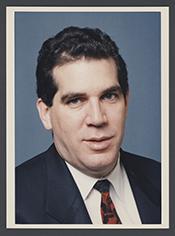
United States · United States Congress · 29 July 1999
Access to Medical Treatment Act - Defines: (1) "danger" as an adverse reaction to an unapproved drug or medical device that causes serious harm, would not otherwise have occurred, and is more serious than contraindications for drugs or devices approved by the Federal Food and Drug Administration for the same disease or condition; and (2) other terms as used in this Act including, "unapproved drug or medical device." (Sec. 4) Allows, notwithstanding any other provision of Federal law, a patient to receive and a health care practitioner to provide any unapproved drug or device the patient desires if it is: (1) recommended by a practitioner (within that practitioner's scope of practice); (2) not a violation of State law; and (3) the practitioner abides with all recommendation requirements. Sets forth the recommendation requirements, including that the practitioner: (1) does not violate the Controlled Substances Act; (2) has informed the patient of certain matters, including that the drug or device is unapproved and experimental; and (3) does not impose a charge for the drug or device in excess of costs. Prohibits the practitioner from making any advertising claims for the drug or device, but allows dissemination of information on the results of the practitioner's use of the drug or device so long as: (1) the practitioner does not offer to sell the drug or device in connection with the dissemination; or (2) the claims are permitted under provisions of the Federal Food, Drug, and Cosmetic Act (FDCA) relating to misbranded food and to dietary supplement labeling. (Sec. 5) Requires a practitioner who discovers that an unapproved drug or device creates a danger to a patient to immediately cease use and recommendation of the unapproved drug or device and provide specified information to the drug's or device's manufacturer. Requires the manufacturer that receives the information to: (1) immediately cease sale and distribution of the drug or device; (2) notify all practitioners to whom the drug or device has been provided; (3) report to the Secretary of Health and Human Services. Directs the Secretary, on receiving the report from the manufacturer, to promptly disseminate information on the danger to all practitioners in the United States, the National Center for Complementary and Alternative Medicine, and agencies of States having responsibility for regulating unsafe or adulterated drugs and devices. Requires the manufacturer to investigate to determine the actual cause of the danger and take specified actions depending on the outcome of that investigation. (Sec. 6) Requires a practitioner who discovers that an unapproved drug or device used in the treatment of a life threatening condition produces results that are significantly more beneficial than results from approved drugs or devices for that condition to provide specified information to the drug's or device's manufacturer. Requires that manufacturer to provide information to the National Center for Complementary and Alternative Medicine. Requires the Center to annually report to Congress on beneficial results and make the report available to the public. (Sec. 7) Declares that this Act does not: (1) have any effect on FDCA provisions regarding pharmacy compounding; and (2) supersede any State or political subdivision law. (Sec. 8) Authorizes a practitioner, in conformity with this Act, to take certain actions regarding an unapproved drug or device and interstate commerce. (Sec. 9) Requires that a practitioner found to have knowingly violated this Act be denied coverage under this Act.
United States · United States Congress · 29 July 1999
Expresses the sense of Congress that the United States should: (1) commend the people of Taiwan for having established a democracy and for repeatedly reaffirming dedication to democratic ideals; (2) recognize Taiwan's independence if the people of Taiwan opt for such status through a democratic mechanism, including a plebiscite; and (3) immediately adopt a "One China, One Taiwan Policy" which reflects the reality that Taiwan and China are two separate nations.
United States · United States Congress · 27 July 1999
Medicare Glaucoma Detection Act of 1999 - Amends title XVIII (Medicare) of the Social Security Act to provide for coverage of glaucoma detection tests for certain eligible individuals under Medicare part B (Supplementary Medical Insurance).
United States · United States Congress · 22 July 1999
Amends the Omnibus Crime Control and Safe Streets Act of 1968 to make certain employees of the Federal Emergency Management Agency, their State and local counterparts, and State and local employees of civil defense agencies eligible for public safety officers' death benefits.
United States · United States Congress · 22 July 1999
Recognizes the moral right of Dina Babbitt to obtain the artwork she created and recognizes her courage in the face of the evils perpetrated by the Nazi command of the Auschwitz-Birkenau death camp, including the atrocities committed by Dr. Josef Mengele. Urges: (1) the President to make all efforts necessary to retrieve and return to her the seven watercolor portraits she painted while suffering a year and a half long internment at the Auschwitz-Birkenau death camp; (2) the State Department to make diplomatic efforts to facilitate the transfer of such watercolors from the Auschwitz-Birkenau state museum to her; (3) the Government of Poland to facilitate the return of such artwork from the Auschwitz-Birkenau state museum to her; and (4) the officials of the Auschwitz-Birkenau state museum to transfer those paintings to her expeditiously.
United States · United States Congress · 20 July 1999
NIH Office of Autoimmune Diseases Act of 1999 - Amends the Public Health Service Act to establish within the Office of the Director of the National Institutes of Health (NIH) the Office of Autoimmune Diseases (Office). Requires the Director of such Office to: (1) recommend an agenda for conducting and supporting research on autoimmune diseases through the national research institutes; (2) promote the sufficient allocation of NIH resources for such research; (3) prepare a biennial report on such research activities; (4) serve as principal advisor on autoimmune diseases to the Secretary of Health and Human Services, the Assistant Secretary for Health, and the Director of NIH; and (5) provide advice to the Director of the Centers for Disease Control and Prevention, the Commissioner of Food and Drugs, and other relevant agencies. Instructs the Director of NIH to ensure that: (1) an Autoimmune Disease Coordinating Committee is in operation to assist the Director of the Office; and (2) the Committee includes liaison members from other Federal health agencies. Authorizes appropriations.
United States · United States Congress · 20 July 1999
Commends President Glafcos Clerides of Cyprus for his decision to cancel the deployment of the S-300 antiaircraft missiles in Cyprus. Urges the President of the United States to use the influence of the U.S. Government to ensure full compliance with the call of the Group of Eight (G-8) leaders and United Nations (UN) Security Council Resolution 1250 for comprehensive negotiations, without preconditions, in the autumn of 1999. Declares that Congress believes that any solution must be based on all relevant UN National Security Council Resolutions, including Resolution 1217.
United States · United States Congress · 19 July 1999
Resolves that the House of Representatives: (1) condemns the senseless violence that occurred in Illinois and Indiana over the Fourth of July weekend; (2) conveys its deepest sympathy to the victims and their families; (3) condemns the culture of hate and the hate groups that foster such violent acts; (4) commends the communities of Illinois and Indiana for uniting to condemn these acts of hate in their neighborhoods; (5) commends the efforts of Federal, State, and local law enforcement officials; and (6) reaffirms its commitment to a society that fully respects and protects all people, regardless of race, religion, or ethnicity.
United States · United States Congress · 15 July 1999
Folic Acid Promotion and Birth Defects Prevention Act of 1999 - Amends the Public Health Service Act to require the Secretary of Health and Human Services, acting through the Director of the Centers for Disease Control and Prevention, to carry out a program, directly or through grants or contracts, for professional and public education and training, research, and epidemiological activities regarding folic acid and birth defects. Authorizes appropriations.
United States · United States Congress · 14 July 1999
Prohibits the United States from operating a U.S. consulate in Jerusalem unless it is under the supervision of the U.S. Ambassador to Israel. Requires any official government document which lists countries and their capital cities to identify Jerusalem as the capital of Israel. Declares that, for purposes of registration of birth, certification of nationality, or issuance of a passport of a U.S. citizen born in the city of Jerusalem, the Secretary of State shall, upon the citizen's request, record the place of birth as Israel.
United States · United States Congress · 13 July 1999
Cardiac Arrest Survival Act of 1999 - Amends the Public Health Service Act to direct the Secretary of Health and Human Services to: (1) assist in providing for an improvement in the survival rates of individuals who experience cardiac arrest in Federal buildings by publishing in the Federal Register for public comment recommendations with respect to placing automatic external defibrillators in such buildings; and (2) assist Federal agencies in implementing programs for such placement. Requires the Secretary to determine criteria for: (1) the selection of the Federal public buildings in which defibrillators should be placed; (2) defibrillator maintenance; and (3) the coordination of the use of the defibrillators in public buildings with emergency medical services providers for the geographic areas in which the buildings are located. Provides that any person who provides emergency medical care through the use of a defibrillator, any person who maintained, tested, or provided training in the use of the device, any physician who provided medical oversight of the device, and the person who acquired the device (if specified conditions have been met) is immune from civil liability for any personal injury or wrongful death resulting from the provision of such care, unless the person engaged in gross negligence or willful or wanton misconduct under the applicable circumstances.
United States · United States Congress · 1 July 1999
Wartime Violation of Italian American Civil Liberties Act - Directs the Inspector General of the Department of Justice to conduct a comprehensive review of the treatment by the Federal Government of Italian Americans during World War II (between September 1, 1939, and December 31, 1945) and to report to Congress on the findings of such review. Requires the findings to include information regarding: (1) Italian Americans who were taken into custody, interned, ordered to move out of designated areas, or arrested for curfew, contraband, or other violations; (2) Federal Bureau of Investigations raids on Italian Americans homes; (3) restrictions on Italian American fishermen and railroad workers; and (4) civil liberties infringements suffered by Italian Americans during World War II as a result of Executive Order 9066. Expresses the sense of Congress that: (1) the story of the treatment of Italian Americans during World War II needs to be told; (2) Federal agencies, including the Department of Education and the National Endowment for the Humanities, should support projects such as conferences, seminars, and lectures to heighten awareness of this unfortunate chapter in our nation's history, the refurbishment and payment of all expenses associated with the traveling exhibit "Una Storia Segreta," and documentaries allowing this issue to be presented to the American public; (3) an advisory committee should be established to assist in the compilation, research, and dissemination of information on the treatment of Italian Americans; and (4) financial support should be provided for educating the American public through the production of a documentary film suited for public broadcast. Requires the President, on behalf of the Government, to formally acknowledge that these events during World War II represented a fundamental injustice against Italian Americans.
United States · United States Congress · 1 July 1999
Organ Procurement and Transplantation Network Amendments of 1999 - Declares that Congress: (1) recognizes the generous contribution made by each living individual who has donated an organ to save a life; and (2) acknowledges the advances in medical technology that have enabled organ transplantation with organs donated by living individuals to become a viable treatment option for an increasing number of patients. Amends the Public Health Service Act to revise and extend programs relating to organ procurement and transplantation, among other changes requiring the Organ Procurement and Transportation Network to: (1) carry out studies and demonstration projects to improve procedures for organ procurement and allocation; and (2) develop a peer review system to assure that members of the Network comply with appropriate medical and other specified criteria. Mandates that the Secretary of Health and Human Services establish additional procedures for providing oversight of, and public accountability for, operation of the Network. Authorizes the Secretary to award grants or contracts for: (1) payment of travel and subsistence expenses incurred toward living organ donation; and (2) studies and demonstration projects. Directs the Secretary to carry out a program to educate the public about organ donation. Authorizes appropriations.
United States · United States Congress · 1 July 1999
Medicare+Choice Risk Adjustment Amendments of 1999 - Amends part C (Medicare+Choice) of title XVIII (Medicare) of the Social Security Act to: (1) require that the new risk adjustment methodology for Medicare+Choice payment rates be implemented in a budget neutral manner; and (2) eliminate any further adjustment in the national per capita Medicare+Choice growth percentage.
United States · United States Congress · 1 July 1999
Better America Bonds Act of 1999 - Amends the Internal Revenue Code to allow a limited income tax credit to a holder of a Better America Bond. Requires the proceeds of such bonds to be used for specified purposes, including: (1) the acquisition of land for use as open space, wetlands, public parks, or greenways, and the provision of visitor facilities for land so used; (2) the remediation of land so acquired to enhance water quality; and (3) the environmental assessment and remediation of real property owned by a State or local government.
United States · United States Congress · 30 June 1999
U.S. Holocaust Assets Commission Extension Act of 1999 - Amends the U.S. Holocaust Assets Commission Act of 1998 to extend through December 31, 2000, the deadline for the final report to the President of the Presidential Advisory Commission on Holocaust Assets in the United States with regard to any recommendations for legislative, administrative, or other action with respect to certain assets of victims of the Holocaust that are in the control or possession of the U.S. Government (including the Board of Governors of the Federal Reserve System and any Federal reserve bank) at any time after January 30, 1933. Authorizes appropriations for Commission activities through FY 2001.
United States · United States Congress · 30 June 1999
Paycheck Fairness Act - Amends the Fair Labor Standards Act of 1938 (FLSA) to revise remedies for and enforcement of prohibitions against sex discrimination in the payment of wages. (Such FLSA prohibitions are also known as the Equal Pay Act). (Sec. 3) Amends FLSA to provide for enhanced enforcement of equal pay requirements, adding a nonretaliation requirement. Increases penalties for such violations. Provides for the Secretary of Labor to seek additional compensatory or punitive damages in such cases. (Sec. 4) Requires the Equal Employment Opportunity Commission (EEOC) and the Office of Federal Contract Compliance Programs to train EEOC employees and affected individuals and entities on matters involving wage discrimination. (Sec. 5) Directs the Secretary to conduct studies and provide information to employers, labor organizations, and the general public concerning the means available to eliminate pay disparities between men and women, including convening a national summit and carrying out other specified activities. (Sec. 6) Directs the Secretary to: (1) develop guidelines for employer evaluations of job categories based on objective criteria, to be used voluntarily by employers to compare wages for different jobs to determine if pay scales adequately and fairly reflect each job's educational and skill requirements, independence, working conditions, and responsibility, in order to eliminate unfair pay disparities between occupations traditionally dominated by men or women; and (2) establish a program to recognize employers who use such guidelines to ensure that women are paid fairly in comparison to men without lowering men's wages. Authorizes the Secretary to provide technical assistance for employers to carry out such evaluations. (Sec. 7) Establishes the Robert Reich National Award for Pay Equity in the Workplace, which shall be evidenced by a medal. Sets forth criteria for specified types of entities to receive such an award. (Sec. 8) Amends the Civil Rights Act to direct the EEOC to: (1) complete a survey of data currently available to the Government relating to employee pay information for use in the enforcement of Federal laws prohibiting pay discrimination, and identify additional data collections to enhance enforcement of such laws; and (2) based on survey results and consultations with other relevant Federal agencies, issue regulations for the collection of pay information data from employers as described by the sex, race, and national origin of employees. (Sec. 9) Authorizes appropriations.
United States · United States Congress · 29 June 1999
Expresses that the House of Representatives: (1) condemns the crimes that occurred in Sacramento, California, at Congregation B'Nai Israel, Congregation Beth Shalom, and Kenesset Israel Torah Center on June 18, 1999; (2) interprets such attacks as an attack on all Americans; (3) is committed to using Federal law enforcement personnel and resources to bring the persons who committed these attacks to justice; (4) recognizes the residents of the Sacramento, California, area who have so quickly joined together to lend support and assistance to the victims and who remain committed to preserving the freedom of religion of all members of the community; and (5) calls upon all Americans to categorically reject similar crimes of hate and intolerance.
United States · United States Congress · 29 June 1999
Commends Emir Jabir al-Ahmad al-Jabir al-Sabah of Kuwait for his commitment to Kuwaiti womens' right to vote and run for public office, as reflected in his decision of May 16, 1999, to grant such right. Congratulates the Kuwaiti women for this achievement. Urges: (1) the Kuwaiti Parliament to support this landmark decision; and (2) President Clinton to support further democratic development in the Persian Gulf region.
United States · United States Congress · 29 June 1999
Expresses congratulations and thanks to U.S. and North Atlantic Treaty Organization troops for fighting for the safety and protection of Kosovar Albanians and bringing peace to Kosovo.
United States · United States Congress · 24 June 1999
Employment Non-Discrimination Act of 1999 - Prohibits employment discrimination on the basis of sexual orientation by covered entities. Declares that a disparate impact does not establish a prima facie violation of this Act. Prohibits related retaliation and coercion. Declares that this Act does not apply to the provision of employee benefits for the benefit of an employee's domestic partner. Prohibits the Equal Employment Opportunity Commission from: (1) collecting statistics on sexual orientation from covered entities; and (2) compelling covered entities to collect such statistics. Prohibits: (1) quotas and preferential treatment; and (2) an order or consent decree for a violation of this Act that includes a quota or preferential treatment. Declares that this Act does not apply to: (1) religious organizations (except regarding employment in a position the duties of which pertain solely to activities of the organization that generate unrelated business income subject to taxation under specified Internal Revenue Code provisions); (2) the relationship between the United States and members of the armed forces; or (3) laws creating special rights or preferences for veterans. Provides for enforcement. Prohibits the imposition of affirmative action for a violation of this Act. Disallows State immunity. Makes the United States or a State liable for all remedies (except punitive damages, with compensatory damages available to the extent specified in certain existing provisions of law) to the same extent as under specified provisions of the Civil Rights Act of 1964. Allows recovery of attorney's fees. Requires posting notices for employees, applicants, and members.
United States · United States Congress · 24 June 1999
Safety Net Preservation Act of 1999 - Amends title XIX (Medicaid) of the Social Security Act to establish a new prospective payment system for federally-qualified health centers and rural health clinics.
United States · United States Congress · 23 June 1999
Designates the Department of Veterans Affairs outpatient clinic in Melbourne, Florida, as the Jerry O' Brien Department of Veterans Affairs Outpatient Clinic.
United States · United States Congress · 23 June 1999
Amends titles XI and XIX (Medicaid) of the Social Security Act (SSA) to: (1) disregard Medicaid payments for certain Medicare (SSA title XVIII) cost-sharing and for veterans in applying provisions for fiscal year Medicaid payments to Puerto Rico and certain other territories; and (2) remove the limitation on the Federal medical assistance percentage for such cost-sharing and for veterans.
United States · United States Congress · 23 June 1999
Resolves that the House of Representatives: (1) condemns the attacks against three Jewish places of worship in the Sacramento, California, area on June 18, 1999; (2) commends the citizens from California and across the country who have provided moral support to Sacramento's Jewish community and who have offered money, labor, books, and other materials to help rebuild the three synagogues; (3) supports all Federal, State, and local law enforcement agencies' efforts to bring the perpetrators of these attacks to justice; and (4) reaffirms its commitment to a society that fully respects and protects all places of worship and reaffirms the right of individuals of all religious convictions freely to practice their religion.
United States · United States Congress · 22 June 1999
New Millennium Classrooms Act - Amends the Internal Revenue Code to: (1) expand the tax deduction for computer donations by corporations to tax-exempt schools to include donations to public libraries; (2) increase from two to three years the age of computers that can be contributed for such deduction; and (3) allow a business tax credit of 30 percent of the value of computers donated to tax-exempt schools and public libraries. Increases the amount of such credit to 50 percent for contributions to schools or public libraries in empowerment zones, enterprise communities, and Indian reservations.
United States · United States Congress · 22 June 1999
Expresses the sense of Congress that all people in the United States should reach out across our differences in ethnicity, race, and religion to respect each other and to celebrate, in friendship and unity, one America.
United States · United States Congress · 22 June 1999
Acknowledges that the Government of Haiti has made progress toward democratization. Urges such Government to engage in dialog with all elements of Haitian society to further a self-sustainable democracy. Encourages the Government and all political parties in Haiti to proceed toward conducting free, fair, transparent, and peaceful elections as scheduled, in the presence of domestic and international observers, without pressure or interference. Urges the Clinton Administration and the international community to continue to play a positive role in Haiti's economic and political development. Commends: (1) the United Nations and other countries and international organizations for their support of health, education, nutrition, and environmental programs in Haiti; and (2) the U.S. military's efforts on the ground in Haiti for providing civil support and medical assistance. Encourages: (1) the Clinton Administration and the international community to provide substantial assistance for the coming elections; and (2) the Government of Haiti to adopt adequate security measures in preparation for such elections. Urges: (1) all elements of Haitian civil society to promote a climate of security; and (2) the United States and other members of the international community to continue support towards a lasting and committed transition to democracy in Haiti.
United States · United States Congress · 18 June 1999
Spaceport Investment Act - Amends the Internal Revenue Code to provide the same treatment for spaceports as is provided for airports under the exempt facility bond rules.
United States · United States Congress · 17 June 1999
Chemical Security Act of 1999 - Bars the public disclosure of off-site consequence analysis submissions under the Clean Air Act for a period of one year after this Act's enactment. Defines an "off-site consequence analysis submission" as a portion of a risk management plan submitted to the Administrator of the Environmental Protection Agency by stationary sources of certain hazardous substances. Permits disclosure of such information for official use only. Prescribes penalties for violation of such prohibition. Directs the Administrator, after June 21, 1999, to make information from risk management plans, including information from off-site consequence analysis submissions, publicly available in a form which excludes information concerning the identity or location of covered stationary sources. Requires owners or operators of such sources to convene a meeting with community representatives, employees and contractors working at such sources, and local emergency planning committees and other emergency responders to discuss measures necessary to prevent, and protect such sources from, attacks by terrorists and other criminals. Provides for certifications to the Federal Bureau of Investigation by such owners or operators that such meetings have been held. Directs the Attorney General to review and report to Congress on the vulnerability of covered stationary sources to criminal and terrorist activity, current industry practices regarding site security, security of transportation of extremely hazardous substances, and this Act's effectiveness. Provides for biennial updates of such report and for recommendations for reducing such vulnerability through inherently safer practices and site security and the need for additional legislation. Requires the Comptroller General to report to Congress on the health and environmental effects of public disclosure of information. Requires, as part of such report, an examination of the reductions in toxic chemical releases associated with reporting requirements of the Superfund Amendments and Reauthorization Act of 1986. Authorizes appropriations.
United States · United States Congress · 16 June 1999
Hospital Outpatient Preservation Act of 1999 - Amends the Balanced Budget Act of 1997 (BBA '97) to limit temporarily the reductions in Federal payments under the Medicare prospective payment system (PPS) for hospital outpatient department services under title XVIII (Medicare) of the Social Security Act. Provides for the retroactive effectiveness of this Act as if included in BBA '97.
United States · United States Congress · 15 June 1999
Medicare Early Access Act of 1999 - Title I: Access to Medicare Benefits for Individuals 62-to-65 Years of Age - Amends title XVIII (Medicare) of the Social Security Act (SSA) to add a new part D (Purchase of Medicare Benefits by Certain Individuals Age 62-to-65 Years of Age). Makes eligible to enroll in Medicare during a specified period individuals between the ages of 62 and 65 who: (1) are not eligible for coverage under group health plans or Federal health insurance; but (2) would be Medicare-eligible if age 65. Requires prior notification of each individual seeking to enroll of the deferred monthly premium amount for which the individual will be liable upon attaining age 65. (Sec. 101) Directs the Secretary of Health and Human Services to determine rates for: (1) the base monthly premium; (2) the base annual premium for individuals age 62 or older, adjusted appropriately for each premium area; as well as the maximum amount of such premium; and (3) the deferred premium for such individuals. Directs the Secretary to provide for payment and collection of the base monthly premium. Makes the enrollee liable for the deferred monthly premium payment. Requires collection of both premiums in the same manner as for the payment of monthly premiums under Medicare part B (Supplementary Medical Insurance). Creates in the Treasury the Medicare Early Access Trust Fund (Trust Fund) to hold collected premiums. Directs: (1) the Trust Fund's Board of Trustees to report annually to Congress on the need for adjustments in the new program in order to maintain its financial solvency; and (2) the Comptroller General to report periodically to Congress on the adequacy of program financing along with appropriate recommendations to accomplish such end. Requires: (1) individuals enrolled under the new part D program to be treated for Medicare purposes as though they were entitled to benefits under Medicare part A (Hospital Insurance) and enrolled under Medicare part B; and (2) new part D program benefits to be payable under Medicare to such individuals in the same manner as if they were so entitled and enrolled. Provides that the new part D program shall not be treated as Medicare for purposes of the Medicaid program (SSA title XIX), including the provision of Medicare cost-sharing assistance, nor for purposes of COBRA (Consolidated Omnibus Budget Reconciliation Act of 1985) continuation requirements of the Public Health Service Act. Title II: Access to Medicare Benefits for Displaced Workers 55-to-62 Years of Age - Amends SSA title XVIII part D to rename the newly established part D program the Purchase of Medicare Benefits by Certain Individuals Age 55-to-65 Years of Age. Provides for part D coverage for certain displaced workers and spouses between the ages of 55 and 62 under arrangements similar to those in title I. Directs the Secretary to provide for continued enrollment of displaced workers who attain 62 years of age. Title III: COBRA Protection for Early Retirees - Subtitle A: Amendments to the Employee Retirement Income Security Act of 1974 - Amends the Employee Retirement Income Security Act of 1974 (ERISA) to extend specified group health plan insurance continuation coverage under COBRA to qualified retirees and their dependents, in cases of substantial reduction or termination of a retiree group health plan. Sets forth a special rule for certain dependents in case of termination or substantial reduction of retiree health coverage. Permits an increased level of premiums in the case of an individual provided continuation coverage by reason of the qualifying event. Subtitle B: Amendments to the Public Health Service Act - Amends the Public Health Service Act to extend specified group health plan insurance continuation coverage under COBRA to qualified retirees and their dependents, in cases of substantial reduction or termination of a retiree group health plan. Sets forth a special rule for certain dependents in case of termination or substantial reduction of retiree health coverage. Permits an increased level of premiums in the case of an individual provided continuation coverage by reason of the qualifying event. Subtitle C: Amendments to the Internal Revenue Code of 1986 - Amends the Internal Revenue Code to extend specified group health plan insurance continuation coverage under COBRA to qualified retirees and their dependents, in cases of substantial reduction or termination of a retiree group health plan. Sets forth a special rule for certain dependents in case of termination or substantial reduction of retiree health coverage. Permits an increased level of premiums in the case of an individual provided continuation coverage by reason of the qualifying event. Title IV: Financing - Provides that any increase in payments under SSA title XVIII resulting from enactment of this Act shall be offset by reductions in payments under such program pursuant to the anti-fraud and anti-abuse provisions enacted as part of the Medicare Fraud and Reimbursement Reform Act of 1999.
United States · United States Congress · 10 June 1999
Bear Protection Act of 1999 - Prohibits any person from: (1) importing bear viscera into, or exporting it from, the United States; or (2) selling bear viscera, bartering, offering it for sale or barter, or purchasing, possessing, transporting, delivering, or receiving it in interstate or foreign commerce. Subjects persons who violate such prohibitions to specified penalties. Waives such prohibition for wildlife law enforcement purposes where a valid permit has been issued. Requires the Secretary of the Interior and the Secretary of State to discuss issues involving such trade with the appropriate representatives of countries that are the leading importers, exporters, or consumers of such products. Requires the Secretary of the Interior to report to Congress on the progress of efforts to end illegal trade in bear viscera.
United States · United States Congress · 10 June 1999
Equity in Prescription Insurance and Contraceptive Coverage Act of 1999 - Amends the Employee Retirement Income Security Act of 1974 and the Public Health Service Act to prohibit a group health plan, and a health insurance issuer providing group coverage, from: (1) excluding or restricting benefits for prescription contraceptive drugs, devices, and outpatient services if the plan provides benefits for other outpatient prescription drugs, devices, or outpatient services; (2) denying eligibility based on use or potential use of such items or services; (3) providing monetary payments or rebates to a covered individual to encourage acceptance of less than the minimum protections available; (4) penalizing, reducing, or limiting a professional's reimbursement because the professional prescribed such drugs or devices or provided such services; or (5) providing incentives to a professional to induce the professional to withhold drugs, devices, or services. Amends the Public Health Service Act to apply those prohibitions to coverage offered in the individual market.
United States · United States Congress · 10 June 1999
National Uniformity for Food Act of 1999 - Amends the Federal Food, Drug, and Cosmetic Act (FDCA) to prohibit any State or political subdivision from establishing or continuing in effect as to any food in interstate commerce any requirement for food labeling or food that is not identical to specified FDCA provisions. Prohibits any State or political subdivision from establishing or continuing in effect any notification requirement for a food that provides for a warning concerning the food's safety that is not identical to FDCA provisions. Allows a State to petition for an exemption and for a national standard regarding any requirement under the FDCA, as amended by this Act, or the Fair Packaging and Labeling Act relating to food regulation. Allows a State to establish a requirement that would otherwise violate FDCA provisions relating to national uniform nutrition labeling or this paragraph if the requirement is needed to address an imminent hazard to health that is likely to result in serious adverse health consequences and if other requirements are met.
United States · United States Congress · 10 June 1999
Empowerment Zones and Enterprise Communities Enhancement Act of 1999 - Amends title XX (Block Grants to States for Social Services) of the Social Security Act to revise additional grants requirements, providing for: (1) additional State entitlements to grants for designated qualified empowerment zones and qualified enterprise communities as well as for strategic planning communities (currently not provided for); (2) specified funding for such additional designated qualified empowerment zone State grants (according to urban or rural status) as well as for additional designated qualified enterprise community State grants and strategic planning community State grants; (3) direct grants to the governing bodies of eligible Indian tribes or Alaska Native villages or regional or village corporations, subject to certain conditions; (4) use of grant funds for revolving loan fund loans to residents, institutions, organizations, or businesses that hire disadvantaged adults and youths; and (5) environmental review to ensure that the National Environmental Policy Act of 1969 and other applicable Federal law are most effectively implemented in connection with the expenditure of grant funds under SSA title XX additional grants provisions.
United States · United States Congress · 10 June 1999
Condemns: (1) Palestinian efforts to circumvent United Nations (UN) Security Council Resolutions 242 and 338, as well as violate the Oslo peace process, by attempting to revive UN General Assembly Resolution 181 and thereby placing the Israeli-Palestinian peace process at risk; and (2) the UN Commission on Human Rights for voting to formally endorse such Resolution as the basis for the future of Palestinian self-determination. Reiterates: (1) that any just and final peace agreement regarding the final status of the territory controlled by the Palestinians can only be determined through direct negotiations and agreement between the State of Israel and the Palestinian Liberation Organization; and (2) Congress' continued unequivocal support for the security and well-being of the State of Israel and of the Oslo peace process based on UN Security Council Resolutions 242 and 338. Calls for the President to declare that: (1) it is U.S. policy that UN General Assembly Resolution 181 is null and void; (2) all negotiations between Israel and the Palestinians must be based on UN Security Council Resolutions 242 and 338; and (3) the United States regards any attempt by the Palestinians, the UN, or any entity to resurrect UN General Assembly Resolution 181 as a basis for negotiations, or for any international decision, as an attempt to sabotage the prospects for a successful peace agreement in the Middle East.
United States · United States Congress · 8 June 1999
Expresses the sense of the Congress that the Clinton administration should: (1) be commended for supporting United Nations Commission on Human Rights Resolution 1999-13 (concerning continued discrimination against religious minorities in the Islamic Republic of Iran), and should continue to work through the United Nations to assure that Iran implements that resolution's recommendations; (2) condemn the recent arrest of members of Iran's Jewish minority and urge their immediate release; (3) urge all nations having relations with Iran to condemn the treatment of religious minorities in Iran and call for the release of all prisoners held on the basis of their religious beliefs; and (4) maintain the current U.S. policy toward Iran unless and until that country moderates its treatment of religious minorities.
United States · United States Congress · 7 June 1999
Medicare Prescription Drug Benefit Act of 1999 - Amends title XVIII (Medicare) of the Social Security Act (SSA) to provide for coverage of certain covered outpatient prescription drugs (including insulin) and biological products, including those that are also prescribable but are available over-the-counter, under Medicare part B (Supplementary Medical Insurance) for enrolled part B beneficiaries. (Sec. 3) Establishes and outlines the administrative structure for implementing such new Medicare part B coverage, including requiring the Secretary of Health and Human Services to establish: (1) competitive bidding procedures for contracting with appropriate private sector service providers meeting specified requirements (including requirements to use cost-containment mechanisms such as formularies) to furnish such new Medicare part B benefits, which consist of a basic benefit package; and (2) a process for providing payments to eligible group health plans on behalf of such enrolled beneficiaries. Imposes certain cost-sharing requirements, and provides for appropriate outreach activities as well as protection of patient confidentiality. (Sec. 4) Permits the Secretary to make payments, subject to specified requirements, to enrollee group health insurance retiree plans providing drug coverage that is equivalent to or greater than the new Medicare part B coverage provided for by this Act while also permitting such enrollees receiving group coverage to continue to receive such coverage under the plan. (Sec. 5) Revises Medicare supplemental health insurance (Medigap) policy requirements with regard to this Act's mandated coverage of certain covered outpatient prescription drugs and biological products to require that an appropriate number of Medigap policies provide complementary, non-duplicative coverage in line with such mandated coverage. (Sec. 6) Amends SSA title XIX (Medicaid) with regard to Medicaid assistance for low-income individuals to modify State Medicaid plan requirements to: (1) increase (from 120 percent to 135 percent of the poverty level) the income eligibility level to qualify for certain Medicare cost-sharing with regard to monthly Medicare part B premiums; and (2) provide for Medicaid prescription drug benefits for qualified Medicare beneficiaries and others as a wrap- around benefit. (Sec. 7) Directs the Secretary to provide for waiver of the additional portion of the Medicare part B premium attributable to the prescription drug coverage mandate of this Act for certain Medicare beneficiaries already having actuarially equivalent drug coverage. Excludes from such waiver a group health plan enrollee if the plan receives payments for such enrollee under this Act. (Sec. 8) Amends SSA title XVIII to: (1) eliminate the time limitation on Medicare benefits for immunosuppressive drugs; (2) require Medicare secondary payer provisions with regard to individuals with end stage renal disease be applied without regard to any time limitation with regard to immunosuppressive drugs furnished on or after this Act's enactment; and (3) increase the membership of the Medicare Payment Advisory Commission by two members, with their initial terms staggered, as well as add to the qualifications for membership. (Sec. 10) Directs the Comptroller General to study and report to Congress with regard to the competitive bidding process for selecting service providers to furnish certain covered outpatient prescription drugs and biological products, including an analysis of any savings to Medicare as a result of this new Medicare part B benefit.
United States · United States Congress · 27 May 1999
Declares that: (1) no Member of Congress or any other American should generalize or stereotype the actions of an individual to an entire group of people; (2) Americans of Asian ancestry are entitled to all rights and privileges afforded to all Americans; and (3) the Attorney General, the Secretary of Energy, and the Commissioner of the Equal Employment Opportunity Commission should, within their respective jurisdictions, vigorously enforce the security of the national laboratories and investigate all allegations of discrimination in public or private workplaces.
United States · United States Congress · 26 May 1999
Calls for the Citizens Stamp Advisory Committee to recommend and the Postal Service to issue a commemorative postage stamp honoring the U.S. Submarine Force on its 100th anniversary.
United States · United States Congress · 25 May 1999
Father Theodore M. Hesburgh Congressional Gold Medal Act - Authorizes the President to present, on behalf of Congress, a congressional gold medal to Father Theodore M. Hesburgh in recognition of his outstanding and enduring contributions to civil rights, higher education, the Catholic Church, the Nation, and the global community. Authorizes the Secretary of the Treasury to strike and sell bronze duplicates. Authorizes appropriations.
United States · United States Congress · 25 May 1999
Commends the Department of State for the vote of the United States against United Nations (UN) General Assembly Resolution ES-10-6, Illegal Israeli Actions In Occupied East Jerusalem And The Rest Of The Occupied Palestinian Territory, to convene a conference of the participants of the Fourth Geneva Convention for the Protection of Civilians in Time of War. Urges: (1) the Department of State to continue its efforts against convening and participating in the conference; (2) the member states of the UN to vigorously oppose any and all efforts to manipulate the Fourth Geneva Convention for the purpose of attacking Israel; and (3) UN Secretary General Kofi Annan and Switzerland, which serves as the depository of the Fourth Geneva Convention, to refrain from assisting in the convening of the conference.
United States · United States Congress · 20 May 1999
Iran Nonproliferation Act of 1999 - Directs the President to report periodically to specified congressional committees on foreign persons who, on or after January 22, 1998, have transferred to Iran: (1) controlled goods, services, or technology; or (2) non-controlled goods, services, or technology that would nevertheless would be, if they were U.S. goods, services, or technology, prohibited for export to Iran because of their potential contribution to the development of nuclear, biological, or chemical weapons, or ballistic missile systems. Excludes from identification in such reports any such persons who were previously identified, or who have acted on behalf of, or in concert with, the U.S. Government. Authorizes the President, with specified exceptions, to apply to such foreign person certain measures: (1) set forth in Executive Order 12938 prohibitions; (2) prohibiting the sale to such persons of defense items on the United States Munitions List and defense articles and defense services, or design and construction services under the Arms Export Control Act; and (3) prohibiting the export to such persons of controlled goods and technology under the Export Administration Act of 1979. Prohibits any U.S. agency from making extraordinary payments to the Russian Space Agency in connection with the International Space Station, or any other organization or entity of the Government of the Russian Federation, unless the President has determined, and reported to specified congressional committees, that: (1) it is the policy of the Government of the Russian Federation to oppose the proliferation to Iran of weapons of mass destruction and missile systems capable of delivering such weapons; (2) such government is taking the necessary steps to prevent the transfer from Russia to Iran of goods, services, and technology useful in the development of such weapons and systems; and (3) neither the Russian Space Agency, nor any organization under its control, has, during the one-year period prior to the determination, made transfers to Iran of controlled goods, services, or technology or non-controlled goods, services, or technology that has potential to contribute to Iran's development of nuclear, biological, or chemical weapons, or of ballistic missile systems.
United States · United States Congress · 20 May 1999
Health Care Worker Needlestick Prevention Act - Directs the Secretary of Labor, acting through the Occupational Safety and Health Administration (OSHA), to amend the bloodborne pathogens standard to require that: (1) employers utilize needleless systems and sharps with engineered sharps injury protections in their work sites to prevent the spread of bloodborne pathogens; and (2) non-managerial direct care health care workers of employers participate in the identification and evaluation of such systems and sharps. Provides an exemption where an employer demonstrates that needleless systems and sharps: (1) do not promote employee safety, interfere with patient safety, or interfere with the success of a medical procedure under certain circumstances in the employer's work facility; or (2) are not commercially available to the employer. (Sec. 2) Includes under such revised standard requirements relating to: (1) exposure control plans; (2) sharps injury logs; and (3) worker training in the use of such systems and sharps. (Sec. 3) Requires the Director of the National Institute for Occupational Safety and Health (NIOSH) to establish and maintain a national database on existing needleless systems and sharps with engineered sharps injury protections. Requires the Director to: (1) develop a set of evaluation criteria for use by employers, employees, and other persons in evaluating and selecting such systems and sharps; (2) develop a model training curriculum to train employers, employees, and other persons in such evaluation process, and provide requested technical assistance to the extent feasible; and (3) establish a national system to collect comprehensive data on needlestick injuries to health care workers, including data on mechanisms to analyze and evaluate prevention. Authorizes NIOSH access to information recorded by employers in sharps injury logs. Authorizes appropriations. (Sec. 5) Directs the Secretary of Health and Human Services to require hospitals, as a condition of their Medicare program participation, to comply with the bloodborne pathogen standard as amended under this Act with respect to hospital employees, even if they are not otherwise subject to such standard because they are exempt from OSHA regulation.
United States · United States Congress · 20 May 1999
School Anti-Violence Empowerment Act - Title I: School Safety Programs - Authorizes the Secretary of Education to award competitive grants to local educational agencies (LEAs) for: (1) crisis intervention programs, including the hiring of school counselors; and (2) school safety programs for students, staff, and school facilities. Requires reservation of 50 percent of funds under this title for grants to hire school counselors, and the other 50 percent for grants for school safety programs. Requires awards to be based on one or more of the following factors: (1) quality of existing or proposed violence prevention program; (2) greatest need for crisis intervention counseling services; and (3) documented financial need based on number of students served under part A of title I of the Elementary and Secondary Education Act of 1965 (ESEA). Authorizes appropriations. Title II: Increased COPS Funding - Amends the Omnibus Crime Control and Safe Streets Act of 1968 to extend through FY 2004 the authorization of appropriations for certain grant programs for Community Policing and "Cops on the Beat" (COPS program). Requires 50 percent of such funds to be used for cooperative partnerships between schools and State and local police departments to provide for the use of police officers in schools. Eliminates provisions for decreasing Federal matching funds and for terminating grant program authority (thus making the authority permanent). Title III: 21st Century Learning - Amends ESEA to extend through FY 2004 the authorization of appropriations for after-school and life skills programs for at-risk youth. Title IV: Model Program and Clearinghouse - Directs the Secretary to: (1) develop a model violence prevention program to be made available to LEAs; and (2) establish and maintain a national clearinghouse to provide LEAs with information on alternative violence prevention programs, and technical assistance to establish and to operate such programs.
United States · United States Congress · 18 May 1999
Taiwan Security Enhancement Act - Expresses the sense of Congress that the Secretary of Defense and the Secretaries of the military departments should make every effort to reserve additional positions for Taiwan military officers at the National Defense University and specified other professional military education schools, and at the U.S. Military Academy, the U.S. Naval Academy, and the Air Force Academy. Expresses the sense of Congress that the Secretary of State should, when considering foreign military sales to Taiwan, to take into account Taiwan's special status and make every effort to ensure it has full and timely access to price and availability data for defense articles and defense services. Directs the President, upon the request of the Defense Security Cooperation Agency, to use Department of Defense (DOD) funds for the assignment of additional technical staff to the American Institute in Taiwan. Directs the President to report annually to Congress with respect to Taiwan's defense needs. Directs the Secretary of Defense to develop a plan for the enhancement of programs for operational training and exchanges of personnel between U.S. armed forces and Taiwanese armed forces for work in threat analysis, doctrine, force planning, operational methods, and other areas. Directs the Secretary of Defense to establish secure direct communications between the U.S. Pacific military command and the Taiwan military command. Authorizes the President, subject to the Arms Export Control Act, to make available for sale to Taiwan, at reasonable cost, theater missile defense equipment and related items, satellite early warning data, modern air-defense equipment, and naval defense systems.
United States · United States Congress · 18 May 1999
Medicare Rehabilitation Benefit Improvement Act of 1999 - Amends title XVIII (Medicare) of the Social Security Act to provide certain Medicare beneficiaries with an exemption to the financial limitations imposed on physical, speech-language pathology, and occupational therapy services under Medicare part B (Supplementary Medical Insurance). Directs the Secretary of Health and Human Services to conduct a study of specified effects of this Act for a report to Congress.
United States · United States Congress · 18 May 1999
Commends the people of Israel for reaffirming, in the May 17 election, Israel's dedication to democratic ideals. Congratulates Ehud Barak on his election as Prime Minister of Israel. Pledges that Congress will work with the President of the United States and the new Israeli Government to strengthen the bonds between the United States and Israel and to advance the cause of peace in the Middle East.
United States · United States Congress · 13 May 1999
National Institute of Biomedical Imaging and Engineering Establishment Act - Amends the Public Health Service Act to provide for the establishment of the National Institute of Biomedical Imaging and Engineering. Requires the Director of the Institute to establish a National Biomedical Imaging and Engineering Program which shall include research and related technology assessments and development in biomedical imaging and engineering. Requires the Director, with respect to such Program, to prepare and transmit to the Secretary of Health and Human Services and the Director of the National Institutes of Health (NIH) a plan to initiate, expand, intensify, and coordinate Institute biomedical imaging and engineering activities. Requires: (1) the consolidation and coordination of Institute biomedical imaging and engineering research and related activities with those of the NIH and other Federal agencies; and (2) the establishment of an Institute advisory council. Authorizes: (1) appropriations for the Institute for FY 2000 through 2002; and (2) the transfer of appropriate NIH personnel and research facilities for Institute activities.