Bill· HRH.R. 2501 (119th)referred
Free Speech Fairness Act
United States · United States Congress · 31 March 2025
The world's political record
Person
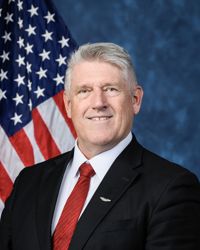
United States · Official source
195 records where Rep. Downing, Troy [R-MT-2] is listed as a sponsor, author, or other actor. Search with topics and years
United States · United States Congress · 31 March 2025
United States · United States Congress · 27 March 2025
United States · United States Congress · 26 March 2025
Stablecoin Transparency and Accountability for a Better Ledger Economy Act of 2025 or the STABLE Act of 2025 This bill establishes a regulatory framework for payment stablecoins (digital assets which an issuer must redeem for a fixed value). Under the bill, only permitted issuers may issue a payment stablecoin in the United States, subject to certain exceptions. Permitted issuers must be a subsidiary of an insured depository institution, a federal-qualified nonbank payment stablecoin issuer, or a state-qualified payment stablecoin issuer. Permitted issuers must be regulated by the appropriate federal or state regulator. A state regulator must certify that the state regulatory regime meets or exceeds federal requirements as established by the bill. Permitted issuers must maintain reserves backing the stablecoin on a one-to-one basis using U.S. currency or other similarly liquid assets, as specified. Permitted issuers must also publicly disclose their redemption policy and publish monthly the details of their reserves. The bill specifies requirements for (1) reusing reserves; (2) providing safekeeping services for stablecoins; and (3) supervisory, examination, and enforcement authority over federal-qualified issuers. The bill places a two-year moratorium on new endogenously collateralized stablecoins (i.e., stablecoins that rely on the value of another digital asset created or maintained by the same originator to maintain the fixed price). Under the bill, permitted payment stablecoins are not considered securities under securities law. However, permitted issuers are subject to the Bank Secrecy Act for anti-money laundering and related purposes.
United States · United States Congress · 14 March 2025
Tribal Trust Land Homeownership Act of 2025 This bill sets forth requirements for the processing of a proposed residential leasehold mortgage, business leasehold mortgage, land mortgage, or right-of-way document by the Bureau of Indian Affairs (BIA). The BIA must notify lenders upon receipt of such documentation, perform a preliminary review of such documents not later than 10 days after receipt, and approve or disapprove of such documents within 20 or 30 days, depending on the type of application. Additionally, the bill sets forth requirements for the BIA regarding (1) response times for the completion of certified title status reports, (2) notification of delays in processing, and (3) the form of notices and delivery of certain reports. The bill also provides relevant federal agencies and Indian tribes with read-only access to the Trust Asset and Accounting Management System maintained by the BIA. The Government Accountability Office must report on digitizing documents for the purpose of streamlining and expediting the completion of mortgage packages for residential mortgages on Indian land. Finally, the bill establishes within the BIA's Division of Real Estate Services the position of Realty Ombudsman.
United States · United States Congress · 14 March 2025
United States · United States Congress · 11 March 2025
United States · United States Congress · 10 March 2025
25th Anniversary of 9/11 Commemorative Coin Act This bill directs the Department of the Treasury to mint and issue coins to commemorate the 25th anniversary of the September 11, 2001, terrorist attacks on the United States and the establishment of the National September 11 Memorial and Museum at the World Trade Center. The sale of all coins issued under this bill must include a surcharge to be paid to the National September 11 Memorial and Museum at the World Trade Center to support operations and maintenance. However, if the issuance of this commemorative coin exceeds certain annual limits, no surcharge may be included.
United States · United States Congress · 10 March 2025
United States · United States Congress · 6 March 2025
ESA Amendments Act of 2025 This bill reauthorizes through FY2031 the Endangered Species Act and generally narrows protections provided under the act. The bill directs the Fish and Wildlife Service and the National Marine Fisheries Service to submit a National Listing Work Plan that establishes a five-year schedule and plan for addressing listing of endangered or threatened species and designation of critical habitats for such species. Under the plan, the bill gives the Services flexibility on the timing of acting on listing petitions and eliminates the requirement for the Services to act within 12 months on listing petitions. The bill limits what land may be designated as critical habitat for an endangered or threatened species. It also limits protections provided to threatened species and allows a state to regulate the recovery of such species if the Services determine the state's proposed recovery strategy would conserve the species. The bill provides statutory authority for Conservation Benefit Agreements, which allow private landowners to voluntarily enter agreements to reduce threats to candidate species in exchange for being allowed to continue their operations if the species is later listed. The bill also modifies the permitting process for certain other voluntary conservation agreements, including by exempting incidental take permits (e.g., permits to harm or kill a species) from environmental review requirements. The bill also makes a variety of other changes to the act, including limiting consultation requirements, judicial review, and awards for attorneys’ fees in certain cases.
United States · United States Congress · 6 March 2025
This joint resolution nullifies the final rule issued by the Consumer Financial Protection Bureau titled Prohibition on Creditors and Consumer Reporting Agencies Concerning Medical Information (Regulation V) and published on January 14, 2025. This rule prohibits the inclusion of medical debt on credit reports and prohibits creditors from considering medical debt when making credit eligibility determinations.
United States · United States Congress · 6 March 2025
Anti-CBDC Surveillance State Act This bill prohibits a Federal Reserve bank from offering products or services directly to an individual, maintaining an account on behalf of an individual, or issuing a central bank digital currency (i.e., a digital dollar). Further, the Board of Governors of the Federal Reserve System is prohibited from using a central bank digital currency to implement monetary policy or from testing, studying, creating, or implementing a central bank digital currency, with exceptions as provided by the bill.
United States · United States Congress · 3 March 2025
Financial Reporting Threshold Modernization Act This bill increases the threshold amounts for certain reporting by financial institutions, adjusts these amounts periodically for inflation, and requires a review of specified financial forms and reporting requirements. The bill increases the threshold dollar amounts above which financial institutions are required to file currency-transaction and suspicious-activity reports with the Financial Crimes Enforcement Network (FinCEN). The bill also increases the transaction threshold above which an entity must register with FinCEN as a money services business. Further, these amounts must be updated every five years to reflect the change in the consumer price index. Treasury must review and report on the effectiveness and efficiency of the forms and requirements regarding domestic coin and currency transactions, foreign currency transactions, and anti-money laundering and combating the financing of terrorism measures, among other matters. Treasury must also make appropriate updates to such forms. The bill also extends through 2031 the requirement that the director of FinCEN must be made annually available for testimony before congressional committees regarding certain FinCEN issues, including resources needed to implement beneficial ownership reporting requirements.
United States · United States Congress · 27 February 2025
This joint resolution nullifies the final rule issued by the Consumer Financial Protection Bureau (CFPB) titled Defining Larger Participants of a Market for General-Use Digital Consumer Payment Applications and published on December 10, 2024. The rule defines larger participants in the general-use digital consumer payment application market (i.e., payment apps) that are subject to CFPB supervisory authority. The rule defines larger participants in this market as nonbanks (1) with an annual volume of at least 50 million transactions, and (2) that are not small business concerns.
United States · United States Congress · 27 February 2025
Stop Russian Market Manipulation Act This bill prohibits the importation of specified minerals from Russia. Specifically, the bill prohibits the importation of platinum, palladium, braggite, rhodium, ruthenium, nickel, cooper, or zinc if the mineral is (1) produced in Russia or by a Russian entity; or (2) determined to have been exchanged with, swapped for, or otherwise obtained in lieu of such a mineral in a manner designed to evade or circumvent this prohibition. The President may not waive this prohibition. The prohibition shall continue to apply until one year after the President certifies to Congress that the Russian government has ended all hostilities against Ukraine. If the Russian government resumes hostilities against Ukraine within three years of a certification, then the prohibition shall resume effect.
United States · United States Congress · 26 February 2025
United States · United States Congress · 25 February 2025
United States · United States Congress · 24 February 2025
Protecting Life from Chemical Abortions Act This bill nullifies certain changes made by the Food and Drug Administration (FDA) to dispensing requirements for mifepristone. (Mifepristone is a drug that is approved to end pregnancies through 10 weeks gestation when used in conjunction with the drug misoprostol. The procedure is often referred to as medication abortion or the abortion pill.) The FDA regulates mifepristone through the Mifepristone Risk Evaluation and Mitigation Strategy (REMS) program. The program requires health care providers to comply with certain requirements in order to prescribe or dispense mifepristone to end a pregnancy; the program previously included an in-person dispensing requirement that required mifepristone to be directly dispensed to patients in clinics, medical offices, or hospitals. During the COVID-19 public health emergency, the FDA stopped enforcing the in-person dispensing requirement, which allowed mail-order pharmacies to fill and dispense mifepristone prescriptions. In January 2023, the FDA modified program requirements so as to (1) remove the in-person dispensing requirement, and (2) require pharmacies to be program-certified in order to dispense mifepristone. The modifications allow certified retail pharmacies to dispense mifepristone pursuant to prescriptions that are written by certified prescribers. The bill nullifies the January 2023 changes and prohibits the FDA from (1) exercising any enforcement discretion with respect to program requirements, or (2) reducing program protections until every state submits certain data regarding abortions to the Centers for Disease Control and Prevention. The bill also generally prohibits the declaration of a public health emergency with respect to abortions.
United States · United States Congress · 21 February 2025
United States · United States Congress · 21 February 2025
North Platte Canteen Congressional Gold Medal Act This bill provides for the award of a Congressional Gold Medal to recognize the individuals and communities that provided financial and other support for the North Platte Canteen in North Platte, Nebraska, during World War II.
United States · United States Congress · 18 February 2025
Enhanced Iran Sanctions Act of 2025 This bill imposes sanctions on certain foreign persons (individuals and entities) that are involved in Iran's petroleum sector as well as certain associated persons. The bill also requires or authorizes actions to facilitate the enforcement of sanctions on Iran. Specifically, the bill requires the President to impose visa- and property-blocking sanctions on any foreign person that, after the bill's enactment, knowingly engages in any transaction related to the processing, export, or sale of oil, condensates, gas, liquefied natural gas, or other petrochemical products in whole or in part from Iran. The President must also impose sanctions on certain foreign persons associated with a sanctioned individual or entity. For example, the President must sanction the subsidiaries and corporate officers of a sanctioned business. The bill provides certain exceptions to these sanctions, including specifying that sanctions do not apply to the importation of goods or to conducting or facilitating transactions for humanitarian assistance. The Department of State must establish an interagency working group that shall seek to establish a multilateral contact group to coordinate international efforts to enforce sanctions on Iran. The bill expands the State Department rewards program to authorize a reward payment to any individual who furnishes information leading to the identification of a person (1) subject to sanctions under this bill, or (2) that has attempted or is attempting to evade sanctions under this bill.
United States · United States Congress · 14 February 2025
Secure Rural Schools Reauthorization Act of 2025 This bill extends and modifies the Secure Rural Schools and Community Self-Determination Act of 2000, including by extending payments made to states and counties containing federal land through FY2026, providing for payments for FY2024 and FY2025, extending the authority of counties to initiate projects using such funds through FY2028, and extending the authority to initiate projects proposed by resource advisory committees through FY2028.
United States · United States Congress · 13 February 2025
Smithsonian American Women’s History Museum Act This bill authorizes the Smithsonian American Women's History Museum to be located on a particular site within the Reserve of the National Mall in Washington, DC. Specifically, the bill designates the South Monument site as the location for the museum; however, the President may designate an alternative site within 180 days of the bill's enactment. (The site is the undeveloped land across the National Mall from the National Museum of African American History and Culture.) Administrative jurisdiction of the site must be transferred to the Smithsonian Institution. The Board of Regents of the Smithsonian Institution must have the approval of specified federal entities (e.g., the Commission of Fine Arts) to plan, design, and construct a museum building. The bill (1) outlines the criteria for considering site and design proposals, and (2) requires the Smithsonian Institution to reimburse for costs resulting from the building approval process. The bill directs the museum to be dedicated to preserving, researching, and presenting the history, achievements, and lived experiences of biological women in the United States. Under this bill, the museum may not identify, present, describe, or depict any biological male as a female. In carrying out its duties, the museum's advisory council must (1) seek and utilize guidance from a broad array of knowledgeable and respected sources reflecting the diversity of the political viewpoints and authentic experiences held by women in the United States, and (2) seek guidance for the creation and substantial revision of exhibits and programs.
United States · United States Congress · 13 February 2025
United States · United States Congress · 13 February 2025
United States · United States Congress · 13 February 2025
United States · United States Congress · 13 February 2025
This joint resolution nullifies the final rule issued by the Consumer Financial Protection Bureau titled Overdraft Lending: Very Large Financial Institutions and published on December 30, 2024. The rule revises provisions regarding charges for insufficient funds in a customer’s bank account (i.e., overdrafts) at very large financial institutions. Under the rule, these institutions must (1) cap overdraft charges at $5; (2) with justification, cap charges at a higher amount; or (3) handle overdrafts as credit and comply with applicable Truth in Lending Act disclosure requirements.
United States · United States Congress · 13 February 2025
Promoting American Patriotism In Our Schools Act This bill requires local educational agencies (LEAs) to establish, maintain, and enforce policies that require federally funded public elementary and secondary schools to display the U.S. flag, educate students about the U.S. flag, and direct students and staff to recite the Pledge of Allegiance on a daily basis. Specifically, LEAs, as a condition of receiving federal elementary and secondary education funds, must require the following activities at each school: for all students, teachers, and staff to recite the Pledge of Allegiance at the beginning of each school day (with an exception for religious or personal reasons); for the U.S. flag to be prominently displayed in each classroom and gymnasium; and for educational materials on the history, significance, and proper display of the U.S. flag to be incorporated into the civics or history curriculum of each grade level. The bill includes annual certification requirements. Further, the bill authorizes and directs the Department of Education to issue and secure compliance with rules or orders with respect to an LEA that fails to certify (or certifies in bad faith) compliance with the bill's requirements.
United States · United States Congress · 12 February 2025
United States-Israel Defense Partnership Act of 2025 This bill requires or authorizes certain actions to increase defense-related cooperation between the United States and Israel. Specifically, the bill requires the Department of Defense (DOD) to establish a cooperative program, with the concurrence of Israel's Ministry of Defense (MOD), to develop and deploy advanced technologies for countering unmanned systems that threaten the United States and Israel; establish in Israel an office of the Defense Innovation Unit (an organization that focuses on rapidly fielding and scaling commercial technology across the U.S. military); and seek to engage Israel's MOD on the ascension of Israel into the national technology and industrial base (currently defined in law as the persons and organizations engaged in research, development, production, integration, services, or information technology activities conducted within the United States, the United Kingdom, Australia, New Zealand, and Canada). The bill authorizes DOD, upon request of Israel's MOD, to jointly conduct research, development, test, and evaluation (RDT&E) of emerging technologies such as artificial intelligence and robotics to meet defense challenges. Additionally, the bill extends the authority for DOD to (1) carry out RDT&E on a joint basis with Israel to establish anti-tunnel and counter unmanned aerial systems capabilities through 2028, and (2) transfer defense articles intended for use as reserve stocks for Israel through January 1, 2029.
United States · United States Congress · 12 February 2025
United States · United States Congress · 12 February 2025
Security And Fairness Enhancement for America Act of 2025 or SAFE for America Act of 2025 This bill eliminates the diversity visa program. This program provides up to 55,000 visas annually to individuals from countries with low rates of immigration to the United States.
United States · United States Congress · 11 February 2025
Protecting Privacy in Purchases Act This bill prohibits payment card networks from using merchant codes that distinguish firearms retailers from general-merchandise retailers or sporting-goods retailers. The Department of Justice must enforce this bill and report annually on the resulting investigations and cases.
United States · United States Congress · 11 February 2025
Expanding Access to Capital for Rural Job Creators Act This bill requires the Office of the Advocate for Small Business Capital Formation within the Securities and Exchange Commission to report on issues encountered by rural-area small businesses.
United States · United States Congress · 7 February 2025
United States · United States Congress · 7 February 2025
United States · United States Congress · 7 February 2025
Family Farm and Small Business Exemption Act This bill restores an exemption for certain family farms and small businesses on the Free Application for Federal Student Aid (FAFSA) form. The bill applies to the net worth of (1) a family farm on which the family resides, or (2) a small business with not more than 100 full-time or full-time equivalent employees that is owned and controlled by the family. Prior to recent changes made to the FAFSA, the net worth of these family farms and small businesses were excluded as assets when calculating a student's financial need to determine federal student aid eligibility. Beginning with the 2024-2025 academic year, the net worth of these farms and businesses are treated as an asset and therefore included in the calculation. This bill restores the exemption to exclude such net worth from the calculation.
United States · United States Congress · 6 February 2025
Respect State Housing Laws Act This bill eliminates a provision that requires a 30-day notice period before a landlord may begin eviction proceedings against a tenant in federally assisted or federally backed housing.
United States · United States Congress · 6 February 2025
Veterans 2nd Amendment Protection Act This bill prohibits the Department of Veterans Affairs (VA) from transmitting certain information to the National Instant Criminal Background Check System (NICS) utilized by licensed importers or dealers of firearms. Specifically, the bill prohibits the VA from transmitting personally identifying information of a veteran or a beneficiary to the NICS solely on the basis that such veteran or beneficiary has an appointed fiduciary to manage their benefits, unless there is an order or finding of a judicial authority that such veteran or beneficiary is a danger to themselves or others.
United States · United States Congress · 5 February 2025
AM Radio for Every Vehicle Act of 2025 This bill requires the Department of Transportation (DOT) to issue a rule requiring AM radio capabilities to be standard in all new passenger vehicles. (AM radio is often used to deliver emergency alerts and news and entertainment programming; some newer vehicles do not include AM equipment.) Specifically, this bill applies to passenger vehicles (1) manufactured in the United States for sale in the United States, imported into the United States, or shipped in interstate commerce; and (2) manufactured after the rule's effective date. The rule must require all such vehicles to have devices that can receive signals and play content transmitted by AM stations or digital audio AM stations installed as standard equipment and made easily accessible to drivers. Prior to the rule's effective date, manufacturers that do not include devices that can access AM radio as standard equipment (1) must inform purchasers of this fact through clear and conspicuous labeling, and (2) may not charge an additional or separate fee for AM radio access. DOT may assess civil penalties for any violation of the rule. The Department of Justice may also bring a civil action to enjoin a violation. The rule, including DOT’s authority to enforce it, must expire 10 years after the bill’s enactment. Further, the Government Accountability Office must study and report on the dissemination of emergency alerts to the public, including by conducting an assessment of AM radio relative to other Integrated Public Alert and Warning System communication technologies.
United States · United States Congress · 5 February 2025
Preventing Aliens Through Rivers or Land Act or the PATROL Act This bill prohibits the Department of Justice (DOJ) from bringing certain civil actions against a state for building a physical structure impacting navigable waters along the U.S. border for security purposes. Specifically, the DOJ is prohibited from bringing an action for (1) the construction of a bridge, causeway, dam, dike, or other structure over or in a port, harbor, or other navigable water of the United States without federal approval; or (2) the creation of any obstruction to the navigable capacity of waters of the United States without federal approval.
United States · United States Congress · 5 February 2025
Protection of Women in Olympic and Amateur Sports Act This bill requires certified national governing bodies (NGBs) of amateur sports (e.g., USA Gymnastics) to prohibit a person whose sex is male from participating in an amateur athletic competition that is designated for females, women, or girls. Under the bill, male means an individual who has, had, will have—or would have, but for a developmental or genetic anomaly or historical accident—the reproductive system that at some point produces, transports, and utilizes sperm for fertilization.
United States · United States Congress · 5 February 2025
Fair Access to Banking Act This bill places restrictions on certain banks, credit unions, and payment card networks if they refuse to do business with a person who complies with the law. Restrictions include prohibiting the use of electronic funds transfer systems and lending programs, termination of an institution's depository insurance, and specified civil penalties. Banks and other specified financial institutions are allowed to deny financial services to a person only if the denial is justified by a documented failure of that person to meet quantitative, impartial, risk-based standards established in advance by the institution. This justification may not be based upon reputational risks to the institution. The bill establishes the right for a person to bring a civil action for a violation of this bill.
United States · United States Congress · 4 February 2025
This bill authorizes coal to be mined on approximately 800 acres of federal land in Musselshell County, Montana. Specifically, it allows all federal coal reserves in such federal land and leased under Federal Coal Lease MTM 97988 to be mined in accordance with the 2020 Bull Mountains Mining Plan Modification. The Bull Mountains Mine is operated by Signal Peak Energy. This bill directs the Department of the Interior, without modification or delay, to approve the Bull Mountains Mining Plan Modification to the extent necessary to mine such land.
United States · United States Congress · 4 February 2025
1071 Repeal to Protect Small Business Lending Act This bill repeals the statute that requires financial institutions to collect data regarding applications for women-owned, minority-owned, or small business loans. Currently, financial institutions must collect and report to the Consumer Financial Protection Bureau information on (1) how many applications were received; (2) the disposition of each application; (3) the type of loan; (4) the amount applied for; (5) the amount approved; and (6) each applicant’s census tract, revenue, race, sex, and ethnicity.
United States · United States Congress · 4 February 2025
Aerial Firefighting Enhancement Act of 2025 This bill reauthorizes the Department of Defense to sell its excess aircraft and aircraft parts that are acceptable for commercial sale for wildfire suppression purposes. Such authority begins October 1, 2025, and ends October 1, 2035. The bill also provides that such aircraft may be used to deliver water by air in order to suppress wildfire (the previous authority only provided for the delivery of fire retardant). The bill removes the previous limitation on providing international wildfire suppression assistance with such purchased aircraft.
United States · United States Congress · 4 February 2025
No User Fees for Gun Owners Act This bill prohibits a state or local government from imposing any insurance requirement, tax, user fee, or similar charge on the manufacture, import, acquisition, transfer, or continued ownership of a firearm or ammunition. The bill includes an exception for a generally applicable sales tax that is assessed against firearms or ammunition in the same proportion to which the tax applies to other goods or services.
United States · United States Congress · 31 January 2025
Pet and Livestock Protection Act of 2025 This bill directs the Department of the Interior to remove protections for the gray wolf under the Endangered Species Act of 1973 (ESA). Specifically, the bill requires Interior to reissue the final rule titled Endangered and Threatened Wildlife and Plants; Removing the Gray Wolf (Canis lupus) From the List of Endangered and Threatened Wildlife and published on November 3, 2020. The rule removed the gray wolf in the lower 48 United States, except for the Mexican wolf ( C. l. baileyi ) subspecies, from the endangered and threatened species list. However, the U.S. District Court for the Northern District of California vacated the rule on February 10, 2022. As a result, the gray wolf reattained the protection status it had prior to the rule's promulgation. The bill also prohibits the reissuance of the rule from being subject to judicial review.
United States · United States Congress · 31 January 2025
Northern Montana Water Security Act of 2025 This bill modifies and ratifies a specified water rights settlement agreement entered into by the United States, Montana, and the Fort Belknap Indian Community of the Fort Belknap Reservation of Montana (i.e., the Gros Ventre and Assiniboine Tribes). The bill also authorizes wastewater infrastructure on the Blackfeet Indian Reservation in Montana. The bill requires the community's water rights to be held in trust for the benefit of the community and its allottees. The community must enact a tribal water code to regulate its water rights. Additionally, the bill authorizes the Department of the Interior and the Department of Agriculture (as applicable) to enter negotiations with Montana to exchange certain state lands for federal lands to be held in trust for the benefit of the community. The bill prohibits gaming on the land taken into trust. The bill also establishes the Aaniiih Nakoda Settlement Trust Fund (and specified accounts) for purposes of carrying out this bill, establishes the Fort Belknap Indian Community Water Settlement Implementation Fund (and specified accounts) for purposes of carrying out this bill, and provides funding for specified accounts established by the bill. The bill also authorizes Interior to plan, design, construct, operate, maintain, and replace community water distribution and wastewater treatment facilities for the Blackfeet Tribe of the Blackfeet Indian Reservation of Montana.
United States · United States Congress · 31 January 2025
Protect Our Communities from DUIs Act This bill makes driving while intoxicated or impaired a ground for (1) barring a non-U.S. national ( alien under federal law) from admission into the United States, or (2) deporting the individual. The bar to admission shall apply to an individual who has been convicted of the offense or has admitted to having committed the acts which constitute the elements of the offense. As a ground for deportability, the individual must have been convicted of the offense.
United States · United States Congress · 31 January 2025
United States · United States Congress · 28 January 2025
Stop Illegal Reentry Act This bill increases criminal penalties for certain non-U.S. nationals ( aliens under federal law) who illegally reenter the United States after removal or exclusion. Generally, an individual who had been denied entry into or removed from the United States and who later enters or attempts to enter the United States without prior approval from the Department of Homeland Security shall be fined, imprisoned for up to five years, or both. Current law requires a fine, imprisonment for up to two years, or both, for such an individual. An individual who had been denied entry or removed three or more times and who later enters or attempts to enter the United States shall be fined, imprisoned for up to 10 years, or both. An individual who was convicted of an aggravated felony or convicted at least two times before removal or departure and who subsequently enters or tries to enter the United States shall be imprisoned at least 5 years and for up to 20 years and may also be fined. Currently, there is no minimum term of imprisonment for an individual who reenters after a conviction for an aggravated felony, and there are no criminal penalties for a reentering individual who had been convicted at least two times (other than the penalties for illegal reentry generally).