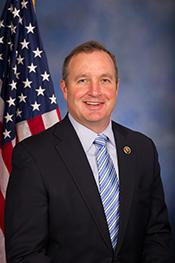
United States · United States Congress · 7 May 2012
Amends the Harmonized Tariff Schedule of the United States to temporarily reduce the duty on certain machinery for molding unvulcanized rubber for tubeless radial tires.
United States · United States Congress · 7 May 2012
Amends the Harmonized Tariff Schedule of the United States to temporarily reduce the duty on certain machinery for molding unvulcanized rubber for tires.
United States · United States Congress · 7 May 2012
Amends the Harmonized Tariff Schedule of the United States to temporarily suspend the duty on certain machinery for molding unvulcanized rubber for tires.
United States · United States Congress · 27 April 2012
Palestinian Peace Promotion and Ant-Incitement Act - Expresses the sense of Congress that the Palestinian Authority (PA) has not lived up to its agreements with Israel to end incitement and should do more to prepare the Palestinian people for peace with Israel. Amends the Foreign Assistance Act of 1961 to prohibit assistance to the PA. Waives such prohibition if the President certifies to Congress that the waiver is important to U.S. national security interests. Directs the Secretary of State, upon the exercise of such waiver and prior to the obligation of funds, to certify to Congress that the PA: (1) has established a single treasury account for all PA financing and all financing mechanisms flow through this account, no parallel financing mechanisms exist, and there is a single comprehensive civil service roster and payroll; and (2) no longer engages in a pattern of incitement against the United States or Israel and is engaged in peace preparation activities aimed at promoting peace with Israel.
United States · United States Congress · 27 April 2012
Prohibits the Secretary of the Army and the Administrator of the Environmental Protection Agency (EPA) from: (1) finalizing, adopting, implementing, administering, or enforcing the proposed guidance described in the notice of availability and request for comments entitled "EPA and Army Corps of Engineers Guidance Regarding Identification of Waters Protected by the Clean Water Act"; or (2) using such guidance, or any substantially similar guidance, as the basis for any decision regarding the scope of the Federal Water Pollution Control Act (commonly known as the Clean Water Act) or any rulemaking. Provides that the use of such guidance as the basis for any rule shall be grounds for vacating such rule.
United States · United States Congress · 27 April 2012
Stop Abortion Funding in Multi-state Exchange Plans Act or SAFE Act - Amends the Patient Protection and Affordable Care Act to require the Director of the Office of Personnel Management (OPM), in entering into contracts with health insurance issuers, to ensure that no multi-state qualified health plan offered in a health benefit exchange provides coverage of abortion. Excepts from such limitation: (1) a pregnancy that results from rape or incest; or (2) a case where a woman suffers from a physical disorder, injury, or illness that would place the her in danger of death unless an abortion is performed, including a life-endangering physical condition caused by or arising from the pregnancy itself. Prohibits any state law from preempting the coverage limitations of this Act.
United States · United States Congress · 25 April 2012
Yucca Utilization to Control Contamination Act - Amends the Nuclear Waste Policy Act of 1982 to direct the President to publish in the Federal Register a notice certifying that the Yucca Mountain site (Nevada) is the selected site for the development of a repository for the disposal of high-level radioactive radioactive waste and spent nuclear fuel. Declares that, if the President fails to publish the certification or revokes it, each entity: (1) that is required to make a payment to the Nuclear Waste Fund shall not be required to make any additional payment; and (2) that has made a payment shall receive a refund, 75% of which shall be used for rebates to the entity's ratepayers, and 25% shall be used to carry out upgrades to the entity's nuclear power facilities to enhance the storage and security of materials used to generate nuclear power. Requires the Secretary of Energy to initiate by January 1, 2017, the transportation to the Yucca Mountain site of defense waste from each state in which it is located. Imposes penalties on the Secretary for failure to initiate such transportation.
United States · United States Congress · 24 April 2012
Strategic Energy Production Act of 2012 - Amends the Energy Policy and Conservation Act to direct the Secretary of Energy (DOE) to develop a plan to increase the percentage of federal lands leased for oil and gas exploration, development, and production under the jurisdiction of the Secretaries of Agriculture (USDA), of Energy, of the Interior, and Defense (DOD), including submerged lands of the Outer Continental Shelf. Requires the percentage of the total amount of such federal lands to be the same as the percentage of petroleum in the Strategic Petroleum Reserve that was drawn down. Directs the Secretary to base the determination of present and future national energy needs upon information from the Energy Information Administration. Prohibits the plan from providing more than 10% of such federal lands for oil and gas exploration, development, and production leasing. Excludes lands managed under either the National Park System or the National Wilderness Preservation System from those designated for increased oil and gas production.
United States · United States Congress · 23 April 2012
Gasoline Regulations Act of 2012 - Requires the President to establish the Transportation Fuels Regulatory Committee to analyze and report, for each of 2016 and 2020, on the cumulative impacts of certain covered rules and actions under the Clean Air Act, including the impacts on gasoline, diesel fuel, and natural gas prices, operating costs, consumers, regional economies, U.S. competitiveness, small businesses, employment, labor markets, public health, and state, local, and tribal governments. Designates as "covered rules": (1) the rule entitled "Control of Air Pollution From New Motor Vehicles: Tier 3 Motor Vehicle Emission and Fuel Standards"; (2) any rule proposed after March 15, 2012, establishing or revising a standard of performance or emission standard for new stationary sources or hazardous air pollutants that is applicable to petroleum refineries; (3) any rule proposed after March 15, 2012, for implementation of the Renewable Fuel Program under the Clean Air Act; (4) the rules entitled "National Ambient Air Quality Standards for Ozone" and "Reconsideration of the 2008 Ozone Primary and Secondary National Ambient Air Quality Standards" and any subsequent rule revising or supplementing the national ambient air quality standards for ozone; and (5) any successor or substantially similar rules. Defines a "covered action" as any action affecting facilities involved in the production, transportation, or distribution of gasoline, diesel fuel, or natural gas taken on or after January 1, 2009, by the Environmental Protection Agency (EPA), a state or local government, or a permitting agency as a result of the application of provisions of the Clean Air Act relating to operating permits or the prevention of significant deterioration of air quality to an air pollutant that is identified as a greenhouse gas in the rule entitled "Endangerment and Cause or Contribute Findings for Greenhouse Gases Under Section 202(a) of the Clean Air Act." Prohibits the Administrator from finalizing the following rules until at least six months after the Committee submits its final report: (1) "Control of Air Pollution From New Motor Vehicles: Tier 3 Motor Vehicle Emission and Fuel Standards" and any successor or substantially similar rule; (2) any rule proposed after March 15, 2012, establishing or revising a performance or emission standard for new stationary sources or hazardous air pollutants that is applicable to petroleum refineries; and (3) any rule revising or supplementing the national ambient air quality standards for ozone under the Clean Air Act. Requires the EPA Administrator to consider feasibility and cost in revising or supplementing any such standards for ozone.
United States · United States Congress · 19 April 2012
Fiscal Responsibility in Federal Contracting Act - Suspends through FY2023 the Davis-Bacon Act (which requires that the locally prevailing wage rate be paid to various classes of laborers and mechanics working under federally-financed or federally-assisted contracts for construction, alteration, and repair of public buildings or public works). Requires the Comptroller General to report to Congress each fiscal year through FY2023 on the savings to the federal government that resulted from such suspension since its beginning.
United States · United States Congress · 19 April 2012
Agency Conferences and Conventions Operating Under Necessary Transparency Act of 2012 or the ACCOUNT Act - Requires the head of a federal agency to: (1) approve in writing any conference costing more than $25,000, (2) approve such a conference only upon determining that it is necessary to the core mission of the agency, and (3) publish a summary on the agency website of the conference that includes the purpose and total cost of the conference and the cost per employee that attended the conference.
United States · United States Congress · 18 April 2012
Rewarding Achievement and Incentivizing Successful Employees Act or RAISE Act - Amends the National Labor Relations Act to declare that neither its prohibition against interference by an employer with employees' right to bargain collectively, nor the terms of a collective bargaining agreement entered into between employees and an employer after enactment of this Act, shall prohibit an employer from paying an employee higher wages, pay, or other compensation than the agreement provides for.
United States · United States Congress · 18 April 2012
Streamlining Permitting of American Energy Act of 2012 - Amends the Mineral Leasing Act to revise requirements for the issuance of permits to drill in energy projects on federal lands. Authorizes the Secretary of the Interior to extend the initial 30-day permit application review period for up to 2 periods of 15 days each, if the Secretary has given written notice of the delay to the applicant. Deems a permit application approved if the Secretary has not made a decision on it by 60 days after its receipt. Prescribes a notice requirement for denial of an application. Requires the Secretary to collect a single $6,500 permit processing fee per application from each applicant at the time the decision is made whether or not to issue a permit. Requires 50% of fees collected as annual wind energy and solar energy right-of-way authorization fees be transferred to the field office where they are collected and used to process permits, right-of-way applications, and other activities necessary for renewable energy development. Requires the Secretary to collect a $5,000 documentation fee to accompany each protest for a lease, right of way, or application for permit to drill. Requires the Secretary to: (1) establish a Federal Permit Streamlining Project in every Bureau of Land Management (BLM) Field office with responsibility for permitting energy projects on federal land, and (2) enter into a related memorandum of understanding with the Secretary of Agriculture, the Administrator of the Environmental Protection Agency (EPA), and the Chief of the Army Corps of Engineers. Requires federal signatories to such memorandum to assign staff with special expertise to field offices. States that the Secretary shall not require a finding of extraordinary circumstances related to a categorical exclusion in administering the Energy Policy Act of 2005 with respect to review under the National Environmental Policy Act of 1969. (A categorical exclusion [CE or CX] is a category of actions which do not individually or cumulatively have a significant effect on the human environment and for which, as a consequence, neither an environmental assessment [EA] nor an environmental impact statement [EIS] is required. If a proposed action is included in the description provided for a listed CE established by an agency, the agency must check to make sure that no extraordinary circumstances exist that may cause the proposed action to have a significant effect in a particular situation. Extraordinary circumstances typically include such matters as effects to endangered species, protected cultural sites, and wetlands. If the proposed action is not included in the description in the agency's CE, or there are extraordinary circumstances, the agency must prepare an EA or an EIS, or develop a new proposal that may qualify for application of a CE.) Sets forth procedures for judicial review of leasing of federal lands for the exploration, development, production, processing, or transmission of oil, natural gas, wind, or any other energy source of energy.
United States · United States Congress · 18 April 2012
Providing Leasing Certainty for American Energy Act of 2012 - Directs the Secretary of the Interior, in conducting lease sales under the Mineral Leasing Act, to offer for sale at least 25% of the annual nominated acreage not previously made available for lease. Shields such acreage from protest and the test of extraordinary circumstances. Makes it eligible, however, for certain categorical exclusions under the Energy Policy Act of 2005 in connection with review under the National Environmental Policy Act of 1969. (A categorical exclusion is a category of actions which do not individually or cumulatively have a significant effect on the human environment and for which, as a consequence, neither an environmental assessment nor an environmental impact statement is required.) Directs the Secretary to consider leasing only federal lands that are available for leasing at the time the lease sale occurs. Amends the Mineral Leasing Act to prohibit the Secretary from: (1) withdrawing any covered energy project issued under that Act without finding a violation by the lessee of lease terms; (2) delaying indefinitely issuance of project approvals, drilling and seismic permits, and rights of way for activities under a lease; and (3) cancelling or withdrawing any lease parcel after a competitive lease sale has occurred and a winning bidder has made the last payment for the parcel. Instructs the Secretary to: (1) make nominated areas available for lease within 18 months after an area is designated as open under a current land use plan, (2) issue all leases sold 60 days after the last payment is made, and (3) adjudicate any lease protests filed following a lease sale. Prohibits additional lease stipulations after the parcel is sold without consultation and agreement of the lessee, unless the Secretary deems such stipulations as emergency actions to conserve national resources. Requires federal land managers to follow existing resource management plans and continue to actively lease in areas designated as open when resource management plans are being amended or revised, until such time as a new record of decision is signed. Declares without force or effect Bureau of Land Management Instruction Memorandum 2010-117.
United States · United States Congress · 18 April 2012
Planning for American Energy Act of 2012 - Amends the Mineral Leasing Act to direct the Secretary of the Interior (the Secretary) and the Secretary of Agriculture (USDA) to publish every four years a Quadrennial Federal Onshore Energy Production Strategy to direct federal land energy development and department resource allocation in order to promote the energy security of the United States. Instructs the Secretary to consult with the Administrator of the Energy Information Administration on the projected energy demands of the United States for the next 30 years and on how energy derived from federal onshore lands can put the United States on a trajectory that meets such demand during the next 4 years, with a goal for increasing energy independence and production. Requires the Secretary to determine a domestic strategic production objective for the development of energy resources from such lands. Expresses the sense of Congress that federally recognized Indian tribes may elect to set their own production objectives as part of the Strategy. Grants the relevant Secretary all necessary authority to make determinations regarding which additional federal lands available for leasing under current law will be available to meet the production objectives established by the strategies. Directs the Secretary to also take all necessary actions to achieve such objectives unless the President determines that it is not in U.S. national security and economic interests to increase federal domestic energy production and to further decrease dependence upon foreign energy sources. Requires the Secretary, within 12 months of this Act's enactment, to complete a programmatic environmental impact statement in accordance with certain requirements under the National Environmental Policy Act of 1969 (NEPA). Deems such statement sufficient to be in compliance with NEPA requirements for all necessary resource management and land use plans associated with implementation of the Strategy. Requires the Secretary to submit to: (1) the President and Congress, each proposed strategy, together with comments received from the affected states, federally recognized tribes, and local governments prior to publishing it; and (2) Congress the first Strategy within 18 months of enactment.
United States · United States Congress · 18 April 2012
Budget for Disasters Act of 2012 - Amends the Balanced Budget and Emergency Deficit Control Act of 1985 (Gramm-Rudman-Hollings Act) to eliminate mandatory adjustments to discretionary disaster appropriations for FY2012-FY2021.
United States · United States Congress · 29 March 2012
Energy Exploration and Production to Achieve National Demand Act or EXPAND Act - Title I: Development of Federal Energy Resources - Amends the Gulf of Mexico Energy Security Act of 2006 to repeal the moratorium upon oil and gas leasing (or any related activity) in: (1) any area east of the Military Mission Line in the Gulf of Mexico; (2) any area in the Eastern Planning Area that is within 125 miles of the Florida coastline; or (3) specified areas within the Central Planning Area and within 100 miles of the Florida coastline. Amends the Outer Continental Shelf Lands Act (OCSLA) regarding the Outer Continental Shelf (OCS) leasing program to direct Secretary of Defense (DOD) to review OCS areas that have been designated as restricted from exploration and operation to determine whether they should remain under restriction. Instructs the Secretary of the Interior (Secretary in this title) to offer for leasing: (1) the Destin Dome and Pensacola areas, even though they were omitted from a certain 5-year leasing program, (2) any other areas in the Eastern Gulf of Mexico Planning Area that are made available for leasing under this Act, and (3) include the aforementioned areas in any 5-year leasing program approved after the date of enactment of this Act. Extends, by 24 months, certain deepwater oil and gas leases in the Gulf of Mexico OCS region that were not producing as of April 30, 2010. Directs the Secretary to: (1) reinstate certain expired leases, and (2) conduct expanded OCS lease sales. Sets forth an allocation scheme for coastal states to receive funds from OCS leases that are inversely proportional to the respective distances between the point on the coastline of the adjacent state that is closest to the geographic center of the applicable leased tract and the geographic center of the leased tract. Directs the Secretary, acting through the Director of the Bureau of Land Management (BLM), to establish and implement a competitive oil and gas leasing program for exploration, development, and production of the oil and gas resources of the Arctic Coastal Plain. Authorizes the Secretary to: (1) designate special areas on such Coastal Plain to preserve fish, wildlife, and subsistence resource values, and (2) exclude leasing or surface occupancy from such areas. Authorizes, however, leasing all or a portion of a Special Area under terms permitting horizontal drilling technology from sites on leases located outside the Special Area. Prescribes: (1) lease sales procedures, (2) lease terms and conditions, and (3) Coastal Plain environmental protection. Sets forth requirements for: (1) distribution of federal and state revenues emanating from bonus, rental, and royalty revenues from oil and gas leasing and operations, (2) semiannual payments to the state of Alaska, (3) rights-of-way and easements across the Coastal Plain for oil and gas transportation, (4) conveyance of surface and subsurface estates to specified Corporations, and (5) local government aid and community service assistance. Establishes in the Treasury the Coastal Plain Local Government Impact Aid Assistance Fund. Expresses the sense of Congress regarding establishment of regional offices and regional permit coordinators to coordinate review of federal permits for oil and gas projects on federal lands onshore and on the OCS, including the appointment of a Regional Permit Coordinator. Prescribes federal agency schedules for permit decisionmaking. Designates the Federal Energy Regulatory Commission (FERC) to act as lead agency for any agency action regarding a Priority Energy Project pursuant to this Act. Amends federal law governing congressional review of agency rulemaking to add: (1) congressional approval procedures for major rules, and (2) congressional disapproval procedures for nonmajor rules. Requires the Secretary invite the governor of any state in which either an oil and gas operation may require a federal permit, or whose coastline is in immediate geographic proximity to OCS oil and gas operations, to be a signatory to a specified memorandum in order to fulfill any state responsibilities regarding federal oil and gas permitting decisions. Authorizes a federal agency with jurisdiction over a Priority Energy Project to delegate to the state in which the Project is located the agency's statutory responsibilities regarding the Project. Removes from further administrative review within the federal agency responsible for decisionmaking any oil and gas permitting decision for federal lands onshore or on the OCS. Subjects to congressional approval implemention, administration, or enforcment by the BLM of Secretarial Order No. 3310. Prescribes wilderness designation procedures subject to congressional approval. Subjects to congressional approval any future executive branch action that withdraws more than 100 acres in the aggregate of public lands within the United States. Grants FERC, in lieu of the Department of the Interior, exclusive jurisdiction and authority to implement and administer the leasing program for research and development of oil shale and tar sands and all other programs and requirements contained in the Energy Policy Act of 2005. Instructs the Secretary to take actions to ensure that by January 1, 2018, at least 10% of the federal OCS lands and at least 10% of onshore federal lands and interests in lands that are under the Secretary's jurisdiction, are being leased for the production of energy. Confers upon the U.S. District Court for the District of Columbia exclusive jurisdiction over any final agency decision concerning covered oil and natural gas activity. Requires the Secretary to complete and finalize the Programmatic Environmental Impact Statement for Solar Energy Development in Six Southwestern States to analyze the potential impacts of developing solar energy on land administered by the Secretary. Directs the Secretary of Agriculture to publish in the Federal Register a notice of intent to prepare a programmatic environmental impact statement to analyze the potential impacts of a program to develop solar and wind energy on National Forest System land. Directs the Secretary of Defense to identify locations on land withdrawn from the public domain and reserved for military purposes that exhibit a high potential for solar, wind, geothermal, or other energy resources production. Instructs the Secretary to establish a wind and solar leasing pilot program on covered land. Instructs the Secretary and the Secretary of Agriculture to: (1) make a joint determination on whether to establish a leasing program for wind or solar energy, or both, on land within their respective jurisdictions; and (2) establish a leasing program unless they determine that it is not in the public interest, and does not provide an effective means of developing wind or solar energy. Prescribes a revenue disposition format for such leasing program. Requires the Secretary to consult and work with the Secretary of Defense regarding military operations in OCS waters, including resolution of conflicts that might arise between such operations and leasing under this Act. Deems existing leases issued under the Final Outer Continental Shelf Oil and Gas Leasing Program, 2007-2012, including any lease issued pursuant to Lease Sale 193 or 213, to be in full compliance with the Final Outer Continental Shelf Oil and Gas Leasing Program, 2007-2012. Authorizes holders of certain previously approved permits to drill (or to sidetrack) to conduct all operations authorized under such permits: (1) without further review by the Bureau of Ocean Energy Management, Regulation and Enforcement and the Bureau of Safety and Environmental Enforcement, and (2) without further review or delay under specified federal environmental protection law. Requires the Secretary to act on oil and natural gas drilling permits within 30 days after an application's submission. Title II: Continental Pipeline Approval - Approves a certain permit for the Keystone XL Pipeline. Deems approved a specified route within the state of Nebraska submitted by the governor of Nebraska if the President does not approve such route within 10 days after its date of submission. Title III: Radiological Material Repository - Requires the federal government to site and permit at least one radiological material geologic repository for the disposal of radiological material. Retains the repository site at Yucca Mountain as the site for the nation's radiological material repository following full statutory review of the Department of Energy's (DOE's) license application to construct the Yucca Mountain repository. Directs the Nuclear Regulatory Commission (NRC) to continue to review DOE's pending license application to construct the repository at Yucca Mountain until a determination is made on its merits. Instructs the NRC to approve such application within 180 days after enactment of this Act. Removes statutory limitations on the amount of radiological material that can be placed in Yucca Mountain. Requires the NRC to replace such limitations with new limits based on scientific and technical analysis of the full capacity of Yucca Mountain for the storage of radiological material. Title IV: Relief from Regulations and Prohibitions that Cause Artificial Price Increases - Amends the Endangered Species Act of 1973 to: (1) require a decision to include a species on the list of threatened and endangered species to be based on the best scientific and economic (currently, commercial) data available at the time, including analysis of the costs and benefits of the matter under consideration; and (2) declare that nothing in such Act shall be construed to authorize the regulation of greenhouse gas emissions. Amends the Clean Air Act to exclude from the definition of "air pollutant" carbon dioxide, water vapor, methane, nitrous oxide, hydrofluorocarbons, perfluorocarbons, or sulfur hexafluoride (greenhouse gases). Declares that nothing in the Clean Air Act, the Federal Water Pollution Control Act (commonly known as the Clean Water Act), the National Environmental Policy Act of 1969, the Endangered Species Act of 1973, or the Solid Waste Disposal Act shall be treated as authorizing or requiring the regulation of climate change or global warming. Provides that such provisions shall not prohibit: (1) implementation and enforcement of the rule entitled "Light-Duty Vehicle Greenhouse Gas Emission Standards and Corporate Average Fuel Economy Standards" and finalization, implementation, enforcement, and revision of the proposed rule entitled "Greenhouse Gas Emissions Standards and Fuel Efficiency Standards for Medium- and Heavy-Duty Engines and Vehicles"; (2) statutorily authorized federal research, development, and demonstration programs and voluntary programs addressing climate change; (3) implementation and enforcement of stratospheric ozone protection provisions of the Clean Air Act to the extent that such implementation or enforcement only involves class I or II substances; or (4) implementation and enforcement of requirements of the Clean Air Act Amendments of 1990 for monitoring and reporting of carbon dioxide emissions. Amends the Energy Independence and Security Act of 2007 to repeal provisions prohibiting any federal agency from entering into a contract for procurement of an alternative or synthetic fuel for any mobility-related use, other than for research or testing, unless the contract specifies that the lifecycle greenhouse gas emissions associated with the production and combustion of the fuel must be less than or equal to such emissions from the equivalent conventional fuel. Amends the Clean Air Act to repeal the renewable fuel program. Title V: Refinery Reform - Requires the Administrator of the Environmental Protection Agency (EPA) to enter into a refinery permitting agreement upon the request of a state or Indian tribe to streamline the process for obtaining all permits licenses, approvals, variances, or other forms of authorization that a refiner is required to obtain for the construction and operation of a facility that refines crude oil into transportation fuel or other petroleum products or a facility that processes coal into synthetic crude oil or any other fuel. Requires the Administrator to: (1) conduct a research and demonstration program to evaluate the air quality benefits of Fischer-Tropsch transportation fuel, (2) evaluate the use of such fuel as a mechanism for reducing engine exhaust emissions, and (3) recommend the most effective use and associated benefits of such fuels for reducing public exposure to exhaust emissions. Requires such program to consider: (1) the use of neat (100%) Fischer-Tropsch fuel and blends with conventional crude oil-derived fuel for heavy-duty and light-duty diesel engines and the aviation sector, and (2) the production costs associated with domestic production of fuel and prices for consumers. Prohibits applications for permits for existing refineries from being considered to be timely if submitted after 120 days after this Act's enactment. Title VI: Repeal of Energy Tax Subsidies - Amends the Internal Revenue Code to repeal: (1) the credit for alcohol fuel, biodiesel, and alternative fuel mixtures; (2) the credit for certain plug-in electric vehicles; (3) the credit for qualified fuel cell motor vehicles; (4) the alternative fuel vehicle refueling property credit; (5) the credit for alcohol used as fuel; (6) the credit for biodiesel and renewable diesel used as fuel; (7) the enhanced oil recovery credit; (8) the credit for electricity produced from certain renewable resources; (9) the credit for producing oil and gas from marginal wells; (10) the credit for production from advanced nuclear power facilities; (11) the credit for carbon dioxide sequestration; (12) the energy credit; (13) the qualifying advanced coal project; and (14) the qualifying gasification project credit. Amends the American Recovery and Reinvestment Tax Act of 2009, Division B of the American Recovery and Reinvestment Act of 2009, to repeal the energy grant program under which the Secretary of the Treasury is required to make grants to persons who place in service in 2009 and 2010 certain energy property that is eligible for: (1) the tax credit for producing electricity from renewable resources (e.g., wind, biomass, or solar energy facilities), or (2) the energy tax credit (e.g., fuel cell, geothermal, or microturbine property). Title VII: Regulatory Relief - Provides that the following rules shall have no force or effect and shall be treated as though they had never taken effect: (1) the National Emission Standards for Hazardous Air Pollutants for Major Sources: Industrial, Commercial, and Institutional Boilers and Process Heaters; (2) the National Emission Standards for Hazardous Air Pollutants for Area Sources: Industrial, Commercial, and Institutional Boilers; (3) the Standards of Performance for New Stationary Sources and Emission Guidelines for Existing Sources: Commercial and Industrial Solid Waste Incineration Units; and (4) Identification of Non-Hazardous Secondary Materials That are Solid Waste. Requires the Administrator of the Environmental Protection Agency (EPA), in place of such rules, to promulgate within 15 months regulations for industrial, commercial, and institutional boilers and process heaters and commercial and industrial solid waste incinerator units subject to such rules, that: (1) establish maximum achievable control technology standards, performance standards, and other requirements for hazardous air pollutants or solid waste combustion under the Clean Air Act; and (2) identify non-hazardous secondary materials that, when used as fuels or ingredients in combustion units of such boilers, heaters, or incinerator units, are solid waste under the Solid Waste Disposal Act for purposes of determining the extent to which such combustion units are required to meet emission standards for such pollutants under such Act. Requires the Administrator to establish compliance dates for such standards and requirements after considering compliance costs, non-air quality health and environmental impacts and energy requirements, the feasibility of implementation, the availability of equipment, suppliers, and labor, and potential net employment impacts. Sets forth guidelines for such rules and regulations, including requiring the Administrator to: (1) ensure that emissions standards for existing and new sources can be met under actual operating conditions consistently and concurrently with emission standards for all other air pollutants regulated by the rule for the source category, and (2) impose the least burdensome regulatory alternative for each regulation promulgated. Amends the Internal Revenue Code to allow a taxpayer to elect to expense the cost of property used in the production of energy in the taxable year in which such property is placed in service. Amends the Solid Waste Disposal Act to authorize states to implement coal combustion residuals permit programs. Requires each state governor to notify the Administrator within six months about whether such state will implement such a program. Requires states that decide to implement such a program to: (1) submit to the Administrator within 36 months a certification that such program meets the specifications of this Act, and (2) maintain either an approved municipal solid waste program for the control of hazardous disposal or an authorized state hazardous waste program. Establishes minimum requirements for coal combustion residuals permit programs. Requires: (1) the revised criteria established by this Act to apply to such programs; (2) landfills, surface impoundments, or other land-based units that may receive coal combustion residuals (structures) to be designed, constructed, and maintained to provide for containment of the maximum volumes of coal combustion residuals appropriate for the structure; (3) such programs to apply such revised criteria to surface impoundments; and (4) new structures that first receive coal combustion residuals after this Act's enactment to be constructed with a base located a minimum of two feet above the upper limit of the natural water table. Authorizes: (1) state agency heads to require action to correct structural integrity deficiencies according to a schedule for structures that are classified as posing a high hazard potential pursuant to the guidelines published by the Federal Emergency Management Agency (FEMA) entitled "Federal Guidelines for Dam Safety: Hazard Potential Classification System for Dams," (2) state agency heads to require that such a structure close if such deficiency is not corrected according to such schedule, (3) states to inspect structures and implement and enforce such permit program, and (4) states to address wind dispersal of dust from coal combustion residuals by requiring dust control measures. Sets forth revised criteria for such programs with respect to: (1) design, groundwater monitoring, corrective action, and closure and post-closure for structures; (2) location restrictions for new structures in floodplains, wetlands, fault areas, seismic impact zones, and unstable areas; (3) air quality, financial assurance, surface water, and record keeping; (4) run-on and run-off control systems for landfills and other land-based units, other than surface impoundments that receive coal combustion residuals; and (5) run-off control systems for surface impoundments. Authorizes states to determine that such criteria is not needed for the management of their coal combustion residuals permit program. Authorizes the Administrator to treat such state determination as a deficiency if it does not accurately reflect the needs for the management of coal combustion residuals in the state. Requires the time period and method for a structure's closure to be set forth in a schedule in a closure plan that takes into account the site-specific characteristics of such structure. Directs the closure plan for a surface impoundment to require the removal of liquid and the stabilization of remaining waste as necessary to support the final cover. Prohibits the Administrator from applying such programs to the utilization, placement, and storage of coal combustion residuals at surface mining and reclamation operations. Prohibits this Act from being construed to alter the EPA's regulatory determination, entitled "Notice of Regulatory Determination on Wastes from the Combustion of Fossil Fuels," that the fossil fuel combustion wastes addressed in that determination do not warrant regulation under such Act. Title VIII: Attainment of National Ambient Air Quality Standards - Amends the Clean Air Act to require any designation or redesignation of an area within a state or an interstate area as a nonattainment area for the national primary or secondary ambient air quality standard for a pollutant to be based on monitoring data and not on modeling data. Requires the Administrator to set forth the air quality modeling methodologies required to be used in state implementation plans for purposes of predicting the effect on ambient air quality of emissions of air pollutants for which the Administrator has established national ambient air quality standards. Authorizes a downwind area that is not in attainment with the national ambient air quality standard for ozone within 18 months of the attainment deadline to petition the Administrator for an extension of the time to come into attainment. Authorizes the Administrator, in lieu of reclassifying an area as nonattainment for ozone, to extend such date if the Administrator: (1) determines that the area is a downwind area with respect to such standard, (2) approves a plan revision for such area prior to a reclassification, (3) determines that the petitioning downwind area has demonstrated that it is affected by transport from an upwind area to a degree that affects the area's ability to attain such standard, and (4) provides measures to ensure that no area downwind of the area receiving the extended attainment date will be affected by transport to a degree that affects the other area's ability to attain such standard. Provides for the withdrawal of a reclassification determination. Requires such extended attainment date to provide for attainment of such ozone standard in the downwind area as expeditiously as practicable but no later than the new date that the area would have been subject to had it been reclassified. Title IX: Sub-basin Reporting of Greenhouse Gas Emissions - Requires the Administrator, in requiring any owner or operator of any facility in the petroleum and natural gas system source category to report greenhouse gas emissions from facilities in such category, to allow such owner or operator to: (1) designate sub-basins consisting of similar fields within a larger basin, and (2) report such emissions from such sub-basins instead of reporting such emissions from the larger basin. Title X: Implementation of National Ocean Policy - Prohibits federal departments and agencies from performing activities to implement Executive Order 13547, entitled "Stewardship of the Ocean, Our Coasts, and the Great Lakes." Title XI: Other Provisions - Requires: (1) the administrative record compiled by an agency regarding an application for a permit, authorization, or other agency action involving a Priority Energy Project to be the sole and exclusive record for any appeal or review of such action, and (2) such record to be closed upon final agency action and prohibits such record from being subject to any further evidentiary proceedings or requirements unless requested by the applicant. Requires an agency to: (1) prepare and submit a Statement of Energy Effects to the Administrator of the Office of Information and Regulatory Affairs, Office of Management and Budget (OMB), for each proposed significant energy action; and (2) publish such Statement, or a summary of it, in each related notice of proposed rulemaking and in any resulting final rule. Requires the approval to construct or operate a Priority Energy Project pursuant to any federal permit to remain valid and authorized for the later of: (1) 18 months following the date on which the last permit needed by such Project to commence construction or operation is final and no longer subject to judicial review, (2) three years, or (3) five years in the case of a nationwide permit issued by the Army Corps of Engineers for activities that impact the aquatic environment. Amends the Migratory Bird Treaty Act to reduce the cap on the maximumpenalty for violations of such Act from $15,000 to $1,000.
United States · United States Congress · 29 March 2012
Fracturing Regulations are Effective in State Hands Act - Grants any state sole authority to promulgate or enforce any regulation, guidance, or permit requirement with regard to the underground injection of fluids or propping agents pursuant to the hydraulic fracturing process, or any component of such process, relating to oil, gas, or geothermal production activities on or under land within the boundaries of that state. Makes the underground injection of fluids or propping agents pursuant to such process, or any components of such process, relating to oil, gas, or geothermal production activities on federal land subject to the law of the state in which that land is located.
United States · United States Congress · 29 March 2012
Constitutional Amendment - States that the liberty of parents to direct the education of their children is a fundamental right. States that neither the United States nor any state shall infringe upon this right without demonstrating that its governmental interest as applied to the person is of the highest order and not otherwise served. Declares that no treaty may be adopted nor shall any source of international law be employed to supersede, modify, interpret, or apply to the rights guaranteed by this amendment.
United States · United States Congress · 29 March 2012
Recognizes Israel's independence as a significant event in providing refuge and a national homeland for the Jewish people and congratulates Israel's people as they celebrate the 64th anniversary of Israel's independence. Commends the bipartisan commitment of all U.S. administrations and congresses since 1948 to stand by Israel and work for its security and well-being. Supports Israel's right to confront and eliminate nuclear threats posed by Iran, including the use of military force if no other peaceful solution can be found within a reasonable time. Congratulates the United States and Israel for the strengthening of bilateral relations in the fields of defense, diplomacy, and homeland security.
United States · United States Congress · 26 March 2012
Pool Safety and Accessibility for Everyone (Pool SAFE) Act - Prohibits any suit brought for violations of the revised regulations of the Americans with Disabilities Act of 1990 concerning the requirements to provide an accessible means of entry to pools for places of public accommodation and commercial facilities that occurred on or after March 15, 2012, and before the date that is one year after enactment of this Act. Bars the Attorney General (AG) from investigating or initiating a compliance review of an alleged violation occurring during such period. Requires dismissal of any suit brought against a place of public accommodation or commercial facility for such a violation brought on or after March 15, 2012, and before the date of enactment of this Act. Directs the AG to revise accessibility regulations to provide that a place of public accommodation or a commercial facility is in compliance with the requirement to have an accessible means of entry to a pool when such a place or facility uses a portable pool lift on request, even if: (1) installation of a permanent lift is readily achievable, and (2) a single portable pool lift is used for multiple pools.
United States · United States Congress · 26 March 2012
Sets forth the congressional budget for the federal government for FY2013, including the appropriate budgetary levels for FY2012, and FY2014-FY2022. Lists recommended budgetary levels and amounts for FY2012-FY2022with respect to: (1) federal revenues, (2) new budget authority, (3) budget outlays, (4) deficits (on-budget), (5) debt subject to limit, and (6) debt held by the public. Lists the appropriate levels of new budget authority and outlays for specified major functional categories for FY2012-FY2022. Sets forth reconciliation instructions for the House Committees on: (1) Agriculture, (2) Education and the Workforce, (3) Energy and Commerce, (4) Financial Services, (5) Natural Resources, (6) Oversight and Government Reform, and (7) Ways and Means. Requires the House Committee on the Budget to report a reconciliation bill that slows the growth in mandatory spending and achieves deficit reduction. Requires each House Committee to identify savings amounting to 1% of total mandatory spending under its jurisdiction from activities determined to be wasteful, unnecessary, or lower-priority. Establishes discretionary spending limits for FY2013-FY2022. Makes it out of order in the House to consider any legislation that causes discretionary budget authority to exceed such limits. Prohibits House legislation that would require advance appropriations, except for certain FY2013-FY2014 programs, projects, activities, or accounts. Prescribes requirements for legislation reported out of committee and designated as an emergency requirement. Requires the Joint Committee on Taxation to calculate the impact of any proposal to change federal revenues on Gross Domestic Product (GDP), total domestic employment, and other specified economic variables. Allocates $931 billion of new budget authority for FY2013 to the House Committee on Appropriations. Prohibits the chair of the House Committee on the Budget from taking into account the provisions of any piece of legislation which propose to increase revenue or offsetting collections if the net effect of the bill is to increase the level of revenue or offsetting collections beyond the level assumed in this budget resolution. Requires the chair to maintain a Budget Protection Mandatory Account and a Budget Protection Discretionary Account. Requires the Majority Leader to introduce rescission bills quarterly. Prescribes legislative procedures for their floor consideration. Expresses the sense of the House regarding: (1) baseline revenue projections, and (2) long-term budget projections. Amends Rule XXI (Restrictions on Certain Bills) of the House of Representatives to allow an amendment to an appropriations bill that amends existing law if it is a germane amendment to an authorizing provision or a line item appropriation of the bill under consideration. Establishes an earmark moratorium for FY2012-FY2013 for legislation providing or authorizing discretionary budget authority, credit or other spending authority, providing a federal tax deduction, credit, or exclusion, or modifying the Harmonized Tariff Schedule in FY2012-FY2013. Prohibits the House Committee on Rules from reporting a rule or order waiving such moratorium. Declares the policy of this resolution on: (1) health care law repeal, (2) bailouts of state and local governments, (3) means-tested welfare programs, (4) reforming the federal budget process, (5) reforming federal regulations, (6) Medicare reform, (7) deficit reduction through cancellation of unobligated balances, and (8) block granting Medicaid to the states.
United States · United States Congress · 21 March 2012
Directs the Secretary of State to: (1) designate Iran's Revolutionary Guard Corps (IRGC) as a foreign terrorist organization, and (2) report to Congress on IRGC terrorist activities.
United States · United States Congress · 8 March 2012
Sound Dollar Act of 2012 - Amends the Federal Reserve Act (FRA) to direct the Board of Governors of the Federal Reserve System (Board) and the Federal Open Market Committee (FOMC) to: (1) promote the goal of long-term price stability, and (2) establish metrics to evaluate whether long-term price stability is being achieved. Prescribes procedures for the establishment and evaluation of such metrics. Directs the Board and the FOMC to: (1) make such information available to the public on a website, and (2) report to Congress each time such metrics are set or revised. Directs the Board to include in its semiannual report to Congress: (1) the results of the evaluation process, (2) whether the goal of long-term price stability is being met, (3) the main monetary policy instruments and strategy used by the Board and the FOMC to achieve long-term price stability, and (4) an analysis of how the policies of the Board and the FOMC are affecting the foreign exchange rate value of the U.S. dollar. Directs the Board to clearly articulate its lender-of-last-resort policy. Revamps FOMC membership to consist of one representative from each of the Federal Reserve banks (in addition to members of the Board). Directs the FOMC to release meeting transcripts to the public within three years after each meeting. Redesignates the Department of the Treasury stabilization fund as the Special Drawing Rights Fund. Instructs the Secretary of the Treasury to liquidate all property in the Fund (other than Special Drawing Rights) and to use all such amounts to reduce the public debt. Limits the availability of the Fund solely to stabilize exchange rates and arrangements. Repeals the authority of the Secretary to deal in U.S. instruments of credit and securities. Permits only Special Drawing Rights to be deposited into the Fund. Requires funds that would otherwise have been deposited into the Fund to be paid, instead, to the Secretary to reduce the public debt. Amends the FRA to authorize the FOMC, in unusual and exigent circumstances, by the affirmative vote of two-thirds of its members, to grant any Federal Reserve bank emergency authority to buy and sell U.S. debt obligations and revenue bonds in anticipation of the collection of taxes or the receipt of assured revenues by any state or local governmental entity, as well as obligations of, or guaranteed by, a foreign government or agency. Amends the Consumer Financial Protection Act of 2010 to repeal: (1) funding for the Consumer Financial Protection Bureau (CFPB), and (2) the Bureau of Consumer Financial Protection Fund.
United States · United States Congress · 8 March 2012
Freedom from Over-Criminalization and Unjust Seizures Act of 2012 - Amends the Lacey Act Amendments of 1981 to repeal the prohibition on importing, exporting, transporting, selling, receiving, acquiring, or purchasing in interstate or foreign commerce: (1) fish or wildlife taken, possessed, transported, or sold in violation of foreign law; or (2) plants taken, possessed, transported, or sold in violation of foreign law, without the payment of appropriate royalties, taxes, or stumpage fees required by foreign law, or in violation of any limitation under foreign law that governs the export or transshipment of plants. Repeals the prohibition on possessing such fish, wildlife, or plants within the special maritime and territorial jurisdiction of the United States. Establishes a $200,000 maximum limit on a civil penalty for a knowing violation of such Act that involves fish, wildlife, or plants with a market value of $350 or more. Repeals: (1) criminal penalties under such Act, and (2) the authorization to suspend, modify, or cancel specified licenses or permits issued to any person who is convicted of a criminal violation of such Act.
United States · United States Congress · 7 March 2012
State Health Flexibility Act of 2012 - Amends the Social Security Act (SSA) to replace the Medicaid and the Children's Health Insurance Program with a program of block grants to states for health care services to indigent individuals. Requires states receiving such block grants to pay for health-care-related items and services provided to a citizen, legal resident, or an alien not lawfully admitted for permanent residence or otherwise permanently residing in the United States under color of law, if: (1) such health-care-related items and services are necessary for the treatment of an emergency medical condition; (2) the individual meets all necessary eligibility requirements for health-care-related items and services under the block grant program except for any immigration status requirement; and (3) such items and services are not related to an organ transplant procedure. Repeals the Patient Protection and Affordable Care Act, the Health Care and Educational Reconciliation Act of 2010, SSA title XIX (Medicaid), and SSA title XXI (State Children's Health Insurance Program) (CHIP).
United States · United States Congress · 5 March 2012
United States-Israel Enhanced Security Cooperation Act of 2012 - States that it is U.S. policy to: (1) reaffirm the commitment to Israel's security as a Jewish state, (2) provide Israel with the military capabilities to defend itself and help preserve its qualitative military edge, (3) expand military and civilian cooperation, (4) assist in a negotiated settlement of the Israeli-Palestinian conflict that results in two states living side by side in peace and security, and (5) encourage Israel's neighbors to recognize Israel's right to exist as a Jewish state. Expresses the sense of Congress that the United States should take specified actions to assist in Israel's defense.
United States · United States Congress · 28 February 2012
Pro Football Hall of Fame Commemorative Coin Act - Directs the Secretary of the Treasury to mint and issue not more than 50,000 $5-gold coins, 400,000 $1-silver coins, and 750,000 half-dollar coins emblematic of the game of professional football. Requires all sales of such coins to include specified surcharges, which shall be paid by the Secretary to the Pro Football Hall of Fame to help finance the construction of a new building and the renovation of existing Pro Football Hall of Fame facilities.
United States · United States Congress · 27 February 2012
Sportsmen's Heritage Act of 2012 - Recreational Fishing and Hunting Heritage and Opportunities Act - Requires federal public land management officials to facilitate the use of, and access to, federal public lands and waters for fishing, sport hunting, and recreational shooting, except as restricted by specified limitations, including statutory authority that authorizes or withholds action for reasons of national security, public safety, or resource conservation. Requires that Bureau of Land Management (BLM) and Forest Service lands, excluding lands on the Outer Continental Shelf, be open to recreational fishing, hunting, and shooting unless the managing agency acts to close lands to such activity for specified purposes, including resource conservation, public safety, energy production, water supply facilities, or national security. Allows federal agencies to: (1) lease their lands for shooting ranges, and (2) designate specific lands for recreational shooting activities. Sets forth requirements for a withdrawal, change of classification, or change of management status that effectively closes or significantly restricts 640 or more contiguous acres of federal public lands or waters for fishing or hunting or related activities. Recreational Shooting Protection Act - Requires National Monument land under BLM's jurisdiction to be open to access and use for recreational shooting, except as limited by the Director of BLM for reasons of national security and public safety and to comply with an applicable federal statute. Prohibits the issuance of closures or restrictions on such land that are substantially similar to those that were previously issued and not approved by federal law. Polar Bear Conservation and Fairness Act of 2012 - Amends the Marine Mammal Protection Act of 1972 to direct the Secretary of the Interior to issue a permit for the importation of any polar bear part (other than an internal organ) from a polar bear taken in a sport hunt in Canada to any person: (1) who submits proof that the polar bear was legally harvested before February 18, 1997; or (2) who has submitted, in support of an application submitted before May 15, 2008, proof that the bear was legally harvested before such date from a polar bear population from which a sport-hunted trophy could be imported before such date. Hunting, Fishing, and Recreational Shooting Protection Act - Amends the Toxic Substances Control Act (TSCA) to exclude from the definition of "chemical substance" for purposes of such Act: (1) any component of any pistol, revolver, firearm, shell, or cartridge the sale of which is subject to federal excise tax, including shot, bullets and other projectiles, propellants, and primers; and (2) any sport fishing equipment the sale of which is subject to federal excise tax and sport fishing equipment components.
United States · United States Congress · 27 February 2012
Coordination of Pro Bono Medically Recommended Dental Care Act - Amends the Public Health Service Act to direct the Secretary of Health and Human Services (HHS) to award competitive grants to, or enter into contracts with, eligible entities to maximize the number of eligible low-income individuals receiving dental care. Requires an entity to use amounts received under a grant or contract to fund the employment costs of a program to: (1) coordinate the provision of free, medically recommended dental care to eligible low-income individuals by volunteer dentists in a manner consistent with state licensing laws; and (2) verify the medical, dental, and financial needs of individuals who may be eligible for such dental services. Requires an eligible: (1) entity to be tax exempt and provide for the participation of eligible individuals in a free dental services program; and (2) individual to be entitled to benefits or be enrolled under Medicare, Medicaid, or a state plan or waiver under the State Children's Health Insurance Program (CHIP, formerly known as SCHIP).
United States · United States Congress · 17 February 2012
Regulatory Freeze for Jobs Act of 2012 - Prohibits any federal agency from taking any significant regulatory action until the Bureau of Labor Statistics (BLS) reports a monthly unemployment rate equal to or less than 6.0%. Defines as "significant" any regulatory action that is likely to: (1) have an annual cost to the economy of $100 million or more or adversely affect the economy, productivity, competition, jobs, the environment, public health or safety, small entities, or state, local, or tribal governments or communities; (2) create a serious inconsistency or otherwise interfere with another agency's action; (3) materially alter the budgetary impact of entitlements, grants, user fees, or loan programs or the rights and obligations of recipients thereof; or (4) raise novel legal or policy issues. Permits an agency to take a significant regulatory action if the President determines that such regulatory action is: (1) necessary because of an imminent threat to health or safety or other emergency, for the enforcement of criminal laws, or for U.S. national security; or (2) issued to implement an international trade agreement. Allows judicial review of challenged agency actions and of determinations by the President under this Act.
United States · United States Congress · 17 February 2012
Condemns Iran for its state-sponsored persecution of religious minorities and its continued violation of the Universal Declaration of Human Rights and the International Covenant on Civil and Political Rights. Calls for Iran to release Youcef Nadarkhani and all other individuals held or charged on account of their religion. Recognizes that religious freedom is a universal human right and a fundamental individual freedom.
United States · United States Congress · 16 February 2012
Keeping Promises to Taxpayers Act of 2012 - Amends the Internal Revenue Code and the Patient Protection and Affordable Care Act to repeal certain health care-related taxes and other provisions, including: (1) the requirement that certain employers provide their employees with health insurance coverage and report on such coverage, (2) the excise tax on excess benefits from employer-sponsored health care coverage, (3) the requirement that distributions from a health savings account be used to pay for prescription drugs and insulin only (thus allowing for payment of over-the-counter medications), (4) the increase (from 7.5% to 10%) in the income threshold for the medical expense tax deduction, (5) the $2,500 limitation on contributions to health flexible spending arrangements, (6) the annual fees required for businesses providing health insurance and manufacturers or importers of branded prescription drugs, (7) the Patient-Centered Outcomes Research Trust Fund, (8) the fee imposed on insured and self-insured health plans, (9) the excise taxes on medical device manufacturers and importers and on indoor tanning services, (10) the increase (from 10% to 20%) in the penalty for distributions from health savings accounts and Archer medical savings accounts not used for qualified medical expenses, and (11) the increase in the tobacco production excise tax.
United States · United States Congress · 16 February 2012
Disapproves and nullifies the rule submitted by the National Labor Relations Board (NLRB) and published December 22, 2011, relating to representation election procedures.
United States · United States Congress · 16 February 2012
Expresses the sense of Congress that: (1) tax incentives for retirement savings plans play an important role in encouraging employers and employees to participate in such plans, (2) existing incentives have increased the number of Americans covered by a retirement plan, and (3) a reformed and simplified tax code should include incentives to maintain and contribute to such plans and to strengthen retirement security for all Americans.
United States · United States Congress · 15 February 2012
Directs the Speaker of the House of Representatives and the President Pro Tempore of the Senate to make arrangements for the presentation of a congressional gold medal to Jack Nicklaus in recognition of his service to the nation in promoting excellence and good sportsmanship. Directs the Secretary of the Treasury to strike such gold medal and to strike and sell duplicate bronze medals at a price sufficient to cover the costs of the gold and bronze medals.
United States · United States Congress · 15 February 2012
Schoolchildren's Health Protection Act - Amends the General Education Provisions Act to prohibit the provision of federal education funding to state or local educational agencies that: (1) provide, or permit the provision of, postcoital emergency contraception or prescriptions for such contraception on the premises of elementary or secondary schools; or (2) contract with a school-based health center to provide students with health services, unless the center agrees to deny students postcoital emergency contraception or prescriptions for such contraception pursuant to the contract.
United States · United States Congress · 9 February 2012
Energizing America through Employment Act - Authorizes TransCanada Keystone Pipeline, L.P. to construct, connect, operate, and maintain pipeline facilities for the import of crude oil and other hydrocarbons at the United States-Canada Border at Phillips County, Montana, in accordance with a certain application filed with the Department of State on September 19, 2008. Declares that no permit pursuant to Executive Order 13337 or any other similar Executive Order regulating such activities at the U.S. border, and no additional environmental impact statement (EIS), shall be required for such Pipeline. Deems a certain EIS issued by the Department of State to satisfy all requirements of the National Environmental Policy Act of 1969 (NEPA) as well as any other law requiring federal agency consultation or review regarding such cross-border facilities. Sets forth conditions governing construction, connection, operation, and maintenance of the cross-border facilities in connection with the Pipeline. Deems sufficient for the purposes of this Act any route and construction, mitigation, and reclamation measures for the Pipeline in the state of Nebraska that is identified by Nebraska and submitted to the Secretary of State. States that any action taken to implement this Act does not constitute a major federal action requiring an EIS under NEPA. Restricts to the U.S. Court of Appeals for the District of Columbia Circuit any federal judicial review over actions and facilities implemented under this Act. Instructs the Secretary of State, for purposes of making a national interest determination under Executive Order 13337 (or any successor Executive Order) regarding a pipeline application, to solicit the views of specified congressional committees regarding such application and pertinent information.
United States · United States Congress · 1 February 2012
Travel Transparency Act - Makes it an unfair or deceptive practice for an air carrier (including an indirect air carrier), foreign air carrier, a carrier agent, or a ticket agent to advertise or solicit air passenger transportation without disclosing the base airfare ticket costs and user taxes imposed for it. Requires the disclosure of any other government imposed taxes and fees paid on a per passenger basis to be clear and separate from the base airfare ticket cost in any such advertisement or solicitation.
United States · United States Congress · 31 January 2012
Prohibits federal funds from being used by a federal agency or instrumentality to participate in a lawsuit to overturn, enjoin, or otherwise invalidate specified immigration-related laws in Oklahoma, Missouri, Arizona, Utah, Indiana, Alabama, South Carolina, or Georgia.
United States · United States Congress · 31 January 2012
Honest Budget Act of 2012 - Amends procedures in the Congressional Budget Act of 1974 that make it out of order in the Senate to consider appropriations legislation until the Senate agrees to a concurrent resolution on the budget. Permits waivers or suspension of such requirements, or successful appeals from a ruling of the Chair, by an affirmative vote of three-fifths (60) of the Senate. Makes it out of order in either chamber to consider certain bills, joint resolutions, or conference reports that designate as: (1) an emergency requirement any provision that creates discretionary or direct spending or decreases revenues, or (2) being for disaster relief. Requires an affirmative vote of three-fifths of the Members to successfully appeal a ruling of the Chair on a point of order against such a measure. Establishes a procedure for emergency designations by amendment. Makes it out of order in the House of Representatives to consider a rule or order that waives the application of such prohibitions against consideration of such measures or amendments. Amends the Federal Credit Reform Act of 1990 (FCRA) to revise the budgetary treatment of federal direct loans and loan guarantees to account for them on a fair value basis (currently, a FCRA accrual basis). Expands such new budgetary treatment to financial investments beginning in FY2015. Defines "financial investment" as a federal government investment in any securities (debt or equity) or futures, swaps, or other derivatives, issued by a non-federal entity, regardless of whether the issuances are federally guaranteed, or issued by a federal entity if the issuance consists of marketable securities. Requires the President's budget: (1) from FY1992 on to reflect the Treasury discounting component of direct loan and loan guarantee programs; and (2) from FY2015 on to reflect the costs of direct loan, loan guarantee, and financial investment programs. Defines "Treasury discounting component" as the estimated long-term cost to the federal government of a direct loan, loan guarantee, or financial investment calculated on a net present value basis, excluding administrative costs and any incidental effects on governmental receipts or outlays. Revises other requirements for the President's budget including conditions for new direct loan obligations incurred and loan guarantee commitments made for FY1992 and thereafter, and new financial investment commitments for FY2015 and thereafter. Requires new budget authority for such loans or loan guarantee or financial investment commitments to be provided in advance in an appropriations Act. Exempts a direct loan or loan guarantee program that constitutes an entitlement (such as the guaranteed student loan program or the veteran's home loan guaranty program) as well as all existing credit programs of the Commodity Credit Corporation (CCC) from: (1) the above requirement; and (2) the prohibition against modification of an outstanding direct loan, loan guarantee, or financial investment in a manner that increases its costs unless budget authority for the additional cost has been provided in advance in an appropriations Act. Revises requirements for Treasury transactions with financing accounts (nonbudget accounts associated with each program account which holds balances, receives the cost payment from the program account, and also includes all other cash flows to and from the federal government resulting from such obligations or commitments made on or after October 1, 1991). Limits the availability of amounts in liquidating accounts to specified payments resulting from direct loan obligations or loan guarantee commitments made before October 1, 1991. Prescribes requirements for consideration of legislation in both chambers after agreement on a budget resolution (in effect, extending a point of order against certain changes in mandatory programs to all such programs in appropriations bills). Prohibits the congressional budget committees from counting rescissions of budget authority that do not result in outlay savings over the period covered by a budget resolution when determining the levels of new budget authority, outlays, direct spending, new entitlement authority, and revenues for a fiscal year. Suspends within-grade step increases in the compensation of certain federal employees from the date of enactment of this Act until December 31, 2012. Makes it out of order in both chambers to consider any legislation that would provide an advance appropriation, except for specified programs or activities, including the Employment and Training Administration, education for the disadvantaged, Head Start, rental assistance, the Corporation for Public Broadcasting, and veterans' medical services. Allows: (1) waiver of this rule in either chamber by an affirmative vote of three-fifths of the Members; and (2) successful appeals in the Senate from the ruling of the Chair, only by an affirmative vote of three-fifths (60). Makes it out of order in the House, notwithstanding the allowance of such a waiver by the vote of a super-majority, to consider a rule or order that waives the application of such prohibition. Prohibits shifts in outlays or revenues from one year to another by a date change to act as an offset for other provisions that increase the deficit for a time period. Makes it out of order in the House to consider a rule or order that waives the application of such prohibition. Prescribes a budget scoring rule for transfers from the Treasury General Fund to the Highway Trust Fund that increase the level of indebtedness subject to the current applicable statutory public debt limit. Makes it out of order in the House to consider a rule or order that waives the application of such requirement.
United States · United States Congress · 25 January 2012
Military Religious Freedom Protection Act - Requires the sincerely held religious or moral beliefs of a member of the Armed Forces concerning the appropriate and inappropriate expression of human sexuality to be accommodated and not the basis of any adverse personnel action, discrimination, or denial of promotion, schooling, training, or assignment (adverse actions). Prohibits a military chaplain from being directed, ordered, or required to perform any duty, rite, ritual, ceremony, service, or function (ceremony) that is contrary to the conscience, moral principles, or religious beliefs (beliefs) of the chaplain or the chaplain's faith group. Prohibits the refusal of a chaplain to perform a ceremony that is contrary to such beliefs from being the basis of any adverse actions. Requires the Secretary of Defense to issue regulations setting forth guidance to implement such requirements and prohibitions. Prohibits a military installation or other property owned, rented, or otherwise under the jurisdiction or control of the Department of Defense (DOD) from being used to officiate, solemnize, or perform a marriage or marriage-like ceremony involving anything other than the union of one man with one woman.
United States · United States Congress · 24 January 2012
Prohibits the use of federal funds to require a person licensed to deal in firearms to report information to the Department of Justice (DOJ) regarding the sale of multiple rifles or shotguns to the same person.
United States · United States Congress · 24 January 2012
Keystone For a Secure Tomorrow Act - Approves a specified permit regarding certain energy-related facilities and land transportation crossings on the international boundaries of the United States for the Keystone XL pipeline project. Prescribes permit requirements, including: (1) reconsideration of routing of the Keystone XL pipeline within Nebraska; (2) a review period during which routing within Nebraska may be reconsidered and the route of the Keystone XL pipeline through the state altered with any accompanying modification to a specified Plan; and (3) the obligation of the President to coordinate review with the state of Nebraska, provide necessary data and reasonable technical assistance material to the review process, and approve the route within Nebraska submitted by its governor to the Secretary of State. Deems approved, within 10 days after its date of submission, the route submitted by the governor of Nebraska pursuant to the permit approved under this Act if the President does not approve that route.
United States · United States Congress · 24 January 2012
Health Freedom for Seniors Act - Amends the Internal Revenue Code to allow tax-free transfers of required distributions after age 70 1/2 from an individual retirement account (IRA) and other tax-exempt retirement accounts to a health savings account. Exempts such transfers from the excise tax on excess contributions to tax-favored accounts and annuities.
United States · United States Congress · 23 January 2012
District of Columbia Pain-Capable Unborn Child Protection Act - Amends the federal criminal code to prohibit any person from performing or attempting to perform an abortion within the District of Columbia except in conformity with this Act's requirements. Requires the physician to first make a determination of the probable post-fertilization age of the unborn child, or reasonably rely upon such a determination made by another physician, by making inquiries of the pregnant woman and performing such medical examinations and tests as a reasonably prudent physician would consider necessary. Prohibits the abortion from being performed if the probable post-fertilization age of the unborn child is 20 weeks or greater. Makes an exception where necessary to save the life of a pregnant woman whose life is endangered by a physical disorder, illness, or injury, excluding psychological or emotional conditions or any claim or diagnosis that the woman will engage in conduct intended to result in her death. Permits a physician to terminate a pregnancy under such exception only in the manner which provides the best opportunity for the unborn child to survive, unless termination of the pregnancy in that manner would pose a greater risk of the death or substantial and irreversible physical impairment of a major bodily function, not including psychological or emotional conditions, of the pregnant woman than would other available methods. Prescribes penalties for violations. Bars prosecution of a woman upon whom an abortion is performed in violation of this Act, but authorizes such a woman or the father or maternal grandparent of the unborn child to obtain appropriate relief through a civil action. Provides for injunctive relief to prevent violations. Sets forth specified privacy protections in court proceedings for the woman upon whom an abortion has been performed. Requires any physician who performs an abortion within the District to report it to the Department of Health of the District of Columbia, which shall issue annual public reports.
United States · United States Congress · 23 January 2012
Ultrasound Informed Consent Act - Amends the Public Health Service Act to require abortion providers, before a woman gives informed consent to any part of an abortion, to perform an obstetric ultrasound on the pregnant woman, provide a simultaneous explanation of what the ultrasound is depicting, display the ultrasound images so the woman may view them, and provide a complete medical description of the images, including the dimensions of the embryo or fetus, cardiac activity if present and visible, and the presence of external members and internal organs if present and viewable. Prohibits construing this Act to require a woman to view the images or penalizing the provider or the woman if she declines to look at the images. Exempts an abortion provider if the abortion is necessary to save the life of a mother whose life is endangered by a physical disorder, physical illness, or physical injury, including a life-endangering physical condition caused by or arising from the pregnancy itself. Requires the provider to include in the woman's medical file a truthful and accurate certification of the specific medical circumstances that support such determination. Authorizes the Attorney General to commence a civil action in federal court against any abortion provider who knowingly violates this Act. Prescribes penalties. Directs the Attorney General to notify the appropriate state medical licensing authority of penalties assessed. Authorizes a woman upon whom an abortion has been performed in violation of this Act to commence a civil action against the provider for actual and punitive damages.