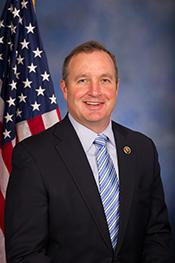
United States · United States Congress · 16 June 2011
Auto Enroll Repeal Act - Amends the Fair Labor Standards Act of 1938 to repeal provisions requiring employers that have more than 200 full-time employees and that offer employees enrollment in one or more health plans to automatically enroll new full-time employees in a health care plan and provide notice of the opportunity to opt-out of such coverage.
United States · United States Congress · 15 June 2011
Deport Convicted Foreign Criminals Act - Amends the the Immigration and Nationality Act to: (1) prohibit issuance of visas to citizens, subjects, nationals, or residents of a country listed in the most recent quarterly delayed repatriation report until the Secretary of Homeland Security (DHS) notifies the Secretary of State that the country is no longer listed, or each alien listed in the report with respect to such country has been removed from the United States; and (2) deny entrance to visa holders who are citizens, subjects, nationals, residents, or government officials of such a country. Directs the Secretary of Homeland Security to notify the chief law enforcement officer of the state and of the local jurisdiction in which an alien who has been detained by the United States is released. Defines "alien" as an individual who: (1) is listed in the most recent quarterly report, or (2) has received a final order of removal and has not been removed from the United States.
United States · United States Congress · 14 June 2011
Utilizing America's Federal Lands for Wind Energy Act - Exempts projects determined by the Bureau of Land Management (BLM) or the Forest Service to be meteorological site testing and monitoring projects from environmental impact statement requirements under the National Environmental Policy Act of 1969 (NEPA). Defines a "meteorological site testing and monitoring project" as a project that is carried out on land administered by BLM or the Forest Service to test or monitor weather using towers or other devices, that is decommissioned within five years of its commencement, that provides meteorological information to such agencies, that causes less than one acre of soil or vegetation disruption at the location of each meteorological tower or other device and no more than five acres of soil or disruption within the proposed right-of-way for the project, and that is installed: (1) using existing access roads, (2) in a manner that does not require off-road motorized access other than one installation activity and one decommissioning activity along an identified off-road route approved by the BLM Director or the Chief of the Forest Service, (3) without construction of new roads other than upgrading of existing minor drainage crossings for safety purposes, and (4) without the use of digging or drilling equipment vehicles other than rubber-tired vehicles with gross weight ratings under 8,500 pounds. Requires the BLM Director or Chief of the Forest Service to: (1) decide whether to issue a permit for such a project within 30 days after receiving an application for such permit, and (2) provide to the applicant reasons why an application was denied and an opportunity to remedy any deficiencies.
United States · United States Congress · 14 June 2011
Advancing Offshore Wind Production Act - Exempts any project determined by the Secretary of the Interior to be an offshore meteorological site testing and monitoring project from environmental impact statement requirements under the National Environmental Policy Act of 1969 (NEPA). Defines an "offshore meteorological site testing and monitoring project" as a project that is administered by the Department of the Interior and carried out on or in the waters of the Outer Continental Shelf to test or monitor weather (including wind, tidal, current, and solar energy) using towers, buoys, or other temporary ocean infrastructure and that: (1) causes less than one acre of surface or seafloor disruption at the location of each meteorological tower or other device and no more than five acres of surface or seafloor disruption within the proposed area affected by the project (including hazards to navigation); (2) is decommissioned within five years of its commencement; and (3) provides meteorological information to the Secretary of the Interior. Directs the Secretary to: (1) require that any applicant seeking to conduct an offshore meteorological site testing and monitoring project on the outer Continental Shelf obtain a permit; (2) determine whether to issue such a permit within 30 days after receiving an application; (3) provide an opportunity for submission of comments by the public; (4) consult with the Secretary of Defense (DOD), the Commandant of the Coast Guard, and the heads of other federal, state, and local agencies that would be affected by issuance of the permit; and (5) provide an applicant the opportunity to remedy deficiencies in a permit application that was denied.
United States · United States Congress · 14 June 2011
Exploring for Geothermal Energy on Federal Lands Act - Exempts projects determined by the Secretary of the Interior to be geothermal exploration test projects from environmental impact statement requirements under the National Environmental Policy Act of 1969 (NEPA). Defines a "geothermal exploration test project" as the drilling of a well to test or explore for geothermal resources on lands leased by the Department of the Interior for the development and production of geothermal resources, that is completed in less than 45 days, that causes less than one acre of soil or vegetation disruption at the location of each well and no more than five acres of soil or vegetation disruption during access or egress to the test site, and that is developed: (1) no deeper than 2,500 feet, (2) less than eight inches in diameter, (3) in a manner that does not require off-road motorized access other than to and from the well site along an identified off-road route, (4) without construction of new roads other than upgrading of existing drainage crossings for safety purposes, and (5) with the use of rubber-tired digging or drilling equipment vehicles. Requires: (1) a leaseholder intending to carry out a geothermal exploration test project to provide notice to the Secretary within 30 days prior to the start of drilling, (2) the Secretary to review a project within 10 days of receipt of such notice and to notify such leaseholder either that such NEPA requirements do not apply or that project deficiencies preclude the NEPA exemption, and (3) the Secretary to allow such leaseholder an opportunity to remedy any such deficiencies prior to the date such leaseholder intended to start drilling.
United States · United States Congress · 14 June 2011
Cutting Federal Red Tape to Facilitate Renewable Energy Act - Requires federal agencies, in complying with the National Environmental Policy Act of 1969 with respect to: (1) any action authorizing or facilitating a proposed renewable energy project, to consider and analyze only the proposed action alternative and the no action alternative and to identify and analyze potential mitigation measures only for such alternatives; and (2) a proposed renewable energy project, to only consider public comments that specifically address such alternatives and that are filed within 30 days after publication of a draft environmental assessment or environmental impact statement. Defines a "renewable energy project" as a project on federal lands or in federal waters, including a project on the Outer Continental Shelf, using wind, solar power, geothermal power, biomass, or tidal or kinetic forces to generate energy.
United States · United States Congress · 7 June 2011
Prohibits federal agencies, including executive, legislative, and judicial agencies, the United States Postal Service (USPO), the Postal Regulatory Commission, and the government of the District of Columbia, from deducting labor organization fees from the salaries of their employees.
United States · United States Congress · 3 June 2011
Lions Clubs International Century of Service Commemorative Coin Act - Directs the Secretary of the Treasury to mint and issue as legal tender $1 coins in commemoration of the centennial of the founding of the Lions Clubs International. Requires the design of the coins to be emblematic of the centennial. Permits the Secretary to issue such coins only during calendar 2017. Requires sales of the coins to include a surcharge of $10 per coin, to be paid by the Secretary to the Lions Clubs International Foundation.
United States · United States Congress · 3 June 2011
Repeals certain Department of Education regulations that for purposes of determining whether a school is eligible to participate in programs under the Higher Education Act of 1965 (HEA): (1) require institutions of higher education and postsecondary vocational institutions (except religious schools) to be legally authorized by the state in which they are situated, (2) delineate what such legal authorization requires of states and schools, and (3) define "credit hour." Prohibits the Secretary of Education from promulgating or enforcing any regulation or rule that defines "credit hour" for any purpose under the HEA.
United States · United States Congress · 3 June 2011
Iran, North Korea, and Syria Nonproliferation Reform and Modernization Act of 2011 - States that it shall be U.S. policy to fully implement and enforce sanctions against Iran, North Korea, and Syria for their proliferation activities and policies. Directs the President to report to Congress identifying any foreign person who: (1) made certain transfers to or acquired from Iran, Syria, or North Korea certain listed nuclear, dual use, missile, chemical, biological, toxic, or nonlisted but otherwise prohibited goods, services, or technology; (2) acquired, mined, or otherwise extracted materials within the territory or control of Iran, North Korea, or Syria for purposes relating to such countries' nuclear, biological, or chemical weapons, or missile development programs; (3) transferred to Iran, Syria, or North Korea goods, services, or technology that could assist such countries' efforts to extract or mill uranium ore; or (4) provided a vessel, insurance, or any other shipping service for transporting goods to or from Iran, North Korea, or Syria for purposes relating to such countries' nuclear, biological, or chemical weapons, or missile development programs. Directs the President to apply the following for at least two years against a person so identified: (1) arms export prohibitions, (2) Executive Order 12938 prohibitions, (3) dual use export prohibitions, (4) investment prohibitions, (5) financing prohibitions, and (6) financial assistance prohibitions. Prohibits U.S. nuclear cooperation agreements and related export licenses and transfers of materials, services and goods with a country that is assisting the nuclear program of Iran, North Korea, or Syria, or is transferring advanced conventional weapons to such countries. Prohibits any U.S. government agency from making extraordinary payments in connection with the International Space Station to the Russian Aviation and Space Agency or any other organization of the government of the Russian Federation unless the President has reported to Congress that: (1) it is Russian policy to oppose the proliferation to or from Iran, North Korea, and Syria of weapons of mass destruction and missile delivery systems; (2) the government of the Russian Federation has demonstrated a commitment to prevent the transfer to or from Iran, North Korea, and Syria of goods, services, and technology that could make a material contribution to Iran's nuclear, biological, chemical weapons, or missile programs; and (3) the Russian Aviation and Space Agency has not, during the one-year period ending on the date of such presidential determination, made transfers that are reportable under this Act to or from Iran, North Korea, or Syria. Directs the Secretary of State to deny a visa to, and the Secretary of Homeland Security (DHS) to exclude from the United States, an alien listed in a report identifying persons involved in specified weapons proliferation activities with Iran. Prohibits a vessel from landing at any U.S. port to load or unload freight or engage in the trade of goods or services if the vessel knowingly entered a port in Iran, North Korea, or Syria during the 180-day period ending on the date of the vessel's U.S. arrival. Directs the President to apply foreign exchange, banking, property and loan sanctions to any person who provides to or acquires from Iran, North Korea, or Syria goods or technology that is used, or is likely to be used, for military applications. Repeals the Iran, North Korea, and Syria Nonproliferation Act. States that such repeal shall not affect any existing sanction under such Act.
United States · United States Congress · 3 June 2011
Amends the National Labor Relations Act to deny the National Labor Relations Board (NLRB) any authority to enjoin or otherwise restrain the enforcement of any state law on the grounds that it is preempted by or conflicts with the Act. Authorizes the Board to refer its determinations regarding such state laws to the Attorney General.
United States · United States Congress · 3 June 2011
Expresses the sense of the House of Representatives that: (1) it is U.S. policy to support Israel in maintaining secure, recognized, and defensible borders; and (2) it is contrary to U.S. policy and our national security to have Israel's borders return to the armistice lines of June 4, 1967.
United States · United States Congress · 26 May 2011
National Right-to-Work Act - Amends the National Labor Relations Act and the Railway Labor Act to repeal those provisions that permit employers, pursuant to a collective bargaining agreement that is a union security agreement, to require employees to join a union as a condition of employment (including provisions permitting railroad carriers to require, pursuant to such an agreement, payroll deduction of union dues or fees as a condition of employment).
United States · United States Congress · 26 May 2011
Returning to Responsible Fiscal Policies Act - Amends the Balanced Budget and Emergency Deficit Control Act of 1985 (Gramm-Rudman-Hollings Act) to require: (1) the Office of Management and Budget (OMB) to estimate the Gross Domestic Product (GDP) outlay limit for the target fiscal year at the outset of the previous fiscal year, on April 30, on August 20, and 15 days after the conclusion of the fiscal year; (2) the Congressional Budget Office (CBO) to provide advisory reports calculating the GDP outlay limit at identical times; and (3) a sequestration by OMB within 45 calendar days after the beginning of a fiscal year to eliminate the excess outlay amount. Prescribes requirements for CBO and OMB advisory sequestration preview reports and an OMB final sequestration report, accompanied by a presidential order detailing the uniform spending reduction. Requires the House and the Senate budget committees to report a resolution directing their committees to change the existing law to achieve the goals outlined in the OMB August 20 report if it projects a sequestration. States that if, after November 15, a bill resulting in outlays for the current fiscal year is enacted that causes excess outlays, the excess outlays for the next fiscal year shall be increased by the amount or amounts of that breach. Amends the Congressional Budget Act of 1974 to make it out of order in both chambers to consider any bill, joint resolution, amendment, or conference report that includes any provision that would cause the most recently reported current GDP outlay limits in the Gramm-Rudman-Hollings Act to be exceeded. Prescribes procedures for waiver or suspension of this rule.
United States · United States Congress · 25 May 2011
Government Litigation Savings Act - Revises provisions of the Equal Access to Justice Act (EAJA) and the federal judicial code relating to the fees and other expenses of parties in agency proceedings and court cases against the federal government to: (1) restrict awards of fees and other expenses under such Act to prevailing parties with a direct and personal monetary interest in an adjudication, including because of personal injury, property damage, or an unpaid agency disbursement; (2) require the reduction or denial of awards commensurate with pro bono hours and related fees and expenses to parties who have acted in an obdurate, dilatory, mendacious, or oppressive manner or in bad faith; (3) limit awards to not more than $200,000 in any single adversary adjudication or for more than three adversary adjudications in the same calendar year (unless the adjudicating officer or judge determines that a higher award is required to avoid severe and unjust harm to the prevailing party); and (4) expand the reporting requirements of the Chairman of the Administrative Conference of the United States with respect to fees and other expenses awarded to prevailing parties during the preceding fiscal year. Requires the Comptroller General to audit the implementation of EAJA for the years 1995 through the end of the calendar year in which this Act is enacted.
United States · United States Congress · 25 May 2011
Gold Star Mothers National Monument Act of 2011 - Authorizes the Gold Star Mothers National Monument Foundation to establish a monument in the District of Columbia area, as a unit of the National Park System, to be known as the Gold Star Mothers National Monument. Prohibits using federal funds to pay the expenses of establishing the monument.
United States · United States Congress · 24 May 2011
Job Protection Act - Amends the National Labor Relations Act to provide that an employer's expression or written dissemination of views, argument, or opinion regarding the costs associated with collective bargaining, work stoppages, or strikes shall not constitute antiunion animus or unlawful motive (an unfair labor practice), if such expression contains no threat of reprisal or force or promise of benefit. Denies the National Labor Relations Board (NLRB), unless an employer has been adjudicated finally to have unlawfully undertaken certain actions, any power to: (1) order the employer to relocate, shut down, or transfer any existing or planned facility or work or employment opportunity; (2) prevent the employer from making such relocations, transfers, or expansions to new or existing facilities in the future; or (3) prevent the employer from closing or not developing a facility, or from eliminating an employment opportunity. Declares that, unless an employer has been so adjudicated, nothing under the Act shall: (1) prevent the employer from choosing where to locate, develop, or expand its business or facilities; (2) require the employer to move, transfer, or relocate any facility, production line, or employment opportunity, or require the employer to cease or refrain from doing so; or (3) prevent the employer from closing a facility or eliminating any employment opportunity.
United States · United States Congress · 24 May 2011
Refundable Child Tax Credit Eligibility Verification Reform Act - Amends the Internal Revenue Code to require taxpayers to provide their social security number on their tax return in order to claim the refundable portion of the child tax credit.
United States · United States Congress · 23 May 2011
Condemns the government of the Islamic Republic of Iran for its: (1) threats to annihilate the United States and Israel, (2) support of international terrorism, and (3) incitement of genocide of the Israeli people. Supports using all means to persuade the government of Iran to stop building and acquiring nuclear weapons. Reaffirms the U.S. bond with Israel and pledges to work with the government of Israel and the people of Israel to ensure that their nation receives critical economic and military assistance, including missile defense capabilities, needed to address the Iranian threat. Supports Israel's right to use all means necessary to confront and eliminate nuclear threats posed by Iran.
United States · United States Congress · 23 May 2011
Reaffirms the principles articulated in H. Con. Res. 460 and S. Res. 393 of the 108th Congress concerning the security of Israel and the advancement of the goal of Israel and Palestine living side by side in peace and security.
United States · United States Congress · 13 May 2011
Iran Threat Reduction Act of 2011 - Declares that it is U.S. policy to deny Iran the ability to support acts of foreign terrorist organizations and develop unconventional weapons and ballistic missiles. Urges the President to initiate diplomatic efforts to expand the multilateral sanctions regime regarding Iran. Directs the President to initiate an investigation into the imposition of sanctions upon receipt of credible information that a person is engaged in a sanctionable activity under this Act. Directs the President to impose specified sanctions on a person who knowingly: (1) makes specified investments with respect to Iran's ability to develop petroleum resources; (2) sells, leases, or provides to Iran goods, services, technology, information, or support that could facilitate Iran's domestic production of refined petroleum products; (3) sells or provides to Iran refined petroleum products, or provides goods, services, technology, information, or support that could contribute to Iran's ability to import refined petroleum products; or (4) exports or otherwise facilitated transshipment to Iran of any goods, services, technology, or other items that would contribute to Iran's ability to acquire or develop chemical, biological, or nuclear weapons, or acquire or develop destabilizing numbers and types of advanced conventional weapons. Sets forth exceptions to such sanctions for: (1) the procurement of certain defense articles or services; (2) eligible products to designated countries or instrumentalities; (3) products, technology, or services under contracts entered into before the date on which the President publishes in the Federal Register the name of the person on which the sanctions are to be imposed; (4) spare or component parts, or information and technology that are essential to U.S. products or production, and related servicing and maintenance; or (5) medicines, medical supplies, or other humanitarian items. Defines sanctions to include: (1) prohibitions on Export-Import Bank assistance, (2) prohibitions on loans from U.S. financial institutions and other financial services, (3) prohibitions on foreign exchange and other banking transactions, (4) prohibitions on property transactions, and (5) export and procurement sanctions. Authorizes: (1) the Secretary of State to issue, upon request, an advisory opinion with respect to whether a proposed activity would be sanctionable, and (2) a person to rely in good faith on such opinion and proceed without being subject to sanctions. Imposes sanctions under this Act for at least two years. Authorizes the President to terminate sanctions after one year if the sanctioned person is no longer engaging in a sanctionable activity and the President has received reliable assurances that the person will not knowingly engage in such future activity. Authorizes the President to waive imposition of sanctions if in the national security interest of the United States. States that a determination to impose sanctions under this Act shall not be reviewable in any court. Repeals the Iran Sanctions Act of 1996. Authorizes the President to provide financial and political assistance to certain foreign and domestic individuals, organizations, and entities that support democracy in Iran. Imposes visa, property, and financial sanctions on persons identified as officials of the government of Iran, security services, or the Islamic Revolutionary Guard Corps (IRGC) who were complicit in the commission of serious human rights abuses against citizens of Iran or their family members on or after June 12, 2009, regardless of whether such abuses occurred in Iran. Directs the Secretary of State to submit an annual report to Congress regarding the promotion of Internet freedom and information access in Iran. Imposes specified sanctions on a person that knowingly assisted in the exportation of petroleum, oil, or natural gas produced by the IRGC or its affiliates. Blocks the U.S. property interests of foreign persons or their affiliates that have committed, or pose a significant risk of committing, acts of violence threatening the peace or economic stability of Iraq or Afghanistan. Directs the President to develop a National Strategy to Counter Iran. Amends the Comprehensive Iran Sanctions, Accountability, and Divestment Act of 2010 to direct the Secretary of the Treasury to require any person owned or controlled by a domestic financial institution to certify that such person is not engaged in corresponding relations or business activity with the IRGC. Requires a report on the Central Bank of Iran's activities to facilitate Iran's efforts to acquire nuclear missile capacities and promote terrorism. Amends the Securities Exchange Act of 1934 to require securities issuers to disclose in their mandatory annual or quarterly reports to the Securities and Exchange Commission (SEC) whether they or their affiliates have: (1) engaged in certain activities relating to Iran, terrorism, and the proliferation of weapons of mass destruction; (2) knowingly engaged in specified activities, or knowingly violated certain regulations prescribed under the Comprehensive Iran Sanctions, Accountability, and Divestment Act of 2010; (3) knowingly conducted any transaction or dealing with a person whose property and interests in property are blocked by certain Executive Orders; or (4) knowingly conducted a transaction or dealing with any person listed in the Iranian Transactions Regulations. Requires the President to: (1) initiate an investigation into the possible imposition of sanctions when the SEC receives a report that an issuer or its affiliate has engaged in the cited activities, and (2) determine whether sanctions should be imposed on the issuer or the affiliate concerned. States that, except to meet U.S. international obligations, the Secretary of State shall deny a visa to, and the Secretary of Homeland Security (DHS) shall exclude from U.S. entry, a person who is an agent, official, or a representative of the government of Iran; and (2) presents a threat to the United States or is affiliated with terrorist organizations. Restricts the movement of such persons in the United States. Terminates the provisions of this Act when Iran: (1) has dismantled its efforts to develop or acquire nuclear, chemical, and biological weapons; (2) no longer provides support for acts of international terrorism; and (3) poses no threat to U.S. national security, interests, or allies.
United States · United States Congress · 13 May 2011
Military Commissions Guilty Plea Adjustment Act - Permits a guilty plea made by the accused prior to the announcement of the sentence in a capital offense trial before a military commission to form the basis of an agreement to reduce the maximum approved sentence.
United States · United States Congress · 13 May 2011
Reaffirms support for a negotiated solution to the Israeli-Palestinian conflict resulting in two states, a democratic Jewish state of Israel and a democratic Palestinian state living in peace and mutual recognition. States that any Palestinian unity government must forswear terrorism, accept Israel's right to exist, and reaffirm previous agreements made with Israel. Opposes any attempt to establish or seek recognition of a Palestinian state outside of an agreement negotiated between Israel and the Palestinians. Urges Palestinian leaders to cease efforts at circumventing the negotiation process, including through a unilateral declaration of statehood or by seeking recognition of a Palestinian state from other nations or the United Nations (U.N.). Supports the Administration's opposition to a unilateral declaration of a Palestinian state. Affirms that Palestinian efforts to circumvent direct negotiations will harm U.S.-Palestinian relations and will have implications for U.S. assistance programs for the Palestinians and the Palestinians Authority (PA). Reaffirms the U.S. statutory requirement precluding assistance to a PA that includes Hamas unless that PA and all its ministers accept Israel's right to exist and all prior agreements and understandings with the United States and Israel.
United States · United States Congress · 12 May 2011
Constitutional Amendment - Authorizes the repeal of any federal law or regulation when the legislatures of two-thirds of the states approve resolutions for this purpose that particularly describe the provisions to be repealed.
United States · United States Congress · 11 May 2011
International Religious Freedom Act Amendments of 2011 - Amends the International Religious Freedom Act of 1998 (IRFA) to require the Ambassador at Large for International Religious Freedom to: (1) integrate U.S. international religious freedom policies and engagement programs into U.S.-funded democracy and civil society programs and counterterrorism policies of U.S. agencies, including the Department of Defense (DOD), Department of State, Department of Homeland Security (DHS), and Department of the Treasury; and (2) coordinate programs including such agencies and the U.S. Agency for International Development (USAID). Recognizes that the absence of religious freedom is related to the persecution of religious minorities, religious conflict, violence, extremism, and terrorism (including terrorism reaching the United States). Extends U.S. policy to assisting nongovernmental organizations (currently, only governments) promoting religious freedom. Authorizes the Ambassador, subject to the direction of the President and the Secretary of State, to represent the United States in contacts with nongovernmental organizations impacting religious freedom in their respective societies, regions, or internationally. Specifies the minimum training requirements for foreign service officers, including chiefs of mission, under the Foreign Service Act of 1980. Modifies: (1) procedures for appointing members to the Commission on International Religious Freedom, and (2) terms of office for such members. Establishes the Executive Committee of the Commission. Extends the Commission's termination date to September 30, 2018. Requires the President, within 120 days after designating a country of particular concern for religious freedom, to transmit to Congress: (1) any identification of the agency or instrumentality and specific officials responsible for religious freedom violations, and (2) an evaluation of the actions taken by the President. Limits, to a 180-day period, the President's authority to waive specified actions with respect to a country in response to religious freedom violations. Terminates any action by the President under the IRFA upon the President's certification that the foreign government has ceased (or taken steps to cease) particularly severe violations of religious freedom. (Currently, without such certification, an action terminates within two years unless reauthorized by law.)
United States · United States Congress · 11 May 2011
Servicemembers' Telemedicine and E-Health Portability Act of 2011 or STEP Act - Authorizes the Secretary of Defense (DOD) to allow certain licensed health-care professionals to provide care to members of the Armed Forces at any location and regardless of where the professional or patient are located, so long as the practice is within the scope of authorized federal duties. Includes among authorized health-care professionals civilian DOD employees, DOD personal service contractors, or other health-care professionals credentialed and privileged at a federal health care institution or location specially designated by the Secretary for such purpose. Requires a report from the Secretary to Congress on plans to develop and expand programs to use new Internet and communication technologies, including telemedicine, telehealth care services, and telebehavioral health programs, to improve patient access to care and resources.
United States · United States Congress · 11 May 2011
One Percent Spending Reduction Act of 2011 - Amends the Balance Budget and Emergency Deficit Control Act of 1985 (Gramm-Rudman-Hollings Act) to establish the aggregate projected outlay (outlay cap) (less net interest payments) for FY2012 at $3.382 billion, less 1%. Reduces each outlay cap for FY2013-FY2017 by 1% of the previous fiscal year's outlay cap. Requires the outlay cap for FY2018 and each subsequent fiscal year to be 18% of the gross domestic product (GDP) for that fiscal year as estimated by the Office of Management and Budget (OMB). Prohibits the outlay caps from being less than those for the preceding fiscal year for FY2019 and any ensuing fiscal year. Requires a sequestration by OMB within 45 days after the beginning of a fiscal year to eliminate any excess outlay amount. Prescribes requirements for Congressional Budget Office (CBO) and OMB sequestration preview reports and an OMB final sequestration report, accompanied by a presidential order detailing uniform spending reductions equal to the excess outlay amount. Requires the House and the Senate budget committees to report a resolution directing the committees of their respective chambers to change existing law to achieve the spending reductions outlined in the OMB August 20 report to meet the outlay limits, if a sequestration is projected. States that if, after November 15, a bill resulting in outlays for the current fiscal year is enacted that causes excess outlays, the excess outlays for the next fiscal year shall be increased by the amount or amounts of that breach. Repeals provisions of the Gramm-Rudman-Hollings Act terminating Pay-As-You-Go (PAYGO) enforcement mechanisms under such Act. Amends the Congressional Budget Act of 1974 to make it out of order in both chambers to consider any bill, joint resolution, amendment, or conference report that includes any provision that would cause the most recently reported, current outlay limits in the Gramm-Rudman-Hollings Act to be exceeded. Prescribes procedures for waiver or suspension of this rule.
United States · United States Congress · 11 May 2011
Freedom to Invest Act of 2011 - Amends the Internal Revenue Code to: (1) extend the election allowed to a U.S. corporation to deduct dividends received from a controlled foreign corporation to the corporation's last taxable year beginning before the enactment of this Act or the first taxable year beginning during the one-year period beginning on such enactment date, and (2) reduce the amount of such tax deduction for corporations that fail to maintain specified employment levels for full-time U.S. employees.
United States · United States Congress · 10 May 2011
Lena Horne Recognition Act - Directs the Speaker of the House of Representatives and the President pro tempore of the Senate to make appropriate arrangements for the posthumous presentation, on behalf of Congress, of a gold medal of appropriate design in commemoration of Lena Horne in recognition of her achievements and contributions to American culture and the civil rights movement.
United States · United States Congress · 10 May 2011
No Health Care Subsidies for Illegal Aliens Act of 2011 - Amends the Patient Protection and Affordable Care Act (PPACA) to revise the procedures for determining eligibility for participation in a state health care insurance exchange (Exchange), with respect to citizenship or immigration status, to: (1) require an applicant for enrollment in a qualified health plan (enrollee) to appear in person at an Exchange and submit a sworn statement, under penalty of perjury, that the enrollee is a citizen or national of the United States or an eligible alien; (2) expand the documentary evidence that enrollees must submit for purposes of verifying eligibility; (3) require Exchanges (currently, the Secretary of Health and Human Services [HHS]) to verify citizenship or immigration status of enrollees based on satisfactory documentary evidence; (4) eliminate the authority of the Secretary to modify the methods used to verify enrollee eligibility; and (5) eliminate provisions authorizing the Secretary to verify the accuracy of submitted information. Applies this Act as if included in the enactment of PPACA.
United States · United States Congress · 5 May 2011
Stolen Valor Act of 2011 - Amends the federal criminal code to subject an individual who, with intent to obtain anything of value, knowingly makes a misrepresentiation regarding his or her military service to: (1) a fine, one year's imprisonment, or both if the misrepresentation is that such individual served in a combat zone or in a special operations force or was awarded the Congressional Medal of Honor; and (2) a fine, six months' imprisonment, or both, in any other case. Provides that: (1) this Act shall not apply to a misrepresentation that an individual did not serve in the Armed Forces, and (2) it is a defense to prosecution that the thing of value is de minimis.
United States · United States Congress · 5 May 2011
Home Construction Lending Regulatory Improvement Act of 2011 - Directs the appropriate federal banking agencies to initiate a coordinated rulemaking with respect to financial institutions under their respective jurisdictions that make real estate loans to home builders. Requires such rulemaking to provide for: (1) elimination of the 100% of bank capital measurement, (2) realistic market-based appraisals, and (3) a prohibition against compelling lenders to call or curtail loans in good standing. Prohibits a federal banking agency also from preventing a qualified financial institution from making a real estate loan to a home builder that has a viable project.
United States · United States Congress · 5 May 2011
Secure Visas Act - Amends the Homeland Security Act of 2002 to grant the Secretary of Homeland Security (DHS) (Secretary), except for the Secretary of State's authority with respect to diplomatic- and international organization-related visas, exclusive authority to issue regulations, establish policy, and administer and enforce the provisions of the Immigration and Nationality Act (INA) and all other immigration or nationality laws relating to U.S. consular officer visa functions. Authorizes the Secretary to refuse or revoke any visa to an alien or class of aliens if necessary or advisable for U.S. security interests. Provides that any such visa revocation shall become effective immediately and cancel any other visa in an alien's possession. Prohibits any court from: (1) reviewing such a determination, or (2) hearing any claim arising from such revocation. Authorizes the Secretary of State to direct a consular officer to refuse or revoke a visa if necessary or advisable for U.S. foreign policy interests. Prohibits a decision by the Secretary of State to approve a visa from overriding a revocation or refusal determination by the Secretary. Directs the Secretary to review on-site all visa applications and supporting documentation before adjudication at visa-issuing posts in Algeria, Canada, Colombia, Egypt, Germany, Hong Kong, India, Indonesia, Iraq, Jerusalem and Tel Aviv in Israel, Jordan, Kuala Lumpur in Malaysia, Kuwait, Lebanon, Mexico, Morocco, Nigeria, Pakistan, the Philippines, Saudi Arabia, South Africa, Syria, Turkey, United Arab Emirates, the United Kingdom, Venezuela, and Yemen. Authorizes the Secretary to assign DHS employees to such posts. States that if the Secretary or the Secretary of State revokes a visa: (1) the relevant consular, law enforcement, and terrorist screening databases shall be immediately updated; and (2) look-out notices shall be posted to all DHS port inspectors and Department of State consular officers. Amends INA to eliminate the exception permitting judicial review of a visa revocation where such revocation is the sole ground for a deportation process based upon an alien's unlawful presence in the United States. Prohibits any court from hearing any claim arising from a visa or document revocation.
United States · United States Congress · 5 May 2011
Consumer Relief for Pain at the Pump Act - Sets forth a deadline for action on certain permit applications under existing Outer Continental Shelf (OCS) leases. Amends the Gulf of Mexico Energy Security Act of 2006 to repeal the moratorium on oil and gas leasing in certain areas of the Gulf of Mexico. Instructs the Secretary of the Interior to offer for leasing areas made available as a result of such repeal. Instructs the Secretary to: (1) offer specified areas for oil and gas leasing pursuant to certain Lease Sale Schedules, (2) conduct OCS lease sales in specified Planning Areas, (3) share OCS receipts derived from all leases with states and local governments, (4) implement a leasing program for certain land within the Arctic Coastal Plain, and (5) issue rights-of-way and easements across the Coastal Plain for oil and gas transportation. Authorizes the Secretary of the Interior to designate certain Coastal Plain lands, including the Sadlerochit Spring area, as Special Areas requiring special management and regulatory protection. Revokes a specified Secretarial Order relating to protecting wilderness characteristics on lands managed by the Bureau of Land Management (BLM). Amends the Consolidated Appropriations Act, 2008 to repeal the prohibition on the use of funds for either a commercial oil shale leasing program or for oil shale lease sales. Directs the Secretary to offer leases for oil shale resources. Confers exclusive jurisdiction upon the U.S. District Court for the District of Columbia for covered energy projects under this Act. Establishes the Office of the Federal Oil and Gas Permit Coordinator. Instructs the Secretary to establish and maintain, in coordination with the Mayor of the North Slope Borough of Alaska, a separate Alaska Offshore Continental Shelf Coordination Office to coordinate the leasing program. Amends the Clean Air Act to redefine "air pollutant" to exclude carbon dioxide, water vapor, methane, nitrous oxide, hydrofluorocarbons, perfluorocarbons, or sulfur hexafluoride (greenhouse gases). Declares that nothing in specified statutes addressing pollution control shall be treated as authorizing or requiring the regulation of climate change or global warming. Amends the Energy Independence and Security Act of 2007 to repeal the prohibition against federal procurement of alternative or synthetic fuel. Requires the Administrator of the Environmental Protection Agency (EPA), upon request of the governor of a state or the governing body of an Indian tribe, to enter into a streamlined refinery permitting agreement. Sets forth deadlines for: (1) approval or disapproval of consolidated permits for construction of new or expansion of existing refineries, and (2) submission of existing refinery permit applications. Requires the EPA Administrator to conduct a research and demonstration program to evaluate the air quality benefits of ultra-clean Fischer-Tropsch transportation fuel, including diesel and jet fuel.
United States · United States Congress · 5 May 2011
American Job Protection Act - Amends the Internal Revenue Code to repeal provisions added by the Patient Protection and Affordable Care Act requiring certain employers who have a workforce of 50 or more full-time employees to provide health insurance coverage for their employees.
United States · United States Congress · 5 May 2011
National Oilheat Research Alliance Reauthorization Act of 2011 - Amends the National Oilheat Research Alliance Act of 2000 to adjust its focus upon oilheat to a focus upon oilheat fuel, a distillate liquid or a biobased liquid used as a fuel for nonindustrial commercial or residential space or hot water heating. Revises the membership of the National Oilheat Research Alliance. Expands the functions of the Alliance to include: (1) providing the cost of installing appliances in low-income households; and (2) prioritizing research, development, and demonstration projects that enhance efficiency through the use of biobased liquids and advanced biofuels. Requires the Alliance to: (1) contract with a qualified accounting firm to develop procedures to ensure statutory compliance; and (2) include in its annual report a detailed account of the amounts spent by each qualified state association that received funds on training, research, development, and demonstration, safety, and consumer education. Revises assessment requirements. States that the assessment rate for calendar years 2012 and 2013 shall be equal to two-tenths of 1% per gallon of oilheat fuel (currently, No. 1 distillate and No. 2 dyed distillate). Requires the annual assessment rate, beginning with calendar year 2014, to be sufficient to cover the costs of the plans and programs developed by the Alliance. Sets forth: (1) a maximum assessment rate; and (2) limitations on any assessment increase. Prohibits any increase in the assessment rate unless the Alliance has, by a specified deadline, notified certain congressional committees. Prohibits: (1) the Alliance from providing funds in response to a request from state, local, or regional programs unless it determines that the funds will be used to benefit consumers of oilheat fuel (instead of the oilheat industry); (2) certain lobbying activities; and (3) any consumer education activity from including a direct reference to a competing product if it is funded from Alliance assessments. Requires Alliance research activities to: (1) include development of renewable fuels, and (2) examine the compatibility of different renewable fuels with oilheat fuel utilization equipment, giving priority to advanced biofuels research. Requires the Alliance to: (1) report to state leaders, the Administrator of the Environmental Protection Agency (EPA) and to Congress on the use of biofuels in oilheat fuel utilization equipment; and (2) develop consumer education materials describing the benefits of using biofuels as, or in, oilheat fuel.
United States · United States Congress · 5 May 2011
Surface Transportation and Taxation Equity Act or the STATE Act - Amends the Internal Revenue Code to reduce the federal excise tax on gasoline and special fuels (but not below two cents per gallon) by corresponding increases in fuel taxes imposed by states as of May 5, 2011 (the date of introduction of this Act).
United States · United States Congress · 4 May 2011
Civilian Property Realignment Act or CPRA - Establishes the Civilian Property Realignment Commission, headed by an Executive Director, to: (1) identify opportunities to reduce significantly the federal government's inventory and cost of federal civilian real property, (2) perform an independent analysis of such inventory, (3) transmit to the President its findings and recommendations for consolidating and otherwise reducing such inventory, and (4) establish and maintain a website for making relevant information about federal civilian real property publicly available. Exempts from the application of this Act certain military installations, properties necessary for national security, and properties reserved for national forest or national park purposes. Requires federal agencies to submit to the Administrator of General Services (GSA) and to the chairperson of the Federal Real Property Council current data on all federal civilian real property and recommendations for the sale or other disposition of such property and for operational efficiencies. Requires the Administrator to develop standards and criteria for the sale or disposal of federal civilian real property. Provides for a review of the Commission's recommendations by the President and by Congress. Establishes procedures for the approval or disapproval by the President and by Congress of, and for implementation of, such recommendations. Exempts properties included in the recommendations for disposal or realignment under this Act from certain public benefit conveyance requirements, including the McKinney-Vento Act (requiring surplus property to be used to assist the homeless). Limits the authority of executive agencies to lease space for the purposes of a public building.
United States · United States Congress · 4 May 2011
Multilingual Services Accounting Act - Requires federal agency Chief Financial Officers to include multilingual services accounting information in their mandatory annual reports to the agency head and to the Director of the Office of Management and Budget (OMB). Defines multilingual services to include: (1) services provided by interpreters hired by an agency; (2) services resulting in additional expenses which an agency provides to assist its employees or contractors to learn a non-English language; (3) agency preparation, translation, printing, or recordation of materials in a language other than English; and (4) services provided or performed for the federal government by agency employees or contractors that require speaking a non-English language that result in wage differentials or benefits provided by the agency. Requires the OMB Director's annual financial management status report to certain congressional committees to contain a Multilingual Services Expenses Report that includes: (1) a summary and analysis of the multilingual services accounting information prepared by each agency Chief Financial Officer, and (2) a description of any changes to the existing financial management structure of the federal government needed to establish an integrated individual agency accounting of all multilingual services conducted by each agency. Requires the OMB Director to issue guidance that an agency Chief Financial Officer must follow in compiling multilingual services accounting information.
United States · United States Congress · 4 May 2011
Condemns the government of the Bolivarian Republic of Venezuela for its state-sponsored support of international terrorist groups. Calls on the Secretary of State to designate Venezuela as a state sponsor of terrorism. Urges cooperation on counter-terrorism initiatives between the U.S. government and allies in the region.
United States · United States Congress · 3 May 2011
Medicare Patient Empowerment Act - Amends title XVIII (Medicare) of the Social Security Act to allow any Medicare beneficiary to enter into a contract with a non-participating (as well as with a participating) physician or practitioner for any item or service covered by Medicare. Allows such beneficiaries to submit a claim for Medicare payment in the amount that would otherwise apply if the claim had been filed by a participating physician or practitioner in the payment area where the physician or practitioner covered by the contract resides. Requires a Medicare beneficiary to agree in writing in such a contract to: (1) pay the physician or practitioner for a Medicare-covered item or service; and (2) submit (in lieu of the physician or practitioner) a claim for Medicare payment. Allows a beneficiary, however, to negotiate, as a term of the contract, for the physician or practitioner to file such claims on the beneficiary's behalf. Preempts state laws from limiting the amount of charges for physician and practitioner services for which Medicare payment is made.
United States · United States Congress · 15 April 2011
Traditional Cigar Manufacturing and Small Business Jobs Preservation Act of 2011 - Amends the Federal Food, Drug, and Cosmetic Act to exempt traditional large and premium cigars from regulation by the Food and Drug Administration (FDA) and from user fees assessed on tobacco products by the FDA.
United States · United States Congress · 15 April 2011
Farm Dust Regulation Prevention Act of 2011 - Prohibits the Administrator of the Environmental Protection Agency (EPA) from proposing, finalizing, implementing, or enforcing any regulation revising the national primary ambient air quality standard or the national secondary ambient air quality standard applicable to particulate matter with an aerodynamic diameter greater than 2.5 micrometers under the Clean Air Act (CAA) for one year. Exempts nuisance dust from the CAA and excludes nuisance dust from references in such Act to particulate matter, except with respect to geographic areas where such dust is not regulated under state, tribal, or local law if the Administrator finds that: (1) nuisance dust (or any subcategory of nuisance dust) causes substantial adverse public health and welfare effects at ambient concentrations; and (2) the benefits of applying CAA standards and other requirements to such dust outweigh the costs. Defines "nuisance dust" as particulate matter: (1) generated from natural sources, unpaved roads, agricultural activities, earth moving, or other activities typically conducted in rural areas; or (2) consisting primarily of soil, other natural or biological materials, windblown dust, or some combination thereof.
United States · United States Congress · 15 April 2011
Security Enhancement and Jobs Act of 2011 - Transfers from the Under Secretary of Transportation for Security (DOT) to the Secretary of Homeland Security (DHS) the authority to approve, within 120 days after receipt, any application of an airport operator to have the screening of passengers and property at an airport be carried out by the screening personnel of a qualified private screening company (security screening opt-out program). Requires the Secretary to approve such an application unless approval would compromise security, detrimentally affect the efficiency or effectiveness of screening, or otherwise adversely affect the mission of the Transportation Security Administration (TSA). Authorizes the Secretary to carry out this Act acting through the Assistant Secretary of Homeland Security (TSA).
United States · United States Congress · 15 April 2011
Prohibits funds available to the United States Agency for International Development (USAID) from being used for the Development Innovation Ventures (DIV) program or any successor program.
United States · United States Congress · 14 April 2011
Hunting, Fishing, and Recreational Shooting Protection Act - Amends the Toxic Substances Control Act (TSCA) to exclude from the definition of "chemical substance" for purposes of such Act: (1) any component of any pistol, revolver, firearm, shell, or cartridge the sale of which is subject to federal excise tax, including shot, bullets and other projectiles, propellants, and primers; and (2) any sport fishing equipment the sale of which is subject to federal excise tax and sport fishing equipment components.
United States · United States Congress · 14 April 2011
Medicare Access to Rehabilitation Services Act of 2011 - Amends title XVIII (Medicare) of the Social Security Act to repeal the cap on outpatient physical therapy, speech-language pathology, and occupational therapy services of the type furnished by a physician or as an incident to physicians' services.
United States · United States Congress · 13 April 2011
National Security and Federal Lands Protection Act - Prohibits the Secretary of the Interior and the Secretary of Agriculture (USDA) from taking action on public lands which impede the border security activities of the Secretary of Homeland Security (DHS) (Secretary). States that the Secretary shall have immediate access to any public land managed by the federal government in order to conduct activities that assist in securing the border (including access to maintain and construct roads, construct a fence, use patrol vehicles, and set up monitoring equipment). States that a specified waiver by the Secretary of certain laws regarding sections of the international border between the United States and Mexico and between the United States and Canada shall apply to all sections of the international land and maritime borders of the United States within 100 miles of such borders with respect to the Secretary's activities under this Act.