Bill· HJRESH.J.Res. 530 (101st)referred
Designating July 2, 1990, as "National Literacy Day".
United States · United States Congress · 22 March 1990
Designates July 2, 1990, as National Literacy Day.
The world's political record
Person
United States · Official source
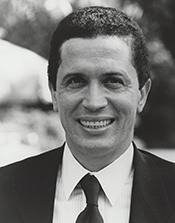
3,346 records where Rep. Ford, Harold E. [D-TN-9] is listed as a sponsor, author, or other actor. Search with topics and years
United States · United States Congress · 22 March 1990
Designates July 2, 1990, as National Literacy Day.
United States · United States Congress · 20 March 1990
Foreign Tax Equity Act of 1990 - Title I: Treatment of Certain Foreign-Owned Corporations - Applies the Revenue Reconciliation Act of 1989 amendments regarding information reporting requirements by certain foreign-owned corporations to taxable years beginning on or before July 10, 1989. Amends the Internal Revenue Code to establish information reporting requirements for foreign corporations engaged in business within the United States. Extends the statute of limitations for the assessment of any foreign-related deficiency by an additional period of not more than three years. Title II: Tax on Disposition of Stock in Domestic Corporations by 10-Percent Foreign Shareholders - Provides that if any nonresident alien or foreign corporation is a ten-percent shareholder in any domestic corporation, any gain or loss from the disposition of any stock in such domestic corporation shall be taken into account as if the taxpayer were effectively connected with U.S. trade or business. Requires a withholding agent to withhold ten percent of the tax realized on certain stock dispositions by such ten-percent shareholders.
United States · United States Congress · 20 March 1990
Designates November 18 through November 24, 1990, and November 17 through November 23, 1991, as National Family Caregivers Week.
United States · United States Congress · 20 March 1990
Designates August 30, 1990, as 1890 Land-Grant Institutions Centennial Recognition Day.
United States · United States Congress · 14 March 1990
Amends title XVIII (Medicare) of the Social Security Act to cover colon cancer preventive screening examinations, an annual physical examination performed by a physician or nurse practitioner, and verbal and written mental health screening examinations if a demonstration project to be conducted by the Secretary of Health and Human Services proves such examinations to be cost-effective or of moderate cost but measurably health enhancing.
United States · United States Congress · 14 March 1990
Designates April 16, 1990, as National Sarcoidosis Awareness Day.
United States · United States Congress · 14 March 1990
Designates the week beginning June 10, 1990, as National Scleroderma Awareness Week.
United States · United States Congress · 14 March 1990
Designates November 16, 1990, as National Philanthropy Day.
United States · United States Congress · 8 March 1990
Miscellaneous Human Resource Amendments of 1990 - Title I: Child Welfare and Foster Care Provisions - Amends part E (Foster Care and Adoption Assistance) of title IV of the Social Security Act to require the Secretary of Health and Human Services to annually provide specified information to the Congress and the public concerning the Foster Care and Adoption Assistance program and the Child Welfare Services program (part B of title IV of the Social Security Act). Prohibits the Secretary from penalizing States under such programs before FY 1992 by reason of a determination made in connection with any triennial review of State compliance with foster care protections. Title II: Supplemental Security Income Provisions - Amends title XVI (Supplemental Security Income) (SSI) of the Social Security Act to increase SSI benefits. Directs the Secretary to annually notify all elderly individuals and disabled individuals who are recipients of benefits under title II (Old Age, Survivors and Disability Insurance) (OASDI) of the Social Security Act and may be or could become eligible for SSI benefits of the availability of SSI benefits and provide such notice to individuals when they attain age 65, apply for OASDI disability benefits before attaining age 65, and are notified of their eligibility for benefits under part B (Supplementary Medical Insurance) of title XVIII (Medicare) of the Social Security Act. Establishes a presumption that a child under age four with a genetic or congenital impairment is disabled or blind for SSI purposes if it is probable that when the child is older the application of clinical and laboratory techniques will prove such to be the case. Directs the Secretary to prescribe final regulations by January 1, 1991, concerning revisions to specified listings of childhood mental and emotional disorders. Requires the Secretary to: (1) consider age-appropriate medical and functional criteria developed by experts in childhood disability in reviewing and revising medical criteria for the evaluation of impairments of children; and (2) publish revised listings of impairments of children and explain deviations from the recommendations of experts within 24 months of this Act's enactment. Preserves the Medicaid (title XIX of the Social Security Act) eligibility of certain individuals rendered ineligible for SSI or State supplementary payments due to their receipt of weekly or biweekly income. Reduces the SSI benefits of a person who is living in another person's household and receiving support and maintenance in kind from such person by the lesser of 33 1/3 percent or the amount of such in-kind income. Excludes amounts received from a State fund to aid victims of crime from an individual's income and resources for SSI purposes. Prohibits the denial of SSI benefits to individuals by reason of their rejection of amounts offered as compensation for a crime. Title III: Child Support Enforcement Provisions - Amends part D (Child Support and Establishment of Paternity) of title IV of the Social Security Act to extend the authority of States to request the withholding of Federal tax refunds from persons owing past-due child support from January 1, 1991, to January 10, 1996. Makes the collection of past-due support from Federal tax refunds applicable to past-due support owed to anyone who was determined to be disabled under the OASDI or SSI programs when he or she was a minor. Extends, from four to 12 months, the period of continuing Medicaid coverage provided to a family which loses eligibility under part A (Aid to Families with Dependent Children) of title IV of the Social Security Act due to the collection or increased collection of child support under part D. Title IV: Unemployment Provisions - Amends the Internal Revenue Code to institute discretionary denial of unemployment benefits between academic terms to employees serving educational institutions in nonprofessional positions. (Under current law denial is mandatory.) Amends title IX (Employment Security) of the Social Security Act to make permanent a limitation on State use of Unemployment Trust Fund amounts for administrative purposes. Title V: Technical Corrections to 1989 Reconciliation Act - Makes technical corrections to the Omnibus Budget Reconciliation Act of 1989 and the Social Security Act.
United States · United States Congress · 8 March 1990
Regulated Precursor Chemicals Act of 1990 - Amends the Controlled Substances Act to revise and expand the list of precursor chemicals, including transferring to such list hydriodic acid from the list of essential chemicals. Revises the definition of "regulated transaction" to include transfers of any amount of an essential listed precursor chemical, with exceptions. Requires each regulated person to report to the Attorney General on any regulated transaction involving any quantity of a listed essential chemical. Makes it unlawful for any person to engage in a regulated transaction involving a listed precursor chemical or any other conduct that defines such person as a regulated person for purposes of such Act without a license required under such Act. Requires the Attorney General to establish a program requiring licenses for regulated persons and regulated transactions involving listed precursor chemicals where such requirement will contribute to carrying out the purposes of such Act and to criminal drug law enforcement. Provides for fines and imprisonment of not more than four years for violations of the licensing requirement. Requires the Attorney General to provide for the audit and control of listed precursor chemical inventories of persons possessing a license under this Act. Directs the Attorney General to cooperate with State authorities by providing information regarding regulated transactions in such chemicals that might be useful in the administration of State laws relating to precursor chemicals, controlled substances, and other illegal drugs.
United States · United States Congress · 8 March 1990
ESOP Promotion and Improvement Act of 1990 - Amends the Internal Revenue Code to allow S corporations (certain small business corporations) to participate in employee stock ownership plans (ESOPs). Extends the ESOP exception to the ten percent early withdrawal penalty tax to certain ESOP distributions to employees made at any time. (Currently the exception applies only to distributions made before January 1, 1990.) Permits ESOP participants whose compensation does not exceed a certain amount to contribute up to 50 percent of it to the plan. Amends the Federal Election Campaign Act of 1971 to permit payroll deductions for ESOP participants to make certain political contributions.
United States · United States Congress · 8 March 1990
Designates February 17 through 23, 1991, as National Visiting Nurse Associations Week.
United States · United States Congress · 8 March 1990
Designates July 10, 1990, as Wyoming Centennial Day.
United States · United States Congress · 7 March 1990
Amends the Federal judicial code to allow Federal judges who have attained the age of 62 and completed 25 years of service to retire on salary from regular active service.
United States · United States Congress · 6 March 1990
Medicaid State Share Protection Amendments of 1990 - Amends title XIX (Medicaid) of the Social Security Act to allow State Medicaid matching payments to include private funds donated by hospitals to the State and State taxes imposed with respect to the provision of Medicaid items and services.
United States · United States Congress · 6 March 1990
Designates May 6 through 13, 1990, as Jewish Heritage Week.
United States · United States Congress · 6 March 1990
Waives the statute of limitations on the claim of a named individual for personal injuries resulting from alleged negligent medical treatment at the Memphis Veterans Administration Medical Center.
United States · United States Congress · 5 March 1990
Amends the Internal Revenue Code to impose an excise tax on emissions of sulfur dioxide and nitrogen oxide from electric utility generating units.
United States · United States Congress · 5 March 1990
Urges the President and the United States Trade Representative: (1) not to include civil air transport services under the General Agreement on Trade in Services that is being negotiated under the General Agreement on Tariffs and Trade; nor (2) to require future negotiations to include such services under such Agreement.
United States · United States Congress · 1 March 1990
Human Services Reauthorization Act of 1990 - Extends authorized appropriations from FY 1991 through 1994 to carry out programs under the following Acts: (1) the Head Start Act; (2) the Follow Through Act; (3) the State Dependent Care Development Grants Act; (4) the Community Services Block Grant Act; (5) the Child Development Associate Scholarship Assistance Act; and (6) the Low-Income Home Energy Assistance Act of 1981. Amends the Human Services Reauthorization Act of 1986 to extend authorized appropriations from FY 1991 through 1994 to carry out the grant program relating to demonstration partnership agreements addressing the needs of the poor.
United States · United States Congress · 1 March 1990
Correctional Options Incentives Amendments - Amends the Omnibus Crime Control and Safe Streets Act of 1968 to authorize the Director of the Bureau of Justice Assistance to make grants to public agencies for correctional options (including construction costs) that provide alternatives to traditional modes of incarceration to: (1) provide more appropriate intervention for youthful offenders who are not, but who are likely to become, career criminals; (2) provide a degree of security and discipline appropriate for the offender involved; (3) provide diagnosis, treatment, and services (including counseling, job training, and placement assistance) to increase the success rate of offenders pursuing lawful conduct following release; (4) reduce criminal recidivism; and (5) reduce the cost of correctional services by reducing recidivism. Bases the selection of grant applicants on their potential for developing or testing innovative alternatives to traditional modes of incarceration. Requires the Director to identify facilities that may be used as sites for correctional programs receiving assistance under this Act. Authorizes appropriations.
United States · United States Congress · 1 March 1990
Expresses the sense of the Congress that: (1) the 25th anniversary of the enactment of the Older Americans Act of 1965 and its successful implementation should be recognized; (2) contributions at all levels of the aging network should be acknowledged and commended; and (3) support for the Act and its primary goal should be reaffirmed.
United States · United States Congress · 28 February 1990
Twenty-First Century Teachers Act - Title I: Loans Incentives for Teaching - Amends the Higher Education Act of 1965 (HEA) to establish a separate fund for teachers under the National Direct Student Loan (NDSL) program. Authorizes appropriations for FY 1991 through 1995 for the Secretary of Education (the Secretary) to make separate capital contributions to NDSL student loan funds. Requires a student, in order to receive a loan from the special account, to: (1) have completed two undergraduate years; (2) intend to pursue a teaching career; and (3) agree to certain repayment conditions if the student either does not enter full-time teaching within a certain period or ceases such teaching before the end of the five-year service period required for loan cancellation. Gives priority for such loans to minority students, or those otherwise underrepresented in the teaching profession or curricula areas, and to individuals who qualify and need such a loan and who demonstrate high academic achievement and potential for success in teaching. Provides for an expedited loan cancellation option for teaching at certain types of schools. Title II: Financial Assistance for Institutional Recruitment and Retention of Individuals Preparing to Enter the Teaching Force - Directs the Secretary to allocate funds under this title to State educational agencies (SEAs) for grants to institutions of higher education for programs to recruit and retain students, particularly minority students, preparing to enter the teaching profession. Authorizes appropriations. Title III: Professional Development Academies - Directs the Secretary to allocate 80 percent of funds for this title among SEAs, on the basis of number of disadvantaged children, to distribute such funds to consortia of local educational agencies (LEAs) for various activities relating to teacher training. Directs the Secretary, from the remaining 20 percent of funds under this title, to award to specified consortia grants to establish professional development academies to provide interstate, international, or other exemplary programs. Limits such grants to five years, with renewal for one additional five-year period. Authorizes appropriations. Title IV: Teacher Recognition - Teacher of the Year Recognition Act - Directs the Secretary to design and implement a program for teachers designated by the Council of Chief State School Officers as teacher of the year and the national teacher of the year. Directs the Secretary to designate and procure medals to honor such teachers of the year, which shall be presented by the President or a designee. Authorizes the Secretary to work with States, local governments, SEAs, LEAs, and others to encourage development of State and local recognition programs for teachers and other educators.
United States · United States Congress · 28 February 1990
Designates the week of June 24 through June 30, 1990, as National Sheriffs' Week in honor of the 50th anniversary of the National Sheriffs' Association.
United States · United States Congress · 28 February 1990
Designates the week of April 15 through April 21, 1990, as National Minority Cancer Awareness Week.
United States · United States Congress · 27 February 1990
Mickey Leland Memorial Domestic Hunger Relief Act - Title I: Reducing Childhood Hunger - Amends the Food Stamp Act of 1977 to revise and increase the excess shelter expense deduction for each fiscal year from FY 1991 through FY 1993. Requires the Secretary of Agriculture to adjust the basic benefit level upwards by specified increments at the beginning of each fiscal year from FY 1991 through FY 1995 until it reaches 105 percent of the cost of the thrifty food plan. Directs the Secretary by regulation to provide for emergency allotments to eligible households to replace food lost in a disaster. Excludes from the computation of household income any State allowance (provided at least annually) for obtaining school clothes for children in school or child care. Provides for allotment increases to cover State or local sales taxes for participants in demonstration projects. Requires alternative systems for delivery or use of food stamp benefits to meet standards issued by the Secretary and, where household participation is not optional, to involve retail food stores serving minority populations, but only if necessary special equipment is operational at all registers. Provides food stamp coverage for prepared meals for homeless households. Permits State agencies to develop standard estimates of the shelter and related expenses which homeless households may reasonably be expected to incur in order to certify such households based on reported expenses not exceeding such an estimate. Title II: Promoting Self-Sufficiency - Excludes the first $50 a month received as child support from consideration as income in determining the food stamp allotments of households also receiving Aid to Families with Dependent Children (AFDC) benefits. Increases from $4,500 to $5,500 from January 1 through September 30, 1991, with annual cost-of-living adjustments to follow, the limit on the fair market value of vehicles that food stamp recipients may own. Directs the Secretary to conduct a sufficient number of demonstration projects to evaluate the effects of excluding from such vehicle calculation the value of: (1) any licensed vehicle used for certain income-producing, transportation, or shelter purposes; and (2) one licensed vehicle used for job-related or job-seeking purposes (including commuting), for pursuing education or training, or for securing food or food stamp benefits. Allows States to use their own agency-designed forms instead of forms approved by the Secretary. Directs State agencies to allow a household to select an adult parent of children in the household as its head where all adult household members agree to do so. Allows four States to give priority in the provision of services to voluntary participants (including both exempt and nonexempt), so long as performance standards are maintained. Authorizes an employment and training program to contain programs designed to increase the self-sufficiency of recipients through self-employment. Excludes from the computation of household financial resources any nonliquid resources necessary to allow the household to carry out an approved plan for self-sufficiency. Increases from $25 to $75 the limit for reimbursements to recipients for costs incurred in employment and training activities. Permits otherwise eligible persons who attend an institution of higher learning to receive food stamp benefits if he or she: (1) attends the institution as part of an employment and training program; or (2) is over 50, registered for employment, and subject to employment or training requirements. Revises the exclusion of educational expenses from the computation of household incomes. Excludes from the computation of household incomes housing assistance payments made to a third party on behalf of a household residing in transitional housing for the homeless. Title III: Simplifying Program Administration - Requires parents and children (regardless of age) who live together to apply for food stamps as a single household. Directs the Secretary to conduct five demonstration projects, in both rural and urban areas, under which households in which each member receives AFDC benefits shall receive monthly food stamp allotments following AFDC rules and procedures, without regard to the eligibility, benefit, and administrative rules of the food stamp program. Requires the Secretary to issue rules under which State agencies must develop standards for identifying (for exclusion as inaccessible resources) those kinds of resources the household is unlikely to sell for any significant return because its interest is so slight or the cost of selling would be so great. Provides that a food stamp office need not consider any resources that the AFDC or supplemental security income benefit programs have already determined to be exempt. Directs State agencies to require only one adult representative of a household to sign all declarations required in the application process on behalf of the household. Makes recipients of State or local general assistance programs categorically eligible for food stamps. Reduces from 30 to ten days the deadline for households convicted of food stamp fraud to decide how to repay their over issuances. Establishes a Commission on the Coordination of Family Support and Food Stamp Policies to report to the President and the Congress on AFDC and food stamp program policies, recommending how to eliminate barriers to participation in both programs. Authorizes appropriations. Title IV: Hunger in Rural America - Requires State agencies to designate rural project areas where low-income persons face substantial difficulties in getting transportation. Requires issuance of coupons by mail in such areas, except where households experience mail losses exceeding certain levels. Allows States to assist households with the food stamp application process. Directs the Secretary to exclude from financial resources the value of a vehicle a household depends upon to carry heating fuel or water for home use where it has no other access to fuel or water. Title V: Promoting Access for the Elderly and Disabled - Declares that State agencies, with respect to the excess medical deduction for the elderly and the disabled, shall not require further verification of a change in medical expenses if the change has been anticipated for the verification period. Requires annual adjustments to the value of the minimum food stamp benefit. Permits State agencies to establish a procedure allowing households whose regular food stamp benefits do not exceed $20 per month to receive up to $60 worth for intervals of up to three months. Requires that any applicant for or recipient of supplemental security income benefits be informed of the availability of food stamp benefits. Title VI: Program Administration by State Agencies - Prohibits the application of disallowances for erroneous issuances or similar actions to any State for a fiscal year before FY 1991. Directs the Secretary, by specified deadlines, to develop standards for initial approval of automated data processing and information retrieval systems for State agencies, as well as written procedures and standards for initial and continued approval reviews. Sets alternative deadlines for full operation of such systems, the later being September 30, 1993. Provides for waivers of ADC system requirements where their application would not significantly improve the efficiency of a State agency's administration. Title VII: Reauthorization of Programs - Reauthorizes through FY 1995: (1) the food stamp program; (2) the nutrition assistance program for Puerto Rico; (3) the temporary emergency food assistance program under the Temporary Emergency Food Assistance Act of 1983; (4) the soup kitchen and food bank programs under the Hunger Prevention Act of 1988; (5) the commodity distribution and supplemental food programs under the Agriculture and Consumer Protection Act of 1973; (6) the distribution of surplus commodities to special nutrition projects under the Agriculture and Food Act of 1981; and (7) the nutrition education program under the Food Security Act of 1985. Title VIII - Amends the Commodity Distribution Reform Act and WIC Amendments of 1987 to require biennial reports to the Congress on food bank projects. Amends the Agriculture and Consumer Protection Act of 1973 to establish a Commodity Supplemental Food Program for the Elderly. Amends the Hunger Prevention Act of 1988 to set forth the National Gleaning Clearinghouse Act of 1990. Establishes a National Gleaning Clearinghouse to share information on available, unused food that could be distributed through the emergency feeding network. Title IX: Effective Dates - Sets forth the effective dates of provisions of this Act.
United States · United States Congress · 27 February 1990
Commemorates May 18, 1990, as the 25th anniversary of Head Start.
United States · United States Congress · 27 February 1990
Designates March 30, 1990, as National Doctor's Day.
United States · United States Congress · 27 February 1990
Designates May 16, 1990, as National Employee Health and Fitness Day.
United States · United States Congress · 22 February 1990
Adolescent Nutritional Equity Act - Amends the National School Lunch Act to restore eligibility for food supplement benefits under the dependent care food program to adolescent youth 18 years of age or under. Makes children with disabilities eligible for such benefits at any age.
United States · United States Congress · 22 February 1990
Designates the week beginning on October 7, 1990, and ending on October 13, 1990, as Mental Illness Awareness Week.
United States · United States Congress · 22 February 1990
Calls for the retention of sanctions against South Africa under the Comprehensive Anti-Apartheid Act until all conditions for the termination of sanctions are fulfilled and a democratic political process is established.
United States · United States Congress · 21 February 1990
Designates the second Sunday in October 1990 as National Children's Day.
United States · United States Congress · 21 February 1990
Designates as Nelson Mandela Week the week in 1990 of Nelson Mandela's first visit to the United States after his prison release in South Africa.
United States · United States Congress · 7 February 1990
Federal Employees Pay Comparability Act of 1990 - Creates the Federal Salary Council to define local pay areas and occupational group categories that include professional, administrative, technical, clerical, law enforcement, firefighter, and health care positions. Directs the Bureau of Labor Statistics (BLS) to: (1) survey the Federal employees in such occupational categories in each local pay area at least once every three years to compare Federal rates of pay to non-Federal rates of pay for the same work; and (2) prepare appropriate alternative pay schedules. Directs the President, based on the resulting BLS report, to establish alternative pay schedules or adjust existing pay schedules where necessary to ensure the competitiveness of the Government in recruiting or retaining well-qualified employees. Requires higher rates under such schedules to be implemented through equal percentage increments over three years. Prohibits an alternative pay schedule from applying with respect to any employee who is employed outside the continental United States or elsewhere where an allowance based on living costs or environmental conditions may be paid. Prohibits employees becoming subject to an alternative pay schedule from being paid less than they would otherwise be paid under a statutory pay system schedule. Prohibits any reduction of a rate of pay under an alternative pay schedule as a result of any adjustment under this Act. Provides that if pay surveys determine that no adjustment in pay rates under an alternative pay schedule is required, such rates shall be adjusted at the same time that any pay adjustment occurs and by the overall average percentage of any adjustment in General Schedule pay rates. Provides annual pay adjustments for employees under each statutory pay system equal to the annual increase in the Employment Cost Index (a quarterly measure of the cost of labor in the private sector). Declares that increases in rates of pay under this Act are not equivalent increases in pay under provisions regarding periodic step-increases. Grants the President authority to provide for special pay rates if the Government's efforts to recruit or retain well-qualified individuals are significantly handicapped by: (1) the remoteness of the area or location involved; (2) undesirable working conditions including exposure to toxic substances; or (3) any other circumstances which the President considers appropriate. Prohibits a minimum special pay rate from exceeding the maximum statutory pay rate for the applicable grade or level. Authorizes the Director of the Office of Management and Budget to grant authority to executive department and agency heads to fix the basic pay rate of up to 400 Government-wide positions which such heads determine to be critical positions at an annual rate that does not exceed the rate for level I of the Executive Schedule. Directs agency heads, in determining whether a position is critical, to consider to the extent to which: (1) the position requires scientific, technical, professional, or administrative qualifications; and (2) additional compensation is necessary to recruit or retain exceptionally qualified individuals. Allows such authority to be reexercised when such a position becomes vacant and is refilled if: (1) an agency head determines that the position remains a critical position; and (2) the Director reconfirms his or her original allocation of critical-position pay authority among executive departments and agencies. Eliminates the GS-11 grade requirement for paying new employees above the minimum rate of the appropriate grade. Creates a new pay system for administrative law judges and contract appeals board members consisting of at least three pay rates to be established and thereafter adjusted by the President. Sets the maximum rate at level IV of the Executive Schedule and the minimum rate at a grade GS-16, Step 1. Requires the Office of Personnel Management to determine which of such rates shall be paid to individual administrative law judges or contract appeals board members according to criteria prescribed by the Office.
United States · United States Congress · 7 February 1990
Civil Rights Act of 1990 - Amends the Civil Rights Act of 1964 to provide that: (1) once a complainant has demonstrated that an employment practice results in a disparate impact on the basis of race, color, religion, sex, or national origin, the respondent has the burden of proving that the practice is justified by business necessity; (2) a complainant need not demonstrate which of a group of practices results in the demonstrated disparate impact; and (3) a respondent need not show business necessity for a specific practice within a group of practices if the respondent shows that that practice does not contribute to the disparate impact. Declares that an unlawful employment practice is established on a demonstration that race, color, religion, sex, or national origin was a motivating factor for any employment practice, even though such practice was also motivated by other factors, but bars certain types of relief if the respondent establishes that it would have taken the same action in the absence of any discrimination. Prohibits a challenge to an employment practice that implements a litigated or consent judgment or order resolving a claim of employment discrimination: (1) by a person who had certain types of notice and opportunity; (2) by a person whose interests were adequately represented by another person who challenged the judgment or order; or (3) if reasonable efforts were made to provide notice to interested persons. Increases to two years the time limit within which a charge of an unlawful employment practice must be filed. Removes provisions setting a separate time limit for charges initially filed with a State or local agency. Declares that a seniority system or practice which is part of a collective bargaining agreement is an unlawful employment practice if it was included in the agreement with the intent to discriminate. Allows, except for disparate impact cases, for compensatory damages (but not back pay) and, where there is malice or reckless or callous indifference, for punitive damages. Allows any party, where compensatory or punitive damages are sought, to demand a jury trial. Includes expert fees and other litigation expenses in any attorney's fees awarded. Prohibits a consent order or judgment settling a claim unless the parties and their counsel attest that a waiver of attorneys' fees was not compelled as a condition of the settlement. Allows to the prevailing party in the original action an award of attorney's fees and costs in defending a challenged judgment or order. Increases to 90 days after final action by a Federal agency the time limit for a Federal employee to bring a civil action. Allows to Federal employees the same interest to compensate for delay in payment as in cases involving non-public parties. Requires Federal civil rights laws to be broadly construed to effect their purpose to eliminate discrimination and provide effective remedies. Prohibits, except as expressly provided, any Federal civil rights law from being construed to restrict or limit the rights, procedures, or remedies available under any other Federal civil rights law. Declares that, for purposes of provisions relating to equal rights under the law, the right to make and enforce contracts includes the making, performance, modification, and termination of contracts, and the enjoyment of all benefits, privileges, terms, and conditions of the contractual relationship.
United States · United States Congress · 7 February 1990
Elementary School Counseling Demonstration Act - Authorizes appropriations for FY 1991 through 1995 for the Secretary of Education to make demonstration grants to local education agencies to establish effective and innovative elementary school counseling programs that can serve as national models. Directs the Secretary to establish an Office of School Counseling, headed by a Director, in the Department of Education.
United States · United States Congress · 7 February 1990
B-2 Production Termination Act - Prohibits funds appropriated to the Department of Defense (DOD) after FY 1990 from being used to commence production of B-2 aircraft. Limits the use of funds already appropriated to DOD for the B-2 to: (1) the completion of the production of such aircraft which began with funds appropriated for a fiscal year before FY 1991; and (2) research, development, test, and evaluation, including flight testing. Directs the Secretary of Defense to preserve production facilities and tooling for production of such aircraft in order to maintain an option to produce such aircraft in the future.
United States · United States Congress · 7 February 1990
Designates March 25, 1990, as Greek Independence Day: A National Day of Celebration of Greek and American Democracy.
United States · United States Congress · 7 February 1990
Designates April 1990 as National Recycling Month.
United States · United States Congress · 7 February 1990
Designates the period of November 18 through November 24, 1990, as National Adoption Week.
United States · United States Congress · 6 February 1990
Medicare Supplemental Insurance Reform Act of 1990 - Amends title XVIII (Medicare) of the Social Security Act to prohibit a Medicare supplemental policy from being sold in any State if the policy's premium exceeds its premium for the previous year by a percentage greater than the projected percentage increase in Medicare costs, unless the premium increase has been approved by the State pursuant to a specified process providing for the detailed review of the reasonableness of such increase. Prohibits the sale of a Medicare supplemental policy which has neither been certified by the Secretary of Health and Human Services as meeting NAIC (National Association of Insurance Commissioners) Model Standards and returning a specified percentage of premiums as benefits, nor determined by a State regulatory program to be returning the requisite percentage of premiums as benefits. Increases the percentage of premiums which must be returned to policyholders as benefits. Requires that each State having a Medicare supplemental policy regulatory program maintain and make available to consumers a listing of the most recent year's ratio of benefits provided to, and premiums collected for, each policy sold in the State.
United States · United States Congress · 6 February 1990
Designates August 7, 1990, as National Neighborhood Crime Watch Day.
United States · United States Congress · 6 February 1990
Harvest of Peace Resolution - Expresses the sense of the Congress that the United States should establish as a primary foreign and domestic policy objective the achievement of common security by: (1) negotiating agreements with the Soviet Union and urging other nations to reduce military forces and spending with the goal of halving worldwide military spending by the year 2000; (2) reducing military assistance and arms sales to developing nations; (3) encouraging the peaceful settlement of conflicts; (4) providing increased assistance to developing nations to overcome hunger and poverty, reduce debt burdens, promote human rights, ensure sustainable development, and protect the environment; (5) increasing support domestically for programs that address human needs; (6) helping defense industries and their employees convert to productive nondefense work; and (7) reducing the Federal deficit.
United States · United States Congress · 5 February 1990
Designates September 21, 1990, as National POW/MIA Recognition Day. Recognizes the National League of Families POW/MIA flag as the official symbol of the United States' commitment to resolving the fates of Americans still prisoner or missing in action in Southeast Asia.
United States · United States Congress · 1 February 1990
Medicaid Frail Elderly Community Care Amendments of 1990 - Amends title XIX (Medicaid) of the Social Security Act to permit States to provide Medicaid coverage of community care for functionally disabled elderly individuals. Considers individuals who are unable to perform at least two daily living activities or who have Alzheimer's disease and require substantial assistance or supervision as functionally disabled individuals. Defines a covered community care setting as a nonresidential setting or a residential setting in which more than two unrelated adults reside and personal services are provided. Requires that community care be provided to each client in accordance with an individual community care plan (ICCP) prepared and periodically reviewed and revised by a community care case manager on the basis of the manager's consultation with the client and a comprehensive functional assessment of a client's needs conducted by an interdisciplinary team before his or her receipt of care and at least annually thereafter. Sets a ceiling on Medicaid payments to States for community care. Reduces Federal Medicaid payments to States that reduce their Medicaid community care expenditures below their FY 1990 expenditures for such care. Requires that community care and community care settings meet requirements, to be developed by the Secretary of Health and Human Services, concerning client rights, the quality of such care, and safety and sanitation. Imposes specified minimum requirements on such care and settings, including certain Medicaid requirements currently applicable to nursing facilities. Requires that community care settings: (1) disclose persons having an ownership or control interest in the setting; and (2) exclude a person from such interest if he or she has been excluded from the Medicaid program or had an interest in a community care setting repeatedly found to have provided substandard care. Makes: (1) the Secretary responsible for certifying that State community care providers and settings comply with Medicaid requirements; and (2) States responsible for certifying that other community care providers and settings comply with Medicaid requirements. Requires that providers and settings be certified annually. Bases community care setting certification on an annual, unannounced survey. Directs the Secretary to: (1) develop a protocol for conducting surveys; and (2) conduct sample surveys of community care settings, within two months of State surveys, to test the adequacy of State surveys. Authorizes the Secretary to conduct a special survey of a setting or a review of a provider when there is reason to question its compliance with this Act. Prohibits the use of surveyors who have an interest in the provider or setting being surveyed. Requires States and the Secretary to investigate complaints against providers or settings concerning violations of this Act's requirements. Requires each State to provide, through the State agency responsible for the certification of such providers and settings, for the receipt, review, and investigation of allegations of client neglect and abuse, and of misappropriation of client property by providers. Requires that: (1) certain information regarding providers and settings and their compliance with this Act's requirements be made available to the public; and (2) State Medicaid fraud and abuse control units be given access to provider or setting survey and certification information. Requires that when the Secretary or State determines that a provider's or setting's deficiencies immediately jeopardize the client's health and safety, immediate action be taken to remove the jeopardy and correct the deficiencies or the provider's or setting's participation in Medicaid be terminated. Authorizes the Secretary or States to terminate a community care provider's participation in the Medicaid program and to impose a civil monetary penalty for failure to meet this Act's requirements. Sets forth the Secretary's responsibilities relating to community care requirements. Requires that State Medicaid payment rates for community care be reasonable and adequate to meet the costs of providing such care efficiently, economically, and in accordance with applicable laws, regulations, and standards. Prohibits the coverage of substandard community care, penalties imposed for such care, and community care furnished by family members.
United States · United States Congress · 1 February 1990
Amends the National Labor Relations Act to make it an unfair labor practice for an employer to offer or grant: (1) permanent replacement employee status during a labor dispute; or (2) any employment preference to an individual who worked or indicated a willingness to work during a labor dispute over an employee who exercised specified rights during such dispute.
United States · United States Congress · 31 January 1990
National Traffic Fatality and Injury Reduction Act of 1990 - Authorizes the Secretary of Transportation to make grants for traffic safety programs to States which require any person riding a motorcycle to wear a helmet and any driver or front seat passenger of a passenger car to have seat belts properly fastened. Requires States receiving grants to agree to maintain their average levels of expenditures for traffic safety programs over the preceding two fiscal years. Prohibits a State from receiving such a grant in more than three fiscal years. Specifies the Federal share of grants and the aggregate amount of such grants to each State. Sets forth requirements with respect to: (1) States' eligibility for grants; and (2) measurement of compliance with State safety laws. Eliminates a provision prohibiting a highway safety program approved by the Secretary from requiring that motorcycle operators or passengers 18 years or older wear a safety helmet. Amends the National Traffic and Motor Vehicle Safety Act of 1966 to authorize the Secretary to conduct or provide assistance to States in promoting the use of safety belts, child safety restraints, motorcycle helmets, and other safety equipment. Authorizes appropriations. Directs the Secretary to withhold a certain percentage of Federal-aid highway funds apportionment to any State where it is lawful to: (1) operate or ride a motorcycle without wearing a motorcycle helmet; or (2) occupy a front seating position in a passenger car without using a safety belt or child safety restraint. Provides that such funds shall remain available to such State for a specified period provided for State compliance with safety requirements.
United States · United States Congress · 31 January 1990
Rape and Incest Victims' Choice Resolution - Expresses the sense of the House of Representatives that Federal Medicaid (title XIX of the Social Security Act) funding should be available for the abortion of pregnancies resulting from rape or incest if such acts, considering the physical and mental state of the women involved, are reported promptly.
United States · United States Congress · 30 January 1990
Provides for all Federal civilian and military retirees to receive the full cost-of-living adjustment in annuities payable under Federal retirement systems for FY 1991. (Includes benefits payable under the Civil Service Retirement and Disability System, military retirement and survivor benefit programs, the Foreign Service Retirement and Disability System, the Central Intelligence Agency Retirement and Disability System, and railroad retirement programs.)